Showing posts with label Christianity. Show all posts

Tuesday, November 24, 2015

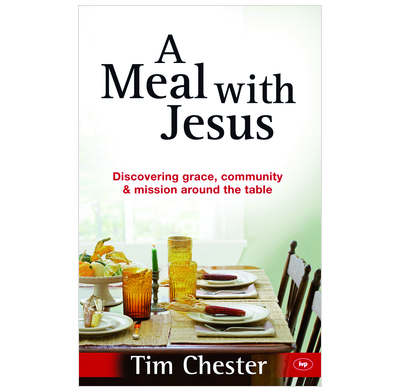
Book Review: A Meal With Jesus


If you know me at all, you'll know I like my food. This book sounds like a perfect one for me, and it really was. Tim Chester has written a great book on the theology and practice of hospitality - 'A Meal with Jesus: Discovering grace, community and mission around the table.'

Through the book, Chester follows the meals mentioned in Luke's gospel, echoing the complaint that the Son of Man came eating and drinking. And when you think of it, there are so many meals in Luke, and each adds to the story and mission of Jesus. There's the enacted grace of the party in Levi's house; the anointing of Jesus in Simon the Pharisee's house; the feeding of the five thousand; the rush to get the seats of honour at the banquet in Luke 14; the Lord's last supper and then the meals in Emmaus and Jerusalem on the first resurrection day.

The chapters follow the meals above (although, the astute may have realised that there are a few more as well - as Chester quotes someone saying, 'In Luke's Gospel Jesus is either going to a meal, at a meal, or coming from a meal.') The circumstances and events of the meals are discovered and explained, and the practical meaning is examined and applied. Throughout, there's a focus on mission, with the challenge to come and receive from Christ and then to go and share that grace and hospitality with others.

All in all, this book is like a six course feast (with an aperitif to set the scene). Each course follows perfectly from the last, and grace is on every plate, with lashings of extra grace. Reading it is like reading a menu - the reader's hunger is stirred, the desire to enjoy these good things is intensified; except that in the reading, the 'eater' is also satisfied. Hungry souls will find fulfillment because Christ is served up in this fine feast.

A Meal with Jesus is available from The Good Book Company.

Monday, November 23, 2015

Book Review: Faker


The parable of the Pharisee and the Tax Collector takes up just seven verses in our Bibles. It's a memorable short story with a sting in the tale - the two men are at prayer, but the end result is surprising. Only one is justified before God, and not the one you would have thought at the start. The parable forms the basis of a new book from the pen of Nicholas T McDonald, published by The Good Book Company: Faker - How to live for real when you're tempted to fake it.

Aimed at young people, I found this to be a great book for more than just the target age group. The writing is engaging, honest and refreshing, as Nicholas opens up about his own failings when trying to fake it. He explores the ways in which we all try to fake it, especially in our social media saturated world, by projecting the best image of ourselves to a watching world. His stories are hilarious (and also instantly recognisable), as the perils of projecting perfection are exposed.

False hopes are shown for what they are, and throughout, there's a clear passion to explain the good news of Jesus Christ in a way that is easily understood and applied to the life of teenagers. The substitutionary atonement is front and centre, and brilliantly explained. There's even a final chapter on prayer which opens up the Lord's Prayer in a fresh way.

I really enjoyed the book, and I reckon that young people definitely will. The chapters are short, accessible and engaging. The gospel is clearly explained. The truth is presented in a way that gently but helpfully confronts. It's well worth buying for your teenagers or youth group - but not just for them. Read it yourself, and appreciate afresh the glory of the gospel.

Faker is available from The Good Book Company, who supplied a review copy of the book.


Tuesday, December 30, 2014

Book Review: Praying Backwards


Are you able to say the alphabet backwards really quickly? Z Y X and W V... The title of Bryan Chapell's book might make you think of that. Is Praying Backwards all about doing a neat trick where you say your prayers in reverse? Thankfully not. Chapell's idea of praying backwards is a sound one, though.

He makes the point well in the introduction. 'How would your prayer change if you began where you ended?... We are supposed to be saying that everything we prayed for was offered "in Jesus' name" - for his honour and purposes... Yet that's not always the way we pray. Often we focus on asking God to ease our worries and satisfy our wants before adding "in Jesus' name" as an obligatory spiritual seasoning to make our petitions palatable to God.'

It's a great idea, making a really important point about how we pray. The rest of the book unpacks the idea, showing what it will look like to pray in Jesus' name, with his priorities and purposes. It will be modelled on Jesus' prayer life, seeking the Father's will, not our own (in a helpful look at the Lord's Prayer); trusting our good Father without doubting; finding in the Spirit power beyond our own power; praying expectantly and persistently, never giving up; with discernment as to what to pray for within the fences of what is righteous and what is prudent.

There is plenty in the book to take away, with some helpful reminders of the privilege of prayer, and some practical helpers to actually get praying or keep praying. As in Chapell's other books there are loads of illustrations, mostly gathered from his own experience (paddle and pray being my favourite one!), and the teaching comes across warm and friendly. However, there were a few times that it seemed to drag on a little more than necessary, and in places it seemed a bit repetitive.

On the whole, this is a good book to get a hold of to learn more about prayer, and to actually get praying. The new Christian will find it accessible and encouraging, but it will also be useful for the older Christian. Once you grasp the image he portrays of praying backwards, it really does affect your prayer life in a positive way.

Praying Backwards by Bryan Chapell is available for Kindle.

Monday, December 29, 2014

Book Review: Magnificent Obsession


From the publication of his book The Dawkins Letters, in which he answered the chapters in Richard Dawkins' The God Delusion, Dundee Free Church minister David Robertson has emerged as one of the leading Christian apologists in the UK and further afield. With speaking engagements all over the country and beyond, Robertson has honed his apologetics, presenting the truth of Christianity in a clear and engaging manner. This is also the case in his most recent book, Magnificent Obsession: Why Jesus is Great.

Tackling one of the most common objections, 'I would believe if I had the evidence', Robertson admits that it isn't an unreasonable request. 'What is unreasonable... is when the statement is made with the assumption that there is either no or insufficient evidence.' Thus, 'This book is written to challenge that assumption.' He acknowledges that, while some people thought that the rise of the New Atheists was a bad thing, they have actually revived an interest in Christianity and opened it up to outsiders asking questions. He explores the idea that everyone has a faith position of some kind, even the atheists. For him, 'I am a Christian because of Jesus Christ.'

The book follows a familiar format, drawing on the same letter style as The Dawkins Letters. However in this book, the recipient isn't an actual person, rather an amalgam of various atheists and agnostics known to him through correspondence, speaking engagements, pastoral work and personal contact. The letters follow a logical sequence, building on the previous, as well as the anticipated response from the reader. The themes of the letters are: Man, Miracles, Messenger, Murdered, Marvellous, Meaning, Mission, Modern, Maranatha, Magnificent.

Throughout, there is a clear and concise presentation of the evidence about Jesus, answering objections and putting the New Atheist on the back foot with some questions and challenges for their faith position. There are plenty of ideas to use in conversations, and threads to pursue and think about further.

On the evidence for Jesus, Robertson contends that 'in our postmodern, touchly-feely world, Jesus is whoever we want him to be.' The reason people don't want to know about Jesus is simple: 'The only reason that people will not accept the overwhelming evidence for the existence of Jesus is that they just really do not want him to exist.'

On the virgin birth, 'If true, it is part of the evidence that there is a God, who does 'intervene' in the world and who does call us to follow him.'

His section on the cross is pure gold, answering the objection of its horror, its need, and its purpose. Similarly, the resurrection is shown to be the heart of the faith, historically attested, and reliable to believe.

He doesn't shrink back from the hard things - even the doctrine of the Trinity, which is the centre of the faith, and vital to understanding God as he has revealed himself.

I couldn't recommend this highly enough. It's a great book which clearly presents the Christian faith in a logical and coherent way, answering the objections many Christians are likely to face from their friends. It would be useful for Christians to read to gain help for those conversations, but also to give to their non-Christian friends to read and discuss together. Magnificent Obsession is available from Amazon.


Friday, December 19, 2014

Book Review: Five Festal Garments


Of all the many series Apollos/IVP have published in recent years, the one that I've valued most highly have been the 'New Studies in Biblical Theology' edited by Don Carson. I'm slowly working my way through the series, and Five Festal Garments by Barry Cooper was among the very best. The book springs from Cooper's two greatest passions - biblical theology and the exposition of the Old Testament as Holy Scripture. They combine wonderfully in the book.

The Five Festal Garments of the title refers to the Old Testament books of Song of Songs, Ruth, Lamentations, Ecclesiastes and Esther. In the introduction, Cooper explains the festal garments through the customary Jewish usage of these books. Recognising that they were always canonical, the problem arose as to how to 'wear' the Scrolls. The solution comes in their use in the Jewish lectionary as readings for the five major festivals. But 'no consensus has emerged about their proper use, or about how they can be the word of God for us today' as Christians. Rather, they appear to be the most neglected books in the scriptures.

These Christian reflections on the books are a great little introduction to each, with their structure and content setting the tone for each chapter. The outline he follows for each asks the key questions - (i) a reading of the text to discover its structure; (ii) the relationship of the book to the wider Old Testament; (iii) how the book connects to the New Testament gospel through 'promise and fulfillment.'

The Song of Songs is the 'Garment of Love', even as it raises the question of who is speaking to whom and what do they mean; and how are we to see it as part of the Bible? His starting point is that it is love poetry, 'but it is neither a philosophical treatise... nor a sex manual.' With the different settings and voices, some may think that it's a compilation of love songs, like a greatest hits album, but Cooper argues that it's one single love poem. With its links to Solomon, the wider context points to the wisdom of Solomon and the themes of love found in Proverbs 31 and elsewhere. The theological context emphasises three important ideas: affirmation of the body and sexual relationships (in its essential goodness with links to the original creation); it doesn't idealise singleness; and it celebrates sex as a one-flesh union. Connecting it to the New Testament, Cooper sees it pointing to the new heavens and the new earth with the implication that sex is good, but it is not the greatest good, with an even better joy in heaven where there is only one marriage, between Christ and his people.

Ruth is up next, the 'Garment of Kindness.' It's a gentle book, but with turbulence in the depths - 'kindness of a radical and controversial sort; a kindness that makes ripples.' While some may see it as a romantic comedy, Cooper finds an irresistable movement in the book, from death to life, barrenness to fruitfulness, emptiness to fullness, curse to blessing.' His obesrvations of the text are marvellous, linking in to the wider context of the judges and David's kingship, a micro-history of salvation as it impacts a household (with wider implications). The wider implications are drawn out in the final section, as kindness is shown to be the very character of God, as his kindness draws in the Gentiles through Jesus the ultimate kinsman redeemer.

Lamentations is the 'Garment of Suffering' used on the Ninth of Ab, the day of fasting for the destruction of the temple. As the name suggests, it's a dark shaft of tragic loss and acute anguish, but Cooper points out that it's also a closely worked 'ordered grief', with its acrostics and a common structure. The question of its setting was surprising for me - having thought it was naturally connected with Jeremiah, it appears that there are differences of opinion, whether it comes after the prophets, as part of the historical writings. The resonance with the rest of the Old Testament is in the confusion over the impregnability of Zion in some of the Psalms, compared to the experienced reality. Over all, it 'shows us God's wrath as a directly experienced reality.' Yet alongside the darkness, there are beams of light, with the hope that comes from God, even as he displays his wrath. This becomes even clearer as we trace those lines through to the New Testament, where 'The unfailing love and righteous wrath of which it speaks find their climactic meeting point in the cross.'

Ecclesiastes is portrayed as the 'Garment of Vexation' - which is perhaps the most enigmatic book dealt with. With few footholds in the hebel (mist), there are as many opinions on the book as there are commentators! Yet there is some clarity as the structure is examined, with the narrator opening and closing the book, before coming to the Teacher's instruction. 'The positive conclusions drawn from the expose of human frailty and futility in the preceding observation complex is that human beings should fear God. And fearing God is tied, by implication, to attentiveness to his Torah.' Again, there's a link to the theme of creation in the Old Testament, but Paul sets the creation's frustration in the context of redemption in Romans 8.

Esther is the last book considered, the 'Garment of Deliverance.' In seeking to understand Esther, the first task is to try to catch her distinctive voice. 'What is of particular interest is the way that theme [deliverance] is developed here. How is deliverance in Esther different from deliverance in, say, the exodus, or Judges, or the Joseph narrative?' Here, we find 'history as story rather than history as chronicle.' Remarking on the 'absence' of God from the text of the book, Cooper urges that to use the book is 'to clothe ourselves with the truth that God is sovereign, and to be reminded that he is always with us, even when he seems most absent, and that nothing can ultimately thwart his purposes.'

I really enjoyed this book, giving an introduction to some of the lesser well known books of the Bible. His approach was very beneficial, opening out from the book itself to its OT context to its whole Bible context. There is plenty of gold in this book, for anyone wanting to get to know these books a bit better. It's also very useful for the pastor preparing to preach a series in the books - as I had previously done when preaching and leading Bible studies in Ruth. The whole series of the New Studies in Biblical Theology is great, but this might just be the crowning glory. Five Festal Garments is available from Amazon.

Tuesday, December 16, 2014

Book Review: Naked God


Is there a God? And if there is, then what difference will that make to my life?

That's the question Martin Ayers examines and answers in this slightly strangely titled book 'Naked God'. It's been out for about four years now, and I heard rave reviews whenever it launched, but it was only recently that I got an opportunity to read it. I'd have to go along with the rave reviews - this is an excellent book to put in the hands of anyone wondering about whether God exists. It probably wouldn't be the initial contact with Christian things, but as an ongoing thought-provoker and guide for discussion and investigation, it is excellent!

Ayers begins the book with a quick survey of the way the world has changed and is changing, in all sorts of ways - technology, sex and many more. He asks the question: 'So how do you react to the change that is all around us?' He goes on to look at how religion seems to be changing, leading him to observe: 'When it comes to the God Question, people keep changing their minds.'

The title of the book is inspired by the television chef Jamie Oliver. You see, the Naked Chef wasn't nude, he was 'stripping the food to its bare essentials.' The aim of the book is to do the same thing with God - to expose the truth about God. This leads to the basic premise of the first part of the book: 'The first task of this book is to show why the God Question really matters... If things are fine without God, then why bother looking for him?'

The chapters in the first section then look at the Naked Truth about why we're here; freedom and knowledge; right and wrong; and they consist of the best analysis of the ultimate end of our secular, pluralist society I've read in a long time. Along the way there are some perceptive comments, including his assertion that 'Atheism is a position of faith or belief just like any religion.'

Chapter two focuses on the belief that the universe is a closed system, only consisting of matter, only fueled by blind, purposeless evolution. But even as many ask the question why are we here? 'naturalism tells us that we shouldn't even ask the question.' You see, if naturalism is right, then it doesn't make sense to live as if there is any purpose or meaning. But, as he concludes, 'the Naked Truth is that if God does not exist, there is no real meaning or purpose for our lives.'

Chapter three builds on this foundation as it explores the ideas of freedom and knowledge. From across the world, he presents examples of people fighting for freedom, and espousing human rights. But, 'naturalism tells us that we people are not really separate, independently existing 'things' after all.' Further, we're really just a product of our genes and environment, and shouldn't be praised for right choices or blamed for wrong actions. He goes even further as he discusses knowledge. The logical conclusion of naturalism is that by thinking about it, we can't trust what we're thinking - because if our brains evolved for survival, then there is no guarantee it tells us what is true. Again, 'what we're doing here is seeing where naturalism actually takes us. It's not pleasant, because it takes us inexorably to conclusions we don't like. But it's only fair to think of the world consistently like this.'

Chapter four looks at morality, and where our sense of right and wrong comes from. He doesn't doubt that there can be moral naturalists. 'But the problem isn't that naturalists have moral values. It's the naturalists have no basis for these moral values.' Therefore, 'without God, there are no universal human rights.' Again, naturalism fails.

Chapter five brings the conclusion of his exploration of naturalism, with a devastating verdict. Naturalism will lead to despair (nihilism) or denial (unwilling to accept that we have no purpose or meaning or morality). He then asks, 'what if there is a God?' 'There is another option. We can investigate whether or not God actually exists.' In all the areas already examined, God would make a real difference, and provide the basis for each of them.

In preparation for the second section, chapter 6 introduces Jesus. 'I primarily want to consider who Jesus was, and whether that changes our mind about God.' Recognising the problem some have with him because of popular misconceptions, Ayers proposes to go back to the evidence, as found in the New Testament Gospels.

Before presenting the positive evidence, he first clears the ground by dealing with two common objections: 1. Isn't Jesus just one of many valid options? But relativism 'doesn't evaluate the reasons for believing something.' He points out that there is a big difference between the opinions and preferences of football supporters and the objective fact of who won the FA Cup last year. 'If God is real, the whole world could deny that fact, and yet it would still be true.' The second objection is: Isn't Jesus just a made up legend? Here he shows how the Gospels are reliable eye witness testimony.

In the rest of the section, he looks at the life of Jesus in a warm, conversational, friendly and engaging way. The topics he covers include 'Isn't Jesus just a good moral teacher?' - the identity of Jesus; Who is Jesus? - his character; Didn't Jesus just die tragically young? - the crucifixion and resurrection. There's also a helpful chapter on the aftermath of Jesus' life, and the objections that could still creep up, such as the socially regressive teaching on sex that the church holds to; the disgraceful record of Jesus' followers, such as the crusades; and the fear of losing freedom by surrendering to Jesus. Each response comes with grace and a challenge to try it out by focusing on Jesus and taking it from there.

Part three concludes the book by pressing home the conclusions by looking to the future. The author deals with judgement, assurance, becoming a Christian, and the alternatives of heaven and hell. There's a clear progression through the book as the false alternatives are closed down, leaving the logical certainty of Christianity based on Christ.

Naked God is a really good book, and one I enjoyed reading. It can sometimes appear slightly wordy, and could maybe benefit from a little editing to become shorter and snappier. There are plenty of cultural references, so the author must like the movies, with illustrations from Good Will Hunting, One Hour Photo and Brassed Off (among others). The pitch is probably aimed towards university students and young professional graduates, but most people seeking to engage with our secular culture will find something to stimulate thought and discussion. It would be a great book to read on Christmas Day, when everyone else is sleeping off the turkey dinner. Naked God is available from all good Christian bookshops and for the Kindle.

Wednesday, July 09, 2014

Book Review: Jesus and the Logic of History


Have you ever had a book sitting on your shelf for ages and ages? You think you know what it's going to say, and so you leave it to descend in your reading priorities. And then you eventually get around to reading it and wonder why you left it so long? That's been my experience with this book - Jesus and the Logic of History by Paul Barnett.

The big idea behind the book is that we can get to know that the gospel accounts are accurate through the incidental details recorded in the New Testament letters. Just think for a moment. Within the letters, which were written before the gospels, there are details about the person and character and life of Jesus which were already part of the eyewitness testimony. The fact that they are already written down before we get to the gospel accounts must mean that the gospels themselves are authentic and accurate records of the life of Jesus. That's the summary of the book. To discover a bit more, read on!

Barnett introduces his book with the reminder that 'Christianity is a historical religion in at least two senses' - that it is a part of world history, but also because 'Jesus was a real man.' That means that 'the origins of Christianity are not mythical in character.' Yet many scholars are attempting to redefine Jesus historically, casting him in some other light, such as a sage, or prophet, or cynic, or whatever. 'There are as many Jesus as there are people who write about him' - each of them seeing their own type of hero in him. Contrasting with this, 'It is the argument of this book that the 'logic' of history demands a Jesus who is definable and about whom a practical consensus can be reached. By this logic it is argued that the Christ of the early church's faith and proclamation must have borne a close relationship to Jesus the historical figure.'

There is a good discussion of the historical approach to events and facts and the changes in society. This helps us to think through the sources used, and presents a challenge to the 'Jesus Questers' who only use fragments of gospels, rather than the fullsome source material present from the earliest days of the Christian movement. This even more so when they tend to rely heavily on discredited late sources such as the Gospel of Thomas.

From this base, he moves on to examine the references to Jesus in secular histories, again adding testimony to the fact that Jesus must have been (at least) a remarkable man who caused such an amazing influence on so many so quickly. This impact is developed in the third chapter, looking at Jesus in the proclamation and tradition. Given that Paul's letters to Corinth and Thessalonians come soon after his first visit to the cities when churches were planted, the details of Jesus' life found within are illuminating. The churches already know about Jesus, the references are merely mentioned in passing, illustrating doctrine and life. This is then expanded to the other apostolic writings of Peter and John, each of whom make mention of the life of Jesus throughout.

Placing Jesus in his historical context is the task of chapter four. Here, the relationship of Jesus to the other major figures found in Luke 3 is considered - John the Baptist, Herod Antipas, Pilate, Annas and Caiaphas. Each of them are known from extra-biblical sources, so there can be no doubt of their existence.

Jesus in the gospels furthers the idea that any reconstruction of Jesus must contend with the details given by the very earliest churches - in continuation from his ministry. Yet most reconstructions refuse to deal with the 'deity dimension' - a belief which is highly noticeable in the earliest churches. These churches already existed before the conversion of Paul - which can be seen in what he writes to the Galatians (because he was persecuting those self-same churches) and the tradition of Jesus' resurrection which had been handed on to him and which he reminds the Corinthians he had passed on to them (1 Cor 15).

The remaining chapters are at pains to show that the gospels and Acts are reliable testimony and not something mythic or made up. His arguments are convincing, because the logic of the history is so clear. Contained within is a discussion of the process of producing the gospels - from witnesses to publication. Each gospel is seen to come from an author who was either an apostle themselves or else was connected to the apostles - Matthew himself; Mark through Peter; Luke through eye witnesses and associated with Paul; John himself. These weren't late documents produced several hundred years later (as claimed by the Da Vinci Code et al) but within the lifetime of the apostles.

This really is an excellent book. It takes a different angle and approach to the New Testament text, but is logical and encouraging. By looking at the letters in a fresh way, the history contained within is unearthed, confirming the reliability of the gospels, and all because Jesus, the Son of God really did live, die and rise. This will be a great book for anyone seeking to engage in defence and confirmation of the gospel through apologetics, or those seeking greater confirmation of the historical roots of the Christian faith. I'm just sorry it took so long to read it!

Jesus and the Logic of History is available from Amazon.

Sunday, June 08, 2014

Sermon: Titus 3: 1-7 Heirs of Hope


When I was younger, I loved to do spot the difference puzzles. You would have two pictures, side by side, but there were some subtle differences. If it was a picture of a park, there might be three ducks in one picture and only two in the other; or the little boy’s kite might have disappeared. Sometimes you had to look really carefully to see what was different.

Sometimes it’s not very easy to see what has changed. For some of the men, perhaps your wife has returned from the hairdresser and they ask you what you think; and can you notice what’s different or what they’ve had done. Is it a new colour, slightly shorter, more or less wavy? Or is it a trick question?

In other situations, though, it’s easy to spot the difference. With a family occasion, you maybe see someone you haven’t seen for a while and the change is instantly noticeable - if they’ve been on holiday; lost or gained weight; or for nephews and nieces, the inevitable ‘look at how tall you’re getting...’ It’s easy to see the change and spot the difference.

In our reading today, Paul gives us two pictures of how to live. He sets them side by side, but the difference is very easy to spot. In fact, the two ways of life are so different to one another, it’s like comparing day and night.

Now we’re coming near to the end of our series, but it’s always good to remind you where we are and what’s happening. Paul is writing to Titus, his colleague, who is on Crete, teaching the church and appointing leaders. The big theme of the letter is ‘truth which accords with godliness’ - or in other words, what we believe affects what we do. All the way through, Paul has been showing us that we need to believe the truth, and then live it out. We saw that in chapter 1 in the church leadership - wanting men who hold to the truth; and in chapter two in the home, where younger and older men and women each have their own specific roles and application.

Here in chapter three, Paul focuses in on life in the world. In verses 1 and 2, he shows us what living as a Christian will look like. It’s something they already know, because he says ‘Remind them...’ So let’s hear and heed this reminder, even if it seems like you’ve heard it all before. ‘Remind them to be subject to rulers and authorities, to be obedient, to be ready for every good work, to speak evil of no one, to avoid quarrelling, to be gentle, and to show courtesy to everyone.’

Here’s what we need to do as Christians. Here’s how we should be living as we go about our daily business, meeting friends and neighbours and enemies. It’s an attractive, positive way of life. Good citizens, good neighbours, good living.

But this is like the ‘after’ feature of one of those home makeover programmes. There used to be one on a few years back called ‘How Clean is your House?’ Kim and Aggie would go into a home that had been neglected over the years, clean it up and get it sorted out. Life as a Christian is like the after shot - the good, indeed the best way to live.

But just as a spotless home doesn’t just happen, neither will a blameless life. Instead, if we’re left to ourselves, if we go our own way, life will look very different. I wonder can you spot the difference when we get to verse 3: ‘foolish, disobedient, led astray, slaves to various passions and pleasures, passing our days in malice and envy, despicable, hating one another.’ It’s the exact opposite of verses 1 and 2. It explains the way the world is, as people live out these very ‘values’ (if that’s the right word). It’s easy to look out at other people and see these things in them. But for the Christian, it’s important to remember that we are no better, because we were once like that as well. Look again at the start of verse 3: ‘For we ourselves were once...’

The Christian life is one of change. I used to be like that, but now I have changed. But how do we jump from one to the other? How can we move from living out verse 3 to living the 1&2 way? We simply can’t do it by ourselves. By nature, we are enslaved. We can’t escape by ourselves. Just like the people in those houses who needed Kim and Aggie, so we need to have outside help.

That’s where verse 4 comes in. This is where the change is found. ‘But when the goodness and loving-kindness of God our Saviour appeared, he saved us, not because of any works of righteousness that we had done, but according to his mercy, through the water of rebirth and renewal by the Holy Spirit.’

Before God works in our life, we’re in verse 3. We can’t be saved by works of righteousness, because we can’t do any. We’re slaves to passions and pleasures. We can’t do anything good that will earn favour with God. That’s why God steps in. Jesus, the goodness and loving-kindness of God our Saviour appeared, and saved us according to his mercy. Mercy is when God does not give us what we deserve.

You see, our sins deserve punishment, but instead God gives us mercy. Instead of wrath, we receive rebirth and renewal - new life by the Holy Spirit. We are reborn and made new, so that we can live by the Spirit, instead of following our sinful desires.

On this Pentecost Sunday, we remember how God gave the Holy Spirit to every believer. He lives within us, giving us life, confirming in us his grace, helping us to live for God, and reminding us of the hope of eternal life. We have been given the Holy Spirit, not miserly, not in a small measure, but richly, abundantly, fully.

Some people think that the church is all about do’s and don’ts. At first glance, that’s what this passage looks as if it’s doing. Don’t be like verse 3. Do be like verse 1 and 2. Do, do, do. It’s like trying to drive a car that has run out of fuel. You could be terribly inspirational, but the car can’t do it. The Christian life is fuelled by the message of grace - here’s what God has already done. You have been saved. You have been justified. You have this great hope. You have the Holy Spirit living inside you. So live it out.

At times we fail. At times we don’t do it as we should. That’s why we need the reminder. Keep going this way; keep obeying the Spirit. And as you do so, you and those around you will be able to spot the difference. You’re not the person you used to be.

As we look at this spot the difference, I wonder which of the two pictures is the likeness of your life. Do you find yourself in verse 3? Enslaved, hating and hated? You don’t like how things are; you want to change, but you don’t know how. Look to Christ and find the grace and mercy he provides. He can make you new through his work on the cross, and give you the Holy Spirit to change you.

Or maybe you’re already a believer. How are you getting on with verses 1&2? Do your workmates or friends see something different in your life? We’re not asking you to pull your socks up, to try a bit harder. Rather, it’s a reminder of what God has done, as you live out the good news. He can make us change, for his glory. Amen.

This sermon was preached in Aghavea Parish Church on Sunday 8th June 2014.

Thursday, December 19, 2013

Book Review: What's So Great About the Doctrines of Grace?


As I've previously noted, I've been trying to read lots of books on grace. So when I spotted this book on special offer for the Kindle, I loaded it up and took it on holidays. However, it wasn't quite what I had expected. Instead of dealing specifically with grace, it turns out that the book is a point-by-point defence of the five points of Calvinism. So what's the problem, I hear you ask. Aren't you a Calvinist? While I do hold the doctrines of the Church of Ireland on election, predestination and all that, I didn't really enjoy the book.

Richard D Phillips states that he has two purposes in the book. 'The first is to explain the doctrines of grace, also known as the "Five Points of Calvinism" through the exposition of Scripture... The second purpose is... to help believers feel the power of these precious truths in their lives. In other words, I aim not merely to teach the doctrines of grace, but to show what is so great about them.'

There are five points of Calvinism, but six chapters. The opening one deals with the theme of God's sovereignty as standing over and above the rest of the doctrine. It's a helpful chapter, which then focuses on Isaiah's vision of God, with the four hallmarks of response to the sovereign God: 1. A readiness to serve - which he claims only comes after the vision. But surely this fails to take account of the fact that the vision comes in chapter 6. Isaiah has already been a prophet. 2. Humble, trusting obedience. 3. Holy boldness. 4. Reliance on sovereign, saving grace.

It's here in this subsection that I really didn't like the book. He describes the dithering King Ahaz, who refuses to ask for a sign in Isaiah 7:

This is seen in the sign Isaiah gave to King Ahaz. Isaiah urged this sign on Ahaz to enliven his faith. It was a sign that was foolish in the eyes of the world, but glorious in the eyes of God: "Behold, the virgin shall conceive and bear a son, and shall call his name Immanuel." In the presence of Ahaz's apostate unbelief, Isaiah laid his hand on the greatest sign of sovereign grace of which he could think: the virgin who would be with child.

As he continues, he makes it clear that he's jumping immediately to Jesus, without thought of original context, or of what that might have meant for Ahaz in the first place. Instead, the scripture becomes flat with no context or contours. I'm afraid, coming so early in the book, it didn't make me want to go much further, if this was the way he was going to handle the scriptures.

But I persisted. The remaining chapters cover the five points of Calvinism, with fairly standard defences of total depravity (How bad am I really? Much, much worse than you have dared to think.); unconditional election (which promotes humility and not pride); limited atonement (we find solid ground for our assurance of salvation); irresistible grace (it glorifies the saving work of the Holy Spirit and demonstrates the saving power of God's Word; and perseverance of the saints (we look not to ourselves, but to the faithful God's sovereign, preserving grace).

All in all, I liked much of the book, but at times was concerned with his handling of the text. I'm not sure it would be overly convincing to those who were enquiring, but for those who are convinced Calvinists, there will be something to help ground you more surely in the doctrines of grace.

What's so Great about the Doctrines of Grace? is available from Amazonand for the Kindle.

Tuesday, December 10, 2013

Book Review: Straightening Out The Self-Centred Church

Back in the summer, we went on holiday to Crete. There was only one possible Bible book I could study while on the island, and that was Titus. Titus was stationed on the island when Paul wrote this letter to him, famous for its declaration (in the words of one of their own prophets) that the Cretans are 'always liars, evil brutes, lazy gluttons.' (1:12)

Most commentaries tend to lump together the Pastoral Epistles (1&2 Timothy and Titus), so this commentary in the Welwyn series by John Benton was perfect for taking on holiday. A single volume on Titus, and a helpful guide through the text.

Through eleven easy to read chapters, Benton takes the reader through the 46 verses of the letter to Titus. As you can see, the chapters take little chunks and help the reader understand not only what Paul is saying, but also what it means for the modern reader as well. The exegesis is helpful, the tone is warm, as the grace of God which has appeared is highlighted and emphasised time and time again. Benton writes with the heart of a pastor, seeking to encourage and grow the flock of Christ with his well chosen words.

The final chapter gives a final overview of the various parts of the letter, helpfully showing how it all fits together, and giving a good summary of the takeaway lessons. The church on Crete was self-centred and selfish; out for themselves, not really worrying about sound teaching or caring for others. 'The cure for self-centred Christians is the truth about God our Saviour. This is the truth that leads to godliness.'

All in all, this is a good guide to the book, and helpful for those who are preparing to teach from Titus, whether or not they are currently on the island of Crete!

Straightening out the Self-centred Church is available from Amazon.

Thursday, October 10, 2013

Book Review: Grow in Grace


While hunting through my library for some holiday reading back in the summer, I came across this little book on growing in grace by Sinclair Ferguson, and so it made it into my case. I've benefited from Ferguson's ministry for a while - through podcasts, books and his appearance at NIMA. This wee book was no exception - for something so small it packs quite a punch, with lots of helpful advice.

This is, as Ferguson states early on, 'a book about the way we develop and mature as Christians.' He writes about babies being born, but for them, 'birth is only the beginning.' They need to grow, and 'so it is in the Christian life as well.' But rather than focusing on the how-to aspects of prayer and Bible study (important as they are), Ferguson chooses to focus instead on God who gives the growth.

The opening section, 'Christ our life' emphasises that 'everything we need... is to be found exclusively in Jesus.' He is the pioneer, and it is God's purpose to make all his children to be like his Son Jesus - our older brother in the family of God. 'Growing in grace means becoming like Jesus.' As you would expect with Ferguson, he's quickly into doctrine: good, solid, healthy doctrine on the nature of Jesus (fully God and fully man) and why this matters for our growth spiritually. We are reminded of the way in which Jesus grew spiritually, in constant obedience despite temptation. This is then developed in the following chapter on How Jesus Grew, seen in four areas: 1. In the fruit of the Spirit - which is really a picture of Jesus 2. Through the disciplines of life 3. In obedience 4. Through experience. Ferguson also identifies three means of growth, channels of help and blessing - searching the scriptures, finding fellowship with God in prayer, and looking for fellowship with God's people.

Section 2 moves on to consider some 'Basic Principles'. The first is in the wisdom which is the fear of the Lord. A helpful discussion on what is meant by the fear of the Lord follows, in which Ferguson identifies two kinds of fear - servile or filial. Filial - the child's loving fear of the father - is what the Bible refers to, and what we see in Jesus. 'One of the reasons why we know so little of such filial fear today is that we do not appreciate the glory of the gospel!' When motivated by godly fear, 'evangelism is not merely a privilege; it is a debt.' [Which was the second time such a thought had arisen in my holiday reading]

The section continues with a look at spiritual appetite, and specifically what Psalms 42&43 teach us about hunger and thirst for God. Sometimes, as he says, God uses isolation to reach us things we couldn't learn in fellowship. From there, he then moves on to consider a matter of life and death - as seen in many of the New Testament letters written to churches in trouble. 'They were being tempted to look for something extra... in every case it involved the teaching that Christ himself was not enough... Paul's answer was to emphasise the meaning and message of the cross.' The grace of the cross is shown in the demonstration of: 1. the love of God; 2. the justice of God; and 3. the wisdom of God.

The next section concentrates on life together. Firstly, the principle is applied postively - because Jesus died for a people, we have been given gifts in order to love others, not just for ourselves to feel special. Gifts should issue in service. But then there's a whole chapter on the negative aspect of life together, because 'being together causes as many problems as it seems to solve.' There is much practical wisdom in this chapter on how to resolve problems and show Christlike openhearted compassion to restore, rather than being vinegar-hardened conkers intent on smashing others to smithereens.

The closing section is a case study of the lives of three of God's people in the Bible - Daniel who grows faithfully, Simon Peter who moves in fits and starts, and Timothy coping with yourself. There are great insights from these men which are applied carefully, in Ferguson's pastoral manner.

All in all, this is an excellent little book. It would be especially good for new Christians, but Christians of any age or stage will profit from the helpful reminders and gentle nudges towards growing in grace. Published in 1981, this would be a great book for a publisher to re-release for a new generation seeking to grow. Grow in Grace is available from Amazon.

Tuesday, September 03, 2013

Book Review: Amazing Grace


Packing for holidays can be a stressful time. Deciding what needs to be taken, and what can be left behind is always a struggle. But while some people agonise over whether to take that extra bikini or the sixth pair of sandals, my decisions focus on the books to be taken with me. My first sun holiday saw me run out of books - as well as reading all of Lynsey's - and needing to buy more books in the resort to keep me going on the flight home.

This year, my holiday reading was a work in progress for about three weeks. A pile had been established, with careful consideration given to what was being included, the variety of the list, as well as the weightiness (both theological and physical). Some of the smaller paperbacks in my upstairs library - some which I didn't even realise I possessed, and can't remember buying or borrowing - made it into the bag. One of them was this: Amazing Grace by Marcus Loane, the former Archbishop of Sydney.

A while back, I had lamented an absence of books on grace, and so it was that I discovered this among my books. It had to be read, given the title. However, on reflection, I'm not sure that this book was correctly titled. In one sense, I can see that the book is a testament to the grace of God in Paul's life as it charts some key areas of his life, ministry and thought, but perhaps there would be a better, less misleading title.

Concentrating in the early chapters on Paul's conversion, Loane writes that 'it is fortunate for us that Paul was so willing to let others see what God had wrought in his soul.' (9). He points out the 'noble progress of humility' in Paul's descriptions of himself in his writings - from apostle, to saint to sinner. The conversion is set within the context and reconstruction of Acts 6, where Paul had been kicking against the pricks (goads) of conscience in watching Stephen die his martyr's death. From there, on that Damascus road, 'his world was turned upside down in one swift, astonishing experience' as he saw Jesus' glory and became a witness and apostle.

The next chapters focus in on Romans 1, on Paul the letter writer and missionary. His description of the salvation of God bears careful reading and rejoicing, but the thing that chimed with me (and was later picked up in other books as well) was his debt to the peoples to preach the gospel.

In his chapter on 'Who shall deliver me?' I'm not sure that Loane got it quite right - or at least isn't consistent in his explanation. On one page, he maintains that Paul's cry of being a wretched man in Romans 7:24-25 is 'the recollection of old struggles' from his pre-conversion days. That 'his cry makes a crisis in the inner thought and structure of this letter. It was a kind of bridge in his spiritual development.' All well and good. I'm not sure I would hold that it's pre-conversion only or at all, but on the next page, Loane then argues that 'he spoke rather as one who knew the grace of God, but who still found the power of sin surging through his mind and members.' Slightly confusing, to my mind.

A better chapter was found on Christ our wisdom, where he expounds the cross of Christ in 1 Corinthians 1. There, we are told that where Christ is made our wisdom for righteousness, sanctification and redemption, 'these terms have to do with the most basic needs and problems in life.'

The latter chapters focus on Jesus being Lord of creation, becoming a curse for us (the battle over legalism in Galatians), and the pattern for our service and sufferings in ministry. The book ends with some chapters on themes from Hebrews, namely the encouragement that comes from the ongoing intercession of Jesus; the vision of the invisible God which sustains and brings endurance; and the promise that God will never forsake us - once given to Joshua and Solomon, but now to each believer in Hebrews.

These are mostly good Bible studies, with useful reminders of some important themes. The ordinary Christian will be encouraged, the preacher will find a solid reserve of truth and a helpful restatement of our faith. The slight negatives are that sometimes the language is dated in terms of style, and also that it is hard to see what binds the book together as one. Amazing Grace is available secondhand from Amazon.

Tuesday, July 23, 2013

Book Review: Different by Design


The gender agenda is repeatedly being brought to the fore in churches, homes, workplaces and wider society. Christian believers may increasingly be seen as out of step with the culture. Should we just get with the programme? Or should we continue to listen in to what God is saying in the Bible? Carrie Sandom addresses these issues in her new book, Different by Design: God's blueprint for men and women, as she takes us back to the Bible and helps us discover God's plan for the sexes.

The introduction paints a picture of society as it currently stands, seen in the lives of several women and families. Sandom identifies a 'gradual feminisation of the workplace', with an 'over-feminized' and 'emasculated' society. What will be the implications of such female leadership? While arguing that some women have a 'having it all' desire (work, family, leadership etc), she wonders if it is actually what women want. 'Not when our desire to be treated the same as men means we're never really treated as women.'

Her first key point is that men and women are different by design. An example is given of listening in to conversations on the Tube (I didn't even realise anyone spoke on the tube!), and seen in a variety of areas - task or people oriented; waffles and spaghetti; how they relate to friends; how they deal with harsh words and negative criticism; logic and intuition. She then asks the why question. Why are men and women different? Moving beyond the obvious differences in bodies, she argues that the hunter-gatherer / home-maker divide doesn't go back far enough. Rather, we need to return to our first parents: 'Adam and Eve were equal in God's sight, but they were not identical.'

The pattern for God's design looks behind the scenes to the character and nature of God. 'We were made for community... it is a reflection of God's own nature.' The Trinity is then outlined, explained, and used as the pattern we follow in equality, diversity, unity and order. 'The Father exercises loving authority over the Son, who humbly and willingly submits to it.'

The revelation of God's design then takes us on a guided tour of Genesis 1-2. 'The two accounts of creation give us both a panoramic view as well as a microscopic one... They are complimentary accounts, not contradictory ones.' The foundational principles are discussed, such as order (where the days point to the creation of habitat and then the inhabitants), purpose and blessing. In Genesis 2 as the camera zooms in, we find freedom and responsibility, union and completion. On marriage, Sandom remarks (p. 54):

It is a beautiful picture and perfectly illustrates that marriage is a lifelong commitment between a man and a woman that changes the focus of all other family relationships. It is a commitment with definite intention and starts with the man taking the initiative. It is to be witnessed by other members of the community and then consummated by their sexual union. He is to love and cherish her as his own body, because she is now a part of him. Similarly, she is to consider herself joined with him in loving partnership even though she remains an individual and distinct from him.

This is marriage as God intended: the coming together of a man and a woman, to form a one-flesh union that is broken only by death. This means we mustn't be naive about same sex partnerships - they do not constitute a marriage. Scripture is clear that a marriage is between a man and a woman. We mustn't be deceived into thinking that pornography and masturbation are legitimate ways of satisfying our sexual longings. We cannot enjoy one-flesh union on our own. And we mustn't be fooled by those who say that sex can be enjoyed without making a public, life-long commitment first. The longing to be united in marriage and to become one-flesh with your spouse is God-given, but God also gives us the parameters for how those longings are to be satisfied.

From there, we come to the rejection of God's design, as the author asks where are the men in church - have they been driven away by the women? We see the pattern rejected in three scenes from Genesis 3: (i) God's word ignored leading to disobedience - 'every temptation to sin in some way doubts God's word, denies God's judgement or distorts God's character.' (ii) God's word upheld leading to judgement; (iii) God's word sustained leading to grace.

In the next chapter, the reader should be aware. The masking of God's design begins with a horrific story of a father sexually abusing his daughter, which is shocking and explicit. This story, as well as biblical examples of sexual brokenness, demonstrate that unity and order always elude us. There's a helpful diagram of the interconnectedness of beliefs on women, sex, leadership etc held by various theological positions.

The restoration of God's design is the chapter we were waiting for from the start, as Jesus re-establishes God's ordering of relationships. His attitude to men and women is discussed, being revolutionary compared to the surrounding society, and yet the author is clear that while women were witnesses to the resurrection, they were not apostles. I wasn't sure of the effectiveness of the chapter, as the jump from men and women to what Jesus did on the cross seemed a leap too far, almost disjointed.

The remainder of the book applies the design to various areas of life, as it seeks to discover the implications of God's design for marriage, the church and the workplace. In the marriage chapter, there's a useful discussion on submission as Ephesians 5 is placed in the context of the whole letter. At one point, there is specific application for women, married or not, which made me wonder if this is primarily (or even exclusively) a book for women. I think it's still useful for both sexes, though.

In the church chapter there are the usual contentious passages about women teaching and having authority. Given that the author works for a church (as an Associate Minister for Women and Pastoral Care), her handling is faithful, and seeks to argue that the scriptures push for men to be in authority over the church family as in the home family, and for men to teach in mixed congregations. This is not to the detriment, though, of the Titus 2 model, where the older women teach the younger women - women certainly have a role in ministry.

All in all, this is a very helpful book which helps us return to the Bible's teaching on gender and sex, with clear Bible explanation, sensitive application and good illustrations. Amidst the prevailing voices of our culture Sandom provides a loud and clear call to rediscover and relate within God's designed differences.

Different by Design is available from Amazon and for Kindle.

Monday, July 22, 2013

The Orange Order: Faith Proclaimed or Feet Parading?

The other day, I was in a national shop in a local town. The assistants are always polite, always friendly, mostly chatty. Picking up and scanning the copy of The Irish News I was buying, the lady quickly made a few assumptions and asked me who would win on Sunday. I had to confess that I didn't know what she was talking about. It turns out it was the GAA Football Ulster Final yesterday between Donegal and Monaghan, which was won by Monaghan 0-13 to 0-7, although I couldn't have told you that without looking.

The assumptions were plain and obvious - buy the Irish News, be a Roman Catholic / Nationalist / Republican, and chat about Gaelic Football. It's precisely because those assumptions are in place (similarly, probably with those on the 'other side' who buy the Newsletter) that I wanted to share a couple of articles from The Irish News last week. Many who need to read them would never ever pick up a copy of The Irish News - but perhaps they'll read them here.


They are both by William Scholes, the faith and religion editor, and were published on Thursday 18th and Friday 19th July. First up, 'Faith proclaimed becoming lost to order's feet proclaiming.'


In it, he explores the 'juggernauts of religion, culture and politics' colliding for the Orange Order. Reflecting on the scenes from the Woodvale Road after they were banned from returning along the Crumlin Road past Ardoyne shops, he says, 'Sorting out where it stands on faith would seem to be central to that.' As he declares, 'Something has clearly gone badly wrong for the Orange Order, certainly in Belfast, if feet parading has become more important than faith proclaimed.'

While recognising that Belfast is a case apart, and in other places, such as Fermanagh, the Twelfth is an entirely different kind of a day, it all comes down to identity:

It seems to be a question of identity. If the Christian's identity lies "in Christ", then while flags, parades and other expressions of culture can remain vitally important, they are no all-consuming.

My thought is on how the actions of attacking the police can be a witness to the love of Christ and his concern for the lost.


The second article came a day later, entitled 'Orange Order needs to have critical friends.'


Scholes focuses on the debate in the recalled Stormont Assembly on Tuesday on the parades issue.

There was going to be a showdown. And after a weekend of violence, intemperate words and the usual blame game, this wouldn't just be any old showdown.
It would be Achilles stepping out of his tent on the Plain of Scamander and confronting Hector at the gates of Troy. It would be King Henry V at Agincourt on Saint Crispin's Day.
But in the end, it was more like Noggin the Nog. Or was it Mike the Knight?
Tuesday's debate at the recalled assembly was the build up to the let-down, at least for anyone expecting a full-on blood on the carpet battle..
For anyone who clings to the belief that politics is the answer to our problems, there were glimmers of hope to be discerned.

The end point and conclusion of his opinion piece should provide a plan for the future:

It is highly tempting for the silent majority of the Protestant community - as if it were a homogeneous bloc in the first place - to allow its apathy towards the Orange Order in Belfast to turn into disavowal.
But that would be a mistake. If Orange ears are apparently shut to nationalists, then it is for other Proetstants to help them see another way.
Some might prefer the order to stop paying lip service to a Christianity its actions at Woodvale contradict but as long as being "Christ-centred" is part of its DNA, Church leaders in particular will have a duty to be involved.

Two important articles, albeit almost entirely hidden away from the eyes who most need to see them, because they're appearing in the Irish News. We give thanks for the peaceful parade / protest on Saturday, but the order needs to find a new way forward, sharing the gospel of Jesus Christ with the whole community as a matter of first priority.

Note: Both articles are used with the permission of the author, William Scholes.