Sermons, book reviews and randomness from the Reverend Garibaldi McFlurry.
Showing posts with label mission. Show all posts
Sunday, February 16, 2020
Sermon: Jonah 3: 1-10 Revival in Nineveh
Deja vu is the feeling that you’ve lived through the present experience before.
Deja vu is the feeling that you’ve lived through the present experience before. Sorry, I couldn’t resist it! But you could be tempted to think that we’ve been here before, as we open up to Jonah chapter 3 on page 928.
You see, for a second time, the word of the Lord comes to Jonah. And for the second time, the word of the Lord sends Jonah to Nineveh. The first time had come back in chapter 1, when God said ‘Go’ and Jonah said ‘No’. Since that moment, Jonah went on the run from God, onto a boat going the opposite direction from his God-given mission, into a storm, and ultimately into the belly of the great fish.
Even in Jonah’s rebellion, God has been in control - so that this most reluctant prophet witnessed to the pagan sailors (who then turned to worship the one true living God of heaven who made the sea and the land); and God had appointed the great fish to rescue Jonah from a watery grave. After three days in the fish, Jonah must have been stinking to high heaven, and was vomited out onto dry land.
We see God’s grace in action right from the start of this chapter. God’s word comes a second time to Jonah. God is the God of the second chance. Have you found that out yourself? You’ve messed up; you come back to the Lord; and he welcomes you in, again and again - for the second time, and the twenty-second time, and the hundred and second time.
And notice that God doesn’t mention what has come before. He doesn’t say, now Jonah, you remember what happened last time, so get it right this time. You see, with God, our past is gone, forgiven and forgotten, and never more to be remembered or cast up. No, it’s almost as if this is the first time God has mentioned Nineveh to Jonah.
And so God sends Jonah with these words: ‘Go to the great city of Nineveh and proclaim to it the message I give you.’ (2) God has a message for Nineveh and Jonah is his chosen messenger.
So what will happen this time? Last time around, God said Go and Jonah said No. What will he do now that he has heard God’s sending all over again? Well we see the answer in verse 3: ‘Jonah obeyed the word of the LORD and went to Nineveh.’ Phew! What a relief! This time he obeyed God’s call, and went to where he was meant to go.
And we’re told a little bit about the city to which he had travelled. ‘Now Nineveh was a very important city - a visit required three days.’ (3) You can almost hear the travel agent’s sales pitch, can’t you? For a proper city break experience you’d need three whole days in it. One or two days wouldn’t be enough. To see the sights you need to have three days.
You can imagine the size of it; the importance of it; how amazing it would have been to be there. But remember Jonah isn’t there for a city break; he isn’t there to see the sights from the open-top bus tour; in fact, he wouldn’t have chosen to go there at all. You see, Nineveh is the capital city of one of the hostile superpowers of the day. Going to Nineveh is going into the heart of enemy territory. Pagan territory.
And it’s to this hostile place, enemy territory, that Jonah has been sent by God, with a message to proclaim. And he doesn’t waste any time. On his first day, he starts into the city and proclaims a message. The message we hear in verse 4: ‘Forty more days and Nineveh will be overturned.’
What about that for a sermon? It’s short and snappy, but it’s all doom and gloom. The countdown clock has begun. Forty days, and Nineveh will be overturned (or overthrown). It’s the same word used to describe what had happened to Sodom and Gomorrah.
So what do you make of his proclamation? Before, when I read his message, I used to think - Jonah really doesn’t like the Ninevites, and he says as little as possible, and offers no hope, and wants them to be overthrown. He’s a reluctant prophet and he’s reluctantly there, so he doesn’t waste much of his breath on them.
But look back to verse 2. ‘Proclaim to it the message I give you.’ Is it that Jonah is like a huffy toddler; or is he actually being faithful this time, even in the sparsity of the message? Perhaps I was being too hard on him. Either way, the message has been proclaimed in the streets of Nineveh. The question is, what will happen next?
You can imagine what would happen these days if someone proclaimed this message in the streets of Portadown or Armagh, in Belfast or London. They’d either be laughed at, or ignored, or locked up. But that’s not what happened in Nineveh. Do you see their response in verse 5?
‘The Ninevites believed God. They declared a fast, and all of them, from the greatest to the least, put on sackcloth.’
While the message didn’t say much, and didn’t offer much or any hope, the Ninevites believed this word of the Lord. They believed God, by taking him at his word, believing what he said to be true, and taking action based on what he had said.
Their response is seen in their fasting and their sackcloth. These are signs of mourning for their sin, of repentance. And their repentance goes all the way to the very top, to the king of Nineveh himself. There he is, seated on his throne in his royal robes. And then there he is, covered in sackcloth, sitting in the dust. Even the king has humbled himself, numbering himself with his people, seeking God’s mercy.
The king sets an example of fasting and repentance. And then he issues his own proclamation in response to the proclamation of Jonah:
‘By the decree of the king and his nobles: Do not let any man or beast, herd or flock, taste anything; do not let them eat or drink. But let man and beast be covered with sackcloth. Let everyone urgently call on God. Let them give up their evil ways and their violence.’ (7-8)
Here’s what revival in Nineveh looks like, by order of the king. Did you notice there are five ‘lets’ - two negative and three positive. First, negatively, do not let man or beast, herd or flock taste anything, eat or drink. So to show their seriousness, they are abstaining from food and drink.
And then positively, they are to let man and beast be covered with sackcloth; they are to let everyone urgently call on God; they are to give up their evil ways and violence. They’re turning away from their sin and turning towards God, calling on him for mercy.
And yet, as his proclamation goes on, he’s just not sure what might happen. He has no assurance that God will respond to their cries for mercy. Do you see what he says there in verse 9? ‘Who knows? God may yet relent and with compassion turn from his fierce anger so that we will not perish.’
He’s not sure if God will be merciful, but he hopes it will be the case. Who knows? Who does know? Jonah knows! Jonah knows this personally - that when he cried to the Lord from under the sea, the Lord saved him and showed him amazing grace. Jonah also knows this because he has heard about the pagan sailors who cried to the Lord and received his amazing grace. Jonah knows this, but he hasn’t communicated it to the Ninevites!
They’re hoping that God might relent, might have compassion on them, so that they don’t perish. But they don’t know for sure! I wonder, could we be like Jonah? What’s the message we communicate about God? Are there bits we fail to mention? Do we miss out the ‘good’ bit of the good news?
So the Ninevites are unsure about God’s grace. But then they experience it in full measure in verse 10: ‘When God saw what they did and how they turned from their evil ways, he had compassion and did not bring upon them the destruction he had threatened.’
How amazing God’s grace is! He showers his saving grace on this city of his enemies, having compassion on them, not bringing the destruction they deserved. Do you recognise yourself in this picture? If you’re trusting in Jesus, then you are a Ninevite! We too were in the path of destruction. We too faced God’s wrath. But he has had compassion on us, and has given us the grace to turn to him from our sin, and to find his salvation.
How amazing is God’s love, that while we were still his enemies, Christ died for us, to make us his friends. And that’s what we remember and celebrate tonight, as we gather at his table, as we remember the king who stepped down from his royal throne, who was stripped, and beaten, and brought low - for us and our salvation.
This is the blessing for all who hear and repent. Yet Jesus takes up the story of Jonah, and points to the sign of Jonah. You see, the people of Nineveh repented when they heard Jonah’s preaching (even such as it was). But the people of Jesus’ day, with someone greater than Jonah preaching to them, refused to listen, refused to repent. May it never be true of us - that we have heard Jesus’ teaching, and we have turned away.
Jonah eventually obeys, bringing God’s word to a lost and needy world. We too have been entrusted with a message, with the good news of the gospel, of the God who will answer all who call on him. How can we remain silent?
This sermon was preached in St Matthew's Church, Richhill on Sunday evening 16th February 2020.
Sunday, May 26, 2019
Sermon: Acts 1: 1-11 Worldwide Witnesses
If you’ve been binge-watching a series on Netflix or NowTV, or tuning in week by week on terrestial television, then you might be familiar with how each new episode begins. It’ll have something like: ‘Previously on ...’ It reminds you of what has already happened, and maybe highlighting the particular details you’ll need to grasp this new episode. Although, if you’ve been binge-watching several episodes in a row, then you don’t really need the reminder!
This morning we are beginning a new series in Acts. Over the next couple of months we’re going to see how the early church started and developed and grew. But very quickly we realise that this isn’t a standalone book; this isn’t an entirely new series. Rather, Acts is like season 2 of an ongoing story. And, just like the TV series, our author begins with a ‘Previously on...’ reminder.
‘In my former book, Theophilus, I wrote about all that Jesus began to do and to teach until the day he was taken up to heaven, after giving instructions through the Holy Spirit to the apostles he had chosen.’ (1-2)
Previously, in the story of Jesus... Now, maybe you already know who wrote Acts, but if not, then it was Dr Luke. Back on page 1025 (keep a finger in Acts 1!), we read the introduction to Luke, where he also mentions Theophilus, and sets out to write an orderly account of the things that have been fulfilled among us - by interviewing the eye-witnesses and servants of the word. So Acts isn’t a new story, rather, it’s the continuation of the story of Luke’s gospel.
And it’s that continuation that Luke emphasises in verse 1. ‘In my former book, I wrote about all that Jesus began to do and to teach...’ What is he saying with that phrase? He’s not saying that book 1 was all about what Jesus did, and book 2 is about what someone else then did. Rather, if Luke’s gospel was all that Jesus began to do and to teach, then Acts is all about what Jesus continued to do and to teach!
The heading in our Bible just says ‘Acts.’ In some versions it will say ‘The Acts of the Apostles.’ Some people try to say that it should be ‘The Acts of the Holy Spirit.’ But I think Luke is helping us to see that it is really ‘The Acts of the Lord Jesus.’ But that raises a question.
You see, we’ve already read verses 1-2, and already we’ve heard that Jesus was taken up to heaven on a certain day. That’s what we find in the last part of the reading from verse 9 onwards. ‘He was taken up before their very eyes, and a cloud hid him from their sight.’ Over the forty days between Easter and the Ascension, Jesus had been with his disciples. We have some of the details of some of those meetings in the last chapters of Matthew, Luke and John, as well as the time when over 500 people saw Jesus (mentioned by Paul in 1 Cor 15:6). But this event in Acts 1 is the final meeting, the conclusion to these physical encounters with Jesus, as he ascends to the right hand of the Father.
So what’s the question that raises? Well, if Acts is all about what Jesus continues to do and to teach, how does that work if Jesus isn’t on the earth any more? And the answer also comes in verse 2. Jesus gave ‘instructions through the Holy Spirit to the apostles he had chosen.’
The work of Jesus, the continuation of all he began to do and to teach is to be carried out through the Holy Spirit by the apostles Jesus had chosen. When you think about that, you might be thinking, you’re doing what, Jesus? These are the guys who just over a month ago all ran away when you were in danger. One of them denied that he even knew you. And you’re going to leave them to get on with the work?
But remember that he has instructed them through the Holy Spirit. Earlier we mentioned the ‘previously on...’ feature of TV programmes. Often in movies you get the kind of highlight reel showing how a character undergoes a training regime (like Rocky). Verses 3-5 are that kind of montage.
‘After his suffering, he showed himself to these men and gave many convincing proofs that he was alive. He appeared to them over a period of forty days and spoke about the kingdom of God. On one occasion, while he was eating with them, he gave them this command: “Do not leave Jerusalem, but wait for the gift my Father promised. For John baptised with water, but in a few days you will be baptised with the Holy Spirit.”’ (3-5)
So how did Jesus get them ready for the task ahead of them? He showed, he spoke, and he promised the Spirit. He showed them that he was alive, with many convincing proofs. He’s making sure that they are sure that he really is alive. Next, he spoke about the kingdom of God. He’s teaching them about his kingdom, and how people need to acknowledge him as king. And finally, he promised the Holy Spirit. John had baptised with water, but Jesus would baptise them with the Holy Spirit.
The apostles have been prepared by Jesus; the forty days are now up. Their training has been completed. It’s the day that Jesus is about the ascend to heaven, to take his place at the Father’s right hand. And yet, the disciples still don’t seem quite ready! They still don’t really seem to get it! Do you see what they ask in verse 6:
‘So when they met together, they asked him, “Lord, are you at this time going to restore the kingdom to Israel?”’
What are they asking? Are you going to restore the kingdom to Israel right now? Are you going to become king right here right now in Jerusalem? They’re looking back to the glory days of King David and King Solomon. But those days were lost through exile to Babylon, and now Roman occupation. They know that Jesus is the Son of David, the King, and so they expect Jesus to kick out the Romans and become king in Jerusalem. Is that going to happen now, now that you’ve done all the stuff about dying on the cross and rising to new life? Are you going to be king, and us your government ministers, your advisors, your cabinet?
But their focus is too narrow. Their vision is too small. Jesus had spoken about the kingdom of God, and all they can think about is the kingdom in Israel. One day the king will reign in Jerusalem, but it wasn’t going to be that day. They needed to work to the Father’s timetable, not their own; to the Father’s plans and not their own:
‘It is not for you to know the times or dates the Father has set by his own authority. But you will receive power when the Holy Spirit comes on you; and you will be my witnesses in Jerusalem, and in all Judea and Samaria, and to the ends of the earth.’ (7-8)
Their focus was just on Jerusalem, but Jesus’ focus is much wider. Do you see his focus? Jerusalem, yes, but also Judea and Samaria, and to the ends of the earth. It’s like a stone being dropped in a pond. The ripples reach farther and farther. And that is Jesus’ plan, the ongoing work of Jesus, for the apostles to go out, not just where they are in Jerusalem; not just next door in Judea and Samaria, but to the ends of the earth.
That is the ongoing work of Jesus. And that is the list of contents for this book of Acts. In this chunk, we’ll only really focus on Jerusalem, but we’ll come back in due course to see how the apostles fulfil the whole of Jesus’ plan through the book of Acts.
And what will they do when they go to all those places? ‘You will be my witnesses.’ A witness speaks of what they have seen and heard. And that’s what the apostles are sent to do. They are to share what they have seen and heard of the Lord Jesus. (That’s why there’s the emphasis on his showing that he is alive, and speaking about the kingdom).
Now, just for a moment, put yourself in the sandals of these apostles. How do you feel about what you’ve heard? You’re going to be witnesses to the ends of the earth. There aren’t any jet planes or mobile phones. There isn’t even any coffee to give you your get up and go. How would you feel? Daunted? Overwhelmed?
Remember that Jesus showed that he was alive, and spoke about the kingdom. But what was the third thing he focused on in the training montage? (v5) The promise of the Holy Spirit. ‘You will receive power when the Holy Spirit comes on you; and you will be my witnesses...’ They wouldn’t be able to do it by themselves. That’s why, when Jesus is ascended, they don’t start checking out Expedia or their local friendly travel agent to get a move on. They wait for the promise; they wait for the power that only comes by the Holy Spirit.
With those last words, Jesus is taken up. The work of Jesus is continuing, by the apostles he has chosen, who are waiting for the power of the Holy Spirit. Acts will show us how they fulfilled that mission. And here we are, in what, to them, would have been the ends of the earth. And the gospel has come to us. We are called to join in with their mission, of making Jesus known, and calling people to bow before king Jesus, but we don’t do it by ourselves - we need the power of the Holy Spirit. Who is it we need to tell, in Richhill, and Ulster and Ireland, and the ends of the earth?
The work of Jesus is continuing as he reigns in heaven. But one day he will return, bodily, to receive the honour we heard last week - every knee bowing and every tongue confessing he is Lord. Are you in? Are you ready to join in the Acts of the Lord Jesus, to be worldwide witnesses?
This sermon was preached in St Matthew's Church, Richhill on Sunday morning 26th May 2019.
Sunday, September 02, 2018
Sermon: Acts 17: 1-15 Riots and Revivals
A former Archbishop of Canterbury once said this: ‘Everywhere the Apostle Paul went, there was a riot or a revival. Everywhere I go, they serve tea,‘ It’s entirely coincidental that we’ll be serving tea after the service today, but will there be a riot or a revival? We’ll wait to see!
Over the autumn term, we’re going to be looking at Paul’s first letter to the Thessalonians - written to the church in Thessalonica. But rather than diving straight into the letter, I thought it would be helpful to get the back story first. Where did the church of the Thessalonians come from? How did it get going? Who was in it, and around it? All that’s what we find in our reading from Acts 17, on page 1113.
And as you turn there, you discover that the Archbishop’s summary is fairly accurate. Except, it wasn’t one or the other, riot or revival - it’s both at the same time. Riot and revival. Or even, riot because of revival.
We find the revival first of all, in verses 1-4. Paul and Silas, fresh from a prison cell in Philippi, are on the move, spreading the good news of Jesus in response to his commission. They arrive in Thessalonica, where there’s a Jewish synagogue - the place of worship and prayer.
And so Paul follows his custom, he goes to the synagogue, in order to proclaim the good news about Jesus. He does that for three Sabbaths, three weeks in a row. Do you see how Luke describes what Paul was doing? Look at the verbs (What are verbs? The doing words - the boys and girls are back at school, so we’re going to go back to school too!) - ‘...he reasoned with them from the Scriptures, explaining and proving that the Christ had to suffer and rise from the dead.’ (2-3)
They would have known the Scriptures - what we know as the Old Testament - and so Paul reasons with them, engaging their minds. Christianity isn’t irrational, or unreasonable - you don’t leave your minds at the door or turn off your brain. It’s reasonable, rational, it makes sense. It’s why we’ll be engaging with big questions at Cafe Church - How can I believe that God exists? (next Sunday evening). And so Paul explains and proves that the Old Testament was all about how the Christ, the promised King, the anointed one, had to suffer and rise from the dead. (That’s what the risen Jesus was explaining to the disciples in Luke 24).
So as Paul established the foundations - what the Christ had to do - he also proclaims who the Christ is. ‘This Jesus I am proclaiming to you is the Christ.’ That’s how Luke summarises the three Sabbath’s worth of sermons. Jesus is the Christ, the one who had to suffer and rise from the dead - following God’s plan revealed in the Old Testament.
And we see the result of Paul’s message in verse 4. Revival breaks out, as people become Christians. ‘Some of the Jews were persuaded and joined Paul and Silas, as did a large number of God-fearing Greeks and not a few prominent women.’ They were persuaded, they were convinced, and so they commit, they join Paul and Silas. There’s revival.
[And it’s happening here too, as people come to faith...]
Revival, but with it comes a riot. And we see how that happens in verse 5. ‘But the Jews were jealous.’ They obviously didn’t like the fact that Paul had come to preach about Jesus, and some of their members were leaving them, joining Paul and Silas. So we see how they respond to the proclamation of Jesus as the Christ. Again, look at the verbs, the doing words from verse 5 on.
‘They rounded up some bad characters... formed a mob... started a riot... rushed to Jason’s house... dragged Jason and some other brothers before the city officials... shouting...’ Lots of action, as they rent-a-mob, start a riot, and then have the cheek to shout what they shout in verse 6.
‘These men who have caused trouble all over the world have now come here, and Jason has welcomed them in to his house.’ Do you see the irony? Paul and Silas hadn’t formed a mob and started a riot. It was the Jews who are causing trouble! But such is their opposition to Jesus, that they will stop at nothing to stop to word being proclaimed.
That phrase about causing trouble literally means ‘they have turned the world upside down.’ And they’re right. The gospel message is revolutionary. It does turn things upside down - rather than God and everyone serving our needs and wants and desires, we put things in their proper place. God on the throne, and us his servants. But the message isn’t always welcome. It brings trouble and opposition from those who don’t want to know.
Yet even the opponents of the message, these rioters, even they proclaim the message - they share that there is another king, one called Jesus. And when the crowd and the officials hear this, they are thrown into turmoil. Why? Because for them, there was only one king - Caesar. To say there is another king, to say Jesus is Lord (rather than Caesar is Lord) is to be disloyal and even treasonous to the empire and the emperor.
Turmoil, but Jason and the others and bailed. We don’t know the names of the others - but we know that they all had a new identity when they received the message and joined Paul and Silas. Did you spot it in verse 6? Jason and some other brothers. When they received the message, they became part of God’s family, they are now known as brothers.
So as night falls, and they send Paul and Silas away on to Berea, what do you think these new brothers were thinking? Paul had been with them for just three weeks. He has now gone, and probably daren’t show his face again. You probably won’t see Paul again. You might not hear from him again. What do you make of all that has gone on? The joy of finding faith. The fear of facing the mob. The threat of being bailed. Would you forget all about Paul and his message? Shrug it off as a fun few weeks, but something to move on from? Or do you keep going? Meeting together as brothers and sisters. Remembering what you’ve been taught. Trying to learn and grow in your new faith? And how are you going to do that?
That’s the position the new believers find themselves in Thessalonica. Paul has gone. And, as the chapter goes on, the pattern repeats. Paul goes to the synagogue (again!). The revival as the Bereans hear, and study the Scriptures to check that Paul is speaking the truth. The ‘Many’ Jews as well as the prominent Greek women and many Greek men. All rejoicing in their new faith. Revival all over again.
But soon comes the riot. Not, as you might expect from Berea itself. But the same Jews from Thessalonica go a long way to be offended. They follow Paul the 45 miles to agitate the crowds and stir them up. Such is their opposition to the gospel that they will stop at nothing to stop it being proclaimed. So Paul moves on again, to Athens, with Silas and Timothy coming behind him. There’s no way back for Paul. He’s been moved on from Berea, so he definitely can’t go back to Thessalonica. But he can write to the little church. And it’s the letter that he writes to them that we’re going to be looking at this term. How will Paul encourage them? What do they need to be reminded of? And what do they need to be taught? We’ll see as we work our way through it from next week.
So that’s the background to 1 Thessalonians. The gospel comes to town and brings riot and revival. It was true in Thessalonica when Paul and Silas arrived there, and it’s still true today.
It’s why, when you invite someone to come along to church, some people will give it a go while others will refuse to come along. Or, if you mention that you’re a Christian to a colleague, you may not get a favourable reaction - or maybe even a complaint against you.
And the same reactions will happen inside us as well. When you hear God’s word, you are reacting and responding in one way or the other. Either you are being brought to life, being revived, as you rejoice in the gospel of Jesus and become a brother or sister. Or you are fighting it and opposing it, starting a riot within - and maybe even recruiting others to stand against it and cause trouble for the brothers.
Even this morning, you are either lining up with King Jesus, who suffered on the cross and rose from the dead according to the Scriptures, or you are living up against him, trying to ignore him. Revival or riot. Both happening at the same time. Even in the same pew. Whichever it is, though, riot or revival, I’d be glad to talk to you about it - after the service over a cup of tea.
This sermon was preached in St Matthew's Church, Richhill on Sunday morning 2nd September 2018.
Labels:
1 Thessalonians,
Gospel,
Jesus,
mission,
sermons
Sunday, June 11, 2017
Sermon: Matthew 28: 16-20 The Great Commission
Over the coming days and weeks, we’ll be getting to know each other a lot better. But at the start, as you meet someone for the first time, there are a few questions that are always asked. Who are you? Where are you from? What do you do?
Well, as you might have gathered by now, my name is Gary, I’m from Dromore (that’s the real Dromore in County Down and not the pretend Dromore in County Tyrone), and I’m a Church of Ireland minister. So now I just have to ask you all the same questions - but don’t shout out the answers all at once now! Some of you might be Richhillian by birth and heritage over many generations, but the rest of us, well, we’re blow-ins, ourselves the most recent of the batch. We’ll have a story of how we came to be here, and where our roots lie.
Answering those same questions - who are you? Where are you from? What do you do? - is why family history is such big business. It’s also why my doorbell in Fermanagh would ring frequently, with the latest Americans or Australians coming to try to find their great-great granda’s Baptism record. He had emigrated far far away from Fermanagh, and now they were back to trace their roots, to see where their family had begun. They were trying to work out who they are, and where they came from.
For us as a church family, our reading from Matthew’s gospel is a bit like tracing our roots, going back to where it all started, to help us see who we are, where we’re from, and what we’re meant to be doing. Just as the Americans returned to Aghavea, so we are going back to Galilee, to see the beginnings of the church.
In verse 16, ‘Then the eleven disciples went to Galilee, to the mountain where Jesus had told them to go.’ The eleven disciples (because Judas is no longer around) go to Galilee. Now why did they go there? Because Jesus told them to go there. But why? If you glance back a page, you’ll see that in 28:7 the angels tell the women to tell the disciples to go to Galilee, and then in 28:10 Jesus himself emphasises the same message. Why?
In Matthew’s Gospel, Galilee was where it all began. Galilee was where Jesus had begun to preach (4:17); Galilee was where he called Simon Peter and Andrew, and the other disciples. But so much had happened since then. Peter had denied knowing Jesus. The rest had ran away, leaving him to die on the cross alone.
So much had happened since then - Jesus had died, but was now raised to new life. So he gathers the disciples back where it all began, and gives them a new start. He gives them a new mission - the mission that we are also part of, because this is where we came from - this is who we are; where we’re from; and what we’re meant to do.
Did you notice that when Jesus arrives, when they saw him, they worshipped him; but some doubted. They just weren’t sure. There is room here for the doubting; there is space to question; so ask your questions. Together we’ll work through the doubts, to come to the place of worship.
To the worshipping disciples and the doubting disciples, Jesus speaks. This is what we know as the ‘great commission’. But notice that Jesus doesn’t begin with what we’re meant to be doing. Instead, he starts with a word about himself.
‘All authority in heaven and on earth has been given to me.’
On Friday afternoon, Teresa May went to visit Buckingham Palace. She wasn’t there to sightsee; or to stroke the corgis; or just to have a cup of tea with members of the Royal family. Teresa was there to seek the Queen’s permission to form the government. She was granted authority to continue as Prime Minister - at least for the time being. As important as the Prime Minister is, in terms of authority, she’s nothing compared to the Lord Jesus.
Do you see what he says? He doesn’t just have a wee bit of authority, and not just over some places. All authority - in heaven; and all authority on earth. Jesus is the rightful ruler. Jesus is in charge, and in control.
Back at the start of Matthew’s gospel, the wise men came a long way to worship the one born king of the Jews. Then in Matthew 4, the devil tempted Jesus by offering him all the kingdoms of the world, if he would only worship Satan. But Jesus receives all authority in heaven and earth through his death on the cross and his resurrection. Jesus is the king of the universe. He has ‘all authority.’
Is this how we think of Jesus? You see, we might think that Jesus isn’t really very important. He might want to be our friend, but that might be because he needs us rather than us needing him. Or we remember the words of the hymn ‘Gentle Jesus, meek and mild’ and think that Jesus is weak, and powerless. Listen to who Jesus says he is - the one with all authority, all power, the true king of the universe.
Now why does that matter? Well, because Jesus has ‘all’ authority, he has the power to command us to do what he wants us to do. This isn’t the great suggestion, or the great optional extra for the keen ones. This is the great commission. It’s not like the tape began on the ‘Mission Impossible’ TV series and movies: ‘Your mission, if you choose to accept it.’ Jesus has a mission for us. So what does he command us to do?
‘Therefore go and make disciples of all nations.’ The command to make disciples of all nations flows from Jesus having all authority. From Galilee, Jesus sends the eleven disciples to go and make more disciples. And where? It’s not just in some places; it’s in all places. We’re called to make disciples of all nations
Now how do we do that? ‘Baptising them in the name of the Father and of the Son and of the Holy Spirit, and teaching them to obey everything I have commanded you.’ Disciples are to be baptised, and taught to obey the words of Jesus. Notice that we’ve got another ‘all’ word. We’re not just to teach and obey some of Jesus’ commands; it’s not like the old pick and mix in Woolworths where you could choose the things you liked and left the things you didn’t like. Matthew records for us the teaching of Jesus - for example the sermon on the mount (Matt 5-7). Disciples make disciples who obey everything (all) Jesus commands.
Now that might seem a bit overwhelming. So we’ve got to go to all nations, and teach them everything Jesus taught? And if it’s a command, it can almost make it even harder - there could be guilt if we feel we’re not doing our bit, if we’re disobeying the one with all authority. But before you run for the door; before you choose not to accept this mission, there is one last ‘all’. A word of promise.
‘And surely I am with you always, to the very end of the age.’
Jesus himself promises to be with us - when? On every other Tuesday and the fifth Friday of a month? For some of the time, but the rest you’re on your own? I am with you always - or all the time. As we step out to obey Jesus’ command, we’re not on our own - Jesus himself goes with us. As you prepare your Sunday School lesson, Jesus is with you. As you speak about Jesus to your non-Christian neighbour over the back fence, Jesus is with you. As you meet with a younger Christian; as you pray with someone in need; as you do any number of things to fulfil the great commission, Jesus is with you. You’re not on your own.
These words of Jesus might be the last words in Matthew’s gospel, but they’re just the start of our mission. Jesus is calling us to know that he has all authority; to therefore go and make disciples in all places; baptising and teaching them all of Jesus’ commands; knowing that Jesus is with us all the time.
So let’s recommit ourselves this morning to step up, and step out - disciples making disciples, as we obey the command of Jesus.
This sermon was preached in St Matthew's Church, Richhill on Sunday 11th June 2017.
Tuesday, November 24, 2015
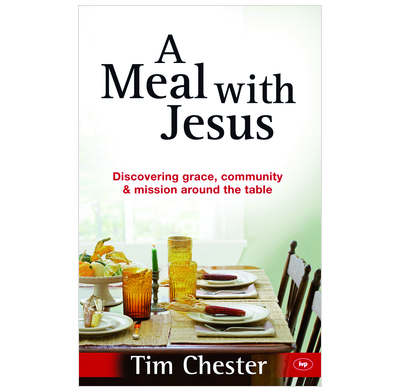
Book Review: A Meal With Jesus
If you know me at all, you'll know I like my food. This book sounds like a perfect one for me, and it really was. Tim Chester has written a great book on the theology and practice of hospitality - 'A Meal with Jesus: Discovering grace, community and mission around the table.'
Through the book, Chester follows the meals mentioned in Luke's gospel, echoing the complaint that the Son of Man came eating and drinking. And when you think of it, there are so many meals in Luke, and each adds to the story and mission of Jesus. There's the enacted grace of the party in Levi's house; the anointing of Jesus in Simon the Pharisee's house; the feeding of the five thousand; the rush to get the seats of honour at the banquet in Luke 14; the Lord's last supper and then the meals in Emmaus and Jerusalem on the first resurrection day.
The chapters follow the meals above (although, the astute may have realised that there are a few more as well - as Chester quotes someone saying, 'In Luke's Gospel Jesus is either going to a meal, at a meal, or coming from a meal.') The circumstances and events of the meals are discovered and explained, and the practical meaning is examined and applied. Throughout, there's a focus on mission, with the challenge to come and receive from Christ and then to go and share that grace and hospitality with others.
All in all, this book is like a six course feast (with an aperitif to set the scene). Each course follows perfectly from the last, and grace is on every plate, with lashings of extra grace. Reading it is like reading a menu - the reader's hunger is stirred, the desire to enjoy these good things is intensified; except that in the reading, the 'eater' is also satisfied. Hungry souls will find fulfillment because Christ is served up in this fine feast.
A Meal with Jesus is available from The Good Book Company.
Labels:
books,
Christianity,
food and drink,
grace,
Jesus,
mission,
reading
Sunday, May 24, 2015
Sermon: 1 Thessalonians 2: 9-16 Walking Worthy According to the Word
Have you ever thought about how many words we hear in a day? Whether it’s the TV, or radio, on the phone or face to face, it’s reckoned that we hear about 100,000 words in a day. But we don’t give equal attention to every one of those 100,000 words. Perhaps you turn off when Stephen Nolan comes on Radio Ulster. A chat with a friend will be more important than the chatter on Coronation Street. You’ll stay on the phone when it’s a relation, but quickly hang up when someone rings about PPI.
The importance of the words depends on who is speaking. What we think of the person will affect how we listen. Imagine the scene when Paul arrived in Thessalonica. He’s just got out of jail in Philippi, having been beaten. He’s not in great shape, might not smell too good. You might not be inclined to listen to him. But when the Thessalonians did listen to him, they discovered a remarkable thing. Paul was speaking to them the word of God. As Paul spoke, they heard God’s word. They accepted it for what it really is - not human words, manmade philosophy or made up stories - but God’s word. The God of the universe had spoken, and Paul was bringing a report of it.
It’s like the TV news people who report what the Prime Minister said. David Cameron said so and so about the NHS today... But this is so much more important. God has spoken. These aren’t just the records of people striving towards God. This is God’s word. And it’s at work in you believers.
Now if that’s the case, and this is indeed God’s word, then it must lead us to action. If we really do mean that ‘Thanks be to God’ after our readings, then we must see that work out in our lives. Paul shows us two things it calls us to do, even while circumstances are difficult. Having God’s word we proclaim it and plead for it, even while some prevent it.
The first consequence of having God’s word is that we want others to hear it. If God really has spoken, then we’ll want everyone to hear the good news. And we’ll make sure that they have easy access to it. For Paul and his team, they worked night and day so that everyone could hear without being burdened. Paul earned his keep, so that the pagans of Thessalonica could hear without cost.
It’s why we get involved with mission agencies - to support those who bring the gospel so that people can hear the good news for free. But what about closer to home? Are there ways in which we could put ourselves out so that someone else can hear the gospel? If we truly believe that God has spoken, a good news message for everyone, then we want them to hear. We need to put ourselves out so that they can hear. Could you help teach the gospel to Sunday School, or be available at SNATCH? Look out for ways to give of yourself to help someone else hear. Having God’s word, we proclaim it.
But more than that, Paul says, that we plead for it as well. Last time we saw how Paul was like a mother nurse with her own children, gentle. Now he shows how he was like a father, giving wisdom, direction, providing a lead and example for his young children. Through his pure, upright, blameless conduct, he was seeking to make them take God’s word seriously. To apply it to their lives. To make it their guide and rule.
Do you see the action words in v 12? Urging, encouraging, pleading. Like a dad watching his son playing football, cheering him on. Except this isn’t football, it’s even more serious. ‘Pleading that you should lead a life worthy of God, who calls you into his own kingdom and glory.’ God’s word calls us into his kingdom and glory. As we hear it, we need to heed it, and be moulded and shaped by it. Here in verse 12, Paul summarises it as ‘a life worthy of God’, or to ‘walk in a manner worthy of God’ (ESV). In chapter 4 we’ll see what that looks like in greater detail, but for now, it means a life reflecting his glory, becoming more like him. A life of worship to him, because we have heard and responded to his word.
It doesn’t come naturally. We need to work at it, together, as we urge and encourage and plead each other to stick at it. We need to be people who cheerlead for each other in our successes, and urge and encourage when we mess things up. We’re probably already aware of the ways in which we fail - so that fatherlike encouragement is so precious as we respond to and apply God’s word, and live out the call he has made on our lives.
Having God’s word, we proclaim it and plead for it. It’s amazing that God has spoken, that we can hear it, and pass it on. But not everyone thinks that. Some people jump to the other conclusion, the one that the Thessalonians had rejected, that it’s all just made up, human words.
As the Ashers case has been discussed, and in the debate around the referendum in the Republic, people try to rubbish or discount or deny the Bible as God’s word. Oh, it’s just ancient stories that don’t count in this new modern world. We’ve moved beyond all that nonsense. It’s definitely not God’s word, because God doesn’t exist. You can’t really believe all that?
When we see the news and watch the onward march of secularism and ‘progress’, we might think that things are getting bad. Will we be completely silenced? Will we be punished for holding to God’s word? Are things getting worse and worse? Actually, things are getting back to normal - not the way things should be, but the way things really are, and always were.
Having accepted the word of God for what it was, having that word of God working in their lives, the Thessalonians were feeling the pressure rise. They were suffering for God’s word - just as Paul had (2:2 last week). But that wasn’t unusual. This was how the very first churches had suffered as well. The churches of God in Christ Jesus in Judea had suffered at the hands of the Jews.
There was death, they were being driven out, they were trying to silence people from sharing God’s word. The Jews were acting in opposition to the church, but they were actually opposing everyone, ‘by hindering us from speaking to the Gentiles so that they may be saved.’ The pressure is there to shut up. To keep quiet, and not share God’s word.
But those who might look at Christians and think that they’re an easy target could find they’re picking the wrong fight. It’s like the school bully who picks on the new kid in school, only to later discover that the new kid is the new principal’s daughter. To take on Christians who hold God’s word is to take on the God whose word they hold. They might be able to intimidate Christians, but God cannot be silenced.
That should be encouraging, as we seek to walk worthy according to the word. It’s God’s word we have, God’s word we’re sharing, God’s word we’re living out. And it’ll be God’s word that counts on the last day, when the full measure of sin is judged, and God’s wrath is paid out for the unbeliever.
In our school, you weren’t allowed to walk around the school during classtime. A teacher spotted two of us walking down the corridor and told us off. But we were carrying a message from the principal, taking it to every classroom. With that note, we had no reason to fear even the scariest teacher. We were on official business. We had a message to share. We, as the church (and only the church) have the message of the gospel - God’s gospel. God has spoken. We must proclaim it, and plead for it (living it out), even if some seek to prevent it.
This sermon was preached in Aghavea Parish Church on Sunday 24th May 2015.
Sunday, May 10, 2015
Sermon: 1 Thessalonians 2: 1-8 Walking Worthy in Evangelism
Do you remember about a year and a half ago, for a few Sundays in November, we had the Church of Ireland census? On each of the Sundays, every person in church was asked to fill in their age and sex. The figures were added up by parish, diocese, and the whole C of I, to give us some idea of who we are and where we’re at. This week at General Synod, the stand out figure was 15%. On any given Sunday, about 15% are in a Church of Ireland church. But it’s not 15% of the whole population of the island, which wouldn’t be too bad; no, it’s 15% of those who identified themselves as being C of I in the 2011 census. In terms of total population, just 0.97% are worshipping in a Church of Ireland church.
The call to mission was clear, and clearly needed. How can we reach out to the people out there, as well as the 85% of our own non-attenders? As things stand, it sounds really bad. But already, we’re better off than Thessalonica was. Last week, we heard of how there weren’t any Christians at all, but then the apostle Paul and his mission team arrived in town. They shared the good news of Jesus, and a church was formed, made up of people who had turned from idols to serve the living and true God.
But then the Jews got jealous, and Paul had to flee town. When he sits down to write this letter to the church (from Corinth), the people of Thessalonica (outside the church) are casting aspersions on Paul and his team. Oh aye, he was one of those fly boys, he came, wanted your money, and then flew off to exploit the next lot of gullible people in the next town. If he was around today, you’d see him on Watchdog or some of those dodgy cowboy preacher channels...
In chapter 2, Paul is writing to remind them of his work in Thessalonica. In doing so, he’s telling them what they already know, but may have forgotten. And as he does so, he shows us what we need as we seek to share the gospel of God - the good news about Jesus. I know that even as I say those words - share the gospel; or the ‘e’ word (evangelism), that the reasons start flowing - I couldn’t do that; I’m no good at speaking; sure isn’t that why we have a rector? Paul shows us how we can do it. Here’s what we need to share the gospel of God.
Firstly, we need courage. Some were criticising Paul, he ran away, just forget about him, but Paul says that his coming was not in vain. In that short period of time, they had became Christians. The change was evident. But how did it come about? Before Paul arrived with them, he had been in Philippi, where he was beaten and thrown into prison, because he had been talking about Jesus.
He could have been tempted to be quiet. Don’t rock the boat. Don’t stir things up. Anything for a quiet life - especially when the trouble started in Thessalonica as well. But look at verse 2. What helped Paul to open his mouth? ‘we had courage in our God to declare to you the gospel of God in spite of great opposition.’ They may have feared the trouble, but they found courage in God.
It’s the same courage our brothers and sisters find when they are lined up on a Libyan beach to be executed, and yet still declare the name of Jesus. We too can have courage in God to invite someone to come along to church, or say what Jesus means to you - even when it’s not easy to do it. God is bigger than any enemy. He gives us courage.
But there’s more. Sharing the gospel of God also needs conviction. Again, Paul says what it wasn’t and then how it was (a bit like watching a tennis match back and forth, not this but that...). Paul’s motives were being questioned. Was he out to deceive, to lead people astray? Or had he impure motives? Some trickery? He says no - our appeal doesn’t spring from those things.
Rather, his motive is to please the one who sent him. Look at verse 4. ‘Just as we have been approved by God to be entrusted with the message of the gospel, even so we speak, not to please mortals, but to please God who tests our hearts.’ Paul doesn’t speak to please people. It would be so easy to just say nice things so that people like you. We could have an easy time if we tell people what they want to hear. But Paul was sent by God, entrusted with the gospel.
If you sit down to write a letter and pop it in the postbox, you have entrusted it to Postman Pat (or at least, one of his colleagues). You don’t expect him to open the letter, and change what you have said, then deliver it. You expect him to pass it on as it is. In the same way, Paul is just the deliveryman, passing on the message of the gospel. Knowing that he has been sent by God, Paul is out, not on a people-pleasing mission, but on a God-pleasing mission.
The danger is that as we speak about Jesus, as we talk to our neighbour or friend or family member about God and the gospel, we can sometimes want to please them, so we don’t mention about hell or sin, or the need for repentance. After all, they won’t want to hear about that, we reason. We want to please them. But will that please God, who sends us and entrusts us with his message? Who is it you’re trying to please in your use of words (or absence of words)?
Sharing the gospel needs courage in opposition, and conviction to share the good news faithfully. But those together could lead to arrogance, that we have the truth. Some Christians may come across in that way, their manner suggests some sort of superiority. Paul was accused of flattery, of greed, and of seeking praise for himself. Even though he was an apostle, he wasn’t like that.
Rather, in verse 7 he shows what he was like (as they know and God is witness), and what we also should be like as we share the gospel with others: ‘But we were gentle among you, like a nurse tenderly caring for her own children.’ Paul takes the image of a nurse who cares for patients, and is even more tender and loving and caring for her kids. This is how we’re to do mission - loving the people we’re talking to, caring for them. Paul had this connection with the Christians in Thessalonica, having spent just three weeks with them. In that time he shared the gospel with them, but he shared something else as well. ‘So deeply do we care for you that we are determined to share with you not only the gospel of God but also our own selves, because you have become very dear to us.’
Now for some, that might be the hardest step - to share ourselves; to grow closer together. But it comes from that compassion - caring for people leads to sharing with people. Take some time this week to think about three people you care for, who you would like to see come to faith. Pray for them. Care for them, and look for opportunities to share with them the good news about Jesus.
We started with stats, so lets end with a different sort of stat. On Thursday night, the exit poll predicted a Tory majority in the General Election. The commentators thought it was nonsense, the opinion polls said that Labour and the Conservatives were neck and neck. The problem was ‘shy Tories’ who didn’t want to admit they were planning to vote Tory in the opinion polls. So they kept quiet, or pretended to be something else. Let’s not be ‘shy Christians’ who never speak about our faith, who are too shy, or embarrassed, or nervous to say that we believe in Jesus. Sharing the gospel of God needs courage (in our God in the face of opposition), conviction (because we’re sent by God to share his message of good news), and compassion (caring for those we share the good news with). Courage, conviction, and compassion - perhaps there’s one we need to develop, maybe we need to grow in all three. Let’s follow Paul’s example, as we share the gospel, so that our existence as a church family is, as Paul says, ‘not in vain.’
This sermon was preached in Aghavea Parish Church on Sunday 10th May 2015.
Labels:
1 Thessalonians,
evangelism,
Jesus,
ministry,
mission,
sermons
Sunday, January 11, 2015
Sermon: Luke 10: 1-24 Sent by Jesus
My first job came completely out of the blue. I was 15, and one day I got home from school. Mum said that the owner of the corner shop up the street had rung, asking would I like to work for him. Immediately, I said no, I wanted to play computer games and go to youth club! But with a quick talking to, I started working in Jackie’s.
With the new year started, you might be thinking about a new job. Perhaps you’re fed up where you are, so you get the paper and look through the job adverts. No matter what job it is, you normally get the same sort of information in the ads. Firstly, there’s a vacancy, there’s a job to be done; secondly, there’s the job description, some sort of details about what is to be done, what you have to do in the job; and thirdly, there’s the reward, the wages, what you get out of the job.
It struck me as I was studying the passage this week, that this is what we have in the first part of Luke 10 - a job vacancy, a job description, and the job’s rewards. Jesus is on his way up to Jerusalem. We saw last week that he calls us to follow him, even though it isn’t always easy, it’s urgent, and it needs determination to press on. This week’s passage follows on directly. As we follow Jesus, we find that he sends us out in his service.
Jesus is on the road. He has set his face to go to up to Jerusalem. He has an appointment with the cross. But as he goes, he sends seventy, two by two, to prepare the way for him. They go to every town he is coming to. But look at how he sends them out: ‘The harvest is plentiful, but the labourers are few; therefore ask the Lord of the harvest to send out labourers into his harvest.’ (2)
There’s a vacancy to be filled. In fact, there are lots of vacant posts to be filled. When the harvest time comes around, it’s all hands on deck. Friends in Scotland tell me they still have a week’s holidays for the potato harvest (even in schools in the middle of the city!). As Jesus looks out, he sees a harvest, not of potatoes or wheat, but of people. People ready to accept him and believe the good news, but they need to be brought in. They need to be harvested. The gospel workers are few.
The cry goes out to ask the Lord of the harvest to send workers. When we see the need for workers, we need to pray to the Lord. Are we stirred to pray for gospel workers, not just here in Northern Ireland, but across the world? Will we join in the Lord’s other prayer?
So we pray, asking God to send out labourers. The need is there, the vacancy is advertised. Yet from verse 2 to 3, the disciples are the answer to their prayer! Ask the Lord to send? Go on your way!
Have you ever discovered that you only really know what the job is whenever you’re in it? The seventy disciples are sent, they’re on their way, and Jesus fills in their task. Here’s the job description. ‘I am sending you out like lambs into the midst of wolves.’ Bringing the news of peace, the news of God’s kingdom is amazing, but it’s also a wee bit scary sometimes. They’re to take nothing with them, just to live on what they’ve given, and bring the message of God’s kingdom coming near. Notice that it’s the same message whether they are received well (9) or rejected (11). Their labour doesn’t depend on the response - the kingdom comes in blessing and in judgement.
In verse 12, we find mention of Sodom. Now, back before Christmas, we heard of its destruction for great wickedness. Yet Jesus says it will be better for Sodom than for the town that rejects these labourers. And those pagan cities, Tyre and Sidon, they too will fare better at the judgement than Chorazin and Bethsaida. If they had seen the same deeds of power, demonstrating God’s kingdom, they would have repented. But the towns of Israel, they refuse to listen.
But who is it they’re not listening to? Peter Westmacott lives in the United States. You could walk past him in the street and not recognise him. His name probably doesn’t even mean anything to you. Yet he meets with the US President regularly, because he is Her Majesty’s Ambassador to the USA. When he speaks, he speaks on behalf of the Queen. That’s the idea in verse 16: ‘Whoever listens to you listens to me, and whoever rejects you rejects me, and whoever rejects me rejects the one who sent me.’ There’s a chain of command, a sending out by the sent one. The Father sends Jesus, who sends us. To refuse to listen to us is to refuse to listen to Jesus and the Father.
This is the job description of every Christian - to be sent out, to speak for Jesus, by bringing the kingdom to the places we find ourselves. So are we willing to go? Are we ready to go to the places God has prepared for us?
When we do go, there’s a great joy in seeing how God acts. There are reasons for rejoicing. In verse 17, the seventy return with wonderful stories of their experiences. What a great reward! They saw demons submitting to the name of Jesus. Jesus had a vision of Satan falling from heaven. All amazing stuff. Yet look at what Jesus says about it in verse 20: ‘do not rejoice at this, that the spirits submit to you, but rejoice that your names are written in heaven.’
What is the ground of our rejoicing? Not in the amazing experiences we have, but just that our names are written in heaven. To be a member of the kingdom is the grounds for rejoicing! To be known by God beats any spiritual experience we might have. Your feelings can fluctuate, go up and down; but the fact of being saved by God is unchanging - and this is what leads us to rejoice.
Jesus also rejoices, because God’s will is being done. You see, as the labourers are sent out, people make their choice whether they listen or not; whether they believe or don’t. At the same time, though, God is accomplishing his will. God has chosen this way to proclaim his kingdom - it’s hidden from the wise and the intelligent (or at least the people who think themselves to be too wise and too clever to need God). By refusing to listen, they exclude themselves. But God reveals the kingdom to ‘infants,’ to those who will listen, to those God has chosen to listen and reveal himself.
If this is what causes Jesus to rejoice, then it should cause us to rejoice as well. Even the preacher can be tempted to think (sometimes), I’m so pleased, that was a really great sermon today! But our rejoicing isn’t in what we’ve done, but in what Christ has done for us - revealed himself to us in his word, and brought us into his family. This is where blessing lies - to be with Jesus, to see him and to hear him. The disciples were blessed, but we are too, as we come to know Jesus.
When we rejoice that we are indeed children of God, we see the need for other people to come to know him as well. We see the job vacancy, the need for gospel workers, for people to share the good news, across the world and across the street. We’ll be motivated to pray, to ask the Lord of the harvest to send out workers. And as we pray, we’ll find that the Lord is sending us as well. So let’s pray, and let’s go, to the people we meet this week, as we bring the news of peace, of God’s kingdom come.
This sermon was preached in Aghavea Parish Church on Sunday 11th January 2015.
Sunday, April 27, 2014
Sermon: Matthew 28: 16-20 The Great Commission
We’re almost coming into the time of year when my doorbell starts to ring with increasing frequency. Tourists from America, Canada, and Australia arrive at the door, seeking information about their great, great grandparents who left this parish to seek their fortunes across the ocean. They’re wanting to get back to where it all started; to the townland of their ancestors; sometimes thinking they’ll see the very cottage that was left behind. To see how their family line started, by getting back to their roots.
Part of my family can do the same by going to the Ulster Folk and Transport Museum at Cultra. My great aunt lived in one of the wee houses in Meeting Street, and now her family has grown and spread. Their family history is an actual part of history; their roots are there to discover.
In our reading today, Jesus is with the eleven disciples in Galilee. As you read through the gospel, you might wonder why the insistence on Galilee. After all, you might remember last week that the angel had told the women to tell the disciples that Jesus was going ahead of them to Galilee. (28:7) And then when Jesus meets the women, he tells them again: ‘go and tell my brothers to go to Galilee; there they will see me.’ (28:10) And if you remember from the middle of Holy Week, at the last supper Jesus had told the disciples that they would all abandon him, ‘but after I am raised up, I will go ahead of you to Galilee.’ (26:32). Galilee, Galilee, Galilee. Why Galilee?
Galilee was the place where it had all began. It was by the sea of Galilee that Jesus had called the first disciples (4:18). It was in the region of Galilee that Jesus began to teach and heal. It’s there that Jesus had started his ministry, and it’s there that Jesus starts afresh. Jesus takes the disciples back to the roots, back to square one. They might have deserted him, but now they’re starting again.
Except, this is something new, something different. Things are just going to be the same old way they had been before. Jesus has died and been raised. He’s not going wandering around Galilee and Judea any more. Instead, Jesus gives the great commission, he tells them the way things are going to be.
This isn’t just a great suggestion; or a great optional extra for super keen Christians. Jesus gives the great commission, the orders for the church in every generation. It has worked out really well that we happen to be reading this on the day of our Easter Vestry, as we come again to move forward for another year, continuing in the Lord’s work.
As Jesus speaks, he mentions four ‘alls’ which will keep us on task, and keep us right. The first all is: all authority. Look at verse 18: ‘All authority in heaven and on earth has been given to me.’ By his death and resurrection, Jesus is confirmed as the king, the rightful ruler. He’s not just the king of the Jews, as the title on the cross said. He is the King of the whole universe - heaven and earth. He has all authority, not just a little bit. He rules over all.
When the Queen’s father died and Princess Elizabeth became Queen, the news was proclaimed. No longer was she just a princess, she was the Queen. The risen Jesus has all authority. So what?
This leads us to the second ‘all’. Jesus says: ‘Go therefore and make disciples of all nations.’ (19) This is the business of the church - to make disciples, not just in one place, but of all nations. The church is called to go and make disciples, followers, learners in every nation. This is the only measure that counts. We can sometimes get caught up on finances or on figures; accounts and attendances. But the thing that really matters is whether we are making disciples. Are we growing in our devotion to Jesus? Are we following him more and more? How have we grown in faith over the past year? Who has begun to follow Jesus?
This is the reason why the church exists - for disciples to make disciples. Everything that we do should be helping this aim to be achieved, through church and Bible study; meetings and organisations; pastoral visits and occasions. It’s something that we’re all involved in, not just the rector.
But, you might be asking, how do we do that? How do we make disciples? What should we be doing with them to make disciples? Jesus tells us how: ‘baptising them in the name of the Father and of the Son and of the Holy Spirit, and teaching them to obey everything that I have commanded you.’ (19-20)
Disciples are learners. We’re learning to obey all - everything that Jesus has commanded. Throughout Matthew’s gospel, we have lots of his teaching. The sermon on the mount is very practical when it comes to obeying Jesus’ words. This is what needs to be passed on. It’s not just, do whatever you feel like. Christianity isn’t just do whatever makes you feel good. There is a body of teaching that has been passed on, and it’s our job to pass it on to the next generation, and to every nation.
It’s at this point that things can start to seem daunting. Wow, that’s a big job that you’ve given us. How could we possibly do that? It’s like the first day that you’re left on your own to look after the house. I remember the first time mum and dad went away for the weekend and I could stay at home. I didn’t have to stay with granny. I was big enough now. So off they go, and suddenly you begin to think - oh, will I be able to manage to cook? check all the windows and doors... There was one time when I had some friends over and I turned quickly to go and answer the door, only to kick a full glass of club orange onto the wall. We got it cleaned off, and mum never knew - unless she’s reading/listening this on the internet!
So the disciples might be thinking to themselves - this is a big job. How could we do it? You might be thinking as well, how could we continue to do that in this generation? Well, Jesus gives them and us some encouragement with his final all. Look at what he says: ‘And remember, I am with you always, to the end of the age.’ (20)
You’re not on your own. No matter where you might find yourself; no matter what comes when you step out to obey Jesus’ command; no matter what pressure you might find yourself under, you are not alone. Jesus is with you at all times, always.
The risen Jesus has all authority. He sends us to make disciples of all nations, by teaching them all he has commanded. And we are not alone, he is with us at all times.
What an encouragement as we begin a new year in the church’s life, as we choose a new Select Vestry and all the other offices. This is the task at hand. My prayer is that we will ourselves obey Jesus’ command as we work together to make disciples under Jesus’ authority, with Jesus’ presence and power. Amen.
This sermon was preached in Aghavea Parish Church on Sunday 27th April 2014.
Wednesday, August 21, 2013
The Church of Ireland in the Plantation of Ulster
On Monday I reviewed Jonathan Bardon's book The Plantation of Ulster
The role of the Church of Ireland at that time seemed to be a political one, with it being seen as a tool for the civilising of the crude Irish. The importance of the gospel was lost amidst the political baggage, unfortunately.
Davies and Chichester were also at one in their certainty that the process of anglicisation must include the full introduction of the Protestant religion, ensuring that the established church - the Church of Ireland - was the sole ecclesiastical authority throughout Ireland. (56)
This issues in the proclamation of King James in 1605 aimed at converting the Old English settlers in Ireland from their Catholicism:
Chichester launched a programme of religious persecution on a scale never witnessed before in Ireland. He now rigidly enforced an earlier law which fined ordinary Catholics a shilling for every Sunday they failed to attend a Protestant church... In Drogheda, Chichester personally led the campaign to force Catholics to attend Protestant services. One Catholic gentleman went as far as the church door but would go no further, whereupon Chichester told him, blandly at first, and then savagely, to go in, and... struck him a cruel blow on the head with his stick. Then the macebearer attacked him so savagely that he fell to the ground like a dead man, and the viceroy had him dragged into church, where he lay insensible and gasping all the time of the sermon, and no one dared approach him. (69)
The man died shortly after. It's hardly a seeker sensitive approach, nor even a gospel minded invitation for people to come in. Once the plantation began in earnest, there was some urging of ministers to come to the pagan land:
Art thou a Minister of Gods word? make speede, the harvest is great, but the laborers be fewe: that shalt there see the poore ignorant untaught people worship stones and sticks: thou by carrying millions to heaven, maiest be made an archangell. (144 - from a pamphlet written by Thomas Blennerhasset, an undertaker planting in Lurg and Coolmakernan in County Fermanagh)
Others became Church of Ireland because it was politically convenient to do so:
The turbulent marchlands of England and Scotland [from whence came the Border Rievers] had not been known for their piety. Here families had hardly been touched by the Reformation. Arriving in Ulster in search of land to rent, they quickly found it politic and economically advantageous to be Protestants. Barely aware of Presbyterian or Puritan theology, they conformed to the state-sponsored church. This explains why such a large number of Protestants in Co. Fermanagh became, and remained, members of the Church of Ireland. (148)
While it appears that King James was a gospel man, his advisors were not thus inclined:
In 1604 the English Privy Council informed Adam Loftus, Archbishop of Dublin, that King James believed 'true religion is better planted by the word than the sword', but Loftus and Thomas Jones, the Lord Chancellor (who was to succeed Loftus in that post), responded that they were unable to see 'how, without some moderate course of coactions, they can be reclaimed from their idolatry to come to hear the glad tidings of the truth.' In short, 'coaction' (force) might be required to bring about the conversion of natives to the reformed faith.(198)
No wonder the gospel has singularly failed to take root in this island! The situation was scarcely likely to improve - the newly appointed Bishop of Derry, Raphoe and Clogher was more concerned with his lands and incomes than with the preaching of the gospel. Similarly, Trinity College Dublin, founded to provide reformed clergy, was sending out on average no more than five graduates per year. The Archdeacon of Clogher in 1622 admitted that 'many of his clergy were "scarce endowed with a mediocrity of learning."' (202)
Tensions between settlers and natives militated against any prospect of mass conversions to the reformed religion among the Gaelic Irish. In any case an alien religion whcih vilified their cherished beliefs and traditions would be preached by men speaking an alien tongue, who often regarded them as pagans, savages and barbarians. Further alienation was brought about by the manner in which the established church imposed its exactions on the native population. Resistance to conversion was strengthened by the eagerness of bishops and clergy of the state church to punish and exploit them through the ecclesiastical courts. (203)
There was another element of sadness in the political machinations, and that centred on the driving out of the Presbyterian clergy. For the first thirty years or so, Presbyterian clergy were welcomed within the Church of Ireland, ministering and preaching the gospel. (Crawford Gribben has written more extensively on this feature of the Church of Ireland at the time). As Bardon writes,
Scottish Presbyterian ministers were readily accepted as parish clergy in Ulster without being forced to subscribe to prescribed liturgy and articles of faith. This explains why there was no serious attempt to set up a presbytery in Ulster until 1642. (203)
But come that fateful time, everything would change.
Wentworth, after denying Catholics the right to public office, now turned on Presbyterians who did not toe the line. Until now the Church of Ireland had tolerated a wide range of Protestant beliefs and practices. This suited Scots very well: most of those settling in Ulster were Presbyterians, who, since they did not yet have their own church here, were content to join the Church of Ireland. And all over Ireland, Protestants in this, the established church, tended to be Puritans, favouring plain forms of worship and dress.
Wentworth was determined to change all that. Bishops using the High Church pomp, ceremony, chanting and liturgy favoured by the King [Charles] replaced the ones that the Irish Protestants prefered. Bramhall... was appointed Bishop of Derry in 1634, and from 1636 he led a court of high commission to supervise diocesan courts and enforce state policy, with the power to confiscate and imprison.
The Presbyterians were driven out, with many fleeing to New England on the Eagle Wing. The Black Oath was the final straw, one of the factors leading to the fall of Charles I and the Civil War, as Clotworthy of Antrim appealed to Parliament on behalf of the Puritans and Presbyterians. But the damage was done, the Church of Ireland was rent asunder, the other Protestants driven out, confirmed by the deprivation of any remaining Presbyterian clergy by Bishop Jeremy Taylor of Down, Connor and Dromore.
It appears that tensions between the churches were magnified in the closing years of the 1600s:
Clergy of the Church of Ireland were particularly alarmed by the influx of Scots immigrants. In several parts of Ulster, Presbyterians formed overwhelming majorities - Jonathan Swift was unhappy at Kilroot not only because he was thwarted in love but also because he had almost no Anglicans living in his parish. Ulster Presbyterians threatened the privileges of the established church and made inroads on Anglican congregations too often neglected by worldly or absentee clergy. (307)
It seems to be a bleak century for the progress of the gospel in Ireland, despite the many opportunities that may have been opened through the plantation. Politics reigned supreme, with the cause of Christ relegated to a minor concern or as a tool to be used to beat and break the natives. While lamenting what has gone before, surely we must heed the warnings and seek to ensure that we are a lively gospel witness, not a tool of government or civil society. An island of lost souls still cries out in need, just as Saint Patrick first heard the call and came to preach Christ crucified. Will we play our part in this, our generation?
Labels:
church,
Church of Ireland,
evangelism,
Gospel,
history,
Ireland,
mission,
Northern Ireland,
Reformation
Tuesday, August 20, 2013
Sermon: Matthew 9:35-38 Look Around, Look Up, Go Out
What can we do to make an impact on our local community? How do we go about introducing people to Jesus? When the church family seems so small, with so many people on the outside, what should we be doing? How can we help people get to know about God’s love for them? As we see Jesus engaged in mission in the gospels, we get a glimpse of how we can follow in his example.
First of all, we look around. Matthew tells us: ‘Jesus went through all the towns and villages, teaching in their synagogues, preaching the good news of the kingdom and healing every disease and sickness. When he saw the crowds...’
Jesus has appeared on the scene, ministering around the towns and villages, and suddenly everyone is talking about him. The way that he can teach with authority, heal people, drive out demons, even raise the dead, it’s no wonder that people flock to be hear Jesus. His fame is increasing. The crowds are following. And Matthew tells us what Jesus saw as he looked around: ‘When he saw the crowds... they were harassed and helpless, like sheep without a shepherd.’
Have you ever watched a field of sheep? They’ll not all be together in a nice bunch; they’ll be all over the place, doing their own thing. A while back I went for a walk up Slieve Croob in the Dromara Hills with my brother-in-law. There were sheep roaming free on the path, in the ditch, all over the hill. They needed a she[herd to come and gather them together, to keep them safe, to take them where they needed to be.
The people in this crowd are lost, unsure of where to turn, without anyone to guide them, trapped in their sins and burdens, wandering aimlessly. Their life has no purpose, no direction. Matthew tells us, they are sheep without a shepherd.
As we look around us, we too find many who are like sheep without a shepherd. You can see it in young people, where trends develop and change, and there’s peer pressure to follow the crowd. But it’s not just young people. Think for a moment of your neighbours or work colleagues. Some are lost, driven by the desire to keep up with the Joneses with houses and cars and gadgets and holidays. Plenty of money, but harassed and helpless.
Some, though, are caught in all sorts of terrible situations, feeling helpless, not knowing where to turn - as yet another rejection letter is received; or the final demand bills come through the door; loneliness, depression, sickness, burdened and bowed down, under pressure.
People will have all sorts of needs; some obvious, some less so. But alongside all that, deep down is the greatest need - there’s the weight of a heavy conscience, weighed down by sin - yet harassed and helpless, unable to know what to do, or how to get rid of it.
I suspect that, just like Jesus, we won’t have to look too far to find people like this. As we look around in Fivemiletown, we’ll see people who are harassed and helpless; like sheep without a shepherd. It’s one thing to see what Jesus sees; but do we feel how Jesus feels about them?
Do you ever watch TV quiz shows? Sometimes we watch the odd one - The Chase when it was on or Pointless. Have you ever watched a quiz show where the people seem to be really silly? You know the answer, you’re shouting at the TV, you can’t believe they can’t get it, you wonder where they get such stupid people from!
There’s a danger that we could view those on the outside in the same way as my Quiz Show quitters. They might be harassed and helpless, but why don’t they just get it and come to church? We have the answer, why can’t they see that? But that attitude isn’t going to win anyone. Rather, we need to see people as Jesus sees them and feel as Jesus feels about them.
Let’s look again at verse 36: ‘When he saw the crowds, he had compassion on them, because they were harassed and helpless, like sheep without a shepherd.’ Jesus, the good shepehrd, sees these sheep without a shepherd, and he has compassion for them. He is moved with pity, with feeling for them, and so is moved to action.
If Jesus has compassion for the lost, then how can we have a different reaction? How could we turn away, not wanting to get involved? We who have also been lost and found, we who know the good shepherd. Just as the Lord has saved us, so we want to see others come to share in it.
As we look around, we see the lost. We have compassion for them, but before we rush headlong to try to help, Jesus points us to the next step. We look around, then we look up.
Jesus says to his disciples: ‘The harvest is plentiful but the workers are few. Ask the Lord of the harvest, therefore, to send out workers into his harvest field.’
There’s a staffing problem - there’s more work than one man can take; an overwhelming burden. Just think of the huge job of harvesting crops before tractors and machinery came in. Nowadays a farmer in a tractor can harvest a field in no time, but what if he was going out with a scythe? The work would be overwhelming.
But Jesus isn’t talking about harvesting crops and gathering food into the barn - he’s still looking at this vast crowd of lost souls, people to be brought into God’s harvest-home. People who need to hear about the good shepherd who loved them so much that he gave his life for them, so that they might live; who need to be told that they are not helpless, or hopeless, but can have help and strength - grace - and hope through the Almighty and Everlasting One. The world is vast, the harvest is plentiful, but the labourers are few.
So what to do? Jesus sees the need then turns to prayer, calling on his disciples to do the same. Looking around will lead us to look up as we ask the Lord of the harvest to send out workers into his harvest field. Jesus prays because it is the Lord’s harvest. The very thing the Lord wants is for his harvest to be gathered in - and so he will answer this prayer to send workers into the harvest.
It’s not that we have to beg and plead and cajole God into sending out workers, yet he delights to involve us. He calls us to partner him as we pray for gospel workers. We recognise the need, and turn to God to meet it. When we look around at our community, we begin to see the needs, the gaps, the opportunities, the ‘wouldn’t it be great if we had ... or someone did...’ We can’t do it in our own strength or power, so we look up to ask him to send the workers.
This is the Lord’s other prayer - you see, we regularly pray the Lord’s Prayer (Our Father...) but this is the Lord’s other prayer, asking for the Lord to send out workers into the harvest.
Now you might think that you’re off the hook. You’ve looked around, you’ve looked up - and we’re at the end of our passage. In a few minutes we’ll be praying for our community, so are we in the clear? Just leave it to the Lord and keep your head down?
Sometimes those chapter divisions are in really bad places. You see, we didn’t have those big number 10s for the first thousand years of the New Testament. And sometimes when we read, whether it’s in church or in our quiet times, we go as far as the end of a chapter and then stop. But the story continues. And what we find when we read on into chapter 10 is that the disciples were the answer to their own prayers. They pray for workers, and Jesus sends them out (10:5) to get on with the work.
You don’t have to go away to be a missionary; you don’t need to go to a far off corner of the field to bring in a harvest. As Jesus teaches us in our reading tonight, you just need to look around (and see the hopeless and helpless); look up (and ask the Lord to send out workers to share the good news); and go out (as the Lord sends us to share his love).
This is a prayer that still needs to be prayed - the lost are still lost; the Lord still saves; there’s still room in his harvest-home. So pray, pray, pray; keep praying for your friends and neighbours and colleagues; pray for opportunities to open up like the uniform shop, and other ways to meet needs and show God’s love; and if the Lord is prompting and prodding you to go out, whether across the world or across the street, then go in his strength, with his promises. It’s his work, and he will bring it to completion.
This sermon was preached at the Evening Praise service in Fivemiletown Parish Church on Sunday 18th August 2013.
Thursday, May 16, 2013
Book Review: Unreached

I've been living and working in a scenic part of rural county Fermanagh for over a year and a half now, having left suburban Belfast behind. It might raise eyebrows that I was reading a book like 'Unreached: Growing Churches in Working-Class and Deprived Areas' with its emphasis on large towns and cities with substantial housing estates. Was it totally unrelevant, a waste of my reading time?
In the opening chapter, it appeared as if it wasn't going to be helpful. The introduction opens with a question about where the thriving evangelical churches in your local area are situated. 'The chances are they will be in the 'nice' areas of town and their leaders will be middle class.' For a start, the thought of towns with lots of churches, and indeed towns of a suitable size to have 'nice' areas - they must be writing about huge towns or even cities. Perhaps I should have passed on this book to a brother in Belfast?
The rest of the introduction, though, and indeed, the rest of the book, helped me to see that it was a very helpful book, one that has been and will continue to be useful, because it helps the reader to think about the culture of the local community (whether it's a housing estate or a country estate; urban jungle or farming families), and how the gospel can be effectively communicated to the people there.
Chapter One focuses on contextualization. Having discussed the various types of people found in working class and deprived areas (itself a helpful reminder that people are different and we can't just lump everyone in an area into the same category), Tim Chester then seeks to provide a Christian view of culture: 1. God created cultures and diversity; 2. Sin distorts cultures; 3. The gospel affirms and judges every culture (at different points and places); 4. Christians should both affirm and transform culture (discovering the bits that align with the gospel, but confronting the bits that are ungodly); 5. The gospel transcends cultural differences; 6. Missional engagement is a two-way process (sometimes the 'missionary' will learn as much as the culture being missioned). These points were very helpful, and have led to lots of reflection to help identify the cultural characteristics of the community I'm reaching. While it's different from the main focus of the book, this general stuff has been very good.
In Chapter Two, the theoretical material about culture is now examined in the precise setting of those working class and deprived areas. Again, while the specifics were different, there are useful pointers - the need to contextualize on a person-to-person basis, because every culture is part of a common humanity (sharing the same basic problem), but also that each individual may not be the stereotype of the cultural norm, and have their own unique mores. As Chester points out, the broad characteristics are best used as shortcuts to reach an individual, rather than definitive guides to the person. It's also important to get to know your neighbourhood (which I have found by living and working in the same community).
Chapter Three builds on the previous chapters, by looking at Key Gospel Themes, mentioning lots in brief, and then three in detail. The Fatherhood of God, victim mentality, and the sovereignty of God are discussed, analyzed and applied to the community and how the gospel brings to bear on the issues raised. For anyone in any mission situation, the issues will be different, but how to work through them and present them are ably demonstrated in this chapter.
Chapter Four thinks specifically about evangelism and how to share the good news. There's an interesting discussion of the merits of social action and evangelism, with a right emphasis on the importance of doing more than just 'good deeds' but actually sharing the faith. The four Es of evangelism (plus another) are presented: enter, explore, expose, evangelise (and engage). The suggestion is to discover the idolatry of the community and use it as the way in to show the gospel as the true fulfillment of those desires, hopes and dreams. Using some basic ideas, there are helpful ways to meet the community in the four points of intersection between peoples' stories and the gospel: creation; fall; redemption; consummation. I also found the following a useful suggestion in the four truths about God as a diagnostic: God is great; God is good; God is glorious; God is gracious. How do my behaviours or thoughts conflicting with these truths? In this way, presenting issues are used as a window on the heart - where change is effected, rather than simply making working class people middle class.
There are some good thoughts on discipleship in Chapter Five, with the reminder that the gospel is not just the ABC of the Christian life but the A-Z. 'We become Christians, continue as Christians and grow as Christians through the gospel.'
Chapter Six brings the book to a close with the focus on teaching the word in a non-book culture. The new person arriving at many of our churches to be greeted by a news sheet, prayer book, hymn book and such like must be off-putting for those who cannot or choose not to read. Bible studies shouldn't just be English comprehension lessons, but rather an engagement with the text as we meet the God who speaks his word to us.
Perhaps surprisingly, while I may not be the primary audience for this book, I have found it really helpful, and it's certainly up there in the best books I've read this year. The principles of mission and cross-cultural engagement are explained and applied in very clear and simple fashion, and the need to understand the culture (whatever the culture and wherever you're working) has been prompted even more in me. If you're hoping to move into a new area and reach people with the gospel, this is a must read book - and not just if you're church planting in a housing estate.
Having asked on Twitter if IVP or Christian Focus or The Good Book Company have any resources for rural ministry and mostly drawn a blank, it seems that in the mean time, this is going to be the best type of book to help work through the issues and opportunities of engaging with the prevailing culture and bringing people to Christ. Maybe the rural mission book will spring forth in a few years time... Unreached is available from Think IVP and as an ebook.

Subscribe to:
Posts (Atom)