Showing posts with label preaching. Show all posts

Wednesday, July 20, 2016

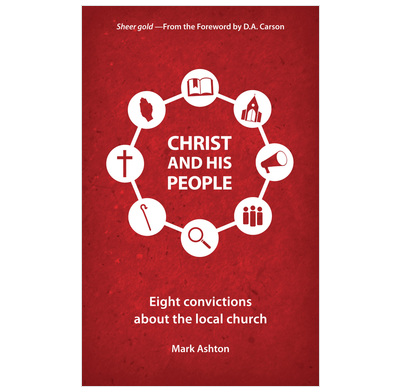
Book Review: Christ and his People


Books can be like a springboard. Something that seems so small and insignificant can propel you higher and further than you would have thought possible. And, despite its slight appearance, Mark Ashton's 'Christ and his People' provides a launchpad for deeper consideration of what church is all about. The subtitle proclaims that the book contains 'Eight convictions about the local church' and each one prompts further thought and reflection.

Mark Ashton had been vicar of Cambridge's The Round Church at St Andrew the Great, and this material was written in the final months of his life before his death from cancer. As such, he provides a rare clarity as he summarises the previous fifty years of ministry at the Round Church - thirty-two years with Mark Ruston and twenty with himself as Pastor - focusing on the priorities of that church.

The eight convictions about the local church addressed in turn are:
1. Bible: the word of God does the work of God through the Spirit of God in the people of God.
2. Local Church: the local church is the primary place where the Kingdom of Heaven impacts the kingdoms of this world.
3. Expository Preaching: consecutive expository preaching by the pastor-teacher is the best normal diet of the local church.
4. Meetings: the meetings of the local church are for both edification and evangelism (with no sharp distinction between these).
5. Ministers: the ministers of the local church are all its members.
6. Focus: the local church should focus on doing a few things really well.
7. Sacrifice: the local church exists for the sake of others.
8. Prayer: prayer lies at the heart of the local church.

Under each heading, Ashton explains and expands, using the Round Church as his worked example. It's interesting to see what ministry and mission looks like in another church, and to be challenged as to the priorities of our churches. How would they look in comparison?

Christ and his People has been released as a small book in its own right, but it also forms the first chapter of a larger volume on the Round Church, 'Persistently Preaching Christ'. As such, there's just one little dead-end in this book which escaped the editing and proof-reading phase, with reference to a discussion in 'Chapter 10' - presumably of the larger 'Persistently' book, since this one only has the eight chapters!

This would be a good book for a church leadership team to read, reflect and discuss together - perhaps over the course of a year and considering one priority at each of its elder/vestry/PCC meetings. Such a small and simple book, yet with the potential to alter a church's course through reconsidering its priorities.

Christ and his People is available from 10ofthose and The Good Book Company.

Monday, July 18, 2016

Book Review: To Fly To Serve


Books come in all different sizes - from multi-volume works down to short and snappy treatises. At the shorter and snappier end comes this little volume, with the subtitle 'Practical help for giving a Bible talk.' Coming from the pen of the Director of Ministry of the Proclamation Trust, there is much good and sound advice here for the person starting out in all sorts of ministries.

The title, you might have recognised, comes from the British Airways motto - 'To Fly. To Serve.' Adrian Reynolds takes up the motto and uses the image of flying a plane as a metaphor for giving a Bible talk / preaching a sermon. The talk is structured around the themes of destination, take-off, level flight, landing and arrivals, and the picture really helps to introduce the various aspects of giving a Bible talk - whether in church, youth group, or any other context.

Adrian gives plenty of helpful advice, peppered with humour and warmth, to launch the prospective preacher in their mission. It would be a great little book to read and think through as part of a small group for those taking their first steps in ministry, of whatever kind. And there are many good reminders for those who have been preaching for a while and have slipped into bad habits.

To Fly To Serve is available from 10ofthose with free postage - buy them for your ministry team and start a conversation about preaching!

Thursday, July 07, 2016

Finishing 2 Peter - sermons and reflections


On Sunday we finished our series in 2 Peter, looking at God's precious and very great promises. I really enjoyed getting to grips with the letter again, having previously organised a preaching series in Dundonald.

But it's not enough to think, ok, I can put a big tick beside 2 Peter now, we all know it. We must continue to reflect on the truth God has taught us through this particular portion of his word. For me, one of the things that stood out, was about how the whole letter is about God's word - his precious and very great promises. Peter links the 'other' scriptures of the Old Testament with the scriptures Paul has written in his letters, and urges us to pay attention to them, and all the more because of the false teachers who will come. Will we have the confidence to hold onto God's word when all around us try to persuade us away?

On finishing a series, it's also a good idea to reflect on it, to think of how you would do it differently. The more I've considered it, the more I reckon I would have needed an extra sermon - but not to divide chapter 2 into two portions, I think it works as one sermon. The difference would come in the very first sermon - to separate the two truths of what we have received, and what we need to do. It seemed to be a bit rushed, a bit cramped, and there is a lot more detail that I didn't get to really dig into in the opening 11 verses. The opening sermons would then be 1:1-4 (the privileges of what we've been given) and 1:5-11 (the increasing qualities of godliness). Perhaps the next time we revisit this letter I'll get it right!

Here are all the sermons that were preached in the series - click on the links to listen or download the sermons.

2 Peter 1: 1-11 Growing in godliness

2 Peter 1: 12-21 Total recall

2 Peter 2: 1-22 This messenger will self-destruct

2 Peter 3: 1-10 The promise of his coming

2 Peter 3: 11-18 What sort of people?

Sunday, June 12, 2016

Sermon: 2 Peter 2: 1-22 This Messenger will self-destruct


Does anyone know the TV/movies with this as the opening theme? [Play clip] It is Mission Impossible, the 1966 TV programme, with four films since 1996 starring Tom Cruise. When that distinctive music is playing, the spy listens in to a tape giving him directions for the impossible mission. ‘Your mission, if you choose to accept it is...’

As Peter continues in his letter, it might feel like a mission impossible for his readers. As we’ve seen so far, Peter is urging us to press on to grow in the knowledge and grace of Jesus. Having received from God our faith; everything we need for life and godliness; and his precious and very great promises, we’re urged to increase in those qualities which confirm that we’re growing in grace - virtue, knowledge, self-control, steadfastness, godliness, brotherly affection and love.

It can be hard enough to try to grow in these qualities (how have you got on over the past 3 weeks?), but today’s passage might make it seem like mission impossible. While affirming that God has given us the scriptures, written by men carried along by the Holy Spirit, pointing us to Jesus, and confirming the promise of his return, Peter now gives us a stark warning. A warning that might discourage us, making it seem much harder for us to grow. It’s the warning of false teachers.

This weekend, the nation is celebrating the Queen’s 90th birthday. At her coronation, the Queen was given a copy of the Bible, with these words ringing in her ears: ‘We present you with this book, the most valuable thing that this world affords. Here is Wisdom; This is the royal Law; These are the lively Oracles of God.’ All true, and Peter would affirm it - yet he says that alongside the true prophets, there were false prophets. And because it happened in the Old Testament, it will also happen in the New; in the church. ‘Just as there will be false teachers among you.’ Not maybe, there will.

Look at what they will do - ‘who will secretly bring destructive heresies.’ Now heresy isn’t a word that we tend to hear very often. A heresy is a belief that strays from the truth; something out of line. So if you have true prophets and false prophets, you also have true teachers and false teachers. They might sound good; you might like what they say, but it’s not true, it’s not good, and in fact, it will lead to destruction.

Now you might be thinking - this really is a mission impossible. How do I know if I’m listening to a true teacher or a false teacher? But you’d almost think that Peter knew about the Mission Impossible theme tune. If you remember it, when the spy listened to the tape, the last thing they would hear was this: ‘This message will self-destruct in five seconds.’ There would be a bang, and the tape was gone; no one else would be able to hear the secret mission.

If we can change that phrase slightly, we see what Peter is saying to us. The false teachers are ‘bringing upon themselves swift destruction.’ Or in other words, ‘This messenger will self-destruct.’ The false teacher will self-destruct.

That’s a good reason to be careful, to be wary when you’re listening to someone. Make sure you’re not listening to a false teacher, bringing destruction. So how do you know? Well, in verses 2 & 3, Peter gives us a flavour of their heresies. It’s all about sensuality - all about feelings, particularly in the realm of sexual pleasure; if it feels good, just do it, with whoever and whenever. And it’s motivated by their greed - they’ll say whatever it takes to exploit you, to take advantage of you.

Further down the passage, Peter shows us how to spot a false teacher. And that word ‘spot’ is one to bear in mind. I’m sure you’ve seen the adverts for Clearasil. Look at verse 13. They are blots and blemishes, they are out of place, like a big spot on the forehead when you’re heading out on a hot date.

In a number of short, snappy sentences, Peter shows us what they’re like. Revelling in the daytime. Eyes full of adultery, insatiable for sin. Enticing unsteady souls. Hearts trained in greed. Accursed, because they have gone astray, wandered from the right path. They’re like Balaam, who we find in Numbers 22-24 - a prophet for hire, he’ll say anything, curse anyone, for a fee - yet he was rebuked when his donkey spoke back to him.

Now maybe you’re wondering what the big deal is. Why can’t we all just get along, and listen to every sort of viewpoint? Why do we have to worry about true and false, right and wrong? Isn’t it narrow and restrictive? Could Don Carson, the theologian be right when he says that the only heresy left today is that there’s such a thing as heresy.

We see the danger in verses 17-22. ‘They promise them freedom, but they themselves are slaves of corruption.’ The promise of the false teacher is that you can be free, do what you like, no limits, no boundaries, but they’re actually leading people into greater slavery. It’s like a wasp calling his mates to an abundant supply of jam or sugar, not realising that he’s caught in the trap.

The pictures Peter uses are the dog returning to its own vomit (which we’ll not dwell on, before you eat your Sunday lunch), and the sow, washing herself, becoming clean, then rolling in the muck again. Listen to the false teacher, and having experienced freedom, you’ll actually become entangled in the defilements of the world. The last state worse than the first. No wonder Peter warns us about them. These messengers will self-destruct, and will take you with them, if you follow them.

Is it mission impossible to spot them, and to avoid them? So far we’ve only looked at the warning, but there is some encouragement in this chapter as well. And it all begins in verse 3. ‘Their condemnation from long ago is not idle, and their destruction is not asleep.’ How can we be sure? Well, remember the scriptures, written by men moved by the Spirit? Peter turns to them to illustrate his point, with four big ifs.

‘For if God did not spare angels when they sinned, but cast them into hell and committed them to chains of gloomy darkness to be kept until the judgement.’ Did God do it? Yes. ‘If he did not spare the ancient world, but preserved Noah... when he brought a flood upon the world of the ungodly.’ Did God do it? Yes. ‘If by turning the cities of Sodom and Gomorrah to ashes he condemned them to extinction, making them an example of what is going to happen to the ungodly.’ Did God do it? Yes. ‘And if he rescued righteous Lot.’ Did God do it? Yes.

Oftentimes in sport, previous form is a good indicator of future success. And going into Euro 2016, the team with the current longest unbeaten run is, Northern Ireland. I’m hoping they can continue that run tonight against Poland. But think about God’s form in those verses. Every time, he was able to condemn the guilty, and rescue the righteous. That’s the contrast between Noah ‘a herald of righteousness’ and the ungodly who perished. It’s the same contrast between righteous Lot and the sensual wicked of Sodom. All those ‘if’ statements are true, and here’s the point, verse 9: ‘then the Lord knows how to rescue the godly from trials, and to keep the unrighteous under punishment until the day of judgement.’

God has kept the righteous in the past, and he will keep doing it, no matter how many false teachers come their way. And God will bring the false teachers to the judgement - they will indeed self-destruct. Both these truths hold together, and it’s vital that we remember them.

As I was preparing to preach this, I wondered what we are meant to do about this all. Now, you might have noticed that there are no commands; no doing words; no instructions in what Peter says here. There’s a lot about what the false teachers are like; there’s the promise of rescue; but there’s nothing to do in this chapter. Isn’t that strange?

And then it dawned on me. You see, we’re so used to reading chapters as if they’re in separate boxes. In our Bibles there might be big chapter numbers and headings to mark off the new chapter. But those aren’t part of the original. Sometimes, they can be distracting, and sometimes they can hide what the author is saying.

Do you remember the contrast at the start of the chapter? Look at how it begins - ‘But false prophets also arose...’ This follows on from Peter’s instruction about the scriptures. The application for chapter two is one that we’ve already heard, already thought about - but now brought into sharper focus.

Can you remember it from last time? Pay attention to the prophetic word. The authentic message. And as you listen to the true prophetic word, the Scriptures, heed the warning about false teachers. Weigh carefully what teachers say, check if it lines up with the Bible, and don’t listen if it wanders from the path.

Pay attention to the Bible - when you’re in church; when you’re in a Bible study and someone gives a new way of looking at something; when you’re channel hopping and come across the God Channel. Be aware that there will be false teachers. And don’t follow them and their self-destructive ways. The Lord will rescue the godly. His promise is sure. So pay attention, and don’t be led astray.

This sermon was preached in Aghavea Parish Church on Sunday 12th June 2016.

Sunday, May 24, 2015

Sermon: 1 Thessalonians 2: 9-16 Walking Worthy According to the Word


Have you ever thought about how many words we hear in a day? Whether it’s the TV, or radio, on the phone or face to face, it’s reckoned that we hear about 100,000 words in a day. But we don’t give equal attention to every one of those 100,000 words. Perhaps you turn off when Stephen Nolan comes on Radio Ulster. A chat with a friend will be more important than the chatter on Coronation Street. You’ll stay on the phone when it’s a relation, but quickly hang up when someone rings about PPI.

The importance of the words depends on who is speaking. What we think of the person will affect how we listen. Imagine the scene when Paul arrived in Thessalonica. He’s just got out of jail in Philippi, having been beaten. He’s not in great shape, might not smell too good. You might not be inclined to listen to him. But when the Thessalonians did listen to him, they discovered a remarkable thing. Paul was speaking to them the word of God. As Paul spoke, they heard God’s word. They accepted it for what it really is - not human words, manmade philosophy or made up stories - but God’s word. The God of the universe had spoken, and Paul was bringing a report of it.
It’s like the TV news people who report what the Prime Minister said. David Cameron said so and so about the NHS today... But this is so much more important. God has spoken. These aren’t just the records of people striving towards God. This is God’s word. And it’s at work in you believers.

Now if that’s the case, and this is indeed God’s word, then it must lead us to action. If we really do mean that ‘Thanks be to God’ after our readings, then we must see that work out in our lives. Paul shows us two things it calls us to do, even while circumstances are difficult. Having God’s word we proclaim it and plead for it, even while some prevent it.

The first consequence of having God’s word is that we want others to hear it. If God really has spoken, then we’ll want everyone to hear the good news. And we’ll make sure that they have easy access to it. For Paul and his team, they worked night and day so that everyone could hear without being burdened. Paul earned his keep, so that the pagans of Thessalonica could hear without cost.

It’s why we get involved with mission agencies - to support those who bring the gospel so that people can hear the good news for free. But what about closer to home? Are there ways in which we could put ourselves out so that someone else can hear the gospel? If we truly believe that God has spoken, a good news message for everyone, then we want them to hear. We need to put ourselves out so that they can hear. Could you help teach the gospel to Sunday School, or be available at SNATCH? Look out for ways to give of yourself to help someone else hear. Having God’s word, we proclaim it.

But more than that, Paul says, that we plead for it as well. Last time we saw how Paul was like a mother nurse with her own children, gentle. Now he shows how he was like a father, giving wisdom, direction, providing a lead and example for his young children. Through his pure, upright, blameless conduct, he was seeking to make them take God’s word seriously. To apply it to their lives. To make it their guide and rule.

Do you see the action words in v 12? Urging, encouraging, pleading. Like a dad watching his son playing football, cheering him on. Except this isn’t football, it’s even more serious. ‘Pleading that you should lead a life worthy of God, who calls you into his own kingdom and glory.’ God’s word calls us into his kingdom and glory. As we hear it, we need to heed it, and be moulded and shaped by it. Here in verse 12, Paul summarises it as ‘a life worthy of God’, or to ‘walk in a manner worthy of God’ (ESV). In chapter 4 we’ll see what that looks like in greater detail, but for now, it means a life reflecting his glory, becoming more like him. A life of worship to him, because we have heard and responded to his word.

It doesn’t come naturally. We need to work at it, together, as we urge and encourage and plead each other to stick at it. We need to be people who cheerlead for each other in our successes, and urge and encourage when we mess things up. We’re probably already aware of the ways in which we fail - so that fatherlike encouragement is so precious as we respond to and apply God’s word, and live out the call he has made on our lives.

Having God’s word, we proclaim it and plead for it. It’s amazing that God has spoken, that we can hear it, and pass it on. But not everyone thinks that. Some people jump to the other conclusion, the one that the Thessalonians had rejected, that it’s all just made up, human words.

As the Ashers case has been discussed, and in the debate around the referendum in the Republic, people try to rubbish or discount or deny the Bible as God’s word. Oh, it’s just ancient stories that don’t count in this new modern world. We’ve moved beyond all that nonsense. It’s definitely not God’s word, because God doesn’t exist. You can’t really believe all that?

When we see the news and watch the onward march of secularism and ‘progress’, we might think that things are getting bad. Will we be completely silenced? Will we be punished for holding to God’s word? Are things getting worse and worse? Actually, things are getting back to normal - not the way things should be, but the way things really are, and always were.

Having accepted the word of God for what it was, having that word of God working in their lives, the Thessalonians were feeling the pressure rise. They were suffering for God’s word - just as Paul had (2:2 last week). But that wasn’t unusual. This was how the very first churches had suffered as well. The churches of God in Christ Jesus in Judea had suffered at the hands of the Jews.

There was death, they were being driven out, they were trying to silence people from sharing God’s word. The Jews were acting in opposition to the church, but they were actually opposing everyone, ‘by hindering us from speaking to the Gentiles so that they may be saved.’ The pressure is there to shut up. To keep quiet, and not share God’s word.

But those who might look at Christians and think that they’re an easy target could find they’re picking the wrong fight. It’s like the school bully who picks on the new kid in school, only to later discover that the new kid is the new principal’s daughter. To take on Christians who hold God’s word is to take on the God whose word they hold. They might be able to intimidate Christians, but God cannot be silenced.

That should be encouraging, as we seek to walk worthy according to the word. It’s God’s word we have, God’s word we’re sharing, God’s word we’re living out. And it’ll be God’s word that counts on the last day, when the full measure of sin is judged, and God’s wrath is paid out for the unbeliever.

In our school, you weren’t allowed to walk around the school during classtime. A teacher spotted two of us walking down the corridor and told us off. But we were carrying a message from the principal, taking it to every classroom. With that note, we had no reason to fear even the scariest teacher. We were on official business. We had a message to share. We, as the church (and only the church) have the message of the gospel - God’s gospel. God has spoken. We must proclaim it, and plead for it (living it out), even if some seek to prevent it.

This sermon was preached in Aghavea Parish Church on Sunday 24th May 2015.

Monday, December 08, 2014

Book Review: Preach: Theology Meets Practice


I've been preaching for over ten years now, and almost weekly for the last six. Previously, there was a steady stream of feedback and correction through staff meetings and supervision. Now that I'm in a parish as rector, there seems to be less sermon feedback (apart from the odd comment on the door, and some positive comments through text and Facebook), so I'm even more aware of the need to improve my preaching. While on summer holidays, lying in the sunshine far away from a pulpit, I read Preach, by Mark Dever and Greg Gilbert. Hopefully since those summer days, my preaching has developed thanks to those two guys.

A book called Preach is obviously going to cater to a fairly specific audience. The authors acknowledge it early on, and set out the purpose to be 'highly practical, highly specific, and drawn from our own practices in preparation and delivery.' They don't set out the only way to preach, but share their experience to guide the reader in his preaching.

The book arises from these two colleagues, and works as a conversation between friends. The relationship is obvious, and the book is successful in drawing the reader into the conversation as a listener. The other thing that is obvious is their conviction that 'God's Word is the most powerful force in the universe. It gives life, it heals, it corrects, it changes lives.' Building on that conviction, there are three reasons why a book like this is useful: 1. The authors see 'a loss of confidence in the preached Word of God', even in evangelical churches. 2. There seems to be 'a lack of confidence in biblical exposition'. And 3. 'We want to work against the bad name that even some expositional preachers have given to expositional preaching.' To counter this, the authors seek to show how to 'expose God's Word to a congregation in a way that's engaging, affecting, and convicting.'

The book consists of three parts. The first makes the theological case for preaching in general, and expositional preaching in particular; the second provides some practical considerations about expositional preaching; and the third provides sample sermons and feedback.

The theological case for preaching makes the basic claim that language and communication means something. It seems obvious, but many today argue that the reader has sole control over interpretation. Words must mean something - and it's rooted in the fact that God communicates. 'It is precisely God's words - His power to speak, to command, to be heard and understood - that sets Him apart from the false gods His people are always tempted to worship.' Indeed, the fact that God continued to speak after Adam and Eve's rebellion was 'the most amazing mercy and love'. 'Anytime God speaks in love to human beings it is an act of grace. We do not deserve it, and we contribute nothing to it. The act of preaching is a powerful symbol of that reality.'

Expositional preaching is seen in the first sermon of the church in Acts 2. Peter quotes from Psalm 16, Psalm 110 and Joel, and then 'he told them what this meant and how it was relevant to them.' And this, in its most basic form, is what expositional preaching is all about. Speaking God's word by explaining and applying it to the hearers. But it goes beyond that. It is the primary means of 'the proclamation of God's life-giving, ex nihilo creating Word... a matter of life and death.' Indeed, 'Preaching is not finally a matter of giving a few thoughts here and there about God or the Bible. It is the proclamation of an authoritative message from the throne room of heaven itself: Be reconciled to God through Jesus!'

They present a working definition of expositional preaching: 'preaching in which the main point of the biblical text being considered becomes the main point of the sermon being preached.' Such preaching is found in lots of different parts of the Bible - Jeremiah, Jesus, Moses, Paul, Ezekiel and so on. As such, preaching should therefore be the central aspect of the church's service, with hymns and readings leading up to it and flowing from it. Within the sermon, there will be two main aims - to edify and evangelise.

Part Two moves to the practical considerations. How do we actually do it?

They argue for systematic continuous exposition of the scripture, because 'God inspired each of the books of the Bible with a certain internal logic and order.' The Bible shouldn't be a lucky dip, but rather should follow the contours of the text within its context, from all genres and both testaments. Further, such systematic preaching means you have to tackle the issues and uncomfortable portions you'd rather avoid!

Dever then shares the diet of his first four years in Capitol Hill Baptist Church. Such an incredible spread, which I know I haven't achieved:

Mark in 13 sermons; Ezra in 4 sermons; 1 Thessalonians in 7 sermons; Ezekiel in 4 sermons; Overviews of the General Epistles (1 sermon per book) in 9 sermons; Proverbs in 5 sermons; Mark 1:1-3:6 in 9 sermons; Deuteronomy in 5 sermons; 1 and 2 Timothy in 6 sermons; 1 and 2 Chronicles in 4 sermons; 1 John in 5 sermons; Joel in 4 sermons; Mark 3:7-6:6 in 6 sermons; Song of Solomon in 2 sermons; overviews of the Old and New Testaments (1 sermon each) in 2 sermons; 1 Timothy in 3 sermons; James in 5 sermons; Joshua in 5 sermons; John in 11 sermons; overviews of the major prophets (1 sermon per book) in 4 sermons; Titus in 6 sermons; overviews of the wisdom books (1 sermon per book) in 5 sermons; 1 Peter in 13 sermons.

There follows some advice on deciding on what series to preach on next; how to divide up the books in passages; and specific sermon preparation, with the awareness that it's deeply personal. There was lots of useful, practical advice here on starting early, seeking to grasp the text and its relation to the gospel, and figuring out what you want to say in advance, in the study, rather than waiting for inspiration in the moment. One observation, though, was that prayer seemed to be omitted in the process outlined (unless it was assumed and unstated).

Something that was particularly interesting for me was the question of the delivery of the sermon. Full manuscript or just notes? Dever uses a full script (as I do), but he makes it plain 'that doesn't mean, of course, that I stand in the pulpit and simply read my manuscript... No, I labor to preach the sermon with passion and conviction, to move the hearts and wills of my listeners so that they are spurred on to respond well to God's word.'

Part Three closes the book with sample sermons and the feedback offered. It was interesting to see how the principles and practices are worked out by the authors. However, written sermons read in a book aren't quite the same thing as hearing or seeing it live. So I'm not sure quite how well this section worked.

All in all, this is a great book, with lots to learn for the preacher at whatever age or stage. It's definitely one that I'll return to again, especially for the opening section on God's word. If you're involved in preaching, then this is one to read and benefit from. It's available for Kindle from Amazon.


Tuesday, December 31, 2013

Book Review: Saving Eutychus


This is a very unique and memorable book. If you can't quite place the name in the title, perhaps the full title and subtitle will help: 'Saving Eutychus - How to preach God's word and keep people awake.' Eutychus is, of course, the young man who fell asleep while Paul was preaching through the night and fell out of the window down to the ground and died - but whom Paul raised to life. If you haven't got the raising to life ability of Paul, then the authors Gary Millar and Phil Campbell want to help you preach and keep people awake!

The book alternates between the two authors, one a Northern Irish man (Millar), the other an Aussie (Campbell), each with a passion for God's glory in and through preaching. This is the focus and drive of the whole book - because, as they remind the reader early on, it's not about you. 'Saving Eutychus doesn't just mean keeping him awake. It also means doing our best to keep him fresh and alert so he can hear the truth of the gospel and be saved.'

The first requirement, therefore, is prayer - dependence on God to be working by his grace. In this first chapter there is a helpful, gentle rebuke of those who only depend on disconnected sermon podcasts being piped through the air rather than the up close and personal involvement of the local church where the pastor knows and is known, and prayer comes more naturally. There is a double challenge - to the preacher himself to be praying for his preaching, but also for the congregation to be praying together for the preaching (rather than, as can sometimes happen, other needs are crowded in and the preaching forgotten).

Chapter 2 focuses in on preaching that changes the heart, when the sermon seems to be exactly what is needed, whether or not the preacher realises. It's not manipulative, not wily, but a heaven-guided missile to the heart. The appeal is for expository preaching as the best way to communicate the Bible: 'expository preaching happens when the vibe of the passage = the vibe of the sermon.' There follows some examples of how this can happen and what it might look like.

Campbell writes chapter 3 in preacher's confessional mode, in the chapter entitled Deadly, Dull and Boring. He reflects on his early preaching, in the form of essay writing and delivering, and wondering why it didn't connect with people. He charts the changes he made, through natural scripting; more repetition of the main idea; and the use of 'improper' English which is how we naturally speak. Campbell gives his top ten tips for being clearer - some of which the preacher will already do, but some of which he can take on board.

What's the big idea is the theme of chapter 4, urging the preacher to spend lots of time working out what the main idea of the passage is, and then communicating that through the course of the sermon. We get a glimpse into the way Campbell preps his sermons - writing out the passage, using various colours and columns to work out where the big idea is contained. We also see how he begins to work through application - in the light of the gospel, what the passage is really saying, and unflinchingly.

Chapter 5 explores the reasons why preaching the gospel is so hard (especially from the Old Testament). Millar guides us through some hermeneutics to help us see that the Old Testament was written for us, and how to work on it. He gives some very helpful advice on finding a route to the gospel, through one of any number of key themes being worked out through the Bible, including creation, fall, covenant and promise, temple, sonship, exodus, messiah, resurrection and so on. Very helpful for those struggling to understand how the Old Testament is still relevant, and for the preacher to refresh on how to explain and apply it.

The sixth chapter is entitled Stand and Deliver, on the delivery of sermons. It's full of practical wisdom, including the helpful 'delivery sphere' of volume, pace and pitch. It may be that my preaching can sometimes be too settled, needing more variety - so this is something I'll return to and try to work on. As Campbell comments: 'It's all about owning your words - using the words you've prepared to communicate the big idea of your passage in a way that moves people towards faith and obedience.

Chapter 7 looks at sermon critique through peer review and pew review. Some good tips here.

The end of the book consists of a sample sermon by each author, critiqued by the other author. It was a useful way of seeing how the sermon feedback sheet could be used, even if they were perhaps very nice about each others' sermons!

The whole book is a joy to read, with lots of good advice and exhortation from those who have been long in the work of preaching and are employed in the training of other preachers. Their humour shines through; these are no ivory tower professors, but are real life preachers seeking to glorify God by encouraging change in their hearers. If you're a preacher, or wanting to be a preacher, this is a great book to read. You will certainly benefit from it.

Saving Eutychus is available from Amazonand for Kindle.

Monday, December 30, 2013

Book Review: Speaking God's Words


The first time I encountered Peter Adam, I was preaching in a small group at a Proclamation Trust Ministry Students Course. The sermon was terrible, and the feedback, while gracious, was also fairly direct. I hadn't preached the idea of the passage at all, importing material from elsewhere, and my illustrations weren't saying what I had thought they were saying. I was thoroughly chastened. But at least I would never see Peter Adam again.

Fast forward a few years, and I'm a busy curate in East Belfast. I'm dispatched to the airport to collect one of the speakers for the Northern Ireland Ministry Assembly the next day, who, as I'm sure you've guessed, was none other than Peter Adam. He didn't remember me, but I surely remembered him! We chatted about the conference and he began to realise that we had in fact met before, but faithful were the wounds of a friend, as they helped me to get back on track in preaching the passage.

Speaking God's Words: A Practical Theology of Preaching has been sitting on my bookshelf for quite a while - perhaps even from those heady days in London. I finally managed to get around to reading it this year, wanting to keep myself fresh on the theory of preaching, and to sharpen my skills for the sake of my congregation. This was well worth taking the time to read, with lots of helpful encouragement to continue the task at hand.

'Preaching is such a demanding activity... And all the pressure on a pastor or minister is to spend time and creative energy being a counsellor, social worker, administrator, friendly visitor or public-relations worker. The pastor needs a robust theology of preaching to find any time or energy for preparation.'

Even from this sample sentence, you know that Adam is on your side. He's been in the trenches, he knows the struggles. So to learn from one with such experience is a joy and delight, and gives spring for each step. The book is divided into two main sections - firstly, three biblical foundations of preaching, and then a second section observing the preacher at work.

The Biblical Foundations of preaching are, Adam argues that: 1. God has spoken - 'Any human ministry of the word depends on a God who is not silent.' 2. It is written - as the revelation has been written down and passed on to us, 'preserved by God as his revelation for his people.' 3. Preach the word - with a God-given source (the Bible), there is also a God-given commission to preach, teach and explain it to people. A variety of examples of this ministry is discussed, from Moses through the Old and New Testaments, to the ongoing work of the church, and especially some notable preachers.

With the foundation in place, Adam then turns his attention to the preacher at work, looking at some distinct but connected aspects of the work.

In Preaching as a ministry of the word, he criticizes Phillips Brooks' famous definition of preaching {preaching is truth through personality} as being too general. But the principle behind Brooks' definition still stands as he explores what the ministry of the word means, and how this is bigger than, but not exclusive of preaching. The word is also ministered in lots of different contexts through the week, so that he clarifies: 'our ministry may be pulpit centred, but it should not be pulpit restricted.' The chapter concludes with a useful survey of Bible words and images of word ministry which would be worth revisiting regularly to check that the full spectrum is included in what the pastor attempts.

In The Preacher's Bible, there's a useful reminder that teaching the Bible is the means of explaining the gospel, but not the end in itself. We're not just producing Bible swots, but wanting to see people growing in grace through the administration of the word. That was my takeaway point of the chapter, because the rest of it was discussing various issues I didn't really grasp - whether through the way they were discussed, or the fact that they are gripping disputes in a certain corner of the theological world.

In The Preacher's Purpose, Adam builds on my observation from the previous chapter, pushing the point home that it's not enough to ask 'did I preach well?' but rather, did the sermon help lead to transformation. To use the question of Charles Simeon: 'Does it humble the sinner, exalt the Saviour and promote holiness?' This prompts Adam to discuss the threefold purpose of a sermon: to serve God and Christ, serve the word, and serve God's people. In all, there are some good pointers for the preacher setting out or recapping and re-learning the basics. However, the illustrative discussion of John Calvin's ministry was, to my mind, a little too long and not overly helpful.

The final chapter, The Demands of Preaching set the preacher straight as to their work in terms of loving and obeying God and Christ, being committed to the truth, loving people, working hard, relating to the real world, enduring suffering, and finding our sufficiency for these things in God. Sobering stuff, but also providing sustenance for the work ahead.

Speaking God's Words is primarily written for the pastor, especially those who want to refocus on why preaching is such a major part of the pastoral work. There will be much to encourage you as you continue to labour for the Lord. Speaking God's Words is available from Amazon.

Tuesday, May 28, 2013

Book Review: Lectures on Preaching


Having attended various preaching and ministry conferences over the years, and listened to even more tapes, cds and now mp3s, the oft-repeated phrase from the lips of speakers continues to sound: 'Preaching is the bringing of truth through personality.' The phrase comes from Phillips Brooks, the Episcopal Bishop of Boston, who you might know as the author of the Christmas carol 'O Little Town of Bethlehem.' His definition was shared in a series of lectures delivered to the Divinity School of Yale College in 1877, written up and published under the title 'Lectures on Preaching'. The book has long stayed on my shelf (probably since the days of the free book giveaways in the RCB Library for students at CITC), but has now been read and enjoyed.

The first chapter focuses on the Two Elements in Preaching - as seen in his definition:

'Preaching is the communication of truth by man to man. It has in it two essential elements, truth and personality.' (5)

The rest of the chapter begins the process of examining these two elements. 'Truth must come through his character, his affections, his whole intellectual and moral being.' (8) Therefore, preparation for ministry 'must be nothing less than the making of a man.' (9) He shows that the truth may be summed up in two words - message (not speculation) and witness (which is personal). On personality, he discusses the need to be yourself, but a true self, honestly and not self-deceived by over-familiarity with holy things - like the station worker calling out the destinations of the trains and imagining that he has been to those places himself while never leaving the platform.

Chapter two shines the spotlight on the Preacher Himself. These take the form of a suggested list of necessary qualities of the preacher: (i) personal piety; (ii) mental and spiritual unselfishness; (iii) hopefulness; (iv) physical condition of self=consecration in self-giving work; (v) a 'born' preacher - with enthusiasm or eloquence or magnetism or gift (call it what you will, as he struggles for the right word). From these qualities, he launches into the preparations needed for ministry, such things as special studies, growing in doctrine, and making connections to the truth from all areas of life. He rounds off the chapter with a realistic and salutary warning of the dangers to a man's character from being a preacher: self-conceit, self-indulgence, and breadth.

From there he moves to consider the Preacher in his Work. 'The work of the preacher and the pastor really belong together.' (78) Yet he admits that 'the two parts of the preacher's work are always in rivalry' - the pastoring and the preaching vying for attention and predominance. What is interesting is that even then, he was critical of the unheroic and non-radical nature of modern Christianity. Does it ever change? On the method of the preacher, he laments the absence of method, the canny-go-easiness of so much that passes for preaching, with the danger of 'the passion for expedients' (93) - those things that will completely transform everything and everyone. 'There is nothing so insignificant that some petty minister will not make it the Christian panacea' (96) - including such things as children's church and serving tea! The real need is for hard work, the importance of faithfulness in giving one's best to the work.

Chapter Four presents the Idea of the Sermon. 'Whatever is in the sermon must be in the preacher first.' (109) The purpose of the sermon is 'the persuading and moving of men's souls.' (110) He appeals for the preaching to not just be doctrinal discourse - it must be applied. Otherwise, he says, it would be like a doctor providing medical lectures to sick people rather than giving the necessary medicines. Towards the end of this chapter there's an excellent discussion on the danger of simply addressing visible moral problems. Rather, these are to be used and seen as symptoms of the underlying spiritual conditions.

The fifth chapter brings the preacher one step closer to the pulpit as he discusses The Making of the Sermon. He recognises that each sermon is different, due to the unique combination of the preacher, the element of truth being communicated, and the congregation. Sermon making shouldn't just be about following rules, but should be a 'fresh and vital process.' He also highlights the danger of getting caught up in trying to prepare 'great' sermons, and in so doing shying away from what needs to be said. Disappointingly, he seems to almost advocate a random scatter-gun approach to picking a text for each week, rather than a SCEOTs type approach (Systematic Continuous Exposition of the Text - that is, working through a book of the Bible). This Bishop didn't seem to be fussed about lectionaries! He also cautions against too much special reading for this week's sermon, with the apparent danger of having unformed thoughts which are shared but later regretted. It is better, rather, to build up settled convictions and to work from the body of truth known and sure.

While he may not advocate SCEOTs, he does, however warn against the abuse of texts. Single verse texts may be isolated and twisted, and so it's much better to get into the flow of Scripture. 'Only let your texts be real.' - that is, what they actually mean in context!

Chapter Six brings consideration of The Congregation. With clarity and compassion, Brooks points out the danger of thinking of the people gathered as 'my congregation', through a mixture of a love of power and an anxious sense of responsibility. There then follows some interesting discussion of the nature of crowd dynamics, in which he reckons that people are more receptive gathered in a group. Thus, the need to speak to 'man' in general, rather than the specific individual. I wasn't entirely sure of this bit. He does, though, move on to consider the various types of hearer, with the need to apply the message to those specific needs. Perhaps the most helpful piece of advice in the chapter comes in relation to judging the 'success' of the preaching - by its evidently changed condition (over a period of time).

The next chapter considers The Ministry for Our Age. Men are always men, but also found within a specific time and culture, and so he discusses the culture to be reached and preached into. 'Truth and timeliness together make the full preacher.' (220) He also asks whether the preacher's handling of the Bible helps people to read it for themselves, or will they become convinced that the Bible is only a book for 'experts'?

The final chapter is on The Value of the Human Soul. 'There is a power which lies at the centre of all success in preaching... the value of the human soul, felt by the preacher and inspiring all his work. It is this value which must motivate us to commit to preaching and reaching people with the good news as they move towards that day when judgement comes.

As you'll have noticed, there are lots of things to think about; plenty of helpful advice for the preacher, all of which can be boiled down to the maxim 'truth through personality.' Those considering ministry will find it a useful guide; those who are in ministry will find lots of encouragement to keep going and keep striving. In some places, the language and discussion shows that it is almost 150 years old, and yet there is still much of value to be found in these pages.

Monday, December 10, 2012

Preaching Genesis 1-11


I've just preached through the first eleven chapters of Genesis this autumn. It was even more challenging that I had imagined when I set out on my quest. I hope that it's been useful and profitable for the congregation; I know I have certainly been stretched in tackling the creation, the fall, the flood, the genealogies, and Babel. It's challenging because:

1. We're in the Old Testament, which for many Christians (and sadly many preachers) is alien territory. The texts may not be as familiar; passages may be longer; and it might appear to be harder to make the connection to the twenty-first century hearer.

2. The passages may be contentious, with people leaping to particular positions on e.g. the nature of the days in creation; whether God oversaw an evolutionary creative process; the nature of the temptation in the fall; whether the flood was universal or local - and this is just a quick sampling of the issues off the top of my head, which leads to:

3. There's always more that could be said, so the preacher must ruthlessly whittle the material down to make the big point the passage is making, rather than following secondary or trivial matters and focusing attention on them.

Throughout the series, we've watched as God has remained faithful to his promises and purposes, even when our forefathers have messed up, time and again. It's been good to see how God had already begun to make promises relating to the arrival of his Son into the world right back in Eden, demonstrating practically that Jesus was ready from before the foundation of the world to come and die for us.

This week, I hope to review some of the books I read in preparation for the series - perhaps appropriately there may be six of them, with a rest on the Lord's Day!

Monday, September 24, 2012

Desperate Preachers . Com?

Two years ago, I noticed that one of the sermons on my blog was getting an awful lot of traffic in one particular week. It turned out that the sermon was on the very passage recommended by the Revised Common Lectionary, and in the one week that particular page was viewed 805 times.


The peak was on the Saturday, leading me to conclude that there were some desperate preachers looking for sermon ideas (or perish the thought, a ready-made whole sermon) for their Sunday morning gathering. Surely there aren't 805 ministers and pastors who would give pre-chewed food to their congregations?

There is more to the preaching event than just transferring information, or some useful thoughts on a Bible passage. In preaching, the community of God's people is gathered in a particular place, together, to hear from God into their situation from his unchanging word. That means that, although the principles from the passage may be the same, the way they are applied and explained and introduced needs to be carefully thought for the particular context and situation.

What was written for my former suburban parish doesn't necessarily match or work in my new rural parish. And they are only 70 miles apart, let alone congregations in entirely different countries and continents!

It seemed to be a one off. Thankfully. That was, until this week. The numbers visiting my blog in a normal day have increased, but again, the numbers have been off the scale in recent days. The reason? Mark 9:30-37 was the RCL gospel, leading to over 2000 pageviews of my sermon from 2010.


To put this in context: The previous highest number of pageviews on a single day was 400 on the 13th February 2011 (when it was another flurry of preachers looking a sermon on the Transfiguration from Mark 9). This week has totally smashed that - 1072 page views on Saturday alone (more than the whole month of September 2008!).

There definitely appears to be a market for desperate preachers wanting sermons. Let's hope it's not just laziness on their part, avoiding any work and taking a ready-made article from the internet for their congregations on Sundays.

Me, I'll continue to post my sermons on the blog, following the advice of John Piper:

'And if you're going to do it for one person [researching and writing on a pastoral theme] you might as well put it on the Web and just multiply your usefulness.' (p. 141 'The Power of Words and the Wonder of God')

Monday, August 13, 2012

Preaching Away: Coolbuck

Most Sundays, I have the joy and delight of preaching in my own parish church at Aghavea. You'll have to ask my parishioners if they have the joy and delight of listening to me! Occasionally, though, there are opportunities to discover and preach in other churches, and yesterday afternoon was a special one.


This is the little church at Coolbuck, in the parish of Lisbellaw. There's a service here each Sunday afternoon at 3pm (fortnightly in the summer months). It's also not very big, as you might have noticed.

Coolbuck Interior

The parish website provides some more details:

"Coolbuck Mountain Church is a chapel of ease lying within the Parish of Lisbellaw. Early records of the church were lost with other parish records in the fire in Dublin in 1922

According to the Griffith Valuation in 1862 a new schoolhouse was to be added to their records. It is believed that the Ford family built it as a school and handed it over to the landlord JGV Porter to be used as a church.

The stonemason was John Johnston who lived nearby in Coolbuck; the agreed price for the building including the boundary wall was eight pounds.

John Johnston was married in the Parish of Derryvullen South to a local girl, Margaret Rinchey of nearby Mountdrum and they had a large family. Many of their children moved to Australia and three of them became ministers in the church. Their grandson was the Stationmaster in Lisbellaw and on the day of the Coronation of Queen Elizabeth II the family left Lisbellaw by train to start a new life in Australia.

After the First World War services were held monthly and Harvest Services held annually by the light of the tilley lamps. Rev JJ St Ledger opened the church on a weekly basis when he came to the parish in 1958 and this practice still continues. As such, we believe Coolbuck to be Ireland's smallest church building regularly used for public worship.

The electricity was brought to Coolbuck in 1995 with money raised at a Miniature Olde World Flower Festival.

One of the highlights for many in the parish and beyond is the First Communion of Christmas at Coolbuck on Christmas Eve.

The first funeral service was held here in 1979.
Our first baptism was a double baptism in 1971.
Our first Wedding was in December 2005."

Preacher's View

This is the preacher's point of view, with twenty-four souls gathered yesterday, the small, intimate church provides great acoustics for singing, and no amplification required for preaching.

The Lord's Table

With thanks to the Rector, Bryan Kerr for inviting me to lead and preach at Coolbuck yesterday afternoon.

Sunday, August 12, 2012

Sermon: Matthew 13: 10-17 The Purpose of the Parables

Have you ever seen one of those magic eye pictures? You know the type - it’s a pattern, and as you keep looking at it, suddenly another picture appears. Or so I’ve been told. I can never see them. You could tell me that the secret picture is of an elephant riding a unicycle over a tightrope and I wouldn’t know. People who can see them might even get frustrated with me - it’s right there, how can you not see it?

Seeing, but not really perceiving. Last week we began to look at Matthew 13, as Jesus teaches a series of parables by the lakeside, and we listened in as he speaks of the parable of the sower - the seed is sown, the four different responses. The parable is for the crowd, and it’s only later that Jesus explains it, to his disciples. In between the parable and the explanation, we find today’s reading. The disciples ask Jesus - ‘why do you speak to them in parables?’

The disciples might be seeing the puzzled response of the crowd; they perhaps see that the crowd aren’t quite understanding what Jesus is saying. The disciples might even be having a hard time understanding him themselves! They’re asking why doesn’t Jesus come straight out and say what he really means. Why does he use stories and parables?

The key to Jesus’ answer comes in verse 11. Look there with me: ‘To you (that is, to the disciples) it has been given to know the secrets of the kingdom of heaven, but to them it has not been given.’ The words of Jesus are bringing a division between people - those who will come to know the secrets of the kingdom and those who won’t; between those who will see and hear and not get it, and those who will.

Let’s think about these two groups. Over in verse 13 Jesus gives the reason for speaking in parables: ‘The reason I speak to them in parables is that “seeing they do not perceive, and hearing they do not listen, nor do they understand.”’ On the surface, they’re seeing Jesus, they’re hearing him speak, they’re listening to the parable of the sower, but it’s all just on the surface.

They’re not really hearing the true story, what it’s all about; they’re not getting to the deeper meaning. In the same way, they’re seeing Jesus, but they’re not really perceiving him - they don’t realise that he is the Son of God, the King of this kingdom he is proclaiming. They’re a bit like me and my magic eye picture - I’ll look, but I’ll not see it.

You might have noticed that this phrase “seeing they do not perceive, and hearing they do not listen, nor do they understand.” is in quotation marks in our Bibles - Jesus is picking up and using a phrase that comes several times in the Old Testament. You see, this isn’t the first time the people of Israel, the people of God, have been slow on the uptake. They have form in this sort of experience.

Back in Deuteronomy 29, Moses is addressing the people before he dies and they cross over into the promised land. They have experienced the miracles of Exodus; God’s provision for them in the wilderness, yet still they don’t really trust in the Lord, they’re still rebellious. They don’t want to listen.

In fact, as Jesus says here, his generation is the fulfilling of the prophecy of Isaiah 6. I’m sure you know the passage well - as the prophet Isaiah is called for service, the vision of the LORD in the temple, his conviction of his sin in the face of God’s glory, his sin being taken away, and then the question from the throne: ‘Whom shall I send, and who will go for us?’ And with that, Isaiah says ‘Here I am, send me!’

Now that’s where we like to stop the reading. Application - God called Isaiah, and God is calling you, will you go for him? But carry on into the next verse, and you discover just what Isaiah was being called to do. It wasn’t the victorious, triumphant, wonderful message you might think. ‘Go and say to this people: Keep listening, but do not comprehend; keep looking, but do not understand...’

It’s the very passage that Jesus quotes here - Isaiah’s ministry is to expose the people’s blindness and deafness. Isaiah comes from God, and the people don’t listen to him - because they refuse to listen.

I don’t know if you’ve seen any of the Olympics (maybe you’re fed up with them, but don’t worry, they’re all over tonight!). The other day they were interviewing the swimmer Michael Phelps, the greatest Olympian ever. He said about how the President of the United States, Barack Obama had phoned him during the Olympics to wish him well. This was a great thing, a privilege, for the leader of his country to ring him up.

But imagine that Michael hasn’t answered the phone. Or had answered and then starting humming to himself. Or didn’t bother listening. This is a bit like how the people of Israel were in Isaiah’s day, and also in Jesus’ day. They had the privilege of the Creator of the universe speaking to them, and how did they react? They put their fingers in their ears, they closed their eyes, they refused to turn back to God and be healed.

Could this be said of us as well? You could be an upstanding member of the community, someone who has been born and bred, baptised and confirmed in the Church of Ireland, never miss a Sunday, and yet it’s as if you’re sitting with fingers in your ears as God speaks through his word. Is this you? Oh how we need to cry for mercy, asking that God would open our ears that we would hear, and give us hearts to turn to him for healing and salvation.

How could we be members of the kingdom if we refuse to listen to the king? If we disobey what he says?

In contrast to the crowds, the disciples have been given the secrets of the kingdom. To know the Lord Jesus personally, to understand his work of salvation on the cross, to hear him teaching - Jesus says that their eyes and ears are blessed, because of their place in history.

The Old Testament believers had only the promise of the King, which they believed, but they longed to see the Messiah themselves, and to hear his word. They looked forward to the day Jesus would walk on the earth - what a privilege for the disciples to be with Jesus. They got to hear him and see him.

It’s a privilege we share with them, coming after them in time, having the words of Jesus written down for us, so that we too can see his work and hear his words. How blessed we are, to have the Scriptures in our language.

What a privilege we have - but with that a great responsibility to make sure that we are listening to him. We share in the blessing of the disciples, and one day we too will see him face to face, in his eternal kingdom, where we’ll be with him and see him and hear him directly.

So as Jesus speaks to us through the Bible, are you listening to him? Will you receive his word?

This sermon was preached in Aghavea Parish Church on Sunday 12th August 2012.

Friday, August 10, 2012

It's Friday... But Sunday's Coming!

Tony Campolo's little book of the same name comes from a preacher he once heard. The preacher was talking about the cross, the shame, the seeming defeat of Jesus. The fact that all the disciples had fled. Hope seemed to have been lost. It's Friday... but Sunday's coming!

That defeat and sadness and disappointment of Good Friday is overturned when Sunday comes and Jesus emerges from the tomb, in new resurrection life. It's Friday... but Sunday's coming!

The application is that while the Christian life may be hard, there are many struggles, disappointments, sufferings etc as we follow in the path of Jesus, we're still in the pain of Friday. It's Friday... but Sunday's coming!

The preacher was very effective, Campolo reflects, in a church and with a congregation that joined in the little chorus. It's Friday... but Sunday's coming!

It's a memorable little phrase, one that has stuck in my memory in the ten or more years since I read the book. But these days it has a different resonance with me in the realm of ministry.

For the pastor, Sunday is the 'big' day in the week, when the congregation meets together for encouragement and praise, prayer and to hear God's word. The centrepiece of the service is the opening and proclaiming of the Bible, and that needs a sermon.

It's Friday... but Sunday's coming!

The preacher's week begins on Monday morning (or as early in the week as possible), starting to work on the passage for next Sunday's preach. Praying, reading, paying careful attention to the text, what it actually says, letting it flood into the mind.

As well as the conscious reading and studying, the text will continue to marinate unconsciously while driving, while eating, while sleeping. Thoughts continue to interrogate the text - what does it mean? What does it tell us about God? What does it tell us about people? What is the connection to the Lord Jesus?

Later in the week, with some problems and questions emerging, it's time to consult some older brothers, asking them to help in your sermon prep - guys like John Calvin, Martin Luther, Charles Spurgeon, and some other commentary writers and preachers from the library. They will hopefully help clarify some issues, perhaps even give some hints towards structure or application.

By now, it is Friday morning, and Campolo's phrase echoes through the mind:

It's Friday... but Sunday's coming!
It's now time to write the sermon, it's Friday, and Sunday is not too far away. So on Friday mornings, you'll find me in the study, trying to write the first draft of the sermon, getting ready for the weekend, wanting to share what God has been saying in and through the Bible passage for the week.

Several months ago, I had a sermon written on the Friday morning. An adaption of a previously preached one, which seemed to be 'good enough'. But it wasn't. Early on Sunday morning, in that twilight period where I'm not sure if I'm sleeping or awake, suddenly it came to me - I needed to write a completely new sermon, and not depend on somewhere else's leftovers. So in an hour or so, the new sermon was written - although the hard work of studying and thinking and reflecting had already been done through the week.

It worked that Sunday; the sermon was well received; but I don't want to leave it until Sunday in a normal week!

And here we are again. It's Friday... but Sunday's coming. Time to write that sermon...

Thursday, December 08, 2011

Book Review: The Preacher's Portrait


It's always good to engage in some reflective practice, to take time out and think - how am I getting on? It's also good to continue to be learning and growing in understanding of the task at hand. One of the books I read recently was an excellent resource at both teaching and encouraging reflection, and particularly fitting in the aftermath of the passing of 'Uncle John.'

In The Preacher's Portrait, John Stott takes five word pictures or illustrations of the gospel minister's task and expounds them from the associated Scriptures. In this volume, he considers the preacher as a steward, a herald, a witness, a father, and a servant. Now perhaps as you hear those words your mind starts buzzing with the concepts and insights - Stott goes farther.

With good, clear, Bible teaching, he takes the reader through the passages in which the description is found, showing each in its original context. As you can expect with Stott, he is thorough in his teaching, and helpful in his illustrations. Each chapter comes to a close with some application to the preacher's situation, and how it will impact on our ministry, in whatever context or situation we find ourselves in.

There was just one section where I didn't follow his argument and wasn't convinced, but that's ok - we don't have to and won't always agree with Stott or any other Bible teacher, as we're both sinful and can get things wrong (either the writer or the reader!). He seemed to apply the picture of the preacher as a witness (i.e. the preacher's experience and humility) too directly, without first considering the original apostles as the witnesses, to whom we point, using what they have witnessed and testified to as the basis of our appeal, rather than our own personal witness and experience of God's grace (important though that undoubtedly is for a preacher).

Nevertheless, this is a useful book for those in ministry, and would be a good read for a study day / retreat / time out to rethink the call to ministry and the biblical images of the preacher.

Tuesday, May 17, 2011

Sermon Prep

Preacher, what is your usual routine when preparing a sermon? While it doesn't always work out - life and ministry can get in the way - what do you normally aim to do? Do you begin on a Monday morning, or panic on a Saturday evening?

008/365:2010 The Blank (Sermon) Page

The reason I ask is that in John Grisham's new novel The Confession, one of the main characters is the Reverend Keith Schroeder, a Lutheran Pastor in smalltown Kansas. His sermon prep (as imagined by Grisham) goes as follows:

In a normal week, Reverend Schroeder would spend most of Tuesday afternoon locked in his office with the phones on hold as he searched for his next sermon's topic. He looked at current events, thought about the needs of his flock, prayed a lot, and, if nothing happened, would go to the files and look at old sermons. When the idea finally hit, he would write a quick outline and then begin the full text. At that point, the pressure was off, and he could practice and rehearse until Sunday. Few things felt worse, though, than waking up on Wednesday morning with no idea what he would say on Sunday. (p. 112)

Given the way Mr Schroeder is portrayed in the rest of the book, it's no surprise that his sermon prep doesn't seem to take very long, and doesn't seem to mention the Bible! You wonder, though, if this is how the members of our congregations and those outside think we put together our Sunday sermons. Just sit down for a wee while and something will come together.

At least Schroeder prays, but that's maybe all that can be said for him! In practice, the work of preparing a sermon is a week-long activity, starting on Monday for the next Sunday, spending time prayerfully and carefully reading the text, studying the words, considering what is being said (and what isn't said) in the way it is said. It simply can't be done in a hurry, rather it takes time to marinate, to soak in the text, thinking about what God is saying to this particular congregation; thinking about illustrations and applications, before finally getting round to writing the sermon (and hoping you're getting it right first time!).

136/365:2010 Preached!

I've found that it's good to work through sermon series, taking a Bible book in sequence, so that you don't have to take up part of the week trying to decide what to preach on. Simply finding the passage can take up time that needs to be used on the actual passage.

Preacher, how do you organise your time and prepare your sermons?

Thursday, December 30, 2010

Sermon Audio: John 1:16

This was my last sermon of the year, preaching at the Family Service on Christmas Morning, from John's Gospel on Grace Upon Grace. Here's how it sounded.

Wednesday, December 29, 2010

Church Mishaps

I'm not sure why, but it appears that church can often be a very funny place. Sometimes it can be something unintentional but hilarious. Something like leaving your radio mic on while you visit the bathroom. On other occasions, it might be truly horrifying, if a glass jug of wine is knocked over and smashes on the floor. For whatever reason, church can be a tense place.

Perhaps I'm slightly twisted (ok, I know I am...), but I tried to exploit that to make the point of my sermon on Christmas morning sound out very clearly. I had two 'presents' wrapped up, to show the two things that Jesus gives us in John chapter 1. The two big sides of a Cornflakes box had one word each on them, all nicely wrapped up.

The first volunteer opened the present, and revealed the word 'grace'. All was going well, so I explained about grace.

Then I called up my second volunteer, who unwrapped the second present, having hyped up the fact that the first present was grace and what would the second one be?

Yes, it was grace again.

I looked down at the congregation as we spotted that word grace again - and there were some horrified, embarrassed, shocked looks on their faces. Oh no, they were thinking, he's made a mistake. What's he going to do with that? He's written the same word twice!

This will go into that unwritten book of funny church memories, when the Curate made a muck up of his Christmas morning sermon!

I might even have milked the tension for a moment or two, before revealing that it was intentional, to illustrate John 1:16 'And from his fullness we have all received grace upon grace.'

It's one way to ensure that the congregation doesn't sleep, especially if they've been up very early to see if Santa has been!

What are your favourite church mishaps?

Friday, November 19, 2010

NIMA Audio Available

I've just seen on Peter Whyte's website that the 2010 NIMA audio from Bryan Chapell and Vaughan Roberts is available now. Well worth downloading and listening.

Wednesday, November 17, 2010

Grace for Godliness


It's always strange when Wednesday is your Monday - the week is shorter, but there's still the same work to be done. My week began today because the past two days were spent at the Northern Ireland Ministry Assembly (NIMA), in Lisburn.

An excellent couple of days of Bible teaching and practical training for preachers and teachers, with Bryan Chapell and Vaughan Roberts. Vaughan Roberts taught four sessions from Paul's letter to Titus, looking at The Preacher in God's Plan; The Preacher and the Gospel; The Preacher and Godliness; The Preacher and False Teaching, with the letter being thoroughly expounded and applied to the situation of preachers and teachers in the church in the twenty-first century.

Bryan Chapell was taking the more practical sessions, helping us to think carefully about application when preaching. It's probably the area of preaching that I struggle most with, so the sessions were really helpful in urging us to give more thought to the what, where, why and how of application. So as we apply the truth of Scripture, the message of the passage, the 'what' comes directly from our exegesis, but to ground it and make it connect more clearly with our congregation, we need to apply it in the where as well - in the particular situation a truth may be particularly precious; as well as helping people to connect our application with the grace of God.

This was the thing that came out very clearly from both Bryan and Vaughan's sessions - the grace is the fuel for godliness. There's no doubt that we want our congregations to be growing in godliness and abounding in doing good, but how do we call them to do this?

Moral urging either leads to pride (if we think we're achieving it all by ourself) or despair (as we realise we can't actually live to please God); it is only grace that leads to godliness - as a grateful response to what God has done for us in Jesus Christ, so that the gospel rescues us and helps us to live godly lives of hope. Neither do we narrow grace to either licence (insisting that God will forgive us anyway), or legalism, but true, full, whole, wonderful, amazing grace which empowers us and assures us of God's verdict towards us.

Great teaching, but the conference also gives the opportunity to meet up with a range of 'ecumenical' colleagues in gospel ministry from Baptist, Presbyterian, Methodist, RP and other backgrounds; with the encouragement that comes from seeing that you're not alone in the Lord's work. It was good to meet up with friends I hadn't seen in a while and hear how they're getting on in new ministry situations, as well as meet new friends. As always, the bookstall was provided by John Grier from The Evangelical Bookshop in College Square, which was well worth a visit!

Next on the NIMA calendar is the preaching conference in January, but in due course the audio from the sessions will be available over at the NIMA website, so if you didn't make it, listen in and benefit from the good teaching!