Showing posts with label politics. Show all posts

Thursday, July 14, 2016

Book Review: Why Vote Leave


They say it's better late than never, and it's definitely so in this instance. I probably should have read 'Why Vote Leave' by Daniel Hannan MEP before the EU referendum, but better late than never. After the referendum, and with Hannan facing criticism over his apparent about-face on immigration, his persuasive book was reduced to 99p on Kindle. So I took up the offer, read it, and enjoyed it. Well, enjoy is probably not the word, but it is a well constructed, well argued book, showing why the UK's vote to leave the European Union was a principled decision.

In the introduction, Hannan appeals for his sacking from the European Parliament. He desperately wants to be made redundant, with a British withdrawal from the EU, and as he begins his short book, the reasons are immediately obvious. Recounting his first day in Brussels, the over-inflated expenses raise the question of how much the European project costs. And that's before you get to the other concerns he raises - the EU's creeping control of all sorts of national interests consumed by European regulations; its subversion of British sovereignty expressed in Parliament; the decline of the European economy in comparison with every other continent; and the Euro bailouts.

Over ten chapters, Hannan builds his case. He begins with a thought exercise - asking if Britain would seek to join the EU if it wasn't already a member? He considers the examples of Iceland, Norway and Switzerland, none of whom are members, and argues that they are more prosperous for their non-membership. Retelling the history of Britain's involvement with the EU in its various guises over the years, he identifies the reasons Britain opted to join - a decline in its economy, an apparent success story on the continent, and Europhile civil servants. This leads him to consider today's economy, as well as the political union we were being asked to vote on.

He maintains that the EU is not opting for the status quo: 'Choosing to stay in its not the same as choosing to stay put; rather, it is choosing to remain on a conveyor-belt.' This Brussels financed conveyor-belt seeks ever closer union, using the well resourced NGOs it supports to sing its praises. Further, the EU isn't democratic, as Hannan paints a picture of a new legal order, superior to national legislation, always advancing the agenda of 'more Europe.' This agenda brings the EU ever closer to statehood, with the trappings of currency, criminal justice system, president, foreign minister, treaty-making powers, citizenship, passport, flag and anthem. The eurozone bailout is demonstrably illegal, as Hannan argues based on the explicit prohibition of bailouts in the EU Treaty. More examples are found in the refusal or re-running of referendums, until the 'right' result is given, such as in Ireland with the Nice Treaty.

Hannan also considers the euro-corporatism which exists, where big businesses lobby for their own interests, which are protected by the EU decision makers. This is manifested in all sorts of ways, with plenty of examples for the reader to examine. The problems are exacerbated by Britain's lack of influence within the EU, despite its size and importance - in many votes, Britain has ended up in the losing minority, more so than any other member nation. There are several reasons for this, but it's primarily because Britain has different priorities and statecraft compared to the others.

As the book closes, Hannan reviews David Cameron's attempts to renegotiate the European Union prior to the referendum - achieving 'fried air' (nothing at all). This leads in to Hannan's positive vision of Britain, independent and free from the ever closer political union, and free to trade with the world and the EU. Contrary to all the doom and gloom warnings, Hannan makes the point that the EU gains more from trading with the UK, and so they will want to continue to trade with us when we leave. He also examines the possibilities that exist for partnership with Europe - the Swiss, Icelandic and Norwegian models. Yet none of these are precisely how things will turn out, as each country is different, and brings different priorities to the negotiating table.

All in all, the positive case for Leave was made clearly and concisely by Daniel Hannan. The people have now voted for leaving - if the government will carry it through remains to be seen. With such a positive and persuasive political talent, Daniel Hannan should be closely involved in the next steps to fulfill his vision.

Why Vote Leave is available from Amazon and for the Kindle.

Tuesday, July 16, 2013

Orange Parades: History Repeating Itself?

The scenes in Belfast over the Twelfth have been shocking. Members of the Orange Order, bands, and hangers-on attacking the PSNI with a variety of weapons and ammunition, due to the blocking of a parade. After the positive coverage of Northern Ireland during the G8 (only a month ago), the normal headlines have returned, with footage beamed across the world of people waving union flags attacking Her Majesty's police service.


Orange leaders have been describing the blocking of parades as the latest installment in a 'culture war', citing the removal of the union flag from Belfast City Hall as another field of engagement. In actual fact, though, problems with parades are not a new thing. Even further back than the Lower Ormeau or the Garvaghy Road / Drumcree disputes, the student of Irish history discovers that things were even worse about 160 years ago. So bad, in fact, that party processions, both unionist and nationalist, were banned for over seventeen years. The incident that brought the ban? The battle of Dolly's Brae.

© Copyright Kevin O'Kane and licensed for reuse under this Creative Commons Licence

It was the Twelfth of July 1849. The Orangemen of Rathfriland had marched to Lord Roden's Park - what is now Tollymore Forest Park, at Bryansford. Appeals had been made for the Orangemen to return by the new road, that is, the one known as the Horse Shoe Bend on the A50. The Orangemen, though, had gone that way the year before and 'been humiliated over the next year by songs mocking their cowardice.' [1)

Waiting for them at Dolly's Brae were 'masses of armed Ribbonmen... crowded to prevent them.' [2] Between the Ribbonmen and the Orangemen were troops and police, to keep the peace and ensure the march passed through. Everything almost worked out. 'When they were twenty yards of so beyond the danger zone, someone threw a squib and all hell broke loose.' [3] Firing began on both sides, the police moved to scatter the Ribbonmen from the hill, and in the turmoil, many were killed. 'At least thirty Ribbonmen were killed and Orange stragglers burned some Catholic houses and attacked one of the owners.' [4]

The following year, 'Sir William Meredith, the Chief Secretary for Ireland, brought in a bill outlawing Party Processions.' [5] Parades were completely banned, with the order going 'into decline.' [6] Ten years later, 'following a serious riot at Derrymacash, near Lurgan, County Armagh, a Party Emblems Act was passed. The displaying of party flags, banners or emblems from buildings (or other public places) was prohibited; so, too, was the ceremonial discharge of cannon or firearms. Even the playing of traditional party tunes in public was outlawed. Orange leaders denounced both Acts as tyrannical, unconstitutional and an infringement of British liberties, yet they insisted that all brethren should obey them.' [7]

It seems like an early prototype of the current Parades Commission, and even more of a war on Orange culture than we are currently experiencing. The danger, though, in such times of 'persecution' is that a new hero will emerge, who will stand up and be counted. With the union flag dispute, it appeared to be Jamie Bryson and Willie Frazer. With the parades dispute now, who can tell? In the 1860s, the Orange hero was William Johnston of Ballykilbeg in County Down.


'As the events of 12 July 1867 illustrate, the Orange Order remained capable of putting large crowds on the streets, when its cause demanded it. That day, William Johnston of Ballykilbeg, who was opposed to legal curbs on Orange marches, led 100 Orange lodges, with 40,000 people as participants or spectators, in procession from Newtownards to Bangor.' [8] Johnston and a few others were prosecuted, but 'so intent was Johnston on making his mark that he refused to pay the bail money that would have secured his release. When he emerged from Downpatrick jail a month later, thousands of supporters had gathered at the gates, singing Orange songs as loyalist bands played their party tunes.' [9] Such was the groundswell of support for Johnston that he was soon after elected to Westminster and successfully brought about the repeal of the Party Processions Act in 1872.


Reading the accounts of the events of the 1860s, there are some striking resonances with today. An embattled and embittered Orange order under siege. Violence surrounding some parades, even while the vast majority pass off peacefully. Government legislation seeking to pursue peace but making the situation potentially worse. Heroes and martyrs waiting in the wings to rise to prominence. An uneasy political situation.

Rathfriland District still remember Dolly's Brae - the name of that road emblazoned on their District Bannerette like a military battle honour. The rest of us need to remember it as well, and all that followed, to seek a peaceful resolution before it's too late and history repeats itself.


Notes:
[1) Ruth Dudley-Edwards, The Faithful Tribe, p. 250.
[2] Mervyn Jess, The Orange Order, p. 34.
[3] Kevin Haddick-Flynn, Orangeism: The Making of a Tradition, p. 277.
[4] Dudley Edwards, p. 251.
[5] Haddick-Flynn, p. 279.
[6] Haddick-Flynn, p. 280.
[7] Haddick-Flynn, p. 281.
[8] Chris Ryder & Vincent Kearney, Drumcree, p. 12.
[9] Jess, p. 36.

Sunday, June 16, 2013

Sermon: 1 Timothy 2:1-7 Praying for the #G8


Even though it hasn't started yet, it will soon be over. The roadworks are finished, the police are in place, the lough has been closed, and now we're just waiting for the leaders themselves. The action begins tomorrow, and by Tuesday tea time they'll be off again and life will get back to normal. We'll wonder what all the fuss was for.

For twenty four hours, the leaders of the world's eight richest nations (as well as the president of the EU and a few others) will be on our doorstep. What can we do? You might decide to steer clear of enniskillen over the next few days, wary of the potential for trouble. Perhaps you will join the protestors. In our reading this evening, we find the thing that God wants us to do - at all times, but how much more when we are hosting these powerful people in our county.

But as we begin, I wonder if you remember the catchphrase of the Three Musketeers? All for one and one for all. As we look at 1 Timothy 2, we'll see lots of alls and lots of ones.

The first all comes in verse one. 'First of all, I urge that supplications, prayers, intercessions, and thanksgivings be made for all people, for kings and all who are in high positions...' Paul commands Timothy and the church in Ephesus under his care to pray. But rather than just saying pray, he gives all types of prayer for all types of people. The call is to pray for all people, but then he goes to the specific, to pray for kings and all who are in high positions.

The G8 leaders certainly qualify as those in high positions, and we'll be praying for them later. But why is it we're told to pray for them? Why should we pray for those in authority? It is so 'that we may lead a peaceful and quiet life, godly and dignified in every way.' When Paul was writing, he wasn't living under a democratically elected government. Neither did he have a Queen who was a Christian. Rather, Caesar was out to get Christians, Paul himself would die by execution. Yet still, he prays for the emperor, and calls us to pray, so that we may live in peace.

As if that wasn't reason enough to pray, Paul gives us another two - it is good, a good thing to do, but also, it is pleasing in God's sight. And it's here that we find our next all. God 'desires all people to be saved and to come to the knowledge of the truth.' So often we set the scope of salvation too narrow - only us and people like us. In the first century, there was the same issue. The Jews thought that they alone were the inheritors of God's salvation, but the Gentiles were included. All sorts of people are included, God's desire is for all to be saved (even though not all will be saved).

For Paul, being saved and coming to a knowledge of the truth is the same thing - like two sides of the one coin. And what is the truth? What is the testimony that has been given to him? 'for there is one God, and there is one mediator between God and men, the man Christ Jesus, who gave himself as a ransom for all, which is the testimony given at the proper time.'

There may be many different people, many different supposed religions, but Paul reminds us of the truth that there is one God. Not many gods, not lots of idols, as was believed in Paul's day; but one God, who made heaven and earth. Now how can we relate to this one God? If he is high and exalted, the head over all, more powerful than the G8 leaders, then how could we approach him? We need a go between, a mediator, someone to represent us before him, to act in our place.

God has provided the mediator - the man Christ Jesus, who gave himself as a ransom for all. There is one God, one mediator, who gave himself for all. This means that any other religious system is false. They either describe a false god (an idol) or else give a false way to approach this one God. You see, if God has provided the way to approach him, in the mediator, to try and go your own way is to believe a lie. To say no, thank you, I'll do it my way, is to reject this God and reject his salvation.

Just think of someone who is adrift at sea. They're in danger, and the lifeboat comes along, but they refuse to get in. There's no other means of rescue, the lifeboat is their only hope. Is it wise to refuse their help? Is it tolerant to let them go their own way?

Jesus is the saviour for all who will turn to him, his blood is sufficient, the ransom has been paid. It's for this reason that Paul is appointed to be a preacher and apostle, a teacher of the Gentiles - or as you could say, all nations.

This is the truth that has been revealed, the truth that God wants everyone to hear and accept, and so be saved.

We offer all sorts of prayer for all people (especially rulers) so that God's desire for all to be saved through Jesus, the one mediator for all, might be taught to all nations. It's a great reason to pray, as we fall in line with God's desires and pray for the things he wants.

This sermon was preached in the Brooke Memorial Hall on Sunday 16th June 2013.

Thursday, April 18, 2013

Book Review: Brookeborough: The Making of a Prime Minister


Having moved to Fermanagh almost two years ago, I've been trying to get to know the county's people, history, background and culture in order to minister and mission as effectively as possible. As part of the research, the opportunity came to learn about a previous generation of the local landlords, who happened to hold the most senior position in Northern Irish politics for about twenty years. In Brian Barton's book 'Brookeborough: The Making of a Prime Minister' we get to know a lot more about Sir Basil Brooke, Lord Brookeborough.

Barton's aim, writing in 1988 was to put right the shame that 'Brooke has not been well served by posterity'. 'The purpose of this narrative is to trace and to analyse the source and early development of his remarkable, improbable and hitherto neglected campaign.' (x) The result certainly meets the aim, with incredible attention to detail and plenty of analysis.

The background story of the Brooke family is fascinating, bringing them from England to Colebrooke via the plantation of Donegal and later in the 1640s, Fermanagh. It is here that subsequent generations of the family have made their home, to the extent that: 'over the years the Brookes came to identify closely with the county and country of their adoption, its prosperity and stability they helped promote, its idiosyncracies they enjoyed, its humour and sentiment they increasingly shared. They cherished its natural beauty, knew well its history, lived and worked by and large comfortably with its people.' (4) Each generation's contribution to the local, national and international history of the armed services of the empire is recorded.

Sir Basil's childhood is recounted with care, with an interesting detail that the Colebrooke estate in the 1880s was 30,000 acres. His father is recalled as 'a truly Victorian parent... stern disciplinarian, one of... the Jehovah-type.' (16) While this is mentioned, it's not explained if Basil meant that his father preferred the Old Testament view of God (commonly called), or if he thought himself in God-like control. His career in the army is shared, with service in India and then the First World War. On his return to beloved Colebrooke, he was to write, 'I had thought that my soldiering days were over but they were not... I was to become a soldier of a very different sort... but I had the added stimulant of defending my own birthplace.' (28)

That defence is detailed in the third chapter, on the formation of the Special Constabulary. Following the First World War, the tension in Ireland and especially Ulster, became intense. A rise in support for Sinn Fein came due to the execution of the leaders of the failed Easter Rising of 1916 - support which was allegedly promoted by sympathetic Roman Catholic priests. That tension was reaching boiling point in Fermanagh, so that Brooke formed 'his illegal vigilante force' (31). Later, when the Specials were formed and regularised, Brooke was appointed County Commandant.

With a ceasefire in the Anglo-Irish conflict, 'the truce was the prelude to a period of prolonged political uncertainty and sectarian tension which cast a dark and permanent shadow over the subsequent history of Fermanagh.' (44) The truce had been guaranteed by the formation of a Boundary Commission to investigate and recommend the exact line of the border between the Irish Free State and the newly formed Northern Ireland. Herein lay the concern - would Fermanagh find itself on the Irish or Northern side of the border? Fermanagh's nationalists expected to be southern citizens, with the County Council looking for authority to Dail Eireann. Unionists felt threatened, indeed Brooke described the Commission as 'the predominant threat confronting the loyalists of Ulster.' (45)

In this atmosphere, tension was to rise even further - 'from comparative peace to the brink of civil war' (45) with a number of incidents including the kidnapping of over 40 Protestants in the border region and the murder of five A Special Constables in Clones station.

Indeed, as the next chapter makes clear, 'the spectre of the Boundary Commission helped to keep local fears and rumours alive and deepen those psychological scars which permanently influenced the county's political structures.' (59) There is an interesting piece of trivia concerning the drawing of the border, with the military pushing for Lough Erne to be the dividing line, for ease of defence. Such advice was of course, rejected, with the entire county remaining in Northern Ireland.

Perhaps Lord Brookeborough is most famous for his line that 'he had not a Roman catholic about his own place' (78) - a line which has been adapted and adopted (and twisted) even to the present day on the lips of Sinn Fein MLAs. Barton provides a lot of analysis of those remarks, with documentary evidence of the situation of the day, the pressures of the moment and the background. After ten pages of discussion, his conclusion is that Brooke's moderate speeches have been ignored or forgotten, and that 'Such rhetoric was a response to a particular situation and it should not be deduced that the distrust of the minority that he then expressed proved as enduring as its place in popular recollection.' (89)

From here on, the book becomes incredibly detailed to the extent of being laborious in the reporting of Brooke's political career as Minister of Agriculture, Minister of Commerce and Partition, and eventually the almost minute-by-minute negotiations that led to Brooke becoming Prime Minister, succeeding John Andrews in 1943. While it was interesting to see some of what happened in the Northern Ireland Parliament at Stormont, it really would be heavy going for most people, except the political geek.

Of those chapters, just a few highlights shone:

- The statistics of rural living in Northern Ireland in the 1940s: 'In the early 1940s, the Ministry of Home Affairs estimated that 40 per cent of rural housing was either unfit for human habitation or overcrowded, and that over 60 per cent had neither gas nor electricity installed or available.' (102)

- The opportunity to see the people involved in the Ulster Crisis (ironically) establishing the Home Rule Parliament in Northern Ireland - names familiar to students of the Ulster Covenant and raising of Carson's UVF are found in power - Craig, Spender, and others.

- Building on that, the discovery that those politicians weren't really very good; that public opinion was never really overwhelmingly positive for the Stormont administration, and that the government's sheer ineptitude was such that it 'might do irreparable harm to Ulster and to the unionist cause... and constituted a grave danger to the system of democratic government in the province' according to Spender. (121). Perhaps nothing ever changes!

There is also a revealing insight into Brooke's personal faith or otherwise. He 'played an active part in parish if not diocesan affairs more from a sense of duty than personal piety.' (143) This seems to be the only reference to faith at all, or perhaps was all that Barton mentioned.

The book in its final chapter deals with the steps Brooke took to become Prime Minister, but then suddenly stops. To an extent, this was disappointing, as I wanted to learn more of how things turned out, but then that was beyond the scope of the book. I enjoyed it, even thought at times it did appear to revel in the intimate details rather than portraying the broader picture. This will definitely be a good book for those wishing to understand some of what has made Fermanagh the place it is today, as seen in the life of one of its leading citizens. It should be a must-read for politicians and those involved in local politics as we see the current administration at Stormont falter and fail in its duty to serve effectively and achieve just about anything. Otherwise we may repeat the past, rather than learn from its mistakes.

Saturday, May 28, 2011

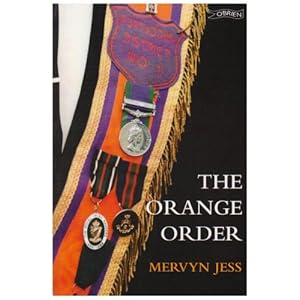
Book Review: The Orange Order


This is a book that has been sitting on my bookshelf for quite a while, and I never got round to reading. Now I have, and I'm glad I did, to help gain a better understanding of an important organisation in the life of Northern Ireland and beyond.

Mervyn Jess, a BBC journalist and son of an Orangeman, had been covering the Drumcree dispute for years, and decided he wanted to understand more about the Order, so he embarked on this book, which came out in 2007. Through the several chapters, he discusses the order's origins, presents a broad sweep of its first two hundred years, probes the ritual, structures and membership, thinks about Drumcree, looks across the globe at the influence of orangeism, before presenting some excellent and insightful chapters centred on interview with an ordinary orangeman, Gerry Kelly (a Sinn Fein MLA), and Drew Nelson (Grand Secretary of the Grand Orange Lodge of Ireland). He even includes a chapter on the Independent Orange Order!

There's no doubt that his research has been impeccable; his contacts are good, both in terms of those interviews already mentioned, but also including sizeable chunks from other leading Orangemen, such as Jonathan Mattison and David Hume. A better understanding of what the Orange is all about comes through the book, as well as an insight into the discussions and debates about the future - between those who see it as a purely religious organisation and those who are pressing for it to be a cultural group and the Twelfth turned into the Belfast version of the Mardi Gras or Notting Hill festivals.

That being said, at times the book can seem to be a little repetitive. There were occasions when the history chapter and the influence chapter seemed to be rehashing the same material. There were also few surprises - although perhaps that was more because of my roots in Orangeism and my working knowledge of Irish history.

All in all, it's an interesting book, and one that will help people understand what the motives and drive of the Orange Order is, and it's a useful exploration of recent Irish history from a unionist perspective.

Monday, August 16, 2010

The Caption Competition!

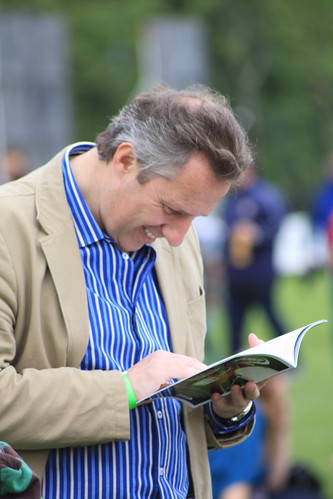
I spotted Ian Paisley Junior at the recent European Pipe Band Championships at Stormont, and this photo lends itself to a caption competition, so here you go...

Junior: Caption Competition?

The blog has the right to remove any unsavoury comments.

Monday, May 10, 2010

General Election 2010 Roundup

Well, I held off from commenting too much until I could see the full results right across Northern Ireland - delayed due to the recounts in the Fermanagh South Tyrone constituency which ended up being the smallest majority of 4 votes.

On the unionist side, it looks like the leaders are in trouble - Peter Robinson, Sir Reg Empey,and Jim Allister. Let's look at them in reverse order. Jim Allister, leader of the Traditional Unionist Voice (TUV) had been promising so much, looking to defeat Ian Paisley Junior (who was standing in his retiring father's constituency of North Antrim), and taking a considerable proportion of votes from discouraged DUP voters in the ten constituencies they were standing candidates. Perhaps buoyed by hopes of building on the impressive 13.7% of votes cast in the 2009 European Election.

However, the TUV vote entirely collapsed, with 40,000 voters either not turning out, or giving their votes to another party, leaving the TUV with just 3.9% of votes cast across Northern Ireland. It's not satisfactory to say that the other 8 constituencies would have boosted the TUV figures - there's no way they could account for the other 40,000 missing voters.

So where does this leave the TUV? Jim Allister is probably likely to win a seat in the Assembly election to be held next year, and probably some local government seats in Councils, but the TUV is certainly not a mainstream or viable political party. It appears that most of the unionist population is accepting the current power-sharing arrangements at Stormont, and don't want to see what Jim Allister has been arguing for. While they may hold on, it looks as if the TUV won't be around for much longer.

Reg Empey's position as leader of the Ulster Unionist Party may also be in danger, following the poor showing at the election, both personally and nationally. Empey tackled Willie McCrea in South Antrim, and while coming just over a thousand votes behind McCrea, it wasn't good enough. Nationally, the situation was just as grim - having lost their only MP as a result of the Conservative linkup, the UUP/UCUNF had to take at least one seat to keep the figures balanced, but utterly failed. Indeed, Empey came the closest to winning a seat - most of the other candidates being roughly 4000 - 6000 votes behind the DUP in each of the constituencies the DUP won. For what was at one time the only unionist party to now receive just 15.2% of the total votes cast (far behind the DUP at 25%), the writing appears to be on the wall for Empey's leadership. Indeed, for them, the biggest show in town is now Stormont, for which planning and effective leadership will be needed if they are to survive the onslaught of the next Assembly election in 2011.

Meanwhile, although the DUP performed well across Northern Ireland, Peter Robinson himself appears to be weakened as party leader having been unseated by the Alliance candidate in East Belfast, Naomi Long. Despite him claiming he had not wished to run for election to Westminster, it seems that Robinson had been seeking to have an exception for himself to maintain his dual mandate, at least for the lifetime of this parliament, so that the party leader could be in both Westminster and Stormont.

Naomi Long has relieved him of the pressure of being in two places at once, but it leaves a problem for Robinson and the DUP. Where should the party leader now be working? At Westminster - so that Robinson will have to be deposed, or at Stormont, so that Robinson can continue to be party leader and First Minister. The problems are perhaps enhanced when facing the Assembly election next year with the knowledge that the DUP had changed the rules (at St Andrews) to ensure that the biggest party, not the biggest designation could nominate the First Minister (with cross-community support). Taking this election as an indicator of next year, that would leave Sinn Fein as the biggest party, and the possibility of Martin McGuiness as First Minister.

The question is - if unionist unity is being bandied about, to form a united unionist party made up of the DUP and the UUP, could Robinson lead it? Or would a new leader for the movement need to be found? Could we see Arlene Foster becoming the leader of united unionism? Would that be acceptable to her former colleagues in the UUP, whom she left to join the DUP? Certainly if the unionists are seeking to prevent McGuiness being First Minister, something will need to be done. But then, it's democracy, isn't it?

On the nationalist/republican side, Sinn Fein continued their dominance, winning 25.5% of the vote, compared to the 16.5% for the SDLP. Each party retained the seats it entered the election with - Margaret Ritchie successfully holding off the challenge of Catriona Ruane in South Down (possibly due to many tactical votes from unionists). Both parties will therefore be confident heading into the next elections.

Alliance have perhaps reached their peak already in winning the East Belfast seat through Naomi Long - I think this is probably a one off which won't be repeated elsewhere in Northern Ireland, resulting from much hard work by Long over many years, helped by some tactical voting from unionists and nationalists in the constituency. The question is, of course, if the UK government coalition falters and another election is held in six months, could Long retain the seat against the challenge of (perhaps) another DUP candidate who isn't Peter Robinson? Or will her incumbency be a brief one?

All in all, Northern Ireland's 2010 election was exciting due to the challenges and changes across the province. It will also be remembered for the uncertainty of the overall government, and David Cameron's search for a coalition partner in the Lib-Dems. Even now, things aren't clear if it will all work out. Time will tell.

Thursday, May 06, 2010

Polling Day

Well, the much awaited General Election has arrived, and polls have been open for over 4 hours already. There are now just over ten and a half hours left to cast your vote. It's certainly not my place to tell you how to vote, but it is my place to say you should vote!

At some point over the next few days I'll have a think about what the results might mean and do some analysis - just so that my degree in Politics from Queens wasn't completely wasted!

Wednesday, May 05, 2010

General Election: Second Round

Following the first review of most of the candidates' election communications for the constituency of East Belfast in tomorrow's General Election, a second round of election communications have arrived. This time, though, we'll deal with them all in one fell swoop, with new things or heightened emphases as polling day quickly approaches.

Naomi Long: Alliance

Naomi's second communication (this time addressed to me) is much bigger, but seems to contain much of the same information, just in bigger text boxes and bigger photos. On the plus side, she answers the nagging question from the first leaflet of double or triple jobbing, with a pledge that 'if elected to Westminster, she has committed to stand down from the Assembly to ensure that East Belfast has full-time representation in Parliament.' On the down side, she is still perpetuating the 'spin' on election results from the 2007 Assembly election, presenting herself as just 52 votes behind Peter Robinson (while neglecting to admit the huge distance between Alliance and both the UUP and the DUP). She now has included Facebook information, so a plus one for social media!

Trevor Ringland: Conservatives and Unionists

We've received two further communications from the Unionists. The first had much the same material, with a few more photos from Trevor's day out in East Belfast, at some new locations - including the reconciliation statue in Stormont Estate. In this communication he also now comes out in favour of the public inquiry into the City Airport runway extension. Sadly, though, it's hard to look past a couple of clangers - what Mark Devenport has been calling the Spellection: on writing about the importance of tourism in East Belfast, Ringland says 'From the Titanic quarters to Parliament buildings...' (Have we more than one Titanic Quarter now? Maybe that's why it's all so expensive...); and the worst clanger, 'Nothen Ireland'.

His second election communication contained a personal message from Trevor Ringland, addressed to my wife. (Should I be worried?) Ringland is coming out fighting, mainly against the Alliance Party, as he says: 'Trevor Ringland is the only candidate who can win this seat from Robinson. The figures speak for themselves. Alliance has always trailed in third. Every vote counts in this election, and with your support, we can put an end to the neglect of East Belfast at Westminster. A vote for Alliance in a vote for Robinson.' At least he is arguing on the basis of fact on the election results. On the plus side, we actually see that he has a change of clothes, with photos of him wearing something other than the outfit he wore for every photo on the first two election leaflets!

Peter Robinson: Democratic Unionist Party

In his final election communication, Peter Robinson is firmly attacking his unionist opponents - perhaps this is where he sees the battle most fiercely fought, rather than against Alliance (sorry Naomi). There are lots of photos of Robinson in various places and situations - a DUP rally, a primary school, visiting a centenarian, with the Orange Order, with troops in Iraq (?) or Afghanistan (?), with Barack Obama, in Parliament, on a building site, and with Citizens' Advice.

There are sections against the UUP/Conservative link up, as well as against the TUV, appealing for unionist unity. However it is on the back page that Robinson becomes his most vitriolic, and perhaps even applies some double standards. He is trying to argue that he is the only local unionist worthy of being elected, and so he writes:

'Peter Robinson lives in the constituency - his unionist opponents live outside the area, one as far away as County Armagh... Peter Robinson knows East Belfast and its people - some of his opponents are tourists and would need Sat Nav to find their way about the area.'

There are several factors about what he has said here:

1. Peter Robinson has only just been moved back into the constituency - he couldn't have said that if Dundonald hadn't been shifted from Strangford to East Belfast again, which would indicate that prior to this election, he wasn't himself in the constituency.

2. There is no legal barrier on anyone living outside a constituency standing for election, nor no residency condition.

3. Is Peter Robinson and the DUP applying this standard for its other candidates? After all, Willie McCrea lives in the Mid-Ulster constituency but is standing in South Antrim, and, as a prime example of double standards, Nigel Dodds, standing in North Belfast, lives as far from that constituency in a provincial town as David Vance does from East Belfast. Should Nigel Dodds therefore not be standing in North Belfast and a local resident be up there instead? Or are the DUP exercising double standards in this attack on its opponents?

The election communications have now been printed and distributed. It's almost time for the x to be crossed and votes cast. This time round, Northern Ireland votes will be counted virtually as soon as polls close at 10pm, rather than the next day. I'm still debating whether I should sit up for a while to watch the results as they come in, or go on to my bed. Any ideas?

Friday, April 30, 2010

General Election: Vote TUV?


In the fifth of our General Election communications review for the constituency of East Belfast, we turn to the newest unionist party on the block, Traditional Unionist Voice, and their candidate David Vance.

With a huge picture of himself on the front, the communication weighs in as a 4 page A4 glossy booklet, with plenty of information on his views, and the wider political issues. However, it is clear that the TUV is seeking to fight its major battle against the dominance of the DUP, having come out from the wings of the DUP (led by Jim Allister) in the aftermath of that party joining the powersharing executive as equal partners with Sinn Fein.

To that end, in the 14 text boxes found throughout the leaflet, 10 of them contain a direct reference to either the DUP or some member of the party, always in a negative connection (unsurprisingly, of course!). Particularly in focus is the person and work of Peter Robinson, with the figures of his (and Iris') expense claims from the last Parliament being quoted several times, as well as the connections between the DUP an Sinn Fein in the Assembly.

The other four text boxes, while not directly referring to the DUP are clearly written with them in mind, seeking to present the TUV as the party able to provide fulltime representation at Westminster, and the party who will not break their election promises (nudge, nudge).

Interestingly, there's also a section on addressing controversial issues of sovereignty (opposing the Lisbon Treaty and calling for a referendum), immigration (using a points system for skilled workers rather than an open door policy), and climate change (which is as a result of 'suspect science').

On the use of photos, it seems strange that Peter Robinson features in as many photographs on David Vance's literature as David Vance does himself - three times each. Now obviously the photos are carefully chosen to maximise the potential damage to Robinson and boost the Vance campaign - so we see Peter Robinson smiling alongside the box alleging that the Robinsons were operating a 'who wants to be a millionaire political lifestyle'; Peter Robinson and Martin McGuinness alongside the text arguing that Stormont is a shambles because of the mandatory coalition; and that infamous shot of Peter at his desk and Iris in a full head-back cackle of a laugh which sits beside a call for voters to say 'no to scandal and sleaze.'

So much for the content. Anything to say about what is said? Well, there's no mention of David Vance's previous membership of the Bob McCartney UKUP (who?), and it does seem that most of the arguments are (again) on issues connected to Stormont, and not Westminster - for which this election has been called. You almost get the feeling that these leaflets could be reused at the next Assembly election without alteration - except that one sentence needs to be changed to make some sense.

'If you expect better then vote for a man who'll be there do the job - vote Vance x.'

I really do expect better - someone 'to' do the job of proofreading, never mind representing East Belfast!

Once again, there's no reference to social media, but there is a website specifically for the campaign, which has a live twitter feed for his campaign.

It's hard to know how the result will turn out - perhaps the rage at Peter Robinson's performance in the past will be raised and focused by this election communication, and Vance can turn enough people to win the seat. I just don't know.

Thursday, April 29, 2010

General Election: An SDLP Future?


It can be easy to feel sorry for the SDLP candidate standing in the General Election in the East Belfast constituency. In an area which is resoundingly unionist, you might almost think 'what's the point of standing?' Yet fair play to Mary Muldoon. Her campaign literature arrived in the post yesterday, so she shall be my fourth review today, leaving the TUV for tomorrow and Sinn Fein if we receive any before Saturday.

Compared to the big booklets and huge folded sheets of other candidates, Muldoon isn't spending much on her campaign literature. One glossy A5 sheet with picture and slogan on one side, and some blurb on the other. The battle Muldoon faces isn't so much to win the seat, but rather seems to be worded to reflect the battle within the nationalist and republican community: 'It is vital to vote in this election and to vote for an honest voice who will take their seat and represent the people of East Belfast.'

Following some biographical information, mostly on her experience in Belfast City Council, there are also the promises of what she will do if elected. That's a big 'if' - perhaps emphasized by the exclamation marks at the end of each pledge: e.g. 'I will oppose cuts to the NI Budget to ensure funding for Hospitals and Schools!' I'm not sure if those exclamation marks are well chosen, but they are perhaps the most enthusiastic of the election promises being made by any of the candidates thus far.

Because there isn't a great deal of detail on her campaign literature, it's harder to discuss it and pick faults, but perhaps what is worth noting is that she firmly comes out against the runway extension at the City Airport - the most open statement I've seen on the issue.

As well as the writing on the back of the sheet, there's also the obligatory pictures, so we see Mary with a constituent when she was canvassing during her last election run out (which must have been the 2007 Assembly election), one with new party leader Margaret Ritchie, and one down in Titanic Quarter in which one of the Harland and Wolff cranes makes an appearance.

Again, social media isn't being widely used in East Belfast, indeed there isn't even any contact information at all (apart from that required by the legislation of printer and publisher/promoter).

Not much detail, but then, to be fair, her candidature will help the overall performance of the SDLP in terms of vote share (being the only party standing candidates in each constituency), but not much chance of taking the seat.

Wednesday, April 28, 2010

General Election: DUP2Win?


In the third of my reviews of the General Election literature in the East Belfast constituency, we turn our attention to the sitting MP, Peter Robinson, who on top of his Westminster job continues to be an MLA and First Minister of Northern Ireland.

Three jobs would seem to be a lot for anyone, but there's no signs that Peter Robinson will step down from one or other of his seats if elected to Parliament again. This despite the recent scandals, and ongoing questions surrounding the transfer of some land in our village of Dundonald. Robinson has been under pressure recently, and perhaps it's being worked out in the way his campaign team are failing to engage with the electorate.

On Monday night I was sitting in the house, with one ear listening for the doorbell announcing some canvassers visiting. Instead, the DUP team were very quickly slipping the election communication through the letterbox and moving on - without ringing doorbells or knocking the doors. No attempt at all to speak with potential voters. I even went out to the door, and the guys say me, but hurried on their way. Not exactly a positive sign, unless they presumptively imagine that my part of Dundonald is either going to automatically vote for him, or is a lost cause so they just want to get their information out without causing a scene.

So as to the information itself, there's quite a bit of it, contained in an 8 page A5 booklet (which also contained an A5 4 page flyer for the local council candidate in the by-election caused by Iris Robinson's resignation). 7 pictures of Peter, so I think Trevor Ringland is still winning for most pictures of himself. Despite being the sitting MP, Robinson seems to be under pressure in the booklet, coming out fighting with material on the expenses scandal in page 2, quoting Sir Thomas Legge who gave him a clean bill of health.

The fight continues on pages 3, 6 and 7, where Peter the fighter is presented positively compared to 'a novice' given his personal experience in those multi-tasking jobs we've mentioned previously, as well as comparing the DUP to other unionist parties in the areas of unionist unity, strong positive leadership, representing unionism and with long-term strategy. Having seen campaign leaflets from other constituencies, these sections are the same across the board, with just some special East Belfast and Peter Robinson sections where the local candidate is introduced in each constituency.

However it's interesting that unionist unity is now presented as a key concern, whenever the DUP are the largest unionist party. If memory serves correctly, they were less keen on unionist unity when they were the smaller unionist party, on the hardline fringe of things. However now that there's a possibility of a Sinn Fein First Minister in the next Assembly they're very concerned to protect their position, especially since the TUV has comfortably moved into the gap left when when DUP shifted into government with the Shinners.

As with some of the other candidates in East Belfast, there does appear to be some confusion as to what the election is all about, with the issues discussed in the Assembly being referred to as if they are the main thing, rather than the particular issues concerning Westminster.

Again, there are no references to Twitter or Facebook or such things, and the only website link is to dup2win.com which has been on the go for many years, and didn't seem to have individual pages for each of the candidates standing in the election.

Time will tell if Peter Robinson will still be MP for East Belfast come the 7th May. It's hard to tell at this stage how the unionist vote will split, and how many votes will be lost to the Conservatives and Unionists, and the TUV. Alliance are also talking up their chances, but as I've said before, I can't seem Naomi Long winning through.

DUP2win? We'll see.

Tuesday, April 27, 2010

General Election: Alliance for All?


The Alliance Party of Northern Ireland's candidate in the East Belfast constituency is current Lord Mayor of Belfast, Naomi Long. However, I'm not sure that she actually wants my vote.

You see, her recent election communication came through the post, and was only addressed to my good lady wife. So maybe I shouldn't even be reviewing it, seeing as I didn't get one myself!

Much smaller than the Conservative and Unionist candidate's paper, Long's is an A4 glossy sheet (carbon neutral, we're assured), folded into three. Just three pictures of Naomi, a portrait, one at the Tall Ships Festival, and one with her fellow Alliance candidates (or is it their MLAs?)

As with their election posters, Alliance are working through a series of contrasts - sharing works, segregation costs; partnership works, deadlock costs; justice works, crime costs; respect works, bigotry costs. Given that Alliance currently don't have any MPs, they instead choose to focus on the things that they're doing in the Northern Ireland Assembly for us, which, while possibly interesting, aren't really the things that are at stake in this election. (Like other parties, perhaps they need a basic education in the different decision-making bodies and which powers are enjoyed by Councils/Assembly/Westminster.

There is also quite a lot on the person and experience of Naomi Long, who perhaps has an even higher profile at present thanks to her time in the Lord Mayor's chair in Belfast City Council. Perhaps this is the reason she's standing, to ride high on the publicity generated from her Council job - but with no word within the literature that she would give up her Council and Assembly seats if elected to Westminster.

She also includes sections in Chinese and Polish, to reach the local ethnic communities - perhaps something unique for the Alliance party in this campaign? However, there is just the general Alliance website, with no reference of an address, email address, Facebook or Twitter at all. Indeed, it took a bit of searching to find out anything about the election, as the Elections section on the website is from the 2005 elections!

There is one possibly misleading section which seems to inflate her chances of winning the election, on a dubious political premise. I'll quote the section, then take it apart.

"Your vote is crucial. This is the most open Westminster contest in East Belfast in a generation but if you want change, only Alliance can deliver. Naomi was elected 52 votes behind Peter Robinson and over 1400 votes ahead of Reg Empey in the last Assembly election. Alliance can win in East Belfast, but your support is crucial. On the 6th May, make your vote work for you. Vote Alliance."

On the face of it, Naomi only needs 53 more people to vote for her and she would take the seat. That sounds doable, doesn't it? Except it's not quite as it seems. Either Alliance don't understand statistics and election results, or else they are deliberately using them in this way to present a false impression.

You see, while Naomi was just 52 votes behind Peter Robinson himself, in the constituency of East Belfast, for their three candidates combined, the DUP received 11,155 first preference votes. (Peter Robinson got 5635, Wallace Browne got 3185, and Robin Newton 2335). Alliance has one candidate, Naomi Long, who received 5583 votes. That is, just about half the number of DUP first preference votes, or 5572 votes behind. That's a lot more than just the 52 votes being presented in the campaign literature.

Indeed, taken as a whole, while Naomi Long's personal first preferences outweighed Reg Empey's, the UUP as a whole (with three candidates and a poor balancing of first preferences across the constituency) received 6516 first preferences. That is, 933 more than Alliance. So Naomi Long and Alliance come into this General Election in third place, with a long way to go to beat the Conservatives and Unionists, let alone the DUP.

Her best chance may come if thousands defect from the DUP to the TUV and UCUNF, so that the three unionist parties are fairly evenly split, and she sneaks ahead by a couple of votes. Otherwise, despite this bigging up of her chances, I think it's safe to say Long won't be heading to Westminster, unless on a holiday.

Monday, April 26, 2010

General Election: Ringland for Change?

This is the first in a series of intended impartial reviews of the election literature received for the East Belfast constituency in the General Election of 2010. Hopefully as the series progresses this week we will actually receive the election communications from the other parties...

The Conservatives and Unionist Candidate is high-profile former British and Irish Lion rugby player, Trevor Ringland. His glossy A3 campaign literature was the first received in our neck of the woods, and the only doorstep caller thus far in the election. Change is the big word, both on the title page, and throughout the literature.

Through a series of short articles and soundbites, the Conservative and Unionist priorities are discussed. First up, a message from David Cameron and Sir Reg Empey, which doesn't say much, and emphasises the fact that Northern Ireland's voice can finally be heard in Westminster through the introduction of 'normal' politics via the Conservatives. The other boxes talk about economics, jobs, reducing sectarianism, and 'helping those who need help most'. (Is that a split infinitive?)

Perhaps the most recurring theme is the series of photos of Trevor Ringland in various places within East Belfast. Despite his attempts to vary the photos (some with jacket on, or off), it seems that he took about ten minutes to drive round certain parts of the constituency and get his (sometimes poor) photograph taken at the locations. So, Trevor at Harland and Wolff, Trevor at the Odyssey, Trevor at the Science Park in the Titanic Quarter, Trevor at the City Airport, Trevor talking to two Chinese (tourists?) at the Titanic Pump House, Trevor at a wee shop at the bottom of the Newtownards Road, Trevor slightly further up the Newtownards Road at the East Belfast Mission.

Perhaps these are the recognisable shots of East Belfast, but has he forgotten that Dundonald has been added to his constituency? Not to mention the rest of the Newtownards Road, through Ballyhackamore, Knock, Belmont, and so on...

There seemed to be a few clumsy moments. "A Northern Ireland for all inside a United Kingdom for all, while co-operating constructively for our mutual benefit with the others we share this island with." That last phrase doesn't seem to sit well - is there a 'with' too many?

Or consider perhaps the most ambiguous piece of diplomacy when talking about the Geroge Best Belfast City Airport:

"The airport contributes to the economy of East Belfast, but the needs of the travelling public must be balanced with the rights of local residents."

So are you in favour of the extension of the runway or not, Trevor? Should we seek to expand the economy, create jobs, as you write elsewhere, or do you not want to press that for fear of losing votes from the flightpath of the airport - hence all the photos of you down at the bottom of the Newtownards Road?

Finally, there were big sections on how to contact Trevor, and a space to write your comments or questions. New technologies and social media being used by this Conservative and Unionist candidate are Facebook and Twitter.

Trevor presents a well-crafted local perspective, although he may have a hard job trying to unseat Peter Robinson.

Saturday, April 10, 2010

So Long, Strangford; 'Ello East Belfast!

We're now in the run-up to the General Election on 6th May, and candidates have a few days left to decide if they're standing. This is our first General Election since we moved home, and already we're on the move again.

Up to now, Dundonald was part of the Strangford constituency (formerly represented by Iris Robinson MP), but before we get a chance to vote on Iris' replacement, we've been moved into her husband's constituency, East Belfast due to the boundary changes. Both Dundonald and the surrounding wards have been added to East Belfast, so as well as getting to know the constituency (which stretches from the Odyssey to Ballybeen), we'll have a new bunch of candidates to get to know.

Following the deadline of 20th April I'll have a full list of candidates, but for now, those confirmed include under pressure First Minister Peter Robinson (DUP), Trevor Ringland (UCUNF), David Vance (TUV), Naomi Long (Alliance), Mary Muldoon (SDLP) and Niall O Donnghaile (Sinn Fein).

Thursday, January 07, 2010

Here's To You, Mrs Robinson

It was a sad, devastating day yesterday in the Northern Ireland news. We don't normally catch the evening news, but for some reason, we saw both the National and Local news bulletins on the BBC.

The First Minister of Northern Ireland, Peter Robinson MP MLA, appeared on a video broadcast from his home study, reading a prepared statement following the publication of a statement from his wife and Strangford MP, Iris Robinson. He talked about her attempting suicide following an inappropriate affair, and the struggle this has placed on their marriage, but that they are working through it.

It appears that someone was going to break the story, so the Robinsons pre-empted it with their own statements. Peter Robinson appeared as a broken man, grieved and pained by his wife's infidelity, and the consequences of this. We need to be praying for the family, who are local residents here in Dundonald, as they seek to rebuild trust and their marriage together.

A terrible situation. Local politicians and the media have thus far been sympathetic and have pledged their support for Peter and Iris in these difficult days. Yet some have been critical of Iris Robinson since her criticism and condemnation of homosexuality back in 2008. They see this as her comeuppance for those remarks.

Yet there has been one bright moment in the midst of the despair. In her statement, Iris said: I grieve that I have damaged my profession in Christ, but I am comforted that He was able to forgive even me. Later, in Peter's statement, he said this:

I love my wife. I have always been faithful to her. In a spirit of humility and repentance, Iris sought my forgiveness, she took responsibility upon herself alone for her actions and I have forgiven her. More important, I know that she has sought and received God's forgiveness.

I only ask if people feel they must judge her, that they find within themselves, as I have done, the gift of doing so with mercy and compassion.


The language of mercy, forgiveness and grace has been used, and forgiveness has been provided and accepted within the Robinson's marriage, and also from God. Yet it has raised many discussions in the media about how Iris Robinson can be certain that God has forgiven her. Rev David McIlveen was interviewed on Good Morning Ulster, and the Chaplain of Upper Bann DUP branch (whose name I didn't catch) was on the Stephen Nolan radio show, both proclaiming clearly the gospel of God's grace and forgiveness on undeserving sinners through the death of Christ and confession and repentance.

Also on Good Morning Ulster, Glen Jordan was interviewed, and his words on scandalous grace bear repeating here:

"One of the things we believe is that grace is a scandalous thing, grace is for those who do not deserve it," he said.

"It doesn't make sense in the kind of economics where you always get what you deserve.

"When you have done wrong to somebody and that person turns round and for no good reason extends forgiveness and says 'Let's try and repair this relationship' you've experienced grace then and you have a responsibility to live out in the light of that."


How marvellous that God's grace and glory is being proclaimed even in such terrible circumstances. How rightly Simon and Garfunkel sang all those years ago:

And here's to you, Mrs. Robinson
Jesus loves you more than you will know (Wo, wo, wo)
God bless you please, Mrs. Robinson
Heaven holds a place for those who pray

Friday, October 30, 2009

CS Lewis on Democracy

In light of the recent expenses scandals, both at Westminster and Stormont, I came across this quotation from CS Lewis in an essay called 'Membership', included in the volume Fern-seed and Elephants.

HP The Big House

I believe in political equality. But there are two opposite reasons for being a democrat. You may think all men so good that they deserve a share in the government of the commonwealth, and so wise that the commonwealth needs their advice. That is, in my opinion, the false, romantic doctrine of democracy. On the other hand, you may believe fallen men to be so wicked that not one of them can be trusted with any irresponsible power over his fellows. That I believe to be the true ground of democracy.


On his view, we should expect that MPs, MLAs and politicians are as wicked as the rest of us, and need to be carefully monitored.

Sunday, July 05, 2009

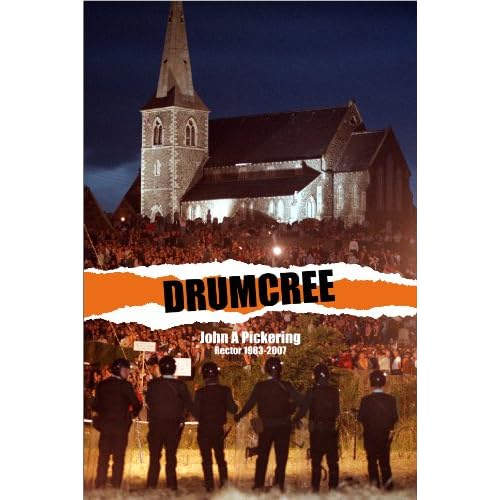
Book Review: Drumcree


The name of a parish church sitting on a hill outside Portadown has become famous across the world, and became one of the landmarks of the post-ceasefire Northern Ireland. Drumcree is famous because the Portadown District of the Orange Order attends Morning Prayer on the first Sunday in July, and that was as far as they were allowed for some years, being blocked and banned from their traditional route back to the County Armagh town via the Garvaghy Road.

The first Drumcree dispute was in 1995, with the stand off lasting for several days, until the parade was permitted on 11th July. During the stand off, main roads across Northern Ireland were blocked, and there was the threat of electricity supplies being turned off at Ballylumford. Something similar happened in 1996, with a stand off until the 11th. In 1997, the parade was immediately permitted following the church service, although trouble later flared in nationalist areas of Northern Ireland. Since 1998, the Orangemen have been prevented from returning along the Garvaghy Road, and the district is still symbolically remaining 'on the hill' at Drumcree. Indeed, today is 'Drumcree Sunday.'

As well as the Orange aspect of things, the political negotiations involved have been continuing, both through and despite the Parades Commission. Most recently, the First Minister has offered to meet both the Portadown District and the Garvaghy Road Residents Coalition. Away from these aspects of the dispute, however, there have also been pressures brought on the parish and rector of Drumcree by the Church of Ireland General Synod, and also by the former Archbishop of Dublin, Walton Empey.

Synod resolutions were passed calling on the Rector, John Pickering, to ban Orangemen from attending morning worship, thus (by their logic) removing the problem. Empey even went as far as to suggest that John Pickering could be sacked if he refused to obey the Synod, which was manifestly not true.

Much ink has been spilled and many books written about the Orange Order, and in particular, the Drumcree standoff. Recently released, however, is the insider view, from the pen of the Rector himself, following his retirement in September 2007. John kept scrupulous notes and notebooks as well as press cuttings from the years of dispute, and has collected them together to tell the story of Drumcree from his perspective. As well as the news events, the book opens us to life in a rectory, and the normal highs and lows of parish ministry. John then takes some time to reflect on the key issues at hand - those of Civil Freedom, Religious Freedom, The Church of Ireland, the media, and his own role in the situation.

Certainly not an easy place for parish ministry, with the focus of the world's media, and no support from a sizeable proportion of the wider Church of Ireland. Yet John displays grace and humility as he recalls the events, and reveals his principled stand rooted in God's faithfulness. By listening to him, we may even see a way forward for the future.

Thursday, July 02, 2009

Peter's Gospel Mission

Has revival broken out at the heart of the Northern Ireland Assembly? This evening the BBC were reporting that First Minister Peter Robinson MP MLA had unveiled his new Executive Ministers following a DUP cabinet reshuffle. They also reported that Robinson has called for his colleagues to spread the gospel. Great stuff, you say, but the quote didn't end there. The First Minister, a parishioner of the Whitewell Metropolitan Tabernacle, isn't sending out apostles to preach the Kingdom of God, but rather the Kingdom of Peter and Martin. The new DUP ministers are being sent out to preach the gospel of devolution.

Following the major disappointment of the European Election, where Jim Allister of the TUV took a substantial number of votes from Diane Dodds, the fear is that many unionists are turning their back on the DUP and therefore on the Assembly. Peter is sending out his heralds to declare the good news of the kingdom of devolution, so as to defeat the "wreckers" who are trying to destroy the power-sharing Assembly.

Archbishop Cranmer, when not battling Facebook, is always interested in politico-religious matters and religio-political matters and so my ears pricked up immediately with this news. Indeed, it would be easy to see the religious elements of the First Minister's crusade. At one time this Peter was opposed to any elements of powersharing. It is hard to know when he was converted, but in a Damascus Road moment, Peter and his fellow apostle Ian led their party into the newly formed Executive. Having been converted, in a complete turn around, Peter now wants other unionists to share his vision of political ecumenism and has sent out his devolution evangelists to the ends of the province. The question is, will this word of Peter be as sure and as successful as the Gospel of our Lord Jesus?

One thinks not. But it's interesting to see the use of religious language in the political sphere.

Monday, June 08, 2009

Euro Election First Preferences

The BBC have just reported on the first preference votes from the Northern Ireland constituency European Election count:

Stephen Agnew, Green Party - 15,764
Jim Allister, Traditional Unionist Voice - 66,197
Bairbre De Brun, Sinn Fein - 126,184
Diane Dodds, DUP - 88,346
Alban Maginness, SDLP - 78,489
Jim Nicholson, Ulster Conservative and Unionist - 82,893
Ian Parsley, Alliance - 26,699
Quota: 121,144

Sinn Fein comfortably topped the poll, and gain the first seat, and it looks like both Dodds (DUP) and Nicholson (UUP) will be elected in the later rounds of the count.

Some initial thoughts:

Jim Allister has polled extremely well, and will be confident of gaining a number of seats in the next Stormont Assembly election. The media are reporting his considerable share of votes as a protest against the DUP, but they could also be the result of people voting for a consistent hard-working MEP for Northern Ireland.

This should be a warning for the DUP, who appear to be moving away from their traditional ground of being the protest vote, and are maturing into government with Sinn Fein. Despite their rhetoric of controlling Sinn Fein, a sizeable proportion of previous DUP voters have abandoned them in this election - and will worry them if this continues in future elections.

If this pattern was repeated in an Assembly election, then Sinn Fein would have the right of nomination of the First Minister, and the DUP would be nominated for Deputy First Minister. Perhaps because of this possibility, such a vote would not be repeated in Assembly elections. The fear among Unionists of having a Shinner as First Minister of Northern Ireland might convince many to vote DUP to prevent this. Although that remains to be seen.