Facing Your Giants. It's something you hear all the time, isn't it? You're up against your Goliath, whatever it might be - sickness, unemployment, stress, family troubles, work, poverty - but just be like David, stand up to your giant and you'll win through. The underdog armed with a slingshot and stones can defeat whatever your pertinent problem might be.
It might be the way you hear the story, but that's not why David and Goliath is recorded in the Scripture for our learning and encouragement. You see, while this might come as a surprise, you aren't David in the story. In fact, to find yourself in the story, look over David's shoulder, at the men of Israel cowering in fear, frightened by the great enemy of God's people.
For forty days, morning and evening, the mighty Goliath of Gath, the Philistine, has came out from the camp and uttered his challenge. One to one, hand to hand fighting. The winner takes the victory.
For forty days, morning and evening, the men of Israel have been dismayed and greatly afraid. Not just the men of Israel, but the King of Israel too. Saul hasn't been very effective these last months, ever since his persistent rebellion against the LORD. The LORD no longer seems to be with him. Who can possibly save Israel from this great danger?
Saul may have lost the Lord's power, but there comes to the camp one who is the Lord's anointed. In the previous chapter, Samuel the prophet came to Bethlehem to anoint the new king, rejecting the first seven sons of Jesse. David was so unlikely, he hadn't even been called in for 'King Factor'. Yet he is the man after God's own heart, he is the one anointed to lead and save God's people.
Despite being mocked, rejected, and looking completely unlikely for the job, David goes out and takes his stand against the nine-foot giant.
"You come to me with a sword and with a javelin, but I come to you in the name of the LORD of hosts, the God of the armies of Israel, whom you have defied. this day the LORD will deliver you into my hand, and I will strike you down and cut off your head. And I will give the dead bodies of the host of the Philistines this day to the birds of the air and to the wild beasts of the earth, that all the earth may know that there is a God in Israel, and that all this assembly may know that the LORD saves not with sword and spear. For the battle is the LORD's, and he will give you into our hand." (1 Samuel 17:45-47)
David, the Lord's anointed, wins the battle, toppling the giant, and defeating the greatest enemy to the people of God. That's why you aren't David - because it took the anointed to do for the people of God what they could not do themselves.
In the same way, The Anointed, The Messiah, The Christ, by himself, stepped up to face the enemy we could not face ourselves - death. The Lord Jesus took on death, and defeated it - the one for the many. Jesus did it on our behalf, so that our enemy has been destroyed.
David and Goliath isn't written to encourage us to face our giants, but rather points to the Lord's anointed, who faces our giants on our behalf, and gives us the victory - what grace that we can share in his victory, having contributed nothing to the effort!
What a transformation we find from the start of the chapter to the end - the people of God were dismayed and greatly afraid as they saw their enemy. By the end of the chapter, 'the men of Israel and Judah rose with a shout and pursued the Philistines as far as Gath... and the people of Israel came back from chasing the Philistines, and they plundered their camp.' (1 Sam 17:52-53). David won the victory, and the people shared the rewards of winning.
Jesus has faced our giant, we stand on the winning team, and share in his blessings.
Thanks be to God, who gives us the victory through our Lord Jesus Christ. (1 Cor 15:57)
Wednesday, March 23, 2011
Tuesday, March 22, 2011
The Way of the Cross (12)
It's a rags to riches romance, and yet it's far more than that. Ruth, a foreigner, has faced her share of tragedy and hardship. Her husband's family had moved to Moab from Israel because of a famine. Her father-in-law, her brother-in-law and her husband all die, leaving Naomi, Orpah and Ruth.
Naomi returns to Israel, and Ruth comes too. She pledges to take care of Naomi, so that her people will be Ruth's people, and her God will be Ruth's God. In the aftermath of famine, the two widows have it hard - there are no state benefits, no old age pension. Ruth goes off to glean in the fields in order to eke out a living.
It's there that she meets her redeemer, the one who can rescue her family situation by the payment of a price. Boaz has compassion on her plight and steps in to redeem her, giving her family, wealth, status, and a child - and a rich inheritance and heritage, which ultimately leads to King David, and King Jesus.
"Spread your wings over your servant, for you are a redeemer." (Ruth 3:9)
Boaz the redeemer points us to Christ the redeemer, the one who rescues us from our poverty and slavery, and gives us freedom and the blessings of being in relationship with him. 'In him we have redemption through his blood, the forgiveness of our trespasses, according to the riches of his grace...' (Ephesians 1:7)
Naomi returns to Israel, and Ruth comes too. She pledges to take care of Naomi, so that her people will be Ruth's people, and her God will be Ruth's God. In the aftermath of famine, the two widows have it hard - there are no state benefits, no old age pension. Ruth goes off to glean in the fields in order to eke out a living.
It's there that she meets her redeemer, the one who can rescue her family situation by the payment of a price. Boaz has compassion on her plight and steps in to redeem her, giving her family, wealth, status, and a child - and a rich inheritance and heritage, which ultimately leads to King David, and King Jesus.
"Spread your wings over your servant, for you are a redeemer." (Ruth 3:9)
Boaz the redeemer points us to Christ the redeemer, the one who rescues us from our poverty and slavery, and gives us freedom and the blessings of being in relationship with him. 'In him we have redemption through his blood, the forgiveness of our trespasses, according to the riches of his grace...' (Ephesians 1:7)


Monday, March 21, 2011
The Way of the Cross (11)
Having settled in the land of promise, the children of Israel soon became like the previous generations, in turning from the LORD to go their own way. Enemies would arise, leading the people to call out to God to save them - which God did, through the hand of the judges. When we hear that word, we think of a wee man or woman sitting in a court with a funny wig, but the judge restores justice, and acts to save God's people.
The book of Judges shows how God saved his people using these judges, people like Gideon, Ehud, Deborah, and Samson. Rather than wanting to be like these people - because they were as flawed as the rest of us - the book of Judges flags up clearly that we need a Saviour who will save perfectly; we need a king who will rule over us; we need a guide who will help us live for God.
Yet even in the stories of the judges there are glimpses of what that ultimate salvation will look like. Here, we think of just one - right at the end of Samson's life. When I think of Samson, I think of one of those pro wrestlers - WWF (if you're as old as me), WCW, WWE or whatever it is these days. Muscleman, ladies' man, long hair, and a bit surprising in lots of different ways.
Eventually (why, why, why) Delilah traps him, having uncovered the secret of his strength - his Nazirite vow to the LORD - and the shorn Samson is quickly captured. Imprisoned and blinded, he becomes a bit of a freak show, brought along to a big feast and taunted. In that moment, he remembers the LORD, and prays for one last burst of strength:
Then Samson called to the LORD and said, "O LORD GOD, please remember me and please strengthen me only this once, O God, htat I may be avenged on the Philistines for my two eyes." And Samson grasped the two middle pillars on which the house rested, and he leaned his weight against them, his right hand on the one and his left hand on the other. And Samson said, "Let me die with the Philistines." Then he bowed with all his strength, and the house fell upon the lords and upon all the people who were in it. So the dead whom he killed at his death were more than those whom he had killed during his life. (Judges 16:28-30)
What has this got to do with the way of the cross? In Samson's death, he destroyed his enemies, and gained his greatest victory. In a similar way, in Jesus' death, he destroyed our greatest enemy - death, and won the great victory.
Samson only achieved a small, temporary victory. By the time Saul has been chosen as king, the Philistines are back, attacking God's people again. But the victory Jesus won will never be reversed; death will never have the final say on God's people.
Dying, you destroyed our death,
Rising, you restored our life,
Lord Jesus, come in glory!
The book of Judges shows how God saved his people using these judges, people like Gideon, Ehud, Deborah, and Samson. Rather than wanting to be like these people - because they were as flawed as the rest of us - the book of Judges flags up clearly that we need a Saviour who will save perfectly; we need a king who will rule over us; we need a guide who will help us live for God.
Yet even in the stories of the judges there are glimpses of what that ultimate salvation will look like. Here, we think of just one - right at the end of Samson's life. When I think of Samson, I think of one of those pro wrestlers - WWF (if you're as old as me), WCW, WWE or whatever it is these days. Muscleman, ladies' man, long hair, and a bit surprising in lots of different ways.
Eventually (why, why, why) Delilah traps him, having uncovered the secret of his strength - his Nazirite vow to the LORD - and the shorn Samson is quickly captured. Imprisoned and blinded, he becomes a bit of a freak show, brought along to a big feast and taunted. In that moment, he remembers the LORD, and prays for one last burst of strength:
Then Samson called to the LORD and said, "O LORD GOD, please remember me and please strengthen me only this once, O God, htat I may be avenged on the Philistines for my two eyes." And Samson grasped the two middle pillars on which the house rested, and he leaned his weight against them, his right hand on the one and his left hand on the other. And Samson said, "Let me die with the Philistines." Then he bowed with all his strength, and the house fell upon the lords and upon all the people who were in it. So the dead whom he killed at his death were more than those whom he had killed during his life. (Judges 16:28-30)
What has this got to do with the way of the cross? In Samson's death, he destroyed his enemies, and gained his greatest victory. In a similar way, in Jesus' death, he destroyed our greatest enemy - death, and won the great victory.
Samson only achieved a small, temporary victory. By the time Saul has been chosen as king, the Philistines are back, attacking God's people again. But the victory Jesus won will never be reversed; death will never have the final say on God's people.
Dying, you destroyed our death,
Rising, you restored our life,
Lord Jesus, come in glory!
Saturday, March 19, 2011
The Way of the Cross (10)
The children of Israel have finally made it to the land of promise. They're about to cross the Jordan under their new leader, Joshua, and try to conquer the first city on their way - Jericho. Two spies are sent into Jericho, coming to the home of Rahab, a prostitute who lived in the city walls.
Despite being a foreigner, and one who would very quickly be conquered, Rahab knows which side she should be on, and so hides the spies from the city authorities. Why?
"I know that the LORD has given you the land, and that the fear of you has fallen upon us, and that all the inhabitants of the land melt away before you. For we have heard how the LORD dried up the water of the Red Sea before you when you came out of Egypt, and what you did to the two kings of the Amorites who were beyond the Jordan, to Sihon and Og, whom you devoted to destruction. And as soon as we heard it, our hearts melted, and there was no spirit left in any man because of you, for the LORD your God, he is God in the heavens above and on the earth beneath. Now then, please swear to me by the LORD that, as I have dealt kindly with you, you also will deal kindly with my father's house." (Joshua 2:9-12)
This foreigner has come to trust in the LORD, knowing the consequences of remaining one of God's enemies. She lets the spies down the wall of the city out of her window by means of a rope - a scarlet cord - which will also symbolise and secure her salvation:
Behold, when we come into the land, you shall tie this scarlet cord in the window through which you let us down, and you shall gather into your house your father and mother, your brothers, and all your father's household. Then if anyone goes out of the doors of your house into the street, his blood shall be on his own head, and we shall be guiltless. But if a hand is laid on anyone who is with you in the house, his blood shall be on our head. (Joshua 2:18-19)
As with the blood of the Passover Lamb in Exodus 12, the scarlet cord (the colour of blood) is the sign of salvation, the protection afforded to those within. The remarkable thing, though, is that those being saved by the 'blood' aren't Israelites this time, but Gentiles, foreigners, being gathered into God's people through faith in Israel's God, the God of the heavens and earth.
Rahab the prostitute is highlighted as an example of faith in Hebrews 11 ('By faith Rahab the prostitute did not perish with those who were disobedient, because she had given a friendly welcome to the spies.'), as one whose faith expressed itself in works by James ('And in the same way was not also Rahab the prostitute justified by works when she received the messengers and sent them out by another way?'). However, the most remarkable thing about Rahab is her other New Testament appearance - one of the few women in the genealogy Matthew begins his gospel with - Rahab became the wife of Salmon, the father of Boaz, so she was David's great-great-granny!
Still today, people of all tribes and nations and tongues are being grafted into God's people through faith in the blood of the Lord Jesus, and the story continues to be told.
Despite being a foreigner, and one who would very quickly be conquered, Rahab knows which side she should be on, and so hides the spies from the city authorities. Why?
"I know that the LORD has given you the land, and that the fear of you has fallen upon us, and that all the inhabitants of the land melt away before you. For we have heard how the LORD dried up the water of the Red Sea before you when you came out of Egypt, and what you did to the two kings of the Amorites who were beyond the Jordan, to Sihon and Og, whom you devoted to destruction. And as soon as we heard it, our hearts melted, and there was no spirit left in any man because of you, for the LORD your God, he is God in the heavens above and on the earth beneath. Now then, please swear to me by the LORD that, as I have dealt kindly with you, you also will deal kindly with my father's house." (Joshua 2:9-12)
This foreigner has come to trust in the LORD, knowing the consequences of remaining one of God's enemies. She lets the spies down the wall of the city out of her window by means of a rope - a scarlet cord - which will also symbolise and secure her salvation:
Behold, when we come into the land, you shall tie this scarlet cord in the window through which you let us down, and you shall gather into your house your father and mother, your brothers, and all your father's household. Then if anyone goes out of the doors of your house into the street, his blood shall be on his own head, and we shall be guiltless. But if a hand is laid on anyone who is with you in the house, his blood shall be on our head. (Joshua 2:18-19)
As with the blood of the Passover Lamb in Exodus 12, the scarlet cord (the colour of blood) is the sign of salvation, the protection afforded to those within. The remarkable thing, though, is that those being saved by the 'blood' aren't Israelites this time, but Gentiles, foreigners, being gathered into God's people through faith in Israel's God, the God of the heavens and earth.
Rahab the prostitute is highlighted as an example of faith in Hebrews 11 ('By faith Rahab the prostitute did not perish with those who were disobedient, because she had given a friendly welcome to the spies.'), as one whose faith expressed itself in works by James ('And in the same way was not also Rahab the prostitute justified by works when she received the messengers and sent them out by another way?'). However, the most remarkable thing about Rahab is her other New Testament appearance - one of the few women in the genealogy Matthew begins his gospel with - Rahab became the wife of Salmon, the father of Boaz, so she was David's great-great-granny!
Still today, people of all tribes and nations and tongues are being grafted into God's people through faith in the blood of the Lord Jesus, and the story continues to be told.
Friday, March 18, 2011
The Way of the Cross (9)
After those forty years wandering in the desert, the children of Israel are finally getting close to the land of promise. Two and a half tribes have already conquered their land on the east of the Jordan, and the rest are ready to go over the river and take their land. But before they do, Moses gives them one last reminder of how they have come to be where they are now. Moses isn't going with them, so he wants them to grasp why their parents' generation languished in the wilderness rather than going straight from Egypt to Israel.
As he outlines their story, highlighting, underlining, emboldening the failures and unbelief of the previous generation, he also outlines the way they should live in the land God is giving them. Within the summary of the Law, we find a couple of verses which Paul picks up on in Galatians, which help us to understand the cross:
And if a man has committed a crime punishable by death and he is put to death, and you hang him on a tree, his body shall not remain all night on the tree, but you shall bury him the same day, for a hanged man is cursed by God. You shall not defile your land that the LORD your God is giving you for an inheritance. (Deuteronomy 21:22-23)
A crime punishable by death means that the person is cursed by God. All of us are lawbreakers, each of us deserves death for our sins. Yet the remarkable thing is that the Holy One, the one who perfectly obeyed the Law and his Father's command, he it was who died in this cursed way on the tree. How can we understand it?
Christ redeemed us from the curse of the law by becoming a curse for us - for it is written, "Cursed is everyone who is hanged on a tree" - so that in Christ Jesus the blessing of Abraham might come to the Gentiles, so that we might receive the promised Spirit through faith. (Galatians 3:13-14)
The Lord Jesus took our cursedness and gives us his blessedness as he dies the death we deserve and gives us the life we didn't deserve.
Bearing shame and scoffing rude,
In my place condemned He stood;
Sealed my pardon with His blood.
Hallelujah! What a Savior!
As he outlines their story, highlighting, underlining, emboldening the failures and unbelief of the previous generation, he also outlines the way they should live in the land God is giving them. Within the summary of the Law, we find a couple of verses which Paul picks up on in Galatians, which help us to understand the cross:
And if a man has committed a crime punishable by death and he is put to death, and you hang him on a tree, his body shall not remain all night on the tree, but you shall bury him the same day, for a hanged man is cursed by God. You shall not defile your land that the LORD your God is giving you for an inheritance. (Deuteronomy 21:22-23)
A crime punishable by death means that the person is cursed by God. All of us are lawbreakers, each of us deserves death for our sins. Yet the remarkable thing is that the Holy One, the one who perfectly obeyed the Law and his Father's command, he it was who died in this cursed way on the tree. How can we understand it?
Christ redeemed us from the curse of the law by becoming a curse for us - for it is written, "Cursed is everyone who is hanged on a tree" - so that in Christ Jesus the blessing of Abraham might come to the Gentiles, so that we might receive the promised Spirit through faith. (Galatians 3:13-14)
The Lord Jesus took our cursedness and gives us his blessedness as he dies the death we deserve and gives us the life we didn't deserve.
In my place condemned He stood;
Sealed my pardon with His blood.
Hallelujah! What a Savior!
Thursday, March 17, 2011
Sermon Audio: 2 Peter 1: 1-11
On Sunday night past I kicked off a new series from 2 Peter, seeing how Peter encourages us in Growing in Godliness. Here's how it sounded.
The Way of the Cross (8)
The children of Israel are on their way through the wilderness - taking the long, windy, circuitous route because of their disobedience. Along the way, they complain (although not for the first time) about having no food, no water, and the food they have is worthless (which makes a mockery of their first point...).
God sends a judgement on them on fiery serpents, who proceeded to find plenty of food in the wilderness - biting the humans, 'so that many people of Israel died.' (Numbers 21:6). Just as God will judge all eternally, so he can also bring forward that judgement temporally, using many forms of judgement.
The people are convicted of their sin, so let's see what happens next:
And the people came to Moses and said, "We have sinned, for we have spoken against the LORD and against you. Pray to the LORD, that he take away the serpents from us." So Moses prayed for the people. And the LORD said to Moses, "Make a fiery serpent and set it on a pole, and everyone who is bitten, when he sees it, shall live." So Moses made a bronze serpent and set it on a pole. And if a serpent bit anyone, he would look at the bronze serpent and live. (Numbers 21:7-9)

The people ask that the discipline of the LORD be removed, but instead, God provides healing and salvation through the serpents, and the bronze serpent in particular. It's found in the badge of many ambulance services across the world, because of the healing described.
For healing, for salvation, the promise was simple - look and live. To look at the symbol of the problem, raised up high on a pole, and believe God's promise, is to find salvation. Can you imagine someone being bitten, but refusing to look at the bronze serpent, even when friends and family urge them? It would be a pointless death, a sad and sorry avoidable stupidity. Salvation is right there - just look and live.
No wonder, then, that when the Lord Jesus spoke of himself, he used this incident to talk of his cross, and the healing that flows from it:
And as Moses lifted up the serpent in the wilderness, so must the Son of Man be lifted up, that whoever believes in him may have eternal life. (John 3:15)
There's a direct correlation - the serpent was lifted so that those facing certain death could look and live; Jesus was lifted up on the cross so that those facing eternal death could look (believe) and have eternal life. The promise is there - whoever - and the promise is certain, eternal life. Look, and live.
God sends a judgement on them on fiery serpents, who proceeded to find plenty of food in the wilderness - biting the humans, 'so that many people of Israel died.' (Numbers 21:6). Just as God will judge all eternally, so he can also bring forward that judgement temporally, using many forms of judgement.
The people are convicted of their sin, so let's see what happens next:
And the people came to Moses and said, "We have sinned, for we have spoken against the LORD and against you. Pray to the LORD, that he take away the serpents from us." So Moses prayed for the people. And the LORD said to Moses, "Make a fiery serpent and set it on a pole, and everyone who is bitten, when he sees it, shall live." So Moses made a bronze serpent and set it on a pole. And if a serpent bit anyone, he would look at the bronze serpent and live. (Numbers 21:7-9)
The people ask that the discipline of the LORD be removed, but instead, God provides healing and salvation through the serpents, and the bronze serpent in particular. It's found in the badge of many ambulance services across the world, because of the healing described.
For healing, for salvation, the promise was simple - look and live. To look at the symbol of the problem, raised up high on a pole, and believe God's promise, is to find salvation. Can you imagine someone being bitten, but refusing to look at the bronze serpent, even when friends and family urge them? It would be a pointless death, a sad and sorry avoidable stupidity. Salvation is right there - just look and live.
No wonder, then, that when the Lord Jesus spoke of himself, he used this incident to talk of his cross, and the healing that flows from it:
And as Moses lifted up the serpent in the wilderness, so must the Son of Man be lifted up, that whoever believes in him may have eternal life. (John 3:15)
There's a direct correlation - the serpent was lifted so that those facing certain death could look and live; Jesus was lifted up on the cross so that those facing eternal death could look (believe) and have eternal life. The promise is there - whoever - and the promise is certain, eternal life. Look, and live.
Wednesday, March 16, 2011
Sermon Audio: Joel 2: 12-17
On Sunday week ago I was preaching from Joel, asking the question What is Repentance? Here's how it sounded.
The Way of the Cross (7)
Yesterday we looked at the Day of Atonement from Leviticus 16, and thought about the goat who was used as a sin offering. We watched how Aaron disappeared into the tabernacle, to the Holy Place, God's presence, and the blood of the goat (and bull) were sprinkled on the mercy seat, God's throne, the ark of the covenant. If the wages of sin are death, then the blood shed by the goat signifies that a death has occurred, and the sins have been dealt with. But the blood of bulls and goats can't forgive sins - they point to the one perfect sacrifice of Jesus for our sins.
All that happened behind closed doors, within the tabernacle, in the Holy Place, where only the high priest could enter one day of the year. The ordinary member of the people of Israel had to take for granted that it had happened, but they couldn't see what had happened. God, in his mercy and grace, arranged that the second goat was a much more public demonstration of God's forgiveness - and when Tyndale translated the Bible into English, granted us a new word: the scapegoat.
And when he has made an end of atoning for the Holy Place and the tent of meeting and the altar, he shall present the live goat. And Aaron shall lay both his hands on the head of the live goat, and confess over it all the iniquities of the people of Israel, and all their transgressions, all their sins. And he shall put them on the head of the goat and send it away into the wilderness by the hand of a man who is in readiness. The goat shall bear all their iniquities on itself to a remote area, and he shall let the goat go free in the wilderness. (Leviticus 16:20-22)
It's a vivid picture of the removal of our sins - Aaron, the priest, representing the people, confesses their sins. The sins are transferred to the goat, who is then taken out of the camp, out of the land, into the wilderness. Your sin is taken far away, and you'll never see the goat again. The scapegoat bears your sins, carries them away, and you bear them no longer.
Truly Jesus is our scapegoat as well as our sin offering. In dying for our sins, he bore them, removing them from us, so that we no longer bear our own sins. Hallelujah! What a Saviour!
All that happened behind closed doors, within the tabernacle, in the Holy Place, where only the high priest could enter one day of the year. The ordinary member of the people of Israel had to take for granted that it had happened, but they couldn't see what had happened. God, in his mercy and grace, arranged that the second goat was a much more public demonstration of God's forgiveness - and when Tyndale translated the Bible into English, granted us a new word: the scapegoat.
And when he has made an end of atoning for the Holy Place and the tent of meeting and the altar, he shall present the live goat. And Aaron shall lay both his hands on the head of the live goat, and confess over it all the iniquities of the people of Israel, and all their transgressions, all their sins. And he shall put them on the head of the goat and send it away into the wilderness by the hand of a man who is in readiness. The goat shall bear all their iniquities on itself to a remote area, and he shall let the goat go free in the wilderness. (Leviticus 16:20-22)
It's a vivid picture of the removal of our sins - Aaron, the priest, representing the people, confesses their sins. The sins are transferred to the goat, who is then taken out of the camp, out of the land, into the wilderness. Your sin is taken far away, and you'll never see the goat again. The scapegoat bears your sins, carries them away, and you bear them no longer.
Truly Jesus is our scapegoat as well as our sin offering. In dying for our sins, he bore them, removing them from us, so that we no longer bear our own sins. Hallelujah! What a Saviour!
Tuesday, March 15, 2011
The Way of the Cross (6)
Having been rescued from Egypt, the LORD makes his covenant with the people of Israel at Mount Sinai. As the people journey towards the promised land, the law is revealed to them, God's gracious gift to enable the sinful people to approach and live with a holy God. Today and tomorrow, we're going to think about the most important day in the Israelite calendar - the Day of Atonement, Yom Kippur, as described in Leviticus 16.
As part of the ceremonial on that day, two goats were used. A bull is sacrificed as a sin offering, and part of the blood sprinkled on the 'mercy seat' (the ark of the covenant in the holy of holies, in the Tabernacle). Then the two goats have lots cast for them - today we'll focus on the goat used at the tabernacle. It is also a sin offering, its blood brought within the veil (the very presence of God), and sprinkled over the mercy seat. The Holy Place has been atoned for - 'at-one' being to be reconciled, for sins to have been covered and forgiven.
This Day of Atonement ceremony only happened on one day each year, and only was performed by the high priest - Aaron and his sons. It signifies the separation that sin brings between God and people, and the need for the shedding of blood for the forgiveness of sins. And ultimately, the blood of the bull and the goat point forward to the one full, perfect, and sufficient sacrifice, oblation, and satisfaction for sins on the cross of Calvary, and the entry of our great high priest into the true tabernacle, heaven to secure 'an eternal redemption.' (Heb 9:12)
As the writer to the Hebrews continues, Jesus' death fulfills the purpose and prophecy of the Law, and grants us the incredible and wonderful benefits of all God's people:
Therefore, brothers, since we have confidence to enter the holy places by the blood of Jesus, by the new and living way that he opened for us through the curtain, that is, through his flesh, and since we have a great priest over the house of God, let us draw near with a true heart in full assurance of faith, with our hearts sprinkled clean from an evil conscience and our bodies washed with pure water... (Hebrews 10:19-22)
As part of the ceremonial on that day, two goats were used. A bull is sacrificed as a sin offering, and part of the blood sprinkled on the 'mercy seat' (the ark of the covenant in the holy of holies, in the Tabernacle). Then the two goats have lots cast for them - today we'll focus on the goat used at the tabernacle. It is also a sin offering, its blood brought within the veil (the very presence of God), and sprinkled over the mercy seat. The Holy Place has been atoned for - 'at-one' being to be reconciled, for sins to have been covered and forgiven.
This Day of Atonement ceremony only happened on one day each year, and only was performed by the high priest - Aaron and his sons. It signifies the separation that sin brings between God and people, and the need for the shedding of blood for the forgiveness of sins. And ultimately, the blood of the bull and the goat point forward to the one full, perfect, and sufficient sacrifice, oblation, and satisfaction for sins on the cross of Calvary, and the entry of our great high priest into the true tabernacle, heaven to secure 'an eternal redemption.' (Heb 9:12)
As the writer to the Hebrews continues, Jesus' death fulfills the purpose and prophecy of the Law, and grants us the incredible and wonderful benefits of all God's people:
Therefore, brothers, since we have confidence to enter the holy places by the blood of Jesus, by the new and living way that he opened for us through the curtain, that is, through his flesh, and since we have a great priest over the house of God, let us draw near with a true heart in full assurance of faith, with our hearts sprinkled clean from an evil conscience and our bodies washed with pure water... (Hebrews 10:19-22)
Monday, March 14, 2011
The Way of the Cross (5)
We continue our journey towards the cross (leaving out Sundays, as there'll normally be a sermon published on those days), and we're still in the land of Egypt. Joseph has been forgotten, though, and the Israelites are slaves in the land. Despite God sending Moses (aged 80) to Pharaoh, Pharaoh's heart has hardened, so that he will not let my people go.
Nine plagues have already fallen on Egypt, specifically on the Egyptians while the Israelites missed them, but now comes the final plague - judgement on the whole land.
3Tell all the congregation of Israel that on the tenth day of this month every man shall take a lamb according to their fathers’ houses, a lamb for a household. 4And if the household is too small for a lamb, then he and his nearest neighbor shall take according to the number of persons; according to what each can eat you shall make your count for the lamb. 5Your lamb shall be without blemish, a male a year old. You may take it from the sheep or from the goats, 6and you shall keep it until the fourteenth day of this month, when the whole assembly of the congregation of Israel shall kill their lambs at twilight.
7"Then they shall take some of the blood and put it on the two doorposts and the lintel of the houses in which they eat it. 8They shall eat the flesh that night, roasted on the fire; with unleavened bread and bitter herbs they shall eat it. 9Do not eat any of it raw or boiled in water, but roasted, its head with its legs and its inner parts. 10And you shall let none of it remain until the morning; anything that remains until the morning you shall burn. 11In this manner you shall eat it: with your belt fastened, your sandals on your feet, and your staff in your hand. And you shall eat it in haste. It is the LORD’s Passover. 12For I will pass through the land of Egypt that night, and I will strike all the firstborn in the land of Egypt, both man and beast; and on all the gods of Egypt I will execute judgments: I am the LORD. 13 The blood shall be a sign for you, on the houses where you are. And when I see the blood, I will pass over you, and no plague will befall you to destroy you, when I strike the land of Egypt.
21Then Moses called all the elders of Israel and said to them, "Go and select lambs for yourselves according to your clans, and kill the Passover lamb. 22Take a bunch of hyssop and dip it in the blood that is in the basin, and touch the lintel and the two doorposts with the blood that is in the basin. None of you shall go out of the door of his house until the morning. 23 For the LORD will pass through to strike the Egyptians, and when he sees the blood on the lintel and on the two doorposts, the LORD will pass over the door and will not allow the destroyer to enter your houses to strike you. 24You shall observe this rite as a statute for you and for your sons forever. 25And when you come to the land that the LORD will give you, as he has promised, you shall keep this service. 26And when your children say to you, 'What do you mean by this service?' 27you shall say, 'It is the sacrifice of the LORD’s Passover, for he passed over the houses of the people of Israel in Egypt, when he struck the Egyptians but spared our houses.'" And the people bowed their heads and worshiped. (Exodus 12:3-13, 21-27)
Death came to every house in Egypt, from the greatest to the least. For the Egyptians, it came in the form of the death of the first born son. Every house mourned. God had struck the Egyptians.
For the children of Israel, it came in the form of the death of the Passover Lamb. The Lamb died in the place of the first born son, and was secure when the blood was applied to the upright and crossbeam of the door of the house. Those who sheltered under the blood of the substitute were safe, while those without the Passover blood died for their sins.
Remember those words of John the Baptist, who, on seeing Jesus declared 'Behold the Lamb of God.' Jesus is our Passover Lamb (1 Cor 5:7), so let us celebrate the feast!
Nine plagues have already fallen on Egypt, specifically on the Egyptians while the Israelites missed them, but now comes the final plague - judgement on the whole land.
3Tell all the congregation of Israel that on the tenth day of this month every man shall take a lamb according to their fathers’ houses, a lamb for a household. 4And if the household is too small for a lamb, then he and his nearest neighbor shall take according to the number of persons; according to what each can eat you shall make your count for the lamb. 5Your lamb shall be without blemish, a male a year old. You may take it from the sheep or from the goats, 6and you shall keep it until the fourteenth day of this month, when the whole assembly of the congregation of Israel shall kill their lambs at twilight.
7"Then they shall take some of the blood and put it on the two doorposts and the lintel of the houses in which they eat it. 8They shall eat the flesh that night, roasted on the fire; with unleavened bread and bitter herbs they shall eat it. 9Do not eat any of it raw or boiled in water, but roasted, its head with its legs and its inner parts. 10And you shall let none of it remain until the morning; anything that remains until the morning you shall burn. 11In this manner you shall eat it: with your belt fastened, your sandals on your feet, and your staff in your hand. And you shall eat it in haste. It is the LORD’s Passover. 12For I will pass through the land of Egypt that night, and I will strike all the firstborn in the land of Egypt, both man and beast; and on all the gods of Egypt I will execute judgments: I am the LORD. 13 The blood shall be a sign for you, on the houses where you are. And when I see the blood, I will pass over you, and no plague will befall you to destroy you, when I strike the land of Egypt.
21Then Moses called all the elders of Israel and said to them, "Go and select lambs for yourselves according to your clans, and kill the Passover lamb. 22Take a bunch of hyssop and dip it in the blood that is in the basin, and touch the lintel and the two doorposts with the blood that is in the basin. None of you shall go out of the door of his house until the morning. 23 For the LORD will pass through to strike the Egyptians, and when he sees the blood on the lintel and on the two doorposts, the LORD will pass over the door and will not allow the destroyer to enter your houses to strike you. 24You shall observe this rite as a statute for you and for your sons forever. 25And when you come to the land that the LORD will give you, as he has promised, you shall keep this service. 26And when your children say to you, 'What do you mean by this service?' 27you shall say, 'It is the sacrifice of the LORD’s Passover, for he passed over the houses of the people of Israel in Egypt, when he struck the Egyptians but spared our houses.'" And the people bowed their heads and worshiped. (Exodus 12:3-13, 21-27)
Death came to every house in Egypt, from the greatest to the least. For the Egyptians, it came in the form of the death of the first born son. Every house mourned. God had struck the Egyptians.
For the children of Israel, it came in the form of the death of the Passover Lamb. The Lamb died in the place of the first born son, and was secure when the blood was applied to the upright and crossbeam of the door of the house. Those who sheltered under the blood of the substitute were safe, while those without the Passover blood died for their sins.
Remember those words of John the Baptist, who, on seeing Jesus declared 'Behold the Lamb of God.' Jesus is our Passover Lamb (1 Cor 5:7), so let us celebrate the feast!
Sunday, March 13, 2011
Sermon: 2 Peter 1: 1-11 Growing in Godliness
It’s always really sad to see someone who doesn’t live up to expectations; who doesn’t reach their full potential. Whether it’s a football player who is on the team, but doesn’t put the effort in; or someone in work who doesn’t pull their weight; or a pupil whose grades aren’t where they could be. They’re ineffective and unfruitful.
How much worse, then, to be a Christian, to have a knowledge of the Lord Jesus, and to be ineffective and unfruitful. Like an adult who has never really grown up, there’s little maturity. Such a waste.
As we begin our new series tonight in 2 Peter, the apostle Peter wants to make sure that we aren’t going to be ineffective or unfruitful as a Christian - that the knowledge we have of the Lord Jesus will be effective in our lives, and that we will be producing the fruit of godliness. How can we be effective and fruitful as Christians?
It’s the concern of the whole letter - our growth in godliness, but don’t just take my word for it. Very often, as we look at the letters in the New Testament, we can see the theme clearly because it is what starts and ends the letter. So if we top and tail 2 Peter, what do we find? 1:2 - ‘May grace and peace be multiplied to you in the knowledge of God and of Jesus our Lord.’ Turn over to 3:18 ‘But grow in the grace and knowledge of our Lord and Saviour Jesus Christ. To him be the glory both now and to the day of eternity. Amen.’ Growth in grace and knowledge (with the day of the Lord in view).
In these verses, Peter is going to tell us how we can grow in godliness, and it all boils down to remembering what we have received, and making every effort. Now even as I say that, you might be thinking, surely they are contradictory? Stay with me, and we’ll see how they fit together.
So first of all, then, what we have received. Let’s look at verse 1. Simeon Peter, a servant and apostle of Jesus Christ. It’s the standard way of opening a letter at the time - not putting the name of who it’s from at the very end (as we do), but right at the start. It’s Simeon Peter, Peter, a servant and apostle. This is one of the twelve, one of the three, one of the prime leaders of the early church - the one who took the lead on the day of Pentecost.
How amazing would it be to get a letter from Peter. I’m on Twitter, and sometimes some of my friends try to get a ‘tweet’ from a famous celebrity - a wee message direct to them from their favourite singer. Here we have a letter from one of the top men in the church, but he says something even more amazing straight away: ‘To those who have obtained a faith of equal standing with ours by the righteousness of our God and Saviour Jesus Christ.’
We might think of ordinary Christians being on one level, missionaries slightly higher, Christian celebrities higher still, and Peter and the apostles right at the top with a much more important level of faith - no, says Peter - to be a Christian means you have a faith of equal standing with the apostles. But it’s not something we have worked up ourselves, or performed for ourselves - no, we have obtained it through the righteousness of Jesus (our God and Saviour).
What a great start, as we think about how to be effective and fruitful as Christians - recognising that we are on an equal standing with the apostles, not second class or amateur league compared to them. But there’s more. Verse 3 - ‘His divine power has granted to us all things that pertain to life and godliness, through the knowledge of him who called us to his own glory and excellence.’ As well as giving us our faith, God has given us all things that pertain to life and godliness - everything we need to live a godly life, becoming more like Jesus. How has he given us these things? What do they look like? It’s through the knowledge of him who called us. As we come to know the Lord Jesus, as we come to know more of him through the Bible, we see what pleases him, we see how he lived, and we are given the resources to do it.
There’s still more! Verse 4 - God has ‘granted to us his precious and very great promises, so that through them you may become partakers of the divine nature...’ We have been given faith, given all we need for godliness, and on top of all that, we have been given God’s precious promises. Through the rest of the letter we’ll see more of these promises, but you can immediately think of what some of them are - forgiveness, the Holy Spirit, comfort, assurance, hope of eternal life / heaven and many more. Through these promises we come to share in God’s eternal life, escaping the world’s corruption of sinful desire.
As a Christian, even this evening, you can see how much God has given you - faith, everything you need for godliness, and precious promises. As you think of all these, you might say to yourself, well, if God has given me all this, then I can just sit back and relax. It’s all in hand. You might even have heard the saying ‘Let Go, Let God.’
If that’s your slogan, then what Peter says next will give you a great shock. Look at verse 5: ‘For this very reason, make every effort to supplement your faith with virtue...’ and so on. It’s not that someone else has taken over and is promoting a kind of works do it yourself religion - no, it’s because God has given us all these things, for this very reason, make every effort.
It’s the same kind of “both and” we find in Philippians 2: ‘work out your own salvation with fear and trembling, for it is God who works in you...’ So what is it we have to make every effort to do?
Supplement your faith with virtue, knowledge, self-control, steadfastness, godliness, brotherly affection, and love. Such a list, and we don’t really have time to explore each of them in the detail we would like. Suffice to say that these are the marks of the Spirit working in our lives - you’ll notice certainly similarities to the fruit of the Spirit from Galatians 5. I don’t think Peter is saying that you necessarily follow in a strict line; that you have faith, then add virtue (wait until it’s good) then add knowledge - rather that each of them are increasing. They’re rooted in what God has given us, they’re based in the faith we have received, and yet we can make an effort to increase them.
What happens if we don’t have these qualities? Peter goes on to tell us in v8-9. The reverse of verse 8 suggests that if we don’t have these, then we’ll be ineffective and unfruitful, as we see further in verse 9: ‘For whoever lacks these qualities is so nearsighted that he is blind, having forgotten that he was cleansed from his former sins.’ To reject this work of the Spirit in your life, to refuse to make an effort to become more like Jesus, Peter says, is to be nearsighted so much as to be blind, forgetting the sins that have already been forgiven and cleansed. It’s to say to yourself, well, I’m not so bad really, am I?
As we come towards the end of the passage, Peter gives us some encouragement to be effective and fruitful as Christians; to keep making the effort towards godliness. ‘Therefore, brothers, be all the more diligent to make your calling and election sure, for if you practice these qualities you will never fall. For in this way there will be richly provided for you an entrance into the eternal kingdom of our Lord and Saviour Jesus Christ.’
Peter isn’t saying here that our calling and election is made sure because of our works - but rather that our works are a sign that we have been elected, chosen by God, called by him, that we are being kept by him, and that we are heading for this rich welcome into Christ’s eternal kingdom. Do you see that? You, who have been given a faith of equal standing to Peter, won’t be entering heaven through a back door, through the tradesman’s entrance, just about making it and no more. No, there’ll be this great welcome, this richly provided entrance. We are headed for heaven - what an encouragement to keep going, making the effort, pushing ahead.
So how do we apply this passage? What will you take away with you tonight? Perhaps you haven’t even started on the journey. You can’t supplement your faith with anything, because you haven’t even got faith in the first place. This assurance, these qualities aren’t really for you until you are a Christian - to try to perform these qualities by themselves won’t provide any assurance. You see, we can’t make it on our own - we need that righteousness of our God and Saviour Jesus Christ to make us right with God. We’re here, we’ll be delighted to help you find out more about how to become a Christian.
Or maybe you’re someone who is an activist. You come to every Bible passage, every sermon wanting to know the one thing you need to do. Perhaps your mind is racing with ways to make every effort to improve these qualities. Remember that our effort must be rooted in what we have received - pause, and remember all that God has given you - your faith, everything you need for godliness, his precious promises.
As you remember God’s mercy towards us, take some time by yourself this week and work through the list - ask yourself - how is my self-control; how am I doing with virtue; where are the areas I need to work on, making an effort in? How can I continue to become more like Jesus?
Think as well about this time last year, or five years ago - are they, in the words of verse 8 ‘yours and increasing’? To ask these questions and to be serious about answering them means that we’ll together become more effective and fruitful as Christians - and all for the glory of our Lord and Saviour Jesus Christ.
This sermon was preached in St Elizabeth's Church, Dundonald on Sunday 13th March 2011.
How much worse, then, to be a Christian, to have a knowledge of the Lord Jesus, and to be ineffective and unfruitful. Like an adult who has never really grown up, there’s little maturity. Such a waste.
As we begin our new series tonight in 2 Peter, the apostle Peter wants to make sure that we aren’t going to be ineffective or unfruitful as a Christian - that the knowledge we have of the Lord Jesus will be effective in our lives, and that we will be producing the fruit of godliness. How can we be effective and fruitful as Christians?
It’s the concern of the whole letter - our growth in godliness, but don’t just take my word for it. Very often, as we look at the letters in the New Testament, we can see the theme clearly because it is what starts and ends the letter. So if we top and tail 2 Peter, what do we find? 1:2 - ‘May grace and peace be multiplied to you in the knowledge of God and of Jesus our Lord.’ Turn over to 3:18 ‘But grow in the grace and knowledge of our Lord and Saviour Jesus Christ. To him be the glory both now and to the day of eternity. Amen.’ Growth in grace and knowledge (with the day of the Lord in view).
In these verses, Peter is going to tell us how we can grow in godliness, and it all boils down to remembering what we have received, and making every effort. Now even as I say that, you might be thinking, surely they are contradictory? Stay with me, and we’ll see how they fit together.
So first of all, then, what we have received. Let’s look at verse 1. Simeon Peter, a servant and apostle of Jesus Christ. It’s the standard way of opening a letter at the time - not putting the name of who it’s from at the very end (as we do), but right at the start. It’s Simeon Peter, Peter, a servant and apostle. This is one of the twelve, one of the three, one of the prime leaders of the early church - the one who took the lead on the day of Pentecost.
How amazing would it be to get a letter from Peter. I’m on Twitter, and sometimes some of my friends try to get a ‘tweet’ from a famous celebrity - a wee message direct to them from their favourite singer. Here we have a letter from one of the top men in the church, but he says something even more amazing straight away: ‘To those who have obtained a faith of equal standing with ours by the righteousness of our God and Saviour Jesus Christ.’
We might think of ordinary Christians being on one level, missionaries slightly higher, Christian celebrities higher still, and Peter and the apostles right at the top with a much more important level of faith - no, says Peter - to be a Christian means you have a faith of equal standing with the apostles. But it’s not something we have worked up ourselves, or performed for ourselves - no, we have obtained it through the righteousness of Jesus (our God and Saviour).
What a great start, as we think about how to be effective and fruitful as Christians - recognising that we are on an equal standing with the apostles, not second class or amateur league compared to them. But there’s more. Verse 3 - ‘His divine power has granted to us all things that pertain to life and godliness, through the knowledge of him who called us to his own glory and excellence.’ As well as giving us our faith, God has given us all things that pertain to life and godliness - everything we need to live a godly life, becoming more like Jesus. How has he given us these things? What do they look like? It’s through the knowledge of him who called us. As we come to know the Lord Jesus, as we come to know more of him through the Bible, we see what pleases him, we see how he lived, and we are given the resources to do it.
There’s still more! Verse 4 - God has ‘granted to us his precious and very great promises, so that through them you may become partakers of the divine nature...’ We have been given faith, given all we need for godliness, and on top of all that, we have been given God’s precious promises. Through the rest of the letter we’ll see more of these promises, but you can immediately think of what some of them are - forgiveness, the Holy Spirit, comfort, assurance, hope of eternal life / heaven and many more. Through these promises we come to share in God’s eternal life, escaping the world’s corruption of sinful desire.
As a Christian, even this evening, you can see how much God has given you - faith, everything you need for godliness, and precious promises. As you think of all these, you might say to yourself, well, if God has given me all this, then I can just sit back and relax. It’s all in hand. You might even have heard the saying ‘Let Go, Let God.’
If that’s your slogan, then what Peter says next will give you a great shock. Look at verse 5: ‘For this very reason, make every effort to supplement your faith with virtue...’ and so on. It’s not that someone else has taken over and is promoting a kind of works do it yourself religion - no, it’s because God has given us all these things, for this very reason, make every effort.
It’s the same kind of “both and” we find in Philippians 2: ‘work out your own salvation with fear and trembling, for it is God who works in you...’ So what is it we have to make every effort to do?
Supplement your faith with virtue, knowledge, self-control, steadfastness, godliness, brotherly affection, and love. Such a list, and we don’t really have time to explore each of them in the detail we would like. Suffice to say that these are the marks of the Spirit working in our lives - you’ll notice certainly similarities to the fruit of the Spirit from Galatians 5. I don’t think Peter is saying that you necessarily follow in a strict line; that you have faith, then add virtue (wait until it’s good) then add knowledge - rather that each of them are increasing. They’re rooted in what God has given us, they’re based in the faith we have received, and yet we can make an effort to increase them.
What happens if we don’t have these qualities? Peter goes on to tell us in v8-9. The reverse of verse 8 suggests that if we don’t have these, then we’ll be ineffective and unfruitful, as we see further in verse 9: ‘For whoever lacks these qualities is so nearsighted that he is blind, having forgotten that he was cleansed from his former sins.’ To reject this work of the Spirit in your life, to refuse to make an effort to become more like Jesus, Peter says, is to be nearsighted so much as to be blind, forgetting the sins that have already been forgiven and cleansed. It’s to say to yourself, well, I’m not so bad really, am I?
As we come towards the end of the passage, Peter gives us some encouragement to be effective and fruitful as Christians; to keep making the effort towards godliness. ‘Therefore, brothers, be all the more diligent to make your calling and election sure, for if you practice these qualities you will never fall. For in this way there will be richly provided for you an entrance into the eternal kingdom of our Lord and Saviour Jesus Christ.’
Peter isn’t saying here that our calling and election is made sure because of our works - but rather that our works are a sign that we have been elected, chosen by God, called by him, that we are being kept by him, and that we are heading for this rich welcome into Christ’s eternal kingdom. Do you see that? You, who have been given a faith of equal standing to Peter, won’t be entering heaven through a back door, through the tradesman’s entrance, just about making it and no more. No, there’ll be this great welcome, this richly provided entrance. We are headed for heaven - what an encouragement to keep going, making the effort, pushing ahead.
So how do we apply this passage? What will you take away with you tonight? Perhaps you haven’t even started on the journey. You can’t supplement your faith with anything, because you haven’t even got faith in the first place. This assurance, these qualities aren’t really for you until you are a Christian - to try to perform these qualities by themselves won’t provide any assurance. You see, we can’t make it on our own - we need that righteousness of our God and Saviour Jesus Christ to make us right with God. We’re here, we’ll be delighted to help you find out more about how to become a Christian.
Or maybe you’re someone who is an activist. You come to every Bible passage, every sermon wanting to know the one thing you need to do. Perhaps your mind is racing with ways to make every effort to improve these qualities. Remember that our effort must be rooted in what we have received - pause, and remember all that God has given you - your faith, everything you need for godliness, his precious promises.
As you remember God’s mercy towards us, take some time by yourself this week and work through the list - ask yourself - how is my self-control; how am I doing with virtue; where are the areas I need to work on, making an effort in? How can I continue to become more like Jesus?
Think as well about this time last year, or five years ago - are they, in the words of verse 8 ‘yours and increasing’? To ask these questions and to be serious about answering them means that we’ll together become more effective and fruitful as Christians - and all for the glory of our Lord and Saviour Jesus Christ.
This sermon was preached in St Elizabeth's Church, Dundonald on Sunday 13th March 2011.
Saturday, March 12, 2011
The Way of the Cross (4)
The story of Joseph reminds us of the Lord Jesus in so many ways. Rejected and mistreated by his brothers, sold for a price, falsely accused, declaring God's word, forgotten, yet raised to the place of honour, in order to save so many people. Joseph is also our next step on the way to Calvary, specifically his words at the very end of the affair.
Joseph's father has died, and now his brothers are fearful that Joseph, the Prime Minister of Egypt, second only to Pharaoh himself, will get his revenge for what they did to him all those years ago. Mistreating him, selling him into slavery in Egypt, and all the rest. They come to Joseph and concoct a story that Jacob / Israel had commanded Joseph to forgive his brothers - in fact, it wasn't needed at all. In Joseph's reply, we find the strange link between two seemingly opposed realities - man's freedom and God's purpose:
As for you, you meant evil against me, but God meant it for good, to bring it about that many people should be kept alive, as they are today. (Genesis 50:20)
The full expression of evil came from the brothers - that was their intention. Yet God was even able to use their evil for the accomplishment of his plan for good, to save many people. Evil is still evil, yet God knows how it can be turned for good.
Isn't that what we see at the cross of Calvary? The rejection of the Son of God, the full weight of the world's evil acting in unison against him. Yet marvelously, wonderfully, it is through the evil of the cross that our salvation was won.
Joseph's father has died, and now his brothers are fearful that Joseph, the Prime Minister of Egypt, second only to Pharaoh himself, will get his revenge for what they did to him all those years ago. Mistreating him, selling him into slavery in Egypt, and all the rest. They come to Joseph and concoct a story that Jacob / Israel had commanded Joseph to forgive his brothers - in fact, it wasn't needed at all. In Joseph's reply, we find the strange link between two seemingly opposed realities - man's freedom and God's purpose:
As for you, you meant evil against me, but God meant it for good, to bring it about that many people should be kept alive, as they are today. (Genesis 50:20)
The full expression of evil came from the brothers - that was their intention. Yet God was even able to use their evil for the accomplishment of his plan for good, to save many people. Evil is still evil, yet God knows how it can be turned for good.
Isn't that what we see at the cross of Calvary? The rejection of the Son of God, the full weight of the world's evil acting in unison against him. Yet marvelously, wonderfully, it is through the evil of the cross that our salvation was won.
Friday, March 11, 2011
The Way of the Cross (3)
We're not told how Abraham is feeling as he walks along the mountain path. We don't need to be told. By his side is young Isaac, the son long promised by God, twenty-five years in the waiting since God had spoken to him about it. Could God have really said it?
Yet he did not doubt the voice. He had heard it before, and tried to take things into his own hands. That had been a disaster. This time, he knew that when the voice of God came, he had to act. No matter how baffling it seemed. The call to sacrifice his son, his only son Isaac, his beloved. He gathered all he needed, and obeyed the command.
Isaac wasn't stupid - he knew what was needed for a sacrifice, but there seemed to be something missing. Something important missing. Where is the lamb for a burnt offering? "God will provide for himself the lamb for a burnt offering, my son."
Isaac is bound to the altar, the knife hovers ominously overhead, and just then Abraham is called again by the voice - tested, and proven. Abraham fears God and will not withhold even his promised son from him. As Hebrews comments, 'He considered that God was able even to raise him from the dead, from which, figuratively speaking, he did receive him back.' (Heb 11:19)

Isaac lives, and the ram caught in the thicket is offered up as the divinely provided substitute. On the Mount of the Lord, the LORD will provide.
Fast forward a few thousand years, and focus in on the same mountain, at Mount Moriah, the hill outside the city wall, where again the LORD provides on that holy mountain. Again there's a substitute, not a ram, but the Lamb of God; the beloved Son, God's only Son who dies in our place.
God spared Abraham's son by providing the substitute; God's Son was the substitute, and the seed of Abraham, through whom all nations of the earth will be blessed.
Yet he did not doubt the voice. He had heard it before, and tried to take things into his own hands. That had been a disaster. This time, he knew that when the voice of God came, he had to act. No matter how baffling it seemed. The call to sacrifice his son, his only son Isaac, his beloved. He gathered all he needed, and obeyed the command.
Isaac wasn't stupid - he knew what was needed for a sacrifice, but there seemed to be something missing. Something important missing. Where is the lamb for a burnt offering? "God will provide for himself the lamb for a burnt offering, my son."
Isaac is bound to the altar, the knife hovers ominously overhead, and just then Abraham is called again by the voice - tested, and proven. Abraham fears God and will not withhold even his promised son from him. As Hebrews comments, 'He considered that God was able even to raise him from the dead, from which, figuratively speaking, he did receive him back.' (Heb 11:19)
Isaac lives, and the ram caught in the thicket is offered up as the divinely provided substitute. On the Mount of the Lord, the LORD will provide.
Fast forward a few thousand years, and focus in on the same mountain, at Mount Moriah, the hill outside the city wall, where again the LORD provides on that holy mountain. Again there's a substitute, not a ram, but the Lamb of God; the beloved Son, God's only Son who dies in our place.
God spared Abraham's son by providing the substitute; God's Son was the substitute, and the seed of Abraham, through whom all nations of the earth will be blessed.
Thursday, March 10, 2011
The Way of the Cross (2)
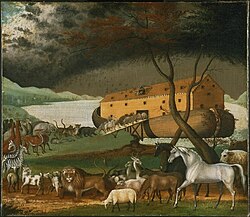
Yesterday we began our journey towards the cross from the Garden of Eden. Following the fall of Adam and Eve, the population of the world has grown, but sin has prevailed as well. By Genesis 6, God is grieved at the wickedness on earth, and resolves to do something about it. God's judgement comes upon the earth, in the form of water - not just an afternoon of heavy rain, but forty days of continual rain, so that the whole earth is flooded. Everyone will face the consequence of their sin - death. Waterworld becomes a reality.
Except one man is spared the watery grave. He and his family are rescued from destruction, along with a floating zoo. Noah is saved by his ark (built by an amateur, which got on better than the Titanic, built by professionals!). The contrast is clear, as God reveals to Noah what is about to happen:
For behold, I will bring a flood of waters upon the earth to destroy all flesh in which is the breath of life under heaven. Everything that is on the earth shall die. But I will establish my covenant with you, and you shall come into the ark, you, your sons, your wife, and your sons' wives with you. (Genesis 6:17-18)
Immediately when we read those verses we think that Noah was special in some way. That Noah was different from everyone else. That everyone else was very bad, and Noah was very good. Why else would God rescue him when all the bad people were condemned to the judgement of the flood? To think that is to miss what God has just said - everyone deserves to die; Noah included.
Noah isn't saved because he is good. He is saved because he is graced. Back a few verses we're told the crucial fact about Noah which explains why he is saved when everyone else perishes: 'But Noah found favour in the eyes of the LORD.' (Gen 6:8) Favour, or grace, is why the text goes on to say that Noah was a righteous man, blameless in his generation. His salvation is rooted in God's grace, not in Noah's goodness.
Christ Jesus is our ark - our rescue from the worldwide judgement that is coming - in Jesus there is safety, without him there is only judgement. Those who are saved aren't there because of their goodness or giving, performance or perfection. They have found favour in the eyes of the Lord. It's why we can't boast - we don't deserve it. Rather, we just marvel at the unexpected, undeserved grace gift of God.
As Noah, the one who found favour in God's eyes emerged from the ark, well, it was like a new creation. The animals are released and begin all over again. Noah and his family begin to populate the earth. Everything is new, yet just the same. Sin continues - Noah himself being a drunkard. But one day those who have been graced and gifted with salvation in Christ will step into the new heavens and the new earth, where there will be no more sin, sickness, sadness or suffering. Eden restored and indeed, surpassed. What a day that will be!
Wednesday, March 09, 2011
The Way of the Cross (1)
Today is Ash Wednesday, the beginning of Lent, as we move towards the events of Good Friday and Easter Sunday. Today I'm also launching a (hopefully) daily series as we join with Jesus on his journey towards Jerusalem, the way of the cross. As we'll see in this series, the way of the cross begins a lot further back than Pilate's house; a lot earlier than the first days of Jesus' ministry in Galilee; it goes right back to Eden and beyond. I invite you to join with me as we follow the way of the cross through the Scriptures.
Perfection. Paradise. A wonderful creation, moulded and shaped by God, inhabited by the people made in his image. Eden stands at the start of the Bible, yet as we look around us at the world in which we live, it doesn't look much like Eden. Murder, violence, rebellion, hate, fear, famine - these are daily headlines on our TV screens. What went wrong? What changed?
The Bible, in Genesis 3, tells us how we fell from Eden to everyday life. Eve and Adam obey the creation rather than the Creator; they believe the lie rather than the truth; they desire to be like God rather than to love and serve God. And so they fell, hiding from God because they suddenly see themselves as they really are. Guilty, shameful, lost.
God comes as judge, acting justly towards the serpent, yet with mercy towards his people - promising a deliverer, the serpent-crusher. The one who will bruise the head of the serpent even as his heel is bruised. The hunt is on for the one who will deal the fatal blow to the serpent, the devil, while suffering himself to perform it. But before we dash on from Genesis 3, to find out who this serpent-crusher will be, we get another hint towards the end of the chapter.
And the LORD God made for Adam and for his wife garments of skins and clothed them. (Genesis 3:21)
It's not saying that Adam and Eve were only given skin at this time - as if they had been running around like fleshless skeletons you might see in a horror movie. No, they were fully skinned - but now the Lord covers their nakedness with garments of skins.
For their shame to be removed, they were covered with skins - the skins of animals. There may be more than one way to skin a cat, but either way, an animal has to die in order to yield its skin. So even here, right in the earliest days, we see the notion of substitution in operation, where something dies to provide cover for the shame and sin of God's people.
We, living after the cross, can see this much clearer, as we put on Christ, as we are clothed in his righteousness, and our shame is taken away.
Perfection. Paradise. A wonderful creation, moulded and shaped by God, inhabited by the people made in his image. Eden stands at the start of the Bible, yet as we look around us at the world in which we live, it doesn't look much like Eden. Murder, violence, rebellion, hate, fear, famine - these are daily headlines on our TV screens. What went wrong? What changed?
The Bible, in Genesis 3, tells us how we fell from Eden to everyday life. Eve and Adam obey the creation rather than the Creator; they believe the lie rather than the truth; they desire to be like God rather than to love and serve God. And so they fell, hiding from God because they suddenly see themselves as they really are. Guilty, shameful, lost.
God comes as judge, acting justly towards the serpent, yet with mercy towards his people - promising a deliverer, the serpent-crusher. The one who will bruise the head of the serpent even as his heel is bruised. The hunt is on for the one who will deal the fatal blow to the serpent, the devil, while suffering himself to perform it. But before we dash on from Genesis 3, to find out who this serpent-crusher will be, we get another hint towards the end of the chapter.
And the LORD God made for Adam and for his wife garments of skins and clothed them. (Genesis 3:21)
It's not saying that Adam and Eve were only given skin at this time - as if they had been running around like fleshless skeletons you might see in a horror movie. No, they were fully skinned - but now the Lord covers their nakedness with garments of skins.
For their shame to be removed, they were covered with skins - the skins of animals. There may be more than one way to skin a cat, but either way, an animal has to die in order to yield its skin. So even here, right in the earliest days, we see the notion of substitution in operation, where something dies to provide cover for the shame and sin of God's people.
We, living after the cross, can see this much clearer, as we put on Christ, as we are clothed in his righteousness, and our shame is taken away.
Sunday, March 06, 2011
Sermon: Joel 2: 12-17 What Is Repentance?
Australia has been in the news recently with flooding. Now, there’s another problem hitting the country - the locust: One plantation owner says that while the floods were devastating, locusts are now proving a major concern. "Every day they get a bit bigger and every day they need more food. They're just eating their way through the whole area. Any green leaf that bends down and touches the ground, within hours you can see grasshoppers on it eating their way up."
A farming spokesman says "They're attacking all the new growth, the new mango shoots, citrus plants, the new pawpaws being planted, any bananas coming close to the ground are being shredded After the summer we've had, to watch what produce you have got left being annihilated by these vicious locusts is pretty devastating."
In our Bible reading this morning, we find ourselves in the book of the prophet Joel. It’s probably not one of the better known books, so it might be helpful to see the background and context of our reading. We’re not told when Joel lived, all we’re told is that he was the son of Pethuel (1:1). He was a prophet in Jerusalem, at a time of national disaster. A plague of locusts was attacking the land of Judah, and coming dangerously close to Jerusalem. Look back at 1:4 - total devastation. The wine has been cut off, food has been cut off, provisions for livestock have been lost - and even the offerings for the temple have been cut off (1:9,13).
Let’s put Joel in the big picture of the Bible, to see what a great disaster this is: God called Abraham, promising him descendants, and a land, and blessing. So the people here are the children of Abraham, the children of Jacob/Israel; and they’re in the land promised to them. But the promised blessings have been taken away, because of the people’s sin and rebellion.
The locust plague in Judah signals the day of the Lord drawing near (1:15) - a day of darkness and gloom, a day of clouds and thick darkness! (2:2). As you read through Joel 1 and 2, the tension builds, the panic rises, the sense of doom grows - and Joel says that this locust army is God’s army - he is controlling it, commanding it. Look at v 11: ‘The LORD utters his voice before his army, for his camp is exceedingly great; he who executes his word is powerful. For the day of the LORD is great and very awesome; who can endure it?’
That’s the question facing the people of Jerusalem as Joel speaks to them - who can endure the day of the LORD? When judgement comes, which of them could stand, as destruction looks them in the face? It’s the very same question we must answer too. In the face of a holy God, can you endure the day of the LORD? Can you be confident on that day, or do your sins condemn you?
We find that we’re caught in the same situation as the people of God in Jerusalem - God’s judgement awaits us; the enemy is at the gates; the death that we deserve lies ready to pounce. Darkness and gloom.
Even as that question hangs in the air - who can endure it - the LORD himself speaks, making his appeal and invitation through Joel. Do you see those words at the start of verse 12? “Yet even now.” This morning we’re looking at what repentance is, and in our remaining time, we’ll see that Repentance is Rending (your heart) and Returning (to the LORD), and Required of all.
Perhaps one of the better known lines from Joel is the one found at the start of verse 13: ‘rend your hearts and not your garments.’ But what does that mean? What does it mean to say that repentance is rending your heart? It might be helpful to look at the contrast there, between rending heart and rending garments. You see, to rend your garment was to tear it in two - it was an outward sign of mourning, a ceremonial act of grief. Last Sunday night we were looking at Elijah being taken up to heaven, and Elisha, his companion immediately ‘took hold of his own clothes, and tore them in two pieces.’ (2 Kings 2:13).
God isn’t interested in outward ceremonial expressions of repentance if they’re only on the surface. It can be easy to go through the motions, to look good coming along to church, to kneel properly and appear to repent of sins, but it’s not even skin deep. It’s just an outward act with no real impact on our lives. So easy, that any of us can do it. Believe me, I know it all too well, sometimes.
Rather, God looks on the heart, and it’s there that we need to be rending. To rend your heart is to have your heart breaking over your sin and rebellion. We’re not talking about the blood-pumping organ when we speak of the heart, we’re talking about the centre of our being, the very essence of your being. All too often we’re comfortable with our sin, not convicted; we’re delighted rather than distressed. Joel calls us to see our sin for what it is, to be heartbroken over our sin. Only then will we want to repent, to escape from our sin, to resolve to stop, and seek to please the Lord.
Repentance is rending your heart, but it’s also returning to the LORD. It’s not enough just to be sorry for your sin, or to beat yourself up about it, if that’s all you do about it. There are many who have a guilty conscience, who are troubled over their sin, but who never return to the Lord. Just think of the prodigal son - when he came to himself sitting in the pigpen, he knew he had done wrong, but if he had stayed there, he never would have found forgiveness and acceptance.
As we’ve seen, the LORD issues this invitation - Yet even now (even in the face of judgement), yet even now, return to me with all your heart. You see, heartfelt repentance will lead to fasting, weeping and mourning - whereas outwards gestures won’t lead to inner change.
We have gone astray, but Joel reminds the people who it is they are returning to - look at the character of God as it shines out in the passage: ‘Return to the LORD your God (the covenant God), for he is gracious and merciful, slow to anger, and abounding in steadfast love; and he relents over disaster.’ (2:13) It’s the same reminder of God’s character Moses was shown at Sinai when the people had rebelled and made the golden calf. God is merciful - in not giving us what we do deserve; and God is gracious - in giving us what we don’t deserve. As the people look back at their history, they see this time and again - gracious and merciful.
But you can never be presumptuous - you can’t presume that God’s just going to do it anyway. You can’t pursue sin thinking, well, sure, it’s God’s job to forgive. That’s why Joel says in verse 14 ‘Who knows whether he will not turn and relent, and leave a blessing behind him?’ We don’t approach God telling him what to do - we come humbly, returning to him, but as we do, we find that he relents.
So far we’ve seen that repentance is rending your heart, and returning to the LORD (saying sorry, coming back to him, taking refuge in his character). The rest of our passage asks the question, then, who needs to repent? And as we briefly look at it, we see that repentance is required of all. ‘Consecrate the congregation; assemble the elders; gather the children, even nursing infants. Let the bridegroom leave his room, and the bride her chamber’(16) From the oldest to the youngest - from elders to nursing infants, everyone must repent. Each of us have this sin problem - the wrong things we have done, thought and said; the good things we haven’t done. Each of us needs to repent, to be heartbroken over our sin and returning to the covenant God who is merciful and gracious.
We may not be facing a plague of locusts waiting at the edge of Dundonald to devastate our crops; but we continue to face the near judgement of our sins - the threat is just as real. On this side of the cross, we can see clearly the grace and mercy of God, as Jesus takes those wrong things we have done, takes our place, to die the death we deserve; to give us the heaven we don’t deserve. As we look back through history to the cross of Jesus, we can answer that question: ‘Who knows whether he will not turn and relent, and leave a blessing behind him?’
Jesus was judged and cursed because of our sin, your sin and mine, so that God relents in his attitude towards us - no longer condemnation, but grace and mercy. That’s why Jesus could appear on the scene at the beginning of Mark’s Gospel and declare: ‘The Kingdom of God is at hand; repent and believe in the gospel (good news).’ (Mark 1:15). As we turn from sin and believe the promises of God about the character of God, we find that our sins are forgiven, the judgement has been avoided, and we are free to live and love and serve God.
We see that, as judgement has been averted, and God’s mercy and grace flow towards the people of God that God does indeed bless them - look on ahead to verse 25: ‘I will restore to you the years that the swarming locust has eaten...’ - blessing rather than curse; and all for the glory of God, so that the nations can’t ask ‘Where is their God?’ but so that all know that the LORD, he is God; the one who will pour out his Spirit on all his people.
Perhaps today you know that you face judgement; that you can’t stand in that day by yourself; that you answer that question of ‘who can endure it?’ by saying, not me. Our God does not change - he who was gracious and merciful in Joel’s day continues to be so, as we see revealed more fully in the person and work of the Lord Jesus. That offer still stands today - to rend your heart, to return to the Lord; to repent - which is required of everyone. Will you repent today? Remember the open arms of the prodigal son - that welcome is for you. Repent, and believe the good news.
This sermon was preached in St Elizabeth's Church, Dundonald on Sunday 6th March 2011.
A farming spokesman says "They're attacking all the new growth, the new mango shoots, citrus plants, the new pawpaws being planted, any bananas coming close to the ground are being shredded After the summer we've had, to watch what produce you have got left being annihilated by these vicious locusts is pretty devastating."
In our Bible reading this morning, we find ourselves in the book of the prophet Joel. It’s probably not one of the better known books, so it might be helpful to see the background and context of our reading. We’re not told when Joel lived, all we’re told is that he was the son of Pethuel (1:1). He was a prophet in Jerusalem, at a time of national disaster. A plague of locusts was attacking the land of Judah, and coming dangerously close to Jerusalem. Look back at 1:4 - total devastation. The wine has been cut off, food has been cut off, provisions for livestock have been lost - and even the offerings for the temple have been cut off (1:9,13).
Let’s put Joel in the big picture of the Bible, to see what a great disaster this is: God called Abraham, promising him descendants, and a land, and blessing. So the people here are the children of Abraham, the children of Jacob/Israel; and they’re in the land promised to them. But the promised blessings have been taken away, because of the people’s sin and rebellion.
The locust plague in Judah signals the day of the Lord drawing near (1:15) - a day of darkness and gloom, a day of clouds and thick darkness! (2:2). As you read through Joel 1 and 2, the tension builds, the panic rises, the sense of doom grows - and Joel says that this locust army is God’s army - he is controlling it, commanding it. Look at v 11: ‘The LORD utters his voice before his army, for his camp is exceedingly great; he who executes his word is powerful. For the day of the LORD is great and very awesome; who can endure it?’
That’s the question facing the people of Jerusalem as Joel speaks to them - who can endure the day of the LORD? When judgement comes, which of them could stand, as destruction looks them in the face? It’s the very same question we must answer too. In the face of a holy God, can you endure the day of the LORD? Can you be confident on that day, or do your sins condemn you?
We find that we’re caught in the same situation as the people of God in Jerusalem - God’s judgement awaits us; the enemy is at the gates; the death that we deserve lies ready to pounce. Darkness and gloom.
Even as that question hangs in the air - who can endure it - the LORD himself speaks, making his appeal and invitation through Joel. Do you see those words at the start of verse 12? “Yet even now.” This morning we’re looking at what repentance is, and in our remaining time, we’ll see that Repentance is Rending (your heart) and Returning (to the LORD), and Required of all.
Perhaps one of the better known lines from Joel is the one found at the start of verse 13: ‘rend your hearts and not your garments.’ But what does that mean? What does it mean to say that repentance is rending your heart? It might be helpful to look at the contrast there, between rending heart and rending garments. You see, to rend your garment was to tear it in two - it was an outward sign of mourning, a ceremonial act of grief. Last Sunday night we were looking at Elijah being taken up to heaven, and Elisha, his companion immediately ‘took hold of his own clothes, and tore them in two pieces.’ (2 Kings 2:13).
God isn’t interested in outward ceremonial expressions of repentance if they’re only on the surface. It can be easy to go through the motions, to look good coming along to church, to kneel properly and appear to repent of sins, but it’s not even skin deep. It’s just an outward act with no real impact on our lives. So easy, that any of us can do it. Believe me, I know it all too well, sometimes.
Rather, God looks on the heart, and it’s there that we need to be rending. To rend your heart is to have your heart breaking over your sin and rebellion. We’re not talking about the blood-pumping organ when we speak of the heart, we’re talking about the centre of our being, the very essence of your being. All too often we’re comfortable with our sin, not convicted; we’re delighted rather than distressed. Joel calls us to see our sin for what it is, to be heartbroken over our sin. Only then will we want to repent, to escape from our sin, to resolve to stop, and seek to please the Lord.
Repentance is rending your heart, but it’s also returning to the LORD. It’s not enough just to be sorry for your sin, or to beat yourself up about it, if that’s all you do about it. There are many who have a guilty conscience, who are troubled over their sin, but who never return to the Lord. Just think of the prodigal son - when he came to himself sitting in the pigpen, he knew he had done wrong, but if he had stayed there, he never would have found forgiveness and acceptance.
As we’ve seen, the LORD issues this invitation - Yet even now (even in the face of judgement), yet even now, return to me with all your heart. You see, heartfelt repentance will lead to fasting, weeping and mourning - whereas outwards gestures won’t lead to inner change.
We have gone astray, but Joel reminds the people who it is they are returning to - look at the character of God as it shines out in the passage: ‘Return to the LORD your God (the covenant God), for he is gracious and merciful, slow to anger, and abounding in steadfast love; and he relents over disaster.’ (2:13) It’s the same reminder of God’s character Moses was shown at Sinai when the people had rebelled and made the golden calf. God is merciful - in not giving us what we do deserve; and God is gracious - in giving us what we don’t deserve. As the people look back at their history, they see this time and again - gracious and merciful.
But you can never be presumptuous - you can’t presume that God’s just going to do it anyway. You can’t pursue sin thinking, well, sure, it’s God’s job to forgive. That’s why Joel says in verse 14 ‘Who knows whether he will not turn and relent, and leave a blessing behind him?’ We don’t approach God telling him what to do - we come humbly, returning to him, but as we do, we find that he relents.
So far we’ve seen that repentance is rending your heart, and returning to the LORD (saying sorry, coming back to him, taking refuge in his character). The rest of our passage asks the question, then, who needs to repent? And as we briefly look at it, we see that repentance is required of all. ‘Consecrate the congregation; assemble the elders; gather the children, even nursing infants. Let the bridegroom leave his room, and the bride her chamber’(16) From the oldest to the youngest - from elders to nursing infants, everyone must repent. Each of us have this sin problem - the wrong things we have done, thought and said; the good things we haven’t done. Each of us needs to repent, to be heartbroken over our sin and returning to the covenant God who is merciful and gracious.
We may not be facing a plague of locusts waiting at the edge of Dundonald to devastate our crops; but we continue to face the near judgement of our sins - the threat is just as real. On this side of the cross, we can see clearly the grace and mercy of God, as Jesus takes those wrong things we have done, takes our place, to die the death we deserve; to give us the heaven we don’t deserve. As we look back through history to the cross of Jesus, we can answer that question: ‘Who knows whether he will not turn and relent, and leave a blessing behind him?’
Jesus was judged and cursed because of our sin, your sin and mine, so that God relents in his attitude towards us - no longer condemnation, but grace and mercy. That’s why Jesus could appear on the scene at the beginning of Mark’s Gospel and declare: ‘The Kingdom of God is at hand; repent and believe in the gospel (good news).’ (Mark 1:15). As we turn from sin and believe the promises of God about the character of God, we find that our sins are forgiven, the judgement has been avoided, and we are free to live and love and serve God.
We see that, as judgement has been averted, and God’s mercy and grace flow towards the people of God that God does indeed bless them - look on ahead to verse 25: ‘I will restore to you the years that the swarming locust has eaten...’ - blessing rather than curse; and all for the glory of God, so that the nations can’t ask ‘Where is their God?’ but so that all know that the LORD, he is God; the one who will pour out his Spirit on all his people.
Perhaps today you know that you face judgement; that you can’t stand in that day by yourself; that you answer that question of ‘who can endure it?’ by saying, not me. Our God does not change - he who was gracious and merciful in Joel’s day continues to be so, as we see revealed more fully in the person and work of the Lord Jesus. That offer still stands today - to rend your heart, to return to the Lord; to repent - which is required of everyone. Will you repent today? Remember the open arms of the prodigal son - that welcome is for you. Repent, and believe the good news.
This sermon was preached in St Elizabeth's Church, Dundonald on Sunday 6th March 2011.
Thursday, March 03, 2011
Sermon Audio: 2 Kings 2: 1-25
On Sunday evening, I finished off our short series in the life of Elijah, looking at his farewell and follow up as he was Taken Up. Here's what it sounded like.
Book Review: The Good Man Jesus and The Scoundrel Christ

This is a story - so proclaims the back cover of the dust jacket of this Philip Pullman offering. It's a story of how stories become stories, in this alternative reading of the gospels, projected back in time.
The story revolves around two men, brothers, twin brothers, Jesus and Christ, born to Mary and one who claims to be an angel. Pullman in this way seeks to retell the gospel using the two contrasting characters.
Jesus, in the story, is, according to the title, a good man. After a boisterous childhood (where his brother Christ always got him out of trouble), he travels the countryside teaching people, doing things out of passion, but not performing any miracles. Christ, his twin brother, is portrayed differently - a childhood of reading and praying, scheming, calculating, in the shadows.
Throughout the book there are plenty of twists / alternative readings of what the gospel texts present as the life, teaching, miracles and actions of the Lord Jesus. Right at the start of Jesus' ministry, the temptations aren't presented by the devil, but by his brother Christ, who tempts him to perform miracles and influence people by trickery; and who tries to get Jesus to back his idea of a worldwide church - and thus have the kingdoms of the world and their power.
As Jesus' ministry develops, Christ is influenced himself by a shadowy stranger who attempts to exploit the situation for his own ends, and for the ends of the church. So Christ begins to keep a record of what Jesus has been saying and doing - with an extended discussion on truth and history - history is what happens, but truth is what should have happened (which will better serve the kingdom). This is particularly seen in how Christ records the teaching and miracles:
'The statements need to be edited, the meanings clarified' in what Jesus says. One example is when Mary and Martha bicker about helping or listening to Jesus - here in the book Jesus sides with Martha, because once bread is burnt, it can't be eaten, whereas she'll be able to hear Jesus' teaching again. 'When Christ heard of this, he knew it would be another of those saying of Jesus that would be better as truth then as history.'
Similarly, we're presented with the old liberal explanations of the miracles (denying any supernatural element outright). So Peter's mother-in-law 'presently she felt well again'. The Cana miracle of water into wine was actually Jesus shaming the steward of the feast who had tried to steal the wine and was forced to bring it out again. 'Some people who were sick felt themselves uplifted by his presence, and declared themselves cured.' And the prime example, where the feeding of the five thousand was just Jesus sharing his picnic and encouraging everyone else to share theirs.
The revisionism becomes clearest (and most sad) when we reach the passion and crucifixion. Again, through the shadowy stranger's influence and direction, Christ is the betrayer, so that Jesus is executed on the cross. Christ then becomes the 'risen Jesus' - his identical twin brother who appears to the disciples, showing that he's alive, and that explains the change in the disciples - Jesus' body having been removed from the tomb the night before to ensure the ruse worked.
In some cases, there were potentially helpful insights - the sermon on the mount is presented as Jesus preaching, but also answering questions and objections as he goes. Similarly, there are sometimes background details and possible motivations that could help to illuminate the gospels. So it's not all bad.
It's just mostly bad. On reading this alternative gospel, it is clear that it's no gospel at all. Pullman's prejudice against the church, faith, and the supernatural shine clearly from virtually every page. The way Jesus is presented, as this 'good man' with a vision of the kingdom coming makes no sense at all if he was just another man - a visionary idealist who doesn't believe God is there or is listening.
Pullman has been particularly ingenious at attempting to write this as a possible original backstory to the gospels as we have them - what really happened, but it's simply implausible and doesn't make much sense at times. Having read this, my hope is that it drives people to read the canonical gospels afresh, to find the real Lord Jesus - while rejecting this book, which should really be titled 'The God-Man Jesus Christ and the Scoundrel Philip Pullman.'
Wednesday, March 02, 2011
Nearer, but Further Away
I've noticed something slightly odd on my travels recently. While you're getting nearer to a place, you're actually further away. Allow me to explain.
When you're leaving the village of Augher on the A4 heading east, there's a signpost which declares Belfast to be 56 miles away. Drive a mile or so closer to Belfast, and the next signpost declares Belfast to be 57 miles away! You're going in a Belfast direction, but you've still further to go.
View Larger Map
Sounds strange, doesn't it? It's all down to the recent roadworks, and the extension of the A4 dual carriageway from Dungannon to Ballygawley. The 56 miles to Belfast sign is from the pre-dual carriageway days, along the old A4 through Killeshil, Cabragh etc. The closer to Belfast but further away sign was installed when the new road was built - which doesn't follow the path of the old A4, but loops further south, slightly closer to Aughnacloy. In effect, Augher and Enniskillen are now further from Belfast, thanks to the course of the new road.
You think you're getting somewhere, only to find you're not as far as you thought you were. The believer's sanctfication is a bit like that. You've come to faith in Jesus, your sins are forgiven, you're free to love and serve the Lord, and you're ready to go places, thinking that you're going to be just like Jesus tomorrow.
The gift of the Holy Spirit, though, highlights our sinfulness, bringing things to light which must be dealt with, repented of, abandoned. We're making progress to be more like Jesus, but these can seem like setbacks. The closer we get to God, the more we're aware of our sinfulness.
This isn't a bad thing - it's the way it's meant to be. Just think of Isaiah, who was pottering along, then he had that vision of the Lord in his holiness, and Isaiah is ruined (Isaiah 6).
It might seem like you're further away, but you're going the right way. Keep going!
When you're leaving the village of Augher on the A4 heading east, there's a signpost which declares Belfast to be 56 miles away. Drive a mile or so closer to Belfast, and the next signpost declares Belfast to be 57 miles away! You're going in a Belfast direction, but you've still further to go.
View Larger Map
Sounds strange, doesn't it? It's all down to the recent roadworks, and the extension of the A4 dual carriageway from Dungannon to Ballygawley. The 56 miles to Belfast sign is from the pre-dual carriageway days, along the old A4 through Killeshil, Cabragh etc. The closer to Belfast but further away sign was installed when the new road was built - which doesn't follow the path of the old A4, but loops further south, slightly closer to Aughnacloy. In effect, Augher and Enniskillen are now further from Belfast, thanks to the course of the new road.
You think you're getting somewhere, only to find you're not as far as you thought you were. The believer's sanctfication is a bit like that. You've come to faith in Jesus, your sins are forgiven, you're free to love and serve the Lord, and you're ready to go places, thinking that you're going to be just like Jesus tomorrow.
The gift of the Holy Spirit, though, highlights our sinfulness, bringing things to light which must be dealt with, repented of, abandoned. We're making progress to be more like Jesus, but these can seem like setbacks. The closer we get to God, the more we're aware of our sinfulness.
This isn't a bad thing - it's the way it's meant to be. Just think of Isaiah, who was pottering along, then he had that vision of the Lord in his holiness, and Isaiah is ruined (Isaiah 6).
It might seem like you're further away, but you're going the right way. Keep going!
Subscribe to:
Posts (Atom)