Sermons, book reviews and randomness from the Reverend Garibaldi McFlurry.
Showing posts with label ministry. Show all posts
Sunday, September 15, 2019
Sermon: Matthew 9: 35-38 Harvest Workers
Boys and girls, I’ve got a question for you today. What would you like to do when you grow up? Maybe some of you would like to be a police officer, or work for the fire service. Maybe you’d like to be a journalist or a sports star. Maybe you’d like to be a doctor or a nurse.
This morning I want to challenge everyone here - boys and girls, mums and dads, grannies and grandas and everybody - to become a harvest worker. You can’t be too young for the job; and you’re never too old for the job - you can start today; and you don’t even have to give up whatever job you already do.
Now, you might be thinking to yourself - what’s involved in this job as a harvest worker? What would I have to do? What are the hours like? What’s the pay like? And I have to be upfront with you - it’s a fulltime commitment, but the rewards are out of this world. So let’s look at the job advert from this morning’s Bible reading.
In Matthew 9, we find that Jesus has been travelling through all the towns and villages. And what has he been doing in all these places? ‘Teaching in their synagogues, preaching the good news of the kingdom and healing every disease and sickness.’ (35) Jesus has been teaching, and preaching, and healing. He’s sharing the good news about his kingdom; he’s putting wrong things right. And as he goes about the country, Matthew tells us what Jesus sees:
‘When he saw the crowds...’ (36)
What do you see when you see a big crowd of people? When you walk into the school assembly hall full of teachers and pupils, what do you see? When you walk up the street in Portadown or Armagh or Belfast, what do you see? You might know a few people: you normally bump into someone you know; but even the people you know, never mind the people you don’t know - what do you see?
Jesus sees the crowds of people, and he feels something:
‘When he saw the crowds, he had compassion on them.’
Jesus sees the crowds of people, and he cares about them. He feels for them. He had compassion on them. That word compassion means to suffer alongside. Jesus sees the people, he knows what they’re going through, and he has compassion for them. He’s concerned for them. He enters into their situations and their suffering, and cares about them - because he loves them.
And why does Jesus feel this way?
‘When he saw the crowds, he had compassion on them, because they were harassed and helpless, like sheep without a shepherd.’ (36)
When Jesus sees the crowds, he sees their situations, he sees their hearts, and he sees that they are ‘harassed and helpless.’ Perhaps you feel this way today. Perhaps you know what it’s like to be harassed and helpless. You’re stressed out; feeling the weight of the world on your shoulders; knocked down or knocked out; and you don’t know what to do, or where to turn; feeling all alone, without any flicker of hope.
Matthew gives us a picture of what being harassed and helpless is like - ‘like sheep without a shepherd.’ Normally the sheep follow the shepherd, and are protected by the shepherd, and are provided for by the shepherd; but if they have no shepherd, then they’re lost. They feel harassed and helpless and don’t know where to turn.
And that’s how people are when they’re not following the Lord who is our shepherd. And so Jesus sees the crowds, he sees their situations, and he has compassion for them. Do we see people the way Jesus sees them? Do we care for people who don’t know Jesus? Do we care that they’re harassed and helpless, that they don’t know the shepherd Lord?
And what Jesus sees leads him to say something. Do you see what Jesus says:
‘Then he said to his disciples, “The harvest is plentiful but the workers are few. Ask the Lord of the harvest, therefore, to send out workers into his harvest field.”’ (37-38)
He says that there’s a big job to do, but there aren’t enough people to do the job. There’s loads to do, but not loads of people to do it. There’s a big harvest to gather in - it’s plentiful; but there are a small number of harvest workers. Do you see the problem?
A plentiful harvest but few workers. So what needs to happen? What do you need if there’s more work than there are workers? You need more workers! Do you see what Jesus says next? ‘Ask the Lord of the harvest, therefore, to send out workers into his harvest field.’
Jesus tells the disciples to ask for more harvest workers. And who is the Lord of the harvest? Who is the person who owns the field, that we have to ask? It’s Jesus!
Jesus tells us to ask him for more harvest workers - to pray for more people to go out and gather in the harvest, as they share the good news of Jesus the king. To be a harvest worker is to tell people about Jesus, and to bring them to Jesus. And there is more work to be done. More people who are harassed and helpless need to be brought to Jesus. And so we need to pray for harvest workers - people who will share the gospel wherever they are, or wherever God sends them. Because here in Richhill and in Northern Ireland and right around the world there is a harvest to be gathered in.
So Jesus sees the need; and he says to ask him for harvest workers; and finally, Jesus sends out the workers. The disciples are told to ask the Lord of the harvest to send out workers into his harvest field. And the very next thing that happens is that their prayer is answered. The Lord of the harvest does send out workers - and who does he send? He sends the disciples! The disciples were the answer to their own prayers.
That’s sometimes how God works. We might see a particular need; something that needs to be done. And so we pray to God, asking for more people to work with young people; or for someone to start a seniors outreach; or whatever it is - and we find that we are the answer to our own prayers, as God sends us to do the thing that is on our hearts.
Today is Vocations Sunday in the Church of Ireland. It’s a reminder that every Christian is called to ministry. Each of us is called to use the gifts God has given us to serve him and other people. Each of us is called to be harvest workers, as we point people to Jesus and bring them to Jesus. So pray for harvest workers - for people to go out into God’s harvest field at home or away - and then see where God sends you to work in his harvest field.
It may be that God is calling you to ordained ministry. Consider it seriously, and carefully, and prayerfully. I’d love to chat with you about it.
Jesus sees the need - people who are harassed and helpless - and he feels compassion for them. Jesus says to pray to him, asking for harvest workers because the harvest is plenty but the workers are few. And as we pray to the Lord of the harvest, we’ll find that Jesus sends us to be harvest workers. Let’s pray now to the Lord of the harvest, as we ask, and offer ourselves in his service.
This sermon was preached at the Family Service in St Matthew's Church, Richhill on Sunday morning 15th September 2019.
Labels:
Church of Ireland,
Matthew,
ministry,
sermons
Sunday, September 23, 2018
Sermon: 1 Thessalonians 2: 1-9 Ministry Motives
I’m sure you know our church’s mission statement. And I’m sure that you could recite it without much trouble. But just in case you’re not sure, you’ll find it at the top of every notice sheet. It’s what St Matthew’s Church exists to do. It’s why we’re here, and what everything we do is driven towards. ‘St Matthew’s is a gospel-centred church reaching out to our community and our world with the love of Christ.’
The question I want to pose this morning is this one - how do we actually do that? What does it look like to reach out to our community? When it comes to the dreaded e word, evangelism, how can we play our part in reaching out with the love of Christ?
In our Bible reading this morning, we discover how Paul and his team did it in Thessalonica. And to help us do that, we’ll see that Paul addresses a misunderstanding; examines motives, and recalls the manner in which they did evangelism. Those three aspects - the misunderstanding, their motives, and their manner - will help us to see that sharing the gospel of God needs courage, conviction and compassion.
This letter that we’re studying was written by Paul to the church of the Thessalonians. Paul and the others had been in Thessalonica for just three weeks, proclaiming that Jesus is the Christ, God’s promised king, before Paul was chased out of town. Some Jews and Gentiles had become Christians, had formed a church, but you can imagine how they were feeling now that Paul had gone.
Had they been taken in by him? Were they fools to have listened to him? Could they really continue to follow Paul’s teaching if he wasn’t going to come back to see them? And maybe as time goes on, they think, maybe it was all a big mistake. A misunderstanding. Perhaps Paul’s visit had been a failure, a damp squib.
But that’s exactly what Paul addresses in verse 1. He’s appealing to them to remember what happened: ‘You know, brothers, that our visit to you was not a failure.’ The very fact that he’s calling them brothers (and sisters - the Greek word means siblings) shows that he hadn’t failed. They had become brothers and sisters in the Christian family. They had become children of God the Father. His visit had been successful.
But in addressing this misunderstanding, of whether his visit was a failure or not, Paul shows us that sharing the gospel of God needs courage. You see, Acts 17 is the story of Paul in Thessalonica, and before 17 comes 16. Acts 16 is the story of Paul in Philippi, where they had been beaten and imprisoned for bringing freedom to a slave girl and proclaiming the Lord Jesus.
So if Paul had been through all that - what he refers to here as ‘we had previously suffered and been insulted in Philippi’ - you might think that Paul would just stop talking about Jesus. He must have been tempted to be quiet, just to have an easy life. But Paul has the courage to share the good news. ‘But with the help of our God we dared to tell you his gospel in spite of strong opposition.’ (2)
It was only with God’s help that he would dare to speak up. But when he knew that God was with him, helping him, then he had the courage to speak boldly. So where might you need the courage to speak up? Let’s ask God that we will know his help, and that we will be courageous to speak up and share the gospel.
To share the gospel of God needs courage. But it needs even more than that. It also needs conviction. It may well be that some of the Thessalonians’ friends were questioning Paul’s motives. Why was it he was going from town to town? Was he out to fool people? Was he out for their money? The question of motives is what Paul moves on to from verse 3.
‘For the appeal we make does not spring from error or impure motives, nor are we trying to trick you.’ (3)
Paul makes clear what his motives were not. He wasn’t coming to them in error, because he had got the wrong end of the stick, spreading lies. He wasn’t coming to them with impure motives, for evil purposes. And he wasn’t coming to them to try to trick them, or deceive them, or lead them astray.
So what was motivating him to come to Thessalonica and share the good news with them? ‘On the contrary, we speak as men approved by God to be entrusted with the gospel.’ (4)
Here’s Paul’s motive - he has been approved by God and entrusted with the gospel. Whenever you’re sending a letter, you have a couple of options. You either take it to the person yourself, or you entrust it to someone else to take it. Normally, if the letter is going far away, you’ll entrust it to Royal Mail. Postman Pat has been entrusted with the letter - it’s his job to carry it unchanged to the recipient. It’s not his job to open the letter and change it. He brings it as it is.
And so Paul and the others were entrusted with the gospel. They had to bring the message as it is - unchanged. Their motive is to please the one who has sent them, by delivering the true message. That’s what Paul says in verse 4. ‘We are not trying to please men but God, who tests our hearts.’
It would be so tempting to try to please people, to say what they want to hear; to play down or ignore the fact that God is a holy God, that he cannot abide our sin, that we can’t just do what we like and expect to enter heaven. If Paul had been out to please the people of Thessalonica, his message would have been entirely different. But Paul isn’t a people-pleaser. His motive is to please God, to do what God wants him to do, and to say what God wants him to say.
And there’s a challenge there for us. who are we trying to please with our words (or our absence of words)? What’s the motive behind your words?
Sharing the gospel needs courage in opposition and conviction to share the good news faithfully. But these two together could lead to arrogance - that we have the truth. Some Christians may come across in that way, their manner suggests some sort of superiority. Paul was accused of flattery, of greed, and of seeking praise for himself. But Paul says he just wasn’t like that.
So what was the manner in which he shared the gospel? From verse 5 he says what he didn’t do: ‘You know we never used flattery, nor did we put on a mask to cover up greed - God is our witness. We were not looking for praise from men, not from you or anyone else.’ That’s what he was not. And then we see what he did do: ‘As apostles of Christ we could have been a burden to you, but we were gentle among you, like a mother caring for her little children.’
Paul takes the image of the nursing mother, gently caring for her little children. This is how we’re to do mission - loving the people we’re talking to, caring for them. And caring about them so much that we don’t just shout the gospel at them from a distance.
‘We loved you so much that we were delighted to share with you not only the gospel of God but our lives as well, because you had become so dear to us.’ (8)
Now, for some, that might be the hardest step - to share ourselves; to grow closer together. But it comes from that compassion - caring for people leads to sharing with people. Take some time this week to think about three people you care for, who you would like to see come to faith in the Lord Jesus. Pray for them. Care for them, and then look for opportunities to share with them the good news about Jesus.
Paul mentions his toil and hardship - how they worked night and day in order to not be a burden on the Thessalonians. And the principle seems to be that people who aren’t believers shouldn’t have to pay to hear the good news. We should do all that we can to make it as easy for them to hear the gospel - out of our compassion for them.
This is why we support mission agencies, so that missionaries are provided to people and places where the gospel is not known, so that they can hear it for free. It’s why our parish organisations exist - indeed, it’s why this parish exists. Your contributions enable this church family to live out and share the good news here in this village and beyond. So your giving to church and mission is a sign of your compassion for the village, so that everyone will hear the good news of Jesus.
Our mission statement might look well on the top of the service sheet. And it might sound nice. But if it only ever stays there, then it’s ultimately worthless. We need to take it, and live it out, as we - you and me together - as we reach out to our community and our world with the love of Christ. And how will we do that?
Sharing the gospel of God needs courage in the face of opposition; it needs conviction to speak rightly and please God who has entrusted us with his gospel; and it needs compassion, as we share our lives and show that we care.
Are you up for the challenge? Let’s do it together.
This sermon was preached in St Matthew's Church, Richhill on Sunday morning 23rd September 2018.
Labels:
1 Thessalonians,
evangelism,
ministry,
sermons
Tuesday, May 29, 2018
Sermon: Titus 1: 5-16 Entrusted with God's work
The summer holidays are on the horizon. But where to go? So you check out the websites, or you go into the travel agents; you look at the brochures; you ask your friends. Crete seems to be nice: warm and sunny, scenic and peaceful, so long as you stay away from the party capitals with drunken teenagers from the UK and Ireland. Titus, the person Paul is writing this letter to is on Crete, but he’s not there for a holiday. There’s work to be done.
After the introduction (Paul the apostle telling Titus his son and fellow worker about God’s promised eternal life and the truth that leads to godliness), we’re straight into Titus’ task.
‘The reason I left you in Crete was that you might straighten out what was left unfinished and appoint elders in every town, as I directed you.’ Titus is to appoint elders (also called overseers (bishops) in v7 - the same people). But what should you look for in a church leader? In the life of the church there are all sorts of leaders doing all sorts of things. What should we be looking for in the parish, in organisations, in vestry? As we’ll see, the important things to look for in church leaders link in with the overall theme of the letter to Titus: ‘the knowledge of the truth that leads to godliness.’ (1:1)
The two must go together - truth and godliness. It’s not an either/or pick and mix. It must be both together, truth leading to godliness. First up, then, we see in verses 6-8 the quality of godliness. The word that sums it up is in those verses twice: blameless. Let me be the first to say that this doesn’t mean perfection. None of us are perfect. So if the standard was perfection, then we wouldn’t have any Christian leaders.
Rather, what we’re looking for is someone with integrity. And this can be seen in three ways, in each of these verses - verse 6 at home; verse 7 in negative form; and verse 8 positively. At home (v6), blameless, as the husband of one wife, not running after lots of women; and whose children (if there are any) being believers. Just as the church is God’s family and household, so our families are the place where leadership is seen in practice.
Verse 7 shows what being blameless is not like: ‘not overbearing, not quick-tempered, not given to drunkenness, not violent, not pursuing dishonest gain.’ It’s easy to see why these kinds of behaviour would make someone unsuitable for church leadership. Each of these are modes of selfishness - putting me, or my anger or my addictions or my fists or my wallet first; all a lack of self-control.
In verse 8, we see the opposite of selfishness - hospitable, one who loves what is good, who is self-controlled, upright, holy and disciplined. These are the things to look for as we select new leaders. These are the things to pray for in our leaders, that they would be increasing.
Godliness is important for those in church leadership. But as we’ve said, that’s just one part. We also need the knowledge of the truth which leads to godliness. It’s truth we find in verse 9. ‘He must hold firmly to the trustworthy message as it has been taught...’
When I was a Curate in Dundonald I was visiting a home when a dog came and attached itself to the front of my shoe. It wasn’t for letting go. It hung on for ages. This is what Paul is looking for - a firm grasp, holding firmly to the trustworthy word.
You see, if God doesn’t lie, then we need to hold on his word - especially church leaders. Why? Because the work of the gospel is the work of the word. Paul gives us two parts of the work: so that he can encourage others by sound doctrine’ - so that what is preached is healthy, is sound. (That’s why it’s important for you to have your Bible open during the sermon to make sure that what I’m saying is what the Bible is saying). It would be great if that’s all that is needed, but there’s a second part of the work: ‘and refute those who oppose it.’
Do you see how the two parts fit together? encouraging other by sound doctrine, and refuting those who oppose it. Why’s this bit needed? There are those who contradict sound doctrine. There are those within the church who don’t hold to the trustworthy word. Not everyone who wears a clerical collar is a Christian preacher. I know this might be hard to believe, but it’s true today, just as it was true in Crete in the first century.
That’s why church leaders are needed. Do you see the ‘for’ at the start of verse 10? Here’s why we need sound teaching: Paul gives us a picture of what these false teachers were like. ‘rebellious people, mere talkers and deceivers... ruining whole households by teaching things they ought not to teach - and that for the sake of dishonest gain.’ You see, these false teachers were tapping into the natural Crete temperament. They were saying what the people wanted to hear, and were gaining, because it was an easy message.
It’s easy for us to see how the Cretans are far from godliness in their ‘always liars, evil brutes, lazy gluttons’ mode of being. But what about us? You see, we are also far from God and godliness by ourselves. What would Paul write of us? ‘People in County Armagh are...’ Richhillians are always... If someone came with a message that you’re basically all right the way you are, with no challenge or change needed, it would be popular enough. But it’s not the gospel. It’s not the trustworthy word that leads to godliness.
Titus is called to do something harder. As he holds to the trustworthy word, Paul tells him in verse 13: ‘Therefore, rebuke them sharply, so that they will be sound in the faith...’
Titus, and therefore church leaders must administer this rebuke in order to take people from their sin-sick nature to being sound in the faith. If you were sick, you would ring up the surgery and get an appointment to see a GP. You want them to stop you being sick and to make you well, healthy. This is what ministry is all about - we want to be healthy in the faith, but if we’re stuck in our sinful nature then we’re not healthy, we need the treatment of the gospel.
The false teachers had turned away from the truth, but it wasn’t that they believed in nothing; rather, they were now believing in anything - Jewish myths or the commands of those who reject the truth. But the end results of their belief and teaching is clearly to be seen. Throughout Titus we’re seeing that the truth leads to godliness. What you believe is seen in how you live your life.
We see it here with the false teachers. They rejected the truth. They still claim to know God, ‘but by their actions they deny him. They are detestable, disobedient, and unfit for doing anything good.’ What they do doesn’t match up with what they say. False teaching needs to be rebuked; corrected; and instead the truth proclaimed.
So what do we look for in church leaders? People marked by holding firm to the truth which leads to godly living. People who proclaim sound doctrine and rebuke those in error.
If you’re in leadership, perhaps like me, you’re feeling the weight of the requirements. Could we possibly do this? So please do pray for those who lead in this parish. And please do pray for me - in study and in homes and in the pulpit to hold and hold forth the word of truth, to apply it to my own life and household, and to the church family.
Who could do this? Who is sufficient for these things? There’s a section of the ordination service, which is our answer: ‘Because none of us can bear the weight of this ministry in our own strength, but only by the grace and power of God, let us pray earnestly for the outpouring of the Holy Spirit on these persons. Let us pray also that God will each day enlarge and enlighten their understanding of the Scriptures, so that they may grow stronger and more mature in their ministry, as they fashion their lives and the lives of the people they serve on the word of God.’
There’s that double emphasis on truth and godliness. So let’s pray.
This sermon was preached in St Matthew's Church, Richhill on Sunday evening 27th May 2018.
Labels:
church,
ministry,
ordinations,
sermons,
Titus
Friday, July 22, 2016
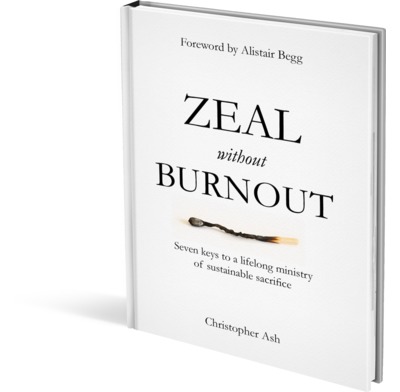
Book Review: Zeal Without Burnout
Having witnessed from afar and having benefited from his teaching and writing ministry, it seems to be a good rule of thumb that if Christopher Ash has written it, then it will be well worth reading. None more so than his little gem, Zeal Without Burnout. In many respects, this book came at a good time for me - reading it when it was needed, giving comfort, restoration, and encouragement to keep going.
Tackling the real and present danger of burnout, particularly (but not exclusively) among those involved in pastoral ministry, Ash writes frankly and openly from his own experiences, but also those of other Christians (and pastors) he has known. He recounts how on two separate occasions, he was almost entirely burnt out. The symptoms are frighteningly common. The stories of others also seem to resonate with many ministers, from conversations at clergy gatherings. But what to do about it?
Importantly, Ash makes the distinction between sacrifice and burnout. The picture he uses is biblical common-sense: 'We are to be living sacrifices until God takes us home to be with Jesus, we are to offer ourselves as those who have a life to offer, rather than a burned-out wreck.' (emphasis his). Sustainable sacrifice is what we're called to, which is developed in the next chapter, in which Ash reminds us that we are creatures of dust - and God is God and we are not.
As promised in the subtitle, the rest of the book sets out 'seven keys to a lifelong ministry of sustainable sacrifice.' Those seven keys are:
1. We need sleep and God does not.
2. We need Sabbath rests and God does not.
3. We need friends and God does not.
4. We need inward renewal and God does not.
5. A warning - beware celebrity!
6. An encouragement - it's worth it!
7. A delight - rejoice in grace, not gifts
Along the way, Ash shares some more stories from other people, showing how these principles work out in peoples' lives and ministries. These were helpful in grounding the teaching points. With a pastor's heart for other pastors, Ash gives us what we need to hear - warning, encouragement, and help to keep going in sustainable sacrifice for the glory of Jesus.
If I needed to read and heed this book, it may well be that you do too. Why not get a copy, do some self-diagnosis, and resolve to avoid burnout before it comes.
Zeal Without Burnout is available from The Good Book Company.
Wednesday, July 20, 2016
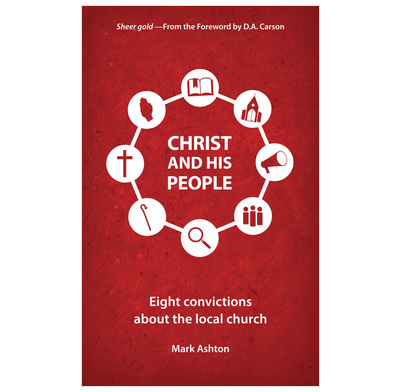
Book Review: Christ and his People
Books can be like a springboard. Something that seems so small and insignificant can propel you higher and further than you would have thought possible. And, despite its slight appearance, Mark Ashton's 'Christ and his People' provides a launchpad for deeper consideration of what church is all about. The subtitle proclaims that the book contains 'Eight convictions about the local church' and each one prompts further thought and reflection.
Mark Ashton had been vicar of Cambridge's The Round Church at St Andrew the Great, and this material was written in the final months of his life before his death from cancer. As such, he provides a rare clarity as he summarises the previous fifty years of ministry at the Round Church - thirty-two years with Mark Ruston and twenty with himself as Pastor - focusing on the priorities of that church.
The eight convictions about the local church addressed in turn are:
1. Bible: the word of God does the work of God through the Spirit of God in the people of God.
2. Local Church: the local church is the primary place where the Kingdom of Heaven impacts the kingdoms of this world.
3. Expository Preaching: consecutive expository preaching by the pastor-teacher is the best normal diet of the local church.
4. Meetings: the meetings of the local church are for both edification and evangelism (with no sharp distinction between these).
5. Ministers: the ministers of the local church are all its members.
6. Focus: the local church should focus on doing a few things really well.
7. Sacrifice: the local church exists for the sake of others.
8. Prayer: prayer lies at the heart of the local church.
Under each heading, Ashton explains and expands, using the Round Church as his worked example. It's interesting to see what ministry and mission looks like in another church, and to be challenged as to the priorities of our churches. How would they look in comparison?
Christ and his People has been released as a small book in its own right, but it also forms the first chapter of a larger volume on the Round Church, 'Persistently Preaching Christ'. As such, there's just one little dead-end in this book which escaped the editing and proof-reading phase, with reference to a discussion in 'Chapter 10' - presumably of the larger 'Persistently' book, since this one only has the eight chapters!
This would be a good book for a church leadership team to read, reflect and discuss together - perhaps over the course of a year and considering one priority at each of its elder/vestry/PCC meetings. Such a small and simple book, yet with the potential to alter a church's course through reconsidering its priorities.
Christ and his People is available from 10ofthose and The Good Book Company.
Monday, July 18, 2016
Book Review: To Fly To Serve
Books come in all different sizes - from multi-volume works down to short and snappy treatises. At the shorter and snappier end comes this little volume, with the subtitle 'Practical help for giving a Bible talk.' Coming from the pen of the Director of Ministry of the Proclamation Trust, there is much good and sound advice here for the person starting out in all sorts of ministries.
The title, you might have recognised, comes from the British Airways motto - 'To Fly. To Serve.' Adrian Reynolds takes up the motto and uses the image of flying a plane as a metaphor for giving a Bible talk / preaching a sermon. The talk is structured around the themes of destination, take-off, level flight, landing and arrivals, and the picture really helps to introduce the various aspects of giving a Bible talk - whether in church, youth group, or any other context.
Adrian gives plenty of helpful advice, peppered with humour and warmth, to launch the prospective preacher in their mission. It would be a great little book to read and think through as part of a small group for those taking their first steps in ministry, of whatever kind. And there are many good reminders for those who have been preaching for a while and have slipped into bad habits.
To Fly To Serve is available from 10ofthose with free postage - buy them for your ministry team and start a conversation about preaching!
Wednesday, June 15, 2016
Developing Ministry?
I serve on the Board of Governors of our local Primary School. Alongside speaking in Assembly and teaching some RE lessons, it's a way of being involved in the school, and engaging with the wider community. I'm coming to the end of my second year on the Board, and it has opened my eyes to everything that is involved in managing and maintaining a school.
Within the Board of Governors, there are different roles and responsibilities, shared out among the members. I'm one of two Governor reviewers for the Principal's PRSD (Performance Review and Staff Development). In June, we meet together with the Principal and an external adviser to review the past year's performance in terms of their specific objectives, and to set the new objectives for the coming year.
The three objectives are within the areas of: 1. Leadership and management; 2. Pupil and curriculum development; 3. Personal and professional development of the principal. The objectives are also SMART (Specific, Measurable, Attainable, Realistic and Time-bound).
In turn, the Principal reviews the PRSD of the teachers in the school, under three similar but slightly different areas, reflecting the different responsibilities: 1. Professional practice; 2. Pupil and curriculum development; 3. Personal and professional development of the teacher.
Coming away from the review meeting last week, it made me wonder about some form of PRSD for ministers in the Church of Ireland. As it stands, there is no model of performance reviewing and development planning as far as I can see. Perhaps it happens in some dioceses, but I've never experienced it.
It needn't be an onerous task - certainly not as detailed as the Annual Appraisal that Doctors endure, in which they produce a full ring binder of evidence of their Continuing Professional Development (CPD) - reflections on their reading, courses and lectures attended, and a certain number of learning hours spent in development; Quality Improvement Activity - auditing their work; Significant events - reflections on particular cases, and how they might do things differently; Feedback from colleagues and patients; and Records of compliments and complaints. I'm certainly not recommending that something as detailed be done, having watched the process of compiling such a portfolio.
If there was some form of review and planning, I think it would be incredibly helpful for those in ministry. Some structured, even if informal, way of reviewing the previous year of ministry, reflecting on particular challenges; as well as identifying two or three areas for focused learning and development.
Perhaps they could be structured around the themes of:
1. Theology (some particular branch or area of theology you want to learn more about e.g. Ecclesiology, or the Holy Spirit, or Biblical theology or Systematic theology, or committing to studying one Bible book intensively);
2. Pastoral (some area of pastoral ministry that you would wish to develop or improve - ministry to the sick / elderly / housebound / marriage prep / Baptism prep etc);
3. Professional - although immediately I recognise that isn't the right word, but I'm struggling to come up with the word, prompted by John Piper's challenging book, 'Brothers, we are not professionals'. This would look at the practical doing of ministry, including prayer, preparing liturgy, preaching prep, conducting meetings, choosing priorities, managing diary and time commitments etc. Perhaps Practical Ministry is the term I'm looking.
4. Personal - looking at home life, making sure time is managed well to ensure days off and holiday time is taken; maintaining and developing outside interests/hobbies; investing in friendships etc.
When at Theological College, we were always warned by the example of a previous anonymous student, who allegedly said that on graduating he was looking forward to never opening another book, because his studies were now finished. So how can we build some form of reviewing and planning into our ministry? How do we ensure that we haven't given up on reading, learning and growing; content to get stuck in a rut, just doing the same old things as we count down the days until retirement?
Some of my colleagues may not want or appreciate a top-down episcopal-imposed 'review', particularly Church of Ireland rectors with the security of parson's freehold. Perhaps we could develop something like this from the bottom up, for those who would appreciate such accountability, and mutual encouragement to keep going and keep growing in ministry.
Today marks the 8th anniversary of my ordination as a Deacon in Dromore Cathedral. God's grace has been amazing, through the highs and lows of pastoral ministry. God is faithful, and in his grace, we'll have many more years of ministry. In his word, he shows us how to do it, in words written by the apostle Paul to his young colleague, Timothy:
6 If you put these things before the brothers, you will be a good servant of Christ Jesus, being trained in the words of the faith and of the good doctrine that you have followed. 7 Have nothing to do with irreverent, silly myths. Rather train yourself for godliness; 8 for while bodily training is of some value, godliness is of value in every way, as it holds promise for the present life and also for the life to come. 9 The saying is trustworthy and deserving of full acceptance. 10 For to this end we toil and strive, because we have our hope set on the living God, who is the Saviour of all people, especially of those who believe.
11 Command and teach these things. 12 Let no one despise you for your youth, but set the believers an example in speech, in conduct, in love, in faith, in purity. 13 Until I come, devote yourself to the public reading of Scripture, to exhortation, to teaching. 14 Do not neglect the gift you have, which was given you by prophecy when the council of elders laid their hands on you. 15 Practise these things, immerse yourself in them, so that all may see your progress. 16 Keep a close watch on yourself and on the teaching. Persist in this, for by so doing you will save both yourself and your hearers. (1 Tim 4:6-16)
Paul speaks about training yourself for godliness - toiling and striving in it, because we have set our hope on God. The Olympic athlete doesn't just turn up at the stadium in Rio and have a go at running or jumping. They've been training hard for the past four years, their eye on the gold medal. It involves hard work, commitment, dedication, blood, sweat and tears. Are we as committed to godliness?
Young Timothy was to set an example to the believers - by no means perfectly, but so that all could see his progress. That's the review question - have I grown in the past year? How have things changed, improved and progressed? The planning phase comes under the keeping a close watch on 'yourself and on the teaching' - your life and your doctrine. The apostle Paul would, I feel, get behind such a review and planning strategy - not for its own sake; not to add another thing onto packed schedules; not as a burden; but simply as a way of growing in godliness and effectiveness in gospel ministry. With that aim in mind, it could be a very useful procedure.
Labels:
grace,
leadership,
ministry
Tuesday, June 14, 2016
Sermon Audio: 2 Peter 2: 1-22
On Sunday, I was preaching from 2 Peter 2, on the danger of false teachers. Just like an episode of the TV and movie franchise, it can seem like 'Mission Impossible' to resist the alluring messages of the false teachers, who plug into our sensuality and greed. Yet Peter says that it is possible for us to stay on mission, especially because these messengers will self-destruct. As we hear the warning, how do we apply and obey a whole chapter of the Bible which doesn't contain a single command? Listen in here to find out.
Sunday, June 12, 2016
Sermon: 2 Peter 2: 1-22 This Messenger will self-destruct
Does anyone know the TV/movies with this as the opening theme? [Play clip] It is Mission Impossible, the 1966 TV programme, with four films since 1996 starring Tom Cruise. When that distinctive music is playing, the spy listens in to a tape giving him directions for the impossible mission. ‘Your mission, if you choose to accept it is...’
As Peter continues in his letter, it might feel like a mission impossible for his readers. As we’ve seen so far, Peter is urging us to press on to grow in the knowledge and grace of Jesus. Having received from God our faith; everything we need for life and godliness; and his precious and very great promises, we’re urged to increase in those qualities which confirm that we’re growing in grace - virtue, knowledge, self-control, steadfastness, godliness, brotherly affection and love.
It can be hard enough to try to grow in these qualities (how have you got on over the past 3 weeks?), but today’s passage might make it seem like mission impossible. While affirming that God has given us the scriptures, written by men carried along by the Holy Spirit, pointing us to Jesus, and confirming the promise of his return, Peter now gives us a stark warning. A warning that might discourage us, making it seem much harder for us to grow. It’s the warning of false teachers.
This weekend, the nation is celebrating the Queen’s 90th birthday. At her coronation, the Queen was given a copy of the Bible, with these words ringing in her ears: ‘We present you with this book, the most valuable thing that this world affords. Here is Wisdom; This is the royal Law; These are the lively Oracles of God.’ All true, and Peter would affirm it - yet he says that alongside the true prophets, there were false prophets. And because it happened in the Old Testament, it will also happen in the New; in the church. ‘Just as there will be false teachers among you.’ Not maybe, there will.
Look at what they will do - ‘who will secretly bring destructive heresies.’ Now heresy isn’t a word that we tend to hear very often. A heresy is a belief that strays from the truth; something out of line. So if you have true prophets and false prophets, you also have true teachers and false teachers. They might sound good; you might like what they say, but it’s not true, it’s not good, and in fact, it will lead to destruction.
Now you might be thinking - this really is a mission impossible. How do I know if I’m listening to a true teacher or a false teacher? But you’d almost think that Peter knew about the Mission Impossible theme tune. If you remember it, when the spy listened to the tape, the last thing they would hear was this: ‘This message will self-destruct in five seconds.’ There would be a bang, and the tape was gone; no one else would be able to hear the secret mission.
If we can change that phrase slightly, we see what Peter is saying to us. The false teachers are ‘bringing upon themselves swift destruction.’ Or in other words, ‘This messenger will self-destruct.’ The false teacher will self-destruct.
That’s a good reason to be careful, to be wary when you’re listening to someone. Make sure you’re not listening to a false teacher, bringing destruction. So how do you know? Well, in verses 2 & 3, Peter gives us a flavour of their heresies. It’s all about sensuality - all about feelings, particularly in the realm of sexual pleasure; if it feels good, just do it, with whoever and whenever. And it’s motivated by their greed - they’ll say whatever it takes to exploit you, to take advantage of you.
Further down the passage, Peter shows us how to spot a false teacher. And that word ‘spot’ is one to bear in mind. I’m sure you’ve seen the adverts for Clearasil. Look at verse 13. They are blots and blemishes, they are out of place, like a big spot on the forehead when you’re heading out on a hot date.
In a number of short, snappy sentences, Peter shows us what they’re like. Revelling in the daytime. Eyes full of adultery, insatiable for sin. Enticing unsteady souls. Hearts trained in greed. Accursed, because they have gone astray, wandered from the right path. They’re like Balaam, who we find in Numbers 22-24 - a prophet for hire, he’ll say anything, curse anyone, for a fee - yet he was rebuked when his donkey spoke back to him.
Now maybe you’re wondering what the big deal is. Why can’t we all just get along, and listen to every sort of viewpoint? Why do we have to worry about true and false, right and wrong? Isn’t it narrow and restrictive? Could Don Carson, the theologian be right when he says that the only heresy left today is that there’s such a thing as heresy.
We see the danger in verses 17-22. ‘They promise them freedom, but they themselves are slaves of corruption.’ The promise of the false teacher is that you can be free, do what you like, no limits, no boundaries, but they’re actually leading people into greater slavery. It’s like a wasp calling his mates to an abundant supply of jam or sugar, not realising that he’s caught in the trap.
The pictures Peter uses are the dog returning to its own vomit (which we’ll not dwell on, before you eat your Sunday lunch), and the sow, washing herself, becoming clean, then rolling in the muck again. Listen to the false teacher, and having experienced freedom, you’ll actually become entangled in the defilements of the world. The last state worse than the first. No wonder Peter warns us about them. These messengers will self-destruct, and will take you with them, if you follow them.
Is it mission impossible to spot them, and to avoid them? So far we’ve only looked at the warning, but there is some encouragement in this chapter as well. And it all begins in verse 3. ‘Their condemnation from long ago is not idle, and their destruction is not asleep.’ How can we be sure? Well, remember the scriptures, written by men moved by the Spirit? Peter turns to them to illustrate his point, with four big ifs.
‘For if God did not spare angels when they sinned, but cast them into hell and committed them to chains of gloomy darkness to be kept until the judgement.’ Did God do it? Yes. ‘If he did not spare the ancient world, but preserved Noah... when he brought a flood upon the world of the ungodly.’ Did God do it? Yes. ‘If by turning the cities of Sodom and Gomorrah to ashes he condemned them to extinction, making them an example of what is going to happen to the ungodly.’ Did God do it? Yes. ‘And if he rescued righteous Lot.’ Did God do it? Yes.
Oftentimes in sport, previous form is a good indicator of future success. And going into Euro 2016, the team with the current longest unbeaten run is, Northern Ireland. I’m hoping they can continue that run tonight against Poland. But think about God’s form in those verses. Every time, he was able to condemn the guilty, and rescue the righteous. That’s the contrast between Noah ‘a herald of righteousness’ and the ungodly who perished. It’s the same contrast between righteous Lot and the sensual wicked of Sodom. All those ‘if’ statements are true, and here’s the point, verse 9: ‘then the Lord knows how to rescue the godly from trials, and to keep the unrighteous under punishment until the day of judgement.’
God has kept the righteous in the past, and he will keep doing it, no matter how many false teachers come their way. And God will bring the false teachers to the judgement - they will indeed self-destruct. Both these truths hold together, and it’s vital that we remember them.
As I was preparing to preach this, I wondered what we are meant to do about this all. Now, you might have noticed that there are no commands; no doing words; no instructions in what Peter says here. There’s a lot about what the false teachers are like; there’s the promise of rescue; but there’s nothing to do in this chapter. Isn’t that strange?
And then it dawned on me. You see, we’re so used to reading chapters as if they’re in separate boxes. In our Bibles there might be big chapter numbers and headings to mark off the new chapter. But those aren’t part of the original. Sometimes, they can be distracting, and sometimes they can hide what the author is saying.
Do you remember the contrast at the start of the chapter? Look at how it begins - ‘But false prophets also arose...’ This follows on from Peter’s instruction about the scriptures. The application for chapter two is one that we’ve already heard, already thought about - but now brought into sharper focus.
Can you remember it from last time? Pay attention to the prophetic word. The authentic message. And as you listen to the true prophetic word, the Scriptures, heed the warning about false teachers. Weigh carefully what teachers say, check if it lines up with the Bible, and don’t listen if it wanders from the path.
Pay attention to the Bible - when you’re in church; when you’re in a Bible study and someone gives a new way of looking at something; when you’re channel hopping and come across the God Channel. Be aware that there will be false teachers. And don’t follow them and their self-destructive ways. The Lord will rescue the godly. His promise is sure. So pay attention, and don’t be led astray.
This sermon was preached in Aghavea Parish Church on Sunday 12th June 2016.
Labels:
2 Peter,
ministry,
preaching,
precious and very great promises,
sermons
Wednesday, June 01, 2016
Sermon Audio: 1 Corinthians 12: 4-20
On Sunday evening we hosted a Commissioning Service for members of the Select Vestries* in our Rural Deanery** of Clogher. Sadly our visiting speaker wasn't able to join us, so I preached on God's gifts for ministry from 1 Corinthians 12. You can listen in here.
(Explanations for my non-Anglican friends:
* Church committee charged with the running of the parish, particularly the 'Three F's' of fabric, furnishings, and finance.
** A clump of local parishes together under the leadership of the Rural Dean. Ours includes the parishes of Aghavea, Tempo & Clabby, Colebrooke & Cooneen with Mullaghfad, Fivemiletown with Kiltermon, and the Clogher Cathedral group (Clogher, Augher, Errigal Portclare and Newtownsaville). )
Labels:
1 Corinthians,
Holy Spirit,
ministry,
sermon audio
Sunday, September 13, 2015
Sermon: John 1: 35-51 Come and See
First impressions can have a lasting impact. Whether you’re going for an interview, or meeting a blind date, or being introduced to a friend of a friend, those first moments will long stick in the memory. For some of you, the first time you met your husband or wife stays with you - seeing them across the room at a dance, or the night you were introduced by mutual friends. You remember exactly where you were, what you were doing, what they were wearing. First impressions have a lasting impact.
As John sits down to write his gospel, he tells us about the first time he met Jesus. He remembers it so clearly. He knows where he was, and what happened. He writes it down, not to boast, not to say, look how great I was that it happened to me. He tells us, so that we can meet Jesus as well. If you were with us last week, you’ll remember that John gives us the ‘key’ to his gospel right at the end - evidence about Jesus leads to belief in Jesus leads to life through Jesus.
In our reading this morning, we see how these things fit together as John and others meet Jesus for the first time. It happens over two days, and there’s a bit of a pattern in how it all works out - as followers bring other people to meet Jesus, and as they discover just who Jesus is for themselves. But let’s launch in at verse 35.
It’s early days in Jesus’ ministry. He has just appeared on the scene. At this moment, he has no disciples, no followers. But John the Baptist does. He’s standing with two of his disciples, when Jesus walks past. [The way I imagine this is thinking about my dad. Every morning, him and a group of men gather on a summer seat in the square. They chat about all sorts of things. They maybe chat about people walking past.] Jesus walks past, and John says: ‘Behold, the Lamb of God!’ Look - he is the Lamb of God.
Suddenly, John’s two disciples walk off. They leave John and start following Jesus. How do you think John felt? Annoyed? Angry? It’d be like if two of dad’s friends saw someone going by and went for a chat with him, leaving dad behind. Or is it? Already in the gospel (1:7), we’ve been told that John the Baptist came to be a witness, to bear witness about the light. That’s what he’s done. He has told people about Jesus. He has done what he was made to do - tell people about Jesus.
The sight of two men walking along, following you, might be a scary thing. After all, stalking is a crime these days. Jesus turns around and, in my Norn Irish version says: What do you want? Verse 38: ‘What are you seeking?’ Why are you following me? So they say that they want to know where he is staying. Are they nosy about his house? I think it’s more than that. They want to find out about this Lamb of God, to get to know him. So Jesus says that’s ok - ‘Come and you will see.’
Come and see. It’s an open invitation to see him, get to know him, offered to people who are curious, people who are searching, people who have heard something about Jesus but want to see for themselves. That offer was for John and Andrew that day, but through John’s gospel, Jesus is still saying to you, ‘Come and see.’ If you’re searching, come and see.
So they came, and they saw, but it was Jesus who conquered. Look at verse 40. Andrew was one of the two, and he went to get his own brother Simon. And what does he say: ‘We have found the Messiah’ - the Christ, the anointed promised King. So he brought Simon to Jesus - Simon who we know better as Peter, rocky, the name given to him by Jesus.
John the Baptist bore witness about Jesus the Lamb of God. John and Andrew heard the witness, and believed it, by going and following Jesus. Personal introduction is really important. Friends introducing friends to Jesus. Word of mouth about the Word of God.
And maybe you think to yourself, well, that would be wonderful, but my friends aren’t like that. If I were to mention Jesus to them, they’re not going to like it. Easier to keep quiet, and keep my friendship with them. They don’t want to know. What do I do then? You need to hear about Philip and his friend, Nathanael.
It’s day two in v43. Jesus finds Philip and tells him to ‘follow me.’ Just as Andrew encounters Jesus and then goes and tells a friend (or a brother) who he has found, Philip goes and tells Nathanael. ‘We have found him of whom Moses in the Law and also the prophets wrote, Jesus of Nazareth, the son of Joseph.’ This Jesus is the one the whole Old Testament is pointing to. It’s all about him, this Jesus of Nazareth.
Nazareth? Huh. You can almost hear Nathanael splutter. ‘Can anything good come out of Nazareth?’ Every place seems to have another local town that they don’t think much of. And in the new supercouncils, those places seem to have been lumped together... Nathanael refuses to believe that anything good would come from Nazareth. He doesn’t want to know. He’s sceptical. He thinks Philip is mad. So how does Philip respond? ‘Come and see.’ The same phrase Jesus used, only this time it’s more, even though you don’t believe, just give it a try. At least come and prove me wrong. Make sure that you’re right.
Somehow, it works, and Nathanael comes along. As Jesus talks to him, and calls him ‘an Israelite in whom there is no deceit’, Nathanael wants to know how Jesus knows him, or anything about him. Jesus’ answer shows his divine power and knowledge: ‘Before Philip called you, when you were under the fig tree, I saw you.’ The fact that Jesus knew all about him was enough for him. Look at his response - this sceptic, Nathanael, the one who thought the only thing good in Nazareth was the road out of it - ‘Rabbi, you are the Son of God! You are the King of Israel!’
In his very first minute with Jesus, Nathanael is brought to know who Jesus is - the Christ, the Son of God of 20:31. Already he believes. Already he has been turned around from scepticism to certainty; from doubt decision. Yet Jesus says he will see even greater things than these. Look at verse 31: ‘Truly, truly, I say to you, you will see heaven opened, and the angels of God ascending and descending on the Son of Man.’
Jesus is pointing back to our first reading, to Genesis 28, where Jacob dreams of a ladder between earth and heaven, the angels ascending and descending. Led Zeppelin might have sung about a lady buying a stairway to heaven, and Neil Sedaka about building a stairway to heaven, but Jesus is saying that he is the only way from earth to heaven. He is the only route to heaven.
When we really get this, when we realise that Jesus is the only way, then we’ll be moved to tell people about Jesus, and introduce them to him. When we know that Jesus is the Lamb of God, the Son of God, the King of Israel, the Messiah, the one the Old Testament is about, we’ll want to get other people to meet him and know him too. So who could you speak to this week? You don’t have to cross the world to tell someone about Jesus - you can cross the street, or cross the room. John the Baptist told his followers, the people he worked with. Andrew told his brother, his family. Philip even told someone who was hostile. It’s not always easy, but it’s the right thing to do. So who could you speak to this week? Take a moment. Think of one person - at work, in the your family, among your friends - and resolve to tell them something about Jesus. You can even mention Christianity Explored to them, and say that you’ll come along with them. It might be scary, it might be costly, but wouldn’t it be worth it to introduce them to Jesus?
But maybe you’re sitting thinking to yourself that you don’t know Jesus. You might have come to church all your life, you know about Jesus, but you don’t know Jesus. You’ve never taken that opportunity to get to know him. You’ve never been introduced. I’d love to do that with you. Come along on Wednesday night to Christianity Explored. Or grab me and ask me for a chat sometime We could go through CE one to one.
Whatever you do after this morning, don’t do nothing. Don’t walk away without resolving to speak about Jesus, or get to know Jesus. First impressions can have a lasting impact. Perhaps even today could be the day you meet with Jesus for the very first time, or introduce sometime to Jesus for the very first time. Whether you’re searching and open, or sceptical and hostile, take those three words in, and follow it up - ‘Come and see’.
This sermon was preached in Aghavea Parish Church on Sunday 13th September 2015.
Labels:
evangelism,
Jesus,
John,
ministry,
sermons,
We Have Seen His Glory
Sunday, May 31, 2015
Sermon: 1 Thessalonians 2:17 - 3:13 Walking Worthy in Afflictions
The bing-bong announcement comes over the loudspeaker in the shopping centre: ‘Could the parents of little Jimmy Jones please make their way to the security desk’. Wee Jimmy has wandered off, got separated from his mum and dad, and is now in floods of tears. (Or, as happened a friend of mine, they went into the toilet and their whole family hid on them coming out - and thought they had been abandoned!). The pain of separation might be particularly acute as a young child. But anyone can know that sense of separation, that loneliness. The day or week or longer in bed sick when everyone else has gone out. The empty nest syndrome when children leave home.
Back in Genesis 2, when God had made Adam, God said that it is not good for the man to be alone. We were made as social beings, made for interaction and partnership, reflecting the God who is Trinity, with the relationship between Father, Son and Holy Spirit. Yet here, in the opening part of today’s reading, Paul is experiencing that sense of separation. He had spent just three weeks in Thessalonica, preaching the gospel and planting the church before he was driven out of town by the Jewish opposition.
Having moved on to Berea, Athens and then Corinth, he was worried about his new Christians. Over the past few weeks we’ve seen how he became so attached to the Thessalonians - being like a nursing mother and a father to them. Look at verse 17. He speaks of the separation in these words: ‘we were made orphans by being separated from you.’ The pain of being separated from his fellow Christians is like losing both parents.
Paul is showing that it is not good for us to be alone - especially in our Christian walk. To be cut off from fellow believers is a painful reality - something the housebound mention regularly. They wish that they could join with us, if only they were able to. They echo those words of Paul in 17-18. Longing, great eagerness, wanting to come, to see you face to face. Yet even with his desire, he finds his way blocked. Satan blocked him from returning.
Have we felt this pain of separation from other Christians? Perhaps it comes on a Sunday we don’t make it to church - it doesn’t really feel like a Sunday! Or an extended period of illness when we weren’t able to be with other believers. Or we miss the singing and voice of someone who always sat beside us or behind us. Perhaps we can gain a greater understanding for those who wish they were here, but now feel cut off, lonely and separated.
It got so bad for Paul, separated from the Thessalonians, that he could bear it no longer. He thought it was better to be without Timothy for a while, so that he could send Timothy to be with them. You see, Paul recognised the spiritual dangers of the pain of separation. We see them at the start of chapter 3. Verse 3 shows that they could have been shaken by these persecutions.
These were new Christians, facing opposition, and on top of all that, they were separated from the only Christians they knew. To give you a picture of their position, think of the three little pigs - living in the house of straw or the house of sticks, when the big bad wolf comes and blows your house down... Paul had promised that persecution would come, but it’s another thing to actually experience it in practice. They had watched as the persecution drove Paul out of town. They were facing the same opposition themselves. Would their house be blown down, shaken?
Timothy was sent to (2) strengthen and encourage you... and also (5) to find out about your faith. Paul’s great fear was that all his labour was a waste of time. So Timothy leaves, and Paul waits. Was it all in vain? As we wait for the answer, let’s consider who we, like Timothy, can go to, to bring strength and encouragement. Is there a neighbour we can look in on, and share a wee something from the sermon with? Or read the Bible with? Or keep informed?
The wait was finally over, and as soon as Timothy returns, Paul writes this letter. You see, the report is good - their faith and love continues! They too long to see Paul and the others again. They are continuing to believe, even in those difficult circumstances, through the pain of separation, because they found strength in the partnership demonstrated by Timothy. His visit and return sparks a firework display of thankfulness and praise, with mutual encouragement and strength and joy.
Paul has been encouraged in his distress and persecution (7), just as the Thessalonians were as well. The strength of partnership blesses and benefits everyone. That’s something I find in visits and pastoral work - when you think you’re there to bless someone else, often you find yourself being blessed even more, as you see someone’s faith grow, or hear them pray. Paul puts it this way in verse 8: ‘For we now live, if you continue to stand firm in the Lord.’
What are the encouragements we’ve found from being with and standing with other Christians? The cup of tea after church is a great way of getting to know one another, but could we take it a bit deeper - and talk about faith as well as the weather or the football? Ask someone to pray for you - and watch as God answers those prayers. Perhaps you’ve had an answer to prayer - share that encouragement with someone else, it’ll encourage them in their prayers!
Paul is seeking to overcome the pain of separation, so he prayers night and day most earnestly that he may see them face to face. But then in the closing verses of ch 3 he tells them what he prays. And this prayer sums up the whole letter. The first two bits round up what we’ve seen so far. ‘Now may our God and Father himself and our Lord Jesus direct our way to you. And may the Lord make you increase and abound in love for one another and for all, just as we abound in love for you.’
If Satan has blocked our way (2:18), then they ask the Father and the Son to remove the roadblocks. He prays that (just as we’ve seen today) he will be able to see them again. But more than that, he prays that their love will be like his love. You can’t doubt Paul’s love for them - his nursing mother, father-like, orphaned love for them. He prays that they will love like this, for one another and for all. We’ve seen these things already in the letter.
But the last part of the prayer points us forward. Here’s what we’re coming to now. ‘And may he so strengthen your hearts in holiness that you may be blameless before our God and Father at the coming of our Lord Jesus Christ with all his saints.’
The Christian life can often bring these times of separation. We’re isolated for various reasons, but the partnership of the church gives us strength for the road. Paul lifts our eyes from the here and now and points us to the end. One day we won’t be on our own. One day we’ll know the fullness of joy, when Jesus comes with all his saints, when we are gathered with Jesus.
Between this day and that, Paul prays that we will be strengthened in holiness, to be one of the saints, God’s holy people. Now that sounds very churchy, but as we’ll see, it’s very practical, and very down to earth - about living in purity, in hope, and in every day life. The pain of separation may be real, with all its spiritual dangers. But God has given us the strength of partnership, as we come together, face to face, to encourage one another, to build one another up, and also as we pray for one another. Let’s pray now.
This sermon was preached in Aghavea Parish Church on Sunday 31st May 2015.
Sunday, May 24, 2015
Sermon: 1 Thessalonians 2: 9-16 Walking Worthy According to the Word
Have you ever thought about how many words we hear in a day? Whether it’s the TV, or radio, on the phone or face to face, it’s reckoned that we hear about 100,000 words in a day. But we don’t give equal attention to every one of those 100,000 words. Perhaps you turn off when Stephen Nolan comes on Radio Ulster. A chat with a friend will be more important than the chatter on Coronation Street. You’ll stay on the phone when it’s a relation, but quickly hang up when someone rings about PPI.
The importance of the words depends on who is speaking. What we think of the person will affect how we listen. Imagine the scene when Paul arrived in Thessalonica. He’s just got out of jail in Philippi, having been beaten. He’s not in great shape, might not smell too good. You might not be inclined to listen to him. But when the Thessalonians did listen to him, they discovered a remarkable thing. Paul was speaking to them the word of God. As Paul spoke, they heard God’s word. They accepted it for what it really is - not human words, manmade philosophy or made up stories - but God’s word. The God of the universe had spoken, and Paul was bringing a report of it.
It’s like the TV news people who report what the Prime Minister said. David Cameron said so and so about the NHS today... But this is so much more important. God has spoken. These aren’t just the records of people striving towards God. This is God’s word. And it’s at work in you believers.
Now if that’s the case, and this is indeed God’s word, then it must lead us to action. If we really do mean that ‘Thanks be to God’ after our readings, then we must see that work out in our lives. Paul shows us two things it calls us to do, even while circumstances are difficult. Having God’s word we proclaim it and plead for it, even while some prevent it.
The first consequence of having God’s word is that we want others to hear it. If God really has spoken, then we’ll want everyone to hear the good news. And we’ll make sure that they have easy access to it. For Paul and his team, they worked night and day so that everyone could hear without being burdened. Paul earned his keep, so that the pagans of Thessalonica could hear without cost.
It’s why we get involved with mission agencies - to support those who bring the gospel so that people can hear the good news for free. But what about closer to home? Are there ways in which we could put ourselves out so that someone else can hear the gospel? If we truly believe that God has spoken, a good news message for everyone, then we want them to hear. We need to put ourselves out so that they can hear. Could you help teach the gospel to Sunday School, or be available at SNATCH? Look out for ways to give of yourself to help someone else hear. Having God’s word, we proclaim it.
But more than that, Paul says, that we plead for it as well. Last time we saw how Paul was like a mother nurse with her own children, gentle. Now he shows how he was like a father, giving wisdom, direction, providing a lead and example for his young children. Through his pure, upright, blameless conduct, he was seeking to make them take God’s word seriously. To apply it to their lives. To make it their guide and rule.
Do you see the action words in v 12? Urging, encouraging, pleading. Like a dad watching his son playing football, cheering him on. Except this isn’t football, it’s even more serious. ‘Pleading that you should lead a life worthy of God, who calls you into his own kingdom and glory.’ God’s word calls us into his kingdom and glory. As we hear it, we need to heed it, and be moulded and shaped by it. Here in verse 12, Paul summarises it as ‘a life worthy of God’, or to ‘walk in a manner worthy of God’ (ESV). In chapter 4 we’ll see what that looks like in greater detail, but for now, it means a life reflecting his glory, becoming more like him. A life of worship to him, because we have heard and responded to his word.
It doesn’t come naturally. We need to work at it, together, as we urge and encourage and plead each other to stick at it. We need to be people who cheerlead for each other in our successes, and urge and encourage when we mess things up. We’re probably already aware of the ways in which we fail - so that fatherlike encouragement is so precious as we respond to and apply God’s word, and live out the call he has made on our lives.
Having God’s word, we proclaim it and plead for it. It’s amazing that God has spoken, that we can hear it, and pass it on. But not everyone thinks that. Some people jump to the other conclusion, the one that the Thessalonians had rejected, that it’s all just made up, human words.
As the Ashers case has been discussed, and in the debate around the referendum in the Republic, people try to rubbish or discount or deny the Bible as God’s word. Oh, it’s just ancient stories that don’t count in this new modern world. We’ve moved beyond all that nonsense. It’s definitely not God’s word, because God doesn’t exist. You can’t really believe all that?
When we see the news and watch the onward march of secularism and ‘progress’, we might think that things are getting bad. Will we be completely silenced? Will we be punished for holding to God’s word? Are things getting worse and worse? Actually, things are getting back to normal - not the way things should be, but the way things really are, and always were.
Having accepted the word of God for what it was, having that word of God working in their lives, the Thessalonians were feeling the pressure rise. They were suffering for God’s word - just as Paul had (2:2 last week). But that wasn’t unusual. This was how the very first churches had suffered as well. The churches of God in Christ Jesus in Judea had suffered at the hands of the Jews.
There was death, they were being driven out, they were trying to silence people from sharing God’s word. The Jews were acting in opposition to the church, but they were actually opposing everyone, ‘by hindering us from speaking to the Gentiles so that they may be saved.’ The pressure is there to shut up. To keep quiet, and not share God’s word.
But those who might look at Christians and think that they’re an easy target could find they’re picking the wrong fight. It’s like the school bully who picks on the new kid in school, only to later discover that the new kid is the new principal’s daughter. To take on Christians who hold God’s word is to take on the God whose word they hold. They might be able to intimidate Christians, but God cannot be silenced.
That should be encouraging, as we seek to walk worthy according to the word. It’s God’s word we have, God’s word we’re sharing, God’s word we’re living out. And it’ll be God’s word that counts on the last day, when the full measure of sin is judged, and God’s wrath is paid out for the unbeliever.
In our school, you weren’t allowed to walk around the school during classtime. A teacher spotted two of us walking down the corridor and told us off. But we were carrying a message from the principal, taking it to every classroom. With that note, we had no reason to fear even the scariest teacher. We were on official business. We had a message to share. We, as the church (and only the church) have the message of the gospel - God’s gospel. God has spoken. We must proclaim it, and plead for it (living it out), even if some seek to prevent it.
This sermon was preached in Aghavea Parish Church on Sunday 24th May 2015.
Sunday, May 10, 2015
Sermon: 1 Thessalonians 2: 1-8 Walking Worthy in Evangelism
Do you remember about a year and a half ago, for a few Sundays in November, we had the Church of Ireland census? On each of the Sundays, every person in church was asked to fill in their age and sex. The figures were added up by parish, diocese, and the whole C of I, to give us some idea of who we are and where we’re at. This week at General Synod, the stand out figure was 15%. On any given Sunday, about 15% are in a Church of Ireland church. But it’s not 15% of the whole population of the island, which wouldn’t be too bad; no, it’s 15% of those who identified themselves as being C of I in the 2011 census. In terms of total population, just 0.97% are worshipping in a Church of Ireland church.
The call to mission was clear, and clearly needed. How can we reach out to the people out there, as well as the 85% of our own non-attenders? As things stand, it sounds really bad. But already, we’re better off than Thessalonica was. Last week, we heard of how there weren’t any Christians at all, but then the apostle Paul and his mission team arrived in town. They shared the good news of Jesus, and a church was formed, made up of people who had turned from idols to serve the living and true God.
But then the Jews got jealous, and Paul had to flee town. When he sits down to write this letter to the church (from Corinth), the people of Thessalonica (outside the church) are casting aspersions on Paul and his team. Oh aye, he was one of those fly boys, he came, wanted your money, and then flew off to exploit the next lot of gullible people in the next town. If he was around today, you’d see him on Watchdog or some of those dodgy cowboy preacher channels...
In chapter 2, Paul is writing to remind them of his work in Thessalonica. In doing so, he’s telling them what they already know, but may have forgotten. And as he does so, he shows us what we need as we seek to share the gospel of God - the good news about Jesus. I know that even as I say those words - share the gospel; or the ‘e’ word (evangelism), that the reasons start flowing - I couldn’t do that; I’m no good at speaking; sure isn’t that why we have a rector? Paul shows us how we can do it. Here’s what we need to share the gospel of God.
Firstly, we need courage. Some were criticising Paul, he ran away, just forget about him, but Paul says that his coming was not in vain. In that short period of time, they had became Christians. The change was evident. But how did it come about? Before Paul arrived with them, he had been in Philippi, where he was beaten and thrown into prison, because he had been talking about Jesus.
He could have been tempted to be quiet. Don’t rock the boat. Don’t stir things up. Anything for a quiet life - especially when the trouble started in Thessalonica as well. But look at verse 2. What helped Paul to open his mouth? ‘we had courage in our God to declare to you the gospel of God in spite of great opposition.’ They may have feared the trouble, but they found courage in God.
It’s the same courage our brothers and sisters find when they are lined up on a Libyan beach to be executed, and yet still declare the name of Jesus. We too can have courage in God to invite someone to come along to church, or say what Jesus means to you - even when it’s not easy to do it. God is bigger than any enemy. He gives us courage.
But there’s more. Sharing the gospel of God also needs conviction. Again, Paul says what it wasn’t and then how it was (a bit like watching a tennis match back and forth, not this but that...). Paul’s motives were being questioned. Was he out to deceive, to lead people astray? Or had he impure motives? Some trickery? He says no - our appeal doesn’t spring from those things.
Rather, his motive is to please the one who sent him. Look at verse 4. ‘Just as we have been approved by God to be entrusted with the message of the gospel, even so we speak, not to please mortals, but to please God who tests our hearts.’ Paul doesn’t speak to please people. It would be so easy to just say nice things so that people like you. We could have an easy time if we tell people what they want to hear. But Paul was sent by God, entrusted with the gospel.
If you sit down to write a letter and pop it in the postbox, you have entrusted it to Postman Pat (or at least, one of his colleagues). You don’t expect him to open the letter, and change what you have said, then deliver it. You expect him to pass it on as it is. In the same way, Paul is just the deliveryman, passing on the message of the gospel. Knowing that he has been sent by God, Paul is out, not on a people-pleasing mission, but on a God-pleasing mission.
The danger is that as we speak about Jesus, as we talk to our neighbour or friend or family member about God and the gospel, we can sometimes want to please them, so we don’t mention about hell or sin, or the need for repentance. After all, they won’t want to hear about that, we reason. We want to please them. But will that please God, who sends us and entrusts us with his message? Who is it you’re trying to please in your use of words (or absence of words)?
Sharing the gospel needs courage in opposition, and conviction to share the good news faithfully. But those together could lead to arrogance, that we have the truth. Some Christians may come across in that way, their manner suggests some sort of superiority. Paul was accused of flattery, of greed, and of seeking praise for himself. Even though he was an apostle, he wasn’t like that.
Rather, in verse 7 he shows what he was like (as they know and God is witness), and what we also should be like as we share the gospel with others: ‘But we were gentle among you, like a nurse tenderly caring for her own children.’ Paul takes the image of a nurse who cares for patients, and is even more tender and loving and caring for her kids. This is how we’re to do mission - loving the people we’re talking to, caring for them. Paul had this connection with the Christians in Thessalonica, having spent just three weeks with them. In that time he shared the gospel with them, but he shared something else as well. ‘So deeply do we care for you that we are determined to share with you not only the gospel of God but also our own selves, because you have become very dear to us.’
Now for some, that might be the hardest step - to share ourselves; to grow closer together. But it comes from that compassion - caring for people leads to sharing with people. Take some time this week to think about three people you care for, who you would like to see come to faith. Pray for them. Care for them, and look for opportunities to share with them the good news about Jesus.
We started with stats, so lets end with a different sort of stat. On Thursday night, the exit poll predicted a Tory majority in the General Election. The commentators thought it was nonsense, the opinion polls said that Labour and the Conservatives were neck and neck. The problem was ‘shy Tories’ who didn’t want to admit they were planning to vote Tory in the opinion polls. So they kept quiet, or pretended to be something else. Let’s not be ‘shy Christians’ who never speak about our faith, who are too shy, or embarrassed, or nervous to say that we believe in Jesus. Sharing the gospel of God needs courage (in our God in the face of opposition), conviction (because we’re sent by God to share his message of good news), and compassion (caring for those we share the good news with). Courage, conviction, and compassion - perhaps there’s one we need to develop, maybe we need to grow in all three. Let’s follow Paul’s example, as we share the gospel, so that our existence as a church family is, as Paul says, ‘not in vain.’
This sermon was preached in Aghavea Parish Church on Sunday 10th May 2015.
Labels:
1 Thessalonians,
evangelism,
Jesus,
ministry,
mission,
sermons
Sunday, March 01, 2015
Sermon: Luke 10: 38-42 Mary and Martha
Something I always find fascinating is the fact that brothers and sisters can turn out so differently. From the same father and mother can come very different people and personalities. So, for example, I have one brother, Neil, who has dirty fair hair, and is much more sporty than I am. We grew up in the same house, but are very different indeed. Watching family dynamics is interesting - how siblings get on together, whether they complement or contradict each other, spotting similarities and discovering differences.
For that special kind of people watching, the home of Mary and Martha (and Lazarus) must have been an interesting case study. Martha is probably older, she’s the one whose house it is, she’s the one who takes responsibility for the household, making arrangements and catering and all the rest. Mary, based on these verses, seems to be a different sort of woman altogether.
If you’re a Martha type, you might think of Mary as lazy, or workshy, certainly not fulfilling her duties or helping with her share of the work. If you’re a Mary type, you probably think Martha’s a bit uptight; Mary is just relaxed and wanting to make sure her guests are put at ease, chatting and being sociable.
We get an insight into the family because of their special guest. On Sunday mornings we’ve been following Jesus along the road up to Jerusalem. Tonight, we’re rewinding a little bit (as we intended to cover these verses in January). Jesus has arrived in their village, so Martha invites him in. And Martha is stressed.
I wonder how things work in your house if you’re having guests round for dinner or to stay. There’s maybe cleaning to be done; the floor hoovered and surfaces polished and dusted; the food needs to be prepared; the bathroom sparkling. The preparations may start weeks beforehand to make sure all is ready for the visitors.
Martha is in the thick of it, getting everything ready. Imagine her like a cartoon character with about twenty arms all doing something, trying to keep on top of all that has to be done. Her glasses are steamed up from checking the oven, and when the steam clears, she realises that she’s on her own in the kitchen. They have a very very important visitor, but Mary has abandoned her. So she goes looking for Mary, only to find her sitting at Jesus’ feet. It’s well for her can sit down, Martha thinks to herself. Mary has found the time to sit and listen to his teaching.
It seems so unfair. Martha working her fingers to the bone while lady muck sits listening to Jesus? Martyr Martha is doing all the work, and I do feel sorry for her. You see, I reckon that the Protestant work ethic makes us identify with Martha. We almost feel guilty if we sit down for a wee while, knowing there’s always something we could be getting on with.
Some of us even take pride in our busyness and non-stop-ness (if that’s a word)! I’ve even heard clergy colleagues complaining (or boasting, I’m never sure which) that they haven’t had a day off in over twelve weeks. It’s as if we’re meant to congratulate them on their hard work.
I know that there are some mornings where I look at the list of things I’ve to do that day, that I just launch straight in. The sooner I start, the sooner I might get a couple finished. After all, it all depends on me, doesn’t it? Have you ever found yourself thinking the same? I’ve so much to do, I’ll have to get it all done. It’s nearly made worse when you see the Mary types who don’t get worked up about work. It’s not fair.
So Martha takes the bull by the horns. She tackles Jesus. ‘Lord, do you not care that my sister has left me to serve alone? Tell her then to help me.’ Jesus, you see Mary sitting at your feet, but you’re not telling her to help. You’re encouraging her to be lazy. So sort yourself out, and sort her out as well!
Now if you were Jesus, how would you respond? Right Mary, break time is over, away back to work? But that’s not what Jesus says. ‘Martha, Martha, you are anxious and troubled about many things, but one thing is necessary. Mary has chosen the good portion, which will not be taken away from her.’
Martha was distracted, anxious and troubled in her service for the Lord. She wanted to make sure everything was right for him. She was doing things for him, but she missed the one necessary thing. He was right there. She could be with him. She could spend time with him, but instead she chose to busy herself (and annoy herself) for him.
It’s good to serve the Lord. But there is something better - being with the Lord. Mary had chosen the good portion. She chose the thing that was best. The Lord Jesus was in her home, so she wanted to get the most out of that experience, sitting at his feet, listening to his teaching. She may not have realised, but Jesus was on his way up to Jerusalem. He was heading for the cross. How precious to have Jesus in her home, teaching her, speaking with her. And to think she could have missed out, like Martha, distracted by things that seemed to be important or urgent, things that may have been good, but not the best.
Now you might be thinking, well, it was all right for her. She had Jesus coming to her house, speaking to her, teaching her. Could we have the same? Just think what we have. We have the Spirit of Jesus living inside us. We have the teaching of Jesus written down, and the whole of the Bible is about him. We have this, in our own language. We have this access, any time, all the time. We have the opportunity to be like Mary, to sit at Jesus’ feet.
Bible reading isn’t a duty to be done, something you have to do, something to feel guilty about if you miss a day or two. Rather, Bible reading is a privilege. We get to do it (rather than we’ve got to do it). We get to read about Jesus, listen to his teaching, spend time in his presence. Surely we would want to do this?
Yet it’s so easy to be like Martha. Distracted. Caught up in the busyness of things to be done - even things for the Lord that we forget to be with the Lord. Perhaps we need to schedule times to spend with Jesus - make an appointment, mark out time in your diary; you may need to work hard at not working to carve out time from your activities.
In Acts 4, the Jewish council have Peter and John on trial because they were preaching the name of Jesus. The council were the high & mighty religious people. They tried Peter and John and found they were uneducated, common men. So how could they turn Jerusalem upside down with their boldness of preaching and healing? ‘They recognised that they had been with Jesus.’ They were able to do things for Jesus because they had spent time with Jesus.
For the Marthas among us, learn from Mary, as he sits at Jesus’ feet, and listens to his teaching. Savour the moments and find in them the strength to do what needs to be done.
This sermon was preached at the evening service in Aghavea Hall on Sunday 1st March 2015.
Subscribe to:
Posts (Atom)