Sermons, book reviews and randomness from the Reverend Garibaldi McFlurry.
Showing posts with label Ireland. Show all posts
Sunday, March 18, 2018
Sermon: Isaiah 49: 1-18 St Patrick's Call
We’re thinking today about St Patrick, but to get us thinking about him and Ireland, we’ve got a quiz to get us going:
In which county is Ireland’s highest mountain? Carrauntoohil, County Kerry (1038m / 3406ft)
In which county did St Patrick build his first church? Saul church, Co. Down.
Which is the smallest county in Ireland? Louth
How many points did Ireland finish the 2018 Six Nations tournament with?
How many seats are there in Stormont and Dail Eireann? Stormont - 90; Dail - 158 (as well as 60 seats in the Seanad)
In which county can you kiss the Blarney stone? Cork
What is the official colour of St Patrick and of Ireland? Blue, not green!
Which other countries also have St Patrick as their patron saint? Nigeria, Montserrat, Puerto Rico
The world turned green for St Patrick's Day! For one day at least, everyone is Irish! All over the world, people drank green beer in honour of St Patrick, the patron saint of Ireland. Yet, incredibly, Patrick wasn't even Irish! Born at Bannavem Taburniae, which is somewhere in either Wales or Scotland, Patrick came from a Christian family. His dad was a deacon, and his grandfather a priest/presbyter. But as he grew up, Patrick didn't believe. "We would not listen to our priests, who advised us about how we could be saved." (Conf 1).
At the age of 16, Patrick was captured by Irish raiders, sold into slavery, and found himself tending sheep (traditionally thought to be at Slemish mountain outside Ballymena). It was here that Patrick came to faith. "More and more the love of God increased, and my sense of awe before God. Faith grew, and my spirit was moved, so that in one day I would pray up to one hundred times, and at night perhaps the same." (Conf 16).
After about six years, he heard a voice in the night telling him to get up, "Look, your ship is ready." He walked for about two hundred miles to get to the boat which took him back to Britain. Initially, the captain didn't want to take him onboard, but Patrick prayed, and his mind was changed. When they landed on the mainland, they walked twenty-eight days without finding any food. The captain (a pagan) challenged Patrick: "What about this, Christian? You tell us that your God is great and all-powerful - why can't you pray for us, since we're in a bad state of hunger?" As Patrick prayed, a herd of pigs appeared before them, providing food for them all.
Eventually, Patrick made it back home to his family. His family urged him to never leave them again, after all his tribulations. But Patrick had a dream, a vision of a man called Victoricus coming from Ireland with a pile of letters - 'the voice of the Irish'. As he began to read one of these letters in his dream, he heard the voices of the Irish people: "We beg you, holy boy, to come and walk again among us." (Conf 23). In their voice, he heard God's voice, calling him back to Ireland, to bring the good news of Jesus.
This is what drove Patrick to come back to Ireland, the place of his slavery - he wanted the pagans to know the true God, Father, Son, and Holy Spirit. Here's what he writes:
"That is why I cannot be silent - nor would it be good to do so - about such great blessings and such a gift that the Lord so kindly bestowed in the land of my captivity. This is how we can repay such blessings, when our lives change and we come to know God, to praise and bear witness to his great wonders before every nation under heaven." (Conf 3)
He describes Ireland as "the nations to whom the love of Christ brought me." (Conf 13).
But more than that, throughout his Confession, he repeatedly mentions his desire to obey God's command to bring the good news to the ends of the earth, to every nation, and even to Ireland. We're so used to thinking of Ireland as the centre of our universe. We look at a map of the world, and we're fairly central. But to the Roman empire, and Patrick, Ireland was seen as the very edge of the world. Nothing beyond it, and nothing much in it. As Patrick says:
"In this way I can imitate somewhat those whom the Lord foretold would announce his gospel in witness to all nations before the end of the world. This is what we see has been fulfilled. Look at us: we are witnesses that the gospel has been preached right out to where there is nobody else there!" (Conf 34).
He describes himself as "a saving letter of Christ even to the ends of the earth." (Conf 11).
In sections 38-40 of his Confession, Patrick quotes from 9 Bible passages in quick succession, each of them about the nations, the ends of the earth coming to God. One of them is the Great Commission found in Matthew 28, but we’ve looked at it before. So we’re going to focus on our reading from Isaiah 49.
The servant of the LORD is speaking. It’s as if he has a giant megaphone, because, v 1, he’s speaking to places far away: ‘Listen to me, you islands; hear this, you distant nations.’ He’s got a message for every nation, even the very far away places, like Ireland!
Bringing a message is the reason for his existence - called before birth, with a mouth like a sharpened sword. (We’re told in Heb 4 that God’s word is like a sharp two edged sword).
This servant was formed to be God’s servant, to bring Jacob back to him, and gather Israel to himself. The focus there is on the people of Israel, the Jews. But then his job description is expanded.
Maybe you’ve had this in your workplace. You’re getting on with things, doing what you’re meant to do, and then your boss decides to give you even more work to do, more responsibility. We see that happening in verse 6:
‘It is too small a thing for you to be my servant to restore the tribes of Jacob and bring back those of Israel I have kept. I will also make you a light for the Gentiles, that you may bring my salvation to the ends of the earth.’
The servant isn’t just going to restore the Israelites. He is also going to be a light for the Gentiles, to bring God’s salvation to the ends of the earth. Including Ireland.
That’s why Patrick came to Ireland - to bring the good news of God’s salvation here. This picture was going around Facebook yesterday: St Patrick's Day isn't about green beer... it's about a man wanting Ireland to know Jesus Christ.
Jesus is the light of the world, and yet, this passage is also used in Acts to speak of Jesus’ disciples. (Acts 13:47). We are called to shine brightly for God, as the light of Jesus shines in us. That’s what the first disciples did as Jesus sent them out. It’s what Patrick did in his day. And it’s what we’re called to do, here and now.
If we're Christians, these are still our instructions; this is our mission. How can we play our part in fulfilling Christ's command? There's a great little phrase Crosslinks mission agency uses: pray, give, go. We can pray for the work of mission; we can give to support the work of mission; we can go to do the work of mission. You don't have to go across the world to introduce someone to Jesus, you can go across the road.
As we go, we have the promise of Jesus that he is with us always, to the very end of the age. Patrick knew that Jesus was with him - it’s why he wrote his ‘breastplate’, the words of our opening praise. Jesus is with us as we share his good news, so let’s do it!
This sermon was preached in St Matthew's Church, Richhill on Sunday morning 18th March 2018.
Wednesday, October 07, 2015
Children's Talk: Ireland's Call
There's something happening in England at the minute, with lots of countries involved. Does anyone know what it is? It's the rugby world cup. I've brought along a rugby ball. So which team are you supporting? England? Wales? Scotland? Ireland?
Lots of support for Ireland - I've brought along my Ireland shirt to show who I'm supporting. Now does anyone know the song that they sing before they play their matches? It's Ireland's Call. Can anyone sing it?
Here's how the chorus goes:
Ireland, Ireland, together standing tall;
shoulder to shoulder we'll answer Ireland's call.
And here's the video of them singing is before the match against Canada:
There's a line in it that sounds a little bit strange. Shoulder to shoulder? When the cameraman pans along the team, their shoulders aren't all beside each other. Some are big and tall, others are lean and short. They're beside each other, but their shoulders aren't all at the same level. Now why is that?
It's because a rugby team needs different sorts of players. You need hefty, strong players to go into the scrum, to push forward and beat the other team's scrum. But if everyone was the same size as your front row, they might not be very good at playing in the backs. In the same way, you need small, fast runners to play at the back. But if everyone was like that, your scrum wouldn't be very strong.
Each position needs something different. Each player is different, but they all work together to make a good rugby team. It's the same in your school teams, whether it's hockey or netball or football - everyone works together with different roles. It's also the same as your body - you have eyes, ears, hands, toes, heart, lungs and lots more besides. They're all different, but they all work together to give you life.
In the Bible we see the same thing: 'Just as each of us has one body with many members, and these members do not all have the same function, so in Christ we who are many form one body, and each member belongs to all the others. We have different gifts, according to the grace given us.' (Romans 12:4-6)
You might be different to other people in your class or in church, but God has made you for a special job, something that only you can do, as you join with people who are different to make up the one team, the one body. We can be shoulder to shoulder as we answer God's call.
This Children's Talk was shared at a School Assembly in Maguiresbridge Primary School last week.
Labels:
children's talk,
Ireland,
rugby,
school assembly
Saturday, December 06, 2014
Book Review: Brian Boru and the Battle of Clontarf
The year 2014 sits within the decade of centenaries in Irish history. This year, it's one hundred years since the start of World War One. Yet it also stands as another significant anniversary, being one thousand years since the death of the Irish warrior king, Brian Boru at the Battle of Clontarf. Being vaguely aware of that period of history, and of Brian Boru himself (who is buried at St Patrick's Cathedral, Armagh), I read Sean Duffy's book on Brian Boru and the BAttle of Clontarf.
The book was made possible through the publication of electronic texts of the primary source material of early Celtic writing. Duffy's view is that this explosion has led to 'a sober or trustworthy history of Ireland freed of old romantic notions,' quoting Todd. The material also helps to explain why Brian Boru is the best known of the fifty or so high kings of ancient Ireland. The aim of the book is to try to explain why really happened at Clontarf, although it's not as simple as is often thought. Indeed, as Duffy admits, 'what follows is a long-winded attempt at an answer.'
In condensed form, Duffy summarises it as such:
It is a straightforward political narrative. It situates Brian in the politics of Viking Age Ireland. It tells the story of the rise from relative obscurity of his North Munster dynasty of Dal Cais, of his own rapid ascent to national dominance and of the political transformation he wrought. It charts the interprovincial struggle for supremacy that fed into his final great battle on Good Friday, 1014, in which he lost his life. And it examines the international context - the Second Viking Age - in which Clontarf was fought, when England was being conquered by the Danes under the family of King Knut, and the Norse of Dublin made their fatal gamble on breaking free from Brian's overlordship. It examines the evidence to see what was at stake in 1014 and how it can be that Brian was victorious at Clontarf yet lost his own life.
And based on that summary, the book does exactly what it says on the tin. It's very thorough, with lots of detail that sometimes lost me, but the overall gist of the book was clearly explained and expanded. There was some interesting details that I'd like to share.
The first is the reminder that the Celtic-speaking people emerging as the Irish arrived here only a few hundred years before the birth of Christ. Yet they have left no written record, until the Ogham lines and notches on standing stones. Even the 'native' Irish are immigrants and planters, just like the rest of us!
There was also the helpful reminder that Scotland means the land of the Scotti (that is, the Irish). So Columba, founding Iona, was still in Irish territory, across the narrow sea from the mainland of Ireland.
Duffy points out that understanding the politics of medieval Ireland, and especially the kings and kingship is critical, complex and controversial. The theory and practice of kingship wasn't static, with change throughout the centuries, sometimes quicker, sometimes slower. Kings reigned over political communities which saw themselves as a 'tuath' - at least a hundred on the island at various times! He also asserts that the law tracts don't envisage any king higher than the provincial king, although that doesn't mean it didn't happen in practice. A united Ireland seems to be a late concept, partially inaugurated by Boru. Prior to him, the high-kingship wasn't hereditary, but passed between clans, kingdoms and provinces.
After a long introduction in which the political and cultural background is expounded, Duffy gets to the main subject - Brian Boru and the lead up to Clontarf. There's an amazing incident where Brian Boru makes a gift of gold to the abbot of Armagh, a mutually beneficial and convenient act, cementing Armagh as the ecclesiastical capital of Ireland, and confirming Boru as high king.
IN regards to the battle of Clontarf itself, it appears that it's hard to distinguish fact from legend, with various later sources aserting the enemy being either the Leinstermen (in opposition to Brian's Munstermen), or the Norse of Dublin. Was Brian Boru fighting as the leader of the Irish against the invading foreigners? Or was it a political struggle between clans and kingdoms? The annals and annalists pursue their own agendas. But through it all, Duffy brings clarity.
All in all, it's a good book. It's very detailed, with lots of research. However, there are also a lot of unpronouncable Irish names of people and places, which made it hard to read at times! The book has given me a better sense of a key figure in Irish history, in this his millenium year. Brian Boru and the Battle of Clontarf is available for Kindle from Amazon.
Wednesday, August 28, 2013
Book Review: Shooting Sean
Regular readers of the blog will have discovered by now that I'm slowly working my way through Colin Bateman's back catalogue, having been introduced to his writing by a friend and former colleague. Shooting Sean is the fourth Dan Starkey book, following on from Divorcing Jack, Of Wee Sweetie Mice and Men, and Turbulent Priests.
In the latest novel, we pick up where we left off. Starkey, a journalist and author gets caught up in the excitement and danger surrounding the shooting of a new film in Dublin. It's an expose of a gangland criminal and terrorist in Belfast, who isn't very happy. Starkey's job is to research and write a book based on the director and star of the film, a local Irish actor who has made it big in Hollywood.
Spoiler: Starkey's wife and her son are kidnapped by the terrorist - to be released on the condition that Starkey shoots (the double meaning becomes clear) Sean O'Toole. The stakes are high, the puns come thick and fast, the action shifts from Dublin to Amsterdam to Cannes. Another clever book from Bateman. There's lots of tension as Starkey debates whether he should attempt to kill O'Toole - especially since his wife and adopted son are held hostage.
There are some brilliant lines along the way. 'The Belfast-Dublin Express has this much in common with the Orient Express: it's a train.' The travel advice continues: 'Amsterdam: canals, tulips, drugs and red lights. There you go. Just saved you five hundred pounds.' There's an interesting take on a collective noun for nuns - a convention! And also some thoughts about journalism and the internet: 'Perhaps journalism was dying in cyberspace.'
Spoiler: The tension is real, with the hostage situation. This is the book that seems to mark a change in Bateman. Previously, everything seemed to turn out for the best (apart from those peripheral characters and their high death rate). But this one changes. Little Stevie doesn't make it. It's all very real, and very unexpected. I was in shock when I read the last couple of chapters.
If you're planning to read it, make sure you've read the others in the series first. Be prepared for the stinger as Starkey shoots Sean, but the shock lies elsewhere. Shooting Sean is available from Amazon
Wednesday, August 21, 2013
The Church of Ireland in the Plantation of Ulster
On Monday I reviewed Jonathan Bardon's book The Plantation of Ulster
The role of the Church of Ireland at that time seemed to be a political one, with it being seen as a tool for the civilising of the crude Irish. The importance of the gospel was lost amidst the political baggage, unfortunately.
Davies and Chichester were also at one in their certainty that the process of anglicisation must include the full introduction of the Protestant religion, ensuring that the established church - the Church of Ireland - was the sole ecclesiastical authority throughout Ireland. (56)
This issues in the proclamation of King James in 1605 aimed at converting the Old English settlers in Ireland from their Catholicism:
Chichester launched a programme of religious persecution on a scale never witnessed before in Ireland. He now rigidly enforced an earlier law which fined ordinary Catholics a shilling for every Sunday they failed to attend a Protestant church... In Drogheda, Chichester personally led the campaign to force Catholics to attend Protestant services. One Catholic gentleman went as far as the church door but would go no further, whereupon Chichester told him, blandly at first, and then savagely, to go in, and... struck him a cruel blow on the head with his stick. Then the macebearer attacked him so savagely that he fell to the ground like a dead man, and the viceroy had him dragged into church, where he lay insensible and gasping all the time of the sermon, and no one dared approach him. (69)
The man died shortly after. It's hardly a seeker sensitive approach, nor even a gospel minded invitation for people to come in. Once the plantation began in earnest, there was some urging of ministers to come to the pagan land:
Art thou a Minister of Gods word? make speede, the harvest is great, but the laborers be fewe: that shalt there see the poore ignorant untaught people worship stones and sticks: thou by carrying millions to heaven, maiest be made an archangell. (144 - from a pamphlet written by Thomas Blennerhasset, an undertaker planting in Lurg and Coolmakernan in County Fermanagh)
Others became Church of Ireland because it was politically convenient to do so:
The turbulent marchlands of England and Scotland [from whence came the Border Rievers] had not been known for their piety. Here families had hardly been touched by the Reformation. Arriving in Ulster in search of land to rent, they quickly found it politic and economically advantageous to be Protestants. Barely aware of Presbyterian or Puritan theology, they conformed to the state-sponsored church. This explains why such a large number of Protestants in Co. Fermanagh became, and remained, members of the Church of Ireland. (148)
While it appears that King James was a gospel man, his advisors were not thus inclined:
In 1604 the English Privy Council informed Adam Loftus, Archbishop of Dublin, that King James believed 'true religion is better planted by the word than the sword', but Loftus and Thomas Jones, the Lord Chancellor (who was to succeed Loftus in that post), responded that they were unable to see 'how, without some moderate course of coactions, they can be reclaimed from their idolatry to come to hear the glad tidings of the truth.' In short, 'coaction' (force) might be required to bring about the conversion of natives to the reformed faith.(198)
No wonder the gospel has singularly failed to take root in this island! The situation was scarcely likely to improve - the newly appointed Bishop of Derry, Raphoe and Clogher was more concerned with his lands and incomes than with the preaching of the gospel. Similarly, Trinity College Dublin, founded to provide reformed clergy, was sending out on average no more than five graduates per year. The Archdeacon of Clogher in 1622 admitted that 'many of his clergy were "scarce endowed with a mediocrity of learning."' (202)
Tensions between settlers and natives militated against any prospect of mass conversions to the reformed religion among the Gaelic Irish. In any case an alien religion whcih vilified their cherished beliefs and traditions would be preached by men speaking an alien tongue, who often regarded them as pagans, savages and barbarians. Further alienation was brought about by the manner in which the established church imposed its exactions on the native population. Resistance to conversion was strengthened by the eagerness of bishops and clergy of the state church to punish and exploit them through the ecclesiastical courts. (203)
There was another element of sadness in the political machinations, and that centred on the driving out of the Presbyterian clergy. For the first thirty years or so, Presbyterian clergy were welcomed within the Church of Ireland, ministering and preaching the gospel. (Crawford Gribben has written more extensively on this feature of the Church of Ireland at the time). As Bardon writes,
Scottish Presbyterian ministers were readily accepted as parish clergy in Ulster without being forced to subscribe to prescribed liturgy and articles of faith. This explains why there was no serious attempt to set up a presbytery in Ulster until 1642. (203)
But come that fateful time, everything would change.
Wentworth, after denying Catholics the right to public office, now turned on Presbyterians who did not toe the line. Until now the Church of Ireland had tolerated a wide range of Protestant beliefs and practices. This suited Scots very well: most of those settling in Ulster were Presbyterians, who, since they did not yet have their own church here, were content to join the Church of Ireland. And all over Ireland, Protestants in this, the established church, tended to be Puritans, favouring plain forms of worship and dress.
Wentworth was determined to change all that. Bishops using the High Church pomp, ceremony, chanting and liturgy favoured by the King [Charles] replaced the ones that the Irish Protestants prefered. Bramhall... was appointed Bishop of Derry in 1634, and from 1636 he led a court of high commission to supervise diocesan courts and enforce state policy, with the power to confiscate and imprison.
The Presbyterians were driven out, with many fleeing to New England on the Eagle Wing. The Black Oath was the final straw, one of the factors leading to the fall of Charles I and the Civil War, as Clotworthy of Antrim appealed to Parliament on behalf of the Puritans and Presbyterians. But the damage was done, the Church of Ireland was rent asunder, the other Protestants driven out, confirmed by the deprivation of any remaining Presbyterian clergy by Bishop Jeremy Taylor of Down, Connor and Dromore.
It appears that tensions between the churches were magnified in the closing years of the 1600s:
Clergy of the Church of Ireland were particularly alarmed by the influx of Scots immigrants. In several parts of Ulster, Presbyterians formed overwhelming majorities - Jonathan Swift was unhappy at Kilroot not only because he was thwarted in love but also because he had almost no Anglicans living in his parish. Ulster Presbyterians threatened the privileges of the established church and made inroads on Anglican congregations too often neglected by worldly or absentee clergy. (307)
It seems to be a bleak century for the progress of the gospel in Ireland, despite the many opportunities that may have been opened through the plantation. Politics reigned supreme, with the cause of Christ relegated to a minor concern or as a tool to be used to beat and break the natives. While lamenting what has gone before, surely we must heed the warnings and seek to ensure that we are a lively gospel witness, not a tool of government or civil society. An island of lost souls still cries out in need, just as Saint Patrick first heard the call and came to preach Christ crucified. Will we play our part in this, our generation?
Labels:
church,
Church of Ireland,
evangelism,
Gospel,
history,
Ireland,
mission,
Northern Ireland,
Reformation
Monday, August 19, 2013
Book Review: The Plantation of Ulster
Ireland has always been a troubled and contested territory - through the arrival of the Gaels, and subsequent risings and rebellions and conflicts and battles and wars. The northern province of Ulster has seen more than its share of violence, and in this new book, Jonathan Bardon seeks to survey the history of the plantations of the 1600s. 'In seeking the origins of Northern Ireland's present discontents, historians and social scientists alike are again and again brought back to the British colonisation of Ulster in the seventeenth century.' It's an important study, all the more so because of the many 'widely held assumptions' which are flawed (or at least in need of refinement).
There is every indication that this volume will become the key text for the student of Irish history, with substantial detail and extensive footnotes, yet it will also be a good, solid introduction for the general reader with an interest in the history of Ulster. The unraveling of the threads of our present situation is clear and draws the reader in as the story unfolds. Indeed, there are many echoes and recognisable features from those days to these which are emphasised by the author.
The story begins in the 1570s with the various failed attempts at plantation on the island of Ireland. Sir Thomas Smith in the Ards and Upper Clandeboye in 1571 which was destroyed by Sir Brian MacPhelimy; another attempt by Walter Devereux; the planting of Laois and Offaly (Queen's and King's Counties); as well as Munster and Monaghan. A portrait of life in Ireland at the time is presented, with the Gaelic customs and rituals. Queen Elizabeth's war on the Irish Gaelic lords is portrayed, including the huge English losses at the Battle of the Yellow Ford near Blackwatertown. Mountjoy, appointed Lord Deputy, continues to wage the war, including the decisive victory at the Battle of Kinsale on Christmas Eve 1601 - probably due to Irish incompetence. The rout was described in the Annals of the Four Masters in the following way: 'manifest was the displeasure of God.'
The news of Kinsale spread rapidly, with word of 'bonfiers' in London to celebrate the victory - the Ulster custom of Eleventh night bonfires has an even earlier pedigree than the Williamite wars. The intrigue surrounding the surrender of O'Neill, Earl of Tyrone to Queen Elizabeth at Mellifont Abbey is ironic. Unknown to him, but known by Mountjoy - the Queen who had died several days earlier.
In further echoes of current disputes, Bardon notes the frustration held by loyal subjects at the English pardon and restoration for rebels such as Tyrone. As Sir John Harrington wrote:
'I had lived... to see that damned rebel Tyrone brought to England, honoured and well liked... How I did labour after that knave's destruction! I adventured perils buy sea and land, was near starving, ate horseflesh in Munster, and all to quell that man, who now smileth in peace at those who did hazard their lives to destroy him: and now doth dare us old commanders with his presence and protection.'
A similar sentiment heard among many of those who kept the peace and fought the terrorists in modern day Ulster, who now see them in government.
Another resounding feature seems to be the incompetency of government and the triumph of shoddy administration and bureaucracy. The frequency of surveys, reports and inquiries, and the underestimation of the scale of plantation and the overestimation of the possibility of success seems to have been adopted by their successors in the Civil Service!
Something that I found fascinating was the fact of the mass movement of peoples which was occurring in the 1600s. Of course there was the movement across the Irish Sea from England and Scotland to Ireland. There was also the beginning of emigration across the Atlantic to America. But perhaps the most interesting was the Scottish migration to Poland in the early 1600s. Could it be that the Polish people we're welcoming to our shores these days are the children of those first migrants? History will never allow simple xenophobia.
As the Plantation begins with the opportunity presented by the Flight of the Earls in 1607, Bardon continues to focus in on the key players, their personalities and purposes. There is also plenty of information about the development of our counties, cities, towns and villages. The local reader will find many of the features of our surroundings very familiar, and often dating from this time of renewal and plantation. The plantation of Londonderry receives special attention, through Sir Cahir O'Doherty's rebellion and the subsequent plantation by the City of London through The Honourable, The Irish Society.
Bardon draws the story of the plantation through the rest of the seventeenth century, with the horrors of the 1641 rebellion and the ensuing 'civil' wars. As the author notes, 'Few periods of Irish history are as confusing as the 1640s' - due to the various factions in Ireland fighting against and combining with each other based on loyalties and alliances with the factions and sides in the English Civil War.
I was also interested in the role of the Church of Ireland during the plantation - but my reflections on that have grown so large that they'll appear in a separate blog post!
All in all, this is a brilliant book, fairly presenting the facts of the events surrounding the Ulster Plantation, and allowing the reader to draw the conclusions and trace the effects of those heady days. Having had an interest in Irish history (and even written an overview of Irish history), there was much that was familiar to me - a good reminder of 'old friends'. However there was much that was new to me, with fascinating details and local stories that will stick with me.
I thoroughly recommend this book for anyone who wants to understand Northern Ireland as it stands, and those who wish to get a grasp of the turbulent days of plantation in the north of Ireland. The Plantation of Ulster by Jonathan Bardon is available from Amazon
Labels:
books,
culture,
history,
Ireland,
Northern Ireland,
reading,
Ulster-Scots
Thursday, April 18, 2013
Book Review: Brookeborough: The Making of a Prime Minister

Having moved to Fermanagh almost two years ago, I've been trying to get to know the county's people, history, background and culture in order to minister and mission as effectively as possible. As part of the research, the opportunity came to learn about a previous generation of the local landlords, who happened to hold the most senior position in Northern Irish politics for about twenty years. In Brian Barton's book 'Brookeborough: The Making of a Prime Minister' we get to know a lot more about Sir Basil Brooke, Lord Brookeborough.
Barton's aim, writing in 1988 was to put right the shame that 'Brooke has not been well served by posterity'. 'The purpose of this narrative is to trace and to analyse the source and early development of his remarkable, improbable and hitherto neglected campaign.' (x) The result certainly meets the aim, with incredible attention to detail and plenty of analysis.
The background story of the Brooke family is fascinating, bringing them from England to Colebrooke via the plantation of Donegal and later in the 1640s, Fermanagh. It is here that subsequent generations of the family have made their home, to the extent that: 'over the years the Brookes came to identify closely with the county and country of their adoption, its prosperity and stability they helped promote, its idiosyncracies they enjoyed, its humour and sentiment they increasingly shared. They cherished its natural beauty, knew well its history, lived and worked by and large comfortably with its people.' (4) Each generation's contribution to the local, national and international history of the armed services of the empire is recorded.
Sir Basil's childhood is recounted with care, with an interesting detail that the Colebrooke estate in the 1880s was 30,000 acres. His father is recalled as 'a truly Victorian parent... stern disciplinarian, one of... the Jehovah-type.' (16) While this is mentioned, it's not explained if Basil meant that his father preferred the Old Testament view of God (commonly called), or if he thought himself in God-like control. His career in the army is shared, with service in India and then the First World War. On his return to beloved Colebrooke, he was to write, 'I had thought that my soldiering days were over but they were not... I was to become a soldier of a very different sort... but I had the added stimulant of defending my own birthplace.' (28)
That defence is detailed in the third chapter, on the formation of the Special Constabulary. Following the First World War, the tension in Ireland and especially Ulster, became intense. A rise in support for Sinn Fein came due to the execution of the leaders of the failed Easter Rising of 1916 - support which was allegedly promoted by sympathetic Roman Catholic priests. That tension was reaching boiling point in Fermanagh, so that Brooke formed 'his illegal vigilante force' (31). Later, when the Specials were formed and regularised, Brooke was appointed County Commandant.
With a ceasefire in the Anglo-Irish conflict, 'the truce was the prelude to a period of prolonged political uncertainty and sectarian tension which cast a dark and permanent shadow over the subsequent history of Fermanagh.' (44) The truce had been guaranteed by the formation of a Boundary Commission to investigate and recommend the exact line of the border between the Irish Free State and the newly formed Northern Ireland. Herein lay the concern - would Fermanagh find itself on the Irish or Northern side of the border? Fermanagh's nationalists expected to be southern citizens, with the County Council looking for authority to Dail Eireann. Unionists felt threatened, indeed Brooke described the Commission as 'the predominant threat confronting the loyalists of Ulster.' (45)
In this atmosphere, tension was to rise even further - 'from comparative peace to the brink of civil war' (45) with a number of incidents including the kidnapping of over 40 Protestants in the border region and the murder of five A Special Constables in Clones station.
Indeed, as the next chapter makes clear, 'the spectre of the Boundary Commission helped to keep local fears and rumours alive and deepen those psychological scars which permanently influenced the county's political structures.' (59) There is an interesting piece of trivia concerning the drawing of the border, with the military pushing for Lough Erne to be the dividing line, for ease of defence. Such advice was of course, rejected, with the entire county remaining in Northern Ireland.
Perhaps Lord Brookeborough is most famous for his line that 'he had not a Roman catholic about his own place' (78) - a line which has been adapted and adopted (and twisted) even to the present day on the lips of Sinn Fein MLAs. Barton provides a lot of analysis of those remarks, with documentary evidence of the situation of the day, the pressures of the moment and the background. After ten pages of discussion, his conclusion is that Brooke's moderate speeches have been ignored or forgotten, and that 'Such rhetoric was a response to a particular situation and it should not be deduced that the distrust of the minority that he then expressed proved as enduring as its place in popular recollection.' (89)
From here on, the book becomes incredibly detailed to the extent of being laborious in the reporting of Brooke's political career as Minister of Agriculture, Minister of Commerce and Partition, and eventually the almost minute-by-minute negotiations that led to Brooke becoming Prime Minister, succeeding John Andrews in 1943. While it was interesting to see some of what happened in the Northern Ireland Parliament at Stormont, it really would be heavy going for most people, except the political geek.
Of those chapters, just a few highlights shone:
- The statistics of rural living in Northern Ireland in the 1940s: 'In the early 1940s, the Ministry of Home Affairs estimated that 40 per cent of rural housing was either unfit for human habitation or overcrowded, and that over 60 per cent had neither gas nor electricity installed or available.' (102)
- The opportunity to see the people involved in the Ulster Crisis (ironically) establishing the Home Rule Parliament in Northern Ireland - names familiar to students of the Ulster Covenant and raising of Carson's UVF are found in power - Craig, Spender, and others.
- Building on that, the discovery that those politicians weren't really very good; that public opinion was never really overwhelmingly positive for the Stormont administration, and that the government's sheer ineptitude was such that it 'might do irreparable harm to Ulster and to the unionist cause... and constituted a grave danger to the system of democratic government in the province' according to Spender. (121). Perhaps nothing ever changes!
There is also a revealing insight into Brooke's personal faith or otherwise. He 'played an active part in parish if not diocesan affairs more from a sense of duty than personal piety.' (143) This seems to be the only reference to faith at all, or perhaps was all that Barton mentioned.
The book in its final chapter deals with the steps Brooke took to become Prime Minister, but then suddenly stops. To an extent, this was disappointing, as I wanted to learn more of how things turned out, but then that was beyond the scope of the book. I enjoyed it, even thought at times it did appear to revel in the intimate details rather than portraying the broader picture. This will definitely be a good book for those wishing to understand some of what has made Fermanagh the place it is today, as seen in the life of one of its leading citizens. It should be a must-read for politicians and those involved in local politics as we see the current administration at Stormont falter and fail in its duty to serve effectively and achieve just about anything. Otherwise we may repeat the past, rather than learn from its mistakes.
Tuesday, July 10, 2012
Book Review: The Independence of the Celtic Church in Ireland
Eighty years ago, Ireland was celebrating a huge anniversary. It was fifteen hundred years since Saint Patrick had arrived on the island of Ireland as a missionary. The Church of Ireland did much to mark the occasion, with stained glass windows erected in many churches, and the building of the new Saul Parish Church on the site of Patrick's first church a few miles from Downpatrick.

At the same time, the Roman Catholics were claiming Patrick as their own, dressing him up in medieval Catholic bishop-wear, erecting a statue of Patrick on another hill at Saul, and celebrating Patrick the Pope's envoy.
The Independence of the Celtic Church in Ireland does what it says on the tin. The author, WS Kerr, Rector of Seapatrick and Dean of Dromore, sets out to show that the Celtic Church of Patrick and Columba was independent of the Pope's authority and dominion, and thus justifying the Church of Ireland's claim to be the authentic successor of the apostle to Ireland.
Through a series of examinations of the writings of Patrick and other early Christian writings in, from and about Ireland and the Irish Church, Kerr demonstrates that the claims of the Catholic Archbishops of Armagh and Dublin in the early 1930s were entirely unfounded. Noting that Patrick never mentions the Pope or his authority in his writings (The Confession and the Epistle to Coroticus): 'The only conclusion is that St Patrick neither obtained nor recognised as supreme the sanction of the Roman Pontiff for his work in Ireland.' This is particularly so given the fact that his work was opposed. Had Patrick obtained the Pope's command to go he would have relied on this in his defence, rather than the reasons he so adequately does provide.
Similarly, Kerr finds in the writings few traces of later Catholicism, but instead the pure faith: 'Like the "Breastplate" it [the Hymn of St Sechnall] makes evident the evangelical scriptural fervour and purity of the religion of the Celtic Christians.' This is also found later when the Irish monk Columbanus writes to the pope, and declares that: 'For we Irish inhabiting the ends of the world are all disciples of St Peter and St Paul, and of all the disciples who by the Holy Spirit wrote the Divine Canon. We receive nothing beyond the evangelical and apostolic doctrine.' As Kerr notes, it is 'a fine description of the scriptural principles of the Irish Church.'
Kerr also finds that any of the later works on Patrick and the Irish fathers which claim that the Irish Church was Roman are actually falsifications by later copyists for their purposes of propaganda. At times, it was a heavy read to get through the information he presents, but his conclusions are easy to follow and accept.
All in all, Kerr demonstrates that the Irish Celtic Church was independent of Rome for several centuries, existing with its own authorities and traditions, this coming to an end only when the Synod of Whitby led to the inclusion (and suppression) of the Irish Church's traditions on the dating of Easter and the monk's tonsure. His conclusion therefore presents the distinct possibility of being Christian without coming under the authority of the Bishop of Rome as Pope. The vitality and position of the Church of Ireland is defended admirably, in those hot and heavy days.
While the ecclesiastical landscape may have changed in these past eighty years, we would do well to continue to learn from our past, those who established the true faith in this land of darkness, who had passed on the light of the gospel to us, and who expect it us to pass it on to the next generation.
The Independence of the Celtic Church in Ireland would be a good book for students of Irish History, and in particular Irish Church History, and should be found in most good second hand bookshops - John Gowan has plenty of copies for sure!
At the same time, the Roman Catholics were claiming Patrick as their own, dressing him up in medieval Catholic bishop-wear, erecting a statue of Patrick on another hill at Saul, and celebrating Patrick the Pope's envoy.
The Independence of the Celtic Church in Ireland does what it says on the tin. The author, WS Kerr, Rector of Seapatrick and Dean of Dromore, sets out to show that the Celtic Church of Patrick and Columba was independent of the Pope's authority and dominion, and thus justifying the Church of Ireland's claim to be the authentic successor of the apostle to Ireland.
Through a series of examinations of the writings of Patrick and other early Christian writings in, from and about Ireland and the Irish Church, Kerr demonstrates that the claims of the Catholic Archbishops of Armagh and Dublin in the early 1930s were entirely unfounded. Noting that Patrick never mentions the Pope or his authority in his writings (The Confession and the Epistle to Coroticus): 'The only conclusion is that St Patrick neither obtained nor recognised as supreme the sanction of the Roman Pontiff for his work in Ireland.' This is particularly so given the fact that his work was opposed. Had Patrick obtained the Pope's command to go he would have relied on this in his defence, rather than the reasons he so adequately does provide.
Similarly, Kerr finds in the writings few traces of later Catholicism, but instead the pure faith: 'Like the "Breastplate" it [the Hymn of St Sechnall] makes evident the evangelical scriptural fervour and purity of the religion of the Celtic Christians.' This is also found later when the Irish monk Columbanus writes to the pope, and declares that: 'For we Irish inhabiting the ends of the world are all disciples of St Peter and St Paul, and of all the disciples who by the Holy Spirit wrote the Divine Canon. We receive nothing beyond the evangelical and apostolic doctrine.' As Kerr notes, it is 'a fine description of the scriptural principles of the Irish Church.'
Kerr also finds that any of the later works on Patrick and the Irish fathers which claim that the Irish Church was Roman are actually falsifications by later copyists for their purposes of propaganda. At times, it was a heavy read to get through the information he presents, but his conclusions are easy to follow and accept.
All in all, Kerr demonstrates that the Irish Celtic Church was independent of Rome for several centuries, existing with its own authorities and traditions, this coming to an end only when the Synod of Whitby led to the inclusion (and suppression) of the Irish Church's traditions on the dating of Easter and the monk's tonsure. His conclusion therefore presents the distinct possibility of being Christian without coming under the authority of the Bishop of Rome as Pope. The vitality and position of the Church of Ireland is defended admirably, in those hot and heavy days.
While the ecclesiastical landscape may have changed in these past eighty years, we would do well to continue to learn from our past, those who established the true faith in this land of darkness, who had passed on the light of the gospel to us, and who expect it us to pass it on to the next generation.
The Independence of the Celtic Church in Ireland would be a good book for students of Irish History, and in particular Irish Church History, and should be found in most good second hand bookshops - John Gowan has plenty of copies for sure!
Tuesday, June 12, 2012
Roving at Rossnowlagh
Fermanagh is a lovely county, with some mountains, and lakes a plenty. One of the things I miss, though, is the beach. I'm not really a lie on the beach or build sandcastles type of person, but the beach can be a place for lots of fresh air and a good walk. We're now that little bit further from Portstewart Strand, and the north Down coastal path is out of the question these days. Our nearest beach is to be found across the border, at the destination of Orangemen on a Saturday in July - Rossnowlagh, County Donegal.
We've been for a walk there several times now, most recently on the Queen's Diamond Jubilee Bank Holiday Monday. It felt a bit strange to be celebrating her reign by leaving her realm, but at the same time it was a lovely day (when the sun shone unhidden by the clouds!). Despite the impression given by some of these photos, there was quite a crowd at the beach. Lots of cars were parked, ice cream vans were competing for trade, and there were plenty of dogs - as Pippa discovered to her cost when an overly friendly golden retriever came to say hello.
Here are a few pictures from the day:

This man was earnestly hunting for treasure. Don't think he found any.

The tide was well and truly out, giving us plenty of beach to play with.

I don't think this crab was sunbathing. He looked a bit crabbid, really.

The scenery is beautiful in this part of Donegal.

This might be the buoys brigade, marking off where it's unsafe for vehicles to journey across the softer sand.

The kite was flying high - until I tried to take some photos of it, and promptly crashed.

The lifeguard station was closed up. No Baywatch available that day - perhaps Pamela Anderson and David Hasselhoff were otherwise occupied.
We've been for a walk there several times now, most recently on the Queen's Diamond Jubilee Bank Holiday Monday. It felt a bit strange to be celebrating her reign by leaving her realm, but at the same time it was a lovely day (when the sun shone unhidden by the clouds!). Despite the impression given by some of these photos, there was quite a crowd at the beach. Lots of cars were parked, ice cream vans were competing for trade, and there were plenty of dogs - as Pippa discovered to her cost when an overly friendly golden retriever came to say hello.
Here are a few pictures from the day:
This man was earnestly hunting for treasure. Don't think he found any.
The tide was well and truly out, giving us plenty of beach to play with.
I don't think this crab was sunbathing. He looked a bit crabbid, really.
The scenery is beautiful in this part of Donegal.
This might be the buoys brigade, marking off where it's unsafe for vehicles to journey across the softer sand.

The kite was flying high - until I tried to take some photos of it, and promptly crashed.
The lifeguard station was closed up. No Baywatch available that day - perhaps Pamela Anderson and David Hasselhoff were otherwise occupied.
Monday, April 16, 2012
Book Review: The God With Sore Legs

Adrian McCartney invites you on a journey, in more senses than one. The first journey is very impressive - as he sets off to cycle around the coast of Ireland. In the style of some of the best travel writers, Adrian vividly portrays the thought process that led to the start of the journey (with a few hours' notice!), as well as the places and people he encounters along the way. There's lots of humour, plenty of craic, and the undoubted pleasure of a bag of chips and a can of coke after a hard day's cycling.
Yet as the pace slows along the country coastal roads of this island, Adrian brings the reader on another journey, to discover the God with sore legs - Jesus, exhausted after a long walk, sitting by the well in Samaria. Each chapter presents another look at Jesus, as encountered in John's gospel. At times, there were some details I didn't necessarily follow or agree with, but on the whole, there's lots to consider, and the book provides a compelling and helpful introduction to Jesus.
It's perhaps geared towards those who don't know Jesus, but even those who have known Jesus for a long time will be blessed as they perch on the back of Adrian's bike and listen in to his stories and the story of Jesus. Here are just a few tasters to whet your appetite:
'Let's consider grace for a few moments before considering it for the rest of our lives.'
'Not following him does not make you a bad person. You already were!LOL.'
'Faith can never just be a matter of believing. It is also about acknowledging and declaring. Nicodemus was beginning to acknowledge where his journey had brought him.'
The God With Sore Legs is available from The Good Book Shop (in paper copy) and the Kindle store.
Tuesday, February 28, 2012
Book Review: Dead Interesting

A couple of weeks ago, a parcel landed through our letterbox, having journeyed the whole way from Dublin (via our old address!). Inside, I discovered a book that was fairly quickly read and immensely enjoyed.
Dead Interesting is a compilation of stories from the graveyards of Dublin, written by one of the tour guides at Glasnevin Cemetery, Shane MacThomáis, and is a fascinating dander through not just the graveyards, but also the full sweep of modern Irish history. Each chapter is short, just a couple of pages, with at least one illustration (one of which is a picture I had taken). This book is guaranteed to make you laugh, cry, and learn, in equal measure.
Where else would you be guided through the graves of famous and infamous Irish men; the resting places of Jews and Hugenots; the cholera pits and mass graves; and be informed about graverobbers and funeral rites? There are many memorable and quirky stories contained within, of which these are just a small sample: the boxer's mother who bared her breasts in public; the two brothers buried side by side, one a British soldier and one an Irish rebel; fighters from both sides of the Spanish Civil War; and perhaps the most strange of all, the Belfast member of the Ulster Volunteer Force (UVF) buried in the Republican Plot at Glasnevin.

There was just one tiny error in the book, as the author deals with the story of Margorie McCall, with the claim that her burial place was the Shankill graveyard in Belfast. It's actually the Shankill graveyard in Lurgan, from which she emerged to live again for a while, frightening her family as she landed on the doorstep fresh from her grave. But it's an easy mistake to make, given that most people would think of Belfast as being the Shankill in question.
All in all, this is a great little book, and one I thoroughly enjoyed reading. I'm very grateful to Shane for sending me a copy of it on its publication, and wish him every success for the book. Copies are available from the publishers.
Wednesday, December 21, 2011
Book Review: The Ulster Crisis
We're rapidly approaching the decade of centenaries in Ulster and Irish history. The one-hundredth anniversary of the sinking of the Titanic, the signing of the Ulster Solemn League and Covenant (and complementary Women's Declaration), the raising of the Ulster Volunteer Force, the Larne gun-running, the First World War, the Easter Rising, the Battle of the Somme, the formation of the Dail, the establishing of Northern Ireland, and so much more. Such a densely packed period of Irish history, and it's now rolling round towards one hundred years since each of those milestone moments.
With that in mind, and given the amount of discussion already being undertaken about how to commemorate each of those events, I decided to re-read ATQ Stewart's authoritative work on the events in Ulster: 'The Ulster Crisis.' The great historian writes passionately in an engaging style, carrying the reader along to follow the story, while giving some delightful and interesting asides to fill out the picture. Stewart seems to write with a lot of sympathy for the Ulster volunteers and their leaders, Sir Edward Carson and Sir James Craig, yet he is not beyond being critical of events and motives when required.
In my reading and notes, I particularly focused on the religious element of the resistance to Home Rule, well, I am a minister, after all! And along the way there were some interesting things to note.
Stewart's opinion of the Orange Order in the 1880s is interesting, given that the order seeks to portray itself as a purely religious institution: 'a very powerful political organisation working for the maintenance of the Union.' (p.31) (Which itself is interesting, given that the Order was originally against the Act of Union in its early days, as the leadership stood to lose out on the prestige and power of the Irish Parliament sitting in Dublin).
In terms of the underlying sectarianism in Irish society: 'It is doubtful that the Ulster Protestant had much desire to persecute his neighbour because of the way he worshipped, but he certainly had an excessive fear of being persecuted by him, or to be more accurate, but his Church.' (p. 43) Almost as an aside, from fairly early on in the campaign against Home Rule, there is lots of rhetoric about the 'Protestant Province of Ulster' from the lips of Carson and Craig.
The role of the Protestant churches is faithfully recorded, including the fact that the Balmoral rally on Easter Tuesday of 1912 was opened with prayers by the Archbishop of Armagh and the Moderator of the Presbyterian Church; the Ulster Covenant was submitted for approval from the churches before it was officially released; and that the morning of 'Ulster Day' 28th September 1912 'began with an impressive act of dedication in religious services throughout the city, for the Protestant Churches had given the Anti-Home Rule campaign their solemn blessing.' Leading ministers from the churches were among the first to sign the Covenant in Belfast, and across the province.
It's hard to know how to respond to these reports a century on, when you survey the political landscape today. It has been suggested recently that perhaps the Ulstermen were right to fear the power of the Roman Church, with the reports of shocking abuse which was covered up as if the Church were above the law, a state within a state. At the same time, were the churches pursuing politics rather than gospel, focusing on the earthly head of state (whether Queen or President or whoever) rather than on submitting to the rulers (whoever they may be) and working for the Kingdom whether in the United Kingdom or not?
Given the irony that it was the Anti-Home Rule province of Ulster that actually ended up with Home Rule, was it a bit of an over-reaction on the part of the leaders, whipping up hysteria and organising dubiously legal activities with less danger than was imagined? As Stewart comments, 'In retrospect, it seems strange that a measure as limited as the Home Rule Bill should engender such political passion.'
The coming decade will show us how far we have moved on towards a shared society from those turbulent days of the 1910s. The political capital and heritage of those years is up for grabs, to be used and abused by many political groups, who will seek to claim that they are the true heirs of their revered forebears, whether republican or loyalist, nationalist or unionist. It's clear that the churches have lost their position of influence in many communities, and while the four main church leaders can occasionally be wheeled out by the NIO to be on message, the churches seem to have been abandoned by many of the most political in society.
Stewart is the master story teller, and all of his history writings are worth reading, not just for what you will learn, but also for the way he tells you the details. I thoroughly recommend his book for those wishing to remind themselves, or indeed learn for the first time, what the events are which will loom large in these years. There are bound to be rumours, myths, and propaganda as we re-examine our history. Authentic and authoritative historians must be those we listen to so that we can learn from the past, and work towards our shared future.
Labels:
books,
history,
Ireland,
Northern Ireland,
reading
Monday, December 12, 2011
Book Review: God's Executioner
The name of Oliver Cromwell has always been a controversial one in Irish history and society, famous or infamous for the nine months he spent on this island in 1649 - 1650. The horrors of Drogheda and Wexford, as well as many smaller local incidents mean that, for so many reasons, Cromwell's visit has never been forgotten. In this recent book, Micheál Ó Siochrú, a history lecturer at Trinity College Dublin, re-examines the record of Cromwell, re-assessing his impact on Irish history.
The research is first class, with carefully laid out records of Cromwell's travels and actions while he was in Ireland in what was, to be fair, a complex and confusing time in the history of this island. Following the Rebellion of 1641, a number of different interests emerged, each trying to assert itself and control Ireland, while Britain was engulfed in Civil War between the King and Parliament. Between the Old Irish, the Old English, the Ulster Planters (some of whom were, at different times, either Royalist or Parliamentarian), the political landscape was more fragmented than a clusterbomb. Ó Siochrú patiently explains the situation, keeping readers up to date on developments as they happened, as well as the motivations of the various factions. At one stage it was interesting to read that the Catholic Bishop of Clogher, old Heber McMahon (who is honoured by the local GAA club in Brookeborough) was fighting on the side of the English King!
The main focus is, of course, on Cromwell, and in an opening chapter there is a very good introduction to the man, and how he emerged on the political scene when the Parliament became regicidal. There were some interesting comments on religion, including this on his conversion: 'Famously, he suffered some kind of nervous breakdown or spiritual awakening, and emerged from this experience a committed Puritan, one of the elect.' While the purpose of the book isn't religious, it was interesting that these were the possible alternatives - nervous breakdown or spiritual awakening. Later, it is observed that God's will appeared to be 'the justification for anything he wished to do.'
There is a lot of page space given to the incident at Drogheda, where Cromwell stormed the town, killing man, woman and child. What has, mostly, been forgotten, is that Drogheda was a garrison town, containing a large number of English and Irish Protestant soldiers on the Royalist side, and while this was the main target of the Cromwellian advance, it appears that the town's inhabitants suffered the same fate as the garrison - unmerciful death. The accounts from the time are carefully reported, weighed for inevitable bias, and presented faithfully, leaving the reader to decide on the conviction or otherwise of Cromwell.
But there was more to Cromwell in Ireland than just that day's action at Drogheda. The remainder of the book follows Cromwell through the rest of his nine months in Ireland, and the wider Parliamentarian campaign against the Royalist and/or Catholic forces arrayed against them. It was interesting to read how military campaigns worked in the 1600s, and there are plenty of details about life in early modern Ireland, and the Tories (the guerilla force which was the scourge of Cromwell's forces).
The book is not just for 'geeks' (the description proffered by my wife when she saw my choice of reading on our recent trip to New York!), but for all who may have an interest in Irish history, or a fascination with Cromwell. While some history books may be dull and dusty, this is not one of them. I really enjoyed this book, and perhaps you will too.
Friday, August 26, 2011
Attack of the Clones
The other Saturday we took a little trip to the Belleek Pottery to see what it's like. We received quite a lot of Belleek items as wedding presents, and thought it would be good to see where they had been made, and how they were made. Sadly the only guided tours on Saturdays are for privately booked tour buses, so we had to content ourselves with the 'museum' which was tiny and the gift shop, which was all geared towards the American market.
While there, though, we were accosted by a representative of the Northern Ireland Tourist Board. Having been asked where we had travelled from (er, just down the road...), he did a quick survey trying to discover demographics of visitors and all that. He also took my email address, as some participants would be invited to join a further web-based survey to garner reflections once the holiday/trip had been completed.
The email popped up yesterday, and I settled down to complete it. And it was then that I discovered a most remarkable fact: the border between Northern Ireland and the Republic of Ireland has shifted. Northern Ireland must now be six and a bit counties:
Fermanagh now includes Clones, according to the map and the detailed list. I wonder when this border incursion occurred? Or perhaps we're seeing the start of the border expanding and including the estranged 26?
While there, though, we were accosted by a representative of the Northern Ireland Tourist Board. Having been asked where we had travelled from (er, just down the road...), he did a quick survey trying to discover demographics of visitors and all that. He also took my email address, as some participants would be invited to join a further web-based survey to garner reflections once the holiday/trip had been completed.
The email popped up yesterday, and I settled down to complete it. And it was then that I discovered a most remarkable fact: the border between Northern Ireland and the Republic of Ireland has shifted. Northern Ireland must now be six and a bit counties:
Fermanagh now includes Clones, according to the map and the detailed list. I wonder when this border incursion occurred? Or perhaps we're seeing the start of the border expanding and including the estranged 26?
Labels:
holidays,
Ireland,
Northern Ireland,
survey
Thursday, June 23, 2011
Book Review: How The Irish Saved Civilization
Thomas Cahill wants to let you into a secret in this book - that civilization as you know it today is all because of the Irish. Not the generation of the Celtic Tiger, nor the Wild Geese, but much further back, to the days when the Roman Empire was collapsing and the dark ages were kicking in. The Irish, and in particular, the Irish monks, were busy copying the great works of the ancient world in their monasteries while on Continental Europe they were being destroyed by the marauding barbarians. It was those same monks, in the next generations, which reintroduced civilization and philosophy to Europe, launching the rise of the medieval period.
The story is well told, with lots of interesting detail, such that you could imagine Cahill as one of the great Irish bards. He brings the reader on a time travelling adventure to observe what was happening across Europe in the 400s and 500s AD. It's fascinating, and well worth reading if you're at all interested in history, particularly Irish history. There's a good chapter on Saint Patrick, using the source material of his confession, and lots on the legacy of Patrick, as Columba (Columcille), Columbanus and others reach beyond Ireland to Scotland (Iona), England (Lindisfarne), and the continent with missionary zeal. Yet having said all that, there were a few things that troubled me.
Firstly, the author seems to be much too taken by the loose Celtic pagan morality, hearkening for those simpler days with easy sex and ready violence, where everyone was a warrior (what has changed?!), infusing those ancient morals with a thoroughly modern secular abandon. He refuses to be critical of the standards of the time, and rather urges for us to return to such behaviour.
Secondly, while it is acknowledged that it was the monks who saved civilization, there appears to be little understanding or explanation of why they were committed to the good news, why they would give and go and serve, or indeed what the good news was. The fact that the Book of Kells is a book of the gospels seems to be a secondary matter, compared to their elaborate decoration.
All in all, I think I could recommend the book for those interested in the heritage and history of what a bunch of Christians achieved on this island all those centuries ago, but with a firm warning that it can sometimes descend into nationalist propaganda, or undue Romanism (given the independence of the Irish Church in this period), and there's some foul language as well. Perhaps what I'm saying is that the topic is a great one, but I wish it was covered in another format than in this particular book!
Saturday, May 28, 2011
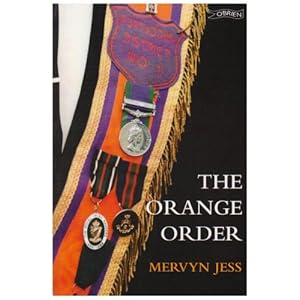
Book Review: The Orange Order
This is a book that has been sitting on my bookshelf for quite a while, and I never got round to reading. Now I have, and I'm glad I did, to help gain a better understanding of an important organisation in the life of Northern Ireland and beyond.
Mervyn Jess, a BBC journalist and son of an Orangeman, had been covering the Drumcree dispute for years, and decided he wanted to understand more about the Order, so he embarked on this book, which came out in 2007. Through the several chapters, he discusses the order's origins, presents a broad sweep of its first two hundred years, probes the ritual, structures and membership, thinks about Drumcree, looks across the globe at the influence of orangeism, before presenting some excellent and insightful chapters centred on interview with an ordinary orangeman, Gerry Kelly (a Sinn Fein MLA), and Drew Nelson (Grand Secretary of the Grand Orange Lodge of Ireland). He even includes a chapter on the Independent Orange Order!
There's no doubt that his research has been impeccable; his contacts are good, both in terms of those interviews already mentioned, but also including sizeable chunks from other leading Orangemen, such as Jonathan Mattison and David Hume. A better understanding of what the Orange is all about comes through the book, as well as an insight into the discussions and debates about the future - between those who see it as a purely religious organisation and those who are pressing for it to be a cultural group and the Twelfth turned into the Belfast version of the Mardi Gras or Notting Hill festivals.
That being said, at times the book can seem to be a little repetitive. There were occasions when the history chapter and the influence chapter seemed to be rehashing the same material. There were also few surprises - although perhaps that was more because of my roots in Orangeism and my working knowledge of Irish history.
All in all, it's an interesting book, and one that will help people understand what the motives and drive of the Orange Order is, and it's a useful exploration of recent Irish history from a unionist perspective.
Friday, May 14, 2010
Irish Evangelicals and Glasspool
William Crawley has reported that CIEF, EFIC, New Wine and Reform Ireland have published a joint statement ahead of the proposed consecration of the world's first lesbian bishop tomorrow. Taken from the EFIC website, here is the statement in full:
As members of the Church of Ireland we wish to express sorrow that Mary Glasspool, a person who is living in a same-sex relationship, is to be consecrated as one of two new assistant bishops in Los Angeles on May 15.
The elevation to senior church leadership of a person whose lifestyle is contrary to the will of God revealed in Scripture is both wrong and disappointing.
The decision to elect and confirm Mary Glasspool to the position of suffragan bishop is a clear rejection of the many pleas for gracious restraint made from within the Anglican Communion, not least by the Archbishop of Canterbury, the Windsor Report and the most recent Primates’ Meeting. The Episcopal Church (TEC) has taken this provocative step despite knowing the division and difficulties created by Gene Robinson’s consecration in 2003. This shows a deliberate disregard for other members of the Anglican family and suggests that TEC does not greatly value unity within Anglicanism and indeed throughout the universal Church.
We wish to express our support for the many people within The Episcopal Church who feel alienated and hurt by this development. We stand in fellowship with them and with those who have separated from that Church for conscience’s sake, many of whom now face legal proceedings and financial sacrifices as a result.
Many Christians of all traditions and denominations will share our sorrow and see Mary Glasspool’s consecration as a defiant rejection of pleas for restraint and, even more importantly, as a rejection of the pattern of holiness of life called for in Scripture and endorsed by believers over the centuries.
Jointly issued by the committees of the Church of Ireland Evangelical Fellowship, the Evangelical Fellowship of Irish Clergy, New Wine (Ireland) and Reform Ireland, Ascension Day, May 13th 2010.
As members of the Church of Ireland we wish to express sorrow that Mary Glasspool, a person who is living in a same-sex relationship, is to be consecrated as one of two new assistant bishops in Los Angeles on May 15.
The elevation to senior church leadership of a person whose lifestyle is contrary to the will of God revealed in Scripture is both wrong and disappointing.
The decision to elect and confirm Mary Glasspool to the position of suffragan bishop is a clear rejection of the many pleas for gracious restraint made from within the Anglican Communion, not least by the Archbishop of Canterbury, the Windsor Report and the most recent Primates’ Meeting. The Episcopal Church (TEC) has taken this provocative step despite knowing the division and difficulties created by Gene Robinson’s consecration in 2003. This shows a deliberate disregard for other members of the Anglican family and suggests that TEC does not greatly value unity within Anglicanism and indeed throughout the universal Church.
We wish to express our support for the many people within The Episcopal Church who feel alienated and hurt by this development. We stand in fellowship with them and with those who have separated from that Church for conscience’s sake, many of whom now face legal proceedings and financial sacrifices as a result.
Many Christians of all traditions and denominations will share our sorrow and see Mary Glasspool’s consecration as a defiant rejection of pleas for restraint and, even more importantly, as a rejection of the pattern of holiness of life called for in Scripture and endorsed by believers over the centuries.
Jointly issued by the committees of the Church of Ireland Evangelical Fellowship, the Evangelical Fellowship of Irish Clergy, New Wine (Ireland) and Reform Ireland, Ascension Day, May 13th 2010.
Labels:
Anglican,
church,
Church of Ireland,
Ireland,
USA
Tuesday, September 01, 2009
Who's Your Father?
Or more accurately, who's your grandfather? That's the question that can now be answered thanks to the release of the Census of Ireland 1911 data online by the National Archives of Ireland based in Dublin.
The information is particularly interesting because it was the last census conducted in a united Ireland pre-partition - united, that is, under the Crown in the United Kingdom of Great Britain and Ireland. To that end, it will sit well beside the previously blogged Ulster Covenant archive service hosted by the Public Records Office of Northern Ireland.
The other night we had a quick look for some ancestors, and I was able to find my granda Moles of Tullylish, who was a bonny baby of one year old when the 1911 census was recorded. I've also found my great-grandfather McMurray of the townland of Islandderry, who with his brothers was the source of the several McMurray families in Dromore today. Other branches of the family have been harder to find due to common surnames around the Dromore area and not enough information known or remembered about grandparents and great-grandparents. But we'll keep digging, and hopefully find a full set of great-grandparents to further the incomplete family trees we know of.
The thing about family trees and genealogical research is that you sometimes encounter surprises, or worse, things you didn't want to find out. One surprise for us was that mum's family was registered as Church of Ireland back then, whereas by the time mum was born they were members of the Presbyterian Church. So whether they just moved, or there was a mistake made in the census forms, I'm not sure.
For the natives out there, were you able to find out anything interesting about your relatives? Any surprises?
The information is particularly interesting because it was the last census conducted in a united Ireland pre-partition - united, that is, under the Crown in the United Kingdom of Great Britain and Ireland. To that end, it will sit well beside the previously blogged Ulster Covenant archive service hosted by the Public Records Office of Northern Ireland.
The other night we had a quick look for some ancestors, and I was able to find my granda Moles of Tullylish, who was a bonny baby of one year old when the 1911 census was recorded. I've also found my great-grandfather McMurray of the townland of Islandderry, who with his brothers was the source of the several McMurray families in Dromore today. Other branches of the family have been harder to find due to common surnames around the Dromore area and not enough information known or remembered about grandparents and great-grandparents. But we'll keep digging, and hopefully find a full set of great-grandparents to further the incomplete family trees we know of.
The thing about family trees and genealogical research is that you sometimes encounter surprises, or worse, things you didn't want to find out. One surprise for us was that mum's family was registered as Church of Ireland back then, whereas by the time mum was born they were members of the Presbyterian Church. So whether they just moved, or there was a mistake made in the census forms, I'm not sure.
For the natives out there, were you able to find out anything interesting about your relatives? Any surprises?
Labels:
family,
history,
Ireland,
links,
Northern Ireland
Monday, August 17, 2009
Burning the Bishop
Anglican Bishops in the past were no strangers to being burnt in the flames. The Oxford Martyr Bishops Latimer and Ridley, as well as Archbishop Thomas Cranmer (before he took up blogging) all suffered for their faith. Yet when I was up in Londonderry on Saturday, I noticed another Protestant Bishop about to be burned.
Don't worry, the present Bishop of Derry and Raphoe (Ken Good) hadn't been condemned for heresy. Rather, it was a portrait of one of his predecessors, Frederick Augustus Hervey, Bishop of Derry and Earl of Bristol. His portrait sat at the bottom of the bonfire on Lecky Road, near the Brandywell Flyover, and was featured alongside Union Flags, Ulster Flags, Rangers flags and scarf, Irish Football Association flag, and a homemade picture of a PSNI Landrover.

The bonfire has already attracted attention over at Slugger O'Toole, but I want to focus specifically on the Lord Bishop of Derry who was to meet the flames on Assumption Day, 15th August, and ask why they were going to burn him.
Is it because, in copying Loyalist tradition with their parades and bonfires, that they needed someone in episcopal robes in a tit for tat response to the burning of effigies of the Pope on the Eleventh Night (if indeed that still happens)?
Was it because they don't like the Mussenden Temple, which Bishop Hervey erected in the grounds of his palace at Downhill?
Was it to express their hatred of all things Protestant in the city, and his was the only episcopal portrait they could find? If this is the case, then they're terribly wrong in their understanding of Irish history, and particularly of Earl-Bishop Hervey. He was hardly the bastion of Protestant supremacy the Republicans may think him to be.

I haven't got all my history books arranged as I would like them due to small study space on few bookshelves, so my 'History of Ulster' by Jonathan Bardon must be in a box under the spare bed or in a cupboard somewhere. But even a quick Google search on Hervey reveals him to be quite liberal, indeed tolerant of other religious groups in Ireland.
The Encyclopedia Britannica, for example, says this about him:
The article has been rehashed on Wikipedia, and from it, we can see that the city prospered under Hervey's bishopric, but more importantly, that Hervey was involved in the Volunteers, the forerunners of the United Irishmen, whose vision was to unite Catholic, Protestant and Dissenter together as Irishmen. It was this group which later staged the 1798 Rebellion against the government (which Hervey loudly talk about). So far from Hervey being someone to revile as a British agitator and lord, the (dissident?) republicans in Derry should be finding a friend in Frederick Augustus Hervey.
So why were they burning him? Perhaps we'll never know, unless one of their apologists would like to share their reasons. But one thing is clear - Northern Ireland and Irish history is never simple, and never straightforward!
EDIT: This story made it onto BBC Newsline.
Don't worry, the present Bishop of Derry and Raphoe (Ken Good) hadn't been condemned for heresy. Rather, it was a portrait of one of his predecessors, Frederick Augustus Hervey, Bishop of Derry and Earl of Bristol. His portrait sat at the bottom of the bonfire on Lecky Road, near the Brandywell Flyover, and was featured alongside Union Flags, Ulster Flags, Rangers flags and scarf, Irish Football Association flag, and a homemade picture of a PSNI Landrover.
The bonfire has already attracted attention over at Slugger O'Toole, but I want to focus specifically on the Lord Bishop of Derry who was to meet the flames on Assumption Day, 15th August, and ask why they were going to burn him.
Is it because, in copying Loyalist tradition with their parades and bonfires, that they needed someone in episcopal robes in a tit for tat response to the burning of effigies of the Pope on the Eleventh Night (if indeed that still happens)?
Was it because they don't like the Mussenden Temple, which Bishop Hervey erected in the grounds of his palace at Downhill?
Was it to express their hatred of all things Protestant in the city, and his was the only episcopal portrait they could find? If this is the case, then they're terribly wrong in their understanding of Irish history, and particularly of Earl-Bishop Hervey. He was hardly the bastion of Protestant supremacy the Republicans may think him to be.
I haven't got all my history books arranged as I would like them due to small study space on few bookshelves, so my 'History of Ulster' by Jonathan Bardon must be in a box under the spare bed or in a cupboard somewhere. But even a quick Google search on Hervey reveals him to be quite liberal, indeed tolerant of other religious groups in Ireland.
The Encyclopedia Britannica, for example, says this about him:
he was active and philanthropic . While not neglecting his luxurious personal tastes he spent large sums of money on making roads and assisting agriculture, and his munificence was shared by the city of Londonderry . He built splendid residences at Downhill and Ballyscullion, which he adorned with rare works of art . As a bishop, Hervey was industrious and vigilant; he favoured complete religious equality, and was opposed to the system of tithes . In December 1779 he became earl of Bristol, and in spite of his brother's will succeeded to a considerable property . Having again passed some time in Italy, he returned to Ireland and in 1782 threw himself ardently into the Irish volunteer movement, quickly attaining a prominent position among the volunteers, and in great state attending the convention held in Dublin in November 1783 . Carried away by his position and his popularity he talked loudly of rebellion, and his violent language led the government to contemplate his arrest . Subsequently he took no part in politics, spending his later years mainly on the continent of Europe .
The article has been rehashed on Wikipedia, and from it, we can see that the city prospered under Hervey's bishopric, but more importantly, that Hervey was involved in the Volunteers, the forerunners of the United Irishmen, whose vision was to unite Catholic, Protestant and Dissenter together as Irishmen. It was this group which later staged the 1798 Rebellion against the government (which Hervey loudly talk about). So far from Hervey being someone to revile as a British agitator and lord, the (dissident?) republicans in Derry should be finding a friend in Frederick Augustus Hervey.
So why were they burning him? Perhaps we'll never know, unless one of their apologists would like to share their reasons. But one thing is clear - Northern Ireland and Irish history is never simple, and never straightforward!
EDIT: This story made it onto BBC Newsline.
Labels:
history,
Ireland,
Northern Ireland
Wednesday, July 01, 2009
The Somme
Ninety-three years ago today, almost a generation of my countrymen, many of whom were probably younger than myself, were wiped out in one action. The action was the Battle of the Somme, as the 36th (Ulster) Division attacked the German lines by the river Ancre and Thiepval Wood.
The men and boys had signed up to the war effort so readily. In the midst of the constitutional crisis of Home Rule for Ireland (a form of devolution), the Ulstermen sought to prove their loyalty to the Crown and thereby avoid Rome Rule. However, they could never have foreseen the disaster that was to befall them as the generals and commanders urged men to run across no mans land to attack the German trenches. Some made it, but many more were cut down in their prime by the established German snipers and artillery. Whatever gains were made came at such a high price, and in the end, had to be given up as they hadn't the strength of numbers of soldiers to retain the hard fought possession.
An Orange banner from Dollingstown's Wickliffe's Invincible Morning Star LOL 62 says it all: Every House Mourned. Such a tremendous sense of loss through the province, given that 5500 men died on that one morning, as well as injuries and other losses throughout the war. It had a profound effect on the unionist community in Ulster (and what later became Northern Ireland), to the extent that church bells will toll the funeral toll this morning, and Union flags will be flown at half mast, then raised to full mast tomorrow in memorial.
Among the fallen, one man stands out - Private William McFadzean. He didn't even survive to see the attack, being blown to bits before it happened, and yet he received a posthumous Victoria Cross.
Today we give thanks to God for the great sacrifice of the Ulster Division, and recall their death so that we can live.
An Orange banner from Dollingstown's Wickliffe's Invincible Morning Star LOL 62 says it all: Every House Mourned. Such a tremendous sense of loss through the province, given that 5500 men died on that one morning, as well as injuries and other losses throughout the war. It had a profound effect on the unionist community in Ulster (and what later became Northern Ireland), to the extent that church bells will toll the funeral toll this morning, and Union flags will be flown at half mast, then raised to full mast tomorrow in memorial.
Among the fallen, one man stands out - Private William McFadzean. He didn't even survive to see the attack, being blown to bits before it happened, and yet he received a posthumous Victoria Cross.
For most conspicuous bravery near Thiepval Wood, on 1st July 1916. While in a concentration trench and opening a box of bombs for the distribution prior to an attack, the box slipped down into the trench, which was crowded with men, and two of the safety pins fell out. Pte McFadzean, instantly realising the danger to his comrades, with heroic courage threw himself on the top of the bombs. The bombs exploded, blowing him to pieces, but only one other man was injured. He well knew his danger, being himself a bomber, but without a moment's hesitation he gave his life for his comrades.
Today we give thanks to God for the great sacrifice of the Ulster Division, and recall their death so that we can live.
Labels:
history,
Ireland,
Northern Ireland,
war
Subscribe to:
Posts (Atom)