As we saw yesterday, none of us can fulfil God's standards or keep God's law. Even our righteous deeds can't help us, because they're so caught up in sinful motives.
Our next Psalm (40) is attributed to Jesus by the writer to the Hebrews, as the witness to what he would do when he came:
In sacrifice and offering you have not delighted,
but you have given me an open ear.
Burnt offering and sin offering you have not required.
Then I said, "Behold, I have come;
in the scroll of the book it is written of me:
I delight to do your will, O my God;
your law is within my heart." (Psalm 40:6-8)
Here we see prophecied the perfect obedience of the Son to the Father, the only one who truly delighted in the Father's will, the one who willingly went to the cross in obedience. Temple sacrifices would not and could not make us right with God - but they pointed to the one perfect, sufficient sacrifice of perfect obedience, the life lived, the death died, in perfect trust.
Lawbreakers become lawkeepers, not through moral effort; not through trying harder. In Jesus' obedience we are credited with obedience, and his grace transforms us, gives us a 'heart transplant' to love and keep God's law, just as Jesus did. It doesn't happen immediately, we still fail and fall; but God's grace empowers us to get up, repent, and keep going. And all through the obedience of the Son to death, even death on a cross!
Tuesday, April 05, 2011
Monday, April 04, 2011
The Way of the Cross (23)
Who shall ascend the hill of the LORD?
And who shall stand in his holy place? (Psalm 24:3)
It's the question all of us must answer at some point in our lives. What kind of standard does God expect for us to dwell with him? How good is good enough?
When it comes to our standards, how would you answer if you're good? Maybe you give to charity and buy a Big Issue. Maybe you try not to swear, slander or speed. You avoid drink, drugs, and dreadlocks. Even if you're not perfect, well, at least you're better than that woman down the road. How good is good enough?
He who has clean hands and a pure heart,
who does not lift up his soul to what is false
and does not swear deceitfully.
He will receive blessing from the LORD
and righteousness from the God of his salvation.
Such is the generation of those who seek him,
who seek the face of the God of Jacob. (Psalm 24:4-6)
So is this psalm just a bit of a checklist? Pass the test and receive God's blessing, and dwell with him on his holy hill? Let's try it. Does not swear deceitfully - maybe not. Lift up your soul to what is false - pass. Clean hands - after every toilet stop and before preparing food. A Pure heart? Never. Not me. If having a pure heart is God's standard, then I know I'm in trouble. And you are too.
As Jesus taught in Mark 7, the heart is the centre of the person, and the seat of our rebellion against God. All those evil deeds come from evil desires which come from the heart. The heart of the problem is a problem of the heart. We can't even imagine what a pure heart would look like, because we're so caught up in sin.
If God's standard is the way to dwell with him, then we must all be considered out; we don't qualify; we don't deserve. Yet just when things look impossible - every human from Adam and Eve on have failed in the same way - David looks forward and sees a day coming when one will be qualified to enter God's presence; when the gates will swing wide open to welcome the hero - the one who will have fulfilled God's standards and won the victory, so that his people can join his triumph and give him the glory.
Lift up your heads, O gates!
And be lifted up, O ancient doors,
that the King of glory may come in.
Who is this King of glory?
The LORD, strong and mighty,
the LORD, mighty in battle!
Lift up your heads, O gates!
And lift them up, O ancient doors,
that the King of glory may come in.
Who is this King of flory?
The LORD of hosts,
he is the King of glory! (Psalm 24:7-10)
The Jesus who satisfied the Law, who obeyed the Father, who went to the cross, is risen, ascended, glorified - by his stripes we are healed; by his righteousness, we are counted righteous in God's sight.
And who shall stand in his holy place? (Psalm 24:3)
It's the question all of us must answer at some point in our lives. What kind of standard does God expect for us to dwell with him? How good is good enough?
When it comes to our standards, how would you answer if you're good? Maybe you give to charity and buy a Big Issue. Maybe you try not to swear, slander or speed. You avoid drink, drugs, and dreadlocks. Even if you're not perfect, well, at least you're better than that woman down the road. How good is good enough?
He who has clean hands and a pure heart,
who does not lift up his soul to what is false
and does not swear deceitfully.
He will receive blessing from the LORD
and righteousness from the God of his salvation.
Such is the generation of those who seek him,
who seek the face of the God of Jacob. (Psalm 24:4-6)
So is this psalm just a bit of a checklist? Pass the test and receive God's blessing, and dwell with him on his holy hill? Let's try it. Does not swear deceitfully - maybe not. Lift up your soul to what is false - pass. Clean hands - after every toilet stop and before preparing food. A Pure heart? Never. Not me. If having a pure heart is God's standard, then I know I'm in trouble. And you are too.
As Jesus taught in Mark 7, the heart is the centre of the person, and the seat of our rebellion against God. All those evil deeds come from evil desires which come from the heart. The heart of the problem is a problem of the heart. We can't even imagine what a pure heart would look like, because we're so caught up in sin.
If God's standard is the way to dwell with him, then we must all be considered out; we don't qualify; we don't deserve. Yet just when things look impossible - every human from Adam and Eve on have failed in the same way - David looks forward and sees a day coming when one will be qualified to enter God's presence; when the gates will swing wide open to welcome the hero - the one who will have fulfilled God's standards and won the victory, so that his people can join his triumph and give him the glory.
Lift up your heads, O gates!
And be lifted up, O ancient doors,
that the King of glory may come in.
Who is this King of glory?
The LORD, strong and mighty,
the LORD, mighty in battle!
Lift up your heads, O gates!
And lift them up, O ancient doors,
that the King of glory may come in.
Who is this King of flory?
The LORD of hosts,
he is the King of glory! (Psalm 24:7-10)
The Jesus who satisfied the Law, who obeyed the Father, who went to the cross, is risen, ascended, glorified - by his stripes we are healed; by his righteousness, we are counted righteous in God's sight.


Sunday, April 03, 2011
Sermon: Psalm 117 The Soundbite Psalm
Soundbites reign supreme. Not only does that seem like a good soundbite in its own right, it’s a reflection of where things are these days. With 24 hour news channels, instant messaging, an explosion of information, there seems to be less time for a lengthy, well-reasoned argument to be developed. The message has to be short, snappy, and special.
Just last week, the Chancellor George Osborne came under fire for his ‘Britain will be held aloft by the march of the makers.’ Or who could forget Tony Blair on the day the Good Friday Agreement was signed saying “A day like today is not a day for soundbites, really. But I feel the hand of history upon our shoulders. I really do.”
It might almost seem as if Psalm 117 is a soundbite psalm. When you turned it up in your Bible, or when Val read it, you might have thought to yourself, “Is that it?” While it’s the shortest psalm in the Bible, we’re see that it has a big command, and a big reason.
As the psalm opens, the command is there: ‘Praise the LORD” - but notice that the command to praise isn’t just for Israel, isn’t just for the people living in the promised land; it’s for everyone. ‘Praise the LORD, all nations! Extol him, all peoples!’ Every person on the planet is called to praise.
Now, when we hear the word praise, we maybe think of singing praise; but there are lots of different ways to praise. We can of course sing, but we can also pray, be silent, obey, love, serve. To praise is to acknowledge and confess that God is God and I am not. To give him what he deserves.
So that’s the big command - to praise the LORD. But you might be thinking to yourself, why would I do that? The rest of the psalm, well, verse 2, gives us the reason for praising the Lord. And it’s all because of who God is - it’s rooted in his character. ‘For great is his steadfast love toward us, and the faithfulness of the LORD endures forever.’
We pour out our praise because of the LORD’s steadfast love and faithfulness towards us. Our praise is a reflection of who God is and how he has revealed himself to us in the Bible through the prophets, and through his Son, the Lord Jesus. We praise because God loved us so much that he sent Jesus to die for us; we praise because the Lord is faithful towards us both now and for ever more.
As we meet for our prayer and praise evening, this is a great reminder of why we can meet together in this way; the confidence we have in coming before the throne of grace; and the proper response to what God has done for us - not just for an hour on a Sunday, but for the rest of our life - to praise because of who God is and what he has done.
Let’s say the Psalm together, and then I’ll pray.
This short reflection was shared at the Prayer and Praise night in St Elizabeth's Church, Dundonald on Sunday 3rd April 2011.
Just last week, the Chancellor George Osborne came under fire for his ‘Britain will be held aloft by the march of the makers.’ Or who could forget Tony Blair on the day the Good Friday Agreement was signed saying “A day like today is not a day for soundbites, really. But I feel the hand of history upon our shoulders. I really do.”
It might almost seem as if Psalm 117 is a soundbite psalm. When you turned it up in your Bible, or when Val read it, you might have thought to yourself, “Is that it?” While it’s the shortest psalm in the Bible, we’re see that it has a big command, and a big reason.
As the psalm opens, the command is there: ‘Praise the LORD” - but notice that the command to praise isn’t just for Israel, isn’t just for the people living in the promised land; it’s for everyone. ‘Praise the LORD, all nations! Extol him, all peoples!’ Every person on the planet is called to praise.
Now, when we hear the word praise, we maybe think of singing praise; but there are lots of different ways to praise. We can of course sing, but we can also pray, be silent, obey, love, serve. To praise is to acknowledge and confess that God is God and I am not. To give him what he deserves.
So that’s the big command - to praise the LORD. But you might be thinking to yourself, why would I do that? The rest of the psalm, well, verse 2, gives us the reason for praising the Lord. And it’s all because of who God is - it’s rooted in his character. ‘For great is his steadfast love toward us, and the faithfulness of the LORD endures forever.’
We pour out our praise because of the LORD’s steadfast love and faithfulness towards us. Our praise is a reflection of who God is and how he has revealed himself to us in the Bible through the prophets, and through his Son, the Lord Jesus. We praise because God loved us so much that he sent Jesus to die for us; we praise because the Lord is faithful towards us both now and for ever more.
As we meet for our prayer and praise evening, this is a great reminder of why we can meet together in this way; the confidence we have in coming before the throne of grace; and the proper response to what God has done for us - not just for an hour on a Sunday, but for the rest of our life - to praise because of who God is and what he has done.
Let’s say the Psalm together, and then I’ll pray.
This short reflection was shared at the Prayer and Praise night in St Elizabeth's Church, Dundonald on Sunday 3rd April 2011.
Saturday, April 02, 2011
The Way of the Cross (22)
It's perhaps the best known chapter in the Bible. It's probably one of the most requested hymns at funerals. It is, of course, the Twenty-Third Psalm.
The LORD is my shepherd; I shall not want.
He makes me lie down in green pastures.
He leads me beside still waters.
He restores my soul.
He leads me in paths of righteousness for his name's sake.
Even though I walk through the valley of the shadow of death,
I will fear no evil,
for you are with me;
your rod and your staff,
they comfort me.
You prepare a table before me in the presence of my enemies;
you anoint my head with oil;
my cup overflows.
Surely goodness and mercy shall follow me all the days of my life,
and I shall dwell in the house of the LORD forever. (Psalm 23:1-6)
The Lord is my shepherd. It's how the Lord Jesus describes himself; the good shepherd. In the care of the good shepherd, we will never be in want, because he provides and is present with us at all times.
Even when dark and difficult days come, as they will and do come, there is nothing to fear. The Lord Jesus has passed through death for us; he leads the way through death to the glory of the Lord. As we pass along the way, in the care of the shepherd, we look forward to dwell in the Lord's house forever, part of the family, settled and secure.
All the blessings on offer, highlighted in the psalm, come because of what the Good Shepherd did for the sheep. He laid down his life for the sake of the sheep. He willingly sacrificed himself for our sake.
That's how we can know peace and not fear any evil - the shepherd is my Lord.
The LORD is my shepherd; I shall not want.
He makes me lie down in green pastures.
He leads me beside still waters.
He restores my soul.
He leads me in paths of righteousness for his name's sake.
Even though I walk through the valley of the shadow of death,
I will fear no evil,
for you are with me;
your rod and your staff,
they comfort me.
You prepare a table before me in the presence of my enemies;
you anoint my head with oil;
my cup overflows.
Surely goodness and mercy shall follow me all the days of my life,
and I shall dwell in the house of the LORD forever. (Psalm 23:1-6)
The Lord is my shepherd. It's how the Lord Jesus describes himself; the good shepherd. In the care of the good shepherd, we will never be in want, because he provides and is present with us at all times.
Even when dark and difficult days come, as they will and do come, there is nothing to fear. The Lord Jesus has passed through death for us; he leads the way through death to the glory of the Lord. As we pass along the way, in the care of the shepherd, we look forward to dwell in the Lord's house forever, part of the family, settled and secure.
All the blessings on offer, highlighted in the psalm, come because of what the Good Shepherd did for the sheep. He laid down his life for the sake of the sheep. He willingly sacrificed himself for our sake.
That's how we can know peace and not fear any evil - the shepherd is my Lord.
Friday, April 01, 2011
The Way of the Cross (21)
As you continue to read Psalm 22, you can't fail to be struck by the change that comes in verse 22. Up until then, the horrors of the crucifixion are spelled out in terrible detail. Here, the mood changes, so dramatically, that you could nearly be thinking it's an entirely different psalm with a different theme.
Actually, it fits together perfectly, because the crucifixion is not the end of the story. As Jesus was laid in the tomb, he was not finished. Of that we can be certain because of how Psalm 22 ends:
I will tell of your name to my brothers;
in the midst of the congregation I will praise you:
You who fear the LORD, praise him!
All you offspring of Jacob, glorify him,
and stand in awe of his, all your offspring of Israel!...
All the ends of the earth shall remember and turn to the LORD,
and all the families of the nations shall worship before you.
For kingship belongs to the LORD,
and he rules over the nations. (Psalm 22:22-23, 27-28)
Gone are the agonies, present are the praises. Having passed through the cross, through death, the end of the Psalm is the glorious victory and celebration of the Messiah. The image is of the great congregation, all God's people, gathered together because of the work of the anointed one, who has delivered them through his sacrifice.
But more than just the people of Israel, people from all the ends of the earth, all the families of the nations shall worship before the LORD as a result of the work of the anointed one. It's no surprise then, that the song of heaven declares:
Worthy are you to take the scroll and to open its seals,
for you were slain, and by your blood you ransomed people for God
for every tribe and language and people and nation,
and you have made them a kingdom and priests to our God,
and they shall reign on the earth. (Revelation 5:9-10)
Actually, it fits together perfectly, because the crucifixion is not the end of the story. As Jesus was laid in the tomb, he was not finished. Of that we can be certain because of how Psalm 22 ends:
I will tell of your name to my brothers;
in the midst of the congregation I will praise you:
You who fear the LORD, praise him!
All you offspring of Jacob, glorify him,
and stand in awe of his, all your offspring of Israel!...
All the ends of the earth shall remember and turn to the LORD,
and all the families of the nations shall worship before you.
For kingship belongs to the LORD,
and he rules over the nations. (Psalm 22:22-23, 27-28)
Gone are the agonies, present are the praises. Having passed through the cross, through death, the end of the Psalm is the glorious victory and celebration of the Messiah. The image is of the great congregation, all God's people, gathered together because of the work of the anointed one, who has delivered them through his sacrifice.
But more than just the people of Israel, people from all the ends of the earth, all the families of the nations shall worship before the LORD as a result of the work of the anointed one. It's no surprise then, that the song of heaven declares:
Worthy are you to take the scroll and to open its seals,
for you were slain, and by your blood you ransomed people for God
for every tribe and language and people and nation,
and you have made them a kingdom and priests to our God,
and they shall reign on the earth. (Revelation 5:9-10)
McFlurry's McLinks (23)
Having failed to share any links last month, here's a fresh batch of links from the web for your reading and viewing pleasure.
Ordinary Pastor considers the parenting response to seeing two dudes kissing. He also points us to where we see the glory of Christ. The Proclaimer thinks about Dame Vera Lynn, Melchizedek, and the mathematical extinction of religion. Have you ever had a hangover like this one?
I had lots of links about the Rob Bell book, but I'll not bother with them - instead, as a kind of summary, Challies thought about the new evangelical virtues.
The Confessing Student Worker considers no news and good news after recent events. Norwin's eyewitness accounts and updates from Japan and now home were interesting reading.
Very late for Paddy's Day, but étrangère shared why she was celebrating, as well as looking at the preaching of pop songs.
Ali walks off a packet of crisps (almost!). Ever wanted to paint the town red? Or what about wordsearch wrapping paper? 22 Words shared the 101 most common English words. You wouldn't want to eat at this comma deficient house!
The Church of Ireland wed award nominations are open... while the Simple Pastor deals with Facebook, and Failbook highlights the dangers of status updates in school. Imprints of Light shares the very first version of the iPad.
The video this time round is a compilation of Bible Wordles, showing the most dominant words in each book of the Bible (H/T Trevin Wax):
Ordinary Pastor considers the parenting response to seeing two dudes kissing. He also points us to where we see the glory of Christ. The Proclaimer thinks about Dame Vera Lynn, Melchizedek, and the mathematical extinction of religion. Have you ever had a hangover like this one?
I had lots of links about the Rob Bell book, but I'll not bother with them - instead, as a kind of summary, Challies thought about the new evangelical virtues.
The Confessing Student Worker considers no news and good news after recent events. Norwin's eyewitness accounts and updates from Japan and now home were interesting reading.
Very late for Paddy's Day, but étrangère shared why she was celebrating, as well as looking at the preaching of pop songs.
Ali walks off a packet of crisps (almost!). Ever wanted to paint the town red? Or what about wordsearch wrapping paper? 22 Words shared the 101 most common English words. You wouldn't want to eat at this comma deficient house!
The Church of Ireland wed award nominations are open... while the Simple Pastor deals with Facebook, and Failbook highlights the dangers of status updates in school. Imprints of Light shares the very first version of the iPad.
The video this time round is a compilation of Bible Wordles, showing the most dominant words in each book of the Bible (H/T Trevin Wax):
Thursday, March 31, 2011
March 2011 Review
It's the last day of March, the end of the first quarter, and time for another blog review. This is the 34th posting this month, and here's what we've looked at:
The majority of posts this month have been in the new Lenten series, The Way of the Cross. We've been looking at the Old Testament passages prophecying or preparing for the sacrifice of the cross, and will continue through the rest of Lent and into Easter as we celebrate God's purpose and plan of salvation.
My preaching has been from Joel 2 (audio), 2 Peter 1 (audio) and 2 Peter 2 (audio).
There were two book reviews, The Good Man Jesus and the Scoundrel Christ by Philip Pullman, and Holiness by Grace by Bryan Chapell.
In other news, I thought about the blogging rut I had got myself into, shared the latest Clergy Twit rankings, and my favourite post of the month, Nearer but further away.
The photo of the month was Lake View at Mountstewart:

The majority of posts this month have been in the new Lenten series, The Way of the Cross. We've been looking at the Old Testament passages prophecying or preparing for the sacrifice of the cross, and will continue through the rest of Lent and into Easter as we celebrate God's purpose and plan of salvation.
My preaching has been from Joel 2 (audio), 2 Peter 1 (audio) and 2 Peter 2 (audio).
There were two book reviews, The Good Man Jesus and the Scoundrel Christ by Philip Pullman, and Holiness by Grace by Bryan Chapell.
In other news, I thought about the blogging rut I had got myself into, shared the latest Clergy Twit rankings, and my favourite post of the month, Nearer but further away.
The photo of the month was Lake View at Mountstewart:
The Way of the Cross (20)
The situation facing the anointed one in Psalm 22 increases in intensity as the Psalm continues. As we look at these verses, remember that they were written hundreds of years before crucifixion had even been invented. How clearly we see that God is the author of Scripture, leading and helping the human authors to express what it is he intends.
Many bulls encompass me;
strong bulls of Bashan surround me;
they open wide their mouths at me,
like a ravening and roaring lion.
I am poured out like water,
and all my bones are out of joint;
my heart is like wax'
it is melted within my breast'
my strength is dried up like a potsherd,
and my tongue sticks to my jaws;
you lay me in the dust of death.
For dogs encompass me;
a company of evildoers encircles me;
they have pierced my hands and feet -
I can count all my bones -
they stare and gloat over me;
they divide my garments among them,
and for my clothing they cast lots. (Psalm 22:12-19)
How brightly shines the agony and the glory of the cross. It's as if whatever David was going through as he composed this Psalm enabled him to write down a vision of what the cross would look like. The details are vivid and overwhelming.
Bones out of joint; lack of strength; dryness of mouth; pierced hands and feet; clothes divided; lots cast. It's as if it is the script for what the Romans, acting independently and deliberately, would do on the hill called Golgotha / Calvary.
With each detail, we see how the gospel writers record that it was fulfilled, that it did happen as foretold. How amazing that the Lord Jesus submitted willingly, obeying the Father, to perfectly fulfill what had been written beforehand, and known from eternity.
How wonderful that those pierced hands and feet are the 'wounds of love' his body still bears, now glorified as an everlasting testament to his suffering, the evidence that the price has been paid.
Many bulls encompass me;
strong bulls of Bashan surround me;
they open wide their mouths at me,
like a ravening and roaring lion.
I am poured out like water,
and all my bones are out of joint;
my heart is like wax'
it is melted within my breast'
my strength is dried up like a potsherd,
and my tongue sticks to my jaws;
you lay me in the dust of death.
For dogs encompass me;
a company of evildoers encircles me;
they have pierced my hands and feet -
I can count all my bones -
they stare and gloat over me;
they divide my garments among them,
and for my clothing they cast lots. (Psalm 22:12-19)
How brightly shines the agony and the glory of the cross. It's as if whatever David was going through as he composed this Psalm enabled him to write down a vision of what the cross would look like. The details are vivid and overwhelming.
Bones out of joint; lack of strength; dryness of mouth; pierced hands and feet; clothes divided; lots cast. It's as if it is the script for what the Romans, acting independently and deliberately, would do on the hill called Golgotha / Calvary.
With each detail, we see how the gospel writers record that it was fulfilled, that it did happen as foretold. How amazing that the Lord Jesus submitted willingly, obeying the Father, to perfectly fulfill what had been written beforehand, and known from eternity.
How wonderful that those pierced hands and feet are the 'wounds of love' his body still bears, now glorified as an everlasting testament to his suffering, the evidence that the price has been paid.
Church of Ireland Twitter - March 2011
It's the end of another month, and time for another quick look at the Clergy Twits of the Church of Ireland. Some dramatic twists this month, with Craig McCauley dropping out of Twitter, having been in third previously, and lots of new entries - Susan Green, Nigel Dunne, Paul Willoughby (all Cork), and (due to an oversight on my part) Gareth Harron, who jumps in at 6th. The top two haven't changed, with Stephen Neill in second and the Bishop of Cork at one, while Victor Fitzpatrick and myself are still on equal points in joint third...
The Crew Bridge

Last Saturday I had the opportunity to revisit some of my old stomping grounds in West Tyrone, and discover places new to me as well. This was new to me, at Drumclamph, between Castlederg and Ardstraw. The Crew Bridge stands over the River Derg as it flows towards the Foyle.
Wednesday, March 30, 2011
The Way of the Cross (19)
As we continue to reflect on the crucifixion from Psalm 22, David (and ultimately David's greater Son) contrasts his fathers with his own situation. Previously, when his fathers trusted in the LORD, the LORD delivered them. They were rescued and not put to shame.
But I am a worm and not a man, scorned by mankind and despised by the people. All who see me mock me; they make mouths at me; they wag their heads; "He trusts in the LORD; let him deliver him; let him rescue him, for he delights in him." (Psalm 22:6-8)
Behold the man upon a cross, we sing, yet there was no dignity in what the Lord Jesus went through for us. More like a worm than a man. Despised, mocked - by mankind and his people. He came to his own, and his own did not receive him; more than that, they shamefully treated him.
Once again, we see the terrible irony of the cross in those taunts - even as Jesus was obeying and trusting his Father, the one thing that could not happen was rescue or ease. For Jesus to have been rescued or delivered from the cross, our punishment would not have been borne, our sins would still condemn us.
As we'll see later, it was the will of the LORD to crush him, for our sake - the beloved Son, the one in whom the Father delights, is the atoning sacrifice to make us acceptable and pleasing to God. What a love, what a cost!
But I am a worm and not a man, scorned by mankind and despised by the people. All who see me mock me; they make mouths at me; they wag their heads; "He trusts in the LORD; let him deliver him; let him rescue him, for he delights in him." (Psalm 22:6-8)
Behold the man upon a cross, we sing, yet there was no dignity in what the Lord Jesus went through for us. More like a worm than a man. Despised, mocked - by mankind and his people. He came to his own, and his own did not receive him; more than that, they shamefully treated him.
Once again, we see the terrible irony of the cross in those taunts - even as Jesus was obeying and trusting his Father, the one thing that could not happen was rescue or ease. For Jesus to have been rescued or delivered from the cross, our punishment would not have been borne, our sins would still condemn us.
As we'll see later, it was the will of the LORD to crush him, for our sake - the beloved Son, the one in whom the Father delights, is the atoning sacrifice to make us acceptable and pleasing to God. What a love, what a cost!
Sermon Audio: 2 Peter 2: 1-22
On Sunday evening I engaged in a bit of a mission impossible - trying to preach the 22 verses of 2 Peter 2 on false teachers. To keep with the theme, it was entitled This Teacher Will Self-Destruct.... Here's how it sounded.
Book Review: Holiness by Grace
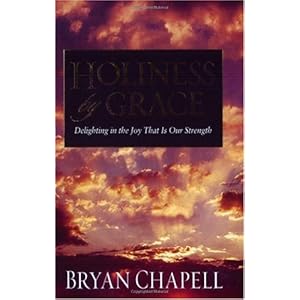
Having heard Bryan Chapell at NIMA last November, this was a must-read book. Having read it, it's definitely a must-read (and must-share) book!
While in some circles, holiness has been forgotten and removed from the Christian life, Chapell brings it back to front and centre. Writing in an accessible, clear, and pastoral way, his point is simple to understand, and transforming to live.
Be holy, because God is holy. His standard seems either to ignore human frailty or to impose certain failure. We must make sense of this command for perfect righteousness lest our hearts harden into a shrugged 'get real' or break into a sobbed 'I can't do it.'...
Our holiness is not so much a matter of what we achieve as it is the grace our God provides.
Through the remaining chapters, Chapell expands on this theme of holiness by grace - through what God has given and Christ has achieved, and not at all based in our performance. He helps us to steer clear of both legalism and licence, through understanding and experiencing God's grace, not just in coming to faith, but in living for God.
The writing is powerful and there are plenty of illustrations. Each chapter is based on an extended exposition of a Bible passage as the theme is unfolded. This book is ideal for all Christians - from the newest believer to the oldest saint, because your heart will be warmed, and you'll be given strength and power for the road - not from yourself; not from Chapell's words; but direct from the Bible, helpfully explained and applied.
The challenge is to live it out - it is life-changing, but the hard work starts as you try to unlearn what you've always thought about your own goodness and effort, and as you repent of your goodness and rejoice in his grace.
Tuesday, March 29, 2011
The Way of the Cross (18)
They are perhaps the most poignant words in the whole Bible. Truly they are a great mystery that we can barely plumb the depths, and yet how precious, how powerful, those words from the cross:
My God, my God, why have you forsaken me?
You see, as Jesus says those words on the cross, it's not a cry of despair, or a moment of doubt. He is intentionally quoting Psalm 22, drawing attention to this extended prophecy of the crucifixion, written so many hundred years before crucifixion had even been invented. We're going to take this Psalm as the basis for our thoughts for the next few days, such is its importance on the way of the cross.
For us, it is a complete mystery how the Lord Jesus, the second person of the Trinity, could be forsaken and separated from God the Father. We just can't imagine how it works, and we're not told how it happened. Yet Jesus' words show us that it did happen - that as he hung on the cross, bearing our sins, he was cut off from God. Forsaken, abandoned.
The just and holy God could not look on his Son, made sin for us. The beloved Son was removed from his Father's pleasure, as he bore our sin. The Lord Jesus truly experienced hell, so that we never will, as we trust in him.
As the Newsboys song puts it:
I'm forgiven because You were forsaken
I'm accepted, You were condemned
We may not fully understand how, but we know why - for us and our sins, so that we can be welcomed and reconciled to God, the Lord Jesus was cut off. Amazing Love indeed!
My God, my God, why have you forsaken me?
You see, as Jesus says those words on the cross, it's not a cry of despair, or a moment of doubt. He is intentionally quoting Psalm 22, drawing attention to this extended prophecy of the crucifixion, written so many hundred years before crucifixion had even been invented. We're going to take this Psalm as the basis for our thoughts for the next few days, such is its importance on the way of the cross.
For us, it is a complete mystery how the Lord Jesus, the second person of the Trinity, could be forsaken and separated from God the Father. We just can't imagine how it works, and we're not told how it happened. Yet Jesus' words show us that it did happen - that as he hung on the cross, bearing our sins, he was cut off from God. Forsaken, abandoned.
The just and holy God could not look on his Son, made sin for us. The beloved Son was removed from his Father's pleasure, as he bore our sin. The Lord Jesus truly experienced hell, so that we never will, as we trust in him.
As the Newsboys song puts it:
I'm forgiven because You were forsaken
I'm accepted, You were condemned
We may not fully understand how, but we know why - for us and our sins, so that we can be welcomed and reconciled to God, the Lord Jesus was cut off. Amazing Love indeed!
Monday, March 28, 2011
The Way of the Cross (17)
When Jesus was crucified, and laid in the tomb, it looked as if things had gone horribly wrong. Just think of the reaction of the two disciples on the road to Emmaus. We had hoped that he was the one. Hope crucified. Was it the end of the road for the Jesus project? Had the cross been an unexpected surprise for Jesus?
As we've been seeing (and will continue to see), the cross was not a surprise, but the long-promised path laid out for Jesus the Christ to walk. More than that, the death of the cross would not be the end. The Christ would die and rise again.
I have set the LORD always before me; because he is at my right hand, I shall not be shaken. Therefore my heart is glad, and my whole being rejoices; my flesh also dwells secure. For you will not abandon my soul to Sheol, or let your holy one see corruption. You make known to me the path of life; in your presence there is fullness of joy; at your right hand are pleasures forevermore. (Psalm 16: 8-11)
Jesus died and was buried; he was also raised from the dead on the third day, so that his body did not rot, but was glorified and transformed. Death could not hold him, so that the way of the cross is the path of life opened up by Jesus for all who trust in him.
This is the very passage Peter turned to on the Day of Pentecost to show that Jesus' resurrection had been promised beforehand. It's a great passage for us to remember and reflect on as we celebrate Jesus' death and life, and look forward to our own eternal life, sharing that fullness of joy and the pleasures of God forever.
As we've been seeing (and will continue to see), the cross was not a surprise, but the long-promised path laid out for Jesus the Christ to walk. More than that, the death of the cross would not be the end. The Christ would die and rise again.
I have set the LORD always before me; because he is at my right hand, I shall not be shaken. Therefore my heart is glad, and my whole being rejoices; my flesh also dwells secure. For you will not abandon my soul to Sheol, or let your holy one see corruption. You make known to me the path of life; in your presence there is fullness of joy; at your right hand are pleasures forevermore. (Psalm 16: 8-11)
Jesus died and was buried; he was also raised from the dead on the third day, so that his body did not rot, but was glorified and transformed. Death could not hold him, so that the way of the cross is the path of life opened up by Jesus for all who trust in him.
This is the very passage Peter turned to on the Day of Pentecost to show that Jesus' resurrection had been promised beforehand. It's a great passage for us to remember and reflect on as we celebrate Jesus' death and life, and look forward to our own eternal life, sharing that fullness of joy and the pleasures of God forever.
Blogging Rut
Oops! I've just noticed that the past few weeks on the blog have been fairly predictable - sermon text, sermon audio, and the Way of the Cross devotional. And that's been it. No photos, no random craic, no newsy bits, nothing on the census, no other stories or insights or tips or anything like that.
I will certainly endeavour to keep the Lent series going, but to do a bit more than that, and keep the blog interesting and varied... Any ideas on something you'd like me to think about or write about?
I will certainly endeavour to keep the Lent series going, but to do a bit more than that, and keep the blog interesting and varied... Any ideas on something you'd like me to think about or write about?
Sunday, March 27, 2011
Sermon: 2 Peter 2: 1-22 This Teacher Will Self-Destruct
In the church today, the only heresy left is that there’s such a thing as heresy. So says Don Carson, as he surveys the state of the church in this postmodern age. What he’s saying is that anything goes - you can say, think, believe whatever you like. The only wrong belief is that there’s such a thing as wrong beliefs.
We’re continuing our series in Peter’s second letter, and, in contrast to today, Peter insists that there is such a thing as false teaching - and we must be aware of the dangers of following such false teaching. We’ve already seen how Peter is urging us to grow in the grace and knowledge of the Lord Jesus, and Johnny helped us last week to see how the Scriptures help us to do just that, because they are God’s word - written by men led by the Spirit.
Look at verse 1. While men spoke from God, in the history of the people of God, there were also false prophets. Think of Korah, who set himself up against Moses (Num 16), or the 400 false prophets promising Ahab victory in war when Michaiah proclaimed he would be killed (1 Kings 22), or those who opposed Jeremiah, declaring ‘peace, peace’ when there was no peace. And Peter is saying that, just as there were false prophets before, so now in the church there will also be false teachers among us.
You see, there is such a thing as false teaching. It’s clear from what Peter says. Look at verse 2 - ‘because of them the way of truth will be blasphemed.’ If Christianity is the way of truth, then they have turned off that path, they’ve left the truth and are teaching lies - false words in v 3, gone astray in verse 15.
Let’s look more closely at the marks of a false teacher, the way to identify a false teacher before seeing what God will do about false teaching.
In the middle of verse 13, we have a description of the false teachers as ‘blots and blemishes’. In a sense, it’s a bit like a spot or a pimple on your face. It’s something that doesn’t belong, something that doesn’t look right, something that (with all those TV ads) you can get rid of. The false teacher is a blot and blemish at the feast, because they stand out, revelling in their deceptions.
Some of the ways they stand out are in their sensuality, their blasphemy, and their greed. Look at verse 2. Many will follow their sensuality, just as in verse 18, they entice by sensual passions of the flesh. It’s all about being sensual, what you feel, indulging in the sinful passions of the flesh - with eyes full of adultery (14), insatiable for sin.
There are those who will say, especially to younger Christians, if it feels right, do it. Don’t be bound by rules, just go with your instincts. Lady Gaga (while not being a false teacher, is certainly a preacher of modern culture) insists that ‘I'm beautiful in my way 'Cause God makes no mistakes, I'm on the right track, baby, I was born this way.’
So some will say, it doesn’t matter how you live, how many partners you have, whatever your orientation, just do what feels right. Sensuality - which goes down really well with our sinful nature, but certainly does not please God.
As well as sensuality, false teachers will be marked by blasphemy (or slander in the NIV). They blaspheme the glorious ones (10), speaking about things they really don’t know anything about (12), seeming to speak with authority, but totally in the wrong. There are some who will speak for a long time and say very little; those who speak with impressive speech, but haven’t a clue what they’re talking about; others who will declare with authority things that aren’t actually clear.
It’s why it’s so important to have the Scriptures open in front of you when listening to the preacher - to make sure that what he is saying is what the Bible says, and not just unhelpful speculation. There are things that we aren’t told, things that may be a mystery until we stand in the new Jerusalem, but it doesn’t help to speculate or declare what God has not revealed!
So we’ve thought about sensuality, blasphemy, but we also see the false teacher is marked by greed. Did you notice it as Stuart read the passage? It’s there in verse 3 - in their greed they will exploit you with false words; and we also see it in 14-15: ‘They have hearts trained in greed... They have followed the way of Balaam, the son of Beor, who loved gain from wrongdoing.’
Balaam is someone we meet in Numbers 22-24. Balak, the king of Moab is afraid of the people of Israel as they journey towards his land on their way from Egypt to the promised land. So he summons Balaam, who is a kind of fortune-teller or prophet - you pay him enough, and he’ll curse your enemies so that you can win the battle. Despite being told not to go to Moab, Balaam goes ahead - putting his greed ahead of God’s word.
It’s not hard to see greedy preachers in today’s church - whether it’s a megachurch pastor with his own private jet, or a minister saying nice things to people so the congregation increases and his pay increases as well. It’s another warning sign, if there’s greed in the heart of the teacher.
At it’s heart, false teaching is so dangerous because of what it can do to congregations and individuals who are led astray by it. Look down to verse 19. ‘They promise them freedom, but they themselves are slaves of corruption.’ Come, follow us, and you can be free to do what you want; come, listen to us, and you don’t need to worry about anything. It sounds so attractive, doesn’t it?
But it’s like a bee sitting on a blob of jam calling out to his friends, come on, it’s great, lovely sweet jam, as much as you can eat... not realising he’s stuck, and the lid of the jam jar is fastened tight. To follow the false teacher is like a sow washing herself and then getting dirty; a dog returning to its vomit; to turn away from the knowledge and truth of the Lord Jesus, and to be even more enslaved than before.
So if that’s what false teaching looks like, what should we do about it? Will we become like some, who are so constantly watchful and suspicious that everyone else is a false teacher apart from themselves? Will we become fearful, confused as to who to listen and what to do?
Thankfully, alongside his warning, Peter also gives us some encouragement. While calling for us to be watchful - listening to the apostles teaching and the prophetic word of Scripture, he also points us to what God will do about false teaching.
Look at verse 3. ‘Their condemnation from long ago is not idle, and their destruction is not asleep.’ False teachers are condemned, and facing destruction.
There’s condemnation because they have turned away from the truth, they have exploited with false words, but perhaps the most surprising thing is that their condemnation is from long ago - because God does not change, and God’s word is truth, then the condemnation stands for all time - the curse of disobedience and false teaching (just as the serpent was condemned in Eden).
The condemnation leads to destruction. As you hear that word, you might think, well, that’s a bit harsh, but we can see the connection right there in the first verse: ‘false teachers... who will secretly bring in destructive heresies... bringing upon themselves swift destruction.’ Because the heresies are destructive, they themselves face destruction. Now it’s not, as some may think, annihilation, so that while God’s people enjoy eternal life, the wicked simply cease to exist; but rather it’s ‘the gloom of utter darkness’ (17) - despite what Rob Bell may think about hell not being forever, or there being escape routes from it, there is destruction for the false teacher.
We see that so clearly in the one section we haven’t touched yet. Remember how Peter says that the Scriptures were written by men moved by the Spirit? He turns to those Scriptures to show how God in the past has punished false teachers and kept his faithful people. From verse 4 there are four ‘ifs’ - if God cast the sinning angels into hell; if God brought a flood to destroy the ungodly (but preserved Noah and his family); if God destroyed Sodom and Gomorrah as an example; and if God rescued righteous Lot - do you see the contrasts there - Noah the preacher of righteousness as opposed to the ungodly all around him; righteous Lot as opposed to the sensual conduct of the wicked in Sodom - if all these things happened (and they did!), ‘then the Lord knows how to rescue the godly from trials, and to keep the unrighteous under punishment until the day of judgement.’
Back in 1 Samuel God declares that he will honour those who honour him; those who keep his word. It’s a hard thing to do, when faced with so much false teaching, tempting teaching, sensual teaching, but Peter wants us to look at where the two paths are heading.
False teachers will be destroyed, virtually self-destructing as they pursue their agendas. Steer clear of false teachers; hold firm to the scriptures - God’s precious promises, and particularly this promise that God will rescue you from trials, as you trust in him.
So who are you listening to? While promising freedom, those false teachers bring slavery and condemnation. It’s only in the gospel of our Lord and Saviour Jesus Christ that we find rescue, and freedom, and life.
This sermon was preached in St Elizabeth's Church, Dundonald on Sunday 27th March 2011.
We’re continuing our series in Peter’s second letter, and, in contrast to today, Peter insists that there is such a thing as false teaching - and we must be aware of the dangers of following such false teaching. We’ve already seen how Peter is urging us to grow in the grace and knowledge of the Lord Jesus, and Johnny helped us last week to see how the Scriptures help us to do just that, because they are God’s word - written by men led by the Spirit.
Look at verse 1. While men spoke from God, in the history of the people of God, there were also false prophets. Think of Korah, who set himself up against Moses (Num 16), or the 400 false prophets promising Ahab victory in war when Michaiah proclaimed he would be killed (1 Kings 22), or those who opposed Jeremiah, declaring ‘peace, peace’ when there was no peace. And Peter is saying that, just as there were false prophets before, so now in the church there will also be false teachers among us.
You see, there is such a thing as false teaching. It’s clear from what Peter says. Look at verse 2 - ‘because of them the way of truth will be blasphemed.’ If Christianity is the way of truth, then they have turned off that path, they’ve left the truth and are teaching lies - false words in v 3, gone astray in verse 15.
Let’s look more closely at the marks of a false teacher, the way to identify a false teacher before seeing what God will do about false teaching.
In the middle of verse 13, we have a description of the false teachers as ‘blots and blemishes’. In a sense, it’s a bit like a spot or a pimple on your face. It’s something that doesn’t belong, something that doesn’t look right, something that (with all those TV ads) you can get rid of. The false teacher is a blot and blemish at the feast, because they stand out, revelling in their deceptions.
Some of the ways they stand out are in their sensuality, their blasphemy, and their greed. Look at verse 2. Many will follow their sensuality, just as in verse 18, they entice by sensual passions of the flesh. It’s all about being sensual, what you feel, indulging in the sinful passions of the flesh - with eyes full of adultery (14), insatiable for sin.
There are those who will say, especially to younger Christians, if it feels right, do it. Don’t be bound by rules, just go with your instincts. Lady Gaga (while not being a false teacher, is certainly a preacher of modern culture) insists that ‘I'm beautiful in my way 'Cause God makes no mistakes, I'm on the right track, baby, I was born this way.’
So some will say, it doesn’t matter how you live, how many partners you have, whatever your orientation, just do what feels right. Sensuality - which goes down really well with our sinful nature, but certainly does not please God.
As well as sensuality, false teachers will be marked by blasphemy (or slander in the NIV). They blaspheme the glorious ones (10), speaking about things they really don’t know anything about (12), seeming to speak with authority, but totally in the wrong. There are some who will speak for a long time and say very little; those who speak with impressive speech, but haven’t a clue what they’re talking about; others who will declare with authority things that aren’t actually clear.
It’s why it’s so important to have the Scriptures open in front of you when listening to the preacher - to make sure that what he is saying is what the Bible says, and not just unhelpful speculation. There are things that we aren’t told, things that may be a mystery until we stand in the new Jerusalem, but it doesn’t help to speculate or declare what God has not revealed!
So we’ve thought about sensuality, blasphemy, but we also see the false teacher is marked by greed. Did you notice it as Stuart read the passage? It’s there in verse 3 - in their greed they will exploit you with false words; and we also see it in 14-15: ‘They have hearts trained in greed... They have followed the way of Balaam, the son of Beor, who loved gain from wrongdoing.’
Balaam is someone we meet in Numbers 22-24. Balak, the king of Moab is afraid of the people of Israel as they journey towards his land on their way from Egypt to the promised land. So he summons Balaam, who is a kind of fortune-teller or prophet - you pay him enough, and he’ll curse your enemies so that you can win the battle. Despite being told not to go to Moab, Balaam goes ahead - putting his greed ahead of God’s word.
It’s not hard to see greedy preachers in today’s church - whether it’s a megachurch pastor with his own private jet, or a minister saying nice things to people so the congregation increases and his pay increases as well. It’s another warning sign, if there’s greed in the heart of the teacher.
At it’s heart, false teaching is so dangerous because of what it can do to congregations and individuals who are led astray by it. Look down to verse 19. ‘They promise them freedom, but they themselves are slaves of corruption.’ Come, follow us, and you can be free to do what you want; come, listen to us, and you don’t need to worry about anything. It sounds so attractive, doesn’t it?
But it’s like a bee sitting on a blob of jam calling out to his friends, come on, it’s great, lovely sweet jam, as much as you can eat... not realising he’s stuck, and the lid of the jam jar is fastened tight. To follow the false teacher is like a sow washing herself and then getting dirty; a dog returning to its vomit; to turn away from the knowledge and truth of the Lord Jesus, and to be even more enslaved than before.
So if that’s what false teaching looks like, what should we do about it? Will we become like some, who are so constantly watchful and suspicious that everyone else is a false teacher apart from themselves? Will we become fearful, confused as to who to listen and what to do?
Thankfully, alongside his warning, Peter also gives us some encouragement. While calling for us to be watchful - listening to the apostles teaching and the prophetic word of Scripture, he also points us to what God will do about false teaching.
Look at verse 3. ‘Their condemnation from long ago is not idle, and their destruction is not asleep.’ False teachers are condemned, and facing destruction.
There’s condemnation because they have turned away from the truth, they have exploited with false words, but perhaps the most surprising thing is that their condemnation is from long ago - because God does not change, and God’s word is truth, then the condemnation stands for all time - the curse of disobedience and false teaching (just as the serpent was condemned in Eden).
The condemnation leads to destruction. As you hear that word, you might think, well, that’s a bit harsh, but we can see the connection right there in the first verse: ‘false teachers... who will secretly bring in destructive heresies... bringing upon themselves swift destruction.’ Because the heresies are destructive, they themselves face destruction. Now it’s not, as some may think, annihilation, so that while God’s people enjoy eternal life, the wicked simply cease to exist; but rather it’s ‘the gloom of utter darkness’ (17) - despite what Rob Bell may think about hell not being forever, or there being escape routes from it, there is destruction for the false teacher.
We see that so clearly in the one section we haven’t touched yet. Remember how Peter says that the Scriptures were written by men moved by the Spirit? He turns to those Scriptures to show how God in the past has punished false teachers and kept his faithful people. From verse 4 there are four ‘ifs’ - if God cast the sinning angels into hell; if God brought a flood to destroy the ungodly (but preserved Noah and his family); if God destroyed Sodom and Gomorrah as an example; and if God rescued righteous Lot - do you see the contrasts there - Noah the preacher of righteousness as opposed to the ungodly all around him; righteous Lot as opposed to the sensual conduct of the wicked in Sodom - if all these things happened (and they did!), ‘then the Lord knows how to rescue the godly from trials, and to keep the unrighteous under punishment until the day of judgement.’
Back in 1 Samuel God declares that he will honour those who honour him; those who keep his word. It’s a hard thing to do, when faced with so much false teaching, tempting teaching, sensual teaching, but Peter wants us to look at where the two paths are heading.
False teachers will be destroyed, virtually self-destructing as they pursue their agendas. Steer clear of false teachers; hold firm to the scriptures - God’s precious promises, and particularly this promise that God will rescue you from trials, as you trust in him.
So who are you listening to? While promising freedom, those false teachers bring slavery and condemnation. It’s only in the gospel of our Lord and Saviour Jesus Christ that we find rescue, and freedom, and life.
This sermon was preached in St Elizabeth's Church, Dundonald on Sunday 27th March 2011.
Saturday, March 26, 2011
The Way of the Cross (16)
As we consider the way of the cross, we come to the Psalms, with so many prophecies and shadows of the glory and wonder of the Lord's passion.
On reading the Gospel accounts of the crucifixion, it becomes very clear that the cross of Jesus is a great divider, and a great unifier. The cross divides - between those who accept Jesus as Saviour, and those who reject him and plot to murder him. At the same time, the cross unites - those who are believing are bound together as the church, and those who reject are bound together, united in their opposition to Jesus.
Just think for a moment of the Jewish religious leaders, who worked with the political authorities to ensure Jesus was crucified. Or think of Luke 23:12 - 'And Herod and Pilate became friends with each other from that very day, for before this they had been at enmity with each other.' These enemies became friends when seeking to get rid of Jesus.
Psalm 2 highlights the futility and foolishness of those who oppose Jesus.
Why do the nations rage and the peoples plot in vain? The kings of the earth set themselves, and the rulers take counsel together, against the LORD and against his Anointed.' (Psalm 2:1-2)
It's the very verse the disciples turned to when they began to be persecuted for proclaiming the risen and exalted Jesus in Jerusalem in Acts 4. It's the verse that gave them boldness to continue to proclaim the good news of Jesus. Why?
Such opposition is ultimately in vain, because the LORD has established his King on Zion, his Son who will rule over all the earth as his inheritance. When he comes again, it will not be to suffer, but to rule over all - therefore we need to get the response right now:
Serve the LORD with fear, and rejoice with trembling. Kiss the Son, lest he be angry, and you perish in the way, for his wrath is quickly kindled. Blessed are all who take refuge in him. (Psalm 2:11-12)
On reading the Gospel accounts of the crucifixion, it becomes very clear that the cross of Jesus is a great divider, and a great unifier. The cross divides - between those who accept Jesus as Saviour, and those who reject him and plot to murder him. At the same time, the cross unites - those who are believing are bound together as the church, and those who reject are bound together, united in their opposition to Jesus.
Just think for a moment of the Jewish religious leaders, who worked with the political authorities to ensure Jesus was crucified. Or think of Luke 23:12 - 'And Herod and Pilate became friends with each other from that very day, for before this they had been at enmity with each other.' These enemies became friends when seeking to get rid of Jesus.
Psalm 2 highlights the futility and foolishness of those who oppose Jesus.
Why do the nations rage and the peoples plot in vain? The kings of the earth set themselves, and the rulers take counsel together, against the LORD and against his Anointed.' (Psalm 2:1-2)
It's the very verse the disciples turned to when they began to be persecuted for proclaiming the risen and exalted Jesus in Jerusalem in Acts 4. It's the verse that gave them boldness to continue to proclaim the good news of Jesus. Why?
Such opposition is ultimately in vain, because the LORD has established his King on Zion, his Son who will rule over all the earth as his inheritance. When he comes again, it will not be to suffer, but to rule over all - therefore we need to get the response right now:
Serve the LORD with fear, and rejoice with trembling. Kiss the Son, lest he be angry, and you perish in the way, for his wrath is quickly kindled. Blessed are all who take refuge in him. (Psalm 2:11-12)
Friday, March 25, 2011
The Way of the Cross (15)
The agonies Job faced were terrible. In one day, he lost his sons and daughter, possessions, flocks, and herds. Soon after, he lost his health, covered in sores. Then came his friends, who 'comfort' him with questions and allegations about secret sin which has led to this punishment.
Through all these trials, Job continues to trust in God - in a very remarkable way. Even in the darkest of his days, there are bright spots, where the gospel shines clearly, and our step on the way to the cross is one of those moments.
"For I know that my Redeemer lives, and at the last he will stand upon the earth. And after my skin has been this destroyed, yet in my flesh I shall see God, whom, I shall see for myself, and my eyes shall behold, and not another. My heart faints within me!" (Job 19:25-27)
The skin which was already being destroyed through his suffering would one day rot when Job was laid in death. Yet there is a strong hope and certainty here that his Redeemer lives, and that Job too would live, and look at his Redeemer on the earth.
What a great insight for this Old Testament saint, to look forward to his living Redeemer walking on the earth. The one who would endure more humiliation than Job; the one who would suffer more than Job; the one who would pass through death to be the living Lord.
We know it better than Job could have imagined, as we look back at the Lord Jesus with the witness of the apostles in the New Testament. Yet sometimes we're not as certain as Job was - we shy away from certainty - so let's stand and sing with Job:
I KNOW that my Redeemer lives!
Through all these trials, Job continues to trust in God - in a very remarkable way. Even in the darkest of his days, there are bright spots, where the gospel shines clearly, and our step on the way to the cross is one of those moments.
"For I know that my Redeemer lives, and at the last he will stand upon the earth. And after my skin has been this destroyed, yet in my flesh I shall see God, whom, I shall see for myself, and my eyes shall behold, and not another. My heart faints within me!" (Job 19:25-27)
The skin which was already being destroyed through his suffering would one day rot when Job was laid in death. Yet there is a strong hope and certainty here that his Redeemer lives, and that Job too would live, and look at his Redeemer on the earth.
What a great insight for this Old Testament saint, to look forward to his living Redeemer walking on the earth. The one who would endure more humiliation than Job; the one who would suffer more than Job; the one who would pass through death to be the living Lord.
We know it better than Job could have imagined, as we look back at the Lord Jesus with the witness of the apostles in the New Testament. Yet sometimes we're not as certain as Job was - we shy away from certainty - so let's stand and sing with Job:
I KNOW that my Redeemer lives!
Thursday, March 24, 2011
The Way of the Cross (14)
As we journey towards the cross, we continue in the period of the kings. After Saul's eventual death at the hands of the Philistines, David is anointed king, first of Judah and then of Israel, and the promises made to Abraham are coming together again. Israel is in the land; a time of peace is here; the nation is expanding; and God's blessing is being known. David expresses the wish to build a temple (or house) for God in his new capital city, Jerusalem, and it's in this context that the next great promise is made.
Moreover, the LORD declares to you that the LORD will make you a house. When your days are fulfilled and you lie down with your fathers, I will raise up your offspring after you, who shall come from your body, and I will establish his kingdom. He shall build a house for my name, and I will establish the throne of his kingdom forever. I will be to him a father, and he shall be to me a son. When he commits iniquity, I will discipline him with the rod of men, with the stripes of the sons of men, but my steadfast love will not depart from him, as I took it from Saul, whom I put away from before you. And your house and your kingdom shall be made sure forever before me. Your throne shall be established forever. (2 Samuel 7:11-16)
Great David's greater son will have his throne established forever. In this passage, we see the two horizons of Bible prophecy - sometimes there is an immediate fulfillment, as well as a longer term, ultimate fulfillment. In the immediate term, we see in the following chapters how Solomon, David's son, is chosen to be king after him.
The ultimate fulfillment, however, is seen in the eternal king, Jesus, whose kingdom will never come to an end. When we apply these verses to Jesus, some get a bit jittery with that mention of 'when he commits iniquity', quickly remembering that Jesus was sinless, but it's helpful to remember the two horizons - Solomon was profoundly wicked as his heart was led astray by his wives' idols. Yet even as God punished Solomon, the kingdom of Judah (separate again from Israel) remained in David's line out of kindness to David and in fulfillment of this promise.
How amazing, therefore, to see that, despite personally sinless, nevertheless, the coming king bore the stripes of men for the sake of his sinful subjects and by his stripes we are healed. Hallelujah! What a Saviour!
Moreover, the LORD declares to you that the LORD will make you a house. When your days are fulfilled and you lie down with your fathers, I will raise up your offspring after you, who shall come from your body, and I will establish his kingdom. He shall build a house for my name, and I will establish the throne of his kingdom forever. I will be to him a father, and he shall be to me a son. When he commits iniquity, I will discipline him with the rod of men, with the stripes of the sons of men, but my steadfast love will not depart from him, as I took it from Saul, whom I put away from before you. And your house and your kingdom shall be made sure forever before me. Your throne shall be established forever. (2 Samuel 7:11-16)
Great David's greater son will have his throne established forever. In this passage, we see the two horizons of Bible prophecy - sometimes there is an immediate fulfillment, as well as a longer term, ultimate fulfillment. In the immediate term, we see in the following chapters how Solomon, David's son, is chosen to be king after him.
The ultimate fulfillment, however, is seen in the eternal king, Jesus, whose kingdom will never come to an end. When we apply these verses to Jesus, some get a bit jittery with that mention of 'when he commits iniquity', quickly remembering that Jesus was sinless, but it's helpful to remember the two horizons - Solomon was profoundly wicked as his heart was led astray by his wives' idols. Yet even as God punished Solomon, the kingdom of Judah (separate again from Israel) remained in David's line out of kindness to David and in fulfillment of this promise.
How amazing, therefore, to see that, despite personally sinless, nevertheless, the coming king bore the stripes of men for the sake of his sinful subjects and by his stripes we are healed. Hallelujah! What a Saviour!
Subscribe to:
Posts (Atom)