Tuesday, June 12, 2012

Roving at Rossnowlagh

Fermanagh is a lovely county, with some mountains, and lakes a plenty. One of the things I miss, though, is the beach. I'm not really a lie on the beach or build sandcastles type of person, but the beach can be a place for lots of fresh air and a good walk. We're now that little bit further from Portstewart Strand, and the north Down coastal path is out of the question these days. Our nearest beach is to be found across the border, at the destination of Orangemen on a Saturday in July - Rossnowlagh, County Donegal.

We've been for a walk there several times now, most recently on the Queen's Diamond Jubilee Bank Holiday Monday. It felt a bit strange to be celebrating her reign by leaving her realm, but at the same time it was a lovely day (when the sun shone unhidden by the clouds!). Despite the impression given by some of these photos, there was quite a crowd at the beach. Lots of cars were parked, ice cream vans were competing for trade, and there were plenty of dogs - as Pippa discovered to her cost when an overly friendly golden retriever came to say hello.

Here are a few pictures from the day:

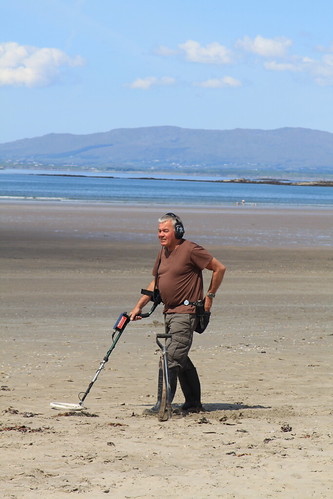
Treasure hunter
This man was earnestly hunting for treasure. Don't think he found any.

Empty beach
The tide was well and truly out, giving us plenty of beach to play with.

Crabbid
I don't think this crab was sunbathing. He looked a bit crabbid, really.

Low Tide
The scenery is beautiful in this part of Donegal.

Buoys
This might be the buoys brigade, marking off where it's unsafe for vehicles to journey across the softer sand.


The kite was flying high - until I tried to take some photos of it, and promptly crashed.

Baywatch
The lifeguard station was closed up. No Baywatch available that day - perhaps Pamela Anderson and David Hasselhoff were otherwise occupied.


Monday, June 11, 2012

Sermon Audio: Ephesians 5: 21-33


On Sunday morning we were thinking about Love and Marriage from Ephesians 5. What will it look like for the husband to be the head of the household? Why would a wife submit to her husband? What is God's pattern for marriage?

Sunday, June 10, 2012

Sermon: Ephesians 5: 21-33 Love and Marriage


I have a confession to make. This might be the most difficult sermon to preach of my nine and a bit months here so far. You see, we’re looking today at marriage, and some of you might be sitting thinking to yourself - what does he know - he’s only been married for almost four years, compared to our twenty, thirty, fifty years together.

It would be much easier for me to skip this section and move on to something a bit easier to talk about - the armour of God in chapter 6. But let’s not get ahead of ourselves! You see, the sermon isn’t a chance for you to catch up on some sleep; but at the same time, it isn’t for me to stand up and rant on for fifteen minutes on a subject of my choosing.

We gather to hear God’s word read and proclaimed - it’s God setting the agenda, not me. It’s the reason we take books of the Bible and work through them from start to finish - right now, we’re working through Paul’s letter to the Ephesians, and marriage is the next topic he addresses. So you’re not just getting what I think of marriage - rather together we want to hear what God thinks of marriage, and what that will mean for our relationships.

The first thing to note is that God thinks marriage is a good idea. We saw that in our first reading from Genesis 2. God is the first matchmaker, forming Adam and then Eve, and bringing them together. Before the fall, before sin came into the world, marriage existed - one man, one woman, coming together to form one flesh, a permanent, public, life-long commitment.

When we were clearing out granny’s house, we came across old wedding photos. The black and white photos of granny and granda McMurray, looking radiant on their wedding day. It’s as if Paul pulls out the wedding picture of our first parents, Adam and Eve, and then he says that marriage itself - every marriage from Adam and Eve down to today - marriage is a like a signpost pointing towards the wedding banquet, the big wedding.

Not just the wedding of the year; not even the wedding of the century or millennium, but THE royal wedding. Look with me at verse 32. ‘This is a great mystery, and I am applying it to Christ and the church.’ Marriage has always been a signpost pointing to the great wedding feast in heaven when Christ and the church are united forever.

We’ve received a couple of wedding invitations for the summer - friends getting married. As they do that, it’s like the trailer for the film; a foretaste of the real thing. Their weddings will be like a picture of Jesus and the church. But so will their ongoing marriages. So many couples invest so much in their wedding day without really thinking about what comes next - the ongoing commitment in all the years that follow until death us do part.

So what will it mean for our marriages to point towards the union of Christ and his church? What should it look like if our marriage is a picture of Christ and the church? It’s like so many pictures (at least the ones I take) - so often it’s out of focus; it’s a bit blurry; it doesn’t really show it in all its glory. We need to focus again on the original, so that we can copy the pattern.

Firstly, Paul addresses the wives. ‘Wives, be subject to your husbands as you are to the Lord.’ In other versions the word used is submit - to ‘obey’ your husband. Now it might be that you immediately raise all sorts of objections; you might think that we’re just out to get you and control you; that it’s a power game; or that Paul hated women. But remember the pattern - ‘For the husband is head of the wife just as Christ is the head of the church, the body of which he is the Saviour.’

Christ is the head of the church - he leads it, and rules over it. In the same way, Paul says, the husband is to be the head in the household - not to dominate or to be a tyrant, but simply in order to provide a lead. (I remember hearing one woman say that her husband was the head of the household and then mutter under her breath that she was the neck that moved the head!).

It’s not easy to submit, but before the women start a revolution, let’s see what Paul says to the husbands. Now at first sight it might seem as if the men get off lightly - ‘husbands, love your wives.’ And the women might be thinking, well, is that it? We have to submit and they just have to love? But look at the standard of love they have to live up to. Remember again the pattern that our marriages follow, as they point to the royal wedding:

‘Husbands, love your wives, just as Christ loved the church and gave himself up for her.’ Now how did Christ love the church? Did he issue commands and demands all day and just be waited on hand and foot? Not at all - he came not to be served but to serve; he loved the church so much that he ‘gave himself up for her.’

Rather than men having it easy, they are called to die for their wives, to give themselves for her. To provide and nourish and tenderly care for her. It’s not that the husband’s will is there to be obeyed, no matter what the wife thinks. Rather, the husband is to pattern himself on the Lord Jesus, leading by serving and giving himself in love for his wife. Men, are you?

Wouldn’t it be so much easier to submit to a loving, giving serving type of husband? Just as the church submits to her loving, giving, serving (and saving) Lord. Marriage is another place for our salvation to be worked out; it’s one of the venues for practical Christianity - real life, and not just theory.

In so many marriages, the wife would never think of submitting because it wouldn’t be safe to - her husband would immediately take advantage. When two sinful and selfish people come together in marriage, there are going to be ructions - always trying to gain the upper hand and control the other. It’s like the out of focus photo - you might just be able to make out that it’s a bride and groom, but that’s about all. As Christians, though, doing marriage in the way Paul describes here; each giving themselves to the other; putting the other first; together looking outward to love and serve; in this marriage the focus on the camera is corrected, the picture becomes clearer, sharper - the picture of the union of Jesus and his bride the church. That royal wedding that will continue throughout eternity which will never come to an end.

For those in marriage, the application should be clear - how does your life together point to our salvation? Are there things you need to work on?

But for those who aren’t currently married, you might be thinking, well, that was a waste of coming to church. That wasn’t for me at all. But perhaps you’ll be married some day - how are you preparing even now, maybe even before you have met your husband or wife to be. Are you cultivating these habits of giving and serving; or just being selfish? Perhaps you give thanks for your own marriage which has finished - how can you be helping others in their marriage? Could you be praying for the young couples preparing for weddings? A listening ear for problems?

Married or not, each of us are invited to the great Royal wedding, not just as spectators, not even just as guests, but as part of the bride. The King has proposed, the wedding date is set. Our earthly marriages are pictures (albeit imperfect) of that great wedding. As we gather at the Lord’s table, we have the foretaste of the great feast. Will you accept? Will you say I do?

This sermon was preached in Aghavea Parish Church on Sunday 10th June 2012.

Thursday, June 07, 2012

Book Review: South: The Story of Shackleton's Last Expedition 1914-1917


The Kindle did it again! I've said before that books can transport you to places and experiences you would never otherwise encounter, and so it was with this free Kindle ebook, leading to a chilly read. Sir Ernest Shackleton was one of the great polar explorers, and this volume invites you to travel with him on his attempted expedition across Antarctica. As the world began to go to war in 1914, Shackleton and his dedicated band of adventurers were setting off to explore the Antarctic region, including a trek across the South Pole from one side to the other. This is the story of their journey.

From the outset, the reader is told that the expedition failed in its objective, but nevertheless 'there are chapters in this book of high adventure, strenuous days, lonely nights, unique experiences, and, above all, records of unflinching determination, supreme loyalty, and generous self-sacrifice on the part of my men.' (foreward). The reader is transported to the barren wilds of the South Pole and the whole polar region, with stories of football played on ice floes, long months of winter darkness, hunting for penguins and seals, dodging sharks and killer whales, low food stocks, and scary moments.

Early on, Shackleton's boat becomes stuck in the ice field, and the party have to set out on sledge and foot across the ice, not having made it to 'dry land' yet. Their bravery knows no bounds, in that terrible and desolate place; with courage and encouragement keeping their spirits high as they urge each other on through moments of thirst and hunger, as well as the sadness of losing the dog sled teams. The puniness of man compared to the wonders of Nature were felt: 'We had seen God in His splendours, heard the text that Nature renders. We had reached the naked soul of man.' (p. 115)

There were some insights into Shackleton's sense of responsibility and thoughts on leadership:

'I confess that I felt the burden of responsibility sit heavily on my shoulders; but on the other hand, I was stimulated and cheered by the attitude of the men. Loneliness is the penalty of leadership, but the man who has to make the decisions is assisted greatly if he feels that there is no uncertainty in the minds of those who follow him, and that his orders will be carried out confidently and in expectation of success.' (p. 68)

At the same time, there was a quiet confidence in the Providence of the Almighty God: 'When I look back at those days I have no doubt that Providence guided us, not only across those snowfields, but across the storm-white sea... I know that during that long and racking march of thirty-six hours over the unnamed mountains and glaciers of South Georgia it seemed to me often that we were four, not three.'

That crossing had been when Shackleton took two of the party with him in an attempt to bring help from the whaling station at South Georgia, having crossed the sea in a little boat entirely unsuited to such a journey. The lieutenant left in charge of the remaining men on the ice had an infectious leadership style, brimming with confidence that spilled over into his companions:

'Wild reckoned that help would come in August, and every morning he had packed his kit, in cheerful anticipation that proved infectious, as I have no doubt it was meant to be... "You see, boss, Wild never gave up hope, and whenever the sea was at all clear of ice he rolled up his sleeping bag and said to all hands, 'Roll up your sleeping bags boys; the boss may come today." Talk about an illustration for an eschatalogical hope!

This was a fascinating read, both chilling and yet inspiring. Chilling, because with the constant depiction of ice and snow and temperature of 0 degrees Farenheit (let alone Celsius!), it makes the reader a little cold, even in the heat. Inspiring, because of the leadership provided by Shackleton and the willingness of the men to serve and help and encourage each other. All in all, it was a remarkable journey, even if unsuccessful, and well worth reading for the bargain price of £0.00! South can be downloaded from Amazon for the Kindle.

Wednesday, June 06, 2012

Sermon Audio: 1 Chronicles 29: 1-20


On Sunday morning I was preaching from 1 Chronicles 29 on the great Gift Day for the Jerusalem temple, as David and the people freely gave their gifts towards the building project. Behind all our gifts is God the Gracious Giver.

Sunday, June 03, 2012

Sermon: 1 Chronicles 29: 1-20


It’s a momentous day in the nation’s history. An important time in the life of the country. It has been anticipated for so long; preparations have been made. Crowds have gathered in the capital for a great celebration. It’s a day that will never be forgotten.

You might think I’m talking about the Diamond Jubilee of Her Majesty, Queen Elizabeth, this very weekend. It’s right and proper to celebrate her long reign over us, and to give thanks to God for his faithfulness for sixty years of the Queen ruling. But I’m actually thinking about the circumstances surrounding our first reading, from 1 Chronicles.

It’s a book you might not be so familiar with, coming near the end of the Old Testament history section. 1 & 2 Chronicles are a history lesson for the exiles returning from Babylon to rebuild Jerusalem. The two books tell the story of how they got into the mess in the first place - how the kingdom of Israel was established, how promising everything looked, and how it all withered and fell away, starting with the reign of Solomon and the other kings.

Our reading, though, comes at the end of David’s life and reign. David has been king for forty years, finally in the city of Jerusalem. He lives in a palace, but the ark of the covenant (the symbol of God’s presence among his people) still stays in the tabernacle - the tent it travelled through the wilderness with the children of Israel after they came out of Egypt and journeyed to the promised land.

David wanted to build the temple - the stone building where Gods presence would rest in the heart of the city - but God said no, that Solomon would build it. So David has made the plans, the directions for building the temple are completed, and David gathers the whole nation together for a Gift Day.

It might be useful to have the chapter open in front of you, to follow the action. Firstly, David gives his gift to the temple: gold, silver, bronze, iron, wood, onyx and precious stones, and marble. The King takes the lead in giving such treasure to the work of the Lord’s house. He’s not like a back seat driver, telling others how to do it but not doing it himself - he takes the lead, he shows that he is in control of his money (not the other way round!), and so he shows his wallet who is boss.

It’s then that he can issue the challenge, as he asks the people of God: ‘Who then will offer willingly, consecrating themselves today to the Lord?’ (5) It’s not a compulsory thing; it’s an invitation, to willingly offer gifts to the Lord. The people respond in generosity, with more gold, silver, bronze, and iron, and precious stones.

Do you see their reaction in verse 9? ‘Then the people rejoiced because these had given willingly, for with single mind they had offered freely to the LORD; King David also rejoiced greatly.’ There is joy as we give to the Lord’s work, it leads to rejoicing. Let’s hope that it is with joy that we also come to give our offering this Gift Day.

You see, we’re still giving to the work of the Lord, to the building of the temple. There is now no physical temple, no building we can point to as our temple. The temple is being built in us and all around us - just as we’ve been learning from Paul’s letter to the Ephesians: ‘So then you are no longer strangers and aliens, but you are citizens with the saints and also members of the household of God, built upon the foundation of the apostles and prophets, with Christ Jesus himself as the cornerstone. In him the whole structure is joined together and grows into a holy temple in the Lord; in whom you also are built together spiritually into a dwelling-place for God.’ (Eph 2:19-22)

Occasionally on my travels, I come across a church where there’s some renovations happening. Several months ago, I had discovered Boho church (Bo ho as I thought), where they were building an extension. At the gate, there was the warning sign showing the need for a hard hat, because the place was a building site. In a sense, every church needs a sign like that, reminding us that we’re still a work in progress, there’s more to be done, we’re in the building trade, building the Lord’s dwelling, the Lord’s temple.

Our gifts today will go towards the building work of the Lord. May they be offered willingly and cause rejoicing, as we see progress in the Lord’s work.

The thing about Gift Days, though, is that we can become fixated with the amount raised - whether it’s more than last year; whether it’s enough. Just in case we’re tempted to fall into that way of thinking, David helps us get our focus back to where it really matters - not on the gift, but on the gracious giver of all gifts. He does this by his powerful prayer, using some words that might just be familiar: ‘Yours, O LORD, are the greatness, the power, the glory, the victory and the majesty; for all that is in the heavens and on the earth is yours... For all things come from you, and of your own have we given you.’

It’s not that we’re so great or good or generous. Rather, David celebrates that God owns all things, and graciously gives us everything that we have. So whatever we have already belongs to God - we are just stewards of it - so it’s only right that we use it to honour God, and give to him.

It’s a bit like the boy who can buy mummy a birthday present because mummy has already given him his pocket money. We can only give because God has first given to us. It’s the very essence of grace - God gives us what we don’t deserve; it calls for us to willingly respond with praise and thanksgiving.

You see, David’s gift that day wasn’t his way of saying “right God, I’ve bought your favour now, you’ll have to do what I want.” We can’t buy God; we can’t pay our way to heaven. Instead, the God of grace makes the first move. He gives us life and strength and every good gift. He sent the Lord Jesus into the world to die for our sins on the cross, to clear the way to welcome us home, to bring us into his cosmic temple building project. He gives us the gift of faith to receive his promises and believe them.

The giver of all things doesn’t need our money; but he graciously invites us to give to his work. The Lord of all wants us to respond with joy, by giving not just our money, but by giving up our lives as living sacrifices, giving all of us for his work, for his praise and glory.

It was an important day in the nation’s history. David and the people celebrated the gifts given that day to build the Jerusalem temple. During Solomon’s reign, the temple was built, and people came to hear the wisdom of Jerusalem’s King. Eventually, though, that temple was destroyed by Nebuchadnezzar. The returning exiles tried again, but with less success.

The temple of the Lord is being built here and now, and across the world, as men and women, boys and girls hear the good news about Jesus and are added to the temple, the Lord’s dwelling. This temple will never be destroyed. You’re invited to be part of this great building project - will you receive God’s grace, and then give your all? Thanks be to God for his indescribable gift!

This sermon was preached in Aghavea Parish Church on the parish's Gift Day, on 3rd June 2012.

Thursday, May 31, 2012

Book Review: The Adventures of Sherlock Holmes


One of the advantages of owning a Kindle is that there are lots of older books which are out of copyright, and thus available free of charge in ebook format. Having often heard tell of Sherlock Holmes but never having read any of the tales from the pen of Sir Arthur Conan Doyle, I downloaded this free volume and really enjoyed it.

These adventures are twelve short stories, mini mysteries, all successfully solved by the impressive Holmes, ably assisted by his bemused friend, Dr Watson. The reader is transported to Victorian England, and all sorts of strange occurrences and events to be investigated and enjoyed.

From A Scandal in Bohemia to the Red-Headed League; A Case of Identity to the Boscombe Valley Mystery; the Five Orange Pips and the Man with the Twisted Lip; there are also adventures of the Blue Carbuncle and the Speckled Band; the Engineer's Thumb; the Noble Bachelor; the Beryl Coronet, and the Copper Beeches. Each story leaves the reader guessing until the secret is revealed and the mystery solved through Holmes' unique style of deduction. I wouldn't want to say much more about the stories because they would be ruined for the reader.

If you've got a Kindle, or even a Kindle app, then this is a great little collection to download and save for those times when you have about ten minutes to spare, perhaps in a doctor's or dentist's waiting room, or on the bus. And as I say, it's free!

Monday, May 28, 2012

Sermon Audio: Ephesians 5: 1-20


Yesterday in church, on the day of Pentecost, we were continuing to work through Paul's letter to the Ephesians, coming to the section where we are urged to be filled with the Spirit.

Sunday, May 27, 2012

Sermon: Ephesians 5: 1-20 Filled with the Spirit


A few years ago, we were moving into the Curatage in Dundonald, and we were looking after our niece, who was about three. She was very keen to help in any way at all. It was as if I had a shadow the whole day - if I sat on a camping chair, she wanted to sit on one; if I leant against the window sill, there she would be propped as well!

It’s funny how children seem to learn by copying - as they move from eating with their hands to eating with a knife and fork; as they learn to tie their shoelaces; as they hear and copy words - as a friend is quickly learning to his cost! Those little mild outbursts are being echoed back to him!

If it’s true in our human families - and I’m sure you have some funny stories of when you or your kids were growing up - we’re being urged to do the very same in the family of God. As we’ve been working our way through Paul’s letter to the church in Ephesus, he has been reminding them and us of how we have been brought into God’s family. We didn’t deserve it, it’s a free gift of God’s grace because of God’s love - which we receive as we believe the promise of God.

Last week, if you were with us, you’ll remember the horrible, dirty T-shirt. Paul says in 4:22 to put off the old self and to put on the new self. Because we have already been changed (through the sacrifice of Christ v2), we must change what we do. And how do we learn what the new self is like? We have been made into God’s children; we should take our lead from God.

Imagine a little boy living on the streets; pickpocketing; dirty; homeless and helpless. What a change it would be if he was adopted by Prince Charles and Camilla. No longer would he be running around dirty; no longer would he be pickpocketing the visitors to the palace. He would have to change his ways, learning from his new parents; and looking up to how his new brothers, William and Harry, live.

It’s the same with us. Verse 1: ‘Therefore be imitators of God, as beloved children, and live in love, as Christ loved us...’ We are already beloved children - we are certain of God’s love for us, displayed in the cross; and so we copy our heavenly Father, wanting to do the same things as him; wanting to walk in his ways; wanting to turn from those things that displease him.

So what will it look like to be children of God? In verses 3-5, Paul says that we will be pure. While the world might run after fornication and impurity and greed, celebrating these things, the Christian is called to be different. It can be hard to avoid such things - in TV, internet, movies, but we’re not even to mention such things. Why? Well because obscene talk, silly talk, and vulgar talk have no place among the saints.

Now when you hear that word, what do you think of? Your mind might race to stained glass window pictures of saints; or you might think of especially holy dead people who wrote parts of the Bible. If you have your Bible open (and it’s normally helpful), flick back to the very first verse of Ephesians. Paul writes to the saints who are in Ephesus - he’s not writing to dead people. He’s writing to the gathered church. You and I - we’re the saints who are in Aghavea. The saints in the New Testament are God’s holy ones, his children, the church.

Paul says that if we are God’s people and we are holy people, then there’s no place for gossip or impurity among us. It’s not even proper to dwell on the juicy gossip of others. Just as with last week - as we put off things, there is something else to put on. If we’re doing away with obscene, silly and vulgar talk, then we’re called instead to put on thanksgiving. Rather than greed (which is idolatry), we’re called to be thankful with what we have.

But more than that, we’re reminded that the end of the two ways is very different - ‘Be sure of this, that no fornicator or impure person... has any inheritance in the kingdom of Christ and of God.’ And as Paul goes on, some will try to deceive us with empty words. Don’t be worrying about morality - everyone is doing it. Don’t worry about the consequences - if it feels good, do it. There are no consequences - you will surely not die.

These are empty words because: ‘the wrath of God comes on those who are disobedient.’ So don’t go there. Don’t be associated with them! Remember whose you are - God’s holy people; remember who you are - light in the Lord. Paul is saying to remember what God has done in you, and to live in the light of the change. ‘For once you were darkness, but now in the Lord you are light. Live as children of light...’

Once again, we’re called to copy our heavenly Father. You might recall how you used to live - and shudder - but as you trust in Christ, you have been rescued, your past is gone, and you have been made clean. But in case we’re wondering what it means to live as children of light, Paul gives us the answer: ‘for the fruit of the light is found in all that is good and right and true.’ That’s a very simple test for any of our thoughts and words and actions: is what I’m doing good? Is it right? Is it true?

Rather than taking part in the unfruitful works of darkness, we are to expose them. A long time ago, before I was married, I was sleeping, and was woken by this rustling noise. I had a packet of rolos sitting on my bedside table, and when I turned on the light, I discovered a mouse, trying to get into the sweets! As soon as the light turned on, it fled, exposed in its dark deeds. It’s a simple matter of turning on the light. You see, if we’re children of light then the way we live will be like a light, exposing the darkness of others, bringing their wickedness into sight.

I wonder if you’ve any trouble sleeping with these bright mornings? The sun hits our windows very early, stirring us to waken. This is what Christ is doing through us, to stir and waken those in darkness, and to bring them into the light as well.

In the last verses, Paul says that as well as being children of purity and children of light, we’re also to be wise. The days are evil - our time is short. We want to make the maximum impact as we shine and obey the Lord. So don’t waste your time getting drunk with wine - don’t be filled with wine; instead, Paul says: be filled with the Spirit.

On this day of Pentecost, as we remember the Holy Spirit being given to the first disciples gathered in that upper room, we need to remember that we too have the gift of the Holy Spirit, living in us, helping us and empowering us to live as God’s children in a wicked and hostile world.

He is the one who creates in us the family likeness, helping us to put off the old self and to put on the new self, as he helps us to sing psalms hymns and spiritual songs; as we give thanks to God the Father every time for every thing.

When I was a child, I was with my granny in a shop one day. We didn’t know the shopkeeper at all, but he was able to say for certainty who my mother was because I looked so much like her whole family. Let’s pray that each of us will become more like the image of God as we copy our Father in all we do this week.

This sermon was preached on the Day of Pentecost, 27th May 2012 in Aghavea Parish Church.

Wednesday, May 23, 2012

Book Review: The Christ of the Empty Tomb


I've previously reviewed another similar book from James Montgomery Boice - The Christ of Christmas. In it, Boice's Christmas sermons were shared, but in this volume, The Christ of the Empty Tomb, Boice turns to the other great festival of the Church: Easter.

Boice was a great preacher, with clarity of thought, superb illustrations, and life-changing application, all of which shines through in this volume of Easter sermons. They are collected into four main sections: New Day Dawning; The First Lord's Day; He is Risen; and Our New Day; and even from those titles you can see the arrangement of material and the scope of the sermons.

There is something for everyone in this very helpful book. For the sceptic (skeptic?), there is a careful examination and explanation of the events of that first Easter Day at the empty tomb. For the new Christian, there are encouragements to grow in faith and confidence because Jesus is risen from the dead. For the seasoned saint, there are plenty of encouragements to keep going and keep growing. For the pressured pastor, there are ideas and illustrations that may be a launchpad for an Easter sermon series; new angles and interesting details to stop and consider; fresh fodder for the preacher.

Above all, the book is an exciting reminder that the heart of our faith is the fact that Jesus is alive and reigns, that death could not hold him, and because of this, nothing will be the same again. Check out the promotional video from the publishers:

Tuesday, May 22, 2012

Sermon: Ephesians 4: 17-32 All Change!


I wonder if you've got a favourite item of clothing? It might be a football shirt that you always wear; a really comfy pair of jeans that you couldn't do without; or even a pair of shoes that you've always loved. Perhaps some of the adults are attached to their clothes?

This morning, I brought along my favourite white T-shirt. I've had it a long time, we've been through a lot together, but I just couldn't part with it. In fact, I decided to wear it this morning to show you. It's under my surplice, so here it is. [Reveal disgustingly dirty T-shirt - pre-treated the night before with tomato ketchup, brown sauce, soy sauce, and a few rips and tears]. What do you think? It might be a bit dirty and ripped and horrible, but it's like a part of me.

What do I need to do with it? Cleaning won't help it. There's only one thing for it. I need to take it off and throw it away.

But if I get rid of it, what else do I need to do? I still need a T-shirt. So I need to get rid of the old one, and put on a brand new, sparkling clean white T-shirt. [Bring new T-shirt from a bag, and put it on.] Is that better?

Does anyone know who Andy Carroll plays football for? He plays for Liverpool. Imagine that he signed for Chelsea this summer. Could he still wear his Liverpool shirt on the pitch? When the teams were playing, could he still wear his red shirt? Of course not! He has to take off his red shirt and instead put on a blue shirt. Which manager would he be listening to? Would he still listen to the Liverpool manager (whoever that is going to be!)? No, he would be listening to the Chelsea manager, doing what he wants him to do.

Following Jesus is a bit like this. You see, we've changed teams. We don't live for ourselves any more, doing what we want to do. Instead we're on Jesus' team. Jesus is our manager, so we do what he wants. Paul, in the letter to the church in Ephesus gives us a picture of what this is like: 'to put off your old self... and to put on your new self.'

When we follow Jesus, he removes our sin (the dirtiness) and makes us clean. It's been done. It's like the dirtiness of my old T-shirt being taken away, and Jesus giving us a clean purity instead. But we're called then to change how we live and what we do, because we're now on Team Jesus. And Paul gives us some examples.

Barney comes home from school. His mum asks if he has any homework. Barney says no, and goes out to play with his friends. He goes into school the next day and his teacher asks where is his homework. What did he do to his mum? He told lies. Is this what someone on Team Jesus should do? Paul says: 'put off falsehood and speak truthfully.'

Or think about Polly. She's round at her friend's house and sees a new DS game she wants. She puts it in her coat pocket and takes it home without asking. What has she done? She has been stealing. Is this how people on Team Jesus behave? Paul says don't steal, but instead share.

Rather than unwholesome talk coming out of our mouths - saying bad things about people and spreading gossip, we should only say what is good and helpful and true. Similarly, we're not to be angry or bitter. Instead, we should be kind and compassionate - just as God was to us.

It's not always easy to do the right things. It's much easier to lie and cheat and steal. But if we're on Jesus' team, he gives us the help we need. He gives us the Holy Spirit, who has sealed us for the day of redemption, given to us to help us make the right choices and to live as Jesus wants us to.

Whose team are you on? What way are you living? In this week, let's pray that God will help us to put off the old self and to put on the new, for the praise and glory of Jesus. Amen.

This sermon was preached at the Family Service in Aghavea Parish Church on Sunday 20th May 2012.

Tuesday, May 15, 2012

Book Review: Precious Blood


The blood of Christ and his atoning work are at the very centre of the Christian faith. Books that help us to think again about that precious blood are very important, none more so than this volume. Having read this in the run up to Easter (yet only getting around to reviewing it now), there was much to savour and enjoy.

Emerging from the Philadelphia Conference on Reformed Theology of 2008, Precious Blood isn't just a book of conference addresses. Rather, it's a wonderful set of chapters which deal with the biblical and theological importance of the blood of the Lord Jesus. Split into two main parts, the first considers the atonement in biblical revelation; while the second explores the atonement in Christian thought through various theologians and periods of Church history. I personally found the biblical material better, but it was good to see how the theology of the atonement has been received and taught in the last two thousand years.

Each chapter comes from a different author's pen, which presents the need to quickly adapt from one writer's style to another, but each of the contributions is helpful. Joel Beeke kicks off with an analysis of Exodus 12 and the Passover in his chapter on Necessary Blood. Robert Godfrey continues by explaining Redeeming Blood from Psalm 49, which wasn't one of the 'purple passages' I would have expected in such a book. Philip Graham Ryken comes next with his chapter on Atoning Blood from Romans 3, followed by Richard D Phillips (the editor of the book) on Cleansing Blood from Hebrews 9. Offensive Blood is the subject of Robert Godfrey's next contribution, in a study of Philippians 3, before RC Sproul concludes the first section with the Precious Blood of 1 Peter 1.

The second section considers the atonement in the Early Church (Derek Thomas), Anselm (Philip Graham Ryken), the Reformation (Robert Godfrey), the Puritans (Joel Beeke), developments since the Reformation (Carl R Trueman), and the 'non-violent' critics of penal substitutionary atonement (Richard D Phillips).

This would be a good book for someone who has a grasp of the basics and wishes to explore the doctrine in greater depth. The range of angles is useful, and I'll certainly be returning to the book to use some of the illustrations and ideas for sermons in the future. All in all, it's a great book I would be happy to recommend. The only place I've seen it online is: Precious Blood.

Monday, May 14, 2012

Sunday, May 13, 2012

Sermon: Ephesians 4: 1-16 Body Building


One of the TV programmes we used to like watching was ‘The World’s Strongest Man’. Each week, competitors from around the world would seek to show their strength by pulling a bus along a track, or lifting cannon balls, or carrying tractor tyres. It was unbelievable to watch their strength, thinking about the dedication they’d put into building up their bodies, enlarging their muscles, to make them big and strong. All the more so when you’re watching them with the body of the old Mr Muscle advert guy - a weakling!

This morning, in our reading from the letter to the Ephesians, Paul says that each of us should be body builders. But we’re not unveiling plans for a gym over in the hall; don’t worry about wearing a leotard; the body we’re building is the body of Christ - the church. But how do we go about it? How can we be body builders?

As we begin, it’s important to remember that Paul is writing a letter to the church in Ephesus. It would have been read as a whole, altogether. It’s been over a month since we were last in Ephesians, so it might be good to have a little reminder of the ground we’ve covered. In Ephesians 1 - 3, Paul celebrates in God’s plan (the mystery) for the whole universe, bound up in Jesus and his work. Through what Jesus has done, God is forming his people - the church, turning sinful people into saints through his amazing grace, showing his grace to the universe, as people from different backgrounds/cultures/nations come together as one in Christ.

So as we’re called into the church, into the body of Christ, how should we live? What will it look like to ‘lead a life worthy of the calling?’ Have you ever heard the old poem: Living above with the saints we love, oh, that will be glory. Living below with the saints we know, now that’s a different story. It’s not always easy to get on with everyone, there are always (at least, this side of glory) going to be disputes and quarrels, as personalities clash.

Nevertheless, in verse 2, Paul begins to explore it: ‘with all humility and gentleness, with patience, bearing with one another in love’. Are we humble in our dealings with each other, or insistent that we’re always right? Are we patient with others? Do we put up with some things we don’t like out of love for others? Or are we out for ourselves all the time?

Paul goes on to urge us to make ‘every effort to maintain the unity of the Spirit in the bond of peace.’ Are we striving for unity in the church? Why is unity so important anyway? As Paul declares, there is only one body - listen out for the number of ones: ‘There is one body and one Spirit, just as you were called to the one hope of your calling, one Lord, one faith, one baptism, one God and Father of all...’ one, one one - There is only one true church, only one body of Christ in all times and places. As we meet here, and live together here, we are part of the one body - just as other churches are also part of the one body. We’re on the same team.

But unity is not uniformity - in the one church there are different people and races and classes and cultures - all joined together as one. There is one body to be built, but many gifts. To come back to our strongman bodybuilder, he’s not just going to use press ups, or just sit-ups, to grow strong; he’ll use a lot of different training routines.

Verse 7: ‘But each of us was given grace according to the measure of Christ’s gift.’ The risen Lord Jesus, having ascended to the Father, gives gifts (grace) to each of his people. That means that you, me, everyone of us, has been given grace from Christ to fulfil our part in his purpose, but the things we will do in his grace will be very different. In verse 11, Paul outlines some of the leadership roles which have traditionally been taken to be ‘the ministry.’ ‘the gifts he gave were that some would be apostles, some prophets, some evangelists, some pastors and teachers.’

Notice that each of those have to do with the word - apostles are those who establish new ministries in new areas, they’re sent; prophets proclaim God’s word; evangelists explain and teach the good news; pastors and teachers (the two are one and the same person) are those who teach the word in the congregation.

But the tendency is to see the pastor-teacher as ‘the minister’ - which must mean that ‘the ministry’ is something that only ordained people do - you must need a collar to do ‘ministry.’ That’s not what Paul says here, it’s not God’s intention in the church - you see, we stopped in the middle of a sentence: ‘some pastors and teachers, to equip the saints for the work of ministry, for building up the body of Christ...’ The word gifts lead to each of us doing the work of ministry / service. We’re in this together. Some churches even express this on their noticeboard at the front door: Rector: Rev such and such; Ministers: The whole congregation. Each of us have been given grace from God to serve in particular ways to build the body. How are you serving? What could you be doing? How can you use the gifts and graces that God has given you in his service?

Our goal is to build the body of Christ ‘until all of us come to the unity of the faith and of the knowledge of the Son of God, to maturity, to the measure of the full stature of Christ.’ There is one God, and one body - to which God gives a diversity of gifts so that we can all be built up together in the unity of the body to accomplish maturity.

We don’t want to keep on being infants, children, rather than growing up. We don’t want to be like a little boat in a big storm, being tossed about, blown by every wind of doctrine. There are winds of false teaching blowing in the church today - will we be carried away by them, or will we stand firm in the truth? We’re wanting to grow up - but how do we do it?

‘But speaking the truth in love, we must grow up in every way into him who is the head, into Christ...’ Speaking the truth can be easy enough - especially when it’s the truth about someone else. It can be easy (even therapeutic) to point out the faults and failings of others. But speaking the truth in love, motivated by love, not anger - that’s the hard part. We’re back to those instructions in verse 2 - bearing with one another in love, but that’s what we seek to do as we seek to build the body, as we hear God’s word and put it into practice in the church.

You may not be very strong today. You might not ever feature on the World’s Strongest Man (or Woman). Yet God calls you to be a body builder. How will you fulfil your ministry this week as you love and serve? How can you use the gifts that God has given you?

Let’s pray that we see the body of Christ being built in this place, for the glory of his name.

This sermon was preached in Aghavea Parish Church on Sunday 13th May 2012.

Saturday, May 12, 2012

General Synod 2012

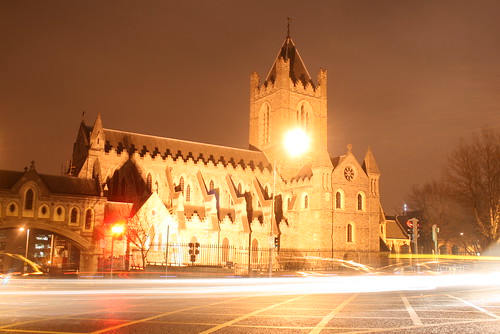
It's been about five years since I've been a member of General Synod, at that time a lay member from Dromore diocese. On ordination, I had missed out on the clerical elections in Down diocese in 2008, and I moved to Clogher diocese about two weeks after the deadline to stand in the clerical elections last year. I voted for our clerical Synodsmen, but couldn't stand. So I've been following the news and updates from Christ Church Cathedral Dublin from General Synod of the Church of Ireland 2012 from afar, thanks to the twitter feed and some facebook updates from various sources.
Christ Church Light Trails
News emerging from Dublin are that the General Synod have passed the following motion in its session today:

The General Synod affirms that:
The Church of Ireland, mindful of the Preamble and Declaration, believes and accepts the Holy Scriptures as revealing all things necessary for eternal salvation through faith in Jesus Christ;

The Church of Ireland continues to uphold its teaching that marriage is part of God’s creation and a holy mystery in which one man and one woman become one flesh, as provided for in Canon 31:

‘The Church of Ireland affirms, according to our Lord’s teaching that marriage is in its purpose a union permanent and life–long, for better or worse, till death do them part, of one man with one woman, to the exclusion of all others on either side, for the procreation and nurture of children, for the hallowing and right direction of the natural instincts and affections, and for the mutual society, help and comfort which the one ought to have of the other, both in prosperity and adversity.’

The Church of Ireland recognises for itself and of itself, no other understanding of marriage than that provided for in the totality of Canon 31. The Churchof Ireland teaches therefore that faithfulness within marriage is the only normative context for sexual intercourse. Members of the Church of Ireland are required by the Catechism to keep their bodies in ‘temperance, soberness and chastity’. Clergy are called in the Ordinal to be ‘wholesome examples and patterns to the flock of Jesus Christ’.

The Church of Ireland welcomes all people to be members of the Church. It is acknowledged, however, that members of the Church have at times hurt and wounded people by words and actions, in relation to human sexuality.

Therefore, in order that the Church of Ireland is experienced as a ‘safe place’ and enabled in its reflection, the Church of Ireland affirms:

A continuing commitment to love our neighbour, and opposition to all unbiblical and uncharitable actions and attitudes in respect of human sexuality from whatever perspective, including bigotry, hurtful words or actions, and demeaning or damaging language;

A willingness to increase our awareness of the complex issues regarding human sexuality;

A determination to welcome and to make disciples of all people.

The Church of Ireland is mindful that for all who believe ‘there is no distinction’ and that ‘all have sinned and come short of the glory of God’ (Romans 3:22–23) and are in need of God’s grace and mercy. We seek to be a community modelled on God’s love for the world as revealed in Jesus Christ. We wish that all members of the Church, through the teaching of the scriptures, the nourishment of the sacraments, and the prayerful and pastoral support of a Christian community will fulfil their unique contribution to God’s purposes for our world.

The General Synod requests the Standing Committee to progress work on the issue of Human Sexuality in the Context of Christian Belief and also to bring a proposal to General Synod 2013 for the formation of a Select Committee with terms of reference including reporting procedures.
[ENDS]

The voting numbers were: Clergy: 81-53; Lay: 154-60; Bishops: 10-2.

Wednesday, May 09, 2012

Sermon Audio: John 21: 1-25


On Sunday morning, as we finished the post-resurrection appearances from John's Gospel, we listened in as Jesus asks Peter: Do you love me? What will it mean for us to love Jesus?

Monday, May 07, 2012

Sermon: Psalm 8 What is man?


One of the things that we’ve quickly noticed since moving to Fermanagh is the quality of the stars at night. In Belfast, you might have seen a few stars, but with all the light pollution, it was hard to make out many. It would have been difficult to be amazed by the universe. But here, well, the view is wonderful! On a clear night you can see stars, and stars, and stars - more than I could have imagined!

Have you ever stopped to think about the greatness of the universe, and compared it to us, here on planet earth? There’s a famous picture taken by the space shuttle Voyager 1, taken four billion miles away, in which the earth appears as a ‘blue dot’. Someone referred to earth as ‘a mote of dust in a sunbeam.’

When you are confronted with all this, what do you make of it? How do you respond to the wonder of all that exists? Do you praise the big bang which brought all this into being by chance? Are you amazed by the randomness of it all? As King David surveys the skies, it moves him to praise - in the right direction:

‘O LORD, our Lord, how majestic is your name in all the earth!’ David looks at the earth, and sees the glory of God. David looks at the skies, and sees the glory of God. It’s what Paul later affirms in Romans 1: ‘For his invisible attributes, namely, his eternal power and divine nature, have been clearly perceived, ever since the creation of the world, in the things that have been made.’

God delights in the praise of his children - David says that he has established strength out of the mouths of babies and infants. Remember the scene as Jesus enters Jerusalem, and the children are crying out? Their praise silences the opposition, stills the enemy.

As David considers the heavens, he’s led to wonder. Here’s how he puts it: ‘When I look at your heavens, the work of your fingers, the moon and the stars, which you have set in place, what is man that you are mindful of him, and the son of man that you care for him?’

If we’re just a speck of dust floating in a sunbeam, and yet God cares for us, how amazing and wonderful is that? Why have you done this God? Why would you care for us?

Imagine someone who has served the community for years and years - a lollipop lady, or someone who fosters children. They quietly go about their business, and yet one day a letter from the Queen arrives, inviting them to receive an honour - an MBE or OBE. If you’ve ever seen someone like that interviewed on TV or in the local newspaper, they’ll be so humble, they never expected it. Who am I to receive this, they might ask.

David is saying who are we - what is man? But more than that, it’s not just a once in a lifetime honour - it’s ongoing care and love. If God is overseeing and ruling over the whole universe, then why would he be concerned with little old me? But he is!

And not just concerned with us, but given us a place of honour: ‘Yet you have made him a little lower than the heavenly beings and crowned him with glory and honour. You have given him dominion over the works of your hands; you have put all things under his feet...’

Isn’t this what happened at creation? God makes Adam and Eve and gives them the place of authority over the world, to rule it under God. We still have this role of oversight over creation - for better or worse, as things are going.

God gave Adam and Eve a share in his glory and honour. They were to rule over the creation, but as we all know, it went badly wrong. Rather than ruling under God, Adam and Eve tried to rebel against God’s rule, and set themselves up as supreme. Their place in the Garden was lost, the fall affected everything - weeds and thistles, hard labour, and pain in childbirth. One writer even goes so far to say that when birds or creatures fly or run away from us now they know that we’re in quarrel with their maker!

The good news is that God sent a second Adam to the fight, the new man, who would overturn the curse, and bring in the new heavens and the new earth. It’s the point that the writer to the Hebrews makes as he quotes these verses. He points to the son of man (a favoured title of the Lord Jesus), who was made for a little while lower than the angels, now crowned with glory and honour, with everything in subjection under his feet.

How amazing that the eternal son of God should give up his place in heaven for the sake of you and me, and take a step down. There’s a TV programme that’s on Channel 4 - undercover boss. The head of a company turns up in one of his branches as a new employee, and sees what it’s like to work at the bottom of the pile - experiencing the dirty jobs rather than the nice, pleasant office work. That’s a bit like what the Lord Jesus undertook - he went from the very top, down below the angels, to become man, to do that job that only he could - to die for our sins and our salvation.

As a result, he has been crowned with glory and honour, as he was raised from the dead and ascended to reign in heaven, at the right hand of his Father. But the writer to the Hebrews points out that the last wee bit hasn’t been completed yet:

‘At present, we do not yet see everything in subjection to him. But we see him who for a little while was made lower than the angels, namely Jesus, crowned with glory and honour because of the suffering of death, so that by the grace of God he might taste death for everyone.’ (Heb 2:8-9)

If we can paraphrase David, what are we, that you would give your Son for us? How worthy is the Lord Jesus to be praised and honoured, who gave up so much for us! As we look at the night sky, we may be moved and humbled by the array of stars, shining in their places. but even that is as nothing compared to the glory of the Lord Jesus, who stepped down for us, and died on the cross for you and for me.

Will you receive his love? Will you honour him? Count Nicolaus von Zinzendorf was converted as he gazed at a painting of the Lord Jesus, the scars of the cross visible, and the saying: ‘‘All this I did for thee, What hast thou done for Me?’ Jesus reigns, and one day soon everything will be under his feet. Will you come today, and praise him, and give your life to him?

This sermon was preached in the Brooke Memorial Hall, Brookeborough on Sunday 6th May 2012.

Sunday, May 06, 2012

Sermon: John 21: 1-25 Do You Love Me?


What do buying flowers, giving a back rub, writing a song; making a meal, little surprises, and surrendering the remote control all got in common? They’re just a few of the ways that people may demonstrate their love for their partner, according to a leading website. Some of them may seem silly, but we’re told it’s the thought that counts. Actions can speak louder than words.

In our reading this morning, as we come to the end of John’s gospel, we find Jesus asking Peter ‘Do you love me?’ As we look at Peter, we find that same question coming to each one of us - ‘Do you love me?’ What will it mean for us to love Jesus?

The setting is in Galilee, the place where it all began; where Peter first met Jesus, where Jesus had called him to follow him. That was three years before, and a lot has happened since then. Peter was Peter, making those brash claims, speaking before his brain was in gear; just as the night Peter said that he would die with Jesus, even if all the other disciples fell away. That very night, in the courtyard of the high priest, by the warmth of a charcoal fire, Peter had faltered, denying that he knew Jesus three times. Jesus died, was raised, but the disciples go back to their old life, fishing.

Just like another time, Peter catches nothing, when a stranger on the shore tells them to cast out on the right hand side. Suddenly, the nets can’t cope, and John realises that it’s the Lord. Peter jumps into the water and swims to be with Jesus. There, he finds a beach barbecue, cooked on a charcoal fire. When they’ve eaten, Jesus asks Peter the question, only he uses Peter’s original name: Simon: ‘Simon son of John, do you love me more than these?’ Do you love me more than these other disciples love me? You’ve previously claimed as much, what about now.

Gone is the brash boldness, the overconfidence. Instead, the reply is a simple ‘Yes, Lord; you know that I love you.’ Now no comparison with others; no over the top statements, just a simple yes, you know I love you. Three times, Jesus asks the question, and three times Peter answers in the same way (with an addition on the third occasion) - You know that I love you.

Jesus restores Peter following his public denials, the question coming each time giving the opportunity to reverse the desperate denial and express his love for the Lord. Isn’t there great comfort here for the believer, the grace given in restoration, sins forgiven, through the love of the Lord.

Now if you were listening closely, or if you’ve got the text open in front of you, you’ll notice that there is something else said to Peter each time, and here we see what it means to love the Lord. You see, to love the Lord is to live and die for his glory.

Simon, son of John, do you love me? Yes Lord, you know that I love you. Do you see what comes next? ‘Feed my lambs... Tend my sheep... Feed my sheep.’ Peter is given a job to do, a task to complete - he is called to live for the glory of the Lord by serving the Lord’s people. Remember where he is - sitting on the shore of Lake Galilee, having returned to his former way of life, back to fishing again.

Just as that call came before to leave his nets and become a fisher of men, so now he is called to leave the boat and become an under-shepherd to the good shepherd. To feed and tend ‘my’ sheep. To feed the lambs and sheep, to give them what will give them life and health and strength; to tend and care for the sheep - the people of God.

For Peter, he demonstrated his love for the Lord by living for the glory of the Lord, loving the Lord and his people, and serving them. While you may not be a pastor, the call for all of us is to love the Lord and his people, serving them in the ways the Lord shows you, using the gifts he has given you. It could be in hospitality, teaching, prayer, encouragement, counselling, helping in practical ways, music, giving, or any number of ways. What is it that the Lord is saying to you, as you answer his question: ‘Do you love me?’ How will you demonstrate your love for him?

So far it’s all good, all straightforward, isn’t it? To love the Lord is to live for his glory. But we may never have imagined what comes next. In fact, we may not want to think about what comes next. To love the Lord is to live for his glory, and die for his glory.

Verse 18: ‘Truly, truly, I say to you, when you were young, you used to dress yourself and walk wherever you wanted, but when you are old, you will stretch out your hands, and another will dress you and carry you where you do not want to go.’ Up to now, this may even just appear to be reflecting the signs of growing old, which some of us are finding every day - no longer able to do some of the things we loved doing, not being able to dress ourselves, being helped and taken about, losing independence.

But John’s comment puts it all into perspective, helps us see what Jesus is actually saying to Peter. ‘This he said to show by what kind of death he was to glorify God.’ Standing before Peter the apostle, years later, lies the cross, where he too will be martyred, executed by Nero. Alongside the call to live for God’s glory is the call to die for God’s glory. Respectfully, and seriously, I ask, will you die well?

You see, we may not face the death of martyrdom (which thousands of our brothers and sisters will face), yet how we die can display our love for the Lord. So you see, the call of the risen Lord is the same call from before, when he calls us to take up our cross and follow him, in whatever circumstances we find ourselves, in the hard times as well as the good, ready to glorify God in our death as much as in our life.

The call goes out, not just to Peter, but to all the church, and all of us individually - to love the Lord and live and die for his glory. With Peter, the way he did that was by leading the early church and dying at the hands of Nero. But Peter slips into a mistake that each of us can so easily fall into. Not content to faithfully follow and get on with what he has been called to do, we see in verse 20 that he wants to know about John, the disciples whom Jesus loved. ‘Lord, what about this man?’ I may be called to die by stretching out my hands on a cross - what about him?

You might look at someone else and think, well, I’ve got it tough compared to Mrs Jones - what about her? And Jesus, as graciously as ever, tells Peter to mind his own business: ‘If it is my will that he remain until I come, what is that to you? You follow me!’ So while Peter’s death is certain, what would it matter to Peter if John is going to remain alive until Jesus returns? Peter’s concern is to follow Jesus, not worry about John’s future.

If I can slightly paraphrase Hebrews 12 here: ‘let us run with endurance the race that is set before us (each one of us individually), looking to Jesus, the founder and perfecter of our faith.’ (Heb 12: 1)

By the time John is writing, Peter has indeed been martyred, and the rumour is circulating that Jesus said this about John. Now imagine that John is nearing death, and Jesus still hasn’t appeared. John reminds us that Jesus didn’t make any such promise. Just as Peter glorified Jesus by his martyrdom, so John will glorify Jesus through living to a grand old age, dying peacefully in his bed. It’s not about being jealous of another’s walk, it’s about encouraging one another in the path set before us by our Lord.

That question Jesus asked Peter echoes down through the years so that we’re confronted with it this evening: Do you love me? The precise ways in which we demonstrate our love will be different for each of us, but the overall summary still stands: Love for Jesus is shown in living for his glory (by serving his people) and dying for his glory.

At the end of verse 19, we hear those two words Peter had previously heard in the same place, when it had all began. Now he has been restored by the love of the Lord demonstrated in the cross, and is sent to demonstrate his love for the Lord by living and dying for his glory. And those words sound out for us as well. Jesus says: ‘Follow me.’

This sermon was preached in Aghavea Parish Church on Sunday 6th May 2012.
Friday, May 04, 2012

Sermon: Luke 15: 11-32 The Lost Sons

What do the following things all have in common? A stuffed puffer fish; a case full of dentures; a human skull; hundreds of umbrellas; and a pound coin? They have all been lost on the London underground! They’re just some of the thousands of items that have been handed in to the Lost Property Office of Transport for London.

In Luke chapter 15, Jesus tells some stories about lost things. In the first, a shepherd has one hundred sheep. One wanders off, and the shepherd goes to find it and rejoices as he brings it home again. In the second, a woman has ten coins, loses one, and searches for it until she finds it. And then he comes to the final story of the three. By now, we know the pattern - something is lost and then found.

But this time it’s different. We’re introduced to a man with two sons. The younger son wants to get lost, and asks his dad for his share of the inheritance. He’s basically saying that he wishes his dad was dead, he just can’t wait to get his hands on what is his. When he has the money, off he goes, you’ll not see him for dust. Away he goes, and in the distant country he has a great time. Lots of friends, lots of parties - ‘wild living’ as Jesus says.

But the money doesn’t last long. He goes through it quicker than a wrong answer on ‘The Million Pound Drop’; moving from riches to rags. He has nothing to show for it - but there’s worse to come. Just as the money dries up, so does the land; there’s famine. No one to help him; friends abandon him, he’s all alone.

As if that wasn’t bad enough, he takes on the only job going, feeding pigs. For a good Jewish boy, this is the ultimate disgrace, living with the pigs. You’re at the lowest of the low, the unclean animals your only friends. Think of the most disgusting job ever, the job you wouldn’t do if they paid you a million pounds, and you’re halfway to this guy among the pigs.

Picture him sitting there, definitely not as happy as a pig in muck, his mind wanders back to home. He remembers the servants, and how even they are better off than him. He came to his senses - he wised up - and decides to go back home. He doesn’t have the money for the bus fare, so he starts walking, and as he goes, he rehearses his speech. He knows what he’s going to say: ‘Father, I have sinned against heaven and against you. I am no longer worthy to be called your son; make me like one of your hired men.’

This is what confession looks like - admitting what you’ve done wrong, saying sorry; turning around.

As he walks home, though, he’s in for a big surprise. Verse 20: ‘But while he was still a long way off, his father saw him, and was filled with compassion for him.’ He doesn’t even make it home - his dad comes to meet him. How did he know? His dad had been watching for him, waiting for him to come back. His dad has compassion for him - he loves him, he’s waiting for him.

The son doesn’t even get to finish his speech; he doesn’t get to the bit about applying for a job as a servant. Straight away, the father is giving orders to his servants asking for a robe and a ring and shoes - the signs of sonship; the symbols of being received as a son. The fattened calf is slaughtered, and a celebration is quickly arranged.

I don’t know you. I don’t know where you are in terms of your relationship with God. It could well be that you have wandered off from God. You’ve taken all the good things he provides, and wished that he was dead. You’ve lived as if God didn’t exist; that you’re in control of your own life and can do things to please yourself. You might be popular, seemingly successful; but in the end, the path you’re on leads to ruin, destruction. Perhaps you’ve reached the end of the path; you’re in the pigsty.

Jesus calls you to come home. Come back to the God who made you, who delights to call you his child. The God who loves you so much that he wants to welcome you into his family. The God who celebrates with the angels when one sinner repents.

God our Father is the God of grace - who gives us what we don’t deserve. None of us deserve to be welcomed in; and yet that’s what God does, as we repent. The way is open for us through the death of the Lord Jesus. Come and be saved. The party begins, and it looks as if the story is coming to a climax in verse 24: ‘Let’s have a feast and celebrate. For this son of mine was dead and is alive again; he was lost and is found.’

You might be thinking - hurray, a happy ending. Story over, let’s move on. Except Jesus isn’t finished. Did you hear about the Primary School class learning about this story, and the teacher asked who wasn’t happy when the prodigal came home? Wee Johnny put up his hand and said ‘The fattened calf’. I’m sure the fattened calf wasn’t happy, but Jesus tells us about the older son. Right at the start, Jesus said that the man had two sons - so let’s think about the older son.

While the younger son had gone off to seek his fame and fortune, the older son had stayed at home, working on the farm. Even now on this special day, he was out in the fields. It’s only as he comes home that he hears the music and dancing. He calls over one of the servants and asks what’s happening. ‘Your brother has come, and your father has killed the fattened calf because he has him back safe and sound.’

The servant thinks he’s telling him good news, but actually, the old brother is angry. his dad comes out to talk to him, and the reason is clear: This older brother hasn’t understood what being a son is all about. It turns out that he’s just as lost as his brother.

My mum has a terrible habit of losing his glasses. She’ll be searching all over the house, trying to find them. In fact, she even has a pair of glasses nearby to wear for when she’s trying to find her glasses. Sometimes, though, she’s searching for them, she’s convinced they’re lost, when they’re actually on her head! (It must run in the family, because I do that sometimes with my sunglasses when on holiday!) They’re right there, and yet they’re lost.

That’s a bit like the older brother. Here’s what he says: ‘All these years I’ve been slaving for you and never disobeyed your orders...’ The whole time he was at home, he was acting like a slave, rather than enjoying the privileges of being a son.

On the surface, he has never strayed, and yet he is just as lost as his brother was. This might be the greater danger for me and for you, growing up in church and CE and Christian organisations, if it’s all just a duty, all just outward show, yet our hearts are far from God. Outward obedience is nothing without heart obedience. We can go through the motions without ever enjoying the blessings of sonship.

It’s the very reason that Jesus told these three stories. You see, the Pharisees and scribes (the religious leaders) were complaining that Jesus was welcoming ‘sinners’. These religious people look at the sinners and think that they’re too bad for God to want them. They don’t like the way that these bad people are coming to Jesus and being welcomed in; that they’re experiencing God’s grace and forgiveness, just like the younger brother.

But in this story, the older brother is the Pharisee, the religious person who doesn’t think they need to repent. They think they’re ok with God; they don’t realise that they’re just as lost. The warning of the parable is for them - will they too recognise that they’re lost and need to repent? Will they realise what being a child of God is all about? Relationship, not religion. Sonship, not slavery.

I wonder if we have any older brother types here tonight. I wonder if you recognise yourself in this older brother. If so, the Father is pleading with you tonight, to come and join the celebration; to come home and share in his welcome; to discover that you too are loved; that you too are welcomed into the family - no longer as a slave, but as a loved son; a loved daughter.

The story ends like an episode of Eastenders (or whatever your favourite soap opera might be) - dum dum dum... a cliffhanger ending. The father’s closing words repeat the earlier climax - rejoicing because the lost are found. But we’re not told the older brother’s response. It’s left open for us. If you’re an older brother type, what will your response be?

This man has two sons, one the prodigal who squandered his inheritance; the other who lived as a servant rather than a son. But there’s another son in the story. This son never went astray like the prodigal; this son never forgot the privilege of sonship; this son perfectly obeyed his Father in everything. This son died for the sins of the two sons, to open the way for their acceptance. He died for your sins, so that you too can be welcomed with open arms. This son was the one who told the story, the one who receives sinners, whether prodigals or older brothers.

Will you come? I once was lost, but now am found. Amen.

This sermon was preached at the CE (Christian Endeavour)

Service in Ballinamallard Methodist Church on Friday 4th May 2012.

Tuesday, May 01, 2012

Sermon Audio: John 20: 19-31


On Sunday, we were considering the experience of doubting Thomas, and thinking about how we can believe that Jesus really is alive: Faith and Doubt