This evening I had to do a turn in my garage.
It's not that the Britain's Got Talent judges were sitting waiting in the garage for me to open the door and perform a little routine for them. It's not even that the tumble drier won't dry the clothes unless I sing and dance for it.
Rather, it was the turning of some lavender plants. We got them last week for the garden, but they're not just ready for planting out yet. Instead they've been sitting on the shelf beside the window.
In just a few days, they've gone from growing straight up to growing towards the window - greedy for light, they grow towards it to maximise the sun's rays on the leaves and flowers. We don't want lopsided lavender, so I turned them around to balance the bend.
Plants are so simple - grow towards the light. They know what they need and they go for it. Pity we aren't similarly oriented.
In our natural state, we don't like the light at all - we prefer darkness, as Jesus says in John 3. Yet Jesus, the light of the world, brings his people from darkness into the glorious light of his gospel and makes us a new creation.
So why is it that we still resist so often? We still prefer darkness sometimes, rather than growing in the light and towards the light - becoming more like Jesus, growing closer to our Saviour.
Do you need to go towards the light, and continue to orient your life towards God? Even the lavender strives - why not us?
Let us fix our eyes on Jesus, the author and perfecter of our faith. (Hebrews 12:2)
Saturday, May 01, 2010
Friday, April 30, 2010
April 2010 Review
Well, another month is drawing to a close and we're a third of the way through 2010. It's time for another recap of what's been happening on the blog. This is the 37th posting of the month, the 114th thus far in 2010.
In church, I've been preaching on Luke 24 (audio), 2 Peter 1 (audio), Genesis 25 (audio), and Daniel 11 (audio). All over the place, in terms of Bible location, but hopefully not in terms of exposition!
In preparation for next week's General Election, we've been getting political on the blog, first with the observation that Dundonald has shifted constituencies, then with reviews of the election communications in East Belfast from the UCUNF, Alliance, DUP, SDLP, and TUV. Nothing has been received from Sinn Fein, so I can't review what I don't have...
We began the month continuing the book reviews from my holiday reading, and managed to get another two books read in April, both on the resurrection. This month there are reviews from: Awakening by David Robertson, The Last King of Scotland by Giles Foden, God's Word Trilogy by Alan Stibbs, Becoming Conversant with the Emerging Church by Don Carson, Living Sacrifice by Helen Roseveare, Raised With Christ by Adrian Warnock, and Lifted by Sam Allberry.
This month I also began a series of postings based on the book of the prophet Zephaniah which will hopefully be completed in May: A Clean Sweep, Complacency, The Day of Distress, Seek and Hide, The Wasteland World.
There was also a McFlurry's McLinks. My favourite video was the Silent Monks, and my favourite post was Seek and Hide.
The 365 project is continuing - 120 days finished now, and my favourite photo from April's offerings was The Opera House:

In church, I've been preaching on Luke 24 (audio), 2 Peter 1 (audio), Genesis 25 (audio), and Daniel 11 (audio). All over the place, in terms of Bible location, but hopefully not in terms of exposition!
In preparation for next week's General Election, we've been getting political on the blog, first with the observation that Dundonald has shifted constituencies, then with reviews of the election communications in East Belfast from the UCUNF, Alliance, DUP, SDLP, and TUV. Nothing has been received from Sinn Fein, so I can't review what I don't have...
We began the month continuing the book reviews from my holiday reading, and managed to get another two books read in April, both on the resurrection. This month there are reviews from: Awakening by David Robertson, The Last King of Scotland by Giles Foden, God's Word Trilogy by Alan Stibbs, Becoming Conversant with the Emerging Church by Don Carson, Living Sacrifice by Helen Roseveare, Raised With Christ by Adrian Warnock, and Lifted by Sam Allberry.
This month I also began a series of postings based on the book of the prophet Zephaniah which will hopefully be completed in May: A Clean Sweep, Complacency, The Day of Distress, Seek and Hide, The Wasteland World.
There was also a McFlurry's McLinks. My favourite video was the Silent Monks, and my favourite post was Seek and Hide.
The 365 project is continuing - 120 days finished now, and my favourite photo from April's offerings was The Opera House:


General Election: Vote TUV?
.jpg)
In the fifth of our General Election communications review for the constituency of East Belfast, we turn to the newest unionist party on the block, Traditional Unionist Voice, and their candidate David Vance.
With a huge picture of himself on the front, the communication weighs in as a 4 page A4 glossy booklet, with plenty of information on his views, and the wider political issues. However, it is clear that the TUV is seeking to fight its major battle against the dominance of the DUP, having come out from the wings of the DUP (led by Jim Allister) in the aftermath of that party joining the powersharing executive as equal partners with Sinn Fein.
To that end, in the 14 text boxes found throughout the leaflet, 10 of them contain a direct reference to either the DUP or some member of the party, always in a negative connection (unsurprisingly, of course!). Particularly in focus is the person and work of Peter Robinson, with the figures of his (and Iris') expense claims from the last Parliament being quoted several times, as well as the connections between the DUP an Sinn Fein in the Assembly.
The other four text boxes, while not directly referring to the DUP are clearly written with them in mind, seeking to present the TUV as the party able to provide fulltime representation at Westminster, and the party who will not break their election promises (nudge, nudge).
Interestingly, there's also a section on addressing controversial issues of sovereignty (opposing the Lisbon Treaty and calling for a referendum), immigration (using a points system for skilled workers rather than an open door policy), and climate change (which is as a result of 'suspect science').
On the use of photos, it seems strange that Peter Robinson features in as many photographs on David Vance's literature as David Vance does himself - three times each. Now obviously the photos are carefully chosen to maximise the potential damage to Robinson and boost the Vance campaign - so we see Peter Robinson smiling alongside the box alleging that the Robinsons were operating a 'who wants to be a millionaire political lifestyle'; Peter Robinson and Martin McGuinness alongside the text arguing that Stormont is a shambles because of the mandatory coalition; and that infamous shot of Peter at his desk and Iris in a full head-back cackle of a laugh which sits beside a call for voters to say 'no to scandal and sleaze.'
So much for the content. Anything to say about what is said? Well, there's no mention of David Vance's previous membership of the Bob McCartney UKUP (who?), and it does seem that most of the arguments are (again) on issues connected to Stormont, and not Westminster - for which this election has been called. You almost get the feeling that these leaflets could be reused at the next Assembly election without alteration - except that one sentence needs to be changed to make some sense.
'If you expect better then vote for a man who'll be there do the job - vote Vance x.'
I really do expect better - someone 'to' do the job of proofreading, never mind representing East Belfast!
Once again, there's no reference to social media, but there is a website specifically for the campaign, which has a live twitter feed for his campaign.
It's hard to know how the result will turn out - perhaps the rage at Peter Robinson's performance in the past will be raised and focused by this election communication, and Vance can turn enough people to win the seat. I just don't know.
Thursday, April 29, 2010
David Cameron's Deadline
I've just watched David Cameron address a gathering of the Conservative Party faithful following the third and final Prime Ministerial Debate on UK television. He was saying that the workers have a message of change to communicate and take to every corner of the country. There's now less than one week until polling finishes in the General Election, so he's well aware of the deadline and shortness of time. Hence he said:
'Don't waste one minute; don't waste one hour; work to get the message out before the time ends.'
Well, the party workers nodded and clapped and left to get on with the job. If only we as Christians would similarly be motivated by the shortness of the time, and were using every opportunity and every day. Or as the apostle Paul says:
5 Walk in wisdom toward outsiders, making the best use of the time. 6 Let your speech always be gracious, seasoned with salt, so that you may know how you ought to answer each person. (Colossians 4:5-6)
'Don't waste one minute; don't waste one hour; work to get the message out before the time ends.'
Well, the party workers nodded and clapped and left to get on with the job. If only we as Christians would similarly be motivated by the shortness of the time, and were using every opportunity and every day. Or as the apostle Paul says:
5 Walk in wisdom toward outsiders, making the best use of the time. 6 Let your speech always be gracious, seasoned with salt, so that you may know how you ought to answer each person. (Colossians 4:5-6)
General Election: An SDLP Future?

It can be easy to feel sorry for the SDLP candidate standing in the General Election in the East Belfast constituency. In an area which is resoundingly unionist, you might almost think 'what's the point of standing?' Yet fair play to Mary Muldoon. Her campaign literature arrived in the post yesterday, so she shall be my fourth review today, leaving the TUV for tomorrow and Sinn Fein if we receive any before Saturday.
Compared to the big booklets and huge folded sheets of other candidates, Muldoon isn't spending much on her campaign literature. One glossy A5 sheet with picture and slogan on one side, and some blurb on the other. The battle Muldoon faces isn't so much to win the seat, but rather seems to be worded to reflect the battle within the nationalist and republican community: 'It is vital to vote in this election and to vote for an honest voice who will take their seat and represent the people of East Belfast.'
Following some biographical information, mostly on her experience in Belfast City Council, there are also the promises of what she will do if elected. That's a big 'if' - perhaps emphasized by the exclamation marks at the end of each pledge: e.g. 'I will oppose cuts to the NI Budget to ensure funding for Hospitals and Schools!' I'm not sure if those exclamation marks are well chosen, but they are perhaps the most enthusiastic of the election promises being made by any of the candidates thus far.
Because there isn't a great deal of detail on her campaign literature, it's harder to discuss it and pick faults, but perhaps what is worth noting is that she firmly comes out against the runway extension at the City Airport - the most open statement I've seen on the issue.
As well as the writing on the back of the sheet, there's also the obligatory pictures, so we see Mary with a constituent when she was canvassing during her last election run out (which must have been the 2007 Assembly election), one with new party leader Margaret Ritchie, and one down in Titanic Quarter in which one of the Harland and Wolff cranes makes an appearance.
Again, social media isn't being widely used in East Belfast, indeed there isn't even any contact information at all (apart from that required by the legislation of printer and publisher/promoter).
Not much detail, but then, to be fair, her candidature will help the overall performance of the SDLP in terms of vote share (being the only party standing candidates in each constituency), but not much chance of taking the seat.
Wednesday, April 28, 2010
Sermon Audio: Daniel 11: 1-45
Last Sunday was perhaps my most challenging preach yet, in the lengthy chapter of Daniel 11. Here's the mp3 file from my sermon, on Antiochus and the Antichrist.
General Election: DUP2Win?

In the third of my reviews of the General Election literature in the East Belfast constituency, we turn our attention to the sitting MP, Peter Robinson, who on top of his Westminster job continues to be an MLA and First Minister of Northern Ireland.
Three jobs would seem to be a lot for anyone, but there's no signs that Peter Robinson will step down from one or other of his seats if elected to Parliament again. This despite the recent scandals, and ongoing questions surrounding the transfer of some land in our village of Dundonald. Robinson has been under pressure recently, and perhaps it's being worked out in the way his campaign team are failing to engage with the electorate.
On Monday night I was sitting in the house, with one ear listening for the doorbell announcing some canvassers visiting. Instead, the DUP team were very quickly slipping the election communication through the letterbox and moving on - without ringing doorbells or knocking the doors. No attempt at all to speak with potential voters. I even went out to the door, and the guys say me, but hurried on their way. Not exactly a positive sign, unless they presumptively imagine that my part of Dundonald is either going to automatically vote for him, or is a lost cause so they just want to get their information out without causing a scene.
So as to the information itself, there's quite a bit of it, contained in an 8 page A5 booklet (which also contained an A5 4 page flyer for the local council candidate in the by-election caused by Iris Robinson's resignation). 7 pictures of Peter, so I think Trevor Ringland is still winning for most pictures of himself. Despite being the sitting MP, Robinson seems to be under pressure in the booklet, coming out fighting with material on the expenses scandal in page 2, quoting Sir Thomas Legge who gave him a clean bill of health.
The fight continues on pages 3, 6 and 7, where Peter the fighter is presented positively compared to 'a novice' given his personal experience in those multi-tasking jobs we've mentioned previously, as well as comparing the DUP to other unionist parties in the areas of unionist unity, strong positive leadership, representing unionism and with long-term strategy. Having seen campaign leaflets from other constituencies, these sections are the same across the board, with just some special East Belfast and Peter Robinson sections where the local candidate is introduced in each constituency.
However it's interesting that unionist unity is now presented as a key concern, whenever the DUP are the largest unionist party. If memory serves correctly, they were less keen on unionist unity when they were the smaller unionist party, on the hardline fringe of things. However now that there's a possibility of a Sinn Fein First Minister in the next Assembly they're very concerned to protect their position, especially since the TUV has comfortably moved into the gap left when when DUP shifted into government with the Shinners.
As with some of the other candidates in East Belfast, there does appear to be some confusion as to what the election is all about, with the issues discussed in the Assembly being referred to as if they are the main thing, rather than the particular issues concerning Westminster.
Again, there are no references to Twitter or Facebook or such things, and the only website link is to dup2win.com which has been on the go for many years, and didn't seem to have individual pages for each of the candidates standing in the election.
Time will tell if Peter Robinson will still be MP for East Belfast come the 7th May. It's hard to tell at this stage how the unionist vote will split, and how many votes will be lost to the Conservatives and Unionists, and the TUV. Alliance are also talking up their chances, but as I've said before, I can't seem Naomi Long winning through.
DUP2win? We'll see.
Tuesday, April 27, 2010
Book Review: Lifted
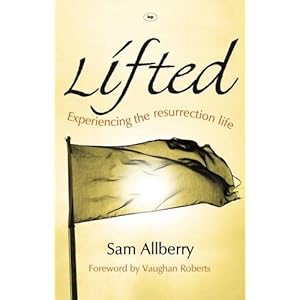
My second resurrection book review in two days! Yesterday I reviewed Adrian Warnock's Raised With Christ, so tonight I turn my attention to Lifted by Sam Allberry. Given that the books are on a similar subject and came out roughly the same time, and are being read and reviewed so closely together, it may be difficult not to compare one with the other. However, that wouldn't be fair to either author, so I'll stick to this book, pure and simple.
Let's be clear from the start, I loved this book! Following a short introduction, dealing with the two problems about the resurrection - credibility and relevance - Allberry dives straight in and looks at four key benefits and implications flowing from the resurrection of Jesus Christ. The four points make up the four chapters of the book: Assurance, Transformation, Hope and Mission.
His writing style is clear and accessible - and particularly reminded me of the way Vaughan Roberts speaks and writes. The four chapters are founded on the Bible's teaching about the resurrection of Jesus and how it impacts not just believers, but also every person who has lived, and the whole of creation. Allberry is humorous, and the book is peppered with personal stories and illustrations to communicate the teaching points.
There were some memorable quotes which I will be committing to memory and using as illustrations in the future:
'The resurrection is God signing off on salvation.'
'The empty tomb reminds us why we need to take Jesus seriously.'
'The death of Jesus was physically attested by his burial, his resurrection was physically attested by his appearances.'
'We talk of hope as something we do... in the Bible, hope is something we have.'
'We look back to Jesus to look forward to our destiny.'
Perhaps my only complaint was that the book was too short! I really enjoyed it, and was also helped to understand even better the wide ranging effects of the resurrection - something we will finally understand when we share in the resurrection of the body on that last great day. This will definitely be one that I'll be recommending, both as an introduction for new believers, and also as a refresher and encourager for longstanding Christians.
General Election: Alliance for All?

The Alliance Party of Northern Ireland's candidate in the East Belfast constituency is current Lord Mayor of Belfast, Naomi Long. However, I'm not sure that she actually wants my vote.
You see, her recent election communication came through the post, and was only addressed to my good lady wife. So maybe I shouldn't even be reviewing it, seeing as I didn't get one myself!
Much smaller than the Conservative and Unionist candidate's paper, Long's is an A4 glossy sheet (carbon neutral, we're assured), folded into three. Just three pictures of Naomi, a portrait, one at the Tall Ships Festival, and one with her fellow Alliance candidates (or is it their MLAs?)
As with their election posters, Alliance are working through a series of contrasts - sharing works, segregation costs; partnership works, deadlock costs; justice works, crime costs; respect works, bigotry costs. Given that Alliance currently don't have any MPs, they instead choose to focus on the things that they're doing in the Northern Ireland Assembly for us, which, while possibly interesting, aren't really the things that are at stake in this election. (Like other parties, perhaps they need a basic education in the different decision-making bodies and which powers are enjoyed by Councils/Assembly/Westminster.
There is also quite a lot on the person and experience of Naomi Long, who perhaps has an even higher profile at present thanks to her time in the Lord Mayor's chair in Belfast City Council. Perhaps this is the reason she's standing, to ride high on the publicity generated from her Council job - but with no word within the literature that she would give up her Council and Assembly seats if elected to Westminster.
She also includes sections in Chinese and Polish, to reach the local ethnic communities - perhaps something unique for the Alliance party in this campaign? However, there is just the general Alliance website, with no reference of an address, email address, Facebook or Twitter at all. Indeed, it took a bit of searching to find out anything about the election, as the Elections section on the website is from the 2005 elections!
There is one possibly misleading section which seems to inflate her chances of winning the election, on a dubious political premise. I'll quote the section, then take it apart.
"Your vote is crucial. This is the most open Westminster contest in East Belfast in a generation but if you want change, only Alliance can deliver. Naomi was elected 52 votes behind Peter Robinson and over 1400 votes ahead of Reg Empey in the last Assembly election. Alliance can win in East Belfast, but your support is crucial. On the 6th May, make your vote work for you. Vote Alliance."
On the face of it, Naomi only needs 53 more people to vote for her and she would take the seat. That sounds doable, doesn't it? Except it's not quite as it seems. Either Alliance don't understand statistics and election results, or else they are deliberately using them in this way to present a false impression.
You see, while Naomi was just 52 votes behind Peter Robinson himself, in the constituency of East Belfast, for their three candidates combined, the DUP received 11,155 first preference votes. (Peter Robinson got 5635, Wallace Browne got 3185, and Robin Newton 2335). Alliance has one candidate, Naomi Long, who received 5583 votes. That is, just about half the number of DUP first preference votes, or 5572 votes behind. That's a lot more than just the 52 votes being presented in the campaign literature.
Indeed, taken as a whole, while Naomi Long's personal first preferences outweighed Reg Empey's, the UUP as a whole (with three candidates and a poor balancing of first preferences across the constituency) received 6516 first preferences. That is, 933 more than Alliance. So Naomi Long and Alliance come into this General Election in third place, with a long way to go to beat the Conservatives and Unionists, let alone the DUP.
Her best chance may come if thousands defect from the DUP to the TUV and UCUNF, so that the three unionist parties are fairly evenly split, and she sneaks ahead by a couple of votes. Otherwise, despite this bigging up of her chances, I think it's safe to say Long won't be heading to Westminster, unless on a holiday.
Monday, April 26, 2010
Book Review: Raised With Christ
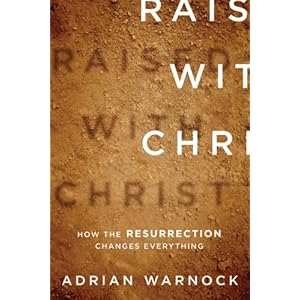
Books on the resurrection are like Jesus - you wait for ages, then two come along at once. Since Easter, I've been reading both Sam Allberry's Lifted, and blogger Adrian Warnock's Raised With Christ. This evening, I'll review the Warnock book (as I read it first), then tomorrow evening shall hopefully review Allberry's offering.
The subtitle of the book, 'How the Resurrection Changes Everything' drives the thoroughness and focus of the entire work. Warnock rightly begins by pointing out that the resurrection has been neglected, with Christians instead preferring to focus on the events of Good Friday - the cross (with or without the resurrection). Therefore, Raised With Christ seeks to redress the balance, and highlights the importance of the resurrection - not just as a happy ending tacked on, but on vital importance to the whole Christian message: 'When considering if Christianity is true, it all boils down to whether Jesus rose from the dead.'
There were some very useful sections in the book. Particularly noteworthy were the chapters asking if Jesus really did rise from the dead, the Old Testament survey of glimpses of resurrection, and the chapter dealing with the preaching of Peter and Paul in Acts which highlights and mentions the resurrection in every sermon.
As I read, I take notes, and I recorded some memorable and useful quotations from the book. How about these:
'The church did not create the resurrection stories; instead the resurrection stories created the church.'
'We cannot be truly cross-centred without also being empty-grave-centred.'
Yet at the same time, there were moments when I didn't seem to follow the logic of what was being argued. Several times the argument is made that the early Christians met early on the Sunday, the Lord's Day, because this was timed to coincide with the resurrection, indeed, 'as they watched the sunrise, it would mirror to them the glorious rebirth of creation begun by Christ's victory over death.' (p. 105). Perhaps it's more likely that with Sunday being a 'normal' day of trade, they couldn't meet at the 10.30am or 11.30am which is more traditional now that Sunday is a day of rest? In order to meet on the Lord's Day, they would have to meet before work / trade / whatever went on in the Roman Empire on the first day of the week...
Similarly, Warnock uses a Mark Driscoll quote to show the danger of emphasizing the cross over the resurrection or the resurrection over against the cross:
"Conversely, there are others who preach only the new kingdom life that Jesus offers through his resurrection... This is the perennial error of Christian liberalism."
Yet earlier, and indeed throughout the book, liberals are presented as among those who deny the resurrection, so how can they here be portrayed as revelling in resurrection life?
The mention of the Driscoll quote brings to mind the virtual constant quoting of Jonathan Edwards, Spurgeon, Driscoll, John Piper, and several other Christian leaders. At times it almost seemed to me that the book was hung between quotations, and it was the quotations that gave it the structure. Perhaps it just wasn't my style, but they seemed to be on overload.
Finally, in Warnock's attempt to be very thorough, there were times when the book almost seemed to be overly long. For example, early on, there was the discussion about two types of groups which are influencing the future of the church, the emergings and the young restless reformed types - although I haven't quite worked out why this discussion is there.
Similarly, there seemed to be quite a lot of emphasis on the healing / spiritual gifts / experience aspect of the Holy Spirit, which didn't sit so easily with me - this may simply be a charismatic thing, which isn't where I'm coming from - which led into three chapters on expecting revival, reviving prayer and the reviving word (perhaps the wrong chapter ordering, as I would have expected the word to come first and prayer and revival in response).
All in all, it's good to see the resurrection being raised to its proper importance, and even with the few questions and issues I have discussed, I think this is a helpful book - although sometimes heavy enough going. While I would probably recommend Allberry's book over this one, Raised With Christ is still going to be a great help to the church and individual Christians' understanding of the importance of the resurrection.
General Election: Ringland for Change?
This is the first in a series of intended impartial reviews of the election literature received for the East Belfast constituency in the General Election of 2010. Hopefully as the series progresses this week we will actually receive the election communications from the other parties...
The Conservatives and Unionist Candidate is high-profile former British and Irish Lion rugby player, Trevor Ringland. His glossy A3 campaign literature was the first received in our neck of the woods, and the only doorstep caller thus far in the election. Change is the big word, both on the title page, and throughout the literature.
Through a series of short articles and soundbites, the Conservative and Unionist priorities are discussed. First up, a message from David Cameron and Sir Reg Empey, which doesn't say much, and emphasises the fact that Northern Ireland's voice can finally be heard in Westminster through the introduction of 'normal' politics via the Conservatives. The other boxes talk about economics, jobs, reducing sectarianism, and 'helping those who need help most'. (Is that a split infinitive?)
Perhaps the most recurring theme is the series of photos of Trevor Ringland in various places within East Belfast. Despite his attempts to vary the photos (some with jacket on, or off), it seems that he took about ten minutes to drive round certain parts of the constituency and get his (sometimes poor) photograph taken at the locations. So, Trevor at Harland and Wolff, Trevor at the Odyssey, Trevor at the Science Park in the Titanic Quarter, Trevor at the City Airport, Trevor talking to two Chinese (tourists?) at the Titanic Pump House, Trevor at a wee shop at the bottom of the Newtownards Road, Trevor slightly further up the Newtownards Road at the East Belfast Mission.
Perhaps these are the recognisable shots of East Belfast, but has he forgotten that Dundonald has been added to his constituency? Not to mention the rest of the Newtownards Road, through Ballyhackamore, Knock, Belmont, and so on...
There seemed to be a few clumsy moments. "A Northern Ireland for all inside a United Kingdom for all, while co-operating constructively for our mutual benefit with the others we share this island with." That last phrase doesn't seem to sit well - is there a 'with' too many?
Or consider perhaps the most ambiguous piece of diplomacy when talking about the Geroge Best Belfast City Airport:
"The airport contributes to the economy of East Belfast, but the needs of the travelling public must be balanced with the rights of local residents."
So are you in favour of the extension of the runway or not, Trevor? Should we seek to expand the economy, create jobs, as you write elsewhere, or do you not want to press that for fear of losing votes from the flightpath of the airport - hence all the photos of you down at the bottom of the Newtownards Road?
Finally, there were big sections on how to contact Trevor, and a space to write your comments or questions. New technologies and social media being used by this Conservative and Unionist candidate are Facebook and Twitter.
Trevor presents a well-crafted local perspective, although he may have a hard job trying to unseat Peter Robinson.
The Conservatives and Unionist Candidate is high-profile former British and Irish Lion
rugby player, Trevor Ringland. His glossy A3 campaign literature was the first received in our neck of the woods, and the only doorstep caller thus far in the election. Change is the big word, both on the title page, and throughout the literature.Through a series of short articles and soundbites, the Conservative and Unionist priorities are discussed. First up, a message from David Cameron and Sir Reg Empey, which doesn't say much, and emphasises the fact that Northern Ireland's voice can finally be heard in Westminster through the introduction of 'normal' politics via the Conservatives. The other boxes talk about economics, jobs, reducing sectarianism, and 'helping those who need help most'. (Is that a split infinitive?)
Perhaps the most recurring theme is the series of photos of Trevor Ringland in various places within East Belfast. Despite his attempts to vary the photos (some with jacket on, or off), it seems that he took about ten minutes to drive round certain parts of the constituency and get his (sometimes poor) photograph taken at the locations. So, Trevor at Harland and Wolff, Trevor at the Odyssey, Trevor at the Science Park in the Titanic Quarter, Trevor at the City Airport, Trevor talking to two Chinese (tourists?) at the Titanic Pump House, Trevor at a wee shop at the bottom of the Newtownards Road, Trevor slightly further up the Newtownards Road at the East Belfast Mission.
Perhaps these are the recognisable shots of East Belfast, but has he forgotten that Dundonald has been added to his constituency? Not to mention the rest of the Newtownards Road, through Ballyhackamore, Knock, Belmont, and so on...
There seemed to be a few clumsy moments. "A Northern Ireland for all inside a United Kingdom for all, while co-operating constructively for our mutual benefit with the others we share this island with." That last phrase doesn't seem to sit well - is there a 'with' too many?
Or consider perhaps the most ambiguous piece of diplomacy when talking about the Geroge Best Belfast City Airport:
"The airport contributes to the economy of East Belfast, but the needs of the travelling public must be balanced with the rights of local residents."
So are you in favour of the extension of the runway or not, Trevor? Should we seek to expand the economy, create jobs, as you write elsewhere, or do you not want to press that for fear of losing votes from the flightpath of the airport - hence all the photos of you down at the bottom of the Newtownards Road?
Finally, there were big sections on how to contact Trevor, and a space to write your comments or questions. New technologies and social media being used by this Conservative and Unionist candidate are Facebook and Twitter.
Trevor presents a well-crafted local perspective, although he may have a hard job trying to unseat Peter Robinson.
Sunday, April 25, 2010
Sermon: Daniel 11: 1-45 The Shape of Things to Come
We’re less than two weeks away from the General Election, and you just can’t escape it - TV, newspapers, radio, internet - everyone is talking about the general election, and especially the opinion polls. People are trying to predict what will happen in the future - which party will win enough seats to form the government, how the country will be changed. Yet even the ‘experts’ are divided as they think different things will happen.
Imagine, then, if someone were to say that they could tell you, not only who would win this election, but every election for the next two hundred years! You might think that impossible - yet it’s what God is revealing here to Daniel. Daniel 11 may well be the most difficult chapter in the whole book, with the detailed description of the movements and battles of the kings of the north and south. We won’t be able to look at every detail, but the important thing to remember here is that God reveals the future before it happens.
Some people think that the history is so detailed and accurate that it must have been written afterwards, but that is simply not the case. It is an integral part of the book of Daniel, and demonstrates again how God knows the future and can reveal it. The pattern of kings rising and attacking one another, the intrigues and plots, were all spoken to Daniel years (even centuries) before they happened. God reveals it, to encourage and strengthen and warn his people. Can you imagine those returning to Jerusalem from exile, receiving this word from the Lord through Daniel, and then watching as the politics perfectly fulfilled what was said?
For the first 28 verses, Israel isn’t really mentioned or threatened. The Persians kings give way to the kings of Greece (Alexander the Great etc), but his kingdom is divided, and two main branches, north and south, keep fighting with each other - the Seleucid dynasty (the kings of the north, based in Syria), and the Ptolemic dynasty (the kings of the south, based in Egypt). These great kingdoms are at war, and Israel is sitting in between them, watching the movements back and forth.
However it all changes in verse 29, where our reading started this morning. The glorious land (Israel) is under threat, as the king of the north - by this time Antiochus Epiphanes IV - turns his attentions to Jerusalem. As we look at these verses, though, we’re not just reading about ancient history. Rather, Antiochus stands as the great enemy of God’s people, and as such, (as we’ll see later) represents the enemy of Christians today and into the future. We’ll look at these verses under two headings - first, Attack on the holy covenant, and second, the response of God’s people.
Firstly, then, Attack on the holy covenant. Antiochus Epiphanes has been on the warpath, conquering all round him, fighting against the kings of the south, but in verse 30 he is frustrated by the ships of Kittim - the Mediterranean Sea. In frustration and rage, he instead attacks Jerusalem - the place of God’s covenant, the temple. Look at verse 31 with me: ‘Forces from him shall appear and profane the temple and fortress, and shall take away the regular burnt offering. And they shall set up the abomination that makes desolate.’
For Daniel and the first readers, this was unthinkable. The temple is the place where God dwells among his people. It is only just being rebuilt after the exile, as the first exiles return with Ezra. Yet the temple will be profaned - made unclean, desolated through the actions of this great enemy. As we look back, it’s clear that Antiochus removed the altar for burnt offerings, and instead installed a pagan altar in the temple. Offering sacrifices to a false god in the place of the worship of the true and living God.
But it wasn’t enough for him to disrupt the worship of God, he also attacked the people of God, seeking to lead them astray. For some, this meant flattery - look at verse 32: ‘He shall seduce with flattery those who violate the covenant.’ These Jews have given up on God, and instead welcome this inter-faith worship - they are led astray by flattery - smooth words, designed to tickle them.
Others, though, resist, so he is on the attack - verse 33 speaks of some stumbling by sword and flame, captivity and plunder. This is an all-out attack on the Old Testament church, motivated by anger and rage against the people of God.
Now, you might be wondering - why are we reading this passage? After all, this is ancient history. Yet as we read on, the figure of Antiochus Epiphanes also represents the enemy of God’s people right throughout the rest of history. By the New Testament, this language is picked up and used to describe the man of lawlessness, the man of sin, the antichrist. Let’s read verse 36, then flick over to 2 Thessalonians 2:3-4. Do you see the similarity? This man of lawlessness exalts himself against every so-called god... so that he... proclaims himself to be God. So, do you remember in Mark 13 when Jesus is asked by his disciples about the destruction of the temple - and in Jesus’ reply he speaks both of the end of the temple and the end of time? In speaking of one, he speaks of the pattern of the future as well. It’s the same here - Antiochus is such that he is the pattern for antichrists and the antichrist.
All through Daniel we have seen that God is in charge, God is on the throne. In chapter 7 we were introduced to the Son of Man, given all authority. Yet here in Daniel 11, this enemy of God’s people arises - Antiochus; through him we see the continuing enemies of God’s church - many antichrists, leading up to this final great antichrist, the man of sin. He exalts himself to the place of God, and attacks the church.
Daniel 11 is therefore still a warning to us - to watch out for the enemies of the people of God - who seek to destroy us through flattery or attack. These antichrists are the human agents of our great enemy, the devil, who constantly seeks to attack us, attacking the covenant, questioning if we’re really saved (when really we’re so terribly sinful).
So if Daniel 11 is a warning to us, what should our response be? How did Daniel 11 help the people of God in Jerusalem resist this attack, and how will it encourage us to resist as well?
Let’s go back to verse 32: ‘He shall seduce with flattery those who violate the covenant, but the people who know their God shall stand firm and take action.’ Some were seduced, led away by flattery, as they violated the covenant - we’ve already thought about them briefly. Yet it doesn’t happen to all. Some resist - what is it about them? ‘but the people who know their God shall stand firm and take action.’ It’s clear that standing firm and taking action will lead to opposition, persecution, even death - it appears that the stumbling mentioned in verse 33 to 35 refers to falling in death.
This is a wake-up call - to be part of the people of God means opposition and even death (as Paul writes to Timothy, ‘all who desire to live a godly life in Christ Jesus will be persecuted’ (2 Tim 3:12), and as Jesus says. ‘if they persecuted me, they will also persecute you’ (John 15:20)). As we gather today, it appears that we’re more in danger of being flattered away than of standing firm, because we have it so comfortable here.
But why is it that the Jews in that day would stand firm, and why we’re also called to stand firm in our day? What is it drives people to be committed, to stand firm and take action for the cause of truth? ‘the people who know their God shall stand firm.’
It is the people who know their God - who are confident that God is in control, that God is reigning, sovereign over all, that God is judge, and will vindicate and protect his people - not from suffering, but through suffering. (That image in 35 of the wise who stumble are refined, purified and made white is of the slain saints under the altar of God in Revelation 7:14). For us, as the covenant is attacked, as the ground and means of our faith is called into question, how much more do we still need to know our God as the grounds of our confidence and firm standing?
We know our God even clearer than Daniel could have as we look at the cross and resurrection of our Lord Jesus. The new covenant he has instituted in his blood, dying our death, giving us new life. Our salvation is secure - based on the finished work of Christ. And our enemy doesn’t like it, not one bit. You remember in Revelation 12, the dragon, the devil seeks to devour the male child, the Messiah. He is foiled, so instead goes off to make war with those who ‘keep the commandments of God and hold to the testimony of Jesus.’
It has been said before that the church is not a cruise ship, but a warship - under attack from the world, the flesh and the devil. As we know our God better through our Bible reading, we have the confidence to stand firm in his covenant, no matter what the enemy throws at us. So what’s your response this morning? Are you in danger of being flattered away from what is yours in Christ? War all round, but you are lying on a sunlounger?
Or will you stand firm because you know your God? Getting to know him better as you daily read Scripture, pray, and watching out for the dangers.
When Antiochus attacked Jerusalem, the Maccabees revolted - and defeated him after a terrible struggle. They had a concern for God’s holiness, and for the city of God. The very last words of Daniel 11 gave them confidence that the attack would not last forever - ‘Yet he shall come to his end, with none to help him.’ Enemies will arise, but they will not succeed forever.
Revelation and 2 Thessalonians (among others) look forward confidently to the end of the man of lawlessness, the antichrist. God is in control, and Jesus will be glorified by all. Armed with this confidence through the knowledge of our God, will we too stand firm and take action?
This sermon was preached in St Elizabeth's Church, Dundonald on Sunday 25th April 2010.
Imagine, then, if someone were to say that they could tell you, not only who would win this election, but every election for the next two hundred years! You might think that impossible - yet it’s what God is revealing here to Daniel. Daniel 11 may well be the most difficult chapter in the whole book, with the detailed description of the movements and battles of the kings of the north and south. We won’t be able to look at every detail, but the important thing to remember here is that God reveals the future before it happens.
Some people think that the history is so detailed and accurate that it must have been written afterwards, but that is simply not the case. It is an integral part of the book of Daniel, and demonstrates again how God knows the future and can reveal it. The pattern of kings rising and attacking one another, the intrigues and plots, were all spoken to Daniel years (even centuries) before they happened. God reveals it, to encourage and strengthen and warn his people. Can you imagine those returning to Jerusalem from exile, receiving this word from the Lord through Daniel, and then watching as the politics perfectly fulfilled what was said?
For the first 28 verses, Israel isn’t really mentioned or threatened. The Persians kings give way to the kings of Greece (Alexander the Great etc), but his kingdom is divided, and two main branches, north and south, keep fighting with each other - the Seleucid dynasty (the kings of the north, based in Syria), and the Ptolemic dynasty (the kings of the south, based in Egypt). These great kingdoms are at war, and Israel is sitting in between them, watching the movements back and forth.
However it all changes in verse 29, where our reading started this morning. The glorious land (Israel) is under threat, as the king of the north - by this time Antiochus Epiphanes IV - turns his attentions to Jerusalem. As we look at these verses, though, we’re not just reading about ancient history. Rather, Antiochus stands as the great enemy of God’s people, and as such, (as we’ll see later) represents the enemy of Christians today and into the future. We’ll look at these verses under two headings - first, Attack on the holy covenant, and second, the response of God’s people.
Firstly, then, Attack on the holy covenant. Antiochus Epiphanes has been on the warpath, conquering all round him, fighting against the kings of the south, but in verse 30 he is frustrated by the ships of Kittim - the Mediterranean Sea. In frustration and rage, he instead attacks Jerusalem - the place of God’s covenant, the temple. Look at verse 31 with me: ‘Forces from him shall appear and profane the temple and fortress, and shall take away the regular burnt offering. And they shall set up the abomination that makes desolate.’
For Daniel and the first readers, this was unthinkable. The temple is the place where God dwells among his people. It is only just being rebuilt after the exile, as the first exiles return with Ezra. Yet the temple will be profaned - made unclean, desolated through the actions of this great enemy. As we look back, it’s clear that Antiochus removed the altar for burnt offerings, and instead installed a pagan altar in the temple. Offering sacrifices to a false god in the place of the worship of the true and living God.
But it wasn’t enough for him to disrupt the worship of God, he also attacked the people of God, seeking to lead them astray. For some, this meant flattery - look at verse 32: ‘He shall seduce with flattery those who violate the covenant.’ These Jews have given up on God, and instead welcome this inter-faith worship - they are led astray by flattery - smooth words, designed to tickle them.
Others, though, resist, so he is on the attack - verse 33 speaks of some stumbling by sword and flame, captivity and plunder. This is an all-out attack on the Old Testament church, motivated by anger and rage against the people of God.
Now, you might be wondering - why are we reading this passage? After all, this is ancient history. Yet as we read on, the figure of Antiochus Epiphanes also represents the enemy of God’s people right throughout the rest of history. By the New Testament, this language is picked up and used to describe the man of lawlessness, the man of sin, the antichrist. Let’s read verse 36, then flick over to 2 Thessalonians 2:3-4. Do you see the similarity? This man of lawlessness exalts himself against every so-called god... so that he... proclaims himself to be God. So, do you remember in Mark 13 when Jesus is asked by his disciples about the destruction of the temple - and in Jesus’ reply he speaks both of the end of the temple and the end of time? In speaking of one, he speaks of the pattern of the future as well. It’s the same here - Antiochus is such that he is the pattern for antichrists and the antichrist.
All through Daniel we have seen that God is in charge, God is on the throne. In chapter 7 we were introduced to the Son of Man, given all authority. Yet here in Daniel 11, this enemy of God’s people arises - Antiochus; through him we see the continuing enemies of God’s church - many antichrists, leading up to this final great antichrist, the man of sin. He exalts himself to the place of God, and attacks the church.
Daniel 11 is therefore still a warning to us - to watch out for the enemies of the people of God - who seek to destroy us through flattery or attack. These antichrists are the human agents of our great enemy, the devil, who constantly seeks to attack us, attacking the covenant, questioning if we’re really saved (when really we’re so terribly sinful).
So if Daniel 11 is a warning to us, what should our response be? How did Daniel 11 help the people of God in Jerusalem resist this attack, and how will it encourage us to resist as well?
Let’s go back to verse 32: ‘He shall seduce with flattery those who violate the covenant, but the people who know their God shall stand firm and take action.’ Some were seduced, led away by flattery, as they violated the covenant - we’ve already thought about them briefly. Yet it doesn’t happen to all. Some resist - what is it about them? ‘but the people who know their God shall stand firm and take action.’ It’s clear that standing firm and taking action will lead to opposition, persecution, even death - it appears that the stumbling mentioned in verse 33 to 35 refers to falling in death.
This is a wake-up call - to be part of the people of God means opposition and even death (as Paul writes to Timothy, ‘all who desire to live a godly life in Christ Jesus will be persecuted’ (2 Tim 3:12), and as Jesus says. ‘if they persecuted me, they will also persecute you’ (John 15:20)). As we gather today, it appears that we’re more in danger of being flattered away than of standing firm, because we have it so comfortable here.
But why is it that the Jews in that day would stand firm, and why we’re also called to stand firm in our day? What is it drives people to be committed, to stand firm and take action for the cause of truth? ‘the people who know their God shall stand firm.’
It is the people who know their God - who are confident that God is in control, that God is reigning, sovereign over all, that God is judge, and will vindicate and protect his people - not from suffering, but through suffering. (That image in 35 of the wise who stumble are refined, purified and made white is of the slain saints under the altar of God in Revelation 7:14). For us, as the covenant is attacked, as the ground and means of our faith is called into question, how much more do we still need to know our God as the grounds of our confidence and firm standing?
We know our God even clearer than Daniel could have as we look at the cross and resurrection of our Lord Jesus. The new covenant he has instituted in his blood, dying our death, giving us new life. Our salvation is secure - based on the finished work of Christ. And our enemy doesn’t like it, not one bit. You remember in Revelation 12, the dragon, the devil seeks to devour the male child, the Messiah. He is foiled, so instead goes off to make war with those who ‘keep the commandments of God and hold to the testimony of Jesus.’
It has been said before that the church is not a cruise ship, but a warship - under attack from the world, the flesh and the devil. As we know our God better through our Bible reading, we have the confidence to stand firm in his covenant, no matter what the enemy throws at us. So what’s your response this morning? Are you in danger of being flattered away from what is yours in Christ? War all round, but you are lying on a sunlounger?
Or will you stand firm because you know your God? Getting to know him better as you daily read Scripture, pray, and watching out for the dangers.
When Antiochus attacked Jerusalem, the Maccabees revolted - and defeated him after a terrible struggle. They had a concern for God’s holiness, and for the city of God. The very last words of Daniel 11 gave them confidence that the attack would not last forever - ‘Yet he shall come to his end, with none to help him.’ Enemies will arise, but they will not succeed forever.
Revelation and 2 Thessalonians (among others) look forward confidently to the end of the man of lawlessness, the antichrist. God is in control, and Jesus will be glorified by all. Armed with this confidence through the knowledge of our God, will we too stand firm and take action?
This sermon was preached in St Elizabeth's Church, Dundonald on Sunday 25th April 2010.
Friday, April 23, 2010
Back to School
This morning it was back to school, as I was in Dundonald Primary taking their Key Stage 2 assembly. I brought a load of household items, of various shapes, sizes and weights, and challenged a pupil to hold them all in his arms. Brilliantly, he managed
to hold them all - even though he disappeared behind the pile of books, clothes hangers, boxes, shower pipe and head, toilet rolls, brush, an inflatable globe, and other items!
What was the point of that? Well, it helped us to see that while we may struggle to hold a few things, Hebrews tells us that Jesus sustains the universe by his powerful word. Colossians also reminds us that in him all things hold together. Jesus is powerful, and keeps the world going - every breath we take is given by him.
Or as the old chorus goes: 'He's got the whole world in his hands.'
to hold them all - even though he disappeared behind the pile of books, clothes hangers, boxes, shower pipe and head, toilet rolls, brush, an inflatable globe, and other items!
What was the point of that? Well, it helped us to see that while we may struggle to hold a few things, Hebrews tells us that Jesus sustains the universe by his powerful word. Colossians also reminds us that in him all things hold together. Jesus is powerful, and keeps the world going - every breath we take is given by him.
Or as the old chorus goes: 'He's got the whole world in his hands.'
Thursday, April 22, 2010
Love One Another
'The new command is simple enough for a toddler to memorise and appreciate, profound enough that the most mature believers are repeatedly embarrassed at how poorly they comprehend it and put it into practice: Love one another. As I have loved you, so you must love one another. The standard of comparison is Jesus' love, just exemplified in the footwashing; but since the footwashing points to his death, these same disciples but a few days later would begin to appreciate a standard of live they would explore throughout their pilgrimage. The more we recognise the depth of our own sin, the more we recognise the love of the Saviour; the more we appreciate the love of the Saviour, the higher his standard appears; the higher his standard appears, the more we recognise in our selfishness, our innate self-centredness, the depth of our own sin. With a standard like this, no thoughtful believer can ever say, this side of the parousia, 'I am perfectly keeping the basic stipulation of the new covenant.''
- Don Carson, The Gospel According to John, p. 484, commenting on John 13:35.
- Don Carson, The Gospel According to John, p. 484, commenting on John 13:35.
McFlurry's McLinks (13)
Well well, I didn't realise it has been almost two months since the last installment of McFlurry's McLinks. Let's get on with some of my recommendations from my web reading:
On the area of Bible study and preaching prep, I've been impressed by the helpful diagrams Mark Meynell has been producing on the narrative in Luke 18-20, as well as the post-Easter accounts of Matthew and Luke. William Crawley asked how long a sermon should last, after a Vatican bishop said no more than eight minutes!
DeYoung outlined some helpful tips on preparing to lead congregational prayers.
Perhaps on a personal subject, Mindkee asks about your smell. Mr Kee was considering the mission of God and the commissioned church.
Stafford Carson considered the multi-screen church. Kevin DeYoung was thinking about the decline of the mainline churches. BenYong asks about spiritual maturity.
Al Mohler linked to and commented on a shocking report on preachers who don't believe. William Crawley also picked it up.
Having read several Don Carson books so far this year, I was interested to see that Adrian Warnock spoke about his newest book. He also highlighted the free ESV Bible app for the iPhone.
In some slightly belated Easter-related goodies (which may come in useful next year!) Rambling Rural Rector asks why?
Ray Ortlund didn't recommend this approach used by Luther.
Marramgrass asks are you prepared?
Some funnies, and The Stuff Christians Like book is free (until the end of April), as well as the youth minister scorecard, while DeYoung had the exclusive on Apple development projects.
The funniest blog posting I've read in a long time came courtesy of Ali describing a recent spa treatment!
My linked video is this outstanding Generic Movie. Have you seen it?
On the area of Bible study and preaching prep, I've been impressed by the helpful diagrams Mark Meynell has been producing on the narrative in Luke 18-20, as well as the post-Easter accounts of Matthew and Luke. William Crawley asked how long a sermon should last, after a Vatican bishop said no more than eight minutes!
DeYoung outlined some helpful tips on preparing to lead congregational prayers.
Perhaps on a personal subject, Mindkee asks about your smell. Mr Kee was considering the mission of God and the commissioned church.
Stafford Carson considered the multi-screen church. Kevin DeYoung was thinking about the decline of the mainline churches. BenYong asks about spiritual maturity.
Al Mohler linked to and commented on a shocking report on preachers who don't believe. William Crawley also picked it up.
Having read several Don Carson books so far this year, I was interested to see that Adrian Warnock spoke about his newest book. He also highlighted the free ESV Bible app for the iPhone.
In some slightly belated Easter-related goodies (which may come in useful next year!) Rambling Rural Rector asks why?
Ray Ortlund didn't recommend this approach used by Luther.
Marramgrass asks are you prepared?
Some funnies, and The Stuff Christians Like book is free (until the end of April), as well as the youth minister scorecard, while DeYoung had the exclusive on Apple development projects.
The funniest blog posting I've read in a long time came courtesy of Ali describing a recent spa treatment!
My linked video is this outstanding Generic Movie. Have you seen it?
Wednesday, April 21, 2010
The Wasteland World
Total Wipeout. Zephaniah is continuing to declare the word of the LORD, and his sights are now turned on the surrounding nations. So far, judgement is promised on Jerusalem, but with hints of world devastation. In the rest of chapter 2, Zephaniah declares God's judgement on Judah's enemies.
The Philistines (Gaza, Ashkelon, Ashdod, Ekron), the Cherethites, the Moabites, the Ammonites, the Cushites, and Assyria - south to north, west to east, God's judgement is coming, and the peoples will be wiped out and the land laid waste.
Again, it's a scene of apocalyptic proportions, with the lands becoming deserted, desolate, and destroyed. Moab and Ammon will even end up like Sodom and Gomorrah, nettles and salt pits. Why will all this happen?
Zephaniah gives three reasons. First of all, there's the sin of idolatry - the nations have been worshipping false idols, bowing down to their own gods. Gods who, elsewhere are described as blocks of wood, deaf, dumb, mute, powerless and useless.
'The LORD will be awesome against them; for he will famish all the gods of the earth, and to him shall bow down, each in its place, all the lands of the nations.' (11)
All the praise given to those idol gods will be removed from them - they will be famished, starved of attention and praise - and every knee will bow and praise the LORD, the one, true and living God. It reminds us of Philippians 2 - how one day every knee will bow - that of Richard Dawkins, Christopher Hitchens, and of everyone else - and all tongues will praise King Jesus.
Secondly, the nations have indulged in pride. This was particularly the case with Nineveh, that great city of the Assyrians (who had conquered the kingdom of Israel). Having conquered, Nineveh said to herself that "I am, and there is no one else." Nineveh prided itself in its security and prosperity, but that security will come to an end when the LORD acts against the city.
Thirdly, the nations were taunting and reviling God's people. This was particularly the case with Moab and the Ammonites. They eyed up the promised land, and boasted that they would take it. They harrassed and hassled the people of God. They made life difficult for the people of the covenant.
God's response is to make their lands desolate, like Sodom and Gomorrah. Indeed, more than that - while judgement falls on the nations, God promises that there will be a 'remnant of my people'. That the LORD has not broken his covenant love with his people, even though they will be punished for their own rebellion. The remnant of the people will possess the seacoast, will inhabit the houses of Ashkelon.
Indeed, even while the LORD is disciplining us, even while the rod is being wielded, there is the promise of restoration:
For the LORD their God will be mindful of them and restore their fortunes. (7)
God will not forget his promises, and will therefore restore the fortunes of his people. In the aftermath of Zephaniah's time, it was primarily seen in the return of the exiles to Jerusalem and Judah. God had not abandoned his people or forgotten his promise. With us, we have seen the raising of Jesus, the fortunes restored, and the great hope that is now certain and ours through the resurrection.
God will discipline us, chastening us - but it is for our good and our growth, making us more like Jesus. (Hebrews 12:3-13). Ultimately, Zephaniah 2 points us to the ultimate day of the Lord, when sin will be dealt with, and the rebels will be consigned to hell, and the people of God, that full remnant, will inherit and inhabit the new heavens and the new earth. No longer will God's people face opposition and persecution, because sin and sorrow will be no more. Even so, come Lord Jesus!
The Philistines (Gaza, Ashkelon, Ashdod, Ekron), the Cherethites, the Moabites, the Ammonites, the Cushites, and Assyria - south to north, west to east, God's judgement is coming, and the peoples will be wiped out and the land laid waste.
Again, it's a scene of apocalyptic proportions, with the lands becoming deserted, desolate, and destroyed. Moab and Ammon will even end up like Sodom and Gomorrah, nettles and salt pits. Why will all this happen?
Zephaniah gives three reasons. First of all, there's the sin of idolatry - the nations have been worshipping false idols, bowing down to their own gods. Gods who, elsewhere are described as blocks of wood, deaf, dumb, mute, powerless and useless.
'The LORD will be awesome against them; for he will famish all the gods of the earth, and to him shall bow down, each in its place, all the lands of the nations.' (11)
All the praise given to those idol gods will be removed from them - they will be famished, starved of attention and praise - and every knee will bow and praise the LORD, the one, true and living God. It reminds us of Philippians 2 - how one day every knee will bow - that of Richard Dawkins, Christopher Hitchens, and of everyone else - and all tongues will praise King Jesus.
Secondly, the nations have indulged in pride. This was particularly the case with Nineveh, that great city of the Assyrians (who had conquered the kingdom of Israel). Having conquered, Nineveh said to herself that "I am, and there is no one else." Nineveh prided itself in its security and prosperity, but that security will come to an end when the LORD acts against the city.
Thirdly, the nations were taunting and reviling God's people. This was particularly the case with Moab and the Ammonites. They eyed up the promised land, and boasted that they would take it. They harrassed and hassled the people of God. They made life difficult for the people of the covenant.
God's response is to make their lands desolate, like Sodom and Gomorrah. Indeed, more than that - while judgement falls on the nations, God promises that there will be a 'remnant of my people'. That the LORD has not broken his covenant love with his people, even though they will be punished for their own rebellion. The remnant of the people will possess the seacoast, will inhabit the houses of Ashkelon.
Indeed, even while the LORD is disciplining us, even while the rod is being wielded, there is the promise of restoration:
For the LORD their God will be mindful of them and restore their fortunes. (7)
God will not forget his promises, and will therefore restore the fortunes of his people. In the aftermath of Zephaniah's time, it was primarily seen in the return of the exiles to Jerusalem and Judah. God had not abandoned his people or forgotten his promise. With us, we have seen the raising of Jesus, the fortunes restored, and the great hope that is now certain and ours through the resurrection.
God will discipline us, chastening us - but it is for our good and our growth, making us more like Jesus. (Hebrews 12:3-13). Ultimately, Zephaniah 2 points us to the ultimate day of the Lord, when sin will be dealt with, and the rebels will be consigned to hell, and the people of God, that full remnant, will inherit and inhabit the new heavens and the new earth. No longer will God's people face opposition and persecution, because sin and sorrow will be no more. Even so, come Lord Jesus!
Sermon Audio: Genesis 25: 19-34
Here's the sermon mp3 from Sunday evening, when we began our new series 'Children of the Covenant' looking at the lives of Isaac and Jacob. The nominal title was Double Trouble, looking at the birth of the unidentical twins Esau and Jacob, but the main focus was on God's Purpose in Election.
Tuesday, April 20, 2010
Seek and Hide
A very short chunk of Zephaniah today, and yet a blink of encouragement and good news in the midst of the building gloom surrounding the fearsome and awesome day of the Lord, when God will judge Israel and the nations.
Zephaniah 2:1 continues in the stream of gloom - promising the burning anger of the LORD. The prophet calls for the shameless nation to gather together, yet it seems that even an assembly of the people of Israel will be able to change things. The purpose and course of God's wrath is set - it is the LORD's anger. The capital letters LORD is the covenant-making and covenant-keeping LORD, who will fulfill the covenant perfectly, either through rewards and blessing for those who obey, or through curses and punishment for those who disobey. Israel and Judah have turned aside, so the covenant calls for their punishment.
A bleak situation indeed. One we're becoming very familiar with in Zephaniah's book. Yet at this moment when things seem to be so dark, so set, so certain, there is a glimmer of hope. 2:3 says this:
Seek the LORD, all you humble of the land,
who do his just commands;
seek righteousness; seek humility;
perhaps you may be hidden
on the day of the anger of the LORD.
Even in the face of certain judgement, there is the offer of grace. Even to hardened rebels, there is the final opportunity of mercy in this instance. Firstly, there is some seeking, and then there may be some hiding.
The humble of the land are being addressed - those who know their place, who are not lifted up or full of themselves. Those who, on hearing of the problem of sin, are convicted and repentant, rather than being brazen and stubborn. They are urged to seek the LORD, to seek righteousness, and humility. They are to seek out how to be right with God, to be in a right relationship with God and therefore live out of that right relationship.
It's not something that we can just do once and think that we've finished it. Rather, seeking righteousness and humility is an upside down turn around for us, something that has to be continually worked at (building on the finished work of Christ).
For those who seek righteousness and humility, who obey the LORD's commands, there is a remarkable answer. Normally we think of hide and seek, but here is it seek and hide: those who have sought the LORD may be hidden on the day of anger.
Remember, earlier we had the image of the LORD searching Jerusalem with lamps to punish the complacent - there was no hiding place for the wicked. Yet here, there may be a hiding place for those who seek righteousness, those who are in right relationship with God - precisely because they will have been hidden from the wrath.
It's like the picture of a nuclear bunker - the world is destroyed in a nuclear explosion. Plant life, animal life, humans, all wiped out, apart from those who are hidden from the blast in the bunker. But where is this hiding place? Where is it that is the place to be hidden when the wrath of the LORD is unleashed?
You are a hiding place for me;
you preserve me from trouble;
you surround me with shouts of deliverance. (Psalm 32:7)
God himself is the only hiding place, the only secure place in the day of wrath. For Christians, after the cross, we can see that as Jesus himself bore our sins on the tree, bearing our punishment, paying our debt, he is indeed the hiding place - within that spear-pierced side. Jesus protects us from his wrath, and we who shelter there are safe. Indeed, as the old hymn says:
Rock of Ages, cleft for me,
Let me hide myself in thee.
Seek the LORD, and you will be hidden in him.
Zephaniah 2:1 continues in the stream of gloom - promising the burning anger of the LORD. The prophet calls for the shameless nation to gather together, yet it seems that even an assembly of the people of Israel will be able to change things. The purpose and course of God's wrath is set - it is the LORD's anger. The capital letters LORD is the covenant-making and covenant-keeping LORD, who will fulfill the covenant perfectly, either through rewards and blessing for those who obey, or through curses and punishment for those who disobey. Israel and Judah have turned aside, so the covenant calls for their punishment.
A bleak situation indeed. One we're becoming very familiar with in Zephaniah's book. Yet at this moment when things seem to be so dark, so set, so certain, there is a glimmer of hope. 2:3 says this:
Seek the LORD, all you humble of the land,
who do his just commands;
seek righteousness; seek humility;
perhaps you may be hidden
on the day of the anger of the LORD.
Even in the face of certain judgement, there is the offer of grace. Even to hardened rebels, there is the final opportunity of mercy in this instance. Firstly, there is some seeking, and then there may be some hiding.
The humble of the land are being addressed - those who know their place, who are not lifted up or full of themselves. Those who, on hearing of the problem of sin, are convicted and repentant, rather than being brazen and stubborn. They are urged to seek the LORD, to seek righteousness, and humility. They are to seek out how to be right with God, to be in a right relationship with God and therefore live out of that right relationship.
It's not something that we can just do once and think that we've finished it. Rather, seeking righteousness and humility is an upside down turn around for us, something that has to be continually worked at (building on the finished work of Christ).
For those who seek righteousness and humility, who obey the LORD's commands, there is a remarkable answer. Normally we think of hide and seek, but here is it seek and hide: those who have sought the LORD may be hidden on the day of anger.
Remember, earlier we had the image of the LORD searching Jerusalem with lamps to punish the complacent - there was no hiding place for the wicked. Yet here, there may be a hiding place for those who seek righteousness, those who are in right relationship with God - precisely because they will have been hidden from the wrath.
It's like the picture of a nuclear bunker - the world is destroyed in a nuclear explosion. Plant life, animal life, humans, all wiped out, apart from those who are hidden from the blast in the bunker. But where is this hiding place? Where is it that is the place to be hidden when the wrath of the LORD is unleashed?
You are a hiding place for me;
you preserve me from trouble;
you surround me with shouts of deliverance. (Psalm 32:7)
God himself is the only hiding place, the only secure place in the day of wrath. For Christians, after the cross, we can see that as Jesus himself bore our sins on the tree, bearing our punishment, paying our debt, he is indeed the hiding place - within that spear-pierced side. Jesus protects us from his wrath, and we who shelter there are safe. Indeed, as the old hymn says:
Rock of Ages, cleft for me,
Let me hide myself in thee.
Seek the LORD, and you will be hidden in him.
Monday, April 19, 2010
Sermon Audio: 2 Peter 1: 16-21
Here's the sermon audio mp3 from Sunday week ago, on Why I Believe The Bible.
Sunday, April 18, 2010
Sermon: Genesis 25: 19-34 God's Purpose in Election
Family trees are big business these days, with lots of people researching their great-grandparents, and even further back. There are books, websites, and even TV programmes to help you go back in time to meet your parents. Who do you think you are? is the BBC programme, where celebrities are helped with the research, and travel to the places their ancestors lived, and hear the stories associated with them. Yet sometimes, there’s a shock. Perhaps a great-great uncle who was a pirate, or a smuggler, or who spent some time in jail.
At the start of the New Testament, we’re presented with the family tree of Jesus. That big long list of names in Matthew 1:1-17. Tonight we’re beginning a new series as we trace the second and third generations of the covenant family tree. Several years ago, (before my time) we looked at the life of Abraham - how God called Abram, and promised him offspring (a great nation), land, and his blessing.
But what happens when Abraham is no longer on the scene? How does Isaac, and then Jacob continue as God’s people? You’ll notice in verse 19 the phrase ‘These are the generations of Isaac...’ This is a common phrase in Genesis, a repeated phrase, which shows that a new section is beginning, the next phase of the story is here. (We see it as well in verse 12, but that’s a short section on Ishmael, before we return to God’s covenant people). Just as with the TV programme, we’re going to find some shocking things about our ancestors in the faith, but that reminds us that these guys aren’t the hero, indeed, it drives us closer to God.
I want to look at our passage tonight under two headings. 1. God’s promise of offspring, and 2. God’s purpose in election.
1. God’s promise of offspring. As we’ve said, God had promised Abraham that he would have offspring, that he would be a great nation (12:2), his offspring would be like the stars in number (15:5) or the sand on the seashore (22:17). Isaac was born, after twenty five years of waiting, the child of promise. But now, in the next generation, Isaac himself is without children. He has married Rebekah, but she is barren. Has God abandoned his promise so soon, in the next generation?
Verse 21: ‘And Isaac prayed to the LORD for his wife, because she was barren. And the LORD granted his prayer, and Rebekah his wife conceived.’ Isaac had the clear promise that his father would become a great nation, and so prayed that God would fulfil his promise.
However, when God did fulfil his promise, it was in a quite unexpected way. Not one son, but two - verse 22 puts it so well (indeed, almost foreshadowing all we’ll see over the next few weeks) ‘the children struggled together within her.’ Two bouncing babies, unidentical twins, as one writer has commented. Esau, the red, hairy baby, and Jacob, holding on to his heel. Completely different in temperament, in hobbies, in life. (27-28)
Rebekah, while the children are still in the womb, though, is struggling as the kids struggle within her. She asks why this is happening, and so asks God why - let’s look at verse 23 as we come to our second point:
2. God’s purpose in election. ‘Two nations are in your womb, and two peoples from within you shall be divided; the one shall be stronger than the other, the older shall serve the younger.’
Remember God’s promise to Abraham to make him a great nation? Now there are two nations, two peoples coming from his grandsons - Esau and Jacob. The question is, which is the covenant people? Which is the line of promise?
From our perspective, so many centuries later, we know that Jacob is the line of promise, who later has a name change to be called Israel, and becomes the father of the children of Israel, from whom Jesus the Messiah comes. This is what God purposed in his word to Rebekah: ‘The older shall serve the younger’ - Esau was born seconds before Jacob, so Esau is the older, who will serve Jacob.
But why is this so? Why was it that God chose Jacob, rather than Esau? Have you ever heard of the poet Robert Frost? One of his famous poems is entitled ‘The Road Not Taken.’ The opening lines go like this:
Two roads diverged in a yellow wood,
And sorry I could not travel both
And be one traveller, long I stood
And looked down one as far as I could
To where it bent in the undergrowth.
He stands at a fork in the woods, having to take one path or the other. But which one? Off he sets, not knowing where he is going. Is it like that with God? He tosses a coin, and plumps for Jacob? Well, no.
God is God, some others say, so he knew in advance how things were going to work out and then put his money on the winner? Was it just foreknowledge of how things would happen that meant that God opted for Jacob? Again, we can’t say that. Are we saying that God is at the whim of humans, that God is dependent on us - that God picked Jacob because Jacob had already picked himself?
So maybe it’s not that God just knew what would pan out in the end, but rather that God chose Jacob because he was the good guy, compared to evil Esau. After all, at the end of the chapter, we find that Esau despised his birthright - this was the right to have a double share of his father’s possessions, the special privilege of the firstborn. Yet he despises it, gives it away for the price of a bowl of stew.
Yet there’s a problem with this as well - it’s not just Esau that was evil - Jacob himself is a trickster, using blackmail to obtain the birthright - only giving Esau the food he so desperately needed after he had sworn the birthright away, and later we’ll see his deception as he cons his father to receive his blessing. No, Jacob is not good, or righteous or better than Esau - Jacob doesn’t deserve God’s special choice any more than Esau.
Both brothers are sinners, neither deserve God’s grace. But isn’t that the point?! If we deserved it, it wouldn’t be grace! Rather, we see flawed sinners, rebels, tricksters, who don’t deserve anything being showered by God’s grace in election:
Here’s what Paul says about this: ‘And not only so, but also when Rebekah had conceived children by one man, our forefather Isaac, though they were not yet born and had done nothing either good or bad - in order that God’s purpose of election might continue, not because of works but because of him who calls - she was told “The older will serve the younger.” (Romans 9:10-12)
The truth is that Jacob doesn’t deserve to be chosen by God to receive his grace, and to be included in the family of faith, the forefather of Jesus. Yet he receives that grace in his day, and the promise of Messiah comes one generation closer. It’s what we saw during the Lent Course - God fulfils his promises through the one family, the one line, to prepare the way for Jesus. Imagine that you’re driving up the Newtownards Road, and your destination is Dundonald. There are lots of roads that lead off the main road, interesting roads, maybe the Holywood Road, or the Sandown Road, or whatever. But you’re on course for your destination, so you keep going. In a sense that’s what we see here - Esau is a diversion away from the promised line. God will make him a nation too - Edom, the Edomites, but he isn’t in the promised people of God.
Jacob didn’t deserve to be chosen by God. Neither do we. If you are a Christian tonight, it isn’t because of your works, or your talents, or your goodness. It is simply because God in his wonderful purposes in election chose you to be included in his family. This removes all our sense of pride or achievement. Amazing grace - there is no other word for it! Rejoice, and give thanks to the Lord for his mercy and grace, that guilty sinners like you and me have found grace in the sight of God.
Yet Jacob also reminds us that we need to be changed as we come into the family of faith. God had promised, yes, but that doesn’t justify Jacob’s trickery - God has chosen, but that doesn’t mean God approves of the method he used to obtain the birthright. Was Jacob acting in faith, or out of selfishness?
So far we’ve thought about God’s purpose, but as we close, I just want to mention our human responsibility / accountability. God’s purpose shines through here, as he chose Jacob before birth. Yet Esau is responsible for his own choices, for the way he so lightly gave up his birthright. Look at the last five words: ‘Thus Esau despised his birthright.’ Hebrews 12 picks up this theme in a warning to us - ‘For you know that afterward, when he desired to inherit the blessing, he was rejected, for he had no chance to repent, though he sought it with tears.’
Esau is one who was a part of the visible people of God, yet despised what he had, gave it away, and was rejected. How terrible it would be for any of us, who come along to church, who appear to be good Christians, yet to be despising what we have, and are actually unholy, as Hebrews describes Esau.
God’s promise of offspring, and God’s purpose of election - reasons to give thanks to God tonight, but also to watch ourselves closely, to make sure we’re not actually rejecting the means of grace, rejecting the God who saves and calls.
At the start of the New Testament, we’re presented with the family tree of Jesus. That big long list of names in Matthew 1:1-17. Tonight we’re beginning a new series as we trace the second and third generations of the covenant family tree. Several years ago, (before my time) we looked at the life of Abraham - how God called Abram, and promised him offspring (a great nation), land, and his blessing.
But what happens when Abraham is no longer on the scene? How does Isaac, and then Jacob continue as God’s people? You’ll notice in verse 19 the phrase ‘These are the generations of Isaac...’ This is a common phrase in Genesis, a repeated phrase, which shows that a new section is beginning, the next phase of the story is here. (We see it as well in verse 12, but that’s a short section on Ishmael, before we return to God’s covenant people). Just as with the TV programme, we’re going to find some shocking things about our ancestors in the faith, but that reminds us that these guys aren’t the hero, indeed, it drives us closer to God.
I want to look at our passage tonight under two headings. 1. God’s promise of offspring, and 2. God’s purpose in election.
1. God’s promise of offspring. As we’ve said, God had promised Abraham that he would have offspring, that he would be a great nation (12:2), his offspring would be like the stars in number (15:5) or the sand on the seashore (22:17). Isaac was born, after twenty five years of waiting, the child of promise. But now, in the next generation, Isaac himself is without children. He has married Rebekah, but she is barren. Has God abandoned his promise so soon, in the next generation?
Verse 21: ‘And Isaac prayed to the LORD for his wife, because she was barren. And the LORD granted his prayer, and Rebekah his wife conceived.’ Isaac had the clear promise that his father would become a great nation, and so prayed that God would fulfil his promise.
However, when God did fulfil his promise, it was in a quite unexpected way. Not one son, but two - verse 22 puts it so well (indeed, almost foreshadowing all we’ll see over the next few weeks) ‘the children struggled together within her.’ Two bouncing babies, unidentical twins, as one writer has commented. Esau, the red, hairy baby, and Jacob, holding on to his heel. Completely different in temperament, in hobbies, in life. (27-28)
Rebekah, while the children are still in the womb, though, is struggling as the kids struggle within her. She asks why this is happening, and so asks God why - let’s look at verse 23 as we come to our second point:
2. God’s purpose in election. ‘Two nations are in your womb, and two peoples from within you shall be divided; the one shall be stronger than the other, the older shall serve the younger.’
Remember God’s promise to Abraham to make him a great nation? Now there are two nations, two peoples coming from his grandsons - Esau and Jacob. The question is, which is the covenant people? Which is the line of promise?
From our perspective, so many centuries later, we know that Jacob is the line of promise, who later has a name change to be called Israel, and becomes the father of the children of Israel, from whom Jesus the Messiah comes. This is what God purposed in his word to Rebekah: ‘The older shall serve the younger’ - Esau was born seconds before Jacob, so Esau is the older, who will serve Jacob.
But why is this so? Why was it that God chose Jacob, rather than Esau? Have you ever heard of the poet Robert Frost? One of his famous poems is entitled ‘The Road Not Taken.’ The opening lines go like this:
Two roads diverged in a yellow wood,
And sorry I could not travel both
And be one traveller, long I stood
And looked down one as far as I could
To where it bent in the undergrowth.
He stands at a fork in the woods, having to take one path or the other. But which one? Off he sets, not knowing where he is going. Is it like that with God? He tosses a coin, and plumps for Jacob? Well, no.
God is God, some others say, so he knew in advance how things were going to work out and then put his money on the winner? Was it just foreknowledge of how things would happen that meant that God opted for Jacob? Again, we can’t say that. Are we saying that God is at the whim of humans, that God is dependent on us - that God picked Jacob because Jacob had already picked himself?
So maybe it’s not that God just knew what would pan out in the end, but rather that God chose Jacob because he was the good guy, compared to evil Esau. After all, at the end of the chapter, we find that Esau despised his birthright - this was the right to have a double share of his father’s possessions, the special privilege of the firstborn. Yet he despises it, gives it away for the price of a bowl of stew.
Yet there’s a problem with this as well - it’s not just Esau that was evil - Jacob himself is a trickster, using blackmail to obtain the birthright - only giving Esau the food he so desperately needed after he had sworn the birthright away, and later we’ll see his deception as he cons his father to receive his blessing. No, Jacob is not good, or righteous or better than Esau - Jacob doesn’t deserve God’s special choice any more than Esau.
Both brothers are sinners, neither deserve God’s grace. But isn’t that the point?! If we deserved it, it wouldn’t be grace! Rather, we see flawed sinners, rebels, tricksters, who don’t deserve anything being showered by God’s grace in election:
Here’s what Paul says about this: ‘And not only so, but also when Rebekah had conceived children by one man, our forefather Isaac, though they were not yet born and had done nothing either good or bad - in order that God’s purpose of election might continue, not because of works but because of him who calls - she was told “The older will serve the younger.” (Romans 9:10-12)
The truth is that Jacob doesn’t deserve to be chosen by God to receive his grace, and to be included in the family of faith, the forefather of Jesus. Yet he receives that grace in his day, and the promise of Messiah comes one generation closer. It’s what we saw during the Lent Course - God fulfils his promises through the one family, the one line, to prepare the way for Jesus. Imagine that you’re driving up the Newtownards Road, and your destination is Dundonald. There are lots of roads that lead off the main road, interesting roads, maybe the Holywood Road, or the Sandown Road, or whatever. But you’re on course for your destination, so you keep going. In a sense that’s what we see here - Esau is a diversion away from the promised line. God will make him a nation too - Edom, the Edomites, but he isn’t in the promised people of God.
Jacob didn’t deserve to be chosen by God. Neither do we. If you are a Christian tonight, it isn’t because of your works, or your talents, or your goodness. It is simply because God in his wonderful purposes in election chose you to be included in his family. This removes all our sense of pride or achievement. Amazing grace - there is no other word for it! Rejoice, and give thanks to the Lord for his mercy and grace, that guilty sinners like you and me have found grace in the sight of God.
Yet Jacob also reminds us that we need to be changed as we come into the family of faith. God had promised, yes, but that doesn’t justify Jacob’s trickery - God has chosen, but that doesn’t mean God approves of the method he used to obtain the birthright. Was Jacob acting in faith, or out of selfishness?
So far we’ve thought about God’s purpose, but as we close, I just want to mention our human responsibility / accountability. God’s purpose shines through here, as he chose Jacob before birth. Yet Esau is responsible for his own choices, for the way he so lightly gave up his birthright. Look at the last five words: ‘Thus Esau despised his birthright.’ Hebrews 12 picks up this theme in a warning to us - ‘For you know that afterward, when he desired to inherit the blessing, he was rejected, for he had no chance to repent, though he sought it with tears.’
Esau is one who was a part of the visible people of God, yet despised what he had, gave it away, and was rejected. How terrible it would be for any of us, who come along to church, who appear to be good Christians, yet to be despising what we have, and are actually unholy, as Hebrews describes Esau.
God’s promise of offspring, and God’s purpose of election - reasons to give thanks to God tonight, but also to watch ourselves closely, to make sure we’re not actually rejecting the means of grace, rejecting the God who saves and calls.
Subscribe to:
Comments (Atom)