Yesterday was a difficult day. We said goodbye to Lynsey's granny - who was also 'my' granny. I'm not sure I can write much more just now as she will be sorely missed, being at the very centre of the family. But we know that she is with the Lord - death will not have the last word, because she knew the Lord Jesus as her Saviour, and he has conquered death.
At the funeral, the large congregation sang this hymn:
Be still, my soul: the Lord is on thy side.
Bear patiently the cross of grief or pain.
Leave to thy God to order and provide;
In every change, He faithful will remain.
Be still, my soul: thy best, thy heavenly Friend
Through thorny ways leads to a joyful end.
Be still, my soul: thy God doth undertake
To guide the future, as He has the past.
Thy hope, thy confidence let nothing shake;
All now mysterious shall be bright at last.
Be still, my soul: the waves and winds still know
His voice Who ruled them while He dwelt below.
Be still, my soul: when dearest friends depart,
And all is darkened in the vale of tears,
Then shalt thou better know His love, His heart,
Who comes to soothe thy sorrow and thy fears.
Be still, my soul: thy Jesus can repay
From His own fullness all He takes away.
Be still, my soul: the hour is hastening on
When we shall be forever with the Lord.
When disappointment, grief and fear are gone,
Sorrow forgot, love’s purest joys restored.
Be still, my soul: when change and tears are past
All safe and blessèd we shall meet at last.
Amen, and amen, even though it is painful.
Wednesday, June 16, 2010
Friday, June 11, 2010
McFlurry's McLinks World Cup Special
Search on Google for 'World Cup' and you'll be presented with about 150,000,000 sites. Let's add another one to the total, with a special version of McFlurry's McLinks for the launch of the 2010 FIFA World Cup today in South Africa. It's just a pity that the Green and White Army of Northern Ireland aren't there, but to make up for it, here's some links to explore!
The Simple Pastor linked to the World Cup stadia. He also linked to the economics of the World Cup from Mint.
Rick Hill had some observations on the World Cup, and he's going for England to win. Don't think so Rick - I couldn't bear it if they did!
Bishop Nick Baines published some World Cup prayers.
On Slugger O'Toole, Mick Fealty wants anyone but Brazil and Germany to win.
On my Twitter feed, there was a classic tweet (which I can't find now, nor who composed it), but it went along the lines of - 'England have won the World Cup once, the rest of the world have won it every other time. The odds are in our favour!'
The FIFA website is hosting a fantasy football league for the World Cup, sponsored by McDonald's. One of my friends created a league - there's still time to sign up!
Perhaps the best blog on the subject was Church Mouse presenting the World Cup Bible (some real groaners contained here, but I might just use these over the next few days...).
The Simple Pastor linked to the World Cup stadia. He also linked to the economics of the World Cup from Mint.
Rick Hill had some observations on the World Cup, and he's going for England to win. Don't think so Rick - I couldn't bear it if they did!
Bishop Nick Baines published some World Cup prayers.
On Slugger O'Toole, Mick Fealty wants anyone but Brazil and Germany to win.
On my Twitter feed, there was a classic tweet (which I can't find now, nor who composed it), but it went along the lines of - 'England have won the World Cup once, the rest of the world have won it every other time. The odds are in our favour!'
The FIFA website is hosting a fantasy football league for the World Cup, sponsored by McDonald's. One of my friends created a league - there's still time to sign up!
Perhaps the best blog on the subject was Church Mouse presenting the World Cup Bible (some real groaners contained here, but I might just use these over the next few days...).


Thursday, June 10, 2010
Old McDonald to the Rescue!
Over the past week or so, we've been spending quite a lot of time with family due to a health issue. It means that I've been seeing my niece who lives in Scotland, who we don't get to see terribly often. However, there was a problem. The past couple of times that we've seen each other, whether in Northern Ireland or in Scotland, Elizabeth has burst into tears as soon as she's clapped eyes on me.
This happened whether she was with her mum, or with a whole load of people. If I got too close, or she crawled too close to me, then tears were inevitable! So imagine my panic when I was left with Elizabeth while her mum popped into the kitchen. Just the baby and me. Tears were ripe. What to do?
At just the right moment, Old McDonald came to the rescue. Yes, that Old McDonald, the one who has a farm and all the noisy animals! Back when I was a baby, iPhones and YouTube had never been invented, but now they are my guarantee for a tear-free time with my baby niece. Old McDonald had a farm; Twinkle Twinkle Little Star; The Elmo Song; Five Little Ducks Went Swimming One Day; and many other kiddies favourites, all playing on my phone leads to smiles and dancing and happy times!
So you can join in with one of your old favourite childhood songs, I give you Old McDonald:
This happened whether she was with her mum, or with a whole load of people. If I got too close, or she crawled too close to me, then tears were inevitable! So imagine my panic when I was left with Elizabeth while her mum popped into the kitchen. Just the baby and me. Tears were ripe. What to do?
At just the right moment, Old McDonald came to the rescue. Yes, that Old McDonald, the one who has a farm and all the noisy animals! Back when I was a baby, iPhones and YouTube had never been invented, but now they are my guarantee for a tear-free time with my baby niece. Old McDonald had a farm; Twinkle Twinkle Little Star; The Elmo Song; Five Little Ducks Went Swimming One Day; and many other kiddies favourites, all playing on my phone leads to smiles and dancing and happy times!
So you can join in with one of your old favourite childhood songs, I give you Old McDonald:
Wednesday, June 09, 2010
Bible Background
Last night was the final session of the term for Mindset, the youth leaders' training and support network. Trevor Johnston (Ireland Team Leader with Crosslinks) was speaking from James 3. The sermon was really good and a definite challenge on how we use our tongue because words are revealing (3:1-2), dangerous (3:3-8) and confusing (3:9-12).
But it was the first part of the evening that was perhaps particularly useful, especially if we were wanting to teach the letter of James to our youth groups. Taking four simple questions, we examined the background and context of the letter, in terms of the style of writing (proverbial, wisdom type of writing), audience (primarily Jewish Christians but now for all), situation (trials, persecution, hypocrisy and self-deception through disobedience), and the antidote (pray, receive the implanted word, and do it!).
Very simple questions with answers to be found within the text of the letter which help to understand the context and why James says what he says in the way he says it. A most useful exercise and one that could (and indeed should) be conducted prior to teaching a Bible book.
Mindset now takes a break for the summer, but details of further training events will follow in due course.
But it was the first part of the evening that was perhaps particularly useful, especially if we were wanting to teach the letter of James to our youth groups. Taking four simple questions, we examined the background and context of the letter, in terms of the style of writing (proverbial, wisdom type of writing), audience (primarily Jewish Christians but now for all), situation (trials, persecution, hypocrisy and self-deception through disobedience), and the antidote (pray, receive the implanted word, and do it!).
Very simple questions with answers to be found within the text of the letter which help to understand the context and why James says what he says in the way he says it. A most useful exercise and one that could (and indeed should) be conducted prior to teaching a Bible book.
Mindset now takes a break for the summer, but details of further training events will follow in due course.
Monday, June 07, 2010
My Weird Weekend

Stats on my blog had a weird weekend with two to three times as many visitors as normal. On an average day, there are about 50 page views. Yet things took off to over 70 last week and then over 100 on Saturday and Sunday. Most visitors seemed to be coming searching for 1 Thessalonians 1:1-10 sermon or some connected search term, with my recent sermon featuring on the Google front page for 1 Thess. Then things have dropped even further than normal today!
Sunday, June 06, 2010
Sermon: Philippians 3: 1-11
Over recent times we’ve seen a lot of discussion in the news about profits and losses. Mostly, it has been losses, with some well known businesses and shops closing their doors, but even in the current climate, there are some profits to be made. Sometimes the very things that have been good at making profits for so long are found to be (in the long term) actually a liability, and a loss.
In Philippians 3, Paul uses the language of accountancy - profit and loss; gain and loss, to describe his own life, and particularly his spiritual life. As we’ll see, the very things that Paul thought were for his gain, he now sees them as a loss, indeed, describes them as rubbish.
Paul’s profit and loss comes in the context of a warning to the Philippian Christians. Let’s look at verse 2 together. ‘Look out for the dogs, look out for the evildoers, look out for those who mutilate the flesh.’ These three terms are describing the same group of people, and are a strong warning against them.
But why is Paul so firmly against these people? What is it that Paul hates? They are the circumcision party - they put their confidence in the flesh (see verse 4). Basically, they were arguing that to be real true Christians, proper believers, the Gentile Christians would have to be circumcised to be saved. They were ultimately saying that Jesus wasn’t enough - that the only way you could be sure was this extra religious practice. (Jesus plus circumcision)
But Paul says that they have got it all wrong. Paul looks back at his days before conversion, when he was very religious, and says that if anyone has grounds to be sure of themselves, it was Paul. In verses 5-6 he gives his spiritual CV. In terms of religious practice, Paul had it made. He was part of the people of Israel, he was circumcised, he was a strict observer of the law (Pharisee), he went so far as to persecute the church (who he saw as false teachers back then), and he was regarded as blameless as regards to the law.
His profit is immense - he has stacked up all these things in his profit column. But it’s all about what he has done himself - all very religious. Yet in verse 7, there’s a remarkable turn around. In accounting terms its incredible - ‘But whatever gain I had, I counted as loss for the sake of Christ.’ (7) Everything that he previously thought was for his gain, he now sees as a great loss. Nothing of that matters now compared to the one great gain that he has - the only thing of value given to him - the only thing that profits him.
And what is that? Verse 8: ‘the surpassing worth of knowing Christ Jesus my Lord.’ The one thing of value for Paul is to know Christ Jesus (as) Lord.
How can we know Christ Jesus as Lord? As Paul explains in verse 9, there are two competing confidences, two competing paths to righteousness. ‘not having a righteousness that comes from the law, but that which comes through faith in Christ, the righteousness from God that depends on faith.’
Paul has tried the righteousness that comes from the law - it was the basis of his spiritual CV - but what he thought was gain turned out to be a big loss. You see, no matter how impressive we look, none of us can meet the standards of the law. All of us fall short. Our achievements just aren’t good enough. We end up in pride at what we have done. It’s a dead end.
As Paul turns away from those and turns to Christ, he finds the only righteousness that counts - the only thing of surpassing worth - the righteousness that comes from God by faith in Christ. Not our achievements, but simply our trust - not in what we have done, but what Jesus has done. Believing the promise of God, and being given freely Christ’s righteousness.
This is how to be righteous. But I want to ask you today - as you come to church, as you come to the Lord’s Table, where is your confidence resting? Is it in your achievements, your religious performance? Do you think God accepts you because you’re a member of the Church of Ireland, or because you’ve been coming to church and never missed a Sunday for forty, fifty, sixty years? If our confidence is in ourselves, then we’ve put things in the wrong column - our confidence is misplaced.
Rather, Paul urges us to be trusting in Christ, to believe the promises that God gives us, and to receive the righteousness that comes by faith. Our confidence is in Jesus - not ourself!
Having looked at where our confidence should lie, and how our profit should come from the gain of Christ, Paul goes on to show some of the benefits of knowing Christ. Let’s look at verse 10 together. ‘That I may know him and the power of his resurrection, and may share in his sufferings, becoming like him in his death, that by any means possible I may attain the resurrection from the dead.’
To know Christ and the power of his resurrection - who wouldn’t want to know these things? Rather than trusting in our own achievements, to know Christ is to receive the power of his resurrection - to receive the Holy Spirit who indwells us and helps us to live for God. Yet that’s where many of us stop. We only want to claim that half verse, but not the whole verse.
But Paul goes further, and says that to know Christ is also to share his sufferings, becoming like him in his death. To be a Christian is to suffer - just look at Paul’s example of suffering for the gospel. Jesus promised as much - if they persecute me, they will persecute you. The servant is not greater than the Master. If the Lord Jesus endured the cross and its shame to win the crown for us, then how much more should we expect to share in suffering for him? We saw Christ’s path of suffering in chapter 2 - the cross before the crown. Paul says that the same path has been laid for us - to follow Christ’s example having been saved by him.
No cross, no crown. The world loves to boast about its achievements. Religious people love to boast about their goodness. But Paul says that it’s all rubbish, compared to knowing Christ (knowing Christ and his power, knowing Christ and his sufferings, and ultimately knowing Christ and sharing in his resurrection).
Are you trusting in yourself today? Are you listing all the things that you think guarantee you heaven? Do you have a list of reasons why God should love you? They’re all rubbish. Just come today and receive the grace offered to you in Jesus Christ - he has done all that is needed. His death on the cross removes your sins and gives you the perfect spotless righteousness of Jesus.
Where is your confidence today?
This sermon was preached in the Church of St John the Baptist, Upper Falls Parish on Sunday 6th June 2010.
In Philippians 3, Paul uses the language of accountancy - profit and loss; gain and loss, to describe his own life, and particularly his spiritual life. As we’ll see, the very things that Paul thought were for his gain, he now sees them as a loss, indeed, describes them as rubbish.
Paul’s profit and loss comes in the context of a warning to the Philippian Christians. Let’s look at verse 2 together. ‘Look out for the dogs, look out for the evildoers, look out for those who mutilate the flesh.’ These three terms are describing the same group of people, and are a strong warning against them.
But why is Paul so firmly against these people? What is it that Paul hates? They are the circumcision party - they put their confidence in the flesh (see verse 4). Basically, they were arguing that to be real true Christians, proper believers, the Gentile Christians would have to be circumcised to be saved. They were ultimately saying that Jesus wasn’t enough - that the only way you could be sure was this extra religious practice. (Jesus plus circumcision)
But Paul says that they have got it all wrong. Paul looks back at his days before conversion, when he was very religious, and says that if anyone has grounds to be sure of themselves, it was Paul. In verses 5-6 he gives his spiritual CV. In terms of religious practice, Paul had it made. He was part of the people of Israel, he was circumcised, he was a strict observer of the law (Pharisee), he went so far as to persecute the church (who he saw as false teachers back then), and he was regarded as blameless as regards to the law.
His profit is immense - he has stacked up all these things in his profit column. But it’s all about what he has done himself - all very religious. Yet in verse 7, there’s a remarkable turn around. In accounting terms its incredible - ‘But whatever gain I had, I counted as loss for the sake of Christ.’ (7) Everything that he previously thought was for his gain, he now sees as a great loss. Nothing of that matters now compared to the one great gain that he has - the only thing of value given to him - the only thing that profits him.
And what is that? Verse 8: ‘the surpassing worth of knowing Christ Jesus my Lord.’ The one thing of value for Paul is to know Christ Jesus (as) Lord.
How can we know Christ Jesus as Lord? As Paul explains in verse 9, there are two competing confidences, two competing paths to righteousness. ‘not having a righteousness that comes from the law, but that which comes through faith in Christ, the righteousness from God that depends on faith.’
Paul has tried the righteousness that comes from the law - it was the basis of his spiritual CV - but what he thought was gain turned out to be a big loss. You see, no matter how impressive we look, none of us can meet the standards of the law. All of us fall short. Our achievements just aren’t good enough. We end up in pride at what we have done. It’s a dead end.
As Paul turns away from those and turns to Christ, he finds the only righteousness that counts - the only thing of surpassing worth - the righteousness that comes from God by faith in Christ. Not our achievements, but simply our trust - not in what we have done, but what Jesus has done. Believing the promise of God, and being given freely Christ’s righteousness.
This is how to be righteous. But I want to ask you today - as you come to church, as you come to the Lord’s Table, where is your confidence resting? Is it in your achievements, your religious performance? Do you think God accepts you because you’re a member of the Church of Ireland, or because you’ve been coming to church and never missed a Sunday for forty, fifty, sixty years? If our confidence is in ourselves, then we’ve put things in the wrong column - our confidence is misplaced.
Rather, Paul urges us to be trusting in Christ, to believe the promises that God gives us, and to receive the righteousness that comes by faith. Our confidence is in Jesus - not ourself!
Having looked at where our confidence should lie, and how our profit should come from the gain of Christ, Paul goes on to show some of the benefits of knowing Christ. Let’s look at verse 10 together. ‘That I may know him and the power of his resurrection, and may share in his sufferings, becoming like him in his death, that by any means possible I may attain the resurrection from the dead.’
To know Christ and the power of his resurrection - who wouldn’t want to know these things? Rather than trusting in our own achievements, to know Christ is to receive the power of his resurrection - to receive the Holy Spirit who indwells us and helps us to live for God. Yet that’s where many of us stop. We only want to claim that half verse, but not the whole verse.
But Paul goes further, and says that to know Christ is also to share his sufferings, becoming like him in his death. To be a Christian is to suffer - just look at Paul’s example of suffering for the gospel. Jesus promised as much - if they persecute me, they will persecute you. The servant is not greater than the Master. If the Lord Jesus endured the cross and its shame to win the crown for us, then how much more should we expect to share in suffering for him? We saw Christ’s path of suffering in chapter 2 - the cross before the crown. Paul says that the same path has been laid for us - to follow Christ’s example having been saved by him.
No cross, no crown. The world loves to boast about its achievements. Religious people love to boast about their goodness. But Paul says that it’s all rubbish, compared to knowing Christ (knowing Christ and his power, knowing Christ and his sufferings, and ultimately knowing Christ and sharing in his resurrection).
Are you trusting in yourself today? Are you listing all the things that you think guarantee you heaven? Do you have a list of reasons why God should love you? They’re all rubbish. Just come today and receive the grace offered to you in Jesus Christ - he has done all that is needed. His death on the cross removes your sins and gives you the perfect spotless righteousness of Jesus.
Where is your confidence today?
This sermon was preached in the Church of St John the Baptist, Upper Falls Parish on Sunday 6th June 2010.
Saturday, June 05, 2010
Giving God the Glory

This morning I caught about one minute of BBC 1's food programme, Saturday Kitchen. A great moment to see though, as celebrity chef James Martin was demonstrating how to cook a particular kind of fish (I didn't catch which it was - possibly Turbot or another flat fish). James made mention of the clever markings of the fish - black on one side and white on the other so that it can be disguised / camouflaged and escape predators. The celebrity guest, Lenora Crichlow, said that it was a genius fish, to which James replied that God was the genius for creating it like that.
Truly giving God the glory for the wonders of his creation! Well done James.
Friday, June 04, 2010
Book Review: The Last Word
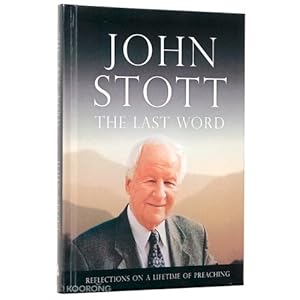
John Stott has enjoyed a lengthy public ministry, proclaiming God's word both in the UK and further afield. Back in 2008, a new book was released with his portrait on the front, entitled The Last Word. Stott's last book, subtitled 'Reflections on a lifetime of preaching' was bought at the time, but disappeared so it's only now that I've had a chance to read it.
The Last Word refers to Stott's final ever address at the Keswick Convention, on Christlikeness. Answering the question he has devoted his life to, What is God's purpose for his people, Stott insists that 'Christlikeness is the will of God for the people of God.' He then expands on this theme, showing its biblical basis, its extent following Christ's example, and its practical consequences.
The sermon is good with excellent content, but I found it to be very brief - it would have been good to see it expanded somewhat, in the classic Stott style, but this may well be because of the way it has been presented in the book. Rather than a continuous style with perhaps Italicised headings, it has been formally divided into separate chapters with blank pages and a title page for each section. So it would be even shorter than the 30 tiny pages it takes up. Plus, at one point, a new chapter heading has been introduced for the final sub-point of the previous section, leading to a more confusing structure which doesn't aid the reader.
The book is padded out with various other elements, including an interview with John Stott on the founding of the London Institute of Contemporary Christianity (LICC), a great sermon on Romans 5, and then brief information sections on LICC, the Langham Partnership, and Keswick. Remarkably, I found the additional material to be the better and more useful parts - the Romans 5 talk was really good (and is part of another recent book 'John Stott at Keswick') and you got more of Stott's passion, personality and intentions coming through in the interview.
On one level, this book was almost a disappointment. Billed as Stott's last word, we have seen another book from him since (The Radical Disciple), and the sermon from Keswick was good but brief. Yet this slim volume will be a useful addition to the Christian's library, and may prove its most useful as a basis for further Bible study on the theme of becoming more like Jesus. A more mixed review than I normally produce, but I ended up slightly ambivalent about this book, so it is an accurate reflection on my reaction to it.
Tuesday, June 01, 2010
The Forbidden Fruit
Over the past few months, I've enjoyed reading Clients From Hell in Google Reader. The premise is simple. Anonymous web designers and other creatives share some of the weird, scary, or downright funny things their clients say as they commission and oversee design projects. The other day, they had a religiously themed post - perhaps all those Apple Geek minsters and youth workers should take note and repent...
Even more interestingly, given the convictions expressed over there, it is Apple's Steve Jobs who has been anti-pornography in the app market.
Even more interestingly, given the convictions expressed over there, it is Apple's Steve Jobs who has been anti-pornography in the app market.
Monday, May 31, 2010
May 2010 Review
The last day of May, and a Bank Holiday Monday at that. Time for another review of what's been happening this month on the blog and in real life. 31 posts, one per day on average, although blog posts are like buses! 145 so far this year, which is well down on last year, but not bad for 151 days of the year gone.
May was the month of the UK General Election, and it received some coverage on the blog. There was the second round of election communications reviews, as well as a comment on polling day, and some analysis of the results. That'll do us for elections for a long time. What, you mean there's another two elections next year?!
My preaching this month consisted of Genesis 27 (audio), Revelation 5 (audio), Colossians 3, and Genesis 29 (audio). We also had another three installments in my Zephaniah series: Lame Leaders, Correction or Corruption, and Pure Speech.
I managed to read and review a few books this month, including Dark Fire by CJ Sansom, Changing the World (Through Effective Youth Ministry) by Ken Moser, The Gospel in Revelation by Graeme Goldsworthy, John Stott: The Making of a Leader by Timothy Dudley-Smith, The Road by Cormac McCarthy, and The Books The Church Suppressed by Michael Green. I also reviewed Tales of the Unexpected DVD and book.
May was also puppy month, with the addition of Pippa to our household. Dog days are just beginning.
My favourite post of the month was Dundonald Dodgems, but what was yours?
The 365 photo-a-day project continues, and this month's favourite picture has to be What Time Is It?

May was the month of the UK General Election, and it received some coverage on the blog. There was the second round of election communications reviews, as well as a comment on polling day, and some analysis of the results. That'll do us for elections for a long time. What, you mean there's another two elections next year?!
My preaching this month consisted of Genesis 27 (audio), Revelation 5 (audio), Colossians 3, and Genesis 29 (audio). We also had another three installments in my Zephaniah series: Lame Leaders, Correction or Corruption, and Pure Speech.
I managed to read and review a few books this month, including Dark Fire by CJ Sansom, Changing the World (Through Effective Youth Ministry) by Ken Moser, The Gospel in Revelation by Graeme Goldsworthy, John Stott: The Making of a Leader by Timothy Dudley-Smith, The Road by Cormac McCarthy, and The Books The Church Suppressed by Michael Green. I also reviewed Tales of the Unexpected DVD and book.
May was also puppy month, with the addition of Pippa to our household. Dog days are just beginning.
My favourite post of the month was Dundonald Dodgems, but what was yours?
The 365 photo-a-day project continues, and this month's favourite picture has to be What Time Is It?
Book Review: The Books The Church Suppressed
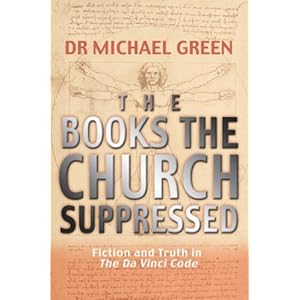
On the blog, we're getting into the swing of book reviews, but the books that I'm reading aren't always the latest books to be found in the bookshops. As I've written previously, I enjoy hunting through secondhand bookshops because you never know what you might find. On a recent visit, I came across the book with this intriguing title - 'The Books The Church Suppressed: Fiction and Truth in The Da Vinci Code' from Dr Michael Green.
Now obviously The Da Vinci Code has been out for a few years now, and this response to it has also been around for about five years, but it was a very useful book in setting out the key issues clearly and concisely. Green identifies the issues at hand in the claims of The Da Vinci code's narrator and characters - that Jesus was only thought of as divine after 325 at the Council of Nicaea, and that in the same year, the pagan emperor Constantine commissioned a new Bible for political motives, which is secondary and later than the Coptic Gnostic gospels from Nag Hammadi and the Dead Sea Scrolls.
Green, in refuting these ridiculous ideas, takes us on a whirlwind tour of Church History, back to the formation of the Canon of Scripture (where the Church recognised the authority of the apostolic writings, rather than giving them authority), and the beginnings of the Gnostic heresies. Or in Green's words: 'The church did not impose some list of books for the faithful to regard as authoritative. They recognised one!'
He expertly exposes the roots of Gnosticism, and how it is a completely different religious system to Christianity: 'Two different worlds, are they not? One rooted in human potential, the other rooted in the person and work of the divine Jesus.' Indeed, perhaps the strongest part of the book is where Green asks why it all matters, and then exposes the current trend towards Gnosticism in The Episcopal Church in the USA, and in liberal denominations in general. I don't think that I've read a better analysis of the mess we're in than his paragraphs on modern day Gnostics in the Church.
Thus far it's all been good, but in his comparison of Gnostic thought and Christianity, there was one weak point. In seeking to oppose the individualistic and superiority complex of the Gnostic elect, Green says this: 'Authentic Christianity... relies not on the salvation of those randomly predestined, but on the sheer generosity of God, whose free gift is eternal life for all who repent and believe.'
I understand that the book is perhaps aimed mostly for interested sceptics, those who will be drawn in by the title, and that Green wishes to greet them with the gospel as they think through the issues involved - but surely predestination is an important element of the gospel. To me, it seems that the biblical doctrine of predestination is being ignored, to emphasise the free offer to all. Perhaps there would have been a better way of phrasing it.
All in all, though, the book is excellent. It's a clear, concise defence of the truth, which acts as a good introduction to the early Church, its history and the Bible's authority. Christians wishing to engage in apologetics and learn more of Church History will benefit, but equally will non-Christians wishing to examine the truth claims of Dan Brown's writings. As I've said, this book's best contribution may well be as an exposition and refutation of Gnosticism, both ancient and modern.
Saturday, May 29, 2010
McFlurry's McLinks (14)
It's time to launch another McFlurry's McLinks, the fourteenth batch of linkable goodness from my Google Reader subscriptions and other web reading. Load up on extra sprinkles and enjoy an ice cream high on these tasty treats:
On preaching, Abraham Piper contends that preaching is the easiest form of public speaking. Check out why he says that - I'm not sure that I practice his suggestion, but I'm sure I know some who do! The book on preparing to teach the Bible, Dig Deeper has been published in the UK for years, but it's only just being published in the US, so Josh Harris had an interesting interview with one of the authors, Nigel Beynon. étrangère has a new development to help with getting to know the Bible better.
On doctrine, mediatree was pondering predestination. Challies asks what the difference is between Joel Osteen and a fortune cookie. I previously linked to the Irish evangelical statement on her consecration, but Al Mohler also considered the surrender of sexual morality surrounding Mary Glasspool. For an example, check out this sermon by the Provost of Glasgow Cathedral, 'preaching' at an Affirmation Scotland service from Acts 2. What's missing? Yes, you've guessed it - repentance!
One Lutheran set out to summarise the Bible in sixty-six verses. Would you use the same ones? Meanwhile David Keen (who thankfully hasn't packed in blogging after his Lenten break) linked to an online collection of Bible art. Some interesting pictures here. Irish Calvinist normally has something worth thinking about. This time, check out his thoughts on lazy missionaries and us.
Mindkee's poetry is back with a bang, this time on Babylon. Her friend, travels with my yak writes about her recent experience of Communion.
In the realm of fun, Abraham Piper linked to a vocab test - my score was reasonable, but I think there are differences in how words are used in American English and 'proper' English - divided by a common language, as someone once said.
There are two video offerings this time round. First up, Abraham Piper had this video, on how the Lord of the Rings should have ended (a lot more quickly):
Second, the Rend Collective worship on the iPhones in a remarkable way:
On preaching, Abraham Piper contends that preaching is the easiest form of public speaking. Check out why he says that - I'm not sure that I practice his suggestion, but I'm sure I know some who do! The book on preparing to teach the Bible, Dig Deeper has been published in the UK for years, but it's only just being published in the US, so Josh Harris had an interesting interview with one of the authors, Nigel Beynon. étrangère has a new development to help with getting to know the Bible better.
On doctrine, mediatree was pondering predestination. Challies asks what the difference is between Joel Osteen and a fortune cookie. I previously linked to the Irish evangelical statement on her consecration, but Al Mohler also considered the surrender of sexual morality surrounding Mary Glasspool. For an example, check out this sermon by the Provost of Glasgow Cathedral, 'preaching' at an Affirmation Scotland service from Acts 2. What's missing? Yes, you've guessed it - repentance!
One Lutheran set out to summarise the Bible in sixty-six verses. Would you use the same ones? Meanwhile David Keen (who thankfully hasn't packed in blogging after his Lenten break) linked to an online collection of Bible art. Some interesting pictures here. Irish Calvinist normally has something worth thinking about. This time, check out his thoughts on lazy missionaries and us.
Mindkee's poetry is back with a bang, this time on Babylon. Her friend, travels with my yak writes about her recent experience of Communion.
In the realm of fun, Abraham Piper linked to a vocab test - my score was reasonable, but I think there are differences in how words are used in American English and 'proper' English - divided by a common language, as someone once said.
There are two video offerings this time round. First up, Abraham Piper had this video, on how the Lord of the Rings should have ended (a lot more quickly):
Second, the Rend Collective worship on the iPhones in a remarkable way:
Friday, May 28, 2010
Book Review: The Road *Possible Spoilers*

Have you ever been caught by one of those 'three for two' offers in shops? There are maybe two things you want to buy, but want to take advantage of the free thing as well - after all, if they're giving it for free you might as well. Recently, that was my experience in Eason's - having bought some presents, I had the third book to get free and couldn't really see anything I wanted. Then I spotted The Road by Cormac McCarthy and remembered it had been made into a movie, so went for it.
The critics are raving about it - the praise without and within is fullsome, the tributes great, but really, I'm not sure that I totally agree. Certainly, the story remains with you long after you've finished reading, but as a modern classic, I'm just not sure.
The setting is America, but not as we know it. It seems to be some sort of post-apocalyptic nightmare, but we're never actually told what has happened to cause such wholesale devastation. Rather, we're constantly reminded about the bleak grey and ash which is the total landscape - made me think of the volcanic island of Lanzarote. Yet whatever has happened, there are quite a few houses still standing, the remains of cities, and a blistered road leading to the south, where things will hopefully be warmer and better.
The two main characters are never named - simply the man and the boy, father and son. The father is seeking to bring the boy to safety, to the sea coast, and the whole narrative is presented in short bursts of paragraphs, a series of vignettes and scenes as they journey on, facing danger from other survivors, while their relationship continues to develop through the trials and tribulations.
While mentioning the style, in short vignettes and bitty paragraphs, it did take a while to get used to the writing style. Throughout, alongside the paragraphs, there are no speech marks, and no apostrophes - perhaps they too have perished in the worldwide catastrophe. So occasionally I found it hard to keep up with who was speaking, whether the man, the boy, or some of the other minor characters.
In particular, the writing style caused one major confusion on page 209, about two-thirds the way through the book. There, you find a short paragraph as follows:
Do you think that your fathers are watching? That they weigh you in their ledgerbook? Against what? There is no book and your fathers are dead in the ground.
No indication of who is speaking, or whether it is the thought of the man, or whether it is the comment of the narrator. What it does indicate, though, is the profound sense of bleakness and hopelessness which pervades the book. From the woman, who sees death as a lover, to the old man who looks forward to when everyone on earth has died: 'When we're all gone at last then therell be nobody here but death and his days will be numbered too.' Just a few pages before, this same old man cries out that 'There is no God and we are his prophets.'
In such bleakness, with theological overtones or undertones (or both}, the novel leaves more questions than it answers. Has what has happened been seen as some divine punishment? Is it (as some critics think) that it's set in a post-globally warmed disaster where the earth has warmed so much than most of human, animal and plant life has died off? While that declaration that there is no God and we are his prophets rings loud, the man wonders if the boy is a god.
As it turns out, this suggestion comes to fruition at the very disappointing and confusing ending. (Spoiler may appear if you're intending to read the book). The father has sacrificed himself through the long journey along the road so that his son is brought to be found by a family who take him in (unbeknownst to the father who has died just before he finds them). And almost the very last paragraph of the book contains these words:
The woman when she saw him put her arms around him and held him. Oh, she said, I am so glad to see you. She would talk to him sometimes about God. He tried to talk to God but the best thing was to talk to his father and he did talk to him and he didnt forget. The woman said that the breath of God was his breath yet though it pass from man to man through all of time.
Oh dear oh! Throughout we've had despair and hopelessness, and now we've landed in panentheism at the very end of the novel. It's certainly a twist, an unexpected conclusion, but not one that I'm in favour of. As I've already said, the rest of the book raised enough questions (to do with the unfolding plot), and the ending raises yet another huge question, to the extent that I'm not sure that I could recommend the book to anyone!
In conclusion, The Road is a haunting, bleak book set in extraordinary times, which will long linger in the memory. However it can be difficult to read due to the style issues, and doesn't really reach a full and final conclusion. Interesting, but perhaps slightly weird. Maybe that's why the critics like it so much...
Thursday, May 27, 2010
Reversal
Johnny, our youth leader, gave me the link to this video last week. It's really powerful, and highlights the reversal, the change that the Lord Jesus is doing in peoples' lives.
Philip Pullman - A Modern Cerinthus?
The writer of Ecclesiastes declared that there is nothing new under the sun. While this is true in all of life, no more so than in the realm of theology. Last month, Philip Pullman published his latest book, 'The Good Man Jesus and the Scoundrel Christ', and as I was reading Michael Green's book 'The Books The Church Suppressed', itself refuting the heresies promoted in Dan Brown's 'The Da Vinci Code', I discovered that Pullman seems to be propogating an old Gnostic heresy, that of Cerinthus:
Cerinthus sought to sever the man Jesus from the heavenly Christ: born as the child of Joseph and Mary, the divine Christ came upon Jesus at his baptism and left him before Calvary. To which John, the eyewitness and apostle, replies that Jesus Christ is one person, that he is God's Son, and that he passed through both baptism and death, water and blood. Cerinthus' morals were highly suspect ... and John has to rebut his immorality.
While the clothing and style may change, the same old heresies keep coming back. It's why we need to be sure of what we believe, holding firm to the faith once delivered to the saints, and watching for false teaching within and without the church. Otherwise, we'll be swallowing poison in our honey.
Cerinthus sought to sever the man Jesus from the heavenly Christ: born as the child of Joseph and Mary, the divine Christ came upon Jesus at his baptism and left him before Calvary. To which John, the eyewitness and apostle, replies that Jesus Christ is one person, that he is God's Son, and that he passed through both baptism and death, water and blood. Cerinthus' morals were highly suspect ... and John has to rebut his immorality.
While the clothing and style may change, the same old heresies keep coming back. It's why we need to be sure of what we believe, holding firm to the faith once delivered to the saints, and watching for false teaching within and without the church. Otherwise, we'll be swallowing poison in our honey.
Wednesday, May 26, 2010
Pure Speech
So far in our protracted series in Zephaniah, we've seen one element of the Day of the Lord - the judgement of all people. Yet the Day of the Lord also means the salvation of God's people.
The book of Zephaniah has so far concentrated on the judgement, both of Jerusalem and the nations. The closing section of chapter 3 brings an amazing picture of restoration and salvation. Amazing, because God's salvation is not just for Jerusalem and Israel, but for people from every nation!
In the week after Pentecost Sunday, it's maybe a very appropriate time to think about the ingathering of the nations:
9 "For at that time I will change the speech of the peoples to a pure speech, that all of them may call upon the name of the LORD and serve him with one accord.
10 From beyond the rivers of Cush my worshipers, the daughter of my dispersed ones, shall bring my offering."
Remember back in Genesis 11, with the building of the first sky-scraper, the Tower of Babel? The people had tried to make a name for themselves by building the tower to reach heaven. God cursed their work, and the curse was in the form of the confusion of their language. Suddenly the workers couldn't make head nor tail of what each other was saying. The building work ceased, and the peoples dispersed, the nations separated, each with their own tongue and language.
God promises that in the end, in the day of the Lord, that curse will be overturned and reversed, that all will speak a pure speech so they can call on the name of the Lord and be saved. It's not that everyone speaks Hebrew (thankfully) - but as we see in the fulfillment of the promise, God speaks everyone's language! In Acts 2 we see the effects of the outpouring of the promised Holy Spirit, as the apostles and others are empowered to proclaim the 'mighty works of God' (Acts 2:11) in a variety of languages. So many call upon the Lord that day that around 3000 are baptised!
This spreading of the good news continues to this day, as Bible translators continue to work to reach languages which don't currently have the Scriptures. Indeed, probably most of us reading this are included among the Gentiles, the foreign people brought near in the Gospel of the Lord Jesus, the fulfillment of God's promise to Abraham that he would be a blessing to the nations.
In Revelation we see the completion of this promise, in the 'great multitude that no one could number, from every nation, from all tribes and peoples and languages, standing before the throne and before the Lamb, clothed in white robes' together worshipping the Lord. There's no room for racism in the church - Jesus' salvation is for all nations and all peoples. We must reach the unreached and proclaim the mighty works of God to every nation. Are you reaching your own people group? Will you reach another nation? We must
go!
The book of Zephaniah has so far concentrated on the judgement, both of Jerusalem and the nations. The closing section of chapter 3 brings an amazing picture of restoration and salvation. Amazing, because God's salvation is not just for Jerusalem and Israel, but for people from every nation!
In the week after Pentecost Sunday, it's maybe a very appropriate time to think about the ingathering of the nations:
9 "For at that time I will change the speech of the peoples to a pure speech, that all of them may call upon the name of the LORD and serve him with one accord.
10 From beyond the rivers of Cush my worshipers, the daughter of my dispersed ones, shall bring my offering."
Remember back in Genesis 11, with the building of the first sky-scraper, the Tower of Babel? The people had tried to make a name for themselves by building the tower to reach heaven. God cursed their work, and the curse was in the form of the confusion of their language. Suddenly the workers couldn't make head nor tail of what each other was saying. The building work ceased, and the peoples dispersed, the nations separated, each with their own tongue and language.
God promises that in the end, in the day of the Lord, that curse will be overturned and reversed, that all will speak a pure speech so they can call on the name of the Lord and be saved. It's not that everyone speaks Hebrew (thankfully) - but as we see in the fulfillment of the promise, God speaks everyone's language! In Acts 2 we see the effects of the outpouring of the promised Holy Spirit, as the apostles and others are empowered to proclaim the 'mighty works of God' (Acts 2:11) in a variety of languages. So many call upon the Lord that day that around 3000 are baptised!
This spreading of the good news continues to this day, as Bible translators continue to work to reach languages which don't currently have the Scriptures. Indeed, probably most of us reading this are included among the Gentiles, the foreign people brought near in the Gospel of the Lord Jesus, the fulfillment of God's promise to Abraham that he would be a blessing to the nations.
In Revelation we see the completion of this promise, in the 'great multitude that no one could number, from every nation, from all tribes and peoples and languages, standing before the throne and before the Lamb, clothed in white robes' together worshipping the Lord. There's no room for racism in the church - Jesus' salvation is for all nations and all peoples. We must reach the unreached and proclaim the mighty works of God to every nation. Are you reaching your own people group? Will you reach another nation? We must
go!
Tuesday, May 25, 2010
Dog Days
Florence and the Machine sang that 'the dog days are over'. But our dog days are only just beginning. We had a new addition to the family on Saturday, when Pippa the miniature Jack Russell came home with us. These past few days have been spent getting to know her and introduce her to our house and wider family.
Yesterday was a big day with the first visit to the vet, just for a wee checkup. It was also my first time in a vet's! The injections start on Friday, though so she might not think as much of us then! After a couple of noisy nights, she seemed to sleep right through last night, from 11pm until 7am! We've even made a decent start at the potty training, with some toilet business outside on the grass.
We're off this week, so it's a great chance to get some wee jobs done and to help Pippa settle into her new
home. Hopefully I'll be able to blog more through the week as things settle down and we get into a new
routine.
Yesterday was a big day with the first visit to the vet, just for a wee checkup. It was also my first time in a vet's! The injections start on Friday, though so she might not think as much of us then! After a couple of noisy nights, she seemed to sleep right through last night, from 11pm until 7am! We've even made a decent start at the potty training, with some toilet business outside on the grass.
We're off this week, so it's a great chance to get some wee jobs done and to help Pippa settle into her new
home. Hopefully I'll be able to blog more through the week as things settle down and we get into a new
routine.
Saturday, May 22, 2010

Book Review: John Stott - The Making of a Leader
There's no doubt about it - this book is an epic! Bishop Timothy Dudley-Smith (he of hymnwriting fame), has been very thorough in his research and production of the authorised biography of the English evangelical leader, John Stott. In this book, there are 460 pages of closely written, small text, as the family background, education, and early ministry of John Stott are revealed and discussed.
And yet, those 460 pages only take you to his 40th birthday! There's another volume of much the same size which will remain untackled until some other day, which focuses on his later ministry and 'retirement'.
The thing which strikes you repeatedly as you read the biography is the sheer dedication, commitment and leadership which has shone throughout Stott's life and ministry. Yet perhaps the most important aspect of the book is to show Stott as an entirely 'ordinary' person, with his peculiarities and interests, his humour and his devotion shining through.
Most of us know Stott as a minister, preacher and author, but Dudley-Smith enlargens our vision of Stott to see him behind the scenes, in his family life, and enjoying his birdwatching. Several years ago, Hillsborough Parish created a stir when they appointed the Curate-Assistant to be Rector, yet Stott had been a parishioner of All Souls, Langham Place, before being appointed as Curate-Assistant, then Rector, and now (retired) senior minister.
Through many eyewitness reminiscences and documentary evidences of letters, Dudley-Smith recreates the pressures of family life as Stott grew up, as well as his education - but as far as interest goes, mine was piqued as Stott considered ordination during the Second World War. It created immense disquiet amongst his family - his father working as a medical consultant to the armed forces, grieved by his son's pacifism (in refusing to volunteer to serve in any capacity for the war effort) and by seeking to study for ordination during the war. Personally, it was a great comfort to know of the struggles of another ordinand faced in pursuing ordination, and how things resolved themselves (much) later.
As I've probably hinted earlier, the book is very thorough - with lots of background detail and perhaps a lot more information than the casual reader could endure - but it can be read with profit, and throughout, the gospel is central, both in Stott's life and in Dudley-Smith's presentation of his life. The casual reader may prefer the more recent (and much shorter) biography by Roger Steer, but for indepth detail and analysis of John Stott's early ministry, this is an excellent volume.
Friday, May 21, 2010
Book Review: The Gospel in Revelation

I've previously blogged about how I enjoyed Graeme Goldsworthy's Preaching the Whole Bible as Christian Scripture, and I've had another book from the same author on my shelves for about the same length of time, without opening it. Spurred on by my recent preach in Revelation 5, I added this small volume to my 'to read' shelf on my desk. Once again, I'm glad to have read it, and just upset that I didn't read it all those years ago!
As Goldsworthy points out near the start, the book of Revelation is a frightening one for the ordinary Christian. Often, we don't know what to do with it - either neglecting it altogether (and therefore missing out on the great encouragement contained within), or getting embroiled in fantastical and erroneous predictions about the future end times and political prophecies. We tend to either extreme because we divorce Revelation from its bible context, and don't interpret it within the context of the gospel. The gospel is the key to understand it all.
Through a series of chapters examining the key features of the book (including the letters to the seven churches, the apocalyptic passages, hymnic passages, conflict, and the final separation), Goldsworthy builds on his central thesis - that the book is written to encourage Christians in their suffering, because 'their sufferings are utterly consistent with the reality of God's kingdom in this present age.' The Lion of Revelation 5 is the Lamb that was slain - that while the church now appears as her Lord on earth, suffering, one day she will be glorified with her Lord when he returns. 'That which the believer now grasps by faith will be open to every eye.'
The pattern of Christ's humiliation in the gospel is the ongoing pattern of the normal Christian life. 'The New Testament teaches that it is the life, death and resurrection of Jesus Christ which constitute the meaning, motive and power for Christian living.'
Goldsworthy discusses the Day of the Lord and what it means - 'The day of the Lord means the salvation of the people of God and the judgement of his enemies.' But while the Old Testament sees this as one event, with the day of the Lord ending the old era and bringing in the new, the New Testament modifies it to include the two comings of the Lord Jesus, with an overlap period between his first and second comings, when the old era will finally finish.
While Revelation has been seen as a happy hunting ground for fundamentalists (just think of the Left Behind series!), Goldsworthy argues that
'Revelation was written, not for the arm-chair prophets with their charts of historical events in the twentieth century and their intricate diagrams of the end of the age, but for the harassed subsistence-level first-century Christians of the Asia Minor province. It was written to bring them both warning and reassurance, to encourage them in their struggle and to liberate them from fear of the enemy within and without.'
All in all, this is a very useful book. It's a great introduction to the book of Revelation within its own context, and the wider Bible context. The principles of interpretation are Christ-centred, gospel-centred, and are clear and consistently applied. I wish I had read it a long time ago, and so it would be very profitable for anyone wanting to grasp what Revelation is all about. The explanation is clear, and the encouragement heartwarming.
While my copy was a small paperback in its own right, The Gospel in Revelation is also included in 'The Goldsworthy Trilogy' available from the Good Book Company.
Subscribe to:
Posts (Atom)