The theme of darkness and light is one that runs throughout the Bible, and especially in relation to the promises of the Lord Jesus' birth and coming. So we find in Isaiah 60, the same theme again, this time with its global significance shining out clearly.
As the world lies in darkness, Isaiah prophecies that the glory of the LORD will rise and shine upon Israel, the shining light in the dark world. The light will attract all sorts of people:
Arise, shine, for your light has come, and the glory of the LORD has risen upon you. For behold, darkness shall cover the earth, and thick darkness the peoples; but the LORD will arise upon you, and his glory will be seen upon you. And nations shall come to your light, and kings to the brightness of your rising. (Isaiah 60:1-3)
It may be these verses that lead some to portray the magi / wise men who came to see Jesus as 'we three kings of Orient are' - especially when verse 6 goes on to say 'A multitude of camels shall cover you, the young camels of Midian and Ephah; all those from Sheba shall come. They shall bring gold and frankincense, and shall bring good news, the praises of the LORD.'
Even if the magi were not kings, there's no doubt that many kings (and queens) have been drawn to the light of Jesus over the years. Queen Victoria hoped that the Lord Jesus would return in her lifetime so that she could lay down the crown of her empire at Jesus' feet. O glory of the Lord, come.
Monday, December 13, 2010
Sunday, December 12, 2010
The Promise of His Coming (12)
Have you ever looked closely at your job description? There's probably a list of required jobs and tasks you have to achieve in your work, maybe some targets, as well as whatever is needed for the good of the business. In previous jobs, I always found that that final clause could be interpreted in all sorts of ways, leading you to do all sorts of wee jobs you would never have imagined.
In ministry as well, you find yourself doing things you never imagined. Over this past year, I've been a car park attendant, a competitive chef, a waiter, chair stacker, paper folder, photocopier, and many other things as well. Extra ways of serving, and all for the work of the kingdom.
In Isaiah 49, the LORD is addressing his servant, as his job description is being expanded:
And now the LORD says, he who formed me from the womb to be his servant, to bring Jacob back to him; and that Israel might be gathered to him - for I am honoured in the eyes of the LORD, and my God has become my strength - (Isaiah 49:5)
The Messiah, the servant of the Lord was commissioned to go to the lost sheep of the house of Israel (Matt 15:24), but that isn't enough now - his horizon is expanded to stretch around the globe:
he says: "It is too light a thing that you should be my servant to raise up the tribes of Jacob and to bring back the preserved of Israel; I will make you as a light for the nations, that my salvation may reach to the end of the earth." (Isaiah 49:6)
Jesus is a light for the nations, the light of the world, so that his salvation reaches to the ends of the earth, so that whoever wherever and whenever anyone calls on the name of the Lord, they will be saved. O light for the nations, come.
In ministry as well, you find yourself doing things you never imagined. Over this past year, I've been a car park attendant, a competitive chef, a waiter, chair stacker, paper folder, photocopier, and many other things as well. Extra ways of serving, and all for the work of the kingdom.
In Isaiah 49, the LORD is addressing his servant, as his job description is being expanded:
And now the LORD says, he who formed me from the womb to be his servant, to bring Jacob back to him; and that Israel might be gathered to him - for I am honoured in the eyes of the LORD, and my God has become my strength - (Isaiah 49:5)
The Messiah, the servant of the Lord was commissioned to go to the lost sheep of the house of Israel (Matt 15:24), but that isn't enough now - his horizon is expanded to stretch around the globe:
he says: "It is too light a thing that you should be my servant to raise up the tribes of Jacob and to bring back the preserved of Israel; I will make you as a light for the nations, that my salvation may reach to the end of the earth." (Isaiah 49:6)
Jesus is a light for the nations, the light of the world, so that his salvation reaches to the ends of the earth, so that whoever wherever and whenever anyone calls on the name of the Lord, they will be saved. O light for the nations, come.


Saturday, December 11, 2010
The Promise of His Coming (11)
We're spending a lot of time in Isaiah as we consider the promises that Jesus is coming, simply because we find so many promises in the prophet Isaiah! We move on and find another series of promises relating to the Lord's chosen servant.
Behold my servant, whom I uphold, my chosen, in whom my soul delights; I have put my Spirit upon him; he will bring forth justice to the nations. He will not cry aloud or lift up his voice, or make it heard in the street; a bruised reed he will not break, and a faintly burning wick he will not quench; he will faithfully bring forth justice. He will not grow faint or be discouraged till he has established justice in the earth; and the coastlands wait for his law. (Isaiah 42:1-4)
The identity of the servant has been hotly disputed throughout Bible interpretation, with Jews insisting that it is Israel the nation that God is referring to here. I don't think that fits - and believe that the prophet Isaiah is promising the coming of the Lord Jesus - in three of these four verses justice is mentioned, Jesus is the coming judge, the one who will establish justice (and already has through his cross, demonstrating both God's mercy and his justice).
There is hope and encouragement for the weak, the bruised reed and the faintly burning wick, that they will not be broken or snuffed out. When he comes, there will be perfect justice. Come, o servant of the Lord!
Behold my servant, whom I uphold, my chosen, in whom my soul delights; I have put my Spirit upon him; he will bring forth justice to the nations. He will not cry aloud or lift up his voice, or make it heard in the street; a bruised reed he will not break, and a faintly burning wick he will not quench; he will faithfully bring forth justice. He will not grow faint or be discouraged till he has established justice in the earth; and the coastlands wait for his law. (Isaiah 42:1-4)
The identity of the servant has been hotly disputed throughout Bible interpretation, with Jews insisting that it is Israel the nation that God is referring to here. I don't think that fits - and believe that the prophet Isaiah is promising the coming of the Lord Jesus - in three of these four verses justice is mentioned, Jesus is the coming judge, the one who will establish justice (and already has through his cross, demonstrating both God's mercy and his justice).
There is hope and encouragement for the weak, the bruised reed and the faintly burning wick, that they will not be broken or snuffed out. When he comes, there will be perfect justice. Come, o servant of the Lord!
Friday, December 10, 2010
Sermon Audio: 1 Timothy 6: 2-10
Last Sunday night we finished our series in the Ten Commandments, and again I was preaching, this time on Do Not Covet. Here's the mp3 file.
The Promise of His Coming (10)
Have you heard the news? It's even better than the news that Santa Claus is coming to town - God is coming! That's the message for the herald of good news in Isaiah 40. Jerusalem, Zion, is to be the messenger for the cities of Judah. God is on his way!
And what will God do when he comes? In this particular section, the focus is on the LORD GOD coming in might, acting like a shepherd:
Behold, the LORD GOD comes with might, and his arm rules for him; behold his reward is with him, and his recompense before him. He will tend his flock like a shepherd; he will gather the lambs in his arms; he will carry them in his bosom, and gently lead those that are with young. (Isaiah 40:10-11)
The mighty Lord acts tenderly towards his flock, particularly the lambs and the pregnant mothers. While there is recompense for his enemies, his loved ones know only his tenderness and the blessing of his reward.
The shepherd king is coming - the good shepherd who will lay down his life for his sheep. Come, shepherd king!
And what will God do when he comes? In this particular section, the focus is on the LORD GOD coming in might, acting like a shepherd:
Behold, the LORD GOD comes with might, and his arm rules for him; behold his reward is with him, and his recompense before him. He will tend his flock like a shepherd; he will gather the lambs in his arms; he will carry them in his bosom, and gently lead those that are with young. (Isaiah 40:10-11)
The mighty Lord acts tenderly towards his flock, particularly the lambs and the pregnant mothers. While there is recompense for his enemies, his loved ones know only his tenderness and the blessing of his reward.
The shepherd king is coming - the good shepherd who will lay down his life for his sheep. Come, shepherd king!
Thursday, December 09, 2010
Sermon: Luke 1: 46-55 Mary's Song
The Magnificat, Mary’s song, is probably fairly well known - and yet in this Advent season, it’s useful to take some time to think about about the message of this great song of praise. We read of how Mary was visited by the angel Gabriel and told that she, a virgin, would become pregnant and have a son.
It’s not the only strange miracle in the family, as her relative Elizabeth, advanced in years is also pregnant! Mary heads off to see Elizabeth, as if they’re forming a pregnancy support class, and when she arrives, she bursts out in praise to God in this song. We’ll look at it under two brief headings: God exalts the humble and humbles the proud.
Firstly, then, God exalts the humble. Think for a moment of just who is singing this song. Mary is an unmarried pregnant girl (possibly even a teenage pregnancy), probably a poor peasant, who lives in a small village in a tiny country which is ruled by the empire of Rome. It’s hardly the birth you would expect for the Saviour of the world and the long promised King. You expect God’s king to be born among royalty, in the palace, in the capital, with the world’s media waiting to capture the exclusive rights to the photos. But that’s not how it goes.
‘My soul magnifies the Lord, and my spirit rejoices in God my Saviour, for he has looked on the humble estate of his servant.’ In the world’s eyes, Mary would be the unlikeliest mother for the Saviour, and yet in God’s eyes, she has found favour (grace). He who is mighty has done great things for me - God has acted for the weak and the powerless, those forgotten and looked down on by the world.
As we look at those whom God chooses, those who make up the church, it’s sometimes surprising. It’s not always the highfliers and the successful. As Paul wrote, ‘For consider your calling, brothers: not many of you were wise according to worldly standards, not many were powerful, not many were of noble birth. But God chose what is foolish in the world to shame the wise...’ (1 Cor 1:26-27)
The great news is that even if you are forgotten or ignored, weak, powerless, or advanced in years, God has not forgotten you. God continues to exalt the humble and lowly, giving us the privilege of adoption as children of God; of an unshakeable eternal destiny; of a place in his new creation. All this, because God is the Saviour - the baby to be born will save his people from their sins and give his blessing.
The humble will be exalted - this is great news, unless you’re proud, because at the same time, God will humble the proud. When God is in charge, things are turned upside down (or right side up!). So those who are proud are scattered, those who are mighty are brought down from their thrones, those who are rich are sent away empty.
To be proud is to say to God that we don’t need him - we can manage on our own. We become self-centred, so that the rest of the world exists for our own personal pleasure. But God cannot allow that to happen, and so intervenes in judgement.
Are you proud today? Do you still resist God and think that you can provide and save yourself? Perhaps it’s even a religious pride that says that God will have to accept you because of your goodness and devotion and religion. Yet the Scriptures are clear: God opposes the proud, but gives grace to the humble.
The question is, why does God do this? The answer is there in the last two verses - God is fulfilling his promise to Abraham, displaying his mercy as he works for the salvation of his people.
Advent is a good time to consider again just where we stand. Are we proud - and facing a fall? Or are we recognising that we can’t do it by ourselves, that we must admit our weakness, and cry out to the Lord to save us? Blessed are the poor in spirit, for theirs is the kingdom of heaven.
This sermon was preached at the Midweek Communion service in St Elizabeth's Church, Dundonald on Wednesday 8th December 2010.
It’s not the only strange miracle in the family, as her relative Elizabeth, advanced in years is also pregnant! Mary heads off to see Elizabeth, as if they’re forming a pregnancy support class, and when she arrives, she bursts out in praise to God in this song. We’ll look at it under two brief headings: God exalts the humble and humbles the proud.
Firstly, then, God exalts the humble. Think for a moment of just who is singing this song. Mary is an unmarried pregnant girl (possibly even a teenage pregnancy), probably a poor peasant, who lives in a small village in a tiny country which is ruled by the empire of Rome. It’s hardly the birth you would expect for the Saviour of the world and the long promised King. You expect God’s king to be born among royalty, in the palace, in the capital, with the world’s media waiting to capture the exclusive rights to the photos. But that’s not how it goes.
‘My soul magnifies the Lord, and my spirit rejoices in God my Saviour, for he has looked on the humble estate of his servant.’ In the world’s eyes, Mary would be the unlikeliest mother for the Saviour, and yet in God’s eyes, she has found favour (grace). He who is mighty has done great things for me - God has acted for the weak and the powerless, those forgotten and looked down on by the world.
As we look at those whom God chooses, those who make up the church, it’s sometimes surprising. It’s not always the highfliers and the successful. As Paul wrote, ‘For consider your calling, brothers: not many of you were wise according to worldly standards, not many were powerful, not many were of noble birth. But God chose what is foolish in the world to shame the wise...’ (1 Cor 1:26-27)
The great news is that even if you are forgotten or ignored, weak, powerless, or advanced in years, God has not forgotten you. God continues to exalt the humble and lowly, giving us the privilege of adoption as children of God; of an unshakeable eternal destiny; of a place in his new creation. All this, because God is the Saviour - the baby to be born will save his people from their sins and give his blessing.
The humble will be exalted - this is great news, unless you’re proud, because at the same time, God will humble the proud. When God is in charge, things are turned upside down (or right side up!). So those who are proud are scattered, those who are mighty are brought down from their thrones, those who are rich are sent away empty.
To be proud is to say to God that we don’t need him - we can manage on our own. We become self-centred, so that the rest of the world exists for our own personal pleasure. But God cannot allow that to happen, and so intervenes in judgement.
Are you proud today? Do you still resist God and think that you can provide and save yourself? Perhaps it’s even a religious pride that says that God will have to accept you because of your goodness and devotion and religion. Yet the Scriptures are clear: God opposes the proud, but gives grace to the humble.
The question is, why does God do this? The answer is there in the last two verses - God is fulfilling his promise to Abraham, displaying his mercy as he works for the salvation of his people.
Advent is a good time to consider again just where we stand. Are we proud - and facing a fall? Or are we recognising that we can’t do it by ourselves, that we must admit our weakness, and cry out to the Lord to save us? Blessed are the poor in spirit, for theirs is the kingdom of heaven.
This sermon was preached at the Midweek Communion service in St Elizabeth's Church, Dundonald on Wednesday 8th December 2010.
The Promise of His Coming (9)
We've recently just seen the end of a major road building project in Northern Ireland, with the A4 dual carriageway from the end of the M1 motorway at Dungannon being extended as far as Ballygawley. Months of hard work, planning, digging, levelling, laying, and finally the new road has been completed. Journey times from Belfast to Enniskillen are markedly quicker already.
In Isaiah 40, there's also a call for a new road, a major project. Not just a dual carriageway, but a highway for our God, the way of the LORD. It's not just going through the rough terrain of south Tyrone, but through the wilderness, in the desert. God is coming - the call is to be ready for his arrival.
Valleys shall be lifted, mountains made low, all becoming level, so that the glory of the LORD may be revealed. This is the message of Advent - God is coming, so be ready. It's the Advent warning and hope expressed by John the Baptist, who identifies himself as this voice crying in the wilderness as he prepares for the arrival of the Lord Jesus.
Are you ready for God's arrival?
In Isaiah 40, there's also a call for a new road, a major project. Not just a dual carriageway, but a highway for our God, the way of the LORD. It's not just going through the rough terrain of south Tyrone, but through the wilderness, in the desert. God is coming - the call is to be ready for his arrival.
Valleys shall be lifted, mountains made low, all becoming level, so that the glory of the LORD may be revealed. This is the message of Advent - God is coming, so be ready. It's the Advent warning and hope expressed by John the Baptist, who identifies himself as this voice crying in the wilderness as he prepares for the arrival of the Lord Jesus.
Are you ready for God's arrival?
Wednesday, December 08, 2010
Sermon: Matthew 1: 18-25 What's In A Name?
What does your name mean? I don’t know if you’ve ever seen those displays in shops of loads of keyrings, each with a different name on them, personalised for you, and on the back it will tell you something about what your name means and where it comes from. If you’re a Margaret (‘pearl’) or a John (‘God is gracious’), an Elizabeth (‘God’s promise’) or a William (‘protection’), then you could find your name no problem. Maybe you had a less common name and could never find it on the back of a keyring. It took me some time before I found out that Gary means ‘spear’.
Names are important. Sometimes, names are given for a particular reason - perhaps it’s a family name that has been passed down; or perhaps it meant something to your parents. In our Bible reading today, we heard of three names associated with Christmas, and I want to spend a few minutes looking at them with you. They are Christ, Jesus, and Immanuel.
First of all, there’s that name, Christ. That’s not just Jesus’ surname, in the way that yours might be Smith, or mine is McMurray, no, it’s a title, rather than a surname. Jesus is the Christ. It’s a word that means the anointed one - the person that the people of Israel were waiting for throughout their history. The one who was anointed was the king - you might remember Samuel anointing David, who would become the king of Israel (1 Sam 16). Now, in our Bible reading, Joseph is called the son of David - David’s great-great-great-great (and so on) grandson. Jesus is the Christ, because he is God’s king, God’s chosen ruler of his people - great David’s greater son. The baby of Bethlehem is the king of the world.
Is Jesus your king today? Is he ruling over your life, so that you do what he wants?
But more than that, let’s think about the name Jesus itself. In our reading, we find that it comes after Luke 1, when Mary has been visited by the angel Gabriel and told that she is to have a son. Joseph, her fiance discovered that she is pregnant, and it puts Joseph in a tricky situation. It appears that Mary has been unfaithful, and yet he doesn’t want to disgrace her, so he has decided to divorce her quietly.
An angel of the Lord appears to him in a dream to explain what is happening, and tells him to take Mary as his wife. The angel also tells Joseph to give the baby boy the name Jesus - ‘for he will save his people from their sins.’ The name Jesus means ‘God saves’, and the angel spells out exactly who it is that God is saving and what they are being saved from. He will save his people from their sins.
You see, we can’t just think of Jesus as the baby of Bethlehem and leave him in the manger. The baby grew up to be a man, and thirty-three or so years later went up to Jerusalem, where he died on the cross, dying for your sin and mine, to reconcile us to God and to rescue us from our sins. As Paul writes to Timothy, Christ Jesus came into the world to save sinners (1 Tim 1:15) - Christmas is the first step of the rescue mission; of the invasion of occupied territory.
Has Jesus saved you from your sins? Have you trusted in him to take away the punishment your sins deserve?
Finally, at the end of the passage, we’re given the third name - Jesus Christ is also Immanuel. Immanuel means ‘God with us’ - the baby Jesus is no ordinary baby, but is God with us. God has become flesh and lived among us - he knows the pressures we have to endure, the temptations we face, the struggles we have. This means that no matter where you are, or whatever you’re going through, God is with you.
Names can be important, and no names are more important than these names that we’ve thought about this morning - Immanuel, God is with us; the Christ, God’s king; Jesus, God saves. Years later, some followers of Jesus have been arrested, and are brought before the Jewish council. Peter declares this: ‘And there is salvation in no one else, for there is no other name under heaven given among men by which we must be saved.’
Our prayer is that you will rejoice in this great salvation this Christmas time, and all because of the baby Jesus, the rescuer, the one who saves.
This sermon was preached at the special Christmas Communion service in St Elizabeth's Court, Dundonald on Wednesday 8th December 2010.
Names are important. Sometimes, names are given for a particular reason - perhaps it’s a family name that has been passed down; or perhaps it meant something to your parents. In our Bible reading today, we heard of three names associated with Christmas, and I want to spend a few minutes looking at them with you. They are Christ, Jesus, and Immanuel.
First of all, there’s that name, Christ. That’s not just Jesus’ surname, in the way that yours might be Smith, or mine is McMurray, no, it’s a title, rather than a surname. Jesus is the Christ. It’s a word that means the anointed one - the person that the people of Israel were waiting for throughout their history. The one who was anointed was the king - you might remember Samuel anointing David, who would become the king of Israel (1 Sam 16). Now, in our Bible reading, Joseph is called the son of David - David’s great-great-great-great (and so on) grandson. Jesus is the Christ, because he is God’s king, God’s chosen ruler of his people - great David’s greater son. The baby of Bethlehem is the king of the world.
Is Jesus your king today? Is he ruling over your life, so that you do what he wants?
But more than that, let’s think about the name Jesus itself. In our reading, we find that it comes after Luke 1, when Mary has been visited by the angel Gabriel and told that she is to have a son. Joseph, her fiance discovered that she is pregnant, and it puts Joseph in a tricky situation. It appears that Mary has been unfaithful, and yet he doesn’t want to disgrace her, so he has decided to divorce her quietly.
An angel of the Lord appears to him in a dream to explain what is happening, and tells him to take Mary as his wife. The angel also tells Joseph to give the baby boy the name Jesus - ‘for he will save his people from their sins.’ The name Jesus means ‘God saves’, and the angel spells out exactly who it is that God is saving and what they are being saved from. He will save his people from their sins.
You see, we can’t just think of Jesus as the baby of Bethlehem and leave him in the manger. The baby grew up to be a man, and thirty-three or so years later went up to Jerusalem, where he died on the cross, dying for your sin and mine, to reconcile us to God and to rescue us from our sins. As Paul writes to Timothy, Christ Jesus came into the world to save sinners (1 Tim 1:15) - Christmas is the first step of the rescue mission; of the invasion of occupied territory.
Has Jesus saved you from your sins? Have you trusted in him to take away the punishment your sins deserve?
Finally, at the end of the passage, we’re given the third name - Jesus Christ is also Immanuel. Immanuel means ‘God with us’ - the baby Jesus is no ordinary baby, but is God with us. God has become flesh and lived among us - he knows the pressures we have to endure, the temptations we face, the struggles we have. This means that no matter where you are, or whatever you’re going through, God is with you.
Names can be important, and no names are more important than these names that we’ve thought about this morning - Immanuel, God is with us; the Christ, God’s king; Jesus, God saves. Years later, some followers of Jesus have been arrested, and are brought before the Jewish council. Peter declares this: ‘And there is salvation in no one else, for there is no other name under heaven given among men by which we must be saved.’
Our prayer is that you will rejoice in this great salvation this Christmas time, and all because of the baby Jesus, the rescuer, the one who saves.
This sermon was preached at the special Christmas Communion service in St Elizabeth's Court, Dundonald on Wednesday 8th December 2010.
The Promise of His Coming (8)
I'm not a great gardener, and yet I've observed some things from our inherited back garden. It seems there used to be a number of evergreen bushes along the side wall, but some of these were cut down before we came. Just the stump remains, and yet there's still life in the old bush yet. While the main stump is as it was when it was cut, there are smaller mini bushes growing up around it now, bearing fruit from those same roots.
The prophet Isaiah looks forward and sees a similar thing happening to Israel. Jesse, the father of David, represents his royal line, and yet in Isaiah 11, his line has become a stump. Cut off in its prime - when the royal line of David ceased to be kings at the exile. Away in the future, though, a new king of David's line will rise:
There shall come forth a shoot from the stump of Jesse, and a branch from his roots shall bear fruit. (Isaiah 11:1)
This new king, however, will be new and different compared to the old kings of Jesse's tree:
And the Spirit of the LORD shall rest upon him, the Spirit of wisdom and understanding, the Spirit of counsel and might, the Spirit of knowledge and the fear of the LORD. And his delight shall be in the fear of the LORD. (Isaiah 11:2-3)
The Spirit-saturated king will judge justly and kill the wicked, to usher in a time of peace, so that wolves and lambs will live together, leopards and goats lie down together, and calves and lions sharing a space.
Once again, Isaiah's prophecy looks forward to this great king, the descendant of Jesse and son of David, and even now, our hearts yearn for this promised peace under the reign of the true king. Come, o branch of Jesse!
The prophet Isaiah looks forward and sees a similar thing happening to Israel. Jesse, the father of David, represents his royal line, and yet in Isaiah 11, his line has become a stump. Cut off in its prime - when the royal line of David ceased to be kings at the exile. Away in the future, though, a new king of David's line will rise:
There shall come forth a shoot from the stump of Jesse, and a branch from his roots shall bear fruit. (Isaiah 11:1)
This new king, however, will be new and different compared to the old kings of Jesse's tree:
And the Spirit of the LORD shall rest upon him, the Spirit of wisdom and understanding, the Spirit of counsel and might, the Spirit of knowledge and the fear of the LORD. And his delight shall be in the fear of the LORD. (Isaiah 11:2-3)
The Spirit-saturated king will judge justly and kill the wicked, to usher in a time of peace, so that wolves and lambs will live together, leopards and goats lie down together, and calves and lions sharing a space.
Once again, Isaiah's prophecy looks forward to this great king, the descendant of Jesse and son of David, and even now, our hearts yearn for this promised peace under the reign of the true king. Come, o branch of Jesse!
Tuesday, December 07, 2010
The Promise of His Coming (7)
John Lennon sang the song 'Happy Christmas (War is Over)', and that would be a fitting summary of our next promise of the birth of Jesus as we find it in Isaiah 9. As we saw yesterday, the kingdom of Judah was suffering threats and violence from their neighbouring kingdoms of Israel and Syria. War was on the horizon, and it was as if the people were in darkness.
Into the darkness comes the promise of the birth of a child, a son of David, who will bring light, joy, peace, and justice.
The people who walked in darkness have seen a great light; those who dwelt in a land of deep darkness, on them has light shined. (Isaiah 9:2)
No more gloom or despair, as the light of God transforms the situation. But there's more:
You have multiplied the nation; you have increased its joy; they rejoice before you as with joy at the harvest, as they are glad when they divide the spoil. (Isaiah 9:3)
Rather than a declining population as people fall in war, instead there is restoration, renewal, growth, and this leads to joy. More joy than there is when God's faithfulness is proved at harvest time, when there's food to spare and a party atmosphere. Light, joy, but there's still more:
For the yoke of his burden, and the staff for his shoulder, the rod of his oppressor, you have broken as on the day of Midian. For every boot of the tramping warrior in battle tumult and every garment rolled in blood will be burned as fuel for the fire. For to us a child is born, to us a son is given; and the government shall be upon his shoulder, and his name shall be called Wonderful Counsellor, Mighty God, Everlasting Father, Prince of Peace. (Isaiah 9:4-6)
The reason for the light and the joy is because their oppressors, their enemies have been defeated and destroyed. No more war, only peace. Peace brought about through the birth of this baby, with these great names. Sometimes today people call their children all sorts of strange things, which normally demonstrates more about the parents than the child, but nothing compared to these great names: Wonderful Counsellor; Mighty God; Everlasting Father; Prince of Peace. And yet, there's even still more:
Of the increase of his government and of peace there will be no end, on the throne of David and over his kingdom, to establish it and to uphold it with justice and with righteousness from this time forth and forevermore. The zeal of the LORD of hosts will do this. (Isaiah 9:7)
The coming baby is found to be in the line of David, sitting on the throne of David - that everlasting kingdom based on God's earlier promise. The king will judge justly and will rule in righteousness - perfectly true, and in accordance with God's will and ways.
Light, joy, peace and justice. Things that our world still cries out for; things that will be fully and finally unveiled when the King returns, but which are already glimpsed through the earthly ministry of the baby of Bethlehem, the one who is coming.
Into the darkness comes the promise of the birth of a child, a son of David, who will bring light, joy, peace, and justice.
The people who walked in darkness have seen a great light; those who dwelt in a land of deep darkness, on them has light shined. (Isaiah 9:2)
No more gloom or despair, as the light of God transforms the situation. But there's more:
You have multiplied the nation; you have increased its joy; they rejoice before you as with joy at the harvest, as they are glad when they divide the spoil. (Isaiah 9:3)
Rather than a declining population as people fall in war, instead there is restoration, renewal, growth, and this leads to joy. More joy than there is when God's faithfulness is proved at harvest time, when there's food to spare and a party atmosphere. Light, joy, but there's still more:
For the yoke of his burden, and the staff for his shoulder, the rod of his oppressor, you have broken as on the day of Midian. For every boot of the tramping warrior in battle tumult and every garment rolled in blood will be burned as fuel for the fire. For to us a child is born, to us a son is given; and the government shall be upon his shoulder, and his name shall be called Wonderful Counsellor, Mighty God, Everlasting Father, Prince of Peace. (Isaiah 9:4-6)
The reason for the light and the joy is because their oppressors, their enemies have been defeated and destroyed. No more war, only peace. Peace brought about through the birth of this baby, with these great names. Sometimes today people call their children all sorts of strange things, which normally demonstrates more about the parents than the child, but nothing compared to these great names: Wonderful Counsellor; Mighty God; Everlasting Father; Prince of Peace. And yet, there's even still more:
Of the increase of his government and of peace there will be no end, on the throne of David and over his kingdom, to establish it and to uphold it with justice and with righteousness from this time forth and forevermore. The zeal of the LORD of hosts will do this. (Isaiah 9:7)
The coming baby is found to be in the line of David, sitting on the throne of David - that everlasting kingdom based on God's earlier promise. The king will judge justly and will rule in righteousness - perfectly true, and in accordance with God's will and ways.
Light, joy, peace and justice. Things that our world still cries out for; things that will be fully and finally unveiled when the King returns, but which are already glimpsed through the earthly ministry of the baby of Bethlehem, the one who is coming.
Monday, December 06, 2010
The Promise of His Coming (6)
It's a time of national terror. The political hotbed of the near east is astir, and the residents of the promised land are frightened as their enemies gather to confront them. It sounds very modern, and yet it's actually the state of affairs in Isaiah's time.
By now, the kingdoms of Israel and Judah have separated, and David's descendant, Ahaz is on the throne in Judah. On the horizon, storm clouds are gather, as Israel and Syria prepare for war. Ahaz and all the people have shaking hearts in fear of what is to come.
The LORD sends Isaiah to declare that they have nothing to fear, because both nations will be destroyed in the not too distant future - Israel and Syria will be consumed by the Assyrian threat, and lowly Judah will remain in the face of that threat too.
As if this great promise isn't enough, though, the LORD asks Ahaz to ask him for a sign to show that it will happen. Ahaz tries to come across as too righteous to do such a thing, so the LORD gives him a sign anyway.
Therefore the Lord himself will give you a sign. Behold, the virgin shall conceive and bear a son, and shall call his name Immanuel. (Isaiah 7:14)
Once again, we're on the two horizons of prophecy - there probably was a child born to a young woman and named Immanuel during the reign of Ahaz, and the lands of Syria and Israel would be deserted by the time he was grown up.
But on the longer timescale, Ahaz receives this prophecy of another young woman - a virgin - who would conceive and bear a son. He can truly be called Immanuel - God with us - not just as a sign to the people that God was not forgetting them in the midst of those political threats; but as a living, walking, talking, breathing sign - God is with us in the Lord Jesus Christ, the Son of God.
Alanis Morisette once sang 'What if God were one of us?' When we look at Jesus, we see the answer. Immanuel, God is with us.
By now, the kingdoms of Israel and Judah have separated, and David's descendant, Ahaz is on the throne in Judah. On the horizon, storm clouds are gather, as Israel and Syria prepare for war. Ahaz and all the people have shaking hearts in fear of what is to come.
The LORD sends Isaiah to declare that they have nothing to fear, because both nations will be destroyed in the not too distant future - Israel and Syria will be consumed by the Assyrian threat, and lowly Judah will remain in the face of that threat too.
As if this great promise isn't enough, though, the LORD asks Ahaz to ask him for a sign to show that it will happen. Ahaz tries to come across as too righteous to do such a thing, so the LORD gives him a sign anyway.
Therefore the Lord himself will give you a sign. Behold, the virgin shall conceive and bear a son, and shall call his name Immanuel. (Isaiah 7:14)
Once again, we're on the two horizons of prophecy - there probably was a child born to a young woman and named Immanuel during the reign of Ahaz, and the lands of Syria and Israel would be deserted by the time he was grown up.
But on the longer timescale, Ahaz receives this prophecy of another young woman - a virgin - who would conceive and bear a son. He can truly be called Immanuel - God with us - not just as a sign to the people that God was not forgetting them in the midst of those political threats; but as a living, walking, talking, breathing sign - God is with us in the Lord Jesus Christ, the Son of God.
Alanis Morisette once sang 'What if God were one of us?' When we look at Jesus, we see the answer. Immanuel, God is with us.
Sunday, December 05, 2010
Sermon: 1 Timothy 6:2-10 Do Not Covet
We’ve reached the final commandment, and you might think that it’s all a bit irrelevant these days. After all, who speaks of coveting now - it all sounds a bit old fashioned, especially if you’re talking about coveting your neighbour’s man servant or donkey. Consider these examples:
Meet Christian Louboutin. The designer who’s given us the shoe women covet, celebrities rock and divas sing about
Since I heard the news of actor Sanjay Dutt buying a new Rolls Royce Ghost for his wife, I can’t help but covet this car a tad more, what with Sanjay Dutt being my favorite actor and all. Excessive lust - the pent up energy it seems has to be penned.
Had Spain not filed an excellent case for staging the event he and England covet? (Beckham and that World Cup story...)
I really covet the Oliver Spencer one [coat], but my friend Gove already has it.
All of those came from the national newspapers over the past week (among others!). The notion of coveting is alive and well right across the land. There’s even a women’s fashion website called covet.com which suggests the latest fashions celebrities are wearing, and where to buy them from.
But you might be asking yourself, what does it mean to covet? Just as the examples at the start all expressed some sort of desire to have something that someone else has; so we find that in the original commandment as well. It is discontentment with what he have - being dissatisfied with our own possessions compared to someone else’s. You remember in previous weeks how some of the commandments were very brief - you shall not kill, just four words. When it comes to the tenth commandment, it’s a lot more specific, with lots of examples - house, wife, servants, ox, donkey, or anything that your neighbour has.
Why is do not covet one of the ten? Why did it make it in? Sometimes you see in the newspapers or on the internet the ‘ten commandments of journalism’ or blogging, or athletics or whatever it is. Or there’ll be a feature on the ten commandments for a new millennium - with things like recycling, and just being nice to people. If you were compiling the ten commandments, what would be in your list? Would coveting still be there?
It turns out that do not covet is the perfect end to the ten commandments, it perfectly rounds them off, and is the key to at least the second half, and perhaps even all of them. Last week we looked at Colossians 3, and right in the middle of our passage, there was that little phrase ‘and covetousness, which is idolatry’ (Colossians 3:5). So to covet is to worship stuff, and not God - so the commandments finish as they begin, challenging our worship. What or whom will we worship?
But more than that, we come to realise that, as Motyer puts it, the tenth commandment ‘is the interpreting clause of the whole Decalogue’ (Ten words), because to covet is the point at which every breach of the law begins.
Do you remember King David’s sorry series of episodes when he committed adultery with Bathsheba (2 Sam 11:4) and then when she’s pregnant, David murders Uriah by placing him in the worst part of the battle and withdrawing his soldiers to leave him defenceless (2 Sam 11:15)? How did that all begin? David saw Bathsheba bathing on the roof, and coveted his neighbour’s wife.
Or in 1 Kings 21, when King Ahab and his queen, Jezebel bear false witness against Naboth by accusing him falsely (10), then have Naboth killed (13), and steal Naboth’s vineyard (16). Where did that all begin? Ahab coveted Naboth’s vineyard (1-4).
Far from being the last and the least of the commandments, it’s actually the key to the rest. Just think for a moment of a time when you coveted something that a friend or neighbour had - something that you really wanted. It may not have been their male servant or female servant; nor their ox or donkey, but it must have been something they had. Maybe it was their house, their car, their mobile, their results, holidays, image, family, security, heat (in this cold weather!), health, garden, popularity, friends. What happened? You probably saw it, then wanted it, then the desire gripped you, and it drove your thoughts, your words, and maybe even your actions. [James says ‘each person is tempted when he is lured and enticed by his own desire...’ (James 1:14)]
Your thoughts, words and actions will reveal what it is that you are worshipping - whether God, or something else. Most of the time, indeed, all of the time before we’ve been saved, we will be coveting something - precisely because we are all idolators at heart. Calvin described the heart as the idol factory. We’re all guilty.
As we’ve reminded ourselves every week - and we must never tire of reminding ourselves of the good news of the gospel - Jesus was innocent on this point of the law, he perfectly fulfilled the law, and therefore never coveted. The Son of Man has nowhere to lay down his head - yet he never coveted his neighbour’s house. Jesus had no wife - yet he never coveted his neighbour’s wife. Jesus had to borrow a donkey to ride into Jerusalem - yet he never coveted his neighbour’s donkey.
Because Jesus died for us, for all our sin, including our idolatrous covetousness, we can have forgiveness even in this area of our life. But as we’ve been seeing throughout our series, we’re not just fleeing legalism, but we’re pursuing holiness. Now as Christians, it’s not enough just to abstain from doing evil (as far as we can, through the help of the Holy Spirit), we also turn to positively seek to please the Lord by doing good works and obeying the law of Christ.
So it’s not just that we don’t try to covet any more - the gospel gives us a positive alternative to coveting, contentment. (And we’ve finally arrived at 1 Timothy 6!) Look at verse 6. ‘Now there is great gain in godliness with contentment.’ The apostle Paul presents a model of contentment which stands in total opposition to the values and standards of the world we live in. You see, the advertisers (particularly in the run up to Christmas) are fuelled by spreading the message of discontentment and dissatisfaction with what you have. They design the products and the ads to make you say ‘if only I had product x, my life would be complete’ (whether that is a closer shave, or the newest gadget, or Beyonce’s perfume, or a big win on the lottery).
The Christian, however, is called to be content with what you have - as Paul reminds us, it’s a zero sum game. When you’re born, you have zero. When you die, you will have zero, so anything you have now is a bonus! And let’s remember that Paul isn’t writing to Timothy from the lap of luxury - as if he’s saying that once you reach a certain standard of living, have (as Hyacinth Bouquet would say of her sister, “large house, and a 'Mercedes, sauna and room for a pony”), then you can be content. You see, no matter how much we have, we’ll still want just a little bit more! But think where Paul is as he writes to Timothy. He’s not in the Hilton, Rome, or lying by the beach - no, he’s in prison! It’s the same in Philippians 4, where Paul says that ‘I have learned in whatever situation I am to be content.’ Location? Prison. What’s the secret? ‘I can do all things through him who strengthens me.’ (Phil 4:13) Whether I have a lot, or have little, because Jesus is strengthening me, I can face any situation, I can go through any hardship or circumstances.
As we begin to apply the message, I have to ask - have you learned this secret? Are you learning to be content in whatever situation the Lord has placed you, whether with little or a lot? Here’s a little scenario. Your friend in school turns up tomorrow with the newest, most fantastic mobile that you’ve had your eye on for ages. How do you respond? Is there envy and jealousy; will you allow the seeds of coveting to take root, so that every waking moment you’re plotting and planning how to get the same phone, even if it means not having lunch from now until you finish school, and not contributing anything of your pocket money or part time job earnings to the church or those in need? Or will you say no, that your current mobile is fine, that you don’t need a new one straight away?
Or if you’re watching television, and you see a particular advert. For each of us it will be different, but you know what it will be for you - car / watch / whatever. Will you be taken in by the false promises of the advert, as they claim your life would be better or even complete if you just had this product? Will you daydream about it, setting up an altar in your mind to worship the mini idol? Or will you say to yourself that you do not need it; that the one you have now will do, that God has richly provided you with so many good things that it would be wrong to throw them back in his face and pursue this one thing?
To seek your sanctification in this particular area, to begin to take seriously the command against covetousness and to practice contentment will, in fact, mean that those knock on sins may be reduced - it’s like the domino chain where you set one off and more fall in sequence - if you begin to deal with the first desire, the impulse to covet, then the sequence won’t start.
It’s no wonder that the very last words in John’s first letter are words we need to hear and heed as we seek to live out the tenth commandment, and indeed the whole ten commandments. John writes, very simply, ‘Little children, keep yourselves from idols.’ (1 John 5:21). What are your idols? Where are you prone to covet? How will you battle those desires by contentment?
We need God’s help, so let us pray.
This sermon was preached in St Elizabeth's Church, Dundonald on Sunday 5th December, rounding off the series in the Ten Commandments.
Meet Christian Louboutin. The designer who’s given us the shoe women covet, celebrities rock and divas sing about
Since I heard the news of actor Sanjay Dutt buying a new Rolls Royce Ghost for his wife, I can’t help but covet this car a tad more, what with Sanjay Dutt being my favorite actor and all. Excessive lust - the pent up energy it seems has to be penned.
Had Spain not filed an excellent case for staging the event he and England covet? (Beckham and that World Cup story...)
I really covet the Oliver Spencer one [coat], but my friend Gove already has it.
All of those came from the national newspapers over the past week (among others!). The notion of coveting is alive and well right across the land. There’s even a women’s fashion website called covet.com which suggests the latest fashions celebrities are wearing, and where to buy them from.
But you might be asking yourself, what does it mean to covet? Just as the examples at the start all expressed some sort of desire to have something that someone else has; so we find that in the original commandment as well. It is discontentment with what he have - being dissatisfied with our own possessions compared to someone else’s. You remember in previous weeks how some of the commandments were very brief - you shall not kill, just four words. When it comes to the tenth commandment, it’s a lot more specific, with lots of examples - house, wife, servants, ox, donkey, or anything that your neighbour has.
Why is do not covet one of the ten? Why did it make it in? Sometimes you see in the newspapers or on the internet the ‘ten commandments of journalism’ or blogging, or athletics or whatever it is. Or there’ll be a feature on the ten commandments for a new millennium - with things like recycling, and just being nice to people. If you were compiling the ten commandments, what would be in your list? Would coveting still be there?
It turns out that do not covet is the perfect end to the ten commandments, it perfectly rounds them off, and is the key to at least the second half, and perhaps even all of them. Last week we looked at Colossians 3, and right in the middle of our passage, there was that little phrase ‘and covetousness, which is idolatry’ (Colossians 3:5). So to covet is to worship stuff, and not God - so the commandments finish as they begin, challenging our worship. What or whom will we worship?
But more than that, we come to realise that, as Motyer puts it, the tenth commandment ‘is the interpreting clause of the whole Decalogue’ (Ten words), because to covet is the point at which every breach of the law begins.
Do you remember King David’s sorry series of episodes when he committed adultery with Bathsheba (2 Sam 11:4) and then when she’s pregnant, David murders Uriah by placing him in the worst part of the battle and withdrawing his soldiers to leave him defenceless (2 Sam 11:15)? How did that all begin? David saw Bathsheba bathing on the roof, and coveted his neighbour’s wife.
Or in 1 Kings 21, when King Ahab and his queen, Jezebel bear false witness against Naboth by accusing him falsely (10), then have Naboth killed (13), and steal Naboth’s vineyard (16). Where did that all begin? Ahab coveted Naboth’s vineyard (1-4).
Far from being the last and the least of the commandments, it’s actually the key to the rest. Just think for a moment of a time when you coveted something that a friend or neighbour had - something that you really wanted. It may not have been their male servant or female servant; nor their ox or donkey, but it must have been something they had. Maybe it was their house, their car, their mobile, their results, holidays, image, family, security, heat (in this cold weather!), health, garden, popularity, friends. What happened? You probably saw it, then wanted it, then the desire gripped you, and it drove your thoughts, your words, and maybe even your actions. [James says ‘each person is tempted when he is lured and enticed by his own desire...’ (James 1:14)]
Your thoughts, words and actions will reveal what it is that you are worshipping - whether God, or something else. Most of the time, indeed, all of the time before we’ve been saved, we will be coveting something - precisely because we are all idolators at heart. Calvin described the heart as the idol factory. We’re all guilty.
As we’ve reminded ourselves every week - and we must never tire of reminding ourselves of the good news of the gospel - Jesus was innocent on this point of the law, he perfectly fulfilled the law, and therefore never coveted. The Son of Man has nowhere to lay down his head - yet he never coveted his neighbour’s house. Jesus had no wife - yet he never coveted his neighbour’s wife. Jesus had to borrow a donkey to ride into Jerusalem - yet he never coveted his neighbour’s donkey.
Because Jesus died for us, for all our sin, including our idolatrous covetousness, we can have forgiveness even in this area of our life. But as we’ve been seeing throughout our series, we’re not just fleeing legalism, but we’re pursuing holiness. Now as Christians, it’s not enough just to abstain from doing evil (as far as we can, through the help of the Holy Spirit), we also turn to positively seek to please the Lord by doing good works and obeying the law of Christ.
So it’s not just that we don’t try to covet any more - the gospel gives us a positive alternative to coveting, contentment. (And we’ve finally arrived at 1 Timothy 6!) Look at verse 6. ‘Now there is great gain in godliness with contentment.’ The apostle Paul presents a model of contentment which stands in total opposition to the values and standards of the world we live in. You see, the advertisers (particularly in the run up to Christmas) are fuelled by spreading the message of discontentment and dissatisfaction with what you have. They design the products and the ads to make you say ‘if only I had product x, my life would be complete’ (whether that is a closer shave, or the newest gadget, or Beyonce’s perfume, or a big win on the lottery).
The Christian, however, is called to be content with what you have - as Paul reminds us, it’s a zero sum game. When you’re born, you have zero. When you die, you will have zero, so anything you have now is a bonus! And let’s remember that Paul isn’t writing to Timothy from the lap of luxury - as if he’s saying that once you reach a certain standard of living, have (as Hyacinth Bouquet would say of her sister, “large house, and a 'Mercedes, sauna and room for a pony”), then you can be content. You see, no matter how much we have, we’ll still want just a little bit more! But think where Paul is as he writes to Timothy. He’s not in the Hilton, Rome, or lying by the beach - no, he’s in prison! It’s the same in Philippians 4, where Paul says that ‘I have learned in whatever situation I am to be content.’ Location? Prison. What’s the secret? ‘I can do all things through him who strengthens me.’ (Phil 4:13) Whether I have a lot, or have little, because Jesus is strengthening me, I can face any situation, I can go through any hardship or circumstances.
As we begin to apply the message, I have to ask - have you learned this secret? Are you learning to be content in whatever situation the Lord has placed you, whether with little or a lot? Here’s a little scenario. Your friend in school turns up tomorrow with the newest, most fantastic mobile that you’ve had your eye on for ages. How do you respond? Is there envy and jealousy; will you allow the seeds of coveting to take root, so that every waking moment you’re plotting and planning how to get the same phone, even if it means not having lunch from now until you finish school, and not contributing anything of your pocket money or part time job earnings to the church or those in need? Or will you say no, that your current mobile is fine, that you don’t need a new one straight away?
Or if you’re watching television, and you see a particular advert. For each of us it will be different, but you know what it will be for you - car / watch / whatever. Will you be taken in by the false promises of the advert, as they claim your life would be better or even complete if you just had this product? Will you daydream about it, setting up an altar in your mind to worship the mini idol? Or will you say to yourself that you do not need it; that the one you have now will do, that God has richly provided you with so many good things that it would be wrong to throw them back in his face and pursue this one thing?
To seek your sanctification in this particular area, to begin to take seriously the command against covetousness and to practice contentment will, in fact, mean that those knock on sins may be reduced - it’s like the domino chain where you set one off and more fall in sequence - if you begin to deal with the first desire, the impulse to covet, then the sequence won’t start.
It’s no wonder that the very last words in John’s first letter are words we need to hear and heed as we seek to live out the tenth commandment, and indeed the whole ten commandments. John writes, very simply, ‘Little children, keep yourselves from idols.’ (1 John 5:21). What are your idols? Where are you prone to covet? How will you battle those desires by contentment?
We need God’s help, so let us pray.
This sermon was preached in St Elizabeth's Church, Dundonald on Sunday 5th December, rounding off the series in the Ten Commandments.
The Promise of His Coming (5)
Turbulent times seem to be the norm for Israel's history. After Moses died, Joshua led the people into the promised land. In between some bright spots, there were some dark periods, increasing in length and depth. The judges were local saviours, men (and women) God raised up to save his people from an immediate threat, but the cycle continued - apostasy, threat, rescue, peace, apostasy (and so on...). Each of the judges point to their failings and flag the need for a great rescuer who will put an end to the cycle of violence.
As the book Judges ends, the refrain is loud and clear: 'In those days there was no king in Israel. Everyone did what was right in his own eyes.' (Judges 21:25). Samuel the prophet anoints Saul as king, and things are looking up, until Saul throws it away through disobedience.
David is anointed king, first of Judah and then of Israel, and the promises made to Abraham are coming together again. Israel is in the land; a time of peace is here; the nation is expanding; and God's blessing is being known. David expresses the wish to build a temple (or house) for God in his new capital city, Jerusalem, and it's in this context that the next great promise is made.
Moreover, the LORD declares to you that the LORD will make you a house. When your days are fulfilled and you lie down with your fathers, I will raise up your offspring after you, who shall come from your body, and I will establish his kingdom. He shall build a house for my name, and I will establish the throne of his kingdom forever. I will be to him a father, and he shall be to me a son. When he commits iniquity, I will discipline him with the rod of men, with the stripes of the sons of men, but my steadfast love will not depart from him, as I took it from Saul, whom I put away from before you. And your house and your kingdom shall be made sure forever before me. Your throne shall be established forever. (2 Samuel 7:11-16)
Great David's greater son will have his throne established forever. In this passage, we see the two horizons of Bible prophecy - sometimes there is an immediate fulfillment, as well as a longer term, ultimate fulfillment. In the immediate term, we see in the following chapters how Solomon, David's son, is chosen to be king after him.
The ultimate fulfillment, however, is seen in the eternal king, Jesus, whose kingdom will never come to an end. When we apply these verses to Jesus, some get a bit jittery with that mention of 'when he commits iniquity', quickly remembering that Jesus was sinless, but it's helpful to remember the two horizons - Solomon was profoundly wicked as his heart was led astray by his wives' idols. Yet even as God punished Solomon, the kingdom of Judah (separate again from Israel) remained in David's line out of kindness to David and in fulfillment of this promise.
How amazing, therefore, to see that, despite personally sinless, nevertheless, the coming king bore the stripes of men for the sake of his subjects and by his stripes we are healed.
The coming king is the son of David, and his throne shall be established forever. Come, King Jesus.
As the book Judges ends, the refrain is loud and clear: 'In those days there was no king in Israel. Everyone did what was right in his own eyes.' (Judges 21:25). Samuel the prophet anoints Saul as king, and things are looking up, until Saul throws it away through disobedience.
David is anointed king, first of Judah and then of Israel, and the promises made to Abraham are coming together again. Israel is in the land; a time of peace is here; the nation is expanding; and God's blessing is being known. David expresses the wish to build a temple (or house) for God in his new capital city, Jerusalem, and it's in this context that the next great promise is made.
Moreover, the LORD declares to you that the LORD will make you a house. When your days are fulfilled and you lie down with your fathers, I will raise up your offspring after you, who shall come from your body, and I will establish his kingdom. He shall build a house for my name, and I will establish the throne of his kingdom forever. I will be to him a father, and he shall be to me a son. When he commits iniquity, I will discipline him with the rod of men, with the stripes of the sons of men, but my steadfast love will not depart from him, as I took it from Saul, whom I put away from before you. And your house and your kingdom shall be made sure forever before me. Your throne shall be established forever. (2 Samuel 7:11-16)
Great David's greater son will have his throne established forever. In this passage, we see the two horizons of Bible prophecy - sometimes there is an immediate fulfillment, as well as a longer term, ultimate fulfillment. In the immediate term, we see in the following chapters how Solomon, David's son, is chosen to be king after him.
The ultimate fulfillment, however, is seen in the eternal king, Jesus, whose kingdom will never come to an end. When we apply these verses to Jesus, some get a bit jittery with that mention of 'when he commits iniquity', quickly remembering that Jesus was sinless, but it's helpful to remember the two horizons - Solomon was profoundly wicked as his heart was led astray by his wives' idols. Yet even as God punished Solomon, the kingdom of Judah (separate again from Israel) remained in David's line out of kindness to David and in fulfillment of this promise.
How amazing, therefore, to see that, despite personally sinless, nevertheless, the coming king bore the stripes of men for the sake of his subjects and by his stripes we are healed.
The coming king is the son of David, and his throne shall be established forever. Come, King Jesus.
Saturday, December 04, 2010
The Promise of His Coming (4)
Long after Jacob and Joseph, God called Moses to lead the children of Israel out of the slavery of Egypt to go up to the Promised Land. Moses had a special place of privilege, as God's prophet, in hearing God's voice, encountering God in his holiness, and leading the people by proclaiming God's word to them.
Yet even Moses was sinful, and his disobedience of God meant that ultimately, he would not enjoy living in the land of promise. The next generation would boldly go across the Jordan to conquer the land.
Near the end of Deuteronomy, that book of Moses' final speeches to the people before he dies and they cross over with Joshua, Moses declares that God will provide a new prophet in the future:
The LORD you God will raise up for you a prophet like me from among you, from your brothers - it is to him you shall listen - just as you desired of the LORD your God at Horeb on the day of the assembly, when you said, "Let me not hear again the voice of the LORD my God or see this great fire any more, lest I die." And the LORD said to me, "They are right in what they have spoken. I will raise up for them a prophet like you from among their brothers. And I will put my words in his mouth, and he shall speak to them all that I command him. And whoever will not listen to my words that he shall speak in my name, I myself will require it of him. (Deuteronomy 18:15-19)
Israel is on the lookout for this special prophet, the one who is coming to reveal God to them, and yet, the words at the end of Deuteronomy are very telling:
And there has not arisen a prophet since in Israel like Moses, whom the LORD knew face to face, none like him for all the signs and wonders that the LORD sent him to do in the land of Egypt, to Pharaoh and to all his servants and to all his land, and for all the mighty power and all the great deeds of terror that Moses did in the sight of all Israel. (Deuteronomy 34:10-12)
What will this prophet be like? He will know the LORD face to face, and do signs and wonders and works of mighty power, and (from earlier) he will speak all that God tells him to speak. It's no surprise, then, to find that Jesus says that 'Moses wrote of me' (John 5:46), yet Jesus has greater honour than Moses as the son over God's house as compared to the servant in God's house. (Hebrews 3:1-6)
Once again, the hunt is on - the prophet is coming. Come, Lord Jesus!
Yet even Moses was sinful, and his disobedience of God meant that ultimately, he would not enjoy living in the land of promise. The next generation would boldly go across the Jordan to conquer the land.
Near the end of Deuteronomy, that book of Moses' final speeches to the people before he dies and they cross over with Joshua, Moses declares that God will provide a new prophet in the future:
The LORD you God will raise up for you a prophet like me from among you, from your brothers - it is to him you shall listen - just as you desired of the LORD your God at Horeb on the day of the assembly, when you said, "Let me not hear again the voice of the LORD my God or see this great fire any more, lest I die." And the LORD said to me, "They are right in what they have spoken. I will raise up for them a prophet like you from among their brothers. And I will put my words in his mouth, and he shall speak to them all that I command him. And whoever will not listen to my words that he shall speak in my name, I myself will require it of him. (Deuteronomy 18:15-19)
Israel is on the lookout for this special prophet, the one who is coming to reveal God to them, and yet, the words at the end of Deuteronomy are very telling:
And there has not arisen a prophet since in Israel like Moses, whom the LORD knew face to face, none like him for all the signs and wonders that the LORD sent him to do in the land of Egypt, to Pharaoh and to all his servants and to all his land, and for all the mighty power and all the great deeds of terror that Moses did in the sight of all Israel. (Deuteronomy 34:10-12)
What will this prophet be like? He will know the LORD face to face, and do signs and wonders and works of mighty power, and (from earlier) he will speak all that God tells him to speak. It's no surprise, then, to find that Jesus says that 'Moses wrote of me' (John 5:46), yet Jesus has greater honour than Moses as the son over God's house as compared to the servant in God's house. (Hebrews 3:1-6)
Once again, the hunt is on - the prophet is coming. Come, Lord Jesus!
Friday, December 03, 2010
Snow White
How are you getting on with the recent snowfall? The British Isles have been covered in a blanket of white with snow nearly everywhere. Not so nice for driving, but lovely to look at from the warmth of the house!
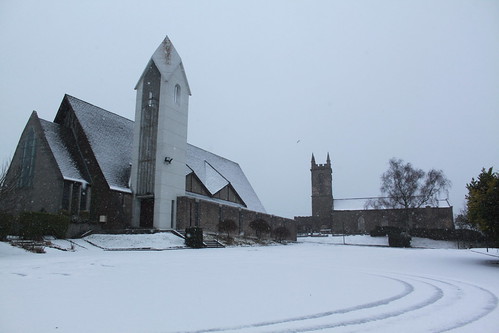
The snow is even a preacher of the gospel, as it points to the purity of the Lord Jesus (Daniel 7:9, Revelation 1:14), and the purity that is given to filthy sinners when they are cleansed by the precious blood of Jesus:
"Come now, let us reason together, says the LORD: though your sins are like scarlet, they shall be as white as snow; though they are red like crimson, they shall become like wool." (Isaiah 1:18)
As one hymnwriter puts it:
What can wash away my sin?
Nothing but the blood of Jesus;
What can make me whole again?
Nothing but the blood of Jesus.
O precious is the flow
That makes me white as snow;
No other fount I know,
Nothing but the blood of Jesus. Amen!
The snow is even a preacher of the gospel, as it points to the purity of the Lord Jesus (Daniel 7:9, Revelation 1:14), and the purity that is given to filthy sinners when they are cleansed by the precious blood of Jesus:
"Come now, let us reason together, says the LORD: though your sins are like scarlet, they shall be as white as snow; though they are red like crimson, they shall become like wool." (Isaiah 1:18)
As one hymnwriter puts it:
What can wash away my sin?
Nothing but the blood of Jesus;
What can make me whole again?
Nothing but the blood of Jesus.
O precious is the flow
That makes me white as snow;
No other fount I know,
Nothing but the blood of Jesus. Amen!
The Promise of His Coming (3)
Yesterday we saw how God chose Abram / Abraham to be the first generation of his own people, the father of a great nation, through whom all families of the earth will be blessed. As we continue to look at the promises made, we now stop on the next milestone on the way to the Lord Jesus.
Abraham was called to go to a land he did not know, where he would have a family and know the blessing of the Lord. By the time we reach Genesis 49, we're seeing the start of the fulfillments of the promise - Isaac has been born, and his son Jacob too has begun his family, gaining more descendants for Abraham. Jacob is near death, with his twelve sons gathered round him, having arrived in Egypt through God's forward planning.
Jacob is blessing his family, and says some prophetic words about each of his sons. the blessing of Judah is of particular interest to us:
Judah, your brothers shall praise you;
your hand shall be on the neck of your enemies;
your father's sons shall bow down before you.
Judah is a lion's cub;
from the prey, my son, you have gone up.
He stooped down; he crouched as a lion
and as a lioness; who dares rouse him?
The sceptre shall not depart from Judah,
nor the ruler's staff from between his feet,
until tribute comes to him;
and to him shall be the obedience of the peoples.
Binding his foal to the vine
and his donkey's colt to the choice vine,
he has washed his garments in wine
and his vesture in the blood of grapes.
His eyes are darker than wine,
and his teeth whiter than milk. (Genesis 49:8-13)
Jacob the patriarch, foresees that the king of Israel will come from Judah's line, from Judah's son. The sceptre, the sign of authority will be in the tribe of Judah, 'until tribute comes to him' (or as the footnote suggests an alternative reading, 'until he comes to whom it belongs.') This king from the tribe of Judah will have the obedience of the peoples, so that all will bow down before him.
As Israel's history is played out, we can trace the line to the shepherd king, David, of the tribe of Judah. And yet it's clear that David, powerful though his kingdom was, David was just another milestone on the way to the true fulfillment. Jacob, also known as Israel, prophesies this true king of Israel, the one who is coming, the one to whom every knee shall bow and every tongue confess that Jesus Christ is Lord, to the glory of the Father.
Abraham was called to go to a land he did not know, where he would have a family and know the blessing of the Lord. By the time we reach Genesis 49, we're seeing the start of the fulfillments of the promise - Isaac has been born, and his son Jacob too has begun his family, gaining more descendants for Abraham. Jacob is near death, with his twelve sons gathered round him, having arrived in Egypt through God's forward planning.
Jacob is blessing his family, and says some prophetic words about each of his sons. the blessing of Judah is of particular interest to us:
Judah, your brothers shall praise you;
your hand shall be on the neck of your enemies;
your father's sons shall bow down before you.
Judah is a lion's cub;
from the prey, my son, you have gone up.
He stooped down; he crouched as a lion
and as a lioness; who dares rouse him?
The sceptre shall not depart from Judah,
nor the ruler's staff from between his feet,
until tribute comes to him;
and to him shall be the obedience of the peoples.
Binding his foal to the vine
and his donkey's colt to the choice vine,
he has washed his garments in wine
and his vesture in the blood of grapes.
His eyes are darker than wine,
and his teeth whiter than milk. (Genesis 49:8-13)
Jacob the patriarch, foresees that the king of Israel will come from Judah's line, from Judah's son. The sceptre, the sign of authority will be in the tribe of Judah, 'until tribute comes to him' (or as the footnote suggests an alternative reading, 'until he comes to whom it belongs.') This king from the tribe of Judah will have the obedience of the peoples, so that all will bow down before him.
As Israel's history is played out, we can trace the line to the shepherd king, David, of the tribe of Judah. And yet it's clear that David, powerful though his kingdom was, David was just another milestone on the way to the true fulfillment. Jacob, also known as Israel, prophesies this true king of Israel, the one who is coming, the one to whom every knee shall bow and every tongue confess that Jesus Christ is Lord, to the glory of the Father.
Thursday, December 02, 2010
Sermon Audio: Colossians 3:1-11
On Sunday evening I was preaching on the Ten Commandments again, this time on No False Witness, primarily from Colossians 3. The audio is here to listen or download.
The Promise of His Coming (2)
When you think of promises in the Bible, you naturally think of Abraham. Despite his many failings, Abraham received the promises of God as the rescue mission was moved to the next level.
Wickedness has spread and contaminated everyone, ever since Adam and Eve disobeyed God's command. Things were so bad that God started all over again with Noah and his family after the flood, and yet they're still getting worse. The Tower of Babel has highlighted again the folly of human pride and self-reliance, so that people are scattered across the earth, unable to understand one another.
It's in this bleak landscape that the glorious rays of the gospel shine again, as God calls Abraham (Abram) to the unknown. God makes his great promise of a land, descendants, and blessing, through his offspring. At this point Abram is 75 and very childless, yet he believes that God can do it.
The immediate offspring is his son of promise, Isaac, and yet this promise of Genesis 12 is another pointer to the Lord Jesus, through whom the Gentiles are included in the people of God through faith. As God promises:
In you all the families of the earth shall be blessed.' (Genesis 12:3)
Abraham's family will be blessed, and yet the blessing will overflow far beyond his own boundaries so that people from every tribe and language and people and nation will share in his blessing. And it all comes through Abraham's offspring, 'Jesus Christ... the son of Abraham' (Matthew 1:1) 'so that in Christ Jesus the blessing of Abraham might come to the Gentiles, so that we might receive the promised Spirit through faith.' (Galatians 3:14)
Wickedness has spread and contaminated everyone, ever since Adam and Eve disobeyed God's command. Things were so bad that God started all over again with Noah and his family after the flood, and yet they're still getting worse. The Tower of Babel has highlighted again the folly of human pride and self-reliance, so that people are scattered across the earth, unable to understand one another.
It's in this bleak landscape that the glorious rays of the gospel shine again, as God calls Abraham (Abram) to the unknown. God makes his great promise of a land, descendants, and blessing, through his offspring. At this point Abram is 75 and very childless, yet he believes that God can do it.
The immediate offspring is his son of promise, Isaac, and yet this promise of Genesis 12 is another pointer to the Lord Jesus, through whom the Gentiles are included in the people of God through faith. As God promises:
In you all the families of the earth shall be blessed.' (Genesis 12:3)
Abraham's family will be blessed, and yet the blessing will overflow far beyond his own boundaries so that people from every tribe and language and people and nation will share in his blessing. And it all comes through Abraham's offspring, 'Jesus Christ... the son of Abraham' (Matthew 1:1) 'so that in Christ Jesus the blessing of Abraham might come to the Gentiles, so that we might receive the promised Spirit through faith.' (Galatians 3:14)
Wednesday, December 01, 2010
Spot The Difference!

Most people loved playing spot the difference as children, and some still do even as adults. Two pictures are presented which are almost identical, but there are some key differences. The hunt is on to find the differences!
The last section of the Sermon on the Mount is a bit like a spot the difference. In Matthew 7:13-27, Jesus presents four vignettes, with two people or groups appearing in each. At first glance, they look identical, and yet Jesus teaches that there's a key difference in each situation, which leads to a very different outcome.
Here's a quick table I designed for our Fellowship Group tonight which sets out the differences and the final outcomes of each.
We're all on a journey, but some are on the broad and easy way that leads to destruction while others are on the narrow way that leads to life. We're called to watch out for false teachers who look good and sound right, but are wolves on the inside, like bad trees which will only produce bad fruit. We're warned that many who call Jesus "Lord" and have lots of amazing experiences will not enter the kingdom because they didn't do the will of God and Jesus never knew them. We're reminded that to hear Jesus' words and not do them is like a foolish builder siting his house on the sand, which will fall when the storms come. Judgement exposes what's on the inside, and there will be surprises on the last day.
[Spot the difference image from here]
The Promise of His Coming (1)
The title of my intended Advent series comes from those words of the scoffers in 2 Peter 3:4. The context is that, as we wait for the return of the Lord Jesus, scoffers arise mocking the promise, as they point to the fact that 'ever since the fathers fell asleep, all things are continuing as they were from the beginning of creation.' That verse led me to think about the fact that from the beginning of creation, the first coming of the Lord Jesus has been promised and predicted. It is this theme of promise that I want to try to reflect on this Advent season.
Just as the traditional Christmas Nine Lessons and Carols service, we begin at the beginning, with the first promise, that of Genesis 3:15. God has made everything in all of creation, and it is very good. Perfection. Yet Adam and Eve, our first parents, disobey the one command that God has given them, and everything is breaking down.
God's creation is ruined, and yet, at the very moment that judgment and condemnation would be entirely appropriate, God's grace shines through, providing the first hint of our rescuer, who would overthrow our enemies of sin, the devil and death, and bring the restoration of the creation. As God judges the serpent for his part in the downfall, God points to the coming serpent crusher.
I will put enmity between you and the woman, and between your offspring and her offspring; he shall bruise your head, and you shall bruise his heel.' (Genesis 3:15)

The fatal blow would be delivered to the serpent - his head would be bruised; at the same time as the serpent bruises the serpent crusher's heel. One who would take the pain inflicted by our great enemy, at the same time as defeating that enemy.
And so, the hunt is on. God has promised a serpent crusher. We wait in anticipation.
Just as the traditional Christmas Nine Lessons and Carols service, we begin at the beginning, with the first promise, that of Genesis 3:15. God has made everything in all of creation, and it is very good. Perfection. Yet Adam and Eve, our first parents, disobey the one command that God has given them, and everything is breaking down.
God's creation is ruined, and yet, at the very moment that judgment and condemnation would be entirely appropriate, God's grace shines through, providing the first hint of our rescuer, who would overthrow our enemies of sin, the devil and death, and bring the restoration of the creation. As God judges the serpent for his part in the downfall, God points to the coming serpent crusher.
I will put enmity between you and the woman, and between your offspring and her offspring; he shall bruise your head, and you shall bruise his heel.' (Genesis 3:15)
The fatal blow would be delivered to the serpent - his head would be bruised; at the same time as the serpent bruises the serpent crusher's heel. One who would take the pain inflicted by our great enemy, at the same time as defeating that enemy.
And so, the hunt is on. God has promised a serpent crusher. We wait in anticipation.
Subscribe to:
Comments (Atom)