I'm currently reading Helen Roseveare's book 'Give Me This Mountain.' It recounts her experiences and things the Lord taught her as she offered herself for missionary work in the Congo. This piece of advice was given to her by Jack Scholes when she arrived in Congo:
If you think you have come to the mission field because you are a little better than others, or as the cream of your church, or because of your medical degree, or for the service you can render the African church, or even for the souls you may see saved, you will fail. Remember, the Lord has only one purpose ultimately for each one of us, to make us more like Jesus. He is interested in your relationship with Himself. Let Him take you and mould you as He will; all the rest will take its rightful place.
Wednesday, April 16, 2008
Tuesday, April 15, 2008
Linfield's Got The Blues
St Pat's 2 - 0 Linfield.
This evening I was just settling down to write an essay, when John came into the room, with a strong temptation. Linfield were coming down to play St Patrick's Athletic in the Setanta Cup. Could we possibly get tickets?
Initially, I was going to write the essay. But then the thought of watching the Irish League leaders in Dublin grew stronger, and I grabbed the car keys. Quick check online as to where they play, and a check of the map to see where to go, and we were off to Richmond Park.
Got parked outside the ground handy enough, and managed to get tickets in the home stand - after having proved that we were adopted Dubliners (by me producing my Trinity College student card). As a security measure, no one was allowed to buy tickets without proof of being non-Linfield fans.
So there we were, in the home stand - two seats away from me, and over the wall in the director's box was the Lord Mayor of Dublin (with a portrait of King Billy on his mayoral chain of office, nonetheless). Sitting right at the halfway line. Game on.
Linfield weren't at the game at all - maybe one chance in the first half, and a couple in the second half. St Pat's however were in a different league. The forwards seemed much faster, getting past the defenders time after time after time. After seven minutes, they were 1-0 but they should have gone in at half time leading by at least 10, the number of chances they squandered. At times it seemed as if the ball was simply refusing to go in for them.
Linfield started better in the second half, but soon St Pat's were back in their rhythm, with more relentless pressure on the Linfield defence. Near the end they got a second - a cracker goal from the edge of the box, with the Linfield keeper not even moving as he watched it fly into the net.
So a convincing win for the side that started the match bottom of the Setanta Cup group. All in all a great game to watch for the neutral supporter.
Just a few wee things were a bit troubling. During the game, some in the St Pat's terraces were chanting 'The IRA...' and waving a huge tricolour. That was at the other side of the ground from me, but it surely made me uncomfortable. the Garda operation at the end of the game was interesting, to say the least. When we made it out of the ground (well after all the Linfield supporters' buses had left), the Garda had erected a barrier across the road - with my car on the other side! A huge number of uniformed officers as well as dog handlers, horses and cops in riot gear were manning the barriers, and in the end myself and maybe twenty or so others were trapped between police lines when the riot cops moved in and drove most of the crowd back down the road (those wearing hoodies and covering their faces). Thankfully we eventually got through, but not before some of the other men in the crowd made their feelings very well known to the policemen on duty.
But the disruption wasn't too bad, and didn't spoil a good night of football, when Linfield truly had a bad case of the blues...
This evening I was just settling down to write an essay, when John came into the room, with a strong temptation. Linfield were coming down to play St Patrick's Athletic in the Setanta Cup. Could we possibly get tickets?
Initially, I was going to write the essay. But then the thought of watching the Irish League leaders in Dublin grew stronger, and I grabbed the car keys. Quick check online as to where they play, and a check of the map to see where to go, and we were off to Richmond Park.
Got parked outside the ground handy enough, and managed to get tickets in the home stand - after having proved that we were adopted Dubliners (by me producing my Trinity College student card). As a security measure, no one was allowed to buy tickets without proof of being non-Linfield fans.
So there we were, in the home stand - two seats away from me, and over the wall in the director's box was the Lord Mayor of Dublin (with a portrait of King Billy on his mayoral chain of office, nonetheless). Sitting right at the halfway line. Game on.
Linfield weren't at the game at all - maybe one chance in the first half, and a couple in the second half. St Pat's however were in a different league. The forwards seemed much faster, getting past the defenders time after time after time. After seven minutes, they were 1-0 but they should have gone in at half time leading by at least 10, the number of chances they squandered. At times it seemed as if the ball was simply refusing to go in for them.
Linfield started better in the second half, but soon St Pat's were back in their rhythm, with more relentless pressure on the Linfield defence. Near the end they got a second - a cracker goal from the edge of the box, with the Linfield keeper not even moving as he watched it fly into the net.
So a convincing win for the side that started the match bottom of the Setanta Cup group. All in all a great game to watch for the neutral supporter.
Just a few wee things were a bit troubling. During the game, some in the St Pat's terraces were chanting 'The IRA...' and waving a huge tricolour. That was at the other side of the ground from me, but it surely made me uncomfortable. the Garda operation at the end of the game was interesting, to say the least. When we made it out of the ground (well after all the Linfield supporters' buses had left), the Garda had erected a barrier across the road - with my car on the other side! A huge number of uniformed officers as well as dog handlers, horses and cops in riot gear were manning the barriers, and in the end myself and maybe twenty or so others were trapped between police lines when the riot cops moved in and drove most of the crowd back down the road (those wearing hoodies and covering their faces). Thankfully we eventually got through, but not before some of the other men in the crowd made their feelings very well known to the policemen on duty.
But the disruption wasn't too bad, and didn't spoil a good night of football, when Linfield truly had a bad case of the blues...


Monday, April 14, 2008
Passing on the Baton
 Tonight was the House Meeting in College, my last engagement as Senior Student. Don't worry, there were no tears or anything like that. In some ways, it's nice to be able to stand down and let someone else run with it.
The new Senior Student will be well known to anyone who knows my blog and Flickr buddies - Robert Ferris. I wish him God's richest blessing as he takes on the new responsibilities of the post, and leads the student body in the year ahead.
For me, the House Meeting is another sign of the nearness of the end of time in college - just one more full week of term left after this one, and then three study weeks and two of exams. It's less than nine weeks now to my (DV) ordination, and less than 14 to our wedding!
Where have the three years of college gone? Will the next three years go as quickly in Dundonald? Here's to the future, all in God's hands and God's plan.
Sunday, April 13, 2008
Jesus the Shepherd. A sermon preached in Ballyward & Rathfriland on 13th April 2008. John 10:1-10
I’m pretty sure that you have heard these words of Jesus before – ‘I am the gate for the sheep’ and (in verse 11) ‘I am the good shepherd.’ Some of you will even know sheep a lot better than me – and it’s at this point that I should probably confess that I’m a townie. So what can we really learn from our passage today? Jesus says that he is the gate and the shepherd. These words may immediately trigger pleasant thoughts and comfort, from knowing the shepherd, but I hope that you won’t stop listening because you think you know what the passage is all about already.
Or perhaps at the outset, you’re a bit confused as to what Jesus is saying. Don’t be discouraged – verse 6 tells us that his first hearers didn’t understand either.
Before we look at the passage itself, it’s vital to look at the context – to see where it fits in the Gospel of John. If you’ll look at verse 1, you’ll see that Jesus is continuing on what he’s saying from the previous chapter, so we need to remember what has happened there.
In John chapter 9, Jesus healed a man who had been born blind. There was a huge uproar among the Pharisees at this, because they didn’t know how Jesus had done it. But there was also fear and a closing of wagons – 9:22 says that the Jews had decided that those who acknowledged Jesus as the Christ would be put out of the synagogue.
After all this has happened, the man Jesus had healed finds him again, and worships him as his Lord. Jesus then says that he has come into the world for judgement – to turn things upside down so that the blind see, and those who see will become blind. Some Pharisees who hear him challenge him, and it is in Jesus’ response that today’s reading comes.
Jesus has already called the Pharisees blind, and here, it is clear that he also regards them as the thief and the robber of verse 1. Remember that these words of Jesus were not spoken to believers, but were rather spoken in judgement against the false ‘shepherds’ and leaders of God’s people. As we listen in to Jesus confronting the Pharisees, we will hear what a wonderful comfort they are to those of us who know him.
As we consider the passage, therefore, let us remember three words throughout. Shepherd, gate, and life.
In verses 2 – 5, Jesus shows that he is the shepherd of the sheep, in contrast to the thief and the robber, who climb in by some other way. Here, Jesus is using a extended metaphor, to help us to see some spiritual truth, and as he does so, uses a scriptural point of reference.
You see, in Ezekiel 34, God speaks out against the shepherds of
Jesus, in John’s Gospel, is saying, in effect, that’s me. In contrast to the thief and the robber, the Jewish leaders who were blind guides, Jesus is the true shepherd of God’s flock, God’s people.
If Jesus is the true shepherd, then, what does this actually look like? Well, look at the passage with me. Verse 3: ‘The watchman opens the gate for him, and the sheep listen to his voice. He calls out his own sheep by name and leads them out. When he has brought out all his own, he goes ahead of them, and his sheep follow him because they know his voice. But they will never follow a stranger; in fact, they will run away from him because they do not recognise a stranger’s voice.’
The image is that of a sheep pen, where there would be several flocks of sheep. But when the shepherd comes and calls, his own sheep know his voice and follow him out. More than that, though, the shepherd knows his sheep, and calls them by name. Jesus is speaking about the personal relationship, that special bond between the shepherd and his sheep, so that they will listen and obey his call. Have you heard the voice of Jesus call on your life? Have you obeyed the call?
Having left the sheep pen, the shepherd and sheep are going on a journey – to the next pen, perhaps, or for better pasture. So how does the shepherd take them where they are going? Does he climb onboard a 4by4 and get the dogs out to chase the sheep along? No, in contrast to how farmers do it today, the Middle Eastern shepherd walked in front of his sheep, and they followed him. And why is it they follow him, according to Jesus? It’s because they know his voice.
Having heard the voice of the shepherd to come out of the sheep pen, the sheep must then continue to hear and follow his voice as they travel together. It’s not that you just need to listen at the start of the journey, and then sit back and relax – the voice of the shepherd continues to call the sheep, and guide them along the way.
This is on contrast to the strangers. No matter how long or hard they call out to the sheep, the sheep won’t follow, because they don’t recognise the voice. The sheep only have ears for the Master. How about you?
Do you only have ears for the Lord? You see, sometimes it’s so easy to miss the Lord because we’re deafened by the world around us. It’s so easy to hear the voices of the strangers, which seem so friendly, calling on us to turn aside from following Jesus, to think about ourselves, or to enjoy a little forbidden pleasure along the way.
That’s why we need to always take time to hear the shepherd’s voice. It will help us stay on course, and keep us close to him. As the hymn, ‘O Jesus I have promised’ says:
O let me hear Thee speaking in accents clear and still,
Above the storms of passion, the murmurs of self will.
O speak to reassure me, to hasten or control;
O speak, and make me listen, Thou Guardian of my soul.
Jesus then goes on to ‘mix his metaphors’ to an extent, by then describing himself as the gate for the sheep. You might think this an odd thing, for Jesus to describe himself as a gate, but we’ll see what he means as he says this.
Imagine, if you can, a sheep pen, which is a circle, but the walls don’t join up. There’s a gap in the wall, obviously where the sheep can come in and out. But there’s no gate on the wall. Rather, when the sheep are inside at night, the shepherd himself lies in the gap of the wall, and becomes the gate of the sheep. He keeps the sheep in, and the predators and thieves out.
But more than that, in order for the sheep to be safe within the sheep pen, they have to enter by the gate. The shepherd therefore makes sure that his sheep are saved and protected from harm.
So I want to ask you today – have you entered by the gate? There is no other way to be saved than by coming through Jesus. As he says himself in John 14: ‘I am the way, the truth and the life. No one comes to the Father except through me.’ (John 14:6). And as Peter declared, ‘Salvation is found in no-one else, for there is no other name under heaven given to men by which we must be saved.’ (Acts 4:12).
You might be thinking, though, why you would bother being saved. What benefit is there? What’s it all about? Jesus says that ‘He will come in and go out, and find pasture.’ Pasture for the sheep is everything that the sheep needs – grass, water, rest. This is all available to the sheep who enter by the shepherd. Jesus makes it even more clear in verse 10, again stating a contrast. ‘The thief comes only to steal and kill and destroy; I have come that they may have life, and have it to the full.’
As we thought earlier about the false shepherds of
Jesus, in contrast, offers life, and life to the full. Or, as another version puts it, ‘abundant life.’ Jesus knows what you need, and is the shepherd for your journey, if you will just follow him. That’s what Jesus is declaring here, and it’s also why John records it here. This is clear from the ‘mission statement’ of John’s Gospel – the very reason he wrote his Gospel: ‘These are written that you may believe that Jesus is the Christ, the Son of God, and that by believing you may have life in his name.’ (John 20:31).
That’s the offer of the gospel in a nutshell. Jesus offers life and peace to all who will hear his voice, believe in him, and follow him. Will you hear and follow today?
Friday, April 11, 2008
His Nibs - Neil Cowley Trio
I'm not quite sure how or why, but I always seem to discover music I like a long time after everyone else has discovered it. One example was Muse - for years I had heard young Dave going on about them, but had never heard them myself. Then one day I did, and have liked their music ever since - as well as trying to work out what they're really saying on themes of sin and justice etc.
Well, the same has happened with the Neil Cowley Trio. I rarely ever watch Jools Holland, except maybe the Hootenanny Special on New Years Eve, but last week when Lynsey was home, it was on and I saw them play this track. I think they're great!
I've since discovered that they had their debut album out in 2006, and a new one just last month, but until I get them I've been listening and watching on youtube and the usual places.
Hope you like them too!
Thursday, April 10, 2008
It Is Finished - John 19:30 (CITC Exegesis Class)
Famous last words. It has been said that you can tell a lot about a person by their last words. Some famous examples include Oscar Wilde – ‘either that wallpaper goes, or I do.’ Or what about the General killed during the US Civil War whose last words were: ‘They couldn’t hit an elephant at this dist…’
As we look at the last words of Jesus, then, what do they tell us about how Jesus dies? In verse 30, we read: ‘When Jesus had received the sour wine, he said, “It is finished”, and he bowed his head and gave up his spirit.’
‘He paid a debt He did not owe;
I owed a debt I could not pay.
I needed someone to wash my sins away;
And now I sing a brand new song.
Amazing Grace the whole day long
For Jesus paid a debt that I could never pay.’
As Don Carson says, “‘It is finished’ captures only part of the meaning (of the Greek word tetelestai), the part that focuses on completion. Jesus’ work was done. But this is no cry of defeat. It refers to fulfilling one’s religious obligations. And so, on the brink of death, Jesus cries out, ‘It is accomplished!’"
Jesus’ shout was one of triumph. So let’s pray that we all will know God’s forgiveness, and the joy of sins forgiven, because Jesus has borne them in his body on the cross, and it is finished!
In Exegesis Class today, we were filmed preaching a short sermon, then in the next class we will watch it back to see what we look like!
Tuesday, April 08, 2008
Fellowship in the Gospel - Romans 1:8-15
Paul is writing to the Christians in Rome. It seems that he has wanted to visit for a long time, but hasn't been able to make it yet. In the meantime, he writes a letter to them, setting out the gospel, and also encouraging them to stand firm in the faith.
The Roman Christians are famous. Their 'faith is proclaimed in all the world.' Rightly so. These were the people who were standing out in saying 'Jesus is Lord' in the very centre of the empire, which said 'Caesar is Lord'. In Caesar's capital city, they defy the emperor to honour the King of Kings.
Paul longs to be with them, to come and see them. To that end, he says that he never ceases to pray for them, mentioning them in his prayers - with God as his witness. What a testimony, to be so confident of saying to someone that we never cease to pray for them - people he has never even met! How does our praying stand in comparison? Sometimes it can be so easy to say to someone, yeah, I'll pray for you, or I'll pray about that - but do we always remember?
Paul wants to see them, not just because of their faith, but also so that he can impart some spiritual gift to the, to strengthen them. What is it that Paul wants to give them? Nothing more than mutual encouragement, the sharing together in a common faith, being built up by hearing the faith story of fellow Christians. I love 1:12 - 'that we may be mutually encouraged by each other's faith, both yours and mine.' For so many of us, we see fellowship as the holy huddle after church, or a chance to catch up on the week's gossip, or maybe a game of ten-pin bowling. But for Paul, this gathering together, this meeting up with other Christians would be about encouragement, and being mutually encouraged. How do our times of fellowship stand in comparison?
These verses have been about fellowship - about Paul finally coming to Rome, so that he can meet these famous Christians, and be mutually encouraged. The thing that has really struck me in these verses, though, has been the final purpose of Paul's coming to Rome. I think it's also at the heart of fellowship.
Paul wants to come to Rome so that he will have some harvest there among them, as he has seen among the Gentiles in other places too. This is his obligation- his purpose - his duty - the task he has been called to fulfil - to preach to both wise and foolish. But look at verse 15 - 'So I am eager to preach the gospel to you also who are in Rome.'
Remember that Paul is writing to Christians, and yet he is eager to preach the gospel to 'you' who are in Rome. I've consulted my commentaries, and no one really seems to comment on this at all, instead focusing on Paul's eagerness or readiness. I think it's significant that Paul's method of fellowship, the way to mutually encourage is to return again to the gospel, to tell again the 'old, old story' and to preach the gospel. As we'll see soon, the gospel is the power of God for salvation. It's the secret of true fellowship.
So, then, how is your praying? How is your fellowshipping? And how is your gospelling? These three together will mutually encourage and build up the Body of Christ like nothing else can.
The Roman Christians are famous. Their 'faith is proclaimed in all the world.' Rightly so. These were the people who were standing out in saying 'Jesus is Lord' in the very centre of the empire, which said 'Caesar is Lord'. In Caesar's capital city, they defy the emperor to honour the King of Kings.
Paul longs to be with them, to come and see them. To that end, he says that he never ceases to pray for them, mentioning them in his prayers - with God as his witness. What a testimony, to be so confident of saying to someone that we never cease to pray for them - people he has never even met! How does our praying stand in comparison? Sometimes it can be so easy to say to someone, yeah, I'll pray for you, or I'll pray about that - but do we always remember?
Paul wants to see them, not just because of their faith, but also so that he can impart some spiritual gift to the, to strengthen them. What is it that Paul wants to give them? Nothing more than mutual encouragement, the sharing together in a common faith, being built up by hearing the faith story of fellow Christians. I love 1:12 - 'that we may be mutually encouraged by each other's faith, both yours and mine.' For so many of us, we see fellowship as the holy huddle after church, or a chance to catch up on the week's gossip, or maybe a game of ten-pin bowling. But for Paul, this gathering together, this meeting up with other Christians would be about encouragement, and being mutually encouraged. How do our times of fellowship stand in comparison?
These verses have been about fellowship - about Paul finally coming to Rome, so that he can meet these famous Christians, and be mutually encouraged. The thing that has really struck me in these verses, though, has been the final purpose of Paul's coming to Rome. I think it's also at the heart of fellowship.
Paul wants to come to Rome so that he will have some harvest there among them, as he has seen among the Gentiles in other places too. This is his obligation- his purpose - his duty - the task he has been called to fulfil - to preach to both wise and foolish. But look at verse 15 - 'So I am eager to preach the gospel to you also who are in Rome.'
Remember that Paul is writing to Christians, and yet he is eager to preach the gospel to 'you' who are in Rome. I've consulted my commentaries, and no one really seems to comment on this at all, instead focusing on Paul's eagerness or readiness. I think it's significant that Paul's method of fellowship, the way to mutually encourage is to return again to the gospel, to tell again the 'old, old story' and to preach the gospel. As we'll see soon, the gospel is the power of God for salvation. It's the secret of true fellowship.
So, then, how is your praying? How is your fellowshipping? And how is your gospelling? These three together will mutually encourage and build up the Body of Christ like nothing else can.
In the Newsletter
Readers of the Newsletter (which claims to be the world's oldest continuous daily newspaper), may have spotted an article on Saturday about my book - Journeying Through Irish History. For those who missed it, they have a much shorter version on the website. Didn't know it was going to be in there until I got an email from the WTV office on Friday!
Copies are still available - from myself or from the West Tyrone Voice office.
Copies are still available - from myself or from the West Tyrone Voice office.
Wednesday, April 02, 2008
Jesus is the Son of God - Romans 1:1-7
What is the resurrection all about? Why the big fuss about Easter? The fact is that there is more than one answer, it's like a diamond with multi-faceted sparkles. As you consider each side in turn, you see the different individual aspects, but together they sparkle together.
I began re-reading Romans last night, and was smacked in the face by Paul in the opening words. You know the way you know some things, but then when you revisit them, you come to see them again for the first time? The introduction of Paul's letter to the Romans was like that for me last night.
Had you asked me for a summary of Romans 1, I probably would have launched into the section on God's wrath. But there's so much more in Romans 1. In fact, there was so much in the first sentence (which lasts for seven verses!), that it was all I read last night. One sentence, I hear you say, that's not much of a Bible reading! Check out the text some time. Romans 1:1-7 is one sentence! Commas are littered through it as Paul moves from one theme to another.
Notice the development of the theme. First Paul, his identity as a servant of Christ and an apostle, set apart for the gospel of God. The gospel which was promised by God beforehand in the Scriptures through the prophets. The Gospel is about God's Son - descended from David, and declared to be Son of God through his resurrection. He's Jesus Christ the Lord.
Through Jesus, Paul (and others) have received grace and apostleship to bring the obedience of faith for the sake of his name - not just among Jews, but among all the nations, including the Romans who are called to belong to Jesus Christ. So it is to the Romans he is writing, loved by God and called to be saints. It is to them that he sends, brings, wishes, grace and peace from God our Father and the Lord Jesus Christ.
Wow! What a sentence! Paul packs so much into the sentence that you could never exhaust the glorious truth of his words.
Briefly, however, we notice some of the key themes we will find in Romans being mentioned in this opening sentence. Notice that it is God's gospel - the gospel, the good news is all the work of God from start to finish (Rom 3). Further, the gospel is centred on Jesus, man and God - which is all about the resurrection (Rom 6). Thirdly, notice the importance of what Paul is seeking to bring about in his preaching and apostleship - 'the obedience of faith.'
The obedience of faith. So often, we can detach those two concepts. We may think of faith as the intellectual assent to certain truths or statements about God. But actually, faith is the active trust in God, as opposed to trust in oneself to secure salvation. This faith is expressed and outworked in obedience - firstly the obedience to God who has commanded the gospel to be preached and obeyed, but also in obedience to the commands of God (Rom 12-14).
To put it all together. Jesus has been raised from the dead. This is the good news. It is also the proof and sign that he is the Son of God. He is the Lord Jesus Christ. the only adequate response is in the obedience of faith, as we are called to belong to Jesus Christ.
Will you trust, obey, bow down, or will you continue on your way in disobedience, rejecting Jesus as your King? What's the big fuss about Easter? Jesus is Lord! Jesus is King! Jesus is alive!
I began re-reading Romans last night, and was smacked in the face by Paul in the opening words. You know the way you know some things, but then when you revisit them, you come to see them again for the first time? The introduction of Paul's letter to the Romans was like that for me last night.
Had you asked me for a summary of Romans 1, I probably would have launched into the section on God's wrath. But there's so much more in Romans 1. In fact, there was so much in the first sentence (which lasts for seven verses!), that it was all I read last night. One sentence, I hear you say, that's not much of a Bible reading! Check out the text some time. Romans 1:1-7 is one sentence! Commas are littered through it as Paul moves from one theme to another.
Notice the development of the theme. First Paul, his identity as a servant of Christ and an apostle, set apart for the gospel of God. The gospel which was promised by God beforehand in the Scriptures through the prophets. The Gospel is about God's Son - descended from David, and declared to be Son of God through his resurrection. He's Jesus Christ the Lord.
Through Jesus, Paul (and others) have received grace and apostleship to bring the obedience of faith for the sake of his name - not just among Jews, but among all the nations, including the Romans who are called to belong to Jesus Christ. So it is to the Romans he is writing, loved by God and called to be saints. It is to them that he sends, brings, wishes, grace and peace from God our Father and the Lord Jesus Christ.
Wow! What a sentence! Paul packs so much into the sentence that you could never exhaust the glorious truth of his words.
Briefly, however, we notice some of the key themes we will find in Romans being mentioned in this opening sentence. Notice that it is God's gospel - the gospel, the good news is all the work of God from start to finish (Rom 3). Further, the gospel is centred on Jesus, man and God - which is all about the resurrection (Rom 6). Thirdly, notice the importance of what Paul is seeking to bring about in his preaching and apostleship - 'the obedience of faith.'
The obedience of faith. So often, we can detach those two concepts. We may think of faith as the intellectual assent to certain truths or statements about God. But actually, faith is the active trust in God, as opposed to trust in oneself to secure salvation. This faith is expressed and outworked in obedience - firstly the obedience to God who has commanded the gospel to be preached and obeyed, but also in obedience to the commands of God (Rom 12-14).
To put it all together. Jesus has been raised from the dead. This is the good news. It is also the proof and sign that he is the Son of God. He is the Lord Jesus Christ. the only adequate response is in the obedience of faith, as we are called to belong to Jesus Christ.
Will you trust, obey, bow down, or will you continue on your way in disobedience, rejecting Jesus as your King? What's the big fuss about Easter? Jesus is Lord! Jesus is King! Jesus is alive!
Tuesday, April 01, 2008
Monday, March 31, 2008
Holding up the Tower of Pisa!
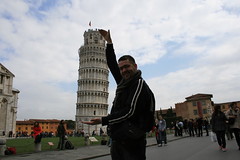
Holding up the Tower of Pisa!
Originally uploaded by Gary McMurray.
Hope you like the picture! This is me doing my bit to hold up the Leaning Tower of Pisa last week during the college trip to Italy. On Tuesday night we set off, then had Wednesday in Pisa before moving on to Florence. Sadly I can't get any photos uploaded on the college network, so it'll be the weekend before my photos are properly available to view.
The Leaning Tower of Pisa is actually the bell tower of the Duomo (Cathedral) of Pisa, of which you can see the corner at the left of the photo. Pretty impressive, all said.
For now, I'm back in Dublin, having started the last four weeks of term today. Not long to go...
Tuesday, March 25, 2008
Italia here I come...
I'm sitting all packed up and ready to hit the road. Heading off to Pisa and Florence with some friends. So there'll probably be no coverage until I return on Saturday night. You can also expect plenty of photos as my memory card is ready and the three batteries are fully charged! Ciao!
Sunday, March 23, 2008
Empty! Risen!

nothere2
Originally uploaded by dtcchc.
1 Now on the first day of the week Mary Magdalene came to the tomb early, while it was still dark, and saw that the stone had been taken away from the tomb. 2So she ran and went to Simon Peter and the other disciple, the one whom Jesus loved, and said to them, "They have taken the Lord out of the tomb, and we do not know where they have laid him." 3 So Peter went out with the other disciple, and they were going toward the tomb. 4Both of them were running together, but the other disciple outran Peter and reached the tomb first. 5And stooping to look in, he saw the linen cloths lying there, but he did not go in. 6Then Simon Peter came, following him, and went into the tomb. He saw the linen cloths lying there, 7and the face cloth, which had been on Jesus’ head, not lying with the linen cloths but folded up in a place by itself. 8Then the other disciple, who had reached the tomb first, also went in, and he saw and believed; 9for as yet they did not understand the Scripture, that he must rise from the dead. 10Then the disciples went back to their homes. (John 20:1-10)
Saturday, March 22, 2008
Crown of Thorns
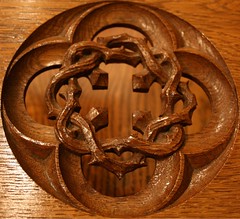
Crown of Thorns
Originally uploaded by Gary McMurray.
When I survey the wondrous cross
on which the Prince of Glory died;
my richest gain I count but loss,
and pour contempt on all my pride.
Forbid it, Lord, that I should boast,
save in the death of Christ, my God;
all the vain things that charm me most,
I sacrifice them to his blood.
See, from his head, his hands, his feet,
sorrow and love flow mingled down.
Did e'er such love and sorrow meet,
or thorns compose so rich a crown.
Were the whole realm of nature mine,
that were an offering far too small;
love so amazing, so divine,
demands my soul, my life, my all.
[Photo of Lectern on the Lord's Table in St John's Church, Rathfriland]
Friday, March 21, 2008
'It is finished' - John 19:30
Why is Good Friday called that? What makes it so good? Tonight we come to the cross, having looked at John's account of the passion every night this week. We ascend to Calvary mount, to Golgotha, that place of the skull to behold the cross of Christ.
To some, Good Friday was a great day. The Jewish chief priests and elders had a good day. Their rival, that troublemaker, Jesus, was out of the way. they had persuaded, or pressured, Pilate into crucifying him.
The soldiers had a good day. After all, it was work as usual, crucifying another few Jewish peasants. Just what they deserved. There was a bonus though. That mysterious one they called the King of the Jews had some items of clothing, which the soldiers divided among them [fulfilling Scripture as they did so]. One lucky soldier even got the seamless robe.
Pilate might even have felt like he had a good day. Having been bullied by the Jews into crucifying Jesus, he won a minor victory against them after they complained about the sign on the cross. It was the custom, you see, to erect a sign over the crucified to proclaim their misdeeds, to discourage anyone else from getting involved in similar antisocial behaviours. The Jews complained because Pilate had written 'Jesus of Nazareth, the King of the Jews.' They preferred 'this man said he was the king of the Jews.' But Pilate won, refusing to change the script, saying 'what I have written, I have written.' The sign proclaimed, in three languages - the languages of the worlds of religion, wisdom and empire the kingship of Christ.
For the followers of Jesus, though, it was a bad day. Most had fled before the day came to pass, but still the women followed closely, and the beloved disciple (John). Their Master, Rabbi, Teacher, Friend, had been tried and shown to be without fault, yet was cruelly crucified. Their hopes of seeing David's kingdom restored had come to nothing. Jesus was dying on a cross. It was a bad day.
So why do we call it Good Friday? What is so good about Jesus dying on the cross? Well, think about the words in the title - 'It is finished.' This was not the cry of anguished desperation, of resignation. This was not the cry of defeat.
Rather, as Jesus cries out 'It is finished' he declares his victory. He proclaims that the suffering due to us for our sins has been endured, paid for, finished.
Recently I was out for a meal with the family, and it came time to pay. I went up to the till, gave over the money, and do you know what they did with the bill? The guy took it, and impaled it on a nail. When the bill went on the nail, it showed that it was paid. Completed. No more needs to be done. The bill is satisfied. No more claim over me. No debt outstanding. Finished.
Good Friday is called Good Friday, because Jesus died in our place, taking the punishment due for our sins, paying the debt that we could not pay, and it is finished!
To some, Good Friday was a great day. The Jewish chief priests and elders had a good day. Their rival, that troublemaker, Jesus, was out of the way. they had persuaded, or pressured, Pilate into crucifying him.
The soldiers had a good day. After all, it was work as usual, crucifying another few Jewish peasants. Just what they deserved. There was a bonus though. That mysterious one they called the King of the Jews had some items of clothing, which the soldiers divided among them [fulfilling Scripture as they did so]. One lucky soldier even got the seamless robe.
Pilate might even have felt like he had a good day. Having been bullied by the Jews into crucifying Jesus, he won a minor victory against them after they complained about the sign on the cross. It was the custom, you see, to erect a sign over the crucified to proclaim their misdeeds, to discourage anyone else from getting involved in similar antisocial behaviours. The Jews complained because Pilate had written 'Jesus of Nazareth, the King of the Jews.' They preferred 'this man said he was the king of the Jews.' But Pilate won, refusing to change the script, saying 'what I have written, I have written.' The sign proclaimed, in three languages - the languages of the worlds of religion, wisdom and empire the kingship of Christ.
For the followers of Jesus, though, it was a bad day. Most had fled before the day came to pass, but still the women followed closely, and the beloved disciple (John). Their Master, Rabbi, Teacher, Friend, had been tried and shown to be without fault, yet was cruelly crucified. Their hopes of seeing David's kingdom restored had come to nothing. Jesus was dying on a cross. It was a bad day.
So why do we call it Good Friday? What is so good about Jesus dying on the cross? Well, think about the words in the title - 'It is finished.' This was not the cry of anguished desperation, of resignation. This was not the cry of defeat.
Rather, as Jesus cries out 'It is finished' he declares his victory. He proclaims that the suffering due to us for our sins has been endured, paid for, finished.
Recently I was out for a meal with the family, and it came time to pay. I went up to the till, gave over the money, and do you know what they did with the bill? The guy took it, and impaled it on a nail. When the bill went on the nail, it showed that it was paid. Completed. No more needs to be done. The bill is satisfied. No more claim over me. No debt outstanding. Finished.
Good Friday is called Good Friday, because Jesus died in our place, taking the punishment due for our sins, paying the debt that we could not pay, and it is finished!
Thursday, March 20, 2008
Behold The Man. Behold Your King! John 19:5, 14
We're continuing our studies in John's Gospel through this Holy Week. Tonight we're going to look at 19:1-16. Last night we looked at the start of Pilate's trial, and we're still there tonight.
First, notice the injustice of the situation. Pilate has already declared that he has found no guilt in Jesus. He has done nothing wrong. Innocent of all charges. Yet he sends Jesus off to be flogged! Is he trying to satisfy the bloodthirsty crowd roughing Jesus up a bit and then release him? The account is sparse - 'Then Pilate took Jesus and flogged him.' (19:1) Not in the Bible do we find the extreme violence, the drawn out details of the flogging, as we find in Mel Gibson's 'The Passion of the Christ.' Rather, we see the highly ironic actions of the soldiers, who, just like Pilate, fail to recognise the king in front of them.
Watch as they twist together the crown - of thorns. The thorns pierce his brow, the blood trickling. Then they produce a purple robe, fit for their 'mock' king, as they bow in false homage.
It is in this state, crowned with the thorns, in a royal robe, that Pilate brings Jesus out to show he has found no guilt in him. Beaten, flogged, crowned. Behold the man!
What love he shows to us, in enduring all this for us. Behold the man!
And yet, the ordeal is not over. The chief priests aren't satisfied with all that has happened. Crucify, is their shout. the flogging wasn't enough, they want Jesus dead. Pilate again tries to prevent it, asking why he should die, when he hasn't done anything wrong. The crowd shouts that he has made himself the Son of God. How wrong could they be! He didn't make himself the Son of God, he was the Son of God!
Notice that this is what puts the wind up Pilate. To hear that Jesus is, or claims to be the Son of God, makes him worried and afraid. What is really going on? Who is this prisoner? Back he goes again to interview Jesus for the final time. Where are you from? But Jesus doesn't answer. Like a lamb before its shearers is silent, so Jesus doesn't speak.
This seems to infuriate Pilate all the more. After all, does he not realise who Pilate is? As representative of Caesar, he has power over Jesus, either for life or death. But Jesus reminds him of the real authority in the world. Caesar rules because all authority has been granted by God. this would not happen without the Father's consent and plan. But there will be consequences - 'therefore he who delivered me over to you has the greater sin.' No doubt about it - the Father willed what happened as he gave his only Son to be lifted on the cross. But those responsible will bear the consequences and penalty of the sin.
Pilate is worried. From now on he seeks to release Jesus, but the crowd become more restless, and all the more insistent that Jesus must die. After all, if Jesus claims to be a king, then he sets himself up against Caesar. And if Caesar wouldn't like that, then how can Pilate tolerate it?
Here we come to the moment of decision. Here we come to the crucial (literally - crucial has its etymological roots in the word cross) moment in Pilate's life, and also in the life of the Jews.
Last night we saw that the Jews chose Barabbas over Jesus. Would they remain in their choice?
Pilate declares 'Behold your king.' Recognise your ruler. See your Messiah, the desire of the ages. Choose life. Choose him.
How devastating the answer of the Jews. 'We have no king but Caesar.' Caesar, remember, was the head of the occupying army. Caesar was an unclean Gentile, whose palace they could not enter to remain clean to eat the Passover. Yet here they chose the world over Jesus. They chose the kingdoms of this world against the King of Kings and Lord of Lords. They finally and completely decide against Jesus.
How sad. How terrible. In our sin, we choose to rebel against the rightful rule of God. Here, the crowd that day continued in their rebellion, choosing against Jesus.
Please do not choose against Jesus! He is the one who bore your sin. He is the one who carried your burden to Calvary. He is the one who loves you so much that he died in your place.
The decision has been made. Pilate sides with it. Jesus is handed over to be crucified.
Behold the man, and behold your king. Will you stand for him?
First, notice the injustice of the situation. Pilate has already declared that he has found no guilt in Jesus. He has done nothing wrong. Innocent of all charges. Yet he sends Jesus off to be flogged! Is he trying to satisfy the bloodthirsty crowd roughing Jesus up a bit and then release him? The account is sparse - 'Then Pilate took Jesus and flogged him.' (19:1) Not in the Bible do we find the extreme violence, the drawn out details of the flogging, as we find in Mel Gibson's 'The Passion of the Christ.' Rather, we see the highly ironic actions of the soldiers, who, just like Pilate, fail to recognise the king in front of them.
Watch as they twist together the crown - of thorns. The thorns pierce his brow, the blood trickling. Then they produce a purple robe, fit for their 'mock' king, as they bow in false homage.
It is in this state, crowned with the thorns, in a royal robe, that Pilate brings Jesus out to show he has found no guilt in him. Beaten, flogged, crowned. Behold the man!
What love he shows to us, in enduring all this for us. Behold the man!
And yet, the ordeal is not over. The chief priests aren't satisfied with all that has happened. Crucify, is their shout. the flogging wasn't enough, they want Jesus dead. Pilate again tries to prevent it, asking why he should die, when he hasn't done anything wrong. The crowd shouts that he has made himself the Son of God. How wrong could they be! He didn't make himself the Son of God, he was the Son of God!
Notice that this is what puts the wind up Pilate. To hear that Jesus is, or claims to be the Son of God, makes him worried and afraid. What is really going on? Who is this prisoner? Back he goes again to interview Jesus for the final time. Where are you from? But Jesus doesn't answer. Like a lamb before its shearers is silent, so Jesus doesn't speak.
This seems to infuriate Pilate all the more. After all, does he not realise who Pilate is? As representative of Caesar, he has power over Jesus, either for life or death. But Jesus reminds him of the real authority in the world. Caesar rules because all authority has been granted by God. this would not happen without the Father's consent and plan. But there will be consequences - 'therefore he who delivered me over to you has the greater sin.' No doubt about it - the Father willed what happened as he gave his only Son to be lifted on the cross. But those responsible will bear the consequences and penalty of the sin.
Pilate is worried. From now on he seeks to release Jesus, but the crowd become more restless, and all the more insistent that Jesus must die. After all, if Jesus claims to be a king, then he sets himself up against Caesar. And if Caesar wouldn't like that, then how can Pilate tolerate it?
Here we come to the moment of decision. Here we come to the crucial (literally - crucial has its etymological roots in the word cross) moment in Pilate's life, and also in the life of the Jews.
Last night we saw that the Jews chose Barabbas over Jesus. Would they remain in their choice?
Pilate declares 'Behold your king.' Recognise your ruler. See your Messiah, the desire of the ages. Choose life. Choose him.
How devastating the answer of the Jews. 'We have no king but Caesar.' Caesar, remember, was the head of the occupying army. Caesar was an unclean Gentile, whose palace they could not enter to remain clean to eat the Passover. Yet here they chose the world over Jesus. They chose the kingdoms of this world against the King of Kings and Lord of Lords. They finally and completely decide against Jesus.
How sad. How terrible. In our sin, we choose to rebel against the rightful rule of God. Here, the crowd that day continued in their rebellion, choosing against Jesus.
Please do not choose against Jesus! He is the one who bore your sin. He is the one who carried your burden to Calvary. He is the one who loves you so much that he died in your place.
The decision has been made. Pilate sides with it. Jesus is handed over to be crucified.
Behold the man, and behold your king. Will you stand for him?
Wednesday, March 19, 2008
Not of this world: A sermon preached in Magheralin on the Wednesday of Holy Week, 19th March 2008. John 18:28-40
I wonder what you think of when you hear the word kingdom. Perhaps you think of golden crowns with sparkly diamonds, or huge palaces, or big thrones. You might even wonder what colour the Queen will wear tomorrow when she visits Armagh Cathedral. Our minds naturally picture the earthly trappings of kingship.
Or maybe when you think of kingdoms you immediately think of borders and land and territory. Nowadays on the journey to
So when we hear Jesus saying in our reading tonight that ‘My kingdom is not of this world’ (36), we may well wonder what he is talking about. Remember that this is Jesus the prisoner, Jesus the one who has been arrested and faced trials in the houses of Annas and Caiaphas; Jesus the one who has been struck in the face already.
Moreover, this is Jesus the prisoner, standing in the
As we look at the passage tonight, we will see three kingdoms interacting. Two are very much of the world, and stand in stark contrast to the
Firstly, we are introduced to the kingdom of the religious, the Jews. We have already seen in John 18 that they arrested Jesus and now bring him to Pilate. They want Pilate to get rid of Jesus for them, in the cruelest way possible, because they can’t do it themselves.
Look at verse 28. Here you see how religion holds their allegiance. They live their life based on following the rules. ‘By now it was early morning, and to avoid ceremonial uncleanness the Jews did not enter the palace; they wanted to be able to eat the Passover.’ It didn’t matter that they were trying to kill a man, so long as they were clean to eat the Passover!
Notice also that for them, truth was compromised, just so long as they got rid of Jesus. When Pilate asks them why they have handed him over, they don’t outline the charges, or explain what he has done. Rather, they say that they wouldn’t have handed Jesus over if he wasn’t a criminal. What strange logic!
However, the saddest thing is that these were the very people who should have recognised Jesus as their king. These were the Jews, the people of God, who were waiting for their Messiah – the anointed one who would free them from slavery and restore the kingdom of their father David.
But what did they do? In Pilate’s own words, verse 35. ‘It was your people and your chief priests who handed you over to me. What is it you have done?’ These were the people who were meant to be Jesus’ people. How sad, that they rejected their own king.
Right back at the very start of John’s Gospel, we read that this would happen. John 1:11 says that ‘He came to that which was his own, but his own did not receive him.’ How terrible that word of judgement – his own people refused to receive him!
Could that be said of you tonight? As we gather here tonight, we identify with the people of God, and yet we may not recognise King Jesus. We appear religious, but its just that – our allegiance is to being a good Protestant, or a good member of the
Or maybe your king tonight isn’t religion. Perhaps the king of your heart is power and wealth. Pilate had plenty of those. As I’ve said, Pilate was the Roman governor, the personal representative of Caesar in
The Romans had become the major kingdom of the world by conquest, and the weapons of the world. Their kingdom was most certainly of this world. For Pilate, then, to hear that Jesus claims to be the King of the Jews, is to suspect that Jesus will bring revolution and rebellion against the Roman powers. His own position could be threatened.
These rebellions were quite common – after all, the choice given to the crowd in verse 40 is between Jesus and Barabbas (who had taken part in a rebellion). Was Jesus just another of these rebel leaders who got a few followers together, a few weapons gathered, and launched a bid to get rid of the Romans? Was Pilate’s position threatened?
Yet despite his lofty position, Pilate seems out of his depth. The Jews refused to come into the palace for the trial, so Pilate himself scurries back and forth between the Jews and Jesus. Despite being the governor, the supreme judge in the area, it appears that Pilate is on trial, rather than Jesus. See him running back and forth, trying to prevent trouble and riots, yet also trying to stop Jesus from being crucified.
As we move into chapter 19 we find him becoming more and more desperate as the situation worsens for him. Yet even here, we see that power and wealth could not save Pilate. He stumbles, groping for answers, and then in verse 38 asks that question ‘What is truth?’ not realising that the one who said ‘I am the way and the truth and the life’ stands before him.
Are you blinded by power or wealth? We strive so hard to make it to the top of the pile, and then think that we have all we need. Even when Pilate exclaims that ‘You are a king, then’, still he doesn’t get it. Or maybe you’re concerned with your own position, and view potential rivals as a threat.
So the kingdom of religion doesn’t work, and the kingdom of power and wealth doesn’t work. What is it Jesus means when he declares that ‘my kingdom is not of this world’?
Well, as we have already seen, Jesus states that his kingdom is not an earthly kingdom. Up until this point, the Jewish nation had been the people of God, simply because they were the descendants of Abraham. There was a geographical boundary, and it could be observed. To use a definition of God’s kingdom – God’s people in God’s place under God’s rule enjoying God’s blessing.
So the Jewish people lived in the
This is precisely what Jesus is getting at when he says in verse 36 – ‘My kingdom is not of this world. If it were, my servants would fight to prevent my arrest by the Jews. But now my kingdom is from another place.’
My kingdom is from another place. In order to see the people of God, you can’t look at the people of
Jesus was not establishing a new state on earth, a new country, with borders and taxation and an army to rival the
You see, Jesus’ kingdom is not like the
This is the
First Jesus says what his kingdom is not – not of this world. But then he turns it around and speaks of what his kingdom is like.
Jesus says ‘You are right in saying I am a king. In fact, for this reason I was born, and for this I came into the world, to testify to the truth.’ (37) Do you see the double purpose – that Jesus was born to be king, and that he came into the world to testify to the truth.
The question remains then, how do we become part of Jesus’ kingdom? How do we crown Jesus as our king? Look at verse 37. ‘Everyone on the side of truth listens to me.’
Ultimately, all other claims of kingship are false. Jesus is the way, the truth and the life, and he testifies to the truth. We, just like Pilate, have a choice – to listen to the truth and recognise Jesus as our king; or to listen to the lies of the world, whether of power and wealth, or of religion. In the end, we can only crown one king – who will it be?
So be it Lord, thy throne shall never,
Like earth's proud empires, pass away
Thy kingdom stands, and grows forever,
Till all thy creatures own thy sway.
Tuesday, March 18, 2008
I Am Not - John 18:17, 25
Last night we thought about the words of Jesus as he identified himself, displaying a spark of his divinity in the words 'I am he.' Tonight, we have a similar phrase, again three words, but with the last word completely different. Not on the lips of Jesus, but on the lips of Peter, as he denies his Master and Lord.
Jesus had previously warned Peter that he would deny him three times - 'Truly, truly, I say to you, the rooster will not crow till you have denied me three times.' (John 13:38). But that was hours ago. Jesus had been arrested and taken to the high priest's house. Following at a distance, Peter and 'another disciple' (was it John?) made it to the house.
The other disciple knew the high priest and was able to get into the courtyard, but Peter was outside. So the other disciple spoke to the servant girl at the door, and brings Peter inside. From my reading of the text it seems that the servant girl knows that John is a disciple of Jesus - so there's no issue. But when she asks Peter 'You also are not one of this man's disciples, are you?' Peter denies it with that sentence: 'I am not.'
Gone is the bravado of the garden, where Peter chopped off the ear of one of the servants. Gone is the outspoken Peter who had tried to tell Jesus that he didn't have to go the way of the cross.
In the face of a servant girl - what threat? Was it fear, or shame, or what? He denies that he is a disciple of Jesus. Oh Peter.
Inside, in the courtyard, it's a bit nippy, so a fire has been lit - note, a charcoal fire, verse 18 (leap over to John 21:9 to see another charcoal fire, this time for a beach barbecue, where Jesus restores Peter, but that's for another blog!). More servants of the high priest are standing warming themselves, and again the question comes. 'You also are not one of his disciples, are you?' Again, Peter supplies the short answer, 'I am not.' Oh Peter.
We then see the expert witness appear. One of the servants is a relative of the man whose ear Peter had lopped off not too long before. He had been in the garden and seen what happened. So he asks 'Did I not see you in the garden with him?' Surely you can't deny it, after wielding a sword and wreaking havoc with a servant's ear. Yet for the third time, Peter denies it, and bang on time, the rooster crows.
Oh Peter.
Are there times that we deny our Lord? Maybe it's in school or work or university, when someone asks 'You're not a Christian, are you?' Is it easier to say no, than to face the possible questions or ridicule? Or when we give in to those around us, following their example, caving in to pressure to conform, to be like them. Or in our private lives, when our actions deny our faith.
Jesus said that it would not be easy to follow him. If the world hated him, then it will also hate us, if we are his. Yet we take heart, because Jesus has overcome the world - he who is in us, is greater than he that is in the world. We do not need to fear.
What will your answer be when others ask you 'You also are not one of this man's disciples are you?'
Well, are you?
Jesus had previously warned Peter that he would deny him three times - 'Truly, truly, I say to you, the rooster will not crow till you have denied me three times.' (John 13:38). But that was hours ago. Jesus had been arrested and taken to the high priest's house. Following at a distance, Peter and 'another disciple' (was it John?) made it to the house.
The other disciple knew the high priest and was able to get into the courtyard, but Peter was outside. So the other disciple spoke to the servant girl at the door, and brings Peter inside. From my reading of the text it seems that the servant girl knows that John is a disciple of Jesus - so there's no issue. But when she asks Peter 'You also are not one of this man's disciples, are you?' Peter denies it with that sentence: 'I am not.'
Gone is the bravado of the garden, where Peter chopped off the ear of one of the servants. Gone is the outspoken Peter who had tried to tell Jesus that he didn't have to go the way of the cross.
In the face of a servant girl - what threat? Was it fear, or shame, or what? He denies that he is a disciple of Jesus. Oh Peter.
Inside, in the courtyard, it's a bit nippy, so a fire has been lit - note, a charcoal fire, verse 18 (leap over to John 21:9 to see another charcoal fire, this time for a beach barbecue, where Jesus restores Peter, but that's for another blog!). More servants of the high priest are standing warming themselves, and again the question comes. 'You also are not one of his disciples, are you?' Again, Peter supplies the short answer, 'I am not.' Oh Peter.
We then see the expert witness appear. One of the servants is a relative of the man whose ear Peter had lopped off not too long before. He had been in the garden and seen what happened. So he asks 'Did I not see you in the garden with him?' Surely you can't deny it, after wielding a sword and wreaking havoc with a servant's ear. Yet for the third time, Peter denies it, and bang on time, the rooster crows.
Oh Peter.
Are there times that we deny our Lord? Maybe it's in school or work or university, when someone asks 'You're not a Christian, are you?' Is it easier to say no, than to face the possible questions or ridicule? Or when we give in to those around us, following their example, caving in to pressure to conform, to be like them. Or in our private lives, when our actions deny our faith.
Jesus said that it would not be easy to follow him. If the world hated him, then it will also hate us, if we are his. Yet we take heart, because Jesus has overcome the world - he who is in us, is greater than he that is in the world. We do not need to fear.
What will your answer be when others ask you 'You also are not one of this man's disciples are you?'
Well, are you?
Monday, March 17, 2008
I Am He - John 18:5
It is Monday in Holy Week, and I'm going to try to blog something from the Gospel reading of each night this week. Wednesday's will be longer as I'm preaching in Magheralin. Thursday's will be done at some point as I won't be at church - I'm going under the hammer knife. Just minor operation, nothing too serious.
Tonight's reading was John 18:1-14, 19-24. Here we find John's account of the arrest of Jesus in the garden across the Kidron Valley (Gethsemane). It was a place that Jesus knew well, for he had often taken his disciples there. Could this have been a regular place of prayer while in Jerusalem, away from the crowds? It appears that it was also familiar to Judas, who hadn't went with Jesus that night - having departed from the meal early 'and it was night.'
As Judas brings the band of soldiers and the officers up the Kidron Valley, in darkness, with them carrying torches, lanterns and weapons, Jesus takes the initiative. Notice how Jesus is in control. While John doesn't record the anguish in the garden, there is space for it to have happened. Consider verse 4 - 'Then Jesus, knowing all that would happen to him, came forward and said to them...'
Jesus, the Alpha and the Omega, the beginning and the end, knows all that will happen to him. But he doesn't shrink back from it. He is committed to the Father's will, to fulfilling the scripture (verse 9). So he comes forward to them and addresses them directly. 'Whom do you seek?'
Their answer could not be more earthy. They are seeking Jesus of Nazareth. The man from Nazareth. But look at the answer Jesus gives them, and their response.
'Jesus said to them "I am he" ... they drew back and fell to the ground.'
εγω ειμι - 'I am' says Jesus, and we see just a spark of his divine glory and power. You may know already that seven times in John's Gospel Jesus speaks of himself saying 'I am ...' the bread of life; the light of the world; the door of the sheep; the good shepherd; the way, the truth and the life; the resurrection and the life; the true vine. In all these 'I am' statements, but more especially here, he reveals himself as God incarnate. 'I am' is the divine name of Yahweh, Jehovah, 'I AM WHO I AM' (Exodus 3:14).
Just as Philippians 2 tells us that every name will bow at the name of Jesus, so here we see the burly soldiers literally falling back to the ground as Jesus speaks and reveals a glimpse of his glory. How great is our God!
At this point the soldiers are on the ground, so Jesus calmly asks them again who they are looking. Again, they respond by saying his name, and again he tells them who he is. Can you see again how Jesus is in control? He ensures that the disciples will not be arrested, but will be free to escape, fulfilling scripture.
And then, in steps Peter. Peter the impetuous. Peter the one who speaks or acts, then thinks about it a week or so later. Out comes the sword, and off comes the ear of Malchus, the high priest's servant. Notice again that Jesus is concerned with fulfilling the Father's will, as he commits himself to drink the cup that the Father has given him.
Even in the midst of arrest and trial, Jesus is in control, knowing what the future holds for him, yet willingly going to the cross, suffering the shame. All in order for us to be reconciled to God, so that not one of those the Father has given him may be lost (see John 6:37, 39, 40, 44; John 10:28-29)
Tonight's reading was John 18:1-14, 19-24. Here we find John's account of the arrest of Jesus in the garden across the Kidron Valley (Gethsemane). It was a place that Jesus knew well, for he had often taken his disciples there. Could this have been a regular place of prayer while in Jerusalem, away from the crowds? It appears that it was also familiar to Judas, who hadn't went with Jesus that night - having departed from the meal early 'and it was night.'
As Judas brings the band of soldiers and the officers up the Kidron Valley, in darkness, with them carrying torches, lanterns and weapons, Jesus takes the initiative. Notice how Jesus is in control. While John doesn't record the anguish in the garden, there is space for it to have happened. Consider verse 4 - 'Then Jesus, knowing all that would happen to him, came forward and said to them...'
Jesus, the Alpha and the Omega, the beginning and the end, knows all that will happen to him. But he doesn't shrink back from it. He is committed to the Father's will, to fulfilling the scripture (verse 9). So he comes forward to them and addresses them directly. 'Whom do you seek?'
Their answer could not be more earthy. They are seeking Jesus of Nazareth. The man from Nazareth. But look at the answer Jesus gives them, and their response.
'Jesus said to them "I am he" ... they drew back and fell to the ground.'
εγω ειμι - 'I am' says Jesus, and we see just a spark of his divine glory and power. You may know already that seven times in John's Gospel Jesus speaks of himself saying 'I am ...' the bread of life; the light of the world; the door of the sheep; the good shepherd; the way, the truth and the life; the resurrection and the life; the true vine. In all these 'I am' statements, but more especially here, he reveals himself as God incarnate. 'I am' is the divine name of Yahweh, Jehovah, 'I AM WHO I AM' (Exodus 3:14).
Just as Philippians 2 tells us that every name will bow at the name of Jesus, so here we see the burly soldiers literally falling back to the ground as Jesus speaks and reveals a glimpse of his glory. How great is our God!
At this point the soldiers are on the ground, so Jesus calmly asks them again who they are looking. Again, they respond by saying his name, and again he tells them who he is. Can you see again how Jesus is in control? He ensures that the disciples will not be arrested, but will be free to escape, fulfilling scripture.
And then, in steps Peter. Peter the impetuous. Peter the one who speaks or acts, then thinks about it a week or so later. Out comes the sword, and off comes the ear of Malchus, the high priest's servant. Notice again that Jesus is concerned with fulfilling the Father's will, as he commits himself to drink the cup that the Father has given him.
Even in the midst of arrest and trial, Jesus is in control, knowing what the future holds for him, yet willingly going to the cross, suffering the shame. All in order for us to be reconciled to God, so that not one of those the Father has given him may be lost (see John 6:37, 39, 40, 44; John 10:28-29)
Un-tolled Delights
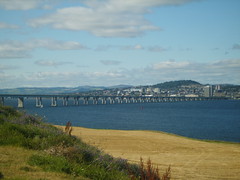
Tay Road Bridge
Originally uploaded by Gary McMurray.
Do you like the pun? As you probably know, I was over in Scotland last week, visiting Lynsey in Dundee. It was during my trip that I discovered that the tolls on the Tay and Forth road bridges have been removed, allowing free passage both ways! Up to recently, there was a cost of about £1 when leaving both Dundee and Edinburgh (but travelling the other direction was free).
The bridges are now free and easy in both directions, which was a big bonus, as Lynsey is currently working in Newport and Tayport, two small villages across the river from Dundee. I had the car over with me, and was able to drop her off to work and then go exploring and photographing!
There was one downside though. On Wednesday I set off for Edinburgh and got across the Forth Bridge without any hassle. When I was coming back, though, the Forth Bridge was closed, so I had to follow a huge diversion towards Kincardine Bridge. Eventually though, the queues were so massive and so long that I set off for Stirling, Perth and Dundee in a long circuitous route... Added about 60 or more miles to my return journey but it was still probably quicker than sitting on that motorway!
So there we are with my untold delights!
Subscribe to:
Posts (Atom)