Wednesday, November 03, 2010

McFlurry's McLinks (17)

Time for another batch of links to the best of what I've been reading on the internet over this past wee while. Lots of links - I'll try not to leave it so long before the next batch!

On the ministry front, Kevin DeYoung had two batches of advice for theological students and young pastors. Proc Trust have started a blog with some useful articles, including preventing boring sermon illustrations. Irish Calvinist asks why pastors are fat. Ugley Vicar preached on the New Perspective, the Pharisee and the Tax Collector!

Some amazing pictures for you to look at: Abraham Piper linked to a nuts and bolts chess set, as well as a hilarious literalist rendering of Solomon's wife (Dontcha wish your girlfriend was hot like her?!), the ultimate preaching trick, and the comparative size of Africa. Belfast Taxi Driver highlighted the screme egg, while Quaerentia linked to amazing photos of the Northern Lights.

DeYoung ponders tormented souls and reasons reason, while Scrabo Power is worried about the next big thing. It's slightly out of date now as he's long gone, but étrangère had an open letter to Benedict when he visited the UK Great Britain. Irish Calvinist thinks about the Gospel and the Koran. The Simple Pastor studied the word call in the Bible. Good stuff. The Vicar's Wife is ready to meditate.

Jonny's Romantic Instructions charts his course from couch to competitor. Benyong gives some advice for new medical students and wonders if the Bible is like a software licence. Trevin Wax had some English expressions and where they came from. Normal Life Adventure shared an alarming story.

Archbishop Cranmer wants to put Cliff Richard at Christmas Number One. Meanwhile, on a Hallowe'en theme (too late for this year but useful for next!) Captive Thoughts looked at resisting the devil while the Vicar's Wife had some Christian pumpkins.

In politics, could we eventually see a united Ireland, united under the Union Jack again?

For the video this time, the Vicar's Wife linked to this Bible in a minute:


This second video had to be shared - the trailer for the new Narnia film!

Tuesday, November 02, 2010

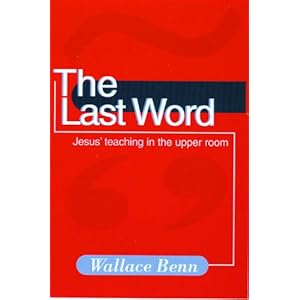
Book Review: The Last Word


This is the second book with this title that I've read and reviewed this year, the other being John Stott's farewell at Keswick. This volume is an older book, originally written in 1996 and republished. The author is Wallace Benn, Bishop of Lewes, who we recently had at our harvest weekend, and who has appeared on Top Gear!

The Last Word for Benn is Jesus' teaching in the upper room, found in John 13-17. The book is broken into five sections - the last demonstration; the last question time; the last gift; last perspectives; and lasting joy. Through these sections, the shorter chapters work through John's gospel in turn, expounding the essential message of Jesus' farewell discourse.

Benn helpfully identifies straight away the key focus of these chapters, the thing that makes sense of them: 'The death of Christ is the focus and backdrop to the dramatic and powerful actions and words of these chapters.' Indeed, 'it is the laying down of Jesus' life which brings glory to God.'

Similarly, he deals with the questions of the disciples, which are our questions too, by bringing us back to Jesus' teaching: 'We find not only four questions from troubled hearts, but four answers for troubled hearts from the lips of the Lord Jesus himself.' Perhaps the most useful section was the two chapters dedicated to the person and work of the Holy Spirit - a subject of much confusion in the church today.

Benn is a great Bible teacher, with great turns of phrase ('we have all known people who have confused uprightness with uptightness'), as well as a pastor's heart to illustrate and apply the teaching directly to the heart of the reader. To some extent, Benn covers the same section of John's Gospel as Don Carson's book 'Jesus and His Friends' but this is much more accessible and easy to read!

One slight complaint about the book is that the same illustration is used virtually verbatim on pages 65 and 141, without any indication that it has previously been used. In an original sermon series this wouldn't be just as obvious or noticeable, but when you're reading through the book and find the same story twice, without even a wee phrase like 'you remember my colleague from earlier who...' It's a minor issue, and doesn't detract at all from the book's value or importance, just a slight niggle from the reader's perspective!

Overall, this is a useful short introduction and overview of John 13-17 which is very pastoral in applying the teaching of Jesus to our lives and situations. It's packed with personal illustrations which are helpful and illustrate the points effectively. A good book for preachers as they seek to understand what is being said, as well as the Christian who wants to take these chapters as their personal Bible reading and wants some help with the passages.

Monday, November 01, 2010

Sermon: John 8:31-47 The Truth About the Father of Lies

Freedom! It’s the cry that stirs millions of hearts, has inspired stories, movies, revolutions and resistance the world over. Whether it’s William Wallace, stirring the Scottish troops before attacking the evil English in Braveheart; or the delight of the USA - the land of the free and the home of the brave.

Everyone wants to be free; free to do what they want when they want - perhaps especially it’s what the teenagers are seeking as they push boundaries at home (ironically, in seeking to be free and different, they all end up looking exactly the same!).

For a people who have been enslaved for centuries, freedom is a big deal. Just think of the joy of the people of Israel as they left Egypt at Passover; or more recently, those newly independent states in Eastern Europe after the fall of communism. Freedom is something to celebrate. How sad, then, if some people don’t even realise that they are in slavery.

To groan under the oppression of slavery is one thing, but to not even know that you’re a slave is quite astonishing. Yet that’s exactly the state of the people speaking with Jesus in our reading from John 8 tonight. Jesus is speaking with Jews in Jerusalem, during one of the feasts of the Jews, the feast of Booths (when everyone made themselves booths/shelters to remember the time of wandering in the wilderness).

Jesus says to these Jews, who have believed in him (to some extent): ‘If you abide in my word, you are truly my disciples, and you will know the truth, and the truth will set you free.’ Jesus’ word is truth, and the truth sets people free. Yet on hearing of this release, they immediately protest that they have never been enslaved to anyone! To their mind, they are free as a bird!

But look at what Jesus says to them in reply: ‘everyone who commits sin is a slave to sin.’ Completely unbeknown to us, as we sin, we become enslaved to sin itself. Sin continues and multiplies, and comes to rule over us, leading us to more sin, further sin, deeper sin. So even though these Jews never realised they were in slavery, Jesus is saying that they are definitely slaves, needing to be freed.

It’s not just the Jews who didn’t realise they were in slavery. Perhaps you yourself are also in unseen chains, presenting your body as slaves to impurity and to lawlessness (Rom 6:16,19). You don’t realise your position. Yet Jesus offers freedom, even tonight.

As Jesus goes on to debate with these Jews (who are getting more irate by the minute), he links this slavery to sin with the idea of sonship. Do you see the contrast in verse 38 (which is the first hint of it): ‘I speak of what I have seen with my Father, and you do what you have heard from your father.’ Jesus’ Father is not their father - and each act according to who their father is.

This is shocking stuff! These were religious Jews, people who attended synagogue, who had travelled to Jerusalem for this special occasion, this feast, yet Jesus is exploding the idea that his Father is their father. Just stop for a moment and think about it. If you were to ask people on the street if God was their father, most people are likely to think that he is, no matter what their connection to God is. Even more so in a church connection. But Jesus is asking them (and us) to be sure of who our father really is.

These Jews are convinced that they are Abraham’s children. We see this in verse 33 - ‘We are offspring of Abraham’, and again in verse 39 ‘Abraham is our father.’ They’re identifying themselves with Abraham, the father of the people of promise. While this is true in a biological sense (they could trace their family tree back to Abraham) yet Jesus insists that they’re not really true children of Abraham, because they aren’t doing what Abraham did.

Abraham heard God’s word and obeyed it. You remember in Genesis 12 where God tells Abraham to leave his father’s house and homeland, and go to a land God will give him. What happens? Abraham goes. Abraham receives the promise of offspring, numerous descendants like the stars or the sand, and (despite a wee wobble when Ishmael is produced through Sarah’s intervention...) Abraham believes God and obeys.

Yet here, Jesus is revealing God to them, speaking the very words of God, and they want to kill him! They’re not doing what Abraham did.

Similarly, in verse 41, they claim to have one Father - even God. They claim that God is their Father, but again, Jesus says that simply isn’t true, because Jesus has come from the Father, so if they were of God, they would love Jesus, they would welcome him and his words. But again, they’re rejecting Jesus.

We sometimes see this today, don’t we? People who think that God is their Father, and yet they reject Jesus. They think they don’t need him, don’t need to hear his teaching. But if they are truly of God, then they will receive Jesus and his words.

So Jesus has exposed the false beliefs of these Jews, that Abraham is their father, and behind that, that God is their Father. Yet Jesus is still pushing the idea that someone is their father. Look at the start of verse 41. ‘You are doing the works your father did.’ Your father. And who is their father? Who is the one who has enslaved them, ruling over them, leading and guiding them?

‘You are of your father the devil, and your will is to do your father’s desires.’ (44) Do you get what Jesus is saying to these religious Jews? And not only to them, but to everyone who isn’t a Christian, no matter how decent or nice or good they may appear. Your father is the devil.

Jesus goes on to sketch out just who their father is in a bit more detail. It’s for this reason that we’re thinking about it tonight, on this night in the year when people willingly are open to the influence of evil, when kids are encouraged to dress up and think about evil spirits.

Just who is the devil, our enemy? What are his desires that Jesus speaks of? ‘He was a murderer from the beginning’. Satan, the devil, appears to have been one of the angels of God. But he set himself up in opposition to God, wanting the praise of heaven for himself. And so the war has raged from that day to this, the devil opposing God, seeking to destroy and defile God’s good creation.

If God is the giver of life and all good things, then the devil seeks to do the opposite - to kill and murder and destroy. He led Adam and Eve astray, in effect murdering them, killing them through their slavery to sin. He continues to destroy lives, families, nations.

Similarly, just as God is just and true and right and good, the devil ‘has nothing to do with the truth, because there is no truth in him. When he lies, he speaks out of his own character, for he is a liar and the father of lies.’ Just think of some of the lies the devil tells people - there’s no such thing as God; there’s no such thing as the devil; hell is just a thing to joke about; there’s no judgement and no consequences; sin is a good thing; just seek your own pleasure; you’ll never be found out.

The light of Christ shines in the darkness and points out exactly what the devil is like. His lies lead people astray, they enslave people to serve sin and himself.

In contrast, Jesus, the Son of God, is the one who came from God and was sent by the Father (v42), who tells the truth (v46), who reveals what God is like (v40), and who sets people free (v36). He did this ultimately in his cross and resurrection, when the powers of evil did their worst, killing the Son, but God the Father raised him from death, setting him high over all as King.

It’s one of the great contrasts running through John’s Gospel - between light and darkness, between those who believe and those who don’t; between those who receive Jesus and those who reject Jesus; between freedom and slavery; between life and death; between those who serve God, and those who serve the devil.

The question is - which are we? Which are you? Or as the passage tonight asks - who is your father? Are you linked up to the devil, serving him, following his example of murder and lying? Or are you a child of God through adoption?

The good news is that Jesus, the Son of God, through his death and resurrection, offers us adoption into the family of God - being removed (as it were) from the abusive parent, our father the devil; being adopted by God the heavenly Father, so that we can call him our Father. We receive eternal life as we believe in Jesus.

We can be confident of our future in the family of God. Yet we’re aware that Satan still prowls around (as Peter puts it) like a roaring lion seeking someone to devour. Peter urges us to resist him - Jesus has defeated Satan through the cross, and will finally defeat him when he returns on the last day. We know how it ends already - it’s as if we have seen the score before watching the highlights on TV.

In Jesus, we have the victory. We are truly free - now from the penalty of sin and the power of sin, and when Jesus returns, from the presence of sin. Free indeed!

This sermon was preached in St Elizabeth's Church, Dundonald on Sunday evening 31st October 2010.

Sunday, October 31, 2010

October 2010 Review

The tenth month of 2010 is passing away, and we've reached Hallowe'en. This is the 19th blog posting of the month, so what has been happening in October?

On the preaching front, there have been five sermons published (along with another preached tonight and appearing tomorrow), from Mark 12:1-12 (audio), Ephesians 6 (audio), Matthew 5 (audio), 2 Timothy 3, and Mark 12:28-34.

I'm still reviewing the books from September's holidays (a process which will continue into November!), and these included Should Christians Embrace Evolution? ed. by Norman C Nevin, Supernatural Living for Natural People by Raymond Ortlund, Saturday Night Peter by Peter Kay, Son of Hamas by Mosab Hassan Yousef, and The Unquenchable Flame by Michael Reeves.

We had some thoughts on getting a good night's sleep from Psalm 3, on orthodoxology, and the first ever list of the top twenty twittering clergy in the Church of Ireland.

October was our harvest weekend, and it provided me with my favourite post of the month, including the TV appearance of Bishop Wallace Benn. On the 365 challenge, my photo of the month was this late-flowering rose:

301/365:2010 October Rose

Sermon: Mark 12: 28-34 Total Love

The TV is packed with the same sort of programme, week after week, and particularly at holiday times. The top 50 movie moments; the top 100 funniest comedians; the top 10 goals of the season. The list goes on and on. Fairly cheap to make, with a few celebrities interviewed, and lots of clips. Perhaps there’s been a public vote; the results are likely to generate lots of debate.

In the Judaism of Jesus’ day, there was just as intense a debate going on, but it wasn’t about the world’s greatest pop star (Beyonce), or the greatest family film (ET). Rather, the question being debated was the one which is asked in our reading this morning. ‘Which commandment is the most important of all?’ Out of all the commands in the Old Testament, which is the most important?

Someone had worked out that there were 613 commands in the Old Testament Law. That’s a huge number - but which was the most important to obey? Which was the one to concentrate on? We’ll look at what Jesus says under two headings today - the Command, and the Completion.

Let’s remember the context. Jesus has arrived into Jerusalem just a few days before, riding on a donkey, the crowds welcoming him. Then he cleared the temple of the moneychangers and sellers. Since, he has been involved in disputes and debates with the scribes, Pharisees, Herodians, Saducees. Different political and religious groupings in Jerusalem. All trying to trick and trap him.

This scribe seems to be different, though. He’s not out to trap Jesus like the others. It seems to be a genuine question. Certainly Jesus receives him better than the others in the previous verses. And he asks that question - which commandment is the most important of all?

Straight away Jesus quotes a verse from Deuteronomy 6. Every Jew every day said this - it was like their creed, part of their daily prayers. ‘Hear, O Israel: The LORD our God, the LORD is one. And you shall love the Lord your God with all your heart and with all your soul and with all your mind and with all your strength.’ The command to love God is based in who God is - the covenant LORD, the one who is the Creator and Rescuer - this is who God is.

In Deuteronomy 6, Moses is speaking to the people of Israel. They’ve been in the wilderness for forty years, having been rescued from Egypt at the Passover, but then they disobeyed God’s command to go into the promised land. Moses knows he isn’t going over with them, so before he dies, he speaks to them, urging them to obey this time.

Because of who God is and what he has done, therefore, the command flows out of that - love the LORD your God. To love God is to delight in him, to cherish him, to seek to know him. And how are we to love God? Is it just for an hour or so on a Sunday? Is it if we remember to say our prayers? No, it’s so much more than that - it’s total love. Look at the four ‘all’s - all your heart, all your soul, all your mind, all your strength. With every part of you, in every situation, whatever you do, think, say, feel - everything should be an expression of love for God.

It’s such a high standard, isn’t it? So much more than we think possible to give. Just think for a moment. What would it look like if I were to love the Lord with all my heart (in my affections and motives); with all my soul (in my very being); with all my mind (in what I think and how I think); with all my strength (in everything that I do, everywhere that I go, in my work)?

But just when you think Jesus has finished, when he has done what he was asked, when he has given the most important commandment, you find that he’s still going. It’s like one of those buy one get one free offers in the supermarket - two for the price of one. Verse 31: ‘The second is this: You shall love your neighbour as yourself.’

It’s not that we only love God and close our eyes to the world, to everyone around us. No, love for God must be coupled with love for neighbour. They must go together. Your neighbour isn’t just the person who lives next door to you - but rather it is everyone around you, everyone in the world. The Jews in Jesus’ day were saying that it was just your fellow Jews, only the people the same as you who you had to love, but Jesus widens that to everyone, even your enemies! (cf Luke 10 The Good Samaritan).

So what will it look like to love your neighbour? Jesus gives us the standard, the amount of love to give and show and have for your neighbour. Love your neighbour as yourself. If there’s one thing all of us are good at, it is in loving ourselves. It’s what we do, as a result of our sinful nature. Out for number one, we immediately know when we’re losing out, being hard done by; we’re all experts at spoiling ourselves, treating ourselves, looking out for number one. We tell ourselves that ‘you’re worth it.’

Jesus says that this is the measure we should use in loving our neighbour. Are we as concerned for those around us? Are we aware of the needs of the people who live beside us? Are we good neighbours, by starting with those who live beside us? Maybe you have an elderly neighbour - call in to make sure they’re ok as the nights draw in.

But remember, again, that Jesus puts these two commandments together - love for God and love for neighbour. Earlier we mentioned only loving God and ignoring our neighbours. But some go the other way and love neighbours and work very hard for people, while completely ignoring God. That’s not what Jesus is saying. Rather God demands love for God and for neighbour. Just think of the ten commandments - our duty to God and our duty to your neighbour.

So that’s the command. The great commandment, to love God and love your neighbour.

The scribe agrees with what Jesus has said, and look at what his final words are: ‘You are right, Teacher. You have truly said that he is one, and there is no other besides him. And to love him with all the heart and with all the understanding and with all the strength, and to love one’s neighbour as oneself, is much more than all whole burnt offerings and sacrifices.’

Loving God and loving neighbour is more important than offerings and sacrifices. Where is it the scribe says this (and Jesus agrees)? They’re in the temple, the very place where the burnt offerings and sacrifices would be made! What Jesus and the scribe are saying is that obedience is better than the ritual sacrifices. Time and time again in the Old Testament we find this emphasis - obedience rather than sacrifice. Just one example: ‘He has told you, O man, what is good; and what does the Lord require of you but to do justice, and to live kindness, and to walk humbly with your God.’ (Micah 6:8)

Heart obedience is more important than the repeated ritual sacrifices offered in the temple. This scribe gets it. It’s not about what you do that makes you right with God. It’s not how you perform on a Sunday as you come to church, looking respectable. It’s about obedience in the heart.

It’s what God requires of us - total love. And yet, while it sounds wonderful, I wonder if you’ve been reminded of your failings? You see, some people will try to tell you that they live by this great commandment. Love God, love your neighbour - that’s how I live my life. But as we’ve been thinking about the total love that God demands - indeed, that God deserves, I know that I can’t do it. That I haven’t done it.

Just think back over the past day - even just this morning. Have you loved God totally, and loved your neighbour totally? Or have your motives been mixed? The great commandment, admirable as it is, is still part of the Law of God, and the Law exposes our sin, flags it up, highlights it, reminds us of how we have failed.

What we need for our great sin of disobeying the great commandment is a great Saviour. One who perfectly obeyed this commandment, whose life perfectly demonstrated love for God and love for neighbour, whose sinless life was offered as a sacrifice for our sinfulness; whose life was given in the place of our death; whose perfect, spotless righteousness is given to us as we trust in his substitutionary death. The very one who was asked this very question - which commandment is the most important of all?

Remember Pilate’s words in John 19? ‘I find no guilt in him.’ (John 19:4) Jesus perfectly obeyed, lived his life in obedience to his Father, and through his death on the cross and his resurrection (the vindication of Jesus’ status), Jesus is king. This is the completion of the commandment.

Back at the start of Mark’s Gospel, Jesus appears on the scene and these are his first words: ‘The time is fulfilled, and the kingdom of God is at hand; repent and believe in the gospel.’ (Mark 1:15) The kingdom of God is near.

Jesus says that the scribe ‘is not far from the kingdom of God.’ He can see what it’s all about. But do you notice that we’re never told that he has entered the kingdom. What a tragedy, to get so close, and yet never to enter. The kingdom is near, because Jesus is near - he has perfectly fulfilled the law, completed the commandment, and invites us to share in his kingdom as we trust in him.

This is the pattern of life in the kingdom - obeying the king, and he gives us the Holy Spirit to help us. We’re by no means perfect, but we will find that we are coming to love God and love our neighbour more than we did before.

You see, we’re not preaching Law - just the demands and commands. That way we either end up being proud of our own achievements, or crushed under our sense of guilt. We recognise the law, yes, but we preach the gospel of grace - Jesus has fulfilled this law, and that as you come to trust in him, there is no more condemnation for you. Rather than a crushing demand, we find it’s a joyful obedience - not through our own efforts, but through the Holy Spirit living in us and transforming us to be more like Jesus.

This sermon was preached in St Elizabeth's Church, Dundonald on Sunday morning 31st October 2010.

Thursday, October 28, 2010

Sermon: 2 Timothy 3:1-17 Know the Message

I want to ask you a question this morning. What is it the church needs to do in these changing times? There's not doubt about it that things are changing very rapidly all around us. The past century was one of amazing technology and development. Things are vastly different to when our grandparents were children themselves. Communications, working patterns, education - all are changing. The question is, should the church be changing its message to fit in with the times?

Some in the emerging/emergent church are saying precisely that. Because things have changed to much, the church needs to change the message it once proclaimed, so that we can fit in better with a new society, enlightened, multicultural, influenced by reason not superstition.

This morning, though, as we continue to think about Bible Sunday, we come to the apostle Paul writing to a younger church leader, Timothy. Paul knows that he is near the end of his life; he's now in prison again, the time is short, and soon he will be killed for being a Christian. Timothy seems to be shy, fearful, so Paul is writing to Timothy to encourage him. Here, in chapter 3, he tells Timothy to know two things - know the times, and know the message.

Know the times

The times, they are a-changing, and yet there's a sense in which things are still the same as ever. We have increased mobility, wealth, possessions, education, and yet things are as they ever were. Sin continues unabated. In the early part of the chapter, Paul describes a catalogue of sins, a litany of wrongdoing, which will be the case in the last days. We're in the last days - we have been since the resurrection - so this is what it looks like when sin continues unrestrained. Alongside the worsening morals of the world, we also have the threat of false teachers, leading people astray.

Do you remember the theme song that brought New Labour to power in 1997? The D:Ream song 'Things Can Only Get Better'. Thirteen years on, as we reflect on the Labour years under Tony Blair and Gordon Brown, we can't really say things have been getting better. If anything, they're getting worse. This isn't a political point - the Conservatives and Liberal Democrats won't be able to change the hearts of the population of the UK. Sin will continue. Just look at your newspapers or TV news. Death, violence, rioting on the streets of Belfast. Sin continues.

Notice the contrast in verse 10 though. Paul is saying that Timothy is to be wise to the times, realising the world he is working in, but not to copy their example. Instead, he writes 'You, however...' Don't follow the wicked world, but copy Paul's example, his faith, love, patience, conduct and all the rest, including persecution!

It's a strange inclusion, isn't it? Paul promises Timothy that he will face persecution - indeed, everyone who desires to live a godly life in Christ Jesus will be persecuted. What a promise! Yet it's what we should expect - precisely because we know the times, we know that the world is living in rebellion against its Maker and King, so that if we stand up or stand out for Jesus, then we'll attract some opposition.

Know the times, and be prepared to stand up for Jesus.

Know the message

But as well as recognising the times, Paul also urges Timothy to know the message he has been entrusted with. Again, at the start of verse 14, notice the contrast. 'But as for you...' The evil people will go from bad to worse, but as for you, continue in what you have learned and believed. Don't change the message - hold firm to the gospel.

Paul reminds Timothy that he has been acquainted with the sacred writings since childhood - which are able to make you wise for salvation in Christ Jesus. The Scriptures are the power of God for salvation, as they point to Jesus. Back in chapter 1, Paul mentioned Timothy's granny Lois, and his mummy Eunice, both of whom were Christians already, and had brought him up to know the Bible (the OT, of course, teaching and training him. Parents and grandparents, here's a call for you to be passing on the faith, teaching your children and grandchildren as you have opportunity.

The Scriptures, Paul says, are God-breathed - the word coming out by the breath/Spirit, just as my words are coming out of my mouth along with my breath. They are given by God to teach us about him, to correct false notions we have about him, and to train us in righteousness.

Our message must not change - we must continue to hold fast and preach the gospel contained in the Scriptures - God's revelation of his Son, the Lord Jesus. How we present the message may change, but not the message itself.

Let's take seriously today Paul's call to know the times we live in, but also to know the message that can turn sinful people into saints; rebels into redeemed people; lost into found.

This sermon was preached at the Midweek Morning Prayer in St Elizabeth's Church, Dundonald on Wednesday 27th October 2010.

Top Twittering Clergy

Inspired by the Twurch of England top 20, here we have for the first time, the top 20 Church of Ireland twits! These are primarily drawn from the Clergy list of the Church of Ireland Twitter list, with some alterations. As with the English system, I've used Twitter Grader which gives the influence grade out of 100.

Name - Username - Grade
1. Stephen Neill paddyanglican 95.5
2. Bishop Paul Colton b2dac 93
3. Gary McMurray gmcflurry 69
4. Victor Fitzpatrick prayspot 67
5. Liz Hanna hannamanor 66
6. Earl Storey topstorey 62
7. Alan Barr alnbarr 61
8. Arlene Moore revamo 58
9. Craig McCauley rrrcmcc 56
10. Daniel Owen dnlowen 55
11. Bryan Martin dromoreminister 52
12. Trevor Johnston trevorjohnston 45
13. Robert Miller robsmiller 42
13. Adrian Dorrian adriandorrian 42
15. Stephen Lowry shlowry 38
15. Elizabeth Cairns revelizca 38
17. Robert Lawson contemp1 36
18. Daniel Nuzum danielnuzum 32
19. Alistair Grimason deantuam 22
19. Brian Harper colliedoggie 22

If you know of any twittering clergy missing from the list, drop a comment/email, and perhaps we'll revisit this at some point in the future to see how this new technology is being used by the church!

Wednesday, October 27, 2010

Sermon Audio: Matthew 5: 21-26

On Sunday night past, I was preaching in our Ten Commandments series on You Shall Not Murder. Here's the mp3 sermon file. For more sermons from St Elizabeth's, check out our sermons blog.

Tuesday, October 26, 2010

Orthodoxology?

In perhaps coining a new word, I want to think for a moment or two about orthodox doxology - or as I've put it, orthodoxology. What I'm trying to get at is the oft neglected subject of our hymn singing and praise of our Heavenly Father - is what we sing correct, sound doctrine; in other words, are we orthodox in our doxology?

The presenting reason came about last week at the clergy conference. During one of the sessions, we were being led by the American team from our partner diocese. We were about to sing the Getty Townend classic 'In Christ Alone', but the lady playing the keyboard drew our attention to an alteration to the well known words, asking us to be careful to sing what was in the powerpoint screen words.

What had changed? As suspected, the second verse had been changed from:

'Til on that cross, as Jesus died,
The wrath of God was satisfied...


Instead, the new version stated:

'Til on that cross, as Jesus died,
The price of sin was satisfied...


Several thoughts crossed my mind. First of all, is it ethical / legally permissible to change the lyrics of a copyrighted song?

But more importantly, what are the altered lyrics really saying? Had Getty and Townend written 'the price of sin was satisfied' it would have been fine - but given that they didn't decide on that option, but affirmed the wrath of God which had to be satisfied to make atonement for our sins, what is being said when the words are changed?

Is it an attempt to ignore or brush over the wrath of God? Are we trying to deny one of the essential attributes of the character of God? Is it to be more politically correct?

The price of sins was being paid on the cross as Jesus died - but at the same time, the price of sin was so that the wrath of God against those sins could be satisfied. Isn't that what Romans is showing us - that 'the wrath of God is revealed from heaven against all ungodliness and unrighteousness of men' (1:18), but that wrath is satisfied, turned away from us because it has been borne by the Lord Jesus on the cross - 'whom God put forward as a propitiation by his blood, to be received by faith' (3:25) - so that we are justified by his grace as a gift through the redemption that is it Christ Jesus.

Or as that great wee chapter from Isaiah puts it:

I will give thanks to you, O LORD,
for though you were angry with me,
your anger turned away,
that you might comfort me.
(Isaiah 12:1)

The wrath of God is not something to take lightly. It took the death of the Lord Jesus to deal with it. We can't quickly ignore it. It is both vital for understanding what the Lord Jesus has done for us (orthodoxy), and also to respond appropriately with praise (doxology) - or in my new favourite made-up word, Orthodoxology!

[Update: having written this last night, I came across a good cover version of In Christ Alone recorded by Adam Young of Owl City - in which the whole second verse is missing! H/T Pizza Preacher]

Monday, October 25, 2010

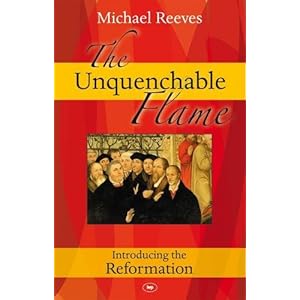
Book Review: The Unquenchable Flame


For most people, Protestants especially, the Reformation is a bit of a confused blur. Fragments of information are held, but without knowing how they fit together. So perhaps you know something about Martin Luther, Archbishop Cranmer and the Pope, but how does it all fit together? What was it all about, at the end of the day, particularly when some are claiming that the Reformation is over (or shouldn't have happened under the new perspective on Paul)?

Michael Reeves has written a fairly short, snappy, and suitable introduction to the Reformation, and is perhaps one of the best books I've read this year. From a short, dramatic prologue, your appetite is whetted, and the book propels you into the turbulent times of the 16th century.

As well as introducing you to the key personalities (Luther, Calvin, Zwingli, Tyndale, Cranmer, the Puritans and a few others), and what they did and said, Reeves presents the issues and doctrines at stake in a clear and helpful way. Alongside the important doctrines, there are some nice witty touches. For example, 'Allowing Luther such freedom with a Bible was a move Rome would soon profoundly regret, but for now, Luther became a teacher of the Bible at the brand new university of Wittenberg.'

Reeves is careful and considered in his writing, though, recognising some of the problems associated with the Reformers while appreciating their stand for true doctrine. His analysis of the Puritans is particularly penetrating, seeing their 'attempt to enforce strict Christian behaviour on a nation' as one of the reasons the Commonwealth under Cromwell ultimately failed.

All in all, this book is an excellent introduction to the history of the Reformation period. Lots of ground is covered with good explanation, but in a clear and accessible way. Both highly recommended and heartwarming!

Sunday, October 24, 2010

Sermon: Matthew 5: 21-27 Anger Slipway

We’re into the second half of our series on the Ten Commandments, and we’re coming into an interesting run of commandments. The next three or four are quite short and sharp - not very many words to preach a whole sermon from. (You might be glad to hear that, although, don’t worry, we’ll still cover our twenty minutes or so thinking about the commandments).

Some of the commandments from Exodus 20 we’ve looked at so far have been quite wordy - for example, in our English version, number 4 has 98 words; 91 words in number 2. In contrast, ‘You shall no murder. You shall not commit adultery. You shall not steal.’ Four words, or five words. And that’s it. The whole commandment. A bigger problem than their brevity is their apparent easiness.

We hear ‘you shall not murder’ and we think we’re in the clear. We can join up with the rich young ruler, list the commandments and say ‘All these I have kept.’ (Matt 19:20). For most of us, if not all of us, we have never killed anyone, never murdered anyone - so have we got a head start, that’s one down, just the other nine to get right now?

Well, not so fast. As we heard in our reading from Matthew 5, Jesus expands and deepens the commandment against murder (which we think we’re in the clear about), to include anger, which is the root of murderous thoughts. We’ll probably find, as we explore the Scriptures together, that there is a great challenge here, as in the other commandments.

Just to remind ourselves of the context of this evening’s passage, you’ll remember that Matthew 5 is the first chapter of the Sermon on the Mount, that prolonged period of teaching at the start of Jesus’ ministry as he teaches the disciples (and the crowds listen in). Immediately before, Jesus has said that he has come to fulfil the Law and the Prophets - by his words, actions, and ultimately his sacrifice on the cross. Jesus also says that ‘unless your righteousness exceeds that of the scribes and Pharisees, you will never enter the kingdom of heaven.’

We looked at this passage a few weeks back as we began our series - you might remember that this exceeding righteousness comes through Jesus (who has fulfilled and obeyed the law perfectly), but in response to that, we are motivated to heart obedience (in our ongoing sanctification), not just external observance.

The command against murder still stands - we can’t go out of church tonight and murder someone. Look at verse 21 as Jesus quotes it: ‘You shall not murder; and whoever murders will be liable to judgement.’ (Matt 5:21). The extra bit (‘whoever murders will be liable to judgement’) seems to be the extra gloss the teachers of the law had added to it. It seems to hint that, so long as you avoid murdering someone, then you’ll not face judgement, you’re in the clear.

Now obviously, murder is wrong - we see this clearly in Genesis 9, as God addresses the whole world’s population of 8 as they come out of Noah’s ark: ‘Every moving thing that lives shall be food for you. And as I gave you the green plants, I give you everything. But you shall not eat flesh with its life, that is, its blood. And for your lifeblood I will require a reckoning: from every beast I will require it and from man. From his fellow man I will require a reckoning for the life of a man. Whoever sheds the blood of a man, by man shall his blood be shed, for God made man in his own image.’ (Genesis 9:3-6)

To take away life is to act in the place of God, who gives life and takes away life. To murder is to destroy and deface the image of God in your fellow human. Murder is a serious business - and we rightly shrink away from it. We rightly say that ‘whoever murders will be liable to judgement.’

But as Jesus expands and deepens the commandment, we find ourselves more likely to face judgement. Do you see the pattern Jesus develops? ‘whoever murders will be liable to judgement... everyone who is angry with his brother will be liable to judgement... whoever insults his brother will be liable (to the council ie to judgement!)... whoever says ‘you fool!’ will be liable to the hell of fire.’

Jesus moves from the outward act of murder to the inner roots of murder; from the action to the thoughts (and words) which begin deep within us, which all are liable to. Through the week, we were up at the clergy conference in Donegal, and one of our free afternoons, I was out for a drive. In Killybegs, along the docks, I saw one of those warning signs that had been tampered with. Originally it said ‘Danger Slipway’, but now it just says ‘Anger Slipway.’ Someone trying to be funny, and yet, in a sense, it’s what Jesus is warning about here. To launch the programme of anger in the heart is to begin down that anger slipway whose end is judgement.

What is it that makes you angry? When, or where, does your anger rise? Is it when you get into the driving seat and everyone else on the road is a fool, getting in your way? Is it in the office as people can’t seem to do their job so you can get on with yours? Is it in church, when things aren’t done quite how you like them? Is it at home, or the extended family, as you have to deal with that particular annoying relative? Loud music from your neighbours late in the night?

Perhaps you try to justify it somehow - you’re provoked, or frustrated. It’s always someone else’s fault. Or perhaps you take refuge in the fact that the courts system can’t make judgements on your thoughts - they’re busy enough trying to catch and deal with the ‘real’ criminals who have committed crimes. Yet Jesus is saying that while earthly courts can’t see our thoughts and motives and hates and angers, there is a judge who sees perfectly. The judge knows our thoughts (perhaps even better than we know them ourselves), who can perfectly judge each case - and provide the proper penalty.

These examples Jesus gives aren’t really separate or different things - it’s all the same - to face judgement, face the council, face the hell of fire. They are where anger leads towards. They are the end result of our anger. Judgement is real and near. This is the truth that Jesus teaches here - not just judgement for the big bold obvious sinful act, but also the less obvious, internal thoughts and attitudes which we each nurse.

Precisely because judgement is real, Jesus urges us to be quickly reconciled with those we have offended. He gives two pictures, two worked out examples of what this reconciliation will look like - in the temple and in the court.

First, then, if you’re at the temple, about to offer your gift of sacrifice, and you remember that you have offended against someone, if they have something against you, then what do you do? Do you hurry through the sacrifice and then sort it out with them? No, Jesus says that you go and be reconciled to them first, before offering your gift at the altar.

It’s a bit like in the Lord’s Prayer, where we pray ‘forgive us our trespasses, as we forgive those who trespass against us.’ In seeking to be reconciled with God - or rather, as we are reconciled with God, we also ought to be reconciled to our brothers and sisters. You remember the words of invitation at the 1662 Holy Communion? ‘Ye that do truly and earnestly repent you of your sins, and are in love and charity with your neighbours, and intend to lead a new life, following the commandments of God, and walking henceforth in his holy ways; Draw near with faith...’

It’s saying what Jesus is saying. While we harbour resentment and anger, can we really say that we are reconciled with God and our neighbour? We may even do best to examine our hearts tonight before we share in the Lord’s Supper - do we harbour anger in our hearts?

In the second picture, Jesus shows you on the way to court. There’s some debt you owe, but you don’t currently have the means to pay it off. The credit card statement has come, or you’ve overdrawn, and the bank is looking the money. Come to terms quickly, Jesus says, before you face the judge and the jailer, and you spend your time in prison.

This isn’t just a handy hints type story, reminding you that your home may be at risk if you do not keep up the repayments. Jesus isn’t just dispensing useful lifestyle tips. Rather, he’s speaking to us who have been warned of our anger - anger leads to judgement.

Judgement is real - and near - so come to terms with your accuser. Recognise the danger you are in - the anger danger - and be reconciled to the judge, to the Lord God. Confess the sins of murder and anger, and find in the Lord Jesus, one who bore your sins on the cross to take them away, to settle the debts you have; the one who also perfectly obeyed this commandment and never murdered or hated.

Find in Jesus your pardon and peace, and then turn away from the destructive patterns of anger - refuse to retreat into your selfish anger and instead live for the good of others, seeking to become more like Jesus.

This sermon was preached in St Elizabeth's Church, Dundonald on Sunday 24th October 2010.

Friday, October 22, 2010

Sermon Audio: Ephesians 6: 1-4

Last Sunday night (before we set off for the Diocesan Clergy Conference in Donegal - hence the blog silence this week!), I was preaching in our Ten Commandments series on Honour Your Parents. This is what it sounded like.

Sunday, October 17, 2010

Sermon: Ephesians 6: 1-4 Honour Your Parents

The other night, we watched a programme on BBC3. The World’s Strictest Parents. So if you thought your parents were strict, you haven’t seen anything yet! The programme follows two rebellious British teenagers who are sent to live for a week with parents in some other country and culture. Monday night’s sent two teenagers to America, where they rebelled against the new rules before coming round to liking their temporary parents and making up with their own parents back home.

We’re continuing to work our way through the Ten Commandments, and tonight we reach the halfway stage. Commandment number 5, honour your father and your mother, that your days may be long in the land that the LORD your God is giving you. We’ll focus on our reading from Ephesians, where the commandment is repeated, but also expanded.

I’m well aware, though, that even as we begin to think about these things the objections and the problems may have started in your head. Perhaps speaking of parents at all is painful for you if you’ve had a traumatic childhood, or lost a parent at an early age. Perhaps you know that your parents aren’t Christians, which leads to stress and pressure at home. Perhaps you think they’re too strict. Or perhaps your parents have both died, and you want to tune out at this point.

Please don’t! We’re going to try to be as practical as possible, as we look at what the commandment says, why it tells us to do it, for how long, and how. So what, why, how long and how.

So first of all, what. Paul in Ephesians tells us to obey our parents (as well as quoting the commandment to honour them). But what does that mean? As one of the commentators writes ‘The command to honour is hugely demanding and also tantalisingly vague.’ (Motyer) Demanding, but vague.

Perhaps we need some concrete examples. Teenagers, what happens if your parents ask you to help with the housework, or keep your room tidy, or doing homeworks? Do you do what they say, respecting them and their decisions, even when you don’t like what it is they’re asking you to do? You’d rather be out with your friends, or even coming to SET or church, but they want you to go visit your long lost auntie Mabel. Paul is saying to obey them in the Lord, for this is right.

Or what about when you have moved out of home, maybe got married. Do you still honour your parents? Do you still respect them, calling to see them, helping them to do things?

I want to give you a couple of examples of the principle from the Bible - so that we can see it both negatively and also positively. First of all, when people don’t obey their parents. Over in Romans 1, Paul is spelling out the consequences and symptoms of our ungodliness and unrighteousness. From 1:29: ‘They were filled with all manner of unrighteousness, evil, covetousness, malice. They are full of envy, murder, strife, deceit, maliciousness. They are gossips, slanderers, haters of God, insolent, haughty, boastful, inventors of evil, disobedient to parents, foolish, faithless, heartless, ruthless.’ (Rom 1:29-31) Disobedience to parents is counted alongside murder, deceit, and hating God.

Or think of Paul’s warning of what the last days will be like: ‘For people will be lovers of self, lovers of money, proud, arrogant, abusive, disobedient to their parents, ungrateful, unholy...’ (2 Tim 3:2). So both as a sign of where the evil of the human heart takes us, and how things are continuing to be in these last days, to disobey parents is to sin against God. I’m sure that all of us, in various ways, and perhaps long ago, have sinned in this way.

In contrast, then, let us consider the glory and example of the Lord Jesus. We’re not told much about Jesus’ childhood, but in Luke 2, we read this: ‘And he went down with them to Nazareth and was submissive to them. And his mother treasured up all these things in her heart.’ (Luke 2:51)

Do you remember the start of Mr Bean TV programmes? The light shines down and he lands (out of an alien spacecraft?) The Lord Jesus didn’t just beam down onto the earth at age thirty for his three years or so of teaching ministry - he lived and grew up among a family, no doubt where Mary and Joseph made some mistakes - but Jesus submitted to them. Jesus honoured and obeyed them - no matter how frustrating it might have been. Remember that Jesus fulfilled the law - even this commandment!

As we’re saved, we have a new relationship to the Law, which will show itself in how we relate to those around us. The first four commandments are how we relate to God; the last six are how we relate to those around us - our duty to our neighbour, as the Catechism would say. But notice that our first duty to our neighbour is in the home, to our parents.

Notice, at the same time, that Paul also addresses fathers in the same breath (although mothers, you aren’t excluded!). As you expect your children to obey you and honour you, you should not ‘provoke your children to anger, but bring them up in the discipline and instruction of the Lord.’ So that’s the what - honour, obey your parents.

Why should we obey our parents? First of all, Paul says that it is right, and then goes on to quote the commandment. Along with the commandment, do you see it, comes the promise. ‘That it may go well with you and that you may live long in the land.’ There is a blessing that comes from our obedience, which I think, is linked to the strong, stable society that comes about through the honouring of parents.

Just look around you. If parents are seeking their children’s wellbeing and best interests, but the children rebel, then they’re going to be putting themselves in danger. To dishonour parents (the first of our duty to our neighbour), is to create the patterns of dishonouring those around us. Similarly, to dishonour parents, those set in authority over us by God, is to dishonour and disobey God.

But what about when our parents aren’t Christians? What if they aren’t bringing you up in the discipline and instruction of the Lord? What if, as it seems to you, they are holding you back from service or stopping you from doing what you think you should be?

I know how you feel! My parents aren’t Christians, and there was a difficult period at home when I was deciding to pursue ordination. I was graduating from university, and didn’t have a job. My parent’s response was to tell me to go and get a real job, not be a minister. What was I to do? You might have noticed that I am a minister, so obviously I pursued it, but respecting my parent’s wishes; taking my time to go through the various selection procedures, so that mum and dad could see that it wasn’t a phase I was going through, that it was what I had to do. I even deferred entry into college for a year so that I could continue to work and save up some money for college.

Don’t rush to disobey, take the time to hear what they’re saying, seek to respect them; obey as far as possible - unless they’re telling you to do something immoral or indecent. There may come a time when you must obey God rather than man, but don’t assume everything is that kind of issue. Your submission can even be a witness to them.

That also raises the question, though, of how long we should go on honouring and obeying our parents. Is it just while we are children, minors, or is it a lifelong command? Consider Matthew 15 (turn there with me) - Jesus is confronting the Pharisees who hold their traditions higher than God’s commands. ‘And why do you break the commandment of God for the sake of your tradition? For God commanded ‘Honour your father and your mother’... But you say “If anyone tells his father or his mother, ‘What you would have gained from me is given to God’, he need not honour his father..”’

It’s obviously adult children in view here, where the Pharisees tried to urge them to give to God the money they would have used to care for their parents. It’s as if you turn round to your parent and say, sorry, I’ve given your nursing home fees to the church, so you’ll just have to do without. Jesus says that this is disobeying God’s command, it is dishonouring to your parents. So the command is a lifelong command - as long as you still have your parents, keep on honouring them. Now obviously this will be slightly different to how you honour them when you’re younger and living at home with them, but the onus is still there to honour.

Paul writes the same to Timothy in his first letter. In the first century, there was no old age pension, no housing benefit, or warm homes allowance. Widows were truly alone, without a breadwinner. Care for them fell to the church. But ‘if a widow has children or grandchildren, let them first learn to show godliness to their own household... But if anyone does not provide for his relative, and especially for members of his household, he has denied the faith and is worse than an unbeliever.’ (1 Tim 5:4,8) So if your parents are old, and you’re grown up, you still have that duty of care and honour.

Earlier we raised the matter of those whose parents have died. 1 Timothy also reminds us that the church is our family. That the older men and older women we have (obviously dependent on what age you are yourself!) are like fathers and mothers. ‘Do not rebuke an older man but encourage him as you would a father, younger men as brothers, older women as mothers, younger women as sisters, in all purity.’ (1 Tim 5:1-2)

We can extend and widen this command to honour your parents in the domestic family to include also the church family. So the command isn’t irrelevant for some, but all can honour elders and family members in this our church family.

To honour and obey our parents is to please our heavenly Father and to follow the example of our Lord Jesus, who perfectly obeyed this command, and whose sacrifice cleanses our sins even in this area. Those times of disobedience are forgiven in Jesus’ cross. Go and start again in pleasing your Father, and honouring those parents you have, in your family and in the Lord.

This sermon was preached in St Elizabeth's Church, Dundonald on Sunday 17th October 2010.

Saturday, October 16, 2010

Book Review: Son of Hamas


The Middle East is a place like no other. It's hard to know if anyone truly knows what is going on in the conflict. Despite some attempts to make comparisons between the Northern Ireland peace process and the search for peace in Israel and Palestine; indeed, with many in Northern Ireland lining up to take sides based on questionable alliances and allegiances, it's probably best to admit ignorance of the entire thing.

On holiday, one of the books I read was Son of Hamas by Mosab Hassan Yousef. You've probably heard of Hamas, but who is it, what does it do, and what are they trying to achieve? Yousef has a 'most unique perspective... I am a son of that region and of that conflict. I am a child of Islam and the son of an accused terrorist. I am also a follower of Jesus.'

Yousef shares his family history, as well as his own story. His father was one of the founders of Hamas, passionate for returning people to the teaching of the Qur'an. Yet in the situation of Palestine and the conflict over territory and religion, Hamas felt that something had to be done. 'Hamas was largely animated by religious fervour and the theology of jihad, while the PLO was driven by nationalism and the ideology of power.'

Yousef's personal story is remarkable, being under surveillance by the Israeli authorities and the American special forces, being arrested, and all that follows in prison. I can't really say much more without spoiling it for you if you're going to read it, but let's just say that it's a white knuckle ride through times of trouble and terror.

As has already been mentioned, Yousef is now a Christian, having been invited to a Bible study in Jerusalem, and through the book we see how he is transformed in his words, thoughts, and actions. If anything, it's slightly disappointing in how little he talks of his conversion and how he explains it, and yet, his analysis of Islam is perceptive and illuminating:

'...the other side of Islam. Islamic life is like a ladder, with prayer and praising Allah as the bottom rung. The higher rungs represent helping the poor and needy... the highest rung is jihad... few look up to see what is at the top... A moderate Muslim is actually more dangerous than a fundamentalist, however because he appears to be harmless, and you can never tell when he has taken that next step toward the top.'

This is a fascinating and tense insider account of the turbulent times of the recent middle East. The story commands your attention, and helps to explain what is really going on, and what is needed for a true and lasting peace in the region.

Friday, October 15, 2010

Nytol or God Over All?

How did you sleep last night?

There's a fair chance that you didn't get a good night's sleep. Insomnia is fairly common, as well as night terrors, partners' snoring, eating too much before bed, and a variety of other reasons.

In the middle of Psalm 3, we find David thanking God for a good night's sleep. Here's what he says:

I lay down and slept; I woke again, for the LORD sustained me. (Psalm 3:5)

Maybe you're thinking to yourself, well, what's so remarkable about that? David was the king of Israel, lived in a palace, probably had a king size bed, luxurious surroundings. How could he not have slept well?

Yet the incredible thing is that David didn't spend the night in his palace. Neither was he in a Hilton hotel, nor visiting the Slieve Donard Hotel. Instead, David was on the run. David, the king, was a fugitive, and not for the first time in his life.

Earlier, David had been fleeing from King Saul, who was trying to kill him. Here in Psalm 3, David has fled Jerusalem, abandoned his royal palace because of the rebellion and uprising of Absalom his son. You can read the full story in 2 Samuel 15-18. Absalom had set himself up against his father and against the LORD, got together a rabble of rebels, and set himself as king.

David and his company are on the run. He's in danger. His life is threatened. But David has slept well. How did he do it? Was he using some Nytol (other sleeping tablets and remedies are available)? Did he blank out the danger through use of drugs or alcohol?

David wasn't using Nytol. Instead, he was trusting in God over all.

O LORD how many are my foes!
Many are rising against me;
many are saying of my soul,
there is no salvation for him in God.

But you, O LORD, are a shield about me,
my glory, and the lifter of my head.
I cried aloud to the LORD,
and he answered me from his holy hill.
(Psalm 3:1-4)

David doesn't focus on the threat, rather he glories in his God, the one who is his shield, his glory, who lifts his head. God, the covenant LORD, who answers prayer - from his holy hill (the very place where the LORD has installed his king, his anointed, but where Absalom has captured. see Psalm 2:6).

I've mentioned before the wee note that granny has in her house which goes something like this - when you're going to bed, leave your troubles with the Lord. He'll be up all night anyway. That's what David is demonstrating here. Focus on the Lord and his character and power, and not on your troubles, and you can sleep easy: 'for he gives to his beloved sleep.' (Psalm 127:2)

Sleep well tonight!

Wednesday, October 13, 2010

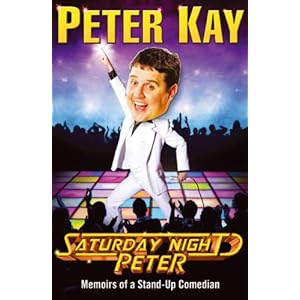
Book Review: Saturday Night Peter


My holiday reading was quite a mix, some theology, some fiction, and some biography. This particular book was the follow up to Peter Kay's first autobiography The Sound of Laughter, and picks up immediately where the first book left off.

Peter Kay is a funny man, there's no doubt about it. His humour presents itself throughout as he tells the story of his rise to popular fame, and his stand up comedy career. Reading this beside the pool, there were many times when I was laughing a little too loudly, tickled by the situations Peter found himself in, and the people he was meeting.

Alongside the jokes, it was also interesting to read in particular about the work involved in stand up comedy from the perspective of a preacher. We stand up and speak for about twenty or so minutes, whereas a comedy set could last up to a couple of hours. While we're not under the pressure to make people laugh (rather our brief is to proclaim God's word), Peter Kay highlights the stressfulness of the situation, and how draining it can be.

A major criticism is that he swears a little too often for my liking, in completely unnecessary ways. He would be just as funny without the swearing, so it's disappointing that he feels the need to include it. Also, with this being his autobiographical second volume, you can expect a third some time in the near future, as this one is solely focused on his stand up career and doesn't really mention his TV work such as That Peter Kay Thing, Phoenix Nights, and Max and Paddy's Road to Nowhere.

However, the most interesting point for me, and something I want to consider for a moment or two was near the end, when he's describing how his second stand up tour kept growing and growing, ending up in an arena tour, playing to thousands each night. At his peak, just as the shows are finishing, he has a health scare. Here's how he describes it:

'In my typical Catholic way I assumed this was the beginning of the flipside of the good fortune I'd been having.'
(p. 346)

Is this really typical Catholic belief? That if things are going well then you'd better prepare for some bad stuff to kick in? While I'm no great fan of Catholic theology, I would argue that Kay is more in line with some Eastern philosophy than Catholicism? On the other hand, if this is how Catholicism is understood in the pew as it were, then where is this all coming from?

An interesting question from a byline in a funny book. It is a good book, but I'm reluctant to recomend it to others based on the swearing. Use your discretion (and don't laugh too loud if you do pick it up!).

Tuesday, October 12, 2010

The Early Church and The Stig

Our Harvest weekend has now finished, and we'll probably be thinking and planning for Christmas services before long. Before Harvest completely disappears from our memory, I wanted to share a few resources from the weekend with you.

Our special guest over the weekend was Bishop Wallace Benn, the Bishop of Lewes on the south coast of England. On Saturday, he taught on the Early Church and its Growth: a study from Acts, which is the basis of a new book soon to be published. The book will be excellent, based on the material he presented and preached on Saturday. You can listen in, as the mp3s are available from the first two sessions of the day over at the St Elizabeth's sermon blog: Session 1; Session 2. Sadly the third session didn't record - blame the idiot curate and his technology!

You might have read the title and wondered how a racing driver fits in with the early church. On the Friday night, Bishop Wallace let slip that he had been on a well known driving programme, and thanks to the wonders of YouTube and the internet, we tracked it down and showed it on Saturday. This is the edited highlights of Wallace's appearance. Enjoy!

Monday, October 11, 2010

Book Review: Supernatural Living for Natural People


Last month we were away on holiday for a week, and I managed to get through eight books. But before I could start reviewing them, I had to deal with the couple of books I had read but not reviewed before I went away. So now we're into the holiday reviews, and this was a book long overdue of being read.

Ray Ortlund was the morning Bible Reading speaker at last year's New Horizon in Coleraine. We had bought the book, but then I never managed to get reading it, until now. I'm sorry that I waited so long. Supernatural Living for Natural People is a brilliant book which unpacks and expounds the glorious riches of Romans 8. Romans 8 has been described as the Everest of the Bible, the peak of the New Testament, and there is no better mountain guide than Ray Ortlund.

Ortlund faithfully explains Romans 8, not just systematically, but also in the context of the whole letter to the Romans, showing how and why the apostle Paul says what he does in the way he does - and what it means for us, sinners 'fighting, but too often failing.' Almost each verse yields a gem of a statement from Ortlund's pen and pastor's heart:

'that declaration [Romans 8:1 no condemnation] has a remarkable effect upon the people of God... they rejoice in the certainty of their final triumph and are energised to fight on.' (p. 17)

'We do not need more frightening punishments and more withering scoldings. We need the all-sufficiency of Jesus applied in rich measure to our deepest points of personal need. And that is what the Holy Spirit does.' (p. 18)

'The new life in Christ is not a superior religion. It is God's alternative to human religion.' (p. 33)

'We see the heart-lifting power of hope.' (p. 93)

'The future God has promised us is cosmic in shape and royal in elevation.' (p. 106)

'The biblical confidence in the Providence of God is a faith so bold, so demanding, so unapologetic, that we cannot believe it half-way. Either all things work together for our good, or nothing makes sense.' (p. 137)

'All around us every day are potential evangelists... we know them as our non-Christian friends. And God has positioned us in the midst of our storms to show them the practical difference that Jesus makes.' (p. 138)

'Certainty in the love of God is how the gospel makes heroes out of ordinary sinners.' (p. 168)

You can probably see, from that quick selection of quotes, that Ortlund is pastoral, practical, and passionate for the glory of God and the upbuilding of God's people through the proclamation of God's word. I can think of no better book to guide you through Romans 8 that I have read; buy this book, read it, and your heart will be warmed, strengthened and encouraged in the gospel.

Saturday, October 09, 2010

Sermon Audio: Mark 12: 1-12

Last Sunday morning I was preaching on The Rejected Son from Mark 12. You can listen to the mp3 sermon right here.

Friday, October 08, 2010

Come, Ye Thankful People, Come

Yes, it's our harvest weekend in Dundonald, but it's not a traditional harvest weekend by any means! Tonight we're having our harvest supper. Stop for a moment - what images do those two words bring to mind? You're probably thinking of a salad tea, or plates piled with sandwiches, followed by traybakes, buns and sweet things. Well, not tonight. Instead, we're having a 'Golden Chip Harvest Supper' supplied by one of the local chip shops. Over 100 portions of chips, and a selection of sausages, chicken strips and pasties will be served as quickly as we can have them delivered and distributed! Thankfully, though, we don't need to worry about the calories, because our evening continues with a Barn Dance (yeeha!)

Tomorrow we're having a special day of Bible teaching, with Bishop Wallace Benn, the Bishop of Lewes in England teaching on Steps to Local Church Growth from the book of Acts. The sessions begin at 10.30 in the Burton Hall tomorrow morning, with some family activities in the afternoon, with a final session at 5pm.

Sunday is our actual Harvest Thanksgiving services, at 10.30am and 6.30pm, again with Bishop Wallace preaching. You're very welcome to join with us to celebrate God's goodness to us, and to praise King Jesus.