Sunday, October 09, 2011

Sermon: Mark 15: 22-39 The Cross of Christ

‘I believe in... Jesus Christ... He suffered under Pontius Pilate, was crucified, died, and was buried. He descended to the dead.’ It’s the one thing that most people probably know about Jesus, even if they’ve never darkened the door of a church. Jesus was crucified - died on a cross. After all, it’s there in each of the four gospels, with so much detail about how it all happened.

Backlit Cross


If you’ve ever read a biography of someone famous, there’ll be a lot of material on their life, relationships, achievements, work, and perhaps a short chapter at the very end on how they died. But if you think of the gospels, there is nearly as much about Jesus’ last week, his last hours, as there is about the whole 33 years leading up to that week. Matthew has 28 chapters, with the last 7 about Holy Week. Luke has 24 chapters, and by chapter 9, he’s already on his way up to Jerusalem. By John 12, (of 21) Jesus is in Bethany six days before the Passover; while in Mark, of his 16 chapters, 6 are set in Jerusalem in Jesus’ final week. Why such emphasis on Jesus’ last week and his death?

Let’s be clear straight away. Jesus’ death was not a tragic accident, happening too soon; a young life cut down in his prime. Nor was it that he was playing with fire and got caught, the religious leaders and Romans being too powerful or too crafty for him. No, the reason the gospels spend so much time detailing Jesus’ death is because it was for this very reason he came into the world.

This morning we’re going to look at three short sayings around the cross, which will, I hope, show us just why Jesus had to die. We’ll also see what it means for us. You’ll find them all in Mark 15, on page 51.

The Creed reminds us that Jesus suffered under Pontius Pilate. We find his verdict of Jesus in verse 14. Jesus has been brought by the Jewish leaders to be tried, but Pilate finds nothing wrong with Jesus. In Matthew’s gospel he declares that he finds him innocent. Jesus Christ has done no wrong, yet Pilate is in a tricky position. There’s a riot kicking off in his front yard, so he tries to pacify the crowd by offering a choice - Barrabas or Jesus. Who would they like to be freed? A scheming murderer and rebel; or the blameless Jesus?

They choose Barrabas - what should Pilate do with Jesus? ‘Crucify him!’ Verse 14: ‘Why, what evil has he done?’ No one can convict Jesus of any wrong, yet the shouts grow louder ‘Crucify him!’

Jesus, the sinless one, is crucified. He does not deserve it. As if that wasn’t enough, though, the chief priests and the scribes (the religious leaders) come to watch him die, mocking him as he hangs on the cross. Let’s see what they said, what the Lord endured: ‘He saved others; he cannot save himself. Let the Messiah, the King of Israel, come down from the cross now, so that we may see and believe.’

These leaders speak better than they know - in their mockery they actually speak the truth. Jesus could have come down from the cross. Remember in the garden Jesus says to Peter he could call on twelve legions of angels to rescue him - but had he escaped the cross, he could not save anyone else. In order to save others, he could not save himself. What wonderful love of the Saviour to go to the cross, willingly, in order to save us!

He saves others precisely because he did not save himself. He willingly gave his life for us. I’m reminded of the gallantry of William McFadzean in the first World War. His regiment were in the trenches preparing to go over the top on 1st July 1916. A box of grenades were being opened, when they spilled, and some of the pins came out. William immediately jumped on top of the box, covering the bombs and taking the full blast, saving the rest of the men in the trench. He gave himself to save his comrades. His sacrifice, in a small way points to what Jesus has done.

But you might be thinking - why did Jesus have to die to save us? Why can’t God just forgive sins without the death of his Son? Remember that we’ve already seen that Jesus us innocent, has done nothing wrong; and in order to save us, he could not save himself.

Ever since the Garden of Eden, we have been separated from God because of our sin. Adam and Eve walked in the garden, but once they sinned, they hid from God, and were banished from the garden. In order to bring us near to God, reconcile us to God, Jesus had to deal with our sin, bearing the punishment of separation (death) we deserved.

We find our last saying in verse 34: ‘My God, my God, why have you forsaken me?’ Do you hear the force of those words? The one who existed in perfect relationship with the Father before time began is cut off, separated, forsaken. All because he bears our sin - it’s as if the Father can’t bear to look at him, God turns his back.

In that moment, Jesus is forsaken, in order to save us. But how can we be sure his death was effective? How can we be sure that our sins can now be forgiven because of the cross? The answer comes in the most amazing thing that happens at that very moment. And it’s so important that Matthew and Luke and Mark all record it. But it doesn’t happen at the cross - if it were a film, the scene would move from the cross to the other side of town, to the temple, where something amazing and terrifying is happening: ‘And the curtain of the temple was torn in two, from top to bottom.’

This wasn’t just a curtain in one of the windows, a piece of interior design. Nor was it a bargain offer from Harry Corry in a floral print. This was the curtain standing at the entrance of the Most Holy Place, where God’s presence was in the heart of the temple.

The curtain was 60 feet high, and four inches thick. The message is clear: Keep out! No entry! You are too sinful to enter God’s presence! You are separated from God! Only the high priest, and only once a year, and only bringing blood could enter - on the Day of Atonement. Suddenly, as Jesus dies, the curtain is torn in two, and we have access to God; we can boldly come through the death of Jesus.

There’s a song which goes like this: ‘I’m forgiven because you were forsaken. I’m accepted, you were condemned. I’m alive and well, your Spirit is within me, because you died and rose again. Amazing love, how can it be, that you, my King, should die for me!’

It’s fitting that we share in the Communion today, as we rejoice in Jesus’ death, and what that means for us. We are no longer separated; our sins are forgiven; we can draw near. We trust not in our own achievements; only in the cross of Jesus.

Perhaps you’ve never experienced this forgiveness - you know that you’re separated from God, your sins are against you. You can come, even today; accept that what Jesus has done on the cross is for you - your sins on his shoulders, and find forgiveness and peace and reconciliation. Things will never be the same again!

Perhaps you’re a Christian, but you find that you still sin - come again to the cross, and find forgiveness for all sins.

This sermon was preached in Aghavea Parish Church on Sunday 9th October 2011.

Sunday, October 02, 2011

Sermon: Psalm 34:8 Taste and See

Today is harvest, and as you came into church this morning you might have noticed all the sights and smells of the flowers and fruit and vegetables. The church is really well decorated. We can see all the good things God has given to us. But as well as the sights and smells there are also the tastes!

In my home church, we had the harvest weekend services, and on the Monday afternoon we hosted the High School harvest. Some times, some of the boys would take an apple from the window, take a bite of it, then put it back - with the teeth marks hidden at the back! They were enjoying the tastes of harvest!

We're going to think about tastes for a moment or two. What are you favourite foods? [Kids answer with chicken, chocolate etc] What about your least favourite foods? [Brussels Sprouts, cabbage etc...]

This morning I've brought some foods along with me to taste, and I need a volunteer. Just in case there are any allergies, I'm going to ask Alan, the churchwarden to come up and help me. And don't worry, Alan, we've got a doctor and several nurses in the congregation in case you collapse!

So we'll put the blindfold on, and give you the samples of food. What are they? [Four samples of foods in little tupperware boxes, with spoons to give samples: 1. tomato ketchup; 2. honey; 3. lemon juice; 4. chocolate]

There were some horrible things and some nice things - which would you like the most? [Kids all chose the chocolate] But what happens when you're given something new? Will you try it or leave it? You never know if you like something until you try it. It might be brussels sprouts, or cabbage, or even snails! Lynsey and me were on holiday in France a few years back and a plate of snails came out - we had to try them to see if we liked them, and they were ok! [Disclaimer - don't try eating the snails in the garden at home...]
Snails. Yum Yum
Psalm 34:8 says this: 'Taste and see that the LORD is good.' What that means is that you have to get to know God, see what God is really like. Just think of all that he has done, giving us life, this earth, weather, food, families, everything we need. God is good.

But more than that, the Lord is good because he sent Jesus to die on the cross to bring us back to God so that we can enjoy God's good things not just now, but for ever. Jesus 'suffered death, so that by the grace of God he might taste death for everyone.' (Heb 2:9). Jesus has tasted death so that we don't have to = we don't have to fear death.

When you get home, you might have a big lunch today. There might even be new things to try. As you taste your food today, or if you try anything new this week, remember our Bible verse: 'Taste and see that the LORD is good.' Do you know that?

This sermon was preached at the Family Harvest Thanksgiving in Aghavea Parish Church on Sunday 2nd October 2011

Friday, September 30, 2011

September 2011 Review

My first month as Rector of Aghavea completed, it's time to look back and see what's been happening on the blog. Just thirteen posts this month, as I adapt to the new 'job' and some of the new things expected of Rectors that Curates don't have to worry about!

One constant has been my preaching, with sermons from Matthew 13, Psalm 33, Psalm 1, Luke 15, Luke 12, and Mark 8.

There were a couple of other posts about becoming a rector, reflecting on the Institution service and getting lost. Other news items were related to travel too, as we had the Journey concert in Dungannon and driving a hard bargain for ministers of religion (but not Baptists!).

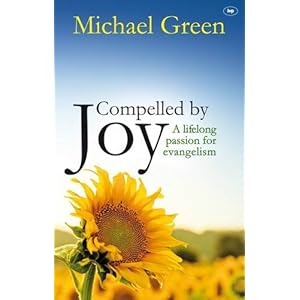
There were a couple of book reviews, on Respectable Sins by Jerry Bridges and Compelled by Joy by Michael Green.

My favourite photo of this month was this ruined church at Wattlebridge:

Drumcrin Parish Church

Thursday, September 29, 2011

Book Review: Compelled By Joy


CS Lewis might have been surprised by joy, but Michael Green was compelled by joy, as he relates in this lively review of his ministry and evangelism, recently published by IVP.

In the opening chapter, Green shares his own story of conversion, which is the impetus for the rest of his life and the rest of the book as he reflects on his attempts at getting the good news out to as many people as possible, in as many ways as possible. 'I have found treasure - by no skill of my own - and I want to share it as widely as I can.'

Yet for many, as he says, the Christian message isn't news (they think they know what it's all about), and it doesn't seem like good news. Green has been committed to communicating the good news for what it really is, and the book recalls some of his experiences, as well as reflections on ministry and on who God is and what he is like.

As the chapters progress there are thoughts on evangelism in the local church, university outreach, being careful to speak in ways people will understand, apologetics in evangelism, sin, the cross, making disciples not just decisions, and the way in which our responsibility fits with God's responsibility.

This was one of the books I read in the interim between finishing as Curate and beginning and Rector, and it was a really good refresher for me on the basics of ministry. There are lots of ideas, plenty of illustrations, and buckets of encouragement for the evangelist and pastor, some of which may be worked out as my ministry here develops.

Occasionally there were wee things that I wasn't too enthusiastic about, ways he went about doing things in a more sacramental fashion, or in the words and phrases he uses, but I've found that with Green's books in the past, and would still recommend them for all the good things they contain.

A useful book for those considering evangelism, and those who need some encouragement to keep going in the long haul of Christian ministry.

Wednesday, September 28, 2011

Driving A Hard Bargain

I've recently been having a look at car insurance, trying to get the best deal. Just in case I hypothetically speaking might be changing my car. And there's something I've noticed - and not just the spam that's likely to flood in on the comments to this post!
214/365:2010 Farewell Fiesta


When you're applying for car insurance online, you're asked all the standard questions. One of those standard questions is your occupation. So you start to type in a few letters and here's what you come up with:


The two options are 'Minister of Religion' or 'Baptist Minister'. Now, I'm sure my Baptists brothers would quickly make the point that they're not ministers of religion, and neither am I, but it was interesting that Baptists seem to be separate and not included under 'Religion' for ministers.

Any suggestions as to why this would be the case?

Tuesday, September 27, 2011

The Journey


Last Saturday night we were all Fired Up in Dungannon by a very special worship concert. Leading British hymnwriter, Stuart Townend rolled into town on the last night of a week touring Northern Ireland, and lifted the roof off the Leisure Centre.

As the evening began, there was a special treat, as Stuart introduced his band, led by Mark Edwards. The band played three instrumental numbers, including a jazz version of Abide With Me. At the start I was a bit dubious, but ended up buying Mark's CD as well, the band were so good!

Through the rest of the evening (with a break in the middle for CD sales and a cup of tea!) Stuart led worship, sang some familiar songs and taught some new ones, from his latest album The Journey. Having previously seen him lead the singing at the GAFCON/FCA event in London a couple of years ago, this was very different - a style I might call Hillbilly Hallelujah! At times there was a Mumford and Sons sound, others like a ceilidh band sound; always fairly folk with guitar, keyboards, double bass / bass guitar, drums, violin, saxophone; and various other instruments the talented band members could play - xylophone, a mouth organ type thing, tin whistle, accordion, flute etc.

Some of the old favourites were there - In Christ Alone, How deep the Father's love for us, and All my days (Beautiful Saviour); but lots of the new songs were also great and very catchy - several days later we're still humming them around the house - watch out for O My Soul; The Perfect Wisdom; The Man Who Calmed The Sea; a reworking of It Is Well With My Soul; and my favourite: Vagabonds. (click the link for samplers)

It wasn't just about the music, though, as Stuart revealed something of himself and his journey, chatting about how and why he wrote the songs on the current album, and what they mean to him. At the heart of all his songs, indeed at the heart of all the best music, is a longing to know and love Christ, and Townend's songs help us do that with solid content and meaningful words, as well as memorable and catchy tunes.

All in all a good evening, and a great album to listen - without a typical Christian CD feeling, which is no bad thing!

Sunday, September 25, 2011

Sermon: Mark 8: 29 I Believe in Jesus Christ

If you were to stop 100 people on the street and ask them who Jesus is, what do you think they would say? You would expect to get a variety of answers - some people reckon Jesus didn’t exist, some that he was a good teacher, a kind man; others that he was the Son of God. But what does that mean?

What if we were to ask you that question. Who is Jesus? How would you answer? What would you say about him? I’m not going to put you on the spot here and now, but what would you say? It’s the question that runs right through Mark’s Gospel, and one that Jesus asks his disciples right in the middle of the Gospel.

Put yourself in the sandals of Simon Peter. In chapter 1 of Mark, this man Jesus comes along and calls you to follow him. You go, and spend time with him. There is no doubt that Jesus is a man. He eats, drinks, gets tired and sleeps. Jesus is a man. And yet, he’s not just a man. If you have a Bible near you, please open it to page 33 of the New Testament.

Jesus enters the synagogue in Capernaum, Peter’s home village. The congregation is astounded at his teaching - they’ve never heard anything like it; but then something more amazing happens. A man with an unclean spirit - a demon - cries out at Jesus: ‘What have you to do with us, Jesus of Nazareth? I know who you are, the Holy One of God.’ Jesus drives the demon out, and do you see what the people do and say? ‘They were all amazed, and they kept on asking one another, ‘What is this? A new teaching - with authority! He commands even the unclean spirits, and they obey him.’ (1:27) So who is this Jesus?

Jump on to chapter 2, Jesus heals the man let down through the roof on his bed. Jesus forgives his sin and makes him walk, and how does the crowd respond? ‘They were all amazed and glorified God, saying, ‘We have never seen anything like this!’ (2:12)

Chapter 3, Jesus is casting out unclean spirits, who shout out at him: ‘You are the Son of God!’ (3:11) And it just keeps coming - Jesus doing these amazing things, and all the time the question keeps coming - who is this Jesus?

Then you’re in a boat. There’s a storm. A really bad storm, because even though you’re a fisherman, you’re convinced you’re about to drown. What’s worse is that Jesus is sleeping. Doesn’t he care? You wake Jesus, he gets up, calms the wind and the waves with a word. ‘And they were filled with great awe and said to one another, ‘Who then is this, that even the wind and the sea obey him?’ (4:41).

Then comes the question. Jesus asks you what you think of him, who he is, and there’s no doubt: ‘You are the Messiah (Christ)’ (8:31) Christ is not just Jesus’ surname - Jesus Christ; rather it’s a title - Jesus the Christ. The Christ is the long expected King God was sending to rule and rescue his people. The Christ is God’s Son, God taking on our flesh.

It’s why Jesus can do the things he does - casting out demons, healing the sick, raising the dead to life, calming storms. The question keeps running through the rest of Mark’s Gospel until it is finally answered by the most unlikely of people. If you turn to Mark 15:39, Jesus has just died on the cross, dying like no other, hounded by the religious leaders; ill-treated by the Roman authorities; beaten and broken, crucified, and it’s as if the climax comes in those words uttered by John Wayne in ‘The Greatest Story Ever Told’ as the centurion declares: ‘Truly this man was the Son of God!’

Jesus is fully man, but he is also fully God. This is what our second reading from Hebrews 1 was reminding us - Jesus is God’s Son, the reflection of God’s glory, the exact imprint of God’s very being. If you want to see what God is like, look at Jesus. As a Sunday School child once said, Jesus is ‘God with skin on.’

It’s why we say the Creed: ‘I believe in... Jesus Christ, God’s only Son, our Lord, who was conceived by the Holy Spirit, born of the Virgin Mary.’ Jesus, God’s Son, who eternally existed with the Father and the Son, stepped into his creation, born as a baby in order to come and rescue us.

But why does it matter that Jesus is both fully God and fully man? What difference does it make to us? If Jesus was just a man, a good man, even the best man, he could not save us. He would be as weak as us, sharing our weakness and unable to do anything to help us. If Jesus was only God, and not a man, he would be powerful, but distant, unable to relate to us and our problems.

Jesus is fully God and fully man and so he is able to save us, help us, and intercede for us. He is the go-between between God and man, because he is both God and man. As Paul writes to Timothy: ‘There is one God; there is also one mediator between God and humankind, Christ Jesus, himself human, who gave himself a ransom for all.’ Nothing less will do. Nothing less will save us. No one else can save us.

We see it through the rest of Hebrews, as you have the vision of who Jesus is right at the start - the Son of God, the radiance of God’s glory and the exact imprint of his nature - this God took on flesh, came into the world, was made, for a little while lower than the angels, made purification for sins, identifies with us by calling us brothers, shares in our temptations, serves as our great high priest, prays for us, and lifts our humanity to the heights of his throne.

Perhaps you are more comfortable with Jesus the man, just one of us, while forgetting about his divinity. Or maybe you are drawn to the powerful divine Jesus, emphasising that so much that you forget Jesus is also human. Scripture affirms that Jesus is both God and man, and we really do need to hold both together, not in tension, but in perfect harmony, as we see them displayed in Jesus.

Perhaps you’ve never really thought about Jesus before. He has always seemed so distant. Can I encourage you to read through Mark’s Gospel this week, and ask yourself again this question - who is Jesus?

Only one can rescue us; only one reveals what God is like as he lives the perfect life, and dies in our place to save us from our sins and demonstrate his love for us. Only one who is raised to life, defeating death and giving us victory over the grave.

Jesus, is unique in history. And the question he asked of his disciples that day in Caesarea Philippi is the same question he asks each one of us: Who do you say that I am? How will you answer?

I believe in Jesus Christ God’s only Son, our Lord. He was conceived by the Holy Spirit, and born of the Virgin Mary. This is the Jesus I believe and trust. Do you?

This sermon was preached in Aghavea Parish Church on Sunday 25th September 2011

Friday, September 23, 2011

Harvest Sermon: Luke 12: 13-21

I wonder if we have any fools here tonight? In Belfast every summer, there is a Festival of Fools. You can be innocently going about your shopping when you’re suddenly confronted with a variety of street performers and entertainers doing all kinds of daft things. People on unicycles; jugglers; dancers; and clowns. They’re being foolish for a laugh.

Or maybe you know someone who you think is a bit foolish. It might be their obsession with Daniel O’Donnell, or the way they leave the house and forget to close the door, or whatever. You look at them and think, well, they’re a bit of a fool.

But what if you yourself are called a fool - not just by one of your neighbours for some silly behaviour - but by God himself? In our Bible reading, we hear of a man who is called a fool by God. As we look more closely at the parable, we’ll see just why he was so foolish, and how we can avoid being fools.

Jesus begins to tell a parable, a story, about a certain rich man. It’s harvest time, and he’s been busy in the fields gathering it all in. Things have been good this year - just enough rain to keep the crop watered, but not too much to flood it; good heat to bring it on; all is well. Yet in his prosperity, he discovers he has a problem.

You see, his land has produced so much, that his barns simply aren’t big enough. He has no room for all his grain and his goods. So as he thinks about his problem, suddenly he comes up with the answer. Verse 18: ‘Then he said, ‘This is what I’ll do. I will tear down my barns and build bigger ones, and there I will store all my grain and my goods. And I’ll say to myself, ‘You have plenty of good things laid up for many years. Take life easy; eat, drink and be merry.’

Now you might be thinking - doesn’t that sound great? One crop big enough to retire on. A big bonus, and no more worrying about anything. Not so long ago in one of the newspapers I read of a mega-rich family in England holding a retirement party for the latest person to retire from the family business - the the age of 30!

It’s the dream most of us pursue, isn’t it? No more working, just lying back on a tropical beach topping up your tan as the world goes by. It was what drove the boom years as property prices soared, everyone out to make their millions; it’s still the dream in these bust years as people hang on until they can make their fortune again.

Take life easy; eat, drink and be merry. Isn’t that what life is all about? Having a good time, enjoying your wealth.

So you can imagine the farmer has made his plans, he’s going to get rid of those tiny barns and have bigger ones built. He goes and rings the builder - the builder even says he’s coming first thing in the morning! What more could he possibly want?

The truth is he will never see the builder coming. Despite his wealth, his riches, his prosperity, those things couldn’t save him. That very night he dies - and never benefits from all that he had stored up. But it wasn’t an accidental death; not just a tragic coincidence; not just a a twist of fate. No, God intervenes and says to him: ‘You fool! This very night your life will be demanded from you. Then who will get what you have prepared for yourself?’

After all his plans for the rest of his life, he would see none of them, because God took him that night. His possessions were useless to him.

It’s not what we think, is it? That’s not how we view stuff. We naturally think that we need stuff, more and more stuff - the latest iPhone; a bigger house; the newest model car; wardrobes full of clothes never worn. We push on to get the latest and the best, more and more, even though our houses are probably coming down with stuff. As someone once remarked about our society: ‘The one with the most toys wins.’ I heard someone ask how much money you need to be happy. ‘Just a little bit more.’

As you might know, we have recently moved house. One morning, the removals lorry arrived, and a team of workers invaded our house in Dundonald, packed up everything we had, and loaded it all in the back of the articulated lorry. I caught myself saying that it was weird to see our whole life in the back of a lorry. And then caught myself on - remembering Jesus’ words here that ‘a man’s life does not consist in the abundance of his possessions.’

How easily it is to measure ourselves or someone else based on what they own - where they live and what they drive. If we see someone with what we think as ‘less’ than ours, we imagine we’re better than them. But what if we see someone with more, or better than us? That old problem of greed can quickly raise its head.

This was why Jesus told the parable in the first place - a man in the crowd asked Jesus to tell his brother to divide the inheritance with him. It might have been a fair question, but Jesus sees right to the heart and knows that greed is motivating him. ‘Watch out! Be on your guard against all kinds of greed; a man’s life does not consist in the abundance of his possessions.’

It’s what the man in the story thought - he had plenty of possessions and so could have an easy life. Being rich meant he could be happy. Have you ever heard yourself think that? Happiness would come if I had a little bit more. There are many who pursue happiness in a drum of wee balls being drawn out on a Saturday night, throwing away money seeking happiness from a big lottery win.

Jesus is saying here that greed for riches isn’t very wise; rather God think it all rather foolish. Remember what he said to the man: ‘You fool!’ And why was he foolish?

He didn’t think of God. The ground had produced a bumper crop, but the man forgot God the giver. You see, all that we have comes from God. He made it, and he gives us everything for us to use. Yet how many of us realise and remember to thank God? We might remember about it this evening as we come to the Harvest Thanksgiving, but what about the rest of the year? Are we mindful of how God has blessed us? We would always make sure to thank someone who gives us a birthday present or does something for us - what about God, who gives us everything?

He didn’t think of God, who gives us life. The man says to himself ‘You have plenty of good things laid up for many years’ yet he himself didn’t have many years. He forgot that God is in control of the future. As James writes in his letter: ‘‘Come now, you who say, “Today or tomorrow we will go into such and such a town and spend a year there and trade and make a profit” – yet you do not know what tomorrow will bring. What is your life? For you are a mist that appears for a little time and then vanishes. Instead you ought to say, “If the Lord wills, we will live and do this or that.”’ (James 4:13-15). Are we foolish to make plans that we may not be able to keep? Are we too sure of the future when we don’t know what tomorrow (or tonight) will hold?

The man also forgot about God, who sits on the judgement seat. His wealth mattered little before God - he may have been wealthy, and yet, as Jesus says, he was not rich toward God. Millions of pounds in the bank, and yet bankrupt before God.

Not only did the man fail to love God with all his heart, mind, soul and strength (and his purse and possessions), but we find that he even failed to love his neighbour as himself. Do you remember what the man said when he came up against his problem? ‘What shall I do? I have no place to store my crops. This is what I’ll do. I will tear down my barns and build bigger ones, and there I will store all my grain and my goods...’

He has no regard for his neighbour; no thought for those who have nothing; doesn’t consider sharing or giving away even the bit that wouldn’t fit in his barn. Everything is kept for self.

And what of us? Are we selfish in storing up what we have for ourselves? Or do we remember those in need, remembering that what he have has been given to us by God, for his purposes, rather than our own private pursuits.

Now you might be thinking to yourself - I have no bumper crop; compared to some of those around me, I’m poor. Maybe the sermon is only for the richest person in the congregation and the rest of us are off the hook. But in the grand scheme of things; when we look at the world, we are the rich! We are those with plenty, yet we keep all for ourselves and our comfort and pleasure.

Because of that, all of us are in danger of being called a fool by God. As Jesus says in the last verse: ‘This is how it will be with anyone who stores up things for himself but is not rich towards God.’ Just like the man, we can be rich, and yet not rich towards God. But how do we stop being foolish? How do we become rich towards God?

The truth is that each one of us is bankrupt towards God. We have no credit, no merit, nothing going in our favour. Instead, there’s a big (and ever increasing) list of debts. Every sin has been listed. Our debt is growing. We could never repay it.

Yet the Lord Jesus Christ came to earth, lived the perfect life, committed no sin, and then gave his life to pay for our sins. As Jesus died on the cross, he satisfied the debt of our sins - as we read in Colossians 2: ‘He forgave us all our sins, having cancelled the written code, with its regulations, that was against us and that stood opposed to us; he took it away, nailing it to the cross.’ (Col 2:13-14).

Paul is saying that it’s a bit like going into a shop with a bill. When you pay the bill, it’s taken, and placed on the nail. It’s been paid for, the debt is cancelled. It’s the same with our sins. Jesus has cancelled our debt towards God through his perfect sacrifice for our sins, which is credited to our account when we trust in him.

There’s an old gospel chorus which puts it so well: He paid a debt he did not owe, I owed a debt I could not pay, I needed someone to wash my sins away. And now I sing a brand new song, Amazing Grace the whole day long, for Jesus paid the debt that I could never pay.

But even more than just our debts being cleared; the Lord Jesus also gives us his blessings, he credits our account, and gives us so much more than we deserve. Paul tells us in Ephesians that all these blessings from ‘the riches of his grace, which he lavished upon us’ (Eph 1:7-8). Later they are described as the ‘immeasurable riches of the grace’ (Eph 2:7) and the ‘unsearchable riches of Christ’ (Eph 3:8). By ourselves, we cannot store up treasure in heaven – we are poor and bankrupt when it comes to the Bank of Heaven. But Jesus offers us the riches of his grace, and provides the means for us to have treasure in heaven.

Perhaps this evening you are realising your poverty towards God - I invite you to receive the Lord Jesus, to depend on him for rescue from your debt. In him, you will find all the riches of his grace.

Perhaps you are a Christian, but you’ve been pursuing wealth on earth rather than storing up treasure in heaven. That’s like depending on Monopoly money for your fortune. Turn again and find in Christ all that you need.

And please, as you leave this church tonight, don’t be a fool.

This sermon was preached at the Harvest Thanksgiving in St Margaret's Church, Clabby, County Fermanagh on Friday 23rd September 2011.

Sunday, September 18, 2011

Sermon: Luke 15:1-10 Lost and Found

This morning I want to introduce you to my lovely flock of three sheep. First of all, there's Baa-rbara (groan, yes, and it gets worse...); next up, there's Wool-iam (groan, I did warn you!); and so there we are. Our lovely flock of three sheep. Baa-rbara, Wool-iam, and - where's Larry the Lamb? He's not in the bag. Where is he?

I think he has wandered off. He's lost. Can I have some volunteers to help me find Larry the Lamb? He must be somewhere in the church building, so I'll need you to look for him. And everyone in the pews might need to help - have a look around and see if he's in your pew.

When he's been found, then we have a celebration - a big shriek of joy! Larry was lost, but now he has been found.

Now imagine you were saving up to buy something. You were saving up all your pocket money, all your Christmas money, all your birthday money. What is it you would be saving for? (Some suggestions - football boots, laptop etc). You counted the money every week, and finally, the day came when you had all the money, you were ready to go and buy whatever it is you were saving for, and you counted it one last time, and there was a pound coin missing!

What would you need to do before you could buy your special item? You would have to go and look for the lost coin, until you found it. How happy would you be when you found it, and could go and buy what you were wanting?

Those examples are a bit like the stories Jesus tells in our reading today. But Jesus wasn't just talking about lost sheep and lost coins. He's teaching us about what God is like.

At the start of the reading, we heard about some people who were not very happy. You see, the tax collectors and 'sinners' were coming to Jesus, listening to him, spending time with him. But the Pharisees and teachers of the law didn't like it. They thought they were the good people, the only people Jesus should be with. They looked down on everyone else, especially those bad people.

Jesus tells these two stories to show us what God is like - he says that God is a bit like the shepherd losing a sheep; like a woman losing a coin. If you would look for a lost sheep to bring it back; if you would look for a lost coin, then God will also go looking for lost people, to bring them back.

This is the good news - that even though all of us have gone astray, we've wandered away from God doing our own thing - Jesus came into the world to find us and to bring us back. Jesus says in Luke 19:10 'The Son of Man came to seek and to save the lost.' Jesus came to bring us back to God.

Now if you were to find the lost sheep, how would you react? The man in the story throws a party, he celebrates. The woman in the story also throws a party, she celebrates. It's the same with God - he has a party when one of us returns to him. What a party that will be!

My aim is that every one of us in the building will come back to God, because of what Jesus has done for us, in coming to find us who are lost, and to bring us back to God. Are you lost, or found?

This sermon was preached at the Family Service in Aghavea Parish Church on Sunday 18th September 2011.

Tuesday, September 13, 2011

Sermon: Psalm 1 Blessed

Have you ever heard of the saying, 'Bad company corrupts good morals'? In what circles do you move? Where do you spend your time, and who do you listen to? Our Psalm this morning suggests that such things can be a help or a hindrance to our spiritual life.

The opening words of our Psalm, therefore, provide us with some idea of how to be blessed. Now, ladies, don’t worry, blessing is not only open to the men folk, because that phrase ‘blessed is the man’ also applies to women – blessed is the one…

First, we see what the blessed one does not do, then we see what they do. ‘Blessed is the man who walks not in the counsel of the wicked, nor stands in the way of sinners, not sits in the seat of scoffers.’ Do you see this downward spiral – how easy it would be to fall into this trap. It begins with walking in the counsel of the wicked – listening to advice from the wicked, walking with them and letting them chart our course.

Then from walking with them, we stand with them. Standing in the way of sinners. Then finally sitting – sitting in the seat of scoffers. Boasting about what we have done, delighting in our sin. The circle we move in can be a vicious cycle, leading us deeper into sin.

On the contrary, the blessed one doesn’t do these things. Instead, we see where they get their counsel from – the law of the LORD. Rather than spending time delighting in evil, ‘his delight is in the law of the LORD, and on his law he meditates day and night.’ How often do we spend time listening to the LORD in his word?

Verse 3 presents us with an awesome picture of the one whose delight is in the word of the Lord. Each phrase adds more and more to the word picture – a picture of stability, of rootedness, of refreshment, of productivity, of prosperity.

I must confess that I’m not much of a gardener. A few years ago, I bought a couple of cactus plants at a church sale. It would be easy to care for them – after all, if a cactus could survive in the desert, then it could survive in my room. But there was one thing I forgot. The cactus can only survive in the desert because its roots go down deep to find water. Without water, the cactus would die. And that’s what happened with mine. No growth, no flowers, just withering.

The tree in the Psalm flourishes with fruit in season and leaves that don’t wither because it is planted beside the streams of water. Just as the trees need water, so we need to be nourished and sustained in our spiritual lives. The man in the Psalm is like the tree because the water comes by feeding on the word, by meditating on the Scriptures. Are you well watered?

Again, in verse 4 we see the contrast. The righteous one is strong, prosperous, rooted, but the wicked is like chaff that the wind drives away. The image is of the threshing at harvest time. The wheat is thrown into the air, and the useless chaff, the straw is blown off, while the good seed (which is heavier) falls to the ground, to be stored up.

Earlier we saw how the righteous one didn’t mix in the wrong circles for advice. Now, in verse 5, we see that the wicked will not be able to mix in other circles. ‘Therefore the wicked will not stand in the judgement, nor sinners in the congregation of the righteous.’ Time is marching on, towards the great Day of the Lord, when the final judgement will occur. The Lord is calling a people for himself – which he began with Abraham. We also became part of the people of God when we trusted in Christ. The Book Revelation shows us what it will be like in the new Jerusalem: ‘Blessed are those who wash their robes so that they may have the right to the tree of life and that they may enter the city by the gates. Outside the city are the dogs and sorcerers and the sexually immoral and murderers and idolaters, and everyone who loves and practices falsehood.’ (Rev 22:14-15) Separation and exclusion from the congregation of the righteous. That’s what verse 6 says as well. The two ways open to us are not the same. One leads to life, one leads to death.

So often we're tempted to ask where we are in the passage, to find ourselves in the Bible. But when we do it here, we get a shock. While we might imagine we're good, righteous, decent people, we're not! All of us have sinned. If we find ourselves in the passage, we're the wicked, we're the sinners, we're the scoffers. We all begin on the path marked for destruction. We all deserve death because of our sins.

If we ask who is this blessed one? Who is the man whose delight was always in the law of the Lord? It's not me, or you, not even a bishop or a very devoted religious figure. Only one man has been delighted in the law of the Lord. He perfectly obeyed it, fulfilling its obligations, and we, the wicked, didn't like it. In our sin, we got rid of him, crucified him on a cruel cross.

Yet this is the good news of the gospel, that we can be saved, rescued, turned around, and transferred to the path of life – not because of ourselves, but because of what Jesus has done for us. It's why Jesus begins his Sermon on the Mount by spelling out what it looks like to be in his community, to share in his blessing by living for and trusting in him.

Two pathways; which are you on today? ‘The LORD knows the way of the righteous, but the way of the wicked will perish.

This sermon was preached in the Brooke Memorial Hall, Brookeborough on Sunday 11th September 2011.

Monday, September 12, 2011

Book Review: Respectable Sins


This was a difficult book to read, not because the words were hard to understand, but because the words impacted so well, through the nudging of the Holy Spirit. For that, I must thank Jerry Bridges for writing this book, Respectable Sins.

So often if we mention the word 'sin', our minds naturally turn to the big, bad sins we see all around us in culture and society. While they may be big and bad, they're not what Bridges has in his sights here. Rather, 'This book is about sin - not the obvious sins of our culture but the subtle sins of believers.'

Following a great reminder of what the gospel is, how the good news saves us, and how it continues to sanctify us, Bridges then turns to a variety of 'decent' sins which we seek to overlook or excuse; sins we have accepted and made respectable: ungodliness, anxiety, discontentment, unthankfulness, pride, selfishness, lack of self-control, impatience, anger, judgementalism, envy, jealousy, sins of the tongue and worldliness. Using an array of illustrations and personal examples, he helps us uncover those sins within our hearts.

Oftentimes you'll hear that a book has changed someone's life; you may not believe it. This book really has - many times since reading this book I've been caught thinking/saying/doing something that was exposed in the book, so that I have been helped and encouraged in my sanctification.

This book is for all Christians who want to grow in their faith, who may be discouraged by the ongoing sins in their heart, and who need to be reminded of the glorious truth of the gospel which brings freedom and will lead to ultimate victory through Jesus' sanctifying death.

Sermon: Psalm 33 I Believe in God

I believe... Well, what is it you believe? There can sometimes be a danger that we stand together and recite the apostles’ creed without really thinking about it. When was the last time you stopped and said to yourself - why do we say this? Why are these things included?

Over the next few Sundays we’re going to look at the Creed together, to remind ourselves of just who we believe in - God, the Father Almighty; his Son, Jesus Christ, and the Holy Spirit.

I believe in this God. The creed isn’t just a speculation of what God is like, someone’s best guess of what it’s all about. Nor is it wishful thinking - as if we’re saying, we can’t be sure, but we hope God is like this... In itself, the creed has no merit - but only so far as it is based on Scripture. In effect, what we have in front of us in the creed is a summary of what the whole Bible teaches, from before the beginning to after the end of time. And, precisely because it summarises scripture, the creed reflects the speaking God, the God who has revealed himself to his creation, so that we can know him. It’s not us reaching up to grasp what God is like, but it is God revealing himself to us, helping us know who he is, and what pleases him.

So as we consider the first section of the creed this morning, we come to Psalm 33, which is a great help in showing us the Father Almighty, the creator of heaven and earth. As we survey the psalm, we’ll find that we come to the themes in reverse order.

Following the call to praise in the opening verses, we are given the reason to praise from verse 6. ‘By the word of the LORD the heavens were made, and by the breath of his mouth all their host... For he spoke, and it came to be; he commanded, and it stood firm.’ (6,9) What we have here is a summary of Genesis 1 - where God speaks the light into being (by his word), and everything God decides to make is made.

Everything you can think of or see; when you enjoy a walk by the beach or climb a mountain; God made it all. Already we’re seeing the power of the Lord, as light is commanded in the darkness, and the world is formed and fashioned by his hand. Psalm 24 reminds us that the earth is the Lord’s and the fullness thereof: God owns what he has made. That means we aren’t the owners of the world, merely the stewards of it - how are we using (or abusing) God’s world?

So God is the Creator of heaven and earth. But there’s more in Psalm 33 as well. It shows us how God is also Almighty. Depending on your generation, you may not use that word very often, but it’s the same as saying God is all-powerful. Recently we had a visit to Dublin of the most powerful man in the world - President Barak Obama. Right now he is powerful because of the weaponry of the American military, but in a few years (or less) he’ll be out of a job, and he’ll lose all that power. God, however, is almighty, all-powerful - ever was, and ever will be.

Look at verse 13: ‘The LORD looks down from heaven; he sees all the children of man; from where he sits enthroned he looks out on all the inhabitants of the earth, he who fashions the hearts of them all and observes all their deeds.’ (13-15) God is all-powerful because he sits in heaven, watching over all that happens, but he’s not just a spectator, not just Jackie Fullerton in the commentary box. More than that, God is sovereign, ruling, reigning: ‘The LORD brings the counsel of the nations to nothing; he frustrates the plans of the peoples. The counsel of the LORD stands forever, the plans of his heart to all generations.’ (10-11)

As we look back, we can see how God is working his purposes out - while nations rise up and empires become powerful, they quickly fade away again - Babylon, Persia, Greece, Rome, the Holy Roman Empire, the British Empire, America. Yet through all those empires, God’s kingdom continues. God is so in control that even the actions of his enemies play into his hands and further his purposes. Just think of the cross - as the might of the Romans and the cunning of the Jews combined to do the devil’s work, they were actually doing ‘whatever your hand and your plan had predestined to take place.’ (Acts 4:28) Think how powerful you have to be in order to have your enemies do you bidding!

As we move on through the psalm, we find that the amazing Creator, the all-powerful Almighty is also a wonderful saviour. ‘Behold, the eye of the LORD is on those who fear him, on those who hope in his steadfast love, that he may deliver their soul from death and keep them alive in famine. Our soul waits for the LORD; he is our help and our shield. For our heart is glad in him, because we trust in his holy name. Let your steadfast love, o LORD, be upon us, even as we hope in you.’

Now what’s implicit here is made explicit elsewhere - that God Almighty is also the Father Almighty. We have to remember that the Bible didn’t all drop from heaven at one point in time - it was written by lots of different authors (with one ultimate source and author), over a period of a few thousand years. What that means is that God reveals himself over time, so that the people can understand. So the prevailing message of the Old Testament is ‘Hear O Israel: The LORD our God, the LORD is one.’ (Deut 6:4) God is one, yes, but as Jesus comes, we discover (as the apostles came to realise) that he also is God, as is the Holy Spirit - so God is one, made up of these three ‘persons’ who relate to each other and to us.

Now in the Old Testament, the fatherhood of God is there, but it’s fatherhood in relation to Israel as a whole. So, for example, ‘Out of Egypt I called my son.’ (Hosea 11:1). There’s also a sense in which the king is seen to have a special relationship with God, to have God as his father, but that was as far as it went in the Old Testament. All that completely changes when the Lord Jesus comes, and reveals that God Almighty is his Father (as the only begotten beloved Son) and so teaches his disciples to pray ‘Our Father’.

Now I realise that, as we talk of these matters, some may find it difficult to think of God as father, precisely because of how a man fulfilled (or neglected) that role. Rather than shying away from using the language, however, can I encourage you to discover the fatherhood of God, how he is the perfect father, who loves and cares for you, who only seeks your best, who never leaves you nor forsakes you? There’s a verse in Psalm 27 that may help your particular situation: ‘For my father and my mother have forsaken me, but the LORD will take me in.’ (Ps 27:10)

So how do we apply this? What we’ve looked at today brings comfort and challenge. God is the Creator of heaven and earth - this world is not random, there is a purpose, and therefore you are not an accident - you are lovingly created. But what will you do to love the world, to tend and keep it, to steward it?

God is Almighty - he is all-powerful, and he is on your side, as you trust in the Lord Jesus. As Paul says in that great chapter, Romans 8 ‘If God is for us, who can be against us?’ God’s purposes are not stopped, so that he who began a good work in you will bring it to completion.

And God is Father - Father of our Lord Jesus Christ, and Father of us, you, me, as we come into his family. Will you trust him and his purposes for you? Will you trust him in the particular situation you find yourself this week? Will you rejoice in his care and provision?

We can say these things because it’s what the Scripture says - it’s what God has revealed to us concerning himself. I believe in God, the Father Almighty, Creator of heaven and earth. Do you?

Friday, September 09, 2011

Lost

I'm sure you've heard of the parable of the lost sheep, but did you hear the one about the lost rector?

My first week in Fermanagh, and I'm struggling with the highways and byways - mostly the byways! On two separate occasions, with directions provided, I've become completely lost, arriving at a house only to find it isn't the house I'm looking for at all! I'm never very far away, but I'm still lost. Last night, I managed to find the house I was calling at on the second attempt, but on Monday I had to get the phone out and ring the lady again for help!

The Tools for the Councils Challenge

I'll not blame it on the sparse address details, only having the name of the townland to go on, rather it appears I'm not very good at following directions. Was it a left or a right at that crossroads? How many lanes did I need to count? Was I looking for a house or a bungalow?

Turns out that we're all like that. We know the way to go, but we don't listen. We prefer to go it alone, following our own ideas. Rather than follow the instructions, we all like sheep have gone astray. Sooner or later, we too need to realise that we're lost, that we can't make it on our own.

The good news is that when we acknowledge we're lost, and cry for help, we discover that the good shepherd has already came to find us and bring us home rejoicing.

The lost can be found, and what a party awaits us when we are brought home!

Monday, September 05, 2011

The Institution

So Friday night was my Institution service as incumbent of the parish. An amazing night, for which I am very thankful. Here are some of the highlights:

- A full church. Aghavea was full to bursting with people who had travelled from near and far to be with us on the evening. Looking down from the front it was strange to see lots of people from the different spheres and parts of my life - Dromore, Dundonald, work, friends, family, as well as new church family and diocesan colleagues. I'm very grateful to all who were able to come on a wet Fermanagh evening.

- A smooth service. The Rural Dean, Maurice Armstrong and the Archdeacon, Cecil Pringle had worked hard at ensuring everything went as it should in the service, which meant we could relax and follow it through without a hitch.

- An inspiring sermon. My Rector in Dundonald, Tim Anderson, preached a cracking sermon on the surprises in God's church from 1 Corinthians 1:26 - 2:5 the people, the proclamation, and the preacher. Very clear and faithful, it was a good sermon to preach me in.

- Excellent singing. I'm very grateful to Myrtle and the choir for their hard work, and the way in which they led the singing of the hymns. I perhaps got a bit carried away in the singing, which led to me losing my voice when it came to leading the prayers!

- A warm welcome. The churchwardens and glebewardens were on hand at the door welcoming everyone, as were the men in the car park directing traffic. 250 hands were shaken at the door as I greeted the entire congregation on the way out, but it'll take some time to get to know (and remember) all their names!

- A good supper. We were directed onto the stage for our supper, which was slightly unnerving - it felt as if everyone was watching every bite going into your mouth! The sandwiches, sausage rolls, cocktail sausages, and buns were unending it seemed, and all delicious. I'm very grateful to Valerie and her catering team for their hard work and energy in seeing that everyone was well fed. I'd better watch though, or my waistline will be expanding in this parish!

All in all, it was a great evening to introduce me to the parish and diocese. Now the hard work begins getting stuck into the parish, discovering all the things rectors need to do that curates didn't have to worry about!

A DVD of the Institution service is in the process of being made - details will follow on how to obtain a copy in due course.

Sunday, September 04, 2011

Sermon: Matthew 13: 44-46 Hidden Treasure

I wonder if you’ve ever heard of a man called Terry Herbert. He had an unusual hobby - metal detecting. He’d been doing it for eighteen years when back in 2009 he discovered the largest ever found collection of gold and silver items in a field in England. There was around 1500 gold and silver pieces, valued at £3.285 million. He would share the fortune with the owner of the field.

He’s a real life example of one of the stories Jesus told in our Gospel reading this morning. The two stories are, in some ways, very same - they are about a man, and something very valuable, something precious - either treasure or pearls. So let’s look at them a bit closer.

In the first story, we’re introduced to a man who is out digging in a field. As he’s digging, he comes across something he’s not expecting. Just like Terry, it’s treasure, hidden in the field. There were no banks or safes when Jesus was telling the story, so the only thing to do with your valuables was to hide them in a field. Perhaps the owner had forgotten about them, perhaps he had died. Either way, the treasure lies hidden until it’s found by this man. Instantly he knows how precious his find is, and knows he must have it.

The second story sounds the same, but it’s a little different. While the first man found his treasure by accident, the second man has been hunting for a long time, knowing exactly what he’s looking for. Look at verse 45 as the second story begins: ‘a merchant looking for fine pearls.’

Think of some of those daytime TV programmes; Bargain Hunt or the like, where people are trying to find things to get the best price at auction. Or you might have noticed in June that the Antiques Roadshow rolled into Enniskillen with members of the public bringing their antiques to be valued. The experts knew what they were looking at.

This man knows his business, dealing in pearls. He’s bought and sold many pearls in his time, perhaps even making pearl necklaces. He has seen many pearls, but then he finds a very special one - ‘one of great value’. He knows he must have it.

The first found it by accident; the second found his treasure after a careful search, but in both cases, it was a life-changing discovery. Did you notice what they both did after finding their treasure?

Verse 44: ‘When a man found it, he hid it again, and then in his joy went and sold all he had and bought that field.’ And again in verse 46: ‘When he found one of great value, he went away and sold everything he had and bought it.’ They have the same reaction, selling all they had, giving up everything else, in order to get the treasure or the pearl. Would you do it? Would you give up everything for some treasure? It sounds crazy, doesn’t it? Why on earth would they do something like that?

For each of them, having found the treasure, nothing else compares, nothing else matters. We see it in the joy of the man selling everything he has in order to buy the field - he can give up everything else knowing that it’s worth it in order to gain the treasure. You see, it’s not crazy, it’s a sure investment in what really counts.

Now why does Jesus tell these two stories, and what is he telling his hearers and us through them? Remember how he starts each of the stories: ‘The kingdom of heaven is like...‘ These stories are a picture of the kingdom; they point us to what it’s like being part of God’s people. So what is the treasure? What is the pearl of great price? These two parables point us to the greatest treasure we can know, to the living Lord Jesus.

Some people stumble upon Jesus, finding him almost unexpectedly, like the man finding treasure in a field. It might be a very sudden thing, like the young man Saul, who was involved in stoning to death the first Christian martyr, Stephen. On his way to Damascus, suddenly Saul meets with Jesus, and is turned from being Jesus’ enemy to being his friend.

For others, becoming a Christian and finding Jesus comes as the end of a long search, exploring many different religions and spiritualities, before discovering the great glory and value of the Lord Jesus. Just think of the long journey to discovery Peter had as he spends time with Jesus, listening to his teaching, watching his miracles, before eventually it all fell into place.

Either way, getting to know Jesus, and trusting in Jesus, is a life-changing event, because of how precious Jesus is. How precious to know and love the only Son of God, the one who gave up highest heaven in order to come and rescue us from our sins and redeem us to live with him; the life-giver, who gave his life so that we might live; the living one, who has defeated death; the glorious one who gives us all his blessings and the assurance of eternal life; the one who loved you so much that he died for you.

When we find Jesus we discover great joy, because Jesus is more precious than anything we can own or buy or give our life to. Truly nothing compares to knowing him. It’s what Paul says in Philippians 3. Paul was tremendously religious, very strict in following the Jewish customs, a background to be proud of, second to none, yet here’s what he says: ‘But whatever was to my profit I now consider loss for the sake of Christ. What is more, I consider everything a loss compared to the surpassing greatness of knowing Christ Jesus my Lord, for whose sake I have lost all things. I consider them rubbish, that I may gain Christ and be found in him, not having a righteousness of my own that comes from the law, but that which is through faith in Christ - the righteousness that comes from God and is by faith.’ (Phil 3:7-9)

Paul says that nothing else matters, compared to knowing Christ - Jesus is the great treasure, the pearl of great price, and we can experience the joy that comes from knowing him. More than that, we will want to share this joy as we ourselves find Jesus and as we help others find him.

My goal, for the time the Lord keeps me in this parish, is to make sure that as many as possible, inside and outside these church walls, will come to find the only treasure that really matters, and come to know the Lord Jesus, and grow in our relationship with him.

Perhaps today you have found that treasure - rejoice in your salvation and celebrate as we share in the bread and wine, the reminder of his love for us. Perhaps, though, you haven’t yet found him. You might be searching; you might not be bothered at all - my prayer is that you will find Jesus, or rather, be found by him, so that you too might share in this joy, as your life is transformed.

This sermon was preached in Aghavea Parish Church on Sunday 4th September 2011

Wednesday, August 31, 2011

August 2011 Review

The end of another month, the children are going back to school, and my holiday between jobs comes to an end with my Institution service this Friday night. On the blog, it's been a quiet month with a huge break in the middle as we moved house and settled into the rectory. Still, there have been 11 posts, made up of the following:

My only preaching in August has been the three farewell sermons in Dundonald, at the midweek congregation on Colossians 1, the morning congregation on 1 Corinthians 3, and the evening congregation on Matthew 9. Ironically, having established the sermon audio website there, no recordings of the three have survived!

There were book reviews, The Long of it by Ernest Long; True Spirituality by Vaughan Roberts and Johnny Cornflakes by Denise George.

In other news, I thought about the border and the barker, moving house and going up in the world.

Had I remembered my camera, the photo of the month might have been taken from the top of Slieve Croob, but as it is, the photo of the month is Ancient Stones:
Ancient Stones

Saturday, August 27, 2011

Book Review: Johnny Cornflakes


Churches can be good at saying that we welcome anyone and everyone, but do we always mean it? It's easy to say, but sometimes harder to put into practice. We affirm that God loves everyone, but when we're called to love them too, that's where it gets difficult.

These are the struggles that undergird the book Johnny Cornflakes. Denise George tells her own story of loving the unloved as she remembers her experience of ministry in the city of Chelsea, near Boston when her husband was called to minister in (what was to her) the depths of hell, far outside her comfort zone and safety zone.

Her talents as a fiction writer mean that this true story reads well, and draws the reader in. The story will also draw you up short, as you find yourself in the story and possibly find yourself sharing in the prejudices, before having your heart broken as the story unfolds.

Above all, this is a recounting of the wonder of God's grace, not just for the unloved, but also for the 'older brother', who also needs God's grace and love overflowing to others.

It's a challenging read, but ultimately a worthwhile read, particularly for those considering how to reach out to the lowest, the least and the lost in their community, because we all have Johnny Cornflakeses all around us.

Friday, August 26, 2011

Attack of the Clones

The other Saturday we took a little trip to the Belleek Pottery to see what it's like. We received quite a lot of Belleek items as wedding presents, and thought it would be good to see where they had been made, and how they were made. Sadly the only guided tours on Saturdays are for privately booked tour buses, so we had to content ourselves with the 'museum' which was tiny and the gift shop, which was all geared towards the American market.

While there, though, we were accosted by a representative of the Northern Ireland Tourist Board. Having been asked where we had travelled from (er, just down the road...), he did a quick survey trying to discover demographics of visitors and all that. He also took my email address, as some participants would be invited to join a further web-based survey to garner reflections once the holiday/trip had been completed.

The email popped up yesterday, and I settled down to complete it. And it was then that I discovered a most remarkable fact: the border between Northern Ireland and the Republic of Ireland has shifted. Northern Ireland must now be six and a bit counties:

Attack of the Clones
Fermanagh now includes Clones, according to the map and the detailed list. I wonder when this border incursion occurred? Or perhaps we're seeing the start of the border expanding and including the estranged 26?

Thursday, August 25, 2011

Puppy Love

Perhaps it’s just a ‘ruff’ patch, but my family think I’m barking mad.

Picture the scene. I’m visiting my girlfriend’s house, enjoying some time with her, getting to know her parents better, taking things easy. There’s just one problem: the family dog. Susie is a Jack Russell terrier, lively, lots of fun, a lovely dog really. She particularly enjoys jumping up on my knee, at the behest of my wife-to-be. Except I’m terrified of dogs.

I can’t quite remember where my fear started. At one time, I happily went with my granda to take our minister’s dog for a walk (Hector, belonged to the Rector!), without a problem. But at some point, somewhere along the line, dogs became the enemy. Something to be feared.

It was heightened by my most memorable (and most terrifying) pastoral visit ever while at minister school. I was on placement in a rural parish, and was tasked to call at a certain home. My placement minister had warned me about the dog, which made my anxiety levels rise, and my willingness to visit plummet. Week after week I would put it off, until I knew I had to visit this Friday.

I arrived, rang the doorbell, and heard the barking. After postmen, minsters must be a dog’s second favourite snack, and it was ready for me! The man came to the door, and turned to lead me into the room, only the dog wasn’t moving, and wasn’t allowing me inside! I wasn’t going to force myself, so had to wait for the man to realise I wasn’t following him, come back to the door, and hold the straining dog back as I entered.

Could it get much worse? Of course it could. Seated at the kitchen table opposite the husband and wife, I was very conscious of a puddle forming on my knee. I hadn’t wet myself - it was dog drool as it sat guarding its master and making sure I didn’t come too close, ready to attack at any moment.

Thankfully the family realised, and the dog was banished to another room, allowing me to complete my visit and dash off before the dog was released again!

Any wonder I wasn’t fond of dogs. Fast forward from those nights where I was Susie’s adventure playground to last night. Back in the same room, with the same people. Only the dog has changed. Susie went to doggy heaven several years ago, but now there are two dogs running around - the new puppy, Poppy, and our dog, Pippa, both miniature Jack Russells.

Pippa
Our dog?! Yes! After lots of lobbying, we got Pippa over a year ago. The first few nights were desperate as she howled for her mother and siblings, but she’s quickly settled into our wee house, so that we’re now inseparable. As it turns out, I’m the chief feeder, walker, and poo-picker-upper, and enjoying it immensely. The canine capers are continuing, and we’re having great fun with a dog that never stops running about, always playful, so that even the outside toilet trips in the middle of the coldest nights of winter with snow higher than Pippa’s head seem like fun.

Diamonds may be a girl’s best friend, but girls, you can keep your diamonds; it’s a dog every time for me.

This article was first published in the Fourth edition of the Lawkit Journal, which is now available for download. Why not contribute something yourself for the next issue?

Wednesday, August 24, 2011

Book Review: True Spirituality


Vaughan Roberts has been one of my favourite teachers and writers for a long time. Each of the subjects he tackles is dealt with in a clear manner, and it's no exception in this overview of 1 Corinthians, entitled True Spirituality.

There's no doubt about it - spirituality is in these days, with all manner of spiritualities on offer. In some ways we think we're quite progressive, charting new territory, being bold and exciting, but it turns out there's nothing new under the sun, and the fledgling church at Corinth was dealing with the self-same issues. Roberts takes a chapter or two at a time and sees what God through Paul say about what true spirituality looks like.

I think the greatest compliment that can be paid to the book is that it says what Scripture says. That might seem like a strange thing to say, but it's not - Roberts doesn't present weird and wonderful ideas, instead he takes us to the text to see what God says through the apostle. He does this through engaging introductions, careful explanation, helpful (and at times funny) illustration, and ends each chapter with relevant and piercing application.

My only problem with the book is that it's too short! The overview of the main issues is sound and thorough, but it means that sometimes not every aspect of the text is covered. Similarly it would be good to have a little more on the 'whys' of how the text is handled in a particular way, for example on some of the contentious passages why one approach/reading is rejected while another used.

All in all it's a good basic commentary on 1 Corinthians, and a different way of approaching and presenting the whole book (in just 8 chapters), and one that will prove useful in future work on the letter. Alongside that, his challenging application is effective for personal devotion and consideration. Good for not just pastors and teachers, but for any Christian exploring the theme of spirituality or the church.