Tuesday, August 21, 2007

Romania Update 2

Dear friends,

Just a quick update but I haven't got long on the net! Firstly, thank you for all your prayers so far - we are knowing the benefit of them out here.

It has been a challenging time so far - from the heat and strong sunshine (with me forgetting my sunglasses... left in the car at Dublin airport), to the language barrier when meeting Romanian families. I've also been challenged about how much we in Northern Ireland have, compared to our brothers and sisters with virtually (or actually) nothing at all.

On Sunday we went to the Tileagd Community Church for the morning service. This is a church primarily for the gypsy community, and we were warmly welcomed. The choir is made up of young people from the congregation, and they sang in English and Romanian - the choir is also coming to the UK on a tour in September/October time - more info to follow!

Yesterday I was out on one of the Family Care Project teams, taking food, clothes and toys to fmailies who need them. I was struck by one 'house' where six people were living in a room little bigger than my college room. We also saw families where the father has died, leaving a wife and eleven children who are struggling to cope.

The kids were so appreciative of what we brought - taking great pleasure in simple things like a soft ball, or balloons or a toy car. One wee lad even came to give us the ball back when we were leaving - his face lit up when he was told he could keep it! The Smiles Foundation cetainly brings smiles to the faces of the families they are helping.

Today I was out on Operation Hope - the elderly visitation and friendship scheme. We spent about two hours with a 94-year old lady who told us stories of her life, and was deighted to receive a gift pack of juice, biscuits, yoghurt, bread and other stuff - which came to the grand total of about 4 pounds sterling.

As I've said earlier, the weather is warm - my tan is coming along nicely, but we've also been seeing tremendous thunder and lightning storms. I think we've had some every day so far - last night was the worst. At about 2.45am it was directly overhead and lasted maybe up to an hour - the chimney on the building I'm staying in was hit (we reckon) and the top half fell. This has now been replaced, but it was close enough for comfort!

Thankfully I haven't been bitten so far by mosquitoes, but Lynsey is suffering from quite a few bites.

On the prayer list - please pray for Kevin and the Smiles staff as they reach out to those in need, extending the kingdom; for the team as we work together across the language barrier; for safety on the sometimes scary Romanian roads where cars will overtake with very little space to do so; and for us as we see some horrific things.

Hopefully I'll be able to update again soon - keep praying, and be assured that you are in my thoughts and prayers as well.

God bless,

Gary


http://garymcmurray.blogspot.com


Draw a leaf and make a pledge on the Live Earth Tree

Friday, August 17, 2007

Romania Update

Dear friends,

Just a quick note to say hello and to request some prayers as I head off to
Romania for my College Placement. In a matter of hours I will be heading
down to the airport to jet off to work with the Smiles Foundation. I'll be
part of a team of about 40 people from across the world, helping with their
various projects.

Please pray for me and the whole team over the next two weeks that we will
gel together, knowing the unity of the gospel as we seek to share God's
grace with the people we meet.

Pray also for Kevin and the permanent mission team of Smiles as they
co-ordinate our work and follow the call of God on their lives to serve in
this part of the world.

Thank you in advance for your prayers - hopefully I'll be able to send a
couple of email updates during the time, but if not, I'll report back on the
trip when I return home!

Blessings,
Gary

http://garymcmurray.blogspot.com

_________________________________________________________________
Tease your brain--play Clink! Win cool prizes!

http://club.live.com/clink.aspx?icid=clink_hotmailtextlink2

Wednesday, August 15, 2007

Countdown to Romania

So I'm in the final few days before heading off to Romania. Been trying to work out what I need to take, all I need to pack, as well as doing a few other things before I go. Over the next day or so I'm hoping to set up a special prayer letter email list, if you would like to be on it, let me know. Not sure if I'll actually have much internet access, with about 40 people on the mission team and restricted times, but you never know.

In other news, the lads were out bowling last night, and I managed to storm to victory (for a change). I'm reckoning that Bryan is my scud - with him in Scotland now, I did better than I have in a long time!

Monday, August 13, 2007

Living for the will of God in joyful service - a sermon preached in Dromore Cathedral on 12th August 2007 - 1 Peter 4:1-11

What is it you live for? If you had to reduce all your actions and motivations down to one thing, what would it be? What is your driving force, the thing that you seek more than anything else?


In our reading tonight, Peter tells us that there are two possible things we can live for – two ways to live. We can either pursue human passions, or we can pursue the will of God. Look at verse 2 – he says that by following in Jesus’ way, we can die to sin, ‘so as to live for the rest of the time in the flesh no longer for human passions, but for the will of God.’


You see, our passage tonight follows straight on from where we left off last week. Do you see the opening words – ‘since therefore Christ suffered in the flesh’ – they indicate that what we’re reading now is based on and follows from what we have just looked at. You have to remember that Peter didn’t have chapters the way they appear in our Bibles now – they came much later, as people tried to make sense of the text. So don’t always go by chapter headings (or even the section headings in your Bible) to see what’s happening – they aren’t really part of it at all.


Last week we thought of how Peter was writing to Christians who were suffering persecution, and he was encouraging them to stick at it, to not give up. The reasons were because they had been called to suffering, because they were following in Jesus’ footsteps and example, because there was a witnessing potential, and there was the example of Noah.


The opening part of our reading follows on from this. Peter has been thinking of how Christ died and was raised to the right hand of the Father – the suffering before the exaltation (cross and crown). Peter than calls his readers to again, follow in Christ’s way of thinking. ‘Arm yourselves with the same way of thinking’ – it reminds me of Paul writing to the Philippians, ‘Have this mind among yourselves, which is yours in Christ Jesus…’ (Phil 2:5).


To follow in Christ’s way of thinking here is to suffer in the flesh to cease from sin. Yes, while it is true that when we are suffering, we are less likely to sin, but that doesn’t seem to be what Peter is saying. Rather, because he has been thinking about Jesus’ death on the cross, he is calling us to reckon ourselves dead to sin. Because Jesus suffered, we also die to our sin when we trust in Christ. In that sense, we have ceased from sin.


We will still sin, from time to time, but we have ceased from sin – no longer will it be the dominating thought in our lives. This is brought out further by verse two – we have ceased from sin (by dying with Christ), and so we no longer live for human passions, but rather for the will of God. Our motivation has completely changed. Our reason for living is no longer ourselves.


So what would it mean to live for human passions? Peter describes some of the possible things that could happen – sensuality, passions, drunkenness, orgies, drinking parties and lawless idolatry. Do you see that all these things are taking the good things that God has given us, and abusing them?


For the Christian, ‘the time that is past suffices for doing what the Gentiles want to do.’ Yes, those things may have been in our past, but that’s where they should stay. Sometimes you hear young people saying that they want to have a good life of partying and enjoying themselves, then when they’re old they’ll become a Christian. But do you know what? Rather than them enjoying the good life, they’re really wasting their lives on these things – on human passions.


Similarly, those engaged in these things are surprised that we don’t want to join in on them. Sure what’s the harm, everyone else is doing it, why not you? I don’t know, maybe orgies and drinking parties and idolatry are happening all around us in Dromore – but living for human passions can take many forms, and don’t always come with big flashing warning lights.


Are you being distinctive? Are our non-Christian friends and those around us different from us, and surprised that we aren’t comfortable doing what they do? Perhaps we need to be more distinctive – as Peter names it rightly, calling it a ‘flood of debauchery’.


But at the end of the day, even if they malign us – calling us prudes, or uptight people, or whatever, we need to be careful. For their flood of debauchery, ‘they will give an account to him who is ready to judge the living and the dead.’ Christ, who died for us, is seated at the right hand of the Father, and he will come again to judge the living and the dead. As we go about our business, we need to remember this fact, because it has been forgotten or ignored in our society and culture.


When was the last time you thought about judgement? It was probably when your conscience gave a twinge, but we don’t often think about it today. Yet for the early church, judgement was a key issue – both in terms of the closeness of death, as well as the final judgement.


Look at verse 6. Obviously some of the community had died. Death was seen as the judgement, the punishment for sins. Remember right back in Eden, death was the punishment for disobedience of God’s rules when the fruit of the tree of the knowledge of good and evil was eaten. Or think of Romans 6:23 – ‘the wages of sin is death’. Because of our sin, we call deserve to die. But Romans 6:23 goes on to remind us that the free gift of God is eternal life in Christ Jesus our Lord.


The judgement will affect everyone, yet Peter says that this is why the gospel was preached – so that we can live! The members of the community who had died had been ‘judged in the flesh the way people are’. But while, on the outside, they were dead, those who have trusted in Jesus are alive in the spirit! Truly, as Jesus said, ‘I am the resurrection and the life. Whoever believes in me, though he die, yet shall he live, and everyone who lives and believes in me shall never die.’ (John 11:25-26).


So far we have been looking at how we might live – according to human passions, but Peter has told us to rather live for the will of God. So what will this look like in practice? How can we live for God?


First of all, Peter reminds us that time is short – the end of all things is at hand. Again, with the early church, they expected Jesus to return at any moment. We, on the other hand, with 2000 years of history since then seem to have forgotten that Jesus is coming back at all. Peter urges us to live as if it is our last day, our last moments indeed. How would you live life differently, if you thought it was your last week, or your last day?


For Peter, it would involve being self-controlled and sober-minded. Being aware of the end means that we will live life focused on the goal. Think of an athlete. The next Olympics are in Beijing next summer. Already the training is in progress, their mind is focused on the goal, because the end is in sight. In fact, looking at the website of the 2012 Olympics in London, preparations are already under way to have athletes ready for those games.


We also see the importance of love- loving one another earnestly, ‘since love covers a multitude of sins’ – again, the call of brotherly love and bearing with one another. There’s the call of hospitality, using what we have to take care of others.


But the main focus of living in the will of God is rightly using the things that God has given. Earlier we thought of how human passions were abusing the good things God has given. In contrast, we see that living in God’s will is about using the things God has given:


‘As each has received a gift, use it to serve one another, as good stewards of God’s varied grace: whoever speaks, as one who speaks oracles of God; whoever serves as one who serves by the strength that God supplies – in order that in everything God may be glorified through Jesus Christ.’


Notice that it doesn’t say – those of you who have received a gift. Rather, it says ‘as each has received a gift’. It’s clear that is isn’t just the chosen few who are gifted, but rather, everyone is gifted. What’s your gift? How has God’s varied grace blessed you?


Notice also that it refers to God’s varied grace. Peter just mentions two types of gifting and service, but that doesn’t mean that there are only two possible ways of gifts or serving. After all, he has already spoken of hospitality. So think of how you can use the gift God has given you, to the best of your ability.


But further, the gifts aren’t given so that individuals can shine. Gifts aren’t about the individual being noticed and elevated. Rather, the gifts are given by God so that others are served, and so that God is glorified. So as you think of what your gifts might be, think how they can be used to serve others and glorify God.


As we’ve seen tonight, there are two ways to live. We can live for human passions, being self-centred and abusing the good things God has given. Or we can live for the will of God, following the mind of Christ, remembering that we have died to sin through the cross, and seeking to live for God. We do this by recognising the gifts, the graces God has given to us, by using them to serve others, and so, to glorify God.


By living for God, we can then say – ‘To him belong glory and dominion for ever and ever. Amen.’

Saturday, August 11, 2007

Umbrellas at Derry Day


Umbrellas
Originally uploaded by Gary McMurray.

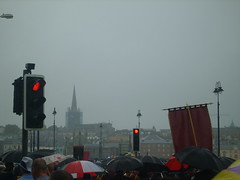
I think this photo best sums up Derry Day for me. The parade's on, the crowds are out to watch, but more than anything else, the umbrellas are up!

As I'm going to miss Black Saturday in a couple of weeks time, I decided to give mum and my auntie the option of going to either the Black parade in Lisnaskea or the Apprentice Boys of Derry 'Relief of Derry' parade in Londonderry. They chose the north-west, and so we went.

Well, it never stopped raining the whole day, and I was absolutely soaked. Right through to the boxers (which is probably too much information!), so that the car seat is still wet now, after several hours of me being in the house.

Lots more photos of the day are available by clicking on this photo - it will take you through to my Flickr site. So, in conclusion, Derry has been relieved!

Friday, August 10, 2007

The reproach of Christ

Over the past couple of days I have been reading 'I am Moses' by Alan Pain. I think I previously blogged about another of Pain's book ('I am Jeremiah'), so when I saw the Moses one in a secondhand bookshop I thought I would get it.

The premise is that it is Moses writing about his life and ministry, with humorous asides and application for possible future generations (that being you and me). An interesting read, although to my mind he seemed to focus an awful lot on a very few incidents, and not mention others at all - such as the reason Moses didn't enter the Promised Land (Numbers 20, 27).*

As I was reading the book, those verses from Hebrews 11 were floating around in my mind, even though they weren't mentioned either. Check out Hebrews 11:24-26 - 'By faith Moses, when he was grown up, refused to be called the son of Pharoah's daughter, choosing rather to be mistreated with the people of God than to enjoy the fleeting pleasures of sin. He considered the reproach of Christ greater wealth than the treasures of Egypt, for he was looking to the reward.'

Despite Moses being brought up in the palace, and being (in the title of the animated movie) The Prince of Egypt, it was all worth nothing compared to being identified with his people and bearing the reproach of Christ. So what was the reproach of Christ? I think the NIV is helpful here - 'He chose to be ill-treated along with the people of God rather than to enjoy the pleasures of sin for a short time. He regarded disgrace for the sake of Christ as of greater value than the treasures of Egypt, because he was looking forward to his reward.'

It makes us think again of our priorities - do we seek to take the power and glory and wealth and privilege of the world now? Because ultimately, it will be worthless - the pleasures of sin last for just a short time compared to the eternal reward of Christ.

When persecution comes, will we seek to preserve ourselves, or will we be in the front line, choosing to be ill-treated with the people of God for the sake of Christ? Surely this is an essential element of the call of Christ, to die to self and to carry our cross daily?

Because, at the end of the Day - capitalisation intended - we will be vindicated by the Father.

--- --- --- --- --- ---

* An aside that I noticed on reviewing the story of Moses not being allowed into the promised land links in to the passage I was preaching on last Sunday that I hadn't noticed at the time. Numbers 20 tells of the people of Israel at Meribah. It wasn't the first time the people had grumbled because of lack of water. On a previous occasion, Moses had been commanded to strike the rock, and water gushed out. On this occasion, however, God told Moses to 'tell the rock before their eyes to yield its water' (Num 20:8).

Moses, however, in his anger (or reverting to traditional methods?) struck the rock with his staff twice. The water came out, but Moses was condemned - 'Because you did not believe in me, to uphold me as holy in the eyes of the people of Israel, therefore you shall not bring this assembly into the land that I have given them.' Moses striking the rock was a sign of unbelief, of not regarding God as holy.

Jump forward to 1 Peter 3, and Peter is calling on those who are suffering persecution to 'Have no fear of them, nor be troubled, but in our hearts regard Christ the Lord as holy, always being prepared to make a defence for the hope that is in you...' (1 Peter 3:14-15). Can you see the link? Moses didn't regard God as holy and suffered unbelief. In the times of persecution, Peter calls on Christians to regard Christ the Lord as holy - to keep faith. Interesting the connections you notice when you're in the word!

Thursday, August 09, 2007

The Happy Couple


Cutting the cake
Originally uploaded by Gary McMurray.

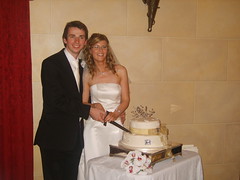
Not long home from Stanley and Sarah's wedding, and my photos of the event are up online! Pictured, we see the happy couple, Mr and Mrs Gamble, cutting their wedding cake. May God bless the couple in their new life together and in their partnership in the gospel ministry at Knockbreda. The entire set of wedding photos can be found here.

Wedding Bells

Just a quick posting as I'm getting ready to go down to Eglantine Parish church for the wedding of Stanley Gamble and Sarah Donaldson. Should be a great day. Photos later tonight or tomorrow, depending on what time I'm home from the reception!

Wednesday, August 08, 2007

Exhibitionist


Hopefully exhibitionist is never a word that could be used to describe me, but for this posting, it seems strangely appropriate. Over the past few days I've received several emails from a nice lady in Scotland, who work for The Lighthouse in Glasgow. It seems to be a centre for design and architecture in Scotland, and they have a variety of exhibitions running.

Basically, to cut a long story short, they want to use my photo 'Craigmore and Beyond' which you can see to the right, in their soon opening exhibition: 'Shifts.' The exhibition is running between 18th August and 14th October in Glasgow, and will be focusing on the corridor between Glasgow and Edinburgh - its infrastructure and architecture.

My photo will seemingly be in a comparative section, where they look at the corridor between Liverpool and Manchester, and the corridor between Belfast and Dublin (where my work fits).

How exciting! I'm gonna be in an exhibition! Woohoo!

Tuesday, August 07, 2007

The Prophet Like Moses

Explore is currently working through Deuteronomy and yesterday I came to the prophecy of a new prophet like Moses:

The LORD your God will raise up for you a prophet like me from among you, from your brothers - it is to him you shall listen - just as you desired of the LORD your God at Horeb on the day of the assembly, when you said, "Let me not hear again the voice of the LORD my God or see this great fire any more, lest I die." And the LORD said to me, "They are right in what they have spoken. I will raise up for them a prophet like you from among their brothers. And I will put my words in his mouth, and he shall speak to them all that I command him. And whoever will not listen to my words that he shall speak in my name, I myself will require it of him." - Deuteronomy 18:15-19

So who was this prophet like Moses? Was he speaking of Joshua, the next leader of the people of Israel? Probably not, as Joshua wasn't a prophet in the same way as Moses. Or was it perhaps Isaiah or Jeremiah, or one of those great prophets? No, I don't think so.

The prophet like Moses was Jesus - the one who revealed the Father, who spoke the Father's words, and who brought his people out of the bondage of slavery in the new Passover. That Passover was through the sacrifice of himself (the lamb without blemish and spot -1 Peter 1:19), so that the righteous wrath of God against sin passes over those who seek refuge under his covering, just like the blood of the lamb was the sign of salvation for the Israelite household in Egypt.

Yet, as the book of Hebrews tells us, there is also a distinction between Moses and Jesus - in that Jesus is greater than Moses:

Therefore, holy brothers, you who share in a heavenly calling, consider Jesus, the apostle and high priest of our confession, who was faithful to him who appointed him, just as Moses was faithful in all God's house. For Jesus has been counted worthy of more glory than Moses - as much more glory as the builder of the house has more honour than the house itself. (For every house is built by someone, but the builder of all things is God). Now Moses was faithful in all God's house as a servant, to testify to the things that were to be spoken later, but Christ is faithful over God's house as a son. And we are his house if indeed we hold fast our confidence and our boasting in our hope. - Hebrews 3:1-6

Monday, August 06, 2007

The Radical Reformission - book review


Having been recommended this book a wee while ago, I finally got around to read it over the weekend. And my reaction? The Radical Reformission by Mark Driscoll is an excellent read!

Mark Driscoll is the pastor of Mars Hill Church in Seattle - named after Mars Hill where Paul preached Christ amidst the Athenian culture. Preaching Christ in a culturally relevant way is the mission of Mars Hill, and is Driscoll's passion.

Yet before you write him off as part of the emerging church movement - with whatever baggage or assumptions you may hold about that section of the church, think again. Driscoll is radically committed to being faithful to the Scriptures as well as speaking to the contemporary culture.

I've read several books about the emerging church, and this has to be the best. Even though he doesn't pretend to write an academic book, he has taught me so much about the current church situation, as well as the mission field we are working in now. My understanding of post-modernism (whatever that is) has grown through reading Driscoll's take on culture.

But the best thing about the book? It has to be that it's written as if he's sitting talking to you while watching the TV. No airs or graces, just plenty of humour and relevance.

Reformission is about reforming the way we do mission - reformission is something we are, rather than something we do. 'The Radical Reformission will show you how to love the Lord through the unchanging gospel, and love your neighbour in our ever-changing culture.'

Blessing Others - A sermon preached in Dromore Cathedral on 5th August 2007. 1 Peter 3:8-22

As we progress through 1 Peter, Peter again appeals for Christians to be loving people, to be bound up in love together. To be honest, you might be forgiven for thinking he goes on about love so very much. In fact, it even looks as if he goes a bit overboard – I mean, it’s okay to love the people like us, or people who like us, but to love those who hate us and harm us?


We’ll see that Peter calls us to be loving people, giving both instruction on how to do it, as well as the reasons why we should do it. Hopefully we’ll see how it fits into Peter’s grand scheme of things within the letter as a whole.


Look with me at verse 8 – ‘Finally, all of you, have unity of mind, sympathy, brotherly love, a tender heart, and a humble mind.’ There’s another of those dreaded ‘finally’ words – it looks like he’s finishing, but in fact he has another couple of chapters to go! Yet it ties up the section he has been dealing with, so it is ‘finally, all of you.’


Leading up to this point, Peter has been speaking of the various models of submission that are part of the Christian life – submission to the proper authorities, submission to masters, submission to husbands. You see, in some of the specifics, they may not have applied to everyone – but now Peter draws the section to a close by appealing to everyone to live a submissive life as part of the community of faith.


First of all, he draws some general characteristics of the submissive life – unity of mind, sympathy, brotherly love, a tender heart, and a humble mind. These things are nothing new to Peter’s readers. Already he has sought for the unity of mind that comes from the hope that they share; the sympathy and compassion of (for example) husbands for their wives; the brotherly love of chapter 1 which flows from a pure (tender) heart; and the humble mind which submits to others.


Peter then moves into some direction for those facing persecution or opposition. Let’s be clear here – Peter is not writing fairy tales to people whose lives are all sweetness and light. He’s writing to real people who are facing real problems – and in particular, the problem of suffering and persecution. He has already briefly mentioned persecution in chapter one (calling his readers the ‘elect exiles’ (1:1) and ‘though now for a little while … you have been grieved by various trials’ (1:6). Now he goes on to counsel them on how to respond to these trials.


‘Do not repay evil for evil or reviling for reviling, but on the contrary, bless, for to this you were called, that you may obtain a blessing’ (3:9). How to deal with opposition? First off, don’t give what you get – while the enemy will trade in evil and reviling, it’s not how we’re to respond. Rather, Peter says, give them what they don’t expect. They expect evil in return, ‘but on the contrary, bless.’ What does that mean, though – what does it mean to bless someone?


Obviously it cannot mean that we reckon as good what is truly evil. Sin is sin. But at the same time, we are to actively seek the good of the other person. As one writer has said, ‘Christians are free from vindictiveness because they trust God’s justice; but they are free for blessing because they know God’s goodness.’


Notice also that the life of blessing is not an optional extra, not a perk that only super-holy Christians can achieve. Rather, ‘bless, for to this you were called.’ While the enemy may not expect us to bless them, God expects us to bless. In blessing when cursed and repaying good for evil, we ultimately follow in the footsteps and example of Jesus, as Peter has already reminded us in 2:23.


Further, Peter provides the reason for the good life, the life of blessing. Simply, because in blessing others, you will obtain a blessing. He shows this in his use of Psalm 34. Verses 10-12 are a direct quotation from Psalm 34. As you can see, they’re also all about the benefits that come from the life of blessing. God is for those who are a blessing to others (those who are righteous), and against those who do evil.


Then Peter goes much further than this. Not only are we called to the life of blessing because we are expected to do it, nor even because of the reward there may be for us, but also, we are called to bless because of the witnessing potential involved. You might think that Peter is being naïve here with his question about there possibly being anyone to harm us for doing good. You might be able to think of plenty of people who would do you harm while you try to do good. Peter asserts there is blessing for us, and the potential to let our persecutors know why we are blessing them – seeking their welfare.


‘Have no fear of them, nor be troubled, but in your hearts honour Christ the Lord as holy, always being prepared to make a defence to anyone who asks you for a reason for the hope that is in you.’ (14-15)


You see, as I said earlier, those who seek to harm us will expect us to retaliate – it’s the worldly thing to do. Someone does something to you, then you get them back. But if we don’t retaliate; if we respond by blessing rather than cursing; it’s going to be unusual, and maybe even confusing for them. Why aren’t you fighting back? Why are you different? Why are you joyful all the time?


What’s the difference? You already know what the difference is – having honoured Christ in our hearts and having the hope in our hearts that comes from him. That’s why we can face circumstances of suffering differently from those around us.


Yet we also need to be ready to tell people when they ask. Are you able to tell a colleague or a friend or neighbour about Jesus if they happen to ask about your hope? Graham Tomlin has written a book called ‘The Provocative Church’ and it deals with this very factor. He argues that we need to be more provocative in how we live our lives so that others see the hope we have and then ask the questions.


And if you’re ready to live the life of blessing, by being able to tell others about your hope – Peter has further advice. ‘Do it with gentleness and respect, having a good conscience, so that, when you are slandered, those who revile your good behaviour in Christ may be put to shame. For it is better to suffer for doing good, if that should be Christ’s will, than for doing evil.’


Can you see the point of these verses? Those who slander us are going to suffer for doing evil. We may well have to face suffering or slander for seeking to do good – but if you’re going to tell others about Jesus, then you need to do it with a good conscience. Because, at the end of the day, it’s going to be far better to suffer for doing good than suffering for doing evil. For the person who slanders, there is shame, but for the Christian who endures suffering, there is only the good conscience.


Peter then goes on to talk about the good conscience, as he returns again to the key theme of the cross. Within 1 Peter, he speaks directly about the cross three times, in each of the first three chapters. As we’ve already thought about briefly, when we suffer for doing good, we are following in the example of Jesus.


‘For Christ also suffered once for sins, the righteous for the unrighteous, that he might bring us to God’ (3:18). It is only because Christ lived the life of blessing, in loving us, that we can follow in his footsteps. And it is because Christ has died for us and was raised again (21) that we have the appeal for a good conscience before God, as we are joined in baptism with Jesus.


In the first mention of the cross, Peter’s focus was on the past – looking beyond the foundation of the world when Christ was foreknown. Then in the second, he spoke of the current calling of submission and not retaliating, especially speaking to slaves, but also to everyone. Now in the third his focus shifts forwards – to Christ seated at the right hand of God through the resurrection with everything subject to him.


You see, the reason we can respond with grace to those who seek to do us harm is because of whose we are. Jesus Christ suffered for us, and he now sits at the right hand of the Father – in the place of authority and power, ready to judge the world. By seeking revenge or retaliation, we’re taking God’s place, in not letting him judge.


You’ll maybe have noticed there are several verses in the middle of the last paragraph I haven’t mentioned yet. Simply put, this is one of the times when I wish Peter had been a little clearer as to what he meant! He speaks of Christ proclaiming to the spirits in prison, who didn’t obey in the days of Noah.


One commentary I read has suggested at least four possible interpretations of who the spirits are – either angels who disobeyed, or the people from Noah’s day; with them either having the gospel proclaimed to them so they may repent, or simply that Christ proclaims his victory over evil and therefore the news of their final doom. I just don’t know, and have gotten no further forward on those few verses. But I’ll keep at it, and maybe in the future I’ll know what it is about.


Nevertheless, the mention of Noah is also an illustration of what Peter has been saying in the passage tonight. Think of all the cursing and reviling and laughter at Noah as he built the ark, the big boat, miles from the coast. It would be like someone in Dromore going up to the rugby club and starting to build a boat. You would think they were nuts! But he persisted in obedience to God’s call, he appealed for his neighbours to join him in the ark, and still they laughed at him. Noah, according to 2 Peter 2:5, was a ‘herald of righteousness’ – blessing when people cursed him. And that’s what God, through Peter calls you to be in the place where you are.


Together, we should be loving people – with that unity of mind, sympathy, brotherly love, a tender heart, and a humble mind. And as well as that, we are called to bless when we are cursed, to seek the good of those who seek our harm.


Maybe as I’ve been speaking, you have been thinking of someone in particular who you find it hard to deal with. Someone who always has a go at you. We’re going to pray now, and for a moment just think about that person. Pray to God and ask him how you can not fear them, but rather seek their good, and to be like Jesus in that way. Then over the next week, keep praying for them, and see how things change.


[Lord God, you have called us to be a blessing to those around us, even to those who seek to harm us. Grant us your strength and your grace to love the people we have thought about as you love them. And help us to seek their welfare. In Jesus’ name we pray, who died for us and reigns with you and the Holy Spirit, one God, forever. Amen]

Sunday, August 05, 2007

Who is the King? - A Sermon preached in Holy Trinity Church, Dromore (Tyrone) on 5th August 2007. 1 Samuel 12:1-25

If God was in the dock, what would you accuse him of? If you had your day in court, how would things turn out?


In our reading this morning, we find Samuel convening a court case, as it were, between the people of Israel, and God. But as we’ll see, when we have God in the dock, it is actually us who are the accused.


Picture the scene. The Israelites have confirmed Saul as king at Gilgal, and they’re having a party to celebrate. Then Samuel stands up for, what the NIV heading calls ‘Samuel’s farewell speech’ (even though he is far from finished).


Samuel had been the leader of the people of Israel from his youth. He was the boy who had heard God’s voice in the temple at Shiloh, and had grown to be the leader of the people. In many ways, he was God’s representative, God’s spokesman.


So into the middle of the celebrations, he gathers the people together for what goes on in this chapter. The opening verses might seem a bit strange, as he asks if he has taken anyone’s ox or donkey, or if he has cheated or been bribed. But if you look at verse 3, he is establishing his credentials as a witness.


If you’re called to court to give your witness, they will make sure you’re going to tell the truth – by making you swear on the Bible, perhaps. But here, Samuel gives his record as a leader as the basis for the truth of what he is going to say. Because he hasn’t lied or cheated or stolen in the past, then they are going to have to listen to his testimony now!


(But there’s more going on here. Verse 3 tells how he led the people – with justice and fairness. It is in contrast to the warning he gave the people in 1 Samuel 8 about what the future king would be like – ‘he will take your sons and make them serve with his chariots and horses… he will take your daughters to be perfumers and cooks and bakers. He will take the best of your field and vineyards and olive groves … He will take a tenth of your grain … He will take a tenth of your flocks’ (1 Sam 8:11-18).)


Can you see the language of the court there – testify (3), witness (5), evidence (7). But rather than God being in the dock, accused; it is the people who are the accused. Samuel is going to (verse 7) ‘confront you with evidence … as to all the righteous acts performed by the LORD for you and your fathers.’ Why are they the accused? Well, because of how they have acted under God’s kingship.


Samuel launches into the familiar story of the people of Israel, reminding them (and us) of their past. Of how in Egypt, the people cried out for help to the LORD, and he rescued them by sending Moses and Aaron. The people of Israel were saved from Egypt and brought into the promised land.


Surely now they would obey God? Surely not – verse 9 shows how they forgot God when they were in the promised land. God had warned them before they entered the land of the consequences of forgetting him, yet they turned around and forgot him! So they came under attack from Sisera, and the Philistines, and the Moabites.


These enemies didn’t all attack at once, though. If you’ve read the book of Judges, you’ll know there was a familiar pattern – Israel would forget God, Israel would come under attack, Israel would remember God and cry out for help, God would send a judge (a deliverer / rescuer), there would be a time of peace, and then Israel would forget God and the cycle started again!


Verse 10 shows us part of that pattern. When they were under threat, then the people would cry out to God – ‘we have sinned; we have forsaken the LORD and served the Baals and the Ashtoreths. But now deliver us from the hands of our enemies, and we will serve you.’ (1 Sam 12:10) In response to their cry, God sent the judges – Jerub-baal (whom you might know better as Gideon), Barak, Jephthah and Samuel.


But then there came one threat too many – the straw that broke the camel’s back. The Ammonites were coming to attack, and the people decided they would rather have a king to rule over them. Look at verse 13. ‘You said to me, “No, we want a king to rule over us” – even though the LORD your God was your king.’


Do you see what Samuel is accusing them of here? It wasn’t that they wanted a king – they already had one – God was their king. Rather than trusting in God as their king, they wanted a king with skin – a human leader who they could see and follow.


Are there times when we do the same? We’re more loyal to the people around us than to God. We would rather do what we want than what God wants us to. We reject God and God’s ways in favour of doing our own thing, or following the people around us (1 Sam 8:5 tells us that they wanted a king like the other nations).


The people hadn’t rejected Samuel as their ruler (although, of course, this is why it is seen as his farewell speech, as he hands over leadership of the nation to the king). They had done much worse, in rejecting God as their king.


Samuel goes on to show just how foolish they had been in wanting the king with skin, compared with having God as king. Look at verses 16-18. While it might have been good to have a human king to lead them into battle, the king couldn’t do what God now does – in sending thunder and rain (during the dry season). Not only does the sign confirm that Samuel is speaking for God, but it also brings conviction of sin in the hearts of the people. Look at verse 19 – ‘Pray to the LORD your God for your servants so that we will not die, for we have added to all our other sins the evil of asking for a king.’


Samuel confirms that they have sinned – in verse 20 he says ‘You have done all this evil; yet do not turn away from the LORD, but serve the LORD with all your heart.’ You see, the people have been in the dock, and the evidence has been presented. Both they and their fathers have sinned against God by forgetting him, by turning their back on him, and seeking to go their own way – especially in wanting a king to rule over them.


We don’t fare much better. We too have forgotten God, as we live comfortably with all that we have. We have turned our backs on God. And we have sought to go our own way. We might not have wanted to crown someone else as king over us, but we have done something as bad – in wanting to be king or queen of our own lives – seeking to sit on the throne of our hearts – the place of God. And that, my friends, is the oldest sin in the creation – wanting to take the place of God. Satan tried it and was cast down for it. The punishment is still the same.


So is that the end of the matter? Have the people of Israel been convicted, as we are too, by the word of God? Yes and no. Yes, they have been convicted – there’s no doubt about it, they are guilty as charged. But there is hope in the court that day, just as there is yet hope for us. Their sin can be cleared, just as if they had never sinned, through God’s grace and mercy. Standing on this side of Calvary, we know that it is through Jesus that we are made right with God and justified before him.


For the people of Israel, verse 20 was their hope – ‘Do not be afraid’ (isn’t that marvellous – that even when confronted with their sin, and confronted by the thunder and rain as a sign of God’s power, the next words of Samuel are words of grace – do not be afraid – which appears in the Bible 65 times) – You have done all this evil; yet do not turn away from the LORD, but serve the LORD with all your heart.’


Their sin has been cancelled, the past is behind them. The focus is immediately turned to the present and future – don’t turn away, serve the LORD. Even though their request was evil, God has given them a king, and Samuel now lays out the two ways to live from here on. Look at verse 14. ‘If you fear the LORD and serve and obey him and do not rebel against his commands, and if both you and the king who reigns over you follow the LORD your God – good! But if you do not obey the LORD, and if you rebel against his commands, his hand will be against you, as it was against your fathers.’


They can go from here by serving the Lord, and obeying him; or they can make the same mistakes their fathers made before them, by rebelling. In essence, we have the same choice. As we confessed our sins at the beginning of the service, we have the choice now – will we continue to live in sin, making ourselves the rulers of our lives, or will we serve God, recognising the rightful king of our lives?


But we can’t do it on our own. Look at verses 22 and 23. ‘For the sake of his great name the LORD will not reject his people, because the LORD was pleased to make you his own. As for me, far be it from me that I should sin against the LORD by failing to pray for you. And I will teach you the way that is good and right.’


As we honour God, so he honours us, and will not let go of us – even when we mess things up. That is the covenant love of God, that he will not reject us, because we are his. But more than that, he doesn’t leave us on our own. For the people of Israel, Samuel promised to pray for the people, and also to instruct them. For us, we have a great high priest who prays for us, Jesus Christ, and the teacher who is the Holy Spirit. God has not left us on our own as we seek to please him. God is with us as we recognise his rule in our hearts.


And so, as we come to a close, you are left with two ways to live. Will you ignore the evidence from the court, and maintain your innocence, by claiming that you have the right to go your own way, the right to take charge of your own life? The warning is stark – ‘If you persist in doing evil, both you and your king will be swept away.’ (1 Sam 12:25)


Or will you, convicted by the evidence of God’s righteous acts and your rebellion, confess your sins, turn and serve God? The testimony of God surely commands you to serve God, because of what he has done for you.


‘Be sure to fear the LORD and serve him faithfully with all your heart; consider what great things he has done for you.’ (1 Samuel 12:24)

Holy Trinity, Dromore


Holy Trinity, Dromore
Originally uploaded by Gary McMurray.

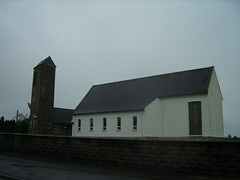
Well, after my early start and the big journey to the far reaches of County Tyrone, I made it to the other Dromore! I was taking the morning service as holiday cover for Bryan Martin, their new Rector. As I've previously mentioned about Annalong, it's always an experience to step into a 'strange' parish and do services.

This morning we were on Morning Prayer One, the traditional service, so at least we had the luxury of at least some familiarity. Another bit of familiarity was that Dromore is the home parish of my college colleague, Stephen Farrell, who was present and read the lesson.

It's always hard to know, but I think the service went okay. The congregation were very welcoming and friendly, and the welcome was furthered by the churchwarden afterwards.

The congregation will celebrate fifty years of the present building next year, and I have to say it's perhaps the best church I've been in for acoustics, responses and general sound quality. A joy and delight to preach and lead in, and also my first time in the Diocese of Clogher.

Sermon was on 1 Samuel 12, as they're working through a series on the book, looking at 'who is the real king?' The sermon will be available shortly soon!

Saturday, August 04, 2007

The 'Other' Dromore

Just a quick posting before I go to bed. I have an early start in the morning as I'm heading up to Holy Trinity Church in the 'other' Dromore to take their morning service and preach. The other Dromore being the County Tyrone variety, of course! As usual, the sermon will be online in due course.

Thursday, August 02, 2007

Tithing

Should Christians tithe? Some would say that we have no need to tithe, because we're not under law, we're under grace. When living in the freedom of Christ, then we have no need to live subject to any laws. Plus, don't tithes sound somewhat archaic. For our Presbyterian brothers and sisters it might also bring back cultural memories of the Penal Laws and the dreaded tithes paid to the Church of Ireland. Is it not just a way of boosting the offering on the collection plate on a Sunday?

Fair enough - in Christ, we are under grace. But imagine my surprise when I encountered Deuteronomy 14, with the section on the tithes:

You shall tithe all the yield of your seed that comes from the field year by year. And before the LORD your God, in the place that he will choose, to make his name dwell there, you shall eat the tithe of your grain, of your wine, and of your oil, and the firstborn of your herd and flock, that you may learn to fear the LORD your God always. And if the way is too long for you, so that you are not able to carry the tithe, when the LORD your God blesses you, because the place is too far from you, which the LORD your God chooses, to set his name there, then you shall turn it into money and bind up the money in your hand and go to the place that the LORD your God chooses and spend the money for whatever you desire. - oxen or sheep or wine or strong drink, whatever your appetite craves. And you shall eat there before the LORD your God and rejoice, you and your household. And you shall not neglect the Levite who is within your towns, for he has no portion or inheritance with you. (Deuteronomy 14:22-27)

The tithe - the tenth of the income wasn't to be given to the temple or the church. Rather, the tithe was to be used for a big party - a huge slap-up feast. Can you imagine that? It's like taking a month and a bit's salary and using it for one dinner? On the UK average earning, it would be spending £2324 for dinner. That would be a quare size of a steak!

Did you notice that the reason for the tasty tithing treat? 'That you may learn to fear the LORD your God always.' (Deaut 14:23) How does a time of feasting remind people to fear God?

Well, you might remember that Moses is speaking to the children of Israel on the edge of the Promised Land. For forty years they have been wandering in the wilderness, dilly-dallying in the desert, and all they have eaten is manna and quail. Manna was, I'm sure, tasty enough. But imagine eating the same food for forty years. "What's for breakfast, darling?" "Manna, honey." "What are we having for lunch?" "Manna." "What are we having for dinner?" "Manna."

The land of Israel was the place of blessing, as we see from the whole book of Deuteronomy. And part of that blessing would be the fact that they had food and grain and wine. Recalling where they had come from would remind them of the fear of the LORD God who had brought them into the land of milk and honey.

So even though it seems that the tithes here were a law, they also flowed from the grace-filled and saved heart.

Now, would you like to tithe?

Binnian


Binnian
Originally uploaded by Gary McMurray.

Another wee image from my Sunday afternoons exploring the Mournes when I was down in Annalong. This one is of Slieve Binnian, from the Head Road. Many more available at my Flickr account - click on the photo to get there!

Tuesday, July 31, 2007

Kilhorne completed

I've now finished my two week duty in Annalong, and really enjoyed it! As you will have seen from my previous posts, I worked through the book of Ruth in the four services. This is the first time I've have the opportunity to work right through a series by myself, and have learned a lot from the experience. I'll be looking forward to the time when I can work through series again!

Having read last week's posting, you might be wondering about the Children's Talk this week. Last week, you remember, the kids didn't come to the front. This week, they came in their droves, and they were a lot more forward. Two lads in particular, who seemed to like telling stories about what had happened to them! It kept the congregation in laughs anyway, and I think they got the point I was making as well - about crying out for help to Jesus.

I think I was a bit more relaxed this Sunday, being more comfortable in the new situation. However, it's back to the possibly nervous situation this Sunday, as I travel to the parish of Holy Trinity, Dromore (in the County Tyrone). Here goes!

Redemption Unfolded: A sermon preached in Annalong on 29th July 2007. Ruth 4:1-22

Did you ever watch Rolf Harris on television? You would see him slapping the paint on the canvas, seemingly randomly. And every so often he would stop and ask ‘Can you guess what it is yet?’ Or for the younger generation, did you ever see Neil Buchanan on Art Attack, as he took tyres and bits of cloth and traffic cones and all sorts as he arranged them seemingly at random.


In both cases, the picture was gradually unfolding, the pieces were put in place, and as time went on, you could see how things unfolded.


So we come to the end of the book of Ruth, as we deal tonight with chapter 4. How will the story end, I’m sure you were wondering as you were coming here tonight, especially if you’ve been with us last week and this morning.


Let’s just recap, before we launch into the passage. Naomi, her husband and her two sons went off to Moab from Bethlehem because of a famine. Sadly, her two sons and her husband died there, and she was left with her two daughters-in-law. Orpah went back home, but Ruth, in her faithfulness stayed with Naomi as they returned to Bethlehem (empty.) Being poverty struck, Ruth went out to glean in the fields, and came into contact with Boaz, who was one of the kinsman-redeemers – the family relatives who could buy back the property of Naomi, restore her land and keep the inheritance going. This morning, we saw how Ruth appealed to Boaz to save her, but Boaz said there was a closer kinsman-redeemer. We left him as he went to sort the matter.


As we see the events of that day unfolding through the passage, we can see through them, the unfolding purposes of God as he redeems and saves his people. We’ll be thinking about those purposes in the past, the present, and the future.


As the passage opens, we meet Boaz going to the town gate. This was the place of doing business, the place where the elders of the town would do business and make judgements. An example of this is found in 2 Samuel 15 – Absalom, the son of King David would stand at the city gate intercepting people who arrived, to act as a judge for them.


Shortly after, the nearer relative that Boaz had mentioned (who isn’t even named), comes along, and Boaz stops him. Then he gets some of the elders of the town to come over, to witness what will go on.


Boaz gives the news that Naomi is selling the land of Elimelech, which needs to be redeemed. The man initially seems happy with the offer, and promises to buy it back, to act as the redeemer. Until Boaz mentions the extra clause of the deal. As well as the fields, you also get a new wife – ‘in order to maintain the name of the dead with his property.’ As we’ve seen right through the book of Ruth, land and family are very important – which means that the role of the kinsman-redeemer is so very important too.


But it’s a step too far. Despite Ruth being of noble character, the man decides that it’s not for him. He just can’t do it. The reason he gives is self-interest. He might endanger his own estate if he takes on the property of another.


So the way is clear for Boaz to become the kinsman-redeemer, and to become Ruth’s husband. Do you see the potentially smelly way of doing business – the removal of a sandal to cement a deal. Imagine taking your shoe off in the estate agent’s office today when you were buying or selling a house! But it shows that he was serious, that the deal has been done, and witnessed.


So how was God working through all this? Let’s look first at how he was active in the past, in unfolding his plan of redemption. The elders bring it to mind in verses 11 and 12, in their blessing on the new couple. As they pray for the future, they remember how God has acted in Israel in the past. ‘We are witnesses. May the LORD make the woman who is coming into your home like Rachel and Leah, who together built up the house of Israel. May you have standing in Ephrathah and be famous in Bethlehem. Through the offspring the LORD gives you by this young woman, may your family be like that of Perez, whom Tamar bore to Judah.’


Rachel and Leah were the wives of Jacob, the mothers of the tribes of Israel, and the elders pray that the LORD will make Ruth like them. It was through the LORD that Rachel and Leah had built up the house of Israel, building up the nation of the people of God.


Further, the elders also recall the next generation of the family, praying that the couple’s offspring will be like Perez, the son of Judah (who was the great-great-great-great-grandfather of Boaz). Notice the dependence of the former generations on the LORD, and how the elders call on the LORD to bless the new family as well.


The building up of Israel was following in the promise of blessing to Abraham, that he would be built up into a great nation that no one could number, and God was faithful to his promises through the actions of Rachel and Leah.


Because God had been faithful in the past, it meant that his plan of redemption could be rolled out in the current generation as well. In verses 9 – 10 we see God’s plan of redemption in the present (for Ruth and Boaz). So, even after the terrible situation of the deaths of Elimelech, Mahlon and Chilion; Boaz was there to act as kinsman-redeemer – God’s agent of redemption in the present.


Right the way through we have seen God’s providence acting for the redemption of Naomi and Ruth – in bringing Naomi to the place where Ruth was, in bringing them together through their tragic circumstances; in Ruth working in the fields of Boaz; in the care and protection that Boaz offered. And also in tonight’s reading – in bringing about the meeting with the closer relative (he just happened to come along), and in what transpired that day.


Look also at verses 13-16. Here we see the ‘current’ redemption continuing, about a year later. Not only have Boaz and Ruth married, but God has brought about a son. Once again the praises ring as they see that God keeps his promise and his purposes! ‘Praise be to the LORD, who this day has not left you without a kinsman-redeemer.’


As we’re coming near the end of the book, you might be wondering who the book is all about. Who is the hero of the story? Is the book all about Naomi?


Notice that the attention seems to have shifted to Naomi, and away from Ruth. Naomi is the focus of verses 13-17, as the women talk to her, and as Naomi takes the child and cares for it. The climax of the book is in verse 17 – ‘Naomi has a son.’ Gone is the emptiness of Naomi; gone is the bitterness of ‘Mara’; gone is the childlessness of Naomi. She has been filled, and redeemed, and saved.


But notice that the women remind Naomi about the vital role and importance of Ruth. Look at verse 15. ‘For your daughter-in-law, who loves you and who is better to you than seven sons, has given him birth.’ Is this a claim that Ruth is the real hero of the story (after all, the book is named after her)? Naomi is reminded that it was through Ruth that her emptiness is brought to an end, and meaning is brought to her life, in two ways. First, Ruth loves her, and second, she is better than seven sons.


I’ve spoken a lot about this being a romantic tale, a love story of sorts between Ruth and Boaz. But do you know what? This verse is the only mention of ‘love’ in the whole book. The love of Ruth for Naomi, for her mother-in-law. The rest of the story centres on kindness – the kindness of Ruth in remaining with Naomi; the kindness of Boaz as he shows favour to Ruth; the kindness of Ruth in choosing Boaz. Love is here between Ruth and Naomi.


Another way in which Ruth is seen as the heroine is that she is counted as better than seven sons to Naomi. This was a remarkable thing to assert, given the importance of sons in the culture.


Or maybe Boaz, the redeemer is seen as the hero? The way he shows kindness, and the way he redeems the family, saving them from poverty and disgrace.


But as one writer has commented: ‘None of them can be said to be the person about whom the book is written. But the implication throughout is that God is watching over his people, and that he brings to pass what is good. The book is a book about God. He rules over all and brings blessing to those who trust in him.’


But in reality, the hero of the story is God. It was the LORD who had brought his purposes about in the former generations; it was the LORD who was acting in history in the circumstances of Naomi and Ruth and Boaz.


And, as we bring the study to an end, we see also that God is working out his grand plan of redemption, not only in the past and the present, but also in the future. The son that Ruth bears is named Obed, and as verse 17 tells us, he became the father of Jesse, who was the father of David.


This wasn’t just a local crisis of a famine, and the subsequent relief effort, that people would soon forget about. Nor was it just a nice story from a family history. Rather, we see that the events in the lives of Naomi and Ruth and Boaz had effects not only on a local scale, or a national scale, but truly, on a global scale, right down through history.


God’s plan of salvation entailed the development of a king in Israel, one who would rule the people justly, and who would be the type, the shadow, the picture looking forward to the true King, the true Messiah who would come to rule God’s people.


The family tree of David is of such importance, not just because of David being king, but because his family line was that of Jesus. Verses 18-22 are also found in Matthew 1:3-6. When you get home, have a look at the first chapter of Matthew, and think on how God oversaw that family line, as he unveiled his purposes, and prepared the way for Jesus, the Messiah to come.


The faithfulness of Ruth, and the redemption that Boaz provided paved the way for the redemption that Jesus came to provide. We thought of that this morning. Tonight, let us praise our faithful God, who brings transformation to our bleakest situations; who rescues us from our troubles, and who blesses us with his grace.


At the start we mentioned the Rolf Harris or Art Attack progression in art, as the pieces unfolded. Ruth’s story was a step in the progress of God rolling out his plan of salvation in Jesus.


God’s purposes were not defeated by the famine, nor by the unwillingness of the first relative’s refusal to redeem Ruth and Naomi.. His purposes for you cannot be defeated either.


‘’For I am convinced that neither death nor life, neither angels nor demons, neither the present nor the future, nor any powers, neither height nor depth, nor anything else in all creation, will be able to separate us from the love of God that is on Christ Jesus our Lord.’ (Romans 8:38-39)


So as we finish, the key themes of the previous chapters are brought together. God’s faithfulness even when times are rough. God’s grace poured out on the least and the lost. God’s redemption for those who cry out in need. And God’s redemption plan worked out so that we can be saved. What an amazing God we serve!

Sunday, July 29, 2007

Calling for redemption - A sermon preached in Annalong on Sunday 29 July 2007. Ruth 3:1-18

Have you ever had a midnight encounter? Maybe you were walking down the road at night, and you saw someone approaching, but didn’t know who they were. How did you feel?


I remember well one midnight encounter – maybe about ten years ago. We were at Boys Brigade camp, and I was in my tent with six other fellas. The officers were trying to quiet us down for the night, but the other fellas in my tent were a bit rowdy. We could see the shadow of an officer on the wall of the tent, and one of the boys shouted out: ‘Ah, it must be Robert, look at the big nose on him!’ Needless to say that it wasn’t Robert; it was the chaplain of the camp, and we all had to report to him the next morning at 6am for duty!


In our reading this morning, we come across a midnight encounter. Boaz is at his threshing floor – the harvest has been gathered in and is now being threshed, and he is in high spirits. After an evening of feasting and drinking to celebrate the harvest, he goes to lie down at the far end of the grain pile. All is well with him as he starts to sleep.


But in the middle of the night, he wakes up, startled by something. And look what he finds, lying at his feet – a woman! Who is it, or what’s happening? Can you imagine the shock of finding someone lying at your feet? So he asks ‘who are you’.


Having read the passage earlier, we know that it’s Ruth. Look at verse 9, to see how she responds. ‘I am your servant Ruth. Spread the corner of your garment over me, since you are a kinsman-redeemer.’


You might be wondering what a kinsman-redeemer is, and we’ll find out as we look at the passage as a whole. We’ll see what she’s doing there; what she asks for; and how Boaz responds.


Firstly, what Ruth is doing there. You might remember from last week that Ruth is the daughter-in-law of Naomi. Naomi and her husband left Bethlehem and went to Moab during a famine, and her husband died. Then her two sons married Moabite women, and the sons died. Orpah, one of the daughters-in-law went back home, but Ruth stayed with Naomi when she came back to Bethlehem.


In chapter two we found Ruth gleaning in the fields of Boaz, because she was poor, and needed to eat. It was legal for the poor and the foreigner to follow the harvesters and glean what was left behind. And it was there that Boaz met Ruth for the first time, offering her protection in the field, and granting her favour (or grace).


So now, coming near the end of the harvest, Naomi takes the initiative in trying to find a home for her, or as the margin puts it, ‘find rest.’ As I’ve said last week, family ties were very important at this time, especially in the inheritance of land. You see, when the people entered the land of Israel, it was divided up among their tribes and clans. Those inheritances could not be changed, but were passed down through the families.


But, as sometimes happened, there were problems. What if someone couldn’t afford to hold the land and sold some of it? Surely the land would be lost to the clan?


The Law provided for such situations. Over in Leviticus 25 we find a series of laws about the year of jubilee and about redemption. The year of Jubilee was to be held every fifty years, and any land which had been sold would be returned to the original owner again. However, if you had the means, you could ‘redeem’ the land. That simply means to buy back the land that had been sold in the first place.


So, for example, Leviticus 25:25 reads: ‘If one of your countrymen becomes poor and sells some of his property, his nearest relative is to come and redeem what his countryman has sold.’


For Naomi and Ruth, though, the situation was more complicated, due to not having any sons. Normally, if the eldest son died, then the second son would marry the wife of the first in order to provide an heir for his brother. This was the reason the Sadducees had come with their ‘problem’ to Jesus about the seven brothers who died without a son, and which man would the wife be married to at the resurrection. But there are no more brothers in the family.


For the inheritance to be passed on, it would take a kinsman-redeemer (‘go-el’ in Hebrew). This would be a male family relative – perhaps an uncle or cousin, who would step in and redeem the land. So in verse 2, Naomi has identified Boaz as one of the kinsman-redeemers, and she send Ruth to him at night, at the threshing floor to make her appeal.


So after Boaz lies down, Ruth takes up her position, uncovering his feet and lying at them, in the position of the servant. It is in this position that Boaz finds her as he is wakened from sleep. And it is from this position that Ruth makes her appeal.


‘Spread the corner of your garment over me, since you are a kinsman-redeemer.’ Can you see what she’s saying here? You know that I’m in need Boaz – not just in terms of my poverty and my need; but also for the good of the family lands – spread the corner of your garment over me! It is a request for protection, for cover, for warmth. Ruth acknowledges her poverty to Boaz, confesses her need, and appeals for Boaz to act for her.


Next, we see how Boaz responds. In chapter two we noted that Boaz was ‘a man of standing’ – a worthy man. Once again we see the worthy man in action, as he cares for Ruth, and expresses his admiration for her. Notice in verse 10 that he identifies her kindness (a recurring theme in the book of Ruth) – her kindness in not running after younger men, but rather fixing her attention on him (do we get a hint here that he is an older man?).


In addition to her kindness, he highlights the fact that she is seen by the local community as ‘a woman of noble character.’ Just as Boaz is a worthy man, so Ruth is a woman of noble character. It has been said that in some of the Hebrew canon of scripture, Ruth comes immediately after Proverbs, because Ruth is a living example of the ‘woman of noble character’ from Proverbs 31: ‘a wife of noble character who can find? She is worth far more than rubies. Her husband has full confidence in her and lacks nothing of good value.’ (Prov 31:10-11)


Yet as he has mentioned the other men – other potential suitors, he is building her up to the sad news that he is not the nearest kinsman-redeemer. There were strict procedures to be followed, with an order of nearness in effect. The other relative will have first refusal.


Even with the possibility of losing Ruth to the other kinsman-redeemer, he is still the worthy man, pouring out the grace and favour we have already seen of him. Look at verse 14. In order to avoid any scandal, he ensures that she has gone home by morning, and will not let it be said that there was a woman at the threshing floor. This is as much for Ruth’s reputation as for his own.


But as he sends her away, we see the great generosity again. Verse 15 – he pours out 6 measures of barley for her to take back to Naomi, so that, as he tells Ruth (verse 17) ‘Don’t go back to your mother-in-law empty-handed.’ Do you remember that word empty? Where have we encountered it before? As Naomi returned to Bethlehem at the end of chapter one, she complained that ‘the LORD has brought me back empty.’ (1:21) It has been said that the book of Ruth is the reversal of Naomi’s emptiness, and again, we see it here, in the picture of God’s grace through Boaz.


So we have seen that Ruth is in trouble, in need, and appeals for help to her kinsman-redeemer, to Boaz. Can you see the parallels with our situation? Have you cried out to your kinsman-redeemer?


You know the need that we have. Ruth was in need because the family land had been sold, and she was in poverty. But our need is all that much greater, because we have sold ourselves. We’ve sold ourselves to the devil, and given up our birthrights. When Adam and Eve believed the lie of the serpent, they were removed from the garden and lost their status as friends of God.


And we, their children, continue to follow in their footsteps. Oh, people try to say that humanity is getting better all the time, but really, despite the advancement in technology and healthcare and science, we are still poor towards God. Science and wealth has blinded us to our poverty, as we consider ourselves to be rich.


Think of the words of the Lord Jesus to the church in Laodicea. ‘You say, “I am rich; I have acquired wealth and do not need a thing.” But you do not realise that you are wretched, pitiful, poor blind and naked.’ (Revelation 3:17)


Now do you see our need? So who is our kinsman-redeemer? None other than the Lord Jesus. He it was who intervened to rescue us; to redeem us. He gave of himself so that we might gain the inheritance of the Father. He died so that we might be received into the family of God. This is the picture the New Testament provides for us, as it speaks of Jesus as redeeming us.


Jesus it was, ‘who gave himself for us to redeem us from all wickedness and to purify for himself a people that are his very own, eager to do what is good.’ (Titus 2:14) Also, Peter writes ‘For you know that it was not with perishable things such as silver of gold that you were redeemed from the empty way of life handed down to you from your fore-fathers, but with the precious blood of Christ, a lamb without blemish or defect.’ (1 Peter 1:18-19).


On the cross, Jesus did the work of redemption – paying the price so that we could be forgiven and bought back from sin. He did it because of his amazing grace, to bring our pardon and redeem us. Yet we need to cry out to him to save us.


We need to acknowledge our need, and confess that we can’t do it on our own. We need him to save us. Can you echo those words of Ruth, and make them your own?


‘I am your servant. Spread the corner of your garment over me, since you are a kinsman-redeemer.’