Saturday, April 04, 2009
Guest Blogging
From time to time we're going to be having some guest blogging here. The first contribution will be published through the week, from regular commenter, Mrs McF. Watch this space, and interact with her challenging material!


Friday, April 03, 2009
Candy to Chocolate
Another in the Friday series 'What's on your iPod?' A quarter pound of sweet things from the Candy shop today!
Candy - Ash
Candyfloss - Booley
Cannonball - Damien Rice
Capriccio Italien - Tchaikovsky
Captain Backfire - The Neil Cowley Trio
Capua: O Sole Mio - Luciano Pavarotti
Caro Mio Beno - Katherine Jenkins
Castle on a Cloud - Les Miserables soundtrack
Catch Me If You Can - The City of Prague Philharmonic Orchestra
Cave - Muse
Certainty of Chance - The Divine Comedy
Change - Lightning Seeds
Chasing Cars - Natasha Bedingfield (in the Live Lounge)
Cheese on a G String - Teannaich
Chelsea Dagger - The Fratellis
Chemical Beats - The Chemical Brothers
Cherry Bomb - Ash
Chocolate - Snow Patrol
Teannaich are a ceilidh band from Scotland with foot-tapping tunes. Not the band that did our wedding ceilidh, but another good one!
the thing that strikes me about this selection is the number of 'local' bands from Northern Ireland that have made it. Booley is now better known as Duke Special, Ash, The Divine Comedy, and Snow Patrol. Who are the up and coming Northern Ireland acts?
Candy - Ash
Candyfloss - Booley
Cannonball - Damien Rice
Capriccio Italien - Tchaikovsky
Captain Backfire - The Neil Cowley Trio
Capua: O Sole Mio - Luciano Pavarotti
Caro Mio Beno - Katherine Jenkins
Castle on a Cloud - Les Miserables soundtrack
Catch Me If You Can - The City of Prague Philharmonic Orchestra
Cave - Muse
Certainty of Chance - The Divine Comedy
Change - Lightning Seeds
Chasing Cars - Natasha Bedingfield (in the Live Lounge)
Cheese on a G String - Teannaich
Chelsea Dagger - The Fratellis
Chemical Beats - The Chemical Brothers
Cherry Bomb - Ash
Chocolate - Snow Patrol
Teannaich are a ceilidh band from Scotland with foot-tapping tunes. Not the band that did our wedding ceilidh, but another good one!
the thing that strikes me about this selection is the number of 'local' bands from Northern Ireland that have made it. Booley is now better known as Duke Special, Ash, The Divine Comedy, and Snow Patrol. Who are the up and coming Northern Ireland acts?
Say What?
While we were in Lanzarote, we went on a couple of bus tours to see some of the sights of the volcanic island. As we were passing through the town of Teguise, the former capital of the island, the tour guide pointed out a castle on top of the hill overlooking the town. Telling us something about its history, including pirates, she then said that more recently it had become an 'Amy Grant museum.'
That's strange, I thought. I didn't imagine that Christian singer Amy Grant would be so popular in the Canaries. Did she have a huge following amongst the residents of Lanzarote?
Well, she must have, as the tour guide went on to explain that islanders had brought tickets and photos and momentos to be placed in the museum. So it must be true - a museum dedicated to the Lazarote love of Amy Grant.
And then I realised what she had actually said. Not an Amy Grant museum, but an Emigrant Museum! Lanzarote was one of the last islands to be developed for tourism, so for a long time it had been the poor relation of the Canary Islands, and people had to move away, emigrate, to find work and money. With the rise in the tourism industry, the islanders had returned, and thus had formed the museum in Santa Barbara castle dedicated to their emigrants!
That's strange, I thought. I didn't imagine that Christian singer Amy Grant would be so popular in the Canaries. Did she have a huge following amongst the residents of Lanzarote?
Well, she must have, as the tour guide went on to explain that islanders had brought tickets and photos and momentos to be placed in the museum. So it must be true - a museum dedicated to the Lazarote love of Amy Grant.
And then I realised what she had actually said. Not an Amy Grant museum, but an Emigrant Museum! Lanzarote was one of the last islands to be developed for tourism, so for a long time it had been the poor relation of the Canary Islands, and people had to move away, emigrate, to find work and money. With the rise in the tourism industry, the islanders had returned, and thus had formed the museum in Santa Barbara castle dedicated to their emigrants!
Guitar Praise

Following on from Sunday School Musical, the latest in the line of Christian copy-cat products is Guitar Praise*. Based on the highly successful console game Guitar Hero, you can play along to all your favourite Rock praise artists. However, it isn't available on the Wii, PS3, Gamecube or Commodore C64. It runs on either Windows or Mac.
With thanks to Scrabo Power for his mention of it. On that page he also writes about Praise Band: The Movie - which tells the story of a traditional church and how it changes when the pastors starts a praise band.
Are these products about changing our culture for the good, or simply promoting the Christian sub-culture bubble which has no impact on wider society? It seems like we may be staying in the salt cellar (or the salt-shaker) rather than being the salt of the world. It seems like we're keeping the light in our wee corner rather than shining it into all the world. How can we impact culture by ignoring and copying it with products only aimed at Christians?
* Following that link will immediately start a very loud sample of one of the songs you can play on Guitar Praise. You have been warned!
Thursday, April 02, 2009
Who Did Jesus Die For?
That was the question in the Explore Bible Reading notes today. Perhaps you've already jumped into your 'camp' whether it be Arminian or Calvinist, universalist or hyper-Calvinist.
In the run up to Easter, Explore is taking things very slow, working verse-by-verse through 2 Corinthians 5. The focus is on what Jesus achieved on the cross. In verse 14, we read these words: For the love of Christ controls us, because we have concluded this: that one has died for all, therefore all have died.
One has died for all. Perhaps some of my Calvinist brothers and sisters are already implying that 'all' there means 'all the elect'. After all, Christ performed only a limited atonement, according to Calvinism. Yet that's not what this verse is saying. One has died for all.
For those who approach the scriptures through doctrine-tinted spectacles, verses like these may need to be explained, or explained away. Rather than listening to scripture, we prefer to have our doctrinal framework, then seek to mould scripture to fit into the frame.
Predestination, election and the extent of the atonement are big issues. A lot of ink has been spilled on these. Some verses clearly state that Christ died for all (John 3:16, 1 Timothy 2:3-6). Others state that he performed a particular redemption (Mark 10:45, John 10:14-15). Are you Arminian or Calvinist?
Into the mix comes the Amyraldian Association. Named after Moses Amyraut, who was a disciple of Calvin, they point out that Calvinism as we know it today is actually more like exaggerated, or hyper-Calvinism, and not actually authentic Calvinism which Jean Calvin himself would recognise. Amyraldianism argues that Christ did indeed die for all, but that only those who are elect will be saved - a hypothetical universalism but with a particular or limited atonement.
It's what Mark Driscoll in Death by Love calls 'an unlimited limited atonement.' It seems to take account of the Biblical evidence, that Christ died for all, but that only those who have faith will be saved. Better than labels, let's hold to the Scriptures as our basis of faith and doctrine. Doctrinal frameworks aren't inspired, but the Scriptures are the God-breathed word.
In the run up to Easter, Explore is taking things very slow, working verse-by-verse through 2 Corinthians 5. The focus is on what Jesus achieved on the cross. In verse 14, we read these words: For the love of Christ controls us, because we have concluded this: that one has died for all, therefore all have died.
One has died for all. Perhaps some of my Calvinist brothers and sisters are already implying that 'all' there means 'all the elect'. After all, Christ performed only a limited atonement, according to Calvinism. Yet that's not what this verse is saying. One has died for all.
For those who approach the scriptures through doctrine-tinted spectacles, verses like these may need to be explained, or explained away. Rather than listening to scripture, we prefer to have our doctrinal framework, then seek to mould scripture to fit into the frame.
Predestination, election and the extent of the atonement are big issues. A lot of ink has been spilled on these. Some verses clearly state that Christ died for all (John 3:16, 1 Timothy 2:3-6). Others state that he performed a particular redemption (Mark 10:45, John 10:14-15). Are you Arminian or Calvinist?
Into the mix comes the Amyraldian Association. Named after Moses Amyraut, who was a disciple of Calvin, they point out that Calvinism as we know it today is actually more like exaggerated, or hyper-Calvinism, and not actually authentic Calvinism which Jean Calvin himself would recognise. Amyraldianism argues that Christ did indeed die for all, but that only those who are elect will be saved - a hypothetical universalism but with a particular or limited atonement.
It's what Mark Driscoll in Death by Love calls 'an unlimited limited atonement.' It seems to take account of the Biblical evidence, that Christ died for all, but that only those who have faith will be saved. Better than labels, let's hold to the Scriptures as our basis of faith and doctrine. Doctrinal frameworks aren't inspired, but the Scriptures are the God-breathed word.
Wednesday, April 01, 2009
April Fools
Just a quick feature highlighting some of the April Fools' Day pranks and stories attempted by the broadcasting media. The Guardian seems to have been propagating the myth of the half-shark half-whale as their offering, while the Belfast Telegraph has been claiming that the Westlink is being made into a one-way system to cope with rush hour traffic. Particularly funny to read the comments from people who thought it was serious!
My favourite, though, is from Belfast Gonzo writing on Slugger O'Toole. He exclusively revealed the new iPhone application, the Ulster Fry, which purportedly uses the phone's battery to generate microwaves to heat up a cup of tea or a carryout. Truly, Gonzo was on fire as he cooked up a hot story!
My favourite, though, is from Belfast Gonzo writing on Slugger O'Toole. He exclusively revealed the new iPhone application, the Ulster Fry, which purportedly uses the phone's battery to generate microwaves to heat up a cup of tea or a carryout. Truly, Gonzo was on fire as he cooked up a hot story!
Sermon: Psalm 14 The Fool
Did you hear the one about the the spaghetti tree? Back in 1957, Panorama showed footage of farmers in Switzerland harvesting spaghetti from what they called spaghetti trees. Seemingly the BBC got lots of phone calls asking where people could buy these spaghetti trees. In reality, though, it was an ‘April Fool’ joke - spaghetti being pasta, and so (just like money), it doesn’t grow on trees.
We’re familiar with the idea of an April Fool. It’s a joke, a bit of fun. Yet our Bible reading today, Psalm 14, contains the picture of something just as foolish, yet more serious. Indeed, rather than being an April Fool, it’s a way to be foolish all year long.
Verse 1: The fool says in his heart, “There is no God.” Such a person decides in their heart that God cannot exist, indeed, that God does not exist. Maybe they look around them at the greatness and vastness of creation - flowers and plants, animals and stars - and think it all came about by chance, by evolution, the endless effects of random events. Or maybe they look at the pain and suffering, in themselves or others, and think that God could not possibly exist.
Or maybe it’s more basic than that. It’s not the result of studying the evidence, or thinking it through. No, it’s just plain wishful thinking, hoping that God doesn’t exist - because if he does, then there are consequences to our actions, we’re accountable, it moves us from being the centre of our existence.
And how does the Bible describe such a person? What is God’s opinion of them? Foolish. The fool says in his heart. We’ll see as we look at the rest of the Psalm, first, what this means for the person, and then ultimately why it is foolishness.
First then, what it means for the person. On Sunday nights we’re working through the letter to Titus. The main theme there is that our belief must impact on our behaviour. So, by believing the truth, we must then live lives that accord with our sound doctrine. There’s a danger that we can be inconsistent. But as we see here, the fool is completely consistent, and consistently wrong!
Verse 1 continues: ‘They are corrupt, they do abominable deeds, there is none who does good.’ The fool believes there is no God, and they live as if there is no God, no one keeping watch, or ensuring justice. So people do what they like, which is always inevitably wrong and evil.
Following the desires of their heart and sinful flesh, they therefore do bad things, more and more. Having already rejected God, then verse 2 summarises the result. The Lord looks down to see if there are any who seek after God, but the answer is no. All have turned aside. Or as Paul says in Romans 3, all have sinned.
You see, it might be easy for us to sit here in the church building and look at those outside thinking, oh yes, they’re fools. But it turns out that at one time we also were fools. We also rejected God, lived our own way, lived as if God didn’t exist. But thanks be to God that he saved us, not because of our works - if we were sinners, turned aside and doing wrong, then we couldn’t be saved by ourselves - no, God saved us through faith in the Lord Jesus, crucified for us - what Paul declares is the foolishness of the cross (1 Corinthians 1:18-31).
So why is it foolish to live as if God does not exist? Well, because God does exist! Look at verse 5. The foolish have lived in opposition to God, and also in opposition to God’s people - eating up my people as they eat bread - but God is with the generation of the righteous. Further, the LORD is the refuge of the poor.
And what is the end result of foolishness? Well, ‘there they are in great terror.’ I imagine it must be a terrible shock for men and women to deny that God exists, and to pass from life to death, and meet God face to face in judgement. It is indeed a great terror for unbelievers.
Not so for God’s people. Despite having endured oppression and opposition from the unbelievers, the fools, God himself will act for their salvation. As we stand on this side of the cross, then we do indeed know the salvation that verse 7 cries for. Do we rejoice, are we glad in our salvation? Having been saved from God’s wrath, we would be fools not to be glad!
This sermon was preached at the Midweek Morning Prayer in St Elizabeth's Dundonald on 1st April, 2009.
We’re familiar with the idea of an April Fool. It’s a joke, a bit of fun. Yet our Bible reading today, Psalm 14, contains the picture of something just as foolish, yet more serious. Indeed, rather than being an April Fool, it’s a way to be foolish all year long.
Verse 1: The fool says in his heart, “There is no God.” Such a person decides in their heart that God cannot exist, indeed, that God does not exist. Maybe they look around them at the greatness and vastness of creation - flowers and plants, animals and stars - and think it all came about by chance, by evolution, the endless effects of random events. Or maybe they look at the pain and suffering, in themselves or others, and think that God could not possibly exist.
Or maybe it’s more basic than that. It’s not the result of studying the evidence, or thinking it through. No, it’s just plain wishful thinking, hoping that God doesn’t exist - because if he does, then there are consequences to our actions, we’re accountable, it moves us from being the centre of our existence.
And how does the Bible describe such a person? What is God’s opinion of them? Foolish. The fool says in his heart. We’ll see as we look at the rest of the Psalm, first, what this means for the person, and then ultimately why it is foolishness.
First then, what it means for the person. On Sunday nights we’re working through the letter to Titus. The main theme there is that our belief must impact on our behaviour. So, by believing the truth, we must then live lives that accord with our sound doctrine. There’s a danger that we can be inconsistent. But as we see here, the fool is completely consistent, and consistently wrong!
Verse 1 continues: ‘They are corrupt, they do abominable deeds, there is none who does good.’ The fool believes there is no God, and they live as if there is no God, no one keeping watch, or ensuring justice. So people do what they like, which is always inevitably wrong and evil.
Following the desires of their heart and sinful flesh, they therefore do bad things, more and more. Having already rejected God, then verse 2 summarises the result. The Lord looks down to see if there are any who seek after God, but the answer is no. All have turned aside. Or as Paul says in Romans 3, all have sinned.
You see, it might be easy for us to sit here in the church building and look at those outside thinking, oh yes, they’re fools. But it turns out that at one time we also were fools. We also rejected God, lived our own way, lived as if God didn’t exist. But thanks be to God that he saved us, not because of our works - if we were sinners, turned aside and doing wrong, then we couldn’t be saved by ourselves - no, God saved us through faith in the Lord Jesus, crucified for us - what Paul declares is the foolishness of the cross (1 Corinthians 1:18-31).
So why is it foolish to live as if God does not exist? Well, because God does exist! Look at verse 5. The foolish have lived in opposition to God, and also in opposition to God’s people - eating up my people as they eat bread - but God is with the generation of the righteous. Further, the LORD is the refuge of the poor.
And what is the end result of foolishness? Well, ‘there they are in great terror.’ I imagine it must be a terrible shock for men and women to deny that God exists, and to pass from life to death, and meet God face to face in judgement. It is indeed a great terror for unbelievers.
Not so for God’s people. Despite having endured oppression and opposition from the unbelievers, the fools, God himself will act for their salvation. As we stand on this side of the cross, then we do indeed know the salvation that verse 7 cries for. Do we rejoice, are we glad in our salvation? Having been saved from God’s wrath, we would be fools not to be glad!
This sermon was preached at the Midweek Morning Prayer in St Elizabeth's Dundonald on 1st April, 2009.
Tuesday, March 31, 2009
March Review
It's the last day of the month of March, so time for another review of the month's blog postings. March 2009 had 37 bloggings, the busiest March since records began, although March 2007 came close with 35.
So what has been happening in my life and on the blog this month?
Like the (most of) the rest of Northern Ireland and the wider world, there was shock when murder at the hands of terrorists returned to our wee province, first with the murder of the two Sappers, then of Constable Carroll.
My two preachings in March were from Titus, as we began a new series in the evenings, and after I introduced Titus (audio), I spoke on the qualifications for Christian leaders (audio).
On the music front, there were the Hayley Westenra and Il Divo concerts, as well as thoughts on Kelly Clarkson and Flo Rida. We also launched a new feature, 'what's on your iPod?' part 1, part 2, part 3, part 4.
My reading yielded reviews of Max Lucado's Cast of Characters, Mark Driscoll's Death by Love, Kirsten Birkett's The Essence of Darwinism, and John Grisham's The Appeal. More books were read during March thanks to the week's relaxing holiday in Lanzarote, but the reviews will come during April.
I think my favourite posting of the month was my reflection on Psalm 67, 'The Answer to Their Prayers.'
So what has been happening in my life and on the blog this month?
Like the (most of) the rest of Northern Ireland and the wider world, there was shock when murder at the hands of terrorists returned to our wee province, first with the murder of the two Sappers, then of Constable Carroll.
My two preachings in March were from Titus, as we began a new series in the evenings, and after I introduced Titus (audio), I spoke on the qualifications for Christian leaders (audio).
On the music front, there were the Hayley Westenra and Il Divo concerts, as well as thoughts on Kelly Clarkson and Flo Rida. We also launched a new feature, 'what's on your iPod?' part 1, part 2, part 3, part 4.
My reading yielded reviews of Max Lucado's Cast of Characters, Mark Driscoll's Death by Love, Kirsten Birkett's The Essence of Darwinism, and John Grisham's The Appeal. More books were read during March thanks to the week's relaxing holiday in Lanzarote, but the reviews will come during April.
I think my favourite posting of the month was my reflection on Psalm 67, 'The Answer to Their Prayers.'
The Appeal: Book Review
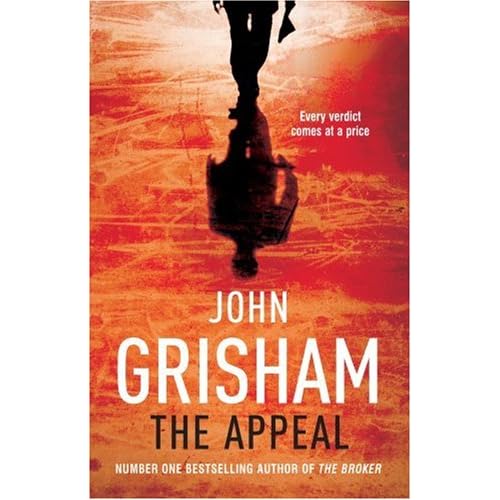
John Grisham has long been one of my favourite authors. With his fine descriptive style, tense legal thrillers with cautionary moral tales, he takes the reader on journeys into US courtrooms and prisons. The Appeal, his twentieth fiction offering continues in the same style, with another compelling story.
After a huge verdict in favour of a widow whose husband died in a village whose water supply was poisoned (allegedly) by a chemical firm, the firm launch an appeal to the Mississippi Supreme Court. The novel follows the experiences, ups and downs of the family lawyers who risked everything for the widow as they prepare for the appeal hearing. The twist is that before the case will come up, there's an election for a seat on the Supreme Court, and big business seeks to influence the election by promoting a candidate who will be much less sympathetic to huge plaintiff damage verdicts.
It seems that this book is written as a personal plea from Grisham, himself a former member of the House of Representatives in Mississippi to America at large to change the way Supreme Court Justices are appointed, thus preventing big business from 'buying' justice. An excellent read, with plenty of characteristic twists along the way.
Monday, March 30, 2009
No, But Seriously...
Last week, I shared how Adrian Dorrian is moving on from Newtownards to the Antrim Road, from St Mark's to St Peter's. This week, I'm delighted to provide a link to his new blog! Adrian's always been very interested in blogging, but never started. Now, after a long time of prodding and 'nagging', he has taken up the challenge, and launched his blog. Not much there yet, but bookmark it or subscribe for his continuing content.
Happy Holidays
Despite the published updates last week, I wasn't near a computer the whole time. The advance publication took on blogger really is great - write up your posts, publish with a future time, and the post is held until that time is reached. Voila!
Anyway, the reason I wasn't near a computer was that Lyns and myself were off on holiday, to the volcanic island of Lanzarote. Some winter/spring sun and a much-needed break. Great stuff.
Temperatures were about 21 - 25 degrees Celsius / Centigrade, which is hot enough for me! Lots of relaxing by the pool, reading, sightseeing, and taking things easy. By Tuesday I had finished all my books, and in the end had to buy one for the journey home, having read all of Lynsey's too! Reviews to come in the near future. Lesson for next holiday - take more books!
One of the highlights was a camel ride near Timanfaya National Park - I'll have some photos of that, and also the sights of the island on Flickr some time soon.
For now, though, it's back to work, with the Easter Vestry on Thursday night, and Holy Week looming next week. There's also a stack of emails, and 575 new blog entries to read on Google Reader at some point. I'm refreshed and ready to go!
Anyway, the reason I wasn't near a computer was that Lyns and myself were off on holiday, to the volcanic island of Lanzarote. Some winter/spring sun and a much-needed break. Great stuff.
Temperatures were about 21 - 25 degrees Celsius / Centigrade, which is hot enough for me! Lots of relaxing by the pool, reading, sightseeing, and taking things easy. By Tuesday I had finished all my books, and in the end had to buy one for the journey home, having read all of Lynsey's too! Reviews to come in the near future. Lesson for next holiday - take more books!
One of the highlights was a camel ride near Timanfaya National Park - I'll have some photos of that, and also the sights of the island on Flickr some time soon.
For now, though, it's back to work, with the Easter Vestry on Thursday night, and Holy Week looming next week. There's also a stack of emails, and 575 new blog entries to read on Google Reader at some point. I'm refreshed and ready to go!
Saturday, March 28, 2009
The Auld Enemy (4)
The book Esther may be famous for being the only book in the Bible which doesn't mention God. However, it is less famous for the final clash between God's people and their ancient enemy, the Amalekites. God had declared that he would war against Amalek throughout all generations, and once again, the old conflict raises its head.
Amalek was a Satan-inspired nation which sought to destroy the people of the Jews, and therefore destroy the family line of the Messiah who was to come. By now, Israel has fallen to the Assyrians, and Jerusalem to the Babylonians. Babylon has fallen to the Medes and Persians, so Israel is well in exile.
Having won a palace beauty competition, Esther, Hadassah, has been made Queen, in place of the feminist Vashti. Esther had been raised by her cousin, Mordecai, who was of the family line of Benjamin, a son of Kish. He was a descendant of the very family of King Saul, who had messed up when it came to destroying the Amalekites.
On the opposite side, we have Haman the Agagite. Agagite meaning son of Agag, which means that we have the great- grandson of Agag king of the Amalekites on one side, and the great- grandson of Saul on the other.
Haman takes out a grudge against Mordecai as he refuses to bow in Haman's presence. Haman then persuades the king to sign an order to allow the widespread slaughter of the Jews, throughout the entire empire. Panic time.
Yet Mordecai keeps his head (literally, as well as metaphorically), and encourages Esther to speak on behalf of her people to the king. 'And who knows whether you have not come to the kingdom for such a time as this?' (Esther 4:14).
Esther is successful, the plot is overthrown, and Haman ends up on his own gallows, intended for Mordecai. Mordecai defeats his enemy, Haman, and God defeats the enemy of his people, the Amalekites, preserving his people, and ensuring that Jesus could be born under the Law to save those under the Law, and to bring salvation to all nations.
The ancient enemy is defeated, and God is vindicated! All praise to our God, who defeats our enemies and delivers us from danger!
Amalek was a Satan-inspired nation which sought to destroy the people of the Jews, and therefore destroy the family line of the Messiah who was to come. By now, Israel has fallen to the Assyrians, and Jerusalem to the Babylonians. Babylon has fallen to the Medes and Persians, so Israel is well in exile.
Having won a palace beauty competition, Esther, Hadassah, has been made Queen, in place of the feminist Vashti. Esther had been raised by her cousin, Mordecai, who was of the family line of Benjamin, a son of Kish. He was a descendant of the very family of King Saul, who had messed up when it came to destroying the Amalekites.
On the opposite side, we have Haman the Agagite. Agagite meaning son of Agag, which means that we have the great- grandson of Agag king of the Amalekites on one side, and the great- grandson of Saul on the other.
Haman takes out a grudge against Mordecai as he refuses to bow in Haman's presence. Haman then persuades the king to sign an order to allow the widespread slaughter of the Jews, throughout the entire empire. Panic time.
Yet Mordecai keeps his head (literally, as well as metaphorically), and encourages Esther to speak on behalf of her people to the king. 'And who knows whether you have not come to the kingdom for such a time as this?' (Esther 4:14).
Esther is successful, the plot is overthrown, and Haman ends up on his own gallows, intended for Mordecai. Mordecai defeats his enemy, Haman, and God defeats the enemy of his people, the Amalekites, preserving his people, and ensuring that Jesus could be born under the Law to save those under the Law, and to bring salvation to all nations.
The ancient enemy is defeated, and God is vindicated! All praise to our God, who defeats our enemies and delivers us from danger!
Friday, March 27, 2009
Endlessly Explosive
Another in my 'what's on your iPod' series, at the end of the E's this time.
Endlessly - Muse
Enough - Chris Tomlin
Enough Love - Duffy
Escape - Muse
Evacuate - The Boxer Rebellion
Everybody Hurts - The Corrs
Everybody Knows (Except You) - The Divine Comedy
Everybody's Fool - Evanescence
Everything Will Be Alright - The Killers
Exo-Politics - Muse
Explosive - Bond
Anything missing from the list that everybody is listening to? Add suggestions in the comments box.
Endlessly - Muse
Enough - Chris Tomlin
Enough Love - Duffy
Escape - Muse
Evacuate - The Boxer Rebellion
Everybody Hurts - The Corrs
Everybody Knows (Except You) - The Divine Comedy
Everybody's Fool - Evanescence
Everything Will Be Alright - The Killers
Exo-Politics - Muse
Explosive - Bond
Anything missing from the list that everybody is listening to? Add suggestions in the comments box.
The Auld Enemy (3)
We've been thinking this week about the enemies of God's people, the Amalekites. God had declared them his enemies, and sanctioned the warfare with them through the centuries until the memory of them is blotted out. Eventually, Israel has a King, and it looks like he will obey God's command and defeat his enemies.
'And [Saul] did valiantly and struck the Amalekites and delivered Israel out of the hands of those who plundered them.' (1 Samuel 14:48) A promising sign indeed. And then it all goes horribly wrong.
God's command is simple: "Thus says the LORD of hosts, 'I have noted what Amalek did to Israel in opposing them on the way when they came up out of Egypt. Now go and strike Amalek and devote to destruction all that they have. Do not spare them, but kill both man and woman, child and infant, ox and sheep, camel and donkey.'" (1 Samuel 15:2-3).
While we may find it difficult that God commands such widespread slaughter, not just of animals but also people, it is clear that this is the action of a just and gracious God. The Amalekites had been consistently oppressing the people of God, and the measure of their sins was full. God's wrath comes slow, but when it falls, it surely comes.
But Saul failed to carry through his orders. Missing the 'all', he spared their king, Agag, and some of the best of the sheep and the oxen and the fattened calves and the lambs (1 Samuel 15:8-9).
Saul, the protector and leader of God's people fails in his task. Because of his disobedience and rejection of God's commands, God rejects him as king, and thus David is anointed for the top job. 'Behold, to obey is better than sacrifice, and to listen than the fat of rams.' (1 Samuel 15:22)
Samuel himself kills Agag, and yet some Amalekites live to see another day, to yet again oppose the people of God... In that generation, with a raid on David's family at Ziklag, and had carried off David and his men's wives, sons and daughters to be captives. David attacked, leaving just 400 Amalekites to ride off to safety on camels (1 Samuel 30:17). Yet, in another generation an Amalekite will seek to destroy the children of Israel and the Messianic line for good...
'And [Saul] did valiantly and struck the Amalekites and delivered Israel out of the hands of those who plundered them.' (1 Samuel 14:48) A promising sign indeed. And then it all goes horribly wrong.
God's command is simple: "Thus says the LORD of hosts, 'I have noted what Amalek did to Israel in opposing them on the way when they came up out of Egypt. Now go and strike Amalek and devote to destruction all that they have. Do not spare them, but kill both man and woman, child and infant, ox and sheep, camel and donkey.'" (1 Samuel 15:2-3).
While we may find it difficult that God commands such widespread slaughter, not just of animals but also people, it is clear that this is the action of a just and gracious God. The Amalekites had been consistently oppressing the people of God, and the measure of their sins was full. God's wrath comes slow, but when it falls, it surely comes.
But Saul failed to carry through his orders. Missing the 'all', he spared their king, Agag, and some of the best of the sheep and the oxen and the fattened calves and the lambs (1 Samuel 15:8-9).
Saul, the protector and leader of God's people fails in his task. Because of his disobedience and rejection of God's commands, God rejects him as king, and thus David is anointed for the top job. 'Behold, to obey is better than sacrifice, and to listen than the fat of rams.' (1 Samuel 15:22)
Samuel himself kills Agag, and yet some Amalekites live to see another day, to yet again oppose the people of God... In that generation, with a raid on David's family at Ziklag, and had carried off David and his men's wives, sons and daughters to be captives. David attacked, leaving just 400 Amalekites to ride off to safety on camels (1 Samuel 30:17). Yet, in another generation an Amalekite will seek to destroy the children of Israel and the Messianic line for good...
Thursday, March 26, 2009
The Auld Enemy (2)
We've been thinking about how Amalek is the ancient enemy of God's people. The first attack when Israel came out of the land of Egypt was by the Amalekites. Now forty years later, Moses is giving final instructions to his people before they enter the Promised Land.
"Remember what Amalek did to you on the way as you came out of Egypt, how he attacked you on the way when you were faint and weary, and cut off your tail, those who were lagging behind you, and he did not fear God. Therefore when the LORD your God has given you rest from all your enemies around you, in the land that the LORD your God is giving you for an inheritance to possess, you shall blot out the memory of Amalek from under heaven; you shall not forget." (Deuteronomy 25:17-19)
This passage sheds some light on the reason for detesting Amalek. The nation hadn't even targeted soldier, but rather the weak and lowly of the Israelites, those lagging behind. It was like ancient guerilla warfare, picking off easy targets rather than standing up for a fight.
Time may have moved on, yet the command is the same - Amalek is not to be tolerated, but to be destroyed. What will happen when Israel moves into the land? Will it obey God's commands?
"Remember what Amalek did to you on the way as you came out of Egypt, how he attacked you on the way when you were faint and weary, and cut off your tail, those who were lagging behind you, and he did not fear God. Therefore when the LORD your God has given you rest from all your enemies around you, in the land that the LORD your God is giving you for an inheritance to possess, you shall blot out the memory of Amalek from under heaven; you shall not forget." (Deuteronomy 25:17-19)
This passage sheds some light on the reason for detesting Amalek. The nation hadn't even targeted soldier, but rather the weak and lowly of the Israelites, those lagging behind. It was like ancient guerilla warfare, picking off easy targets rather than standing up for a fight.
Time may have moved on, yet the command is the same - Amalek is not to be tolerated, but to be destroyed. What will happen when Israel moves into the land? Will it obey God's commands?
Wednesday, March 25, 2009
The Auld Enemy (1)
After Israel had crossed the Red Sea, their first battle was against Amalek. While the soldiers on the ground may have seen the victory of the children of Israel due to any number of military factors, the Scriptures remind us that it was a supernatural victory.
On a hill overlooking the battle, Moses stood with the staff of God in his hands. While the staff was raised, Israel prevailed, and when his arms grew tired, the Amalekites began to gain ground. What to do? Moses wasn't a young man (he was about 8o by now), and his arms were getting tired.
Aaron and Hur stood on either side, holding up his arms until Joshua led the people in complete victory. Imagine it - a smelly calling that day, to stare into Moses' armpit, his oxter, and yet a vital one to secure victory for God's people.
To remind Joshua of the victory, the LORD tells Moses: "Write this as a memorial in a book and recite it in the ears of Joshua, that I will utterly blot out the memory of Amalek from under heaven." (Exodus 17:14)
Why was it that Amalek was chosen for such special treatment? It appears to be because they first opposed the free children of God, and as such were inspired of the devil, to prevent the coming forth (in due time) of the Messiah. As we shall see, their scheming continued through the generations.
What a fearful thing for the LORD to declare war against you. And yet millions of our neighbours and friends are currently God's enemies, as they live in opposition to the Lord Jesus, in rejection of his rightful rule.
On a hill overlooking the battle, Moses stood with the staff of God in his hands. While the staff was raised, Israel prevailed, and when his arms grew tired, the Amalekites began to gain ground. What to do? Moses wasn't a young man (he was about 8o by now), and his arms were getting tired.
Aaron and Hur stood on either side, holding up his arms until Joshua led the people in complete victory. Imagine it - a smelly calling that day, to stare into Moses' armpit, his oxter, and yet a vital one to secure victory for God's people.
To remind Joshua of the victory, the LORD tells Moses: "Write this as a memorial in a book and recite it in the ears of Joshua, that I will utterly blot out the memory of Amalek from under heaven." (Exodus 17:14)
Why was it that Amalek was chosen for such special treatment? It appears to be because they first opposed the free children of God, and as such were inspired of the devil, to prevent the coming forth (in due time) of the Messiah. As we shall see, their scheming continued through the generations.
What a fearful thing for the LORD to declare war against you. And yet millions of our neighbours and friends are currently God's enemies, as they live in opposition to the Lord Jesus, in rejection of his rightful rule.
Tuesday, March 24, 2009
Moving On Up
Got a pleasant surprise when I heard that my brother minister Adrian is moving on up, from an 'umble curacy in St Mark's Newtownards to be rector of St Peter's on the Antrim Road. Not only a big step up in terms of responsibility, but also crossing the river, and the diocesan boundaries. He's only really on short-term loan to the Diocese of Connor!
Having been one of Adrian's confidantes through much of his recent parish hunting, it's been an interesting time to watch it all unfold. Seeing him think through where it was God was calling him, as well as the type of parish he was seeking, has started me thinking about these things too. After all, Adrian is now the first of my college colleagues to be appointed Rector. In two short years it could be my turn to move on from Dundonald either to a second curacy or even a first incumbency.
Where could that be? Another 'city church' or more rural life? An established parish or a church plant? I cannot tell right now, but the Lord knows the future, and the plans he has for me. I'm happy to wait and see, and work in the meantime where I am now, rather than obsessing about the future...
Having been one of Adrian's confidantes through much of his recent parish hunting, it's been an interesting time to watch it all unfold. Seeing him think through where it was God was calling him, as well as the type of parish he was seeking, has started me thinking about these things too. After all, Adrian is now the first of my college colleagues to be appointed Rector. In two short years it could be my turn to move on from Dundonald either to a second curacy or even a first incumbency.
Where could that be? Another 'city church' or more rural life? An established parish or a church plant? I cannot tell right now, but the Lord knows the future, and the plans he has for me. I'm happy to wait and see, and work in the meantime where I am now, rather than obsessing about the future...
Friday, March 20, 2009
Coming and Going
Two smaller alphabet slices today in the 'what's on your iPod' series.
Come and Follow me - Andy Park
Come and Listen - Passion
Come and See - Piano Chill
Come Like You Promise - Delirious
Come To Me - Les Miserables
Come Unto Me - Kingsway
Come Walk Among Us - Andy Park
Go, Go, Go Joseph - Joseph and the Amazing Technicolour Dreamcoat
I suppose the surprising thing is that I don't have at least one version of 'Come, now is the time to worship' on the iPod. Given its almost complete saturation of every worship event and cd, it's not yet on my iTunes!
Come and Follow me - Andy Park
Come and Listen - Passion
Come and See - Piano Chill
Come Like You Promise - Delirious
Come To Me - Les Miserables
Come Unto Me - Kingsway
Come Walk Among Us - Andy Park
Go, Go, Go Joseph - Joseph and the Amazing Technicolour Dreamcoat
I suppose the surprising thing is that I don't have at least one version of 'Come, now is the time to worship' on the iPod. Given its almost complete saturation of every worship event and cd, it's not yet on my iTunes!
A New Form of Nosiness
Google have launched their Street View feature on maps now, and it's live on Belfast. Google maps have long been my source of information, especially when planning routes of pastoral visitation in a new and strange area. Call up an address, and you get a fairly good map, which you can zoom in and out, move around and find your bearings.
Now, they've taken it to the next level. For considerable parts of Belfast, you can drag the 'orange man' (no significance, though) onto a street, and the view changes to an interactive picture. It's as if you were standing on that street, having a look around. You can navigate up and down streets, zoom in and out, look up, down and all around, and see what you would see if you're there. Except number plates and faces are obscured.
Have a look yourself and see what you can find. Flickr friends have found their works lorry in Dalry Park, and several have spotted their own houses.
Now, they've taken it to the next level. For considerable parts of Belfast, you can drag the 'orange man' (no significance, though) onto a street, and the view changes to an interactive picture. It's as if you were standing on that street, having a look around. You can navigate up and down streets, zoom in and out, look up, down and all around, and see what you would see if you're there. Except number plates and faces are obscured.
Have a look yourself and see what you can find. Flickr friends have found their works lorry in Dalry Park, and several have spotted their own houses.
Thursday, March 19, 2009
The Finger of God
Anthropomorphisms are ways of speaking about God using language we know and understand. So we attribute to God the features of people like us. We talk of God's hands and feet.
I've been reading Exodus, and been noticing such a happening there. Moses has appeared on the scene in Egypt, demanding freedom for the children of Israel. Yet, just as God warned, Pharaoh hardens his heart and says no. So the plagues begin. The river Nile is turned to blood, which the Egyptian magicians copy (which was exactly what Egypt needed - even more blood!). Same with the frogs.
But then Moses does something the wise men couldn't copy. God sends gnats on the land. 'The magicians tried by their secret arts to produce gnats, but they could not. Then the magicians said to Pharaoh, "This is the finger of God." But Pharaoh's heart was hardened, and he would not listen to them, as the LORD had said.' (Exodus 8:18-19).
The finger of God. The same description Jesus uses of his own work. 'But if it is by the finger of God that I cast out demons, then the Kingdom of God has come upon you.' (Luke 11:20).
Do we see the finger of God at work? Imagine how much power God has in one finger! It was by a mighty hand and an outstretched arm that He brought Israel out of Egypt (Psalm 136:12). How great is our God!
I've been reading Exodus, and been noticing such a happening there. Moses has appeared on the scene in Egypt, demanding freedom for the children of Israel. Yet, just as God warned, Pharaoh hardens his heart and says no. So the plagues begin. The river Nile is turned to blood, which the Egyptian magicians copy (which was exactly what Egypt needed - even more blood!). Same with the frogs.
But then Moses does something the wise men couldn't copy. God sends gnats on the land. 'The magicians tried by their secret arts to produce gnats, but they could not. Then the magicians said to Pharaoh, "This is the finger of God." But Pharaoh's heart was hardened, and he would not listen to them, as the LORD had said.' (Exodus 8:18-19).
The finger of God. The same description Jesus uses of his own work. 'But if it is by the finger of God that I cast out demons, then the Kingdom of God has come upon you.' (Luke 11:20).
Do we see the finger of God at work? Imagine how much power God has in one finger! It was by a mighty hand and an outstretched arm that He brought Israel out of Egypt (Psalm 136:12). How great is our God!
Subscribe to:
Posts (Atom)